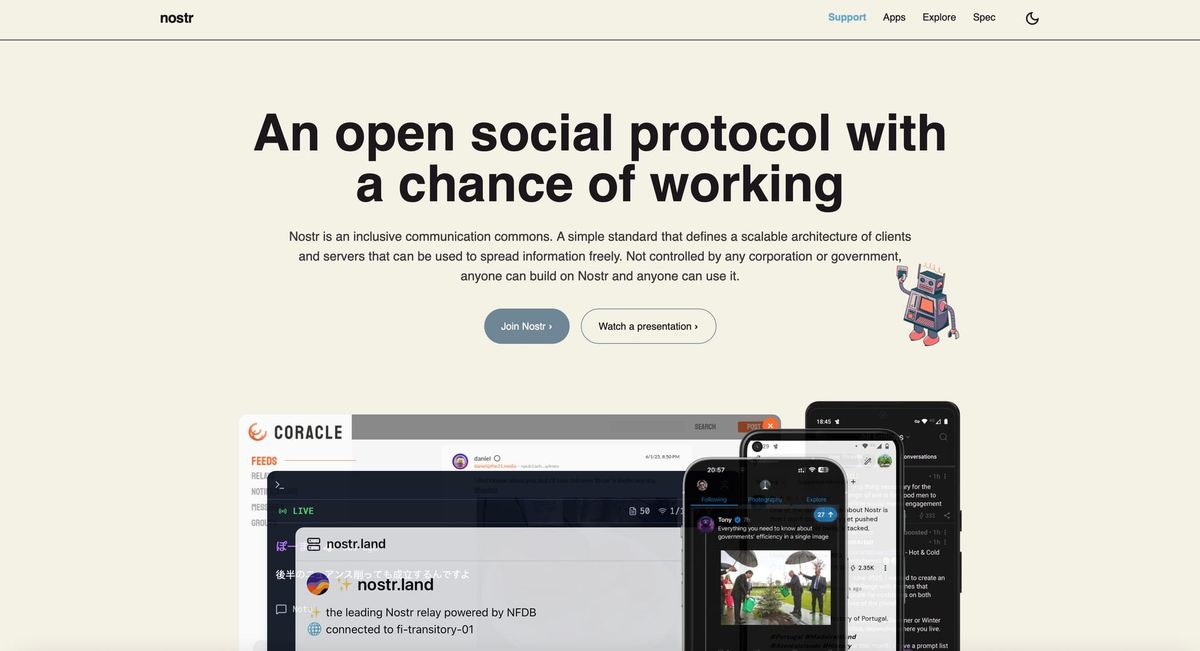
There is a specific kind of regret that comes not from failure but from competence. You did everything right by the rules of the game you were playing, and then at some point you looked up and realized the game had different rules than you thought, or that the rules had changed while you were playing, or that the person who owned the board had interests that were never quite aligned with yours.
A lot of creators who spent the 2010s building on social platforms are somewhere in that territory now. Not broke, not failed, but holding a large follower count and a growing suspicion that the thing they built is more fragile than it looks.
So the question is worth sitting with seriously: if you had known what you know now, what would you have done differently from the start?
The Thing Most People Say First
When you ask creators who have been at this for a decade what they wish they had done differently, the first answer is almost always the email list. Start it earlier. Take it more seriously. Put the link in the bio before it felt necessary rather than after the algorithm changed and made it urgent.
This is correct and also somewhat incomplete as advice, because the email list is a symptom of a deeper understanding rather than the understanding itself. The creators who built email lists early were not primarily thinking about deliverability or algorithm independence. They were operating from a belief that the relationship with their audience was something they were responsible for maintaining directly, not something the platform would maintain on their behalf.
That belief turns out to be the thing worth having had earlier. The email list is one expression of it. The specific tool matters less than the underlying orientation: the audience relationship is yours to build and yours to keep, and any infrastructure that sits between you and your audience is infrastructure you are renting rather than owning.
What Building on Rented Infrastructure Actually Costs
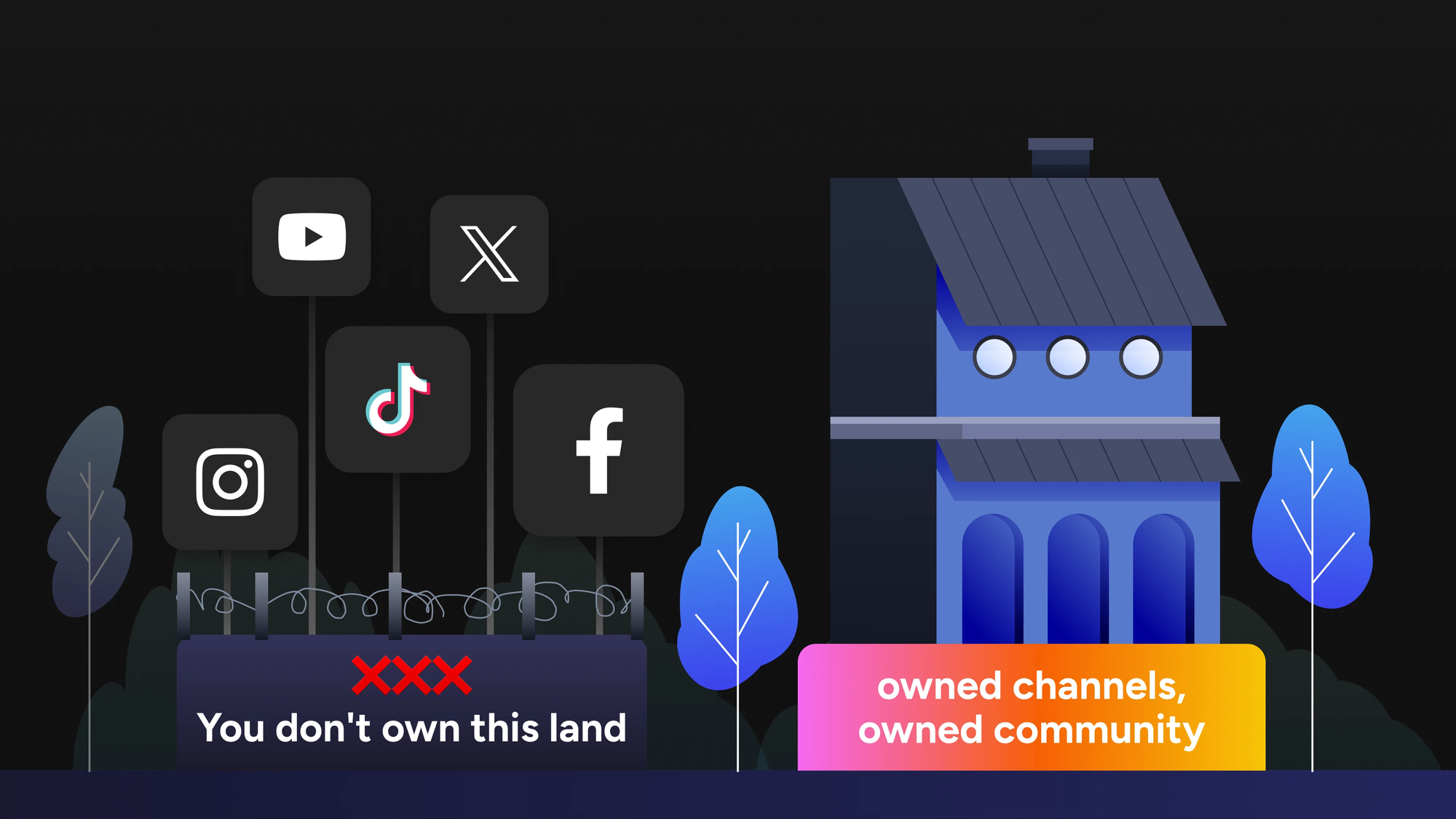
The cost is not usually visible until it is too late to avoid it, which is what makes this particular regret so specific. You can build something genuinely impressive on rented infrastructure. The follower counts are real. The engagement is real. The income from brand deals and affiliate links that flows through a large platform account is real. None of it is fake.
What is not real is the ownership. The audience that feels like yours is mediated entirely by a company whose interests in that audience are not identical to yours. The content that feels like your portfolio is licensed to a platform that can use it for purposes you did not anticipate when you posted it. The identity that feels like your professional reputation is attached to an account that can be suspended, restricted, or made irrelevant by product decisions made in a building you have never been in.
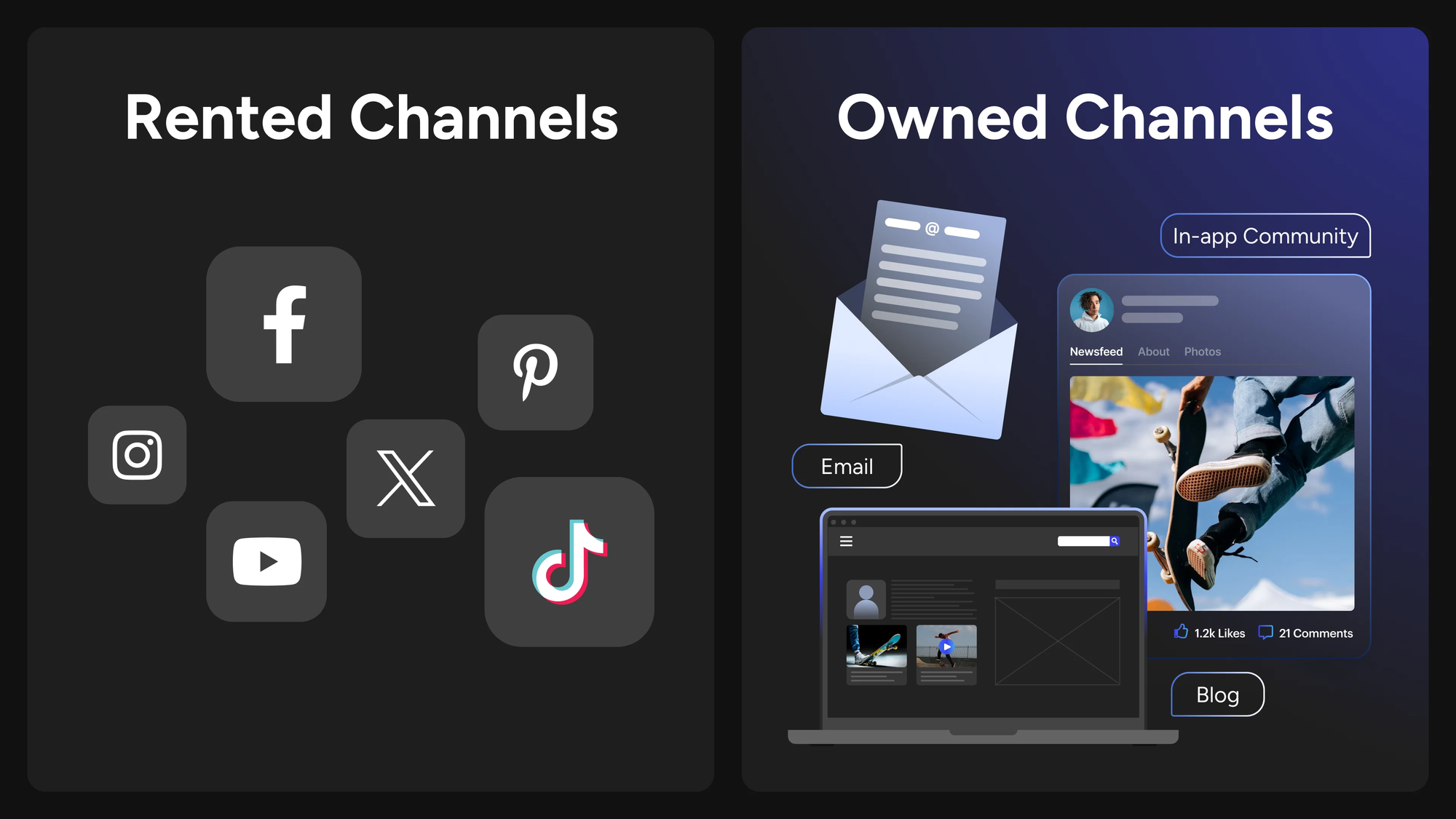
The people who understood this earliest did not necessarily avoid platforms. Most of them used platforms heavily, because platforms are where the audience is and that is not a trivial fact. What they did differently was treat the platform relationship as a distribution arrangement rather than a home. They published somewhere they controlled and used the platform to drive people there. The effort was higher. The compounding was slower. The result, for the ones who kept at it, was an audience relationship that did not have a landlord.
The Specific Decisions That Compound
Hindsight on audience-building tends to cluster around a few decisions that seemed low-stakes at the time and turned out to matter significantly.
The first is where the content lives. A post that exists only on Instagram has a lifespan of roughly 48 hours before it effectively disappears from circulation. The same idea published as an essay or a piece of long-form writing on infrastructure you control has an indefinite lifespan and continues finding readers through search and sharing without requiring you to re-publish it. Creators who built the habit of publishing in durable formats early have archives that work for them without ongoing effort. The ones who published exclusively to feeds have years of work that is effectively inaccessible.
The second is the identity question. Your professional identity on a centralized platform is an account. Accounts can be banned, shadowbanned, made algorithmically invisible, or simply stranded on a platform that loses cultural relevance. The creators who separated their professional identity from any single platform's account, by building a domain, an email list, a presence on infrastructure they controlled, have professional identities that travel with them when platforms change. The ones who did not are more exposed to the consequences of platform decisions they had no part in making.
The third is the monetization structure. Platform-dependent income, whether brand deals that require a certain follower count, ad revenue from platform programs, or affiliate income that flows through platform links, is income that depends on the platform continuing to function in roughly the same way. The creators who built direct monetization early, subscriptions, products, services sold through channels they owned, have income streams that are less exposed to platform policy changes.
What the Alternative Actually Looks Like in Practice
This is where most of these conversations get vague, so it is worth being specific about what building differently actually means in practice rather than in principle.
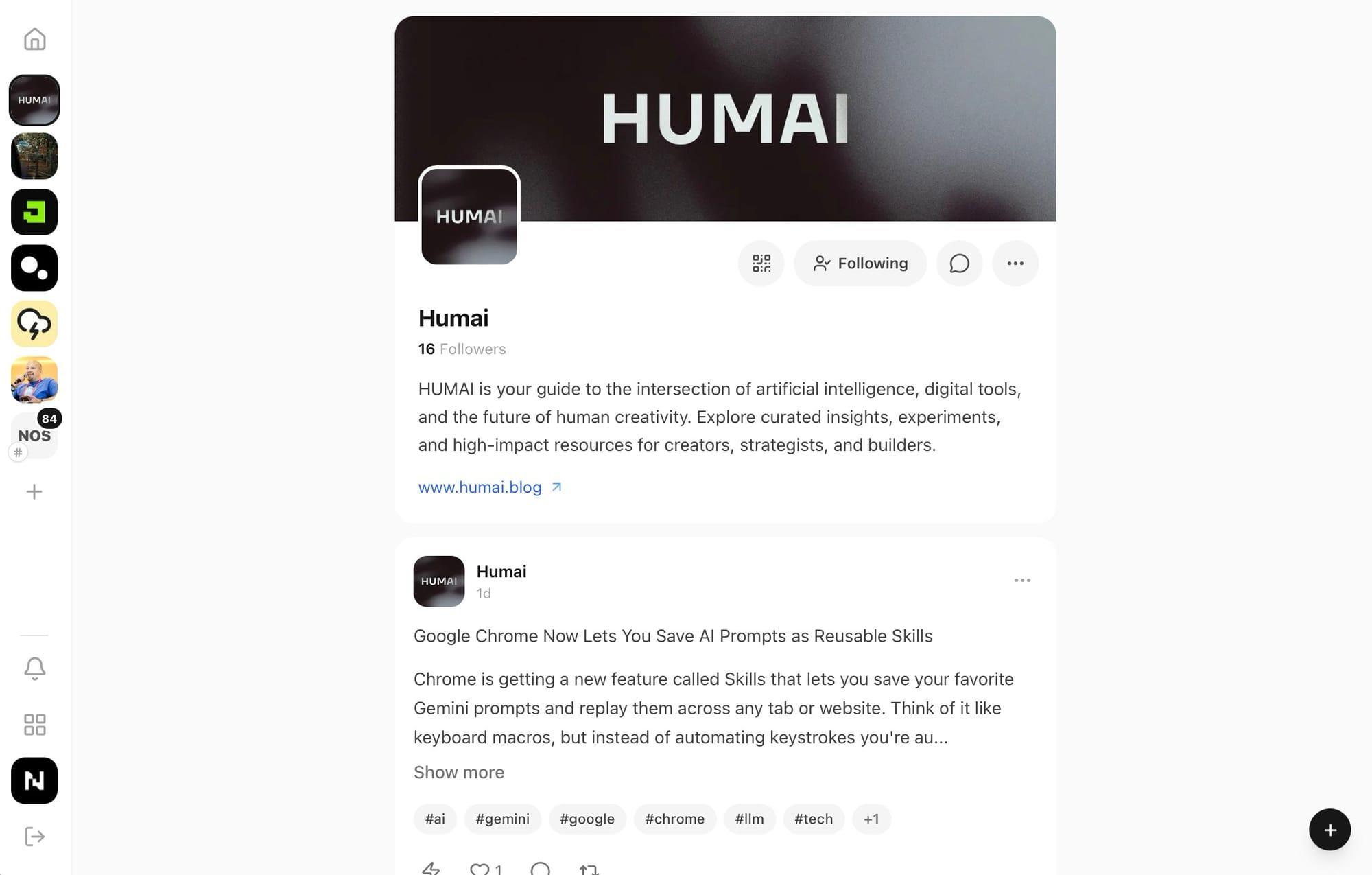
For writers and journalists, the concrete alternative is long-form content published on infrastructure you control, with a direct relationship to readers. Email is the most established version of this. Nostr is worth understanding as a protocol-level version of the same idea, where your identity is a cryptographic key you hold rather than an account on someone else's server. Nostr.blog is built specifically for this use case: long-form publishing where the content is signed with your key, the media library works like a file system you own rather than an upload queue you are depositing into, and readers who want to support specific pieces can do so through Lightning payments without a platform taking a percentage of the transaction. The audience there is smaller than any major social platform, which is the honest trade-off. The ownership is structural rather than a terms-of-service promise that can be amended next year.
For visual creators, the equivalent is building a website with a domain you own as the primary home for the work, using platforms as distribution rather than as the destination. A photographer whose work lives on their own site and is shared to Instagram for discovery is in a structurally different position from one whose entire portfolio exists only in an Instagram grid.
For anyone who builds a business through content, the direct monetization question is the one most worth revisiting with hindsight. A subscription program that runs through an email list or a platform you control is more resilient than one that runs through a platform's creator fund or affiliate program, because the terms of the former are yours to set and the terms of the latter are subject to change without your input.
The Actual Invitation
The question in the headline is not rhetorical. The decisions that matter in hindsight vary significantly depending on what someone was building, who they were building it for, and when they started.
Some people who read this will have built primarily on Instagram and wish they had taken their email list seriously in year two rather than year five. Some will have spent years on Twitter building a professional reputation that is now housed on a platform they no longer trust to behave consistently. Some will have created content that now trains AI models under license terms they never thought carefully about. Some will have done everything right by the conventional wisdom of whatever year they started and still ended up in a position that feels more precarious than the follower count suggests.
What would you have done differently? The question is open, and the answer is probably more specific than the generic "start an email list earlier" version of the conversation usually gets.
FAQ
Is it too late to change how you build if you have already spent years on centralized platforms? No, but the compounding works in both directions. Starting a direct audience relationship now means starting with whatever portion of your current audience you can convert, which is typically small. The earlier the shift, the more time the durable channel has to grow alongside the platform-dependent one.
What is the minimum viable version of building something you own alongside social media? An email list with a single link in your social bio and a reason for people to subscribe. That is the floor. Everything else, a domain, long-form publishing, protocol-based identity, builds on top of that foundation.
How do you convert platform followers to a direct relationship without annoying them? By giving them something worth moving for. Exclusive content, earlier access, more personal communication than the platform post allows. The conversion rate will be low regardless of how well you execute it, typically under 2 percent, but those people represent the audience that would follow you off-platform entirely.
What does Nostr offer that email does not? A different kind of identity. Email is portable at the list level but your address is still managed by a provider and your sending reputation depends on their infrastructure. On Nostr, your identity is a cryptographic key you generate and hold, meaning no provider can revoke it, and your content is signed with that key rather than stored on any single company's server. Nostr.blog makes this practical for long-form publishing specifically, with reader payments that go directly to you through Lightning. The trade-off is a much smaller current audience.
What content format has the best long-term return on the time invested? Long-form writing on infrastructure you control, indexed by search engines, linked from multiple sources over time. A well-written essay from five years ago continues finding readers. A post from five years ago on any major social platform is effectively inaccessible without someone specifically searching for it.
Related Articles
 Mark
Mark Mark
Mark