Pick a day this week and don't open Instagram for twenty-four hours, without any particular agenda attached to the exercise.
This is not a lecture about screen time or dopamine or the corrosive effects of comparison culture. You already know that version of the argument and it has not changed your behavior, because knowledge rarely does. This is a more practical proposition: close one app for one day and notice what you actually observe, not what you expect to observe.
What the First Two Hours Feel Like
The first thing most people notice is not relief but the reflex. The hand moves toward the phone during a lull in a meeting, while waiting for coffee to brew, at a red light, in the three seconds between locking one app and opening another. The reflex fires before the decision does, which is the point. Instagram is not competing for your intentional attention but for the unallocated seconds you do not realize you have until you stop filling them.
The second thing people notice, usually around hour two or three, is mild disorientation, not anxiety exactly, more like the low-grade restlessness of having forgotten something you cannot name. This feeling passes faster than most people expect, somewhere around the four to six hour mark, when the nervous system stops polling for the app that is not there. What fills that space is more revealing than the discomfort itself.
What You Notice When You Are Not Optimizing for the Feed
Instagram is a production environment as much as it is a consumption environment. Most people who use it regularly are doing two things simultaneously: consuming content and mentally producing it, framing experiences as potential posts, noting light quality, composing captions in the background, deciding whether this meal or this view or this moment is worth sharing. This is what the app trains you to do through years of interaction, not vanity so much as conditioned behavior.
On a day without Instagram, some people report that experiences feel less curated and more present, not because their perception improved but because the mental production layer switched off. A walk is a walk rather than potential content. This sounds banal until you notice how infrequently it happens.
Others notice the opposite: they miss the creative constraint. The square frame, the caption, the compression of an experience into something communicable to an audience, for some people that process is genuinely pleasurable and not something to be escaped. Both responses tell you something useful about your actual relationship with the app.
The Reach Problem Nobody Talks About on a Day Like This
Here is something worth thinking about on your day off. Every post you have made on Instagram belongs to a distribution system you do not control and cannot audit. The platform decides, through an algorithm optimized for its own engagement metrics rather than your preferences, which of your followers sees what you made. It decides this differently for Reels than for photos, differently for accounts that post daily than for accounts that post weekly, differently depending on factors that are not published and change without notice.
You provided the content and built the audience, but the platform controls the relationship between those two things and charges you, in time and in attention, for the privilege of that arrangement continuing.
This is not a reason to delete your account so much as a reason to think clearly about what you are exchanging and whether the exchange is working in your favor.
Where the Content Could Live Instead
One of the more useful experiments on a day without Instagram is to notice what you would have posted and ask where else it could go. A photograph has a life beyond a feed that will bury it in 48 hours. A thought worth sharing does not require an algorithm to find its audience.
Some of that content belongs in a newsletter, where the person who subscribed made an active choice to receive it and where delivery does not depend on whether Instagram's current algorithm favors your account type. Some of it belongs in long-form writing, where the idea has room to develop rather than compress into a caption.
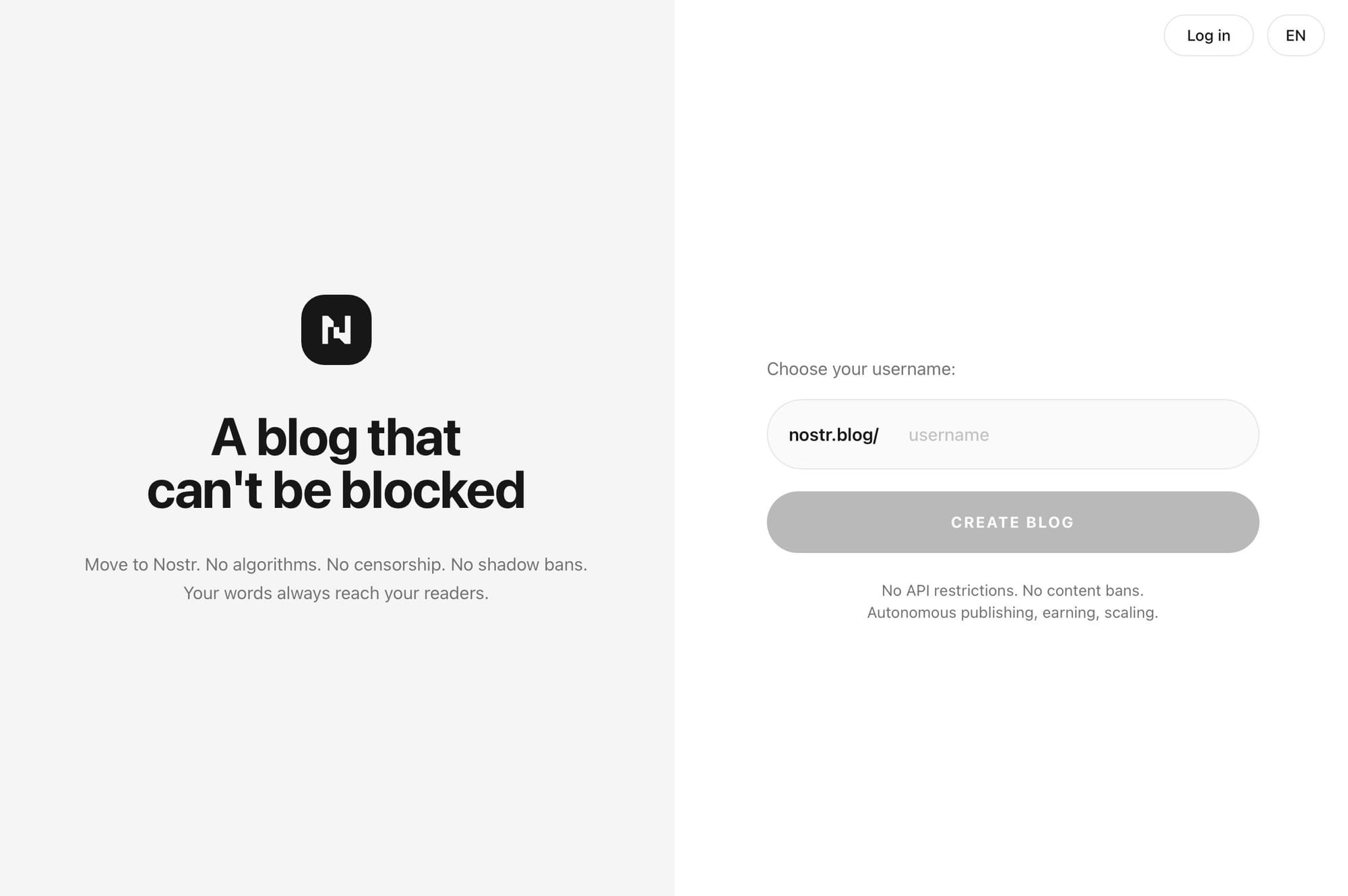
Nostr.blog is worth looking at in this context, not as a replacement for visual-first content but as a place where writing and ideas can live on infrastructure you actually control. Your identity there is a cryptographic key you hold, not an account that can be restricted or removed when your content conflicts with an advertiser's brand safety guidelines. Readers who want to support specific pieces can do so directly through Lightning payments, without a platform taking a percentage of the transaction. The audience is smaller than Instagram by a significant margin. The ownership is real in a way that Instagram's Terms of Service do not offer.
What the Day Actually Costs You
24 hours off Instagram will not cost you followers in any measurable way. Accounts that post once daily do not perform statistically differently from accounts that skip a day. The fear that absence is punished by the algorithm is real but mostly unfounded at the scale of a single day.
What it might cost you is the comfortable numbness of the scroll. Instagram is genuinely good at filling time in a way that does not feel like wasting it. That is the product working as designed. A day without it makes the time visible again, which is uncomfortable for about four hours and clarifying after that.
Close Instagram tomorrow, just for the day, without turning it into a statement or a piece of content for somewhere else. Pay attention to when the reflex fires, how long the restlessness lasts, whether your experience of the day feels different without the production layer running in the background. At the end of it, decide whether to open the app based on whether you actually want to rather than because the habit fired. Twenty-four hours is enough to learn something you cannot learn by reading about it.
FAQ
Will taking a day off Instagram hurt my engagement or reach? Not in any measurable way. The algorithm penalizes extended inactivity, typically defined as weeks rather than days, not a single missed day. One day off will not move your metrics in any direction you will notice.
What if I use Instagram for work or client communication? Set a specific window for those tasks and treat it like checking email rather than scrolling. The challenge is about the reflexive consumption loop, not about preventing every work-related interaction with the platform.
Is there a meaningful alternative to Instagram for photographers and visual creators? Not at comparable scale. For long-form writing and ideas, Nostr-based tools like nostr.blog offer an alternative where content lives on infrastructure you control and distribution is not subject to algorithmic decisions tied to a platform's revenue model. For visual-first content, the honest answer is that the alternatives have not yet matched Instagram's audience size.
Why does the restlessness after putting down Instagram pass so quickly? Because most of it is habitual rather than emotional. The app conditions a checking behavior tied to variable reward schedules, which creates a reflex rather than a need. Once the reflex stops firing and nothing bad happens, the nervous system adjusts within a few hours.
Does one day off actually change anything long-term? Usually not by itself. What it does is make visible something that is otherwise ambient: how often the app is open, what drives the opens, and whether the time spent on it feels chosen or automatic. That visibility is useful information regardless of what you do with it afterward.
Related Articles
 Mark
Mark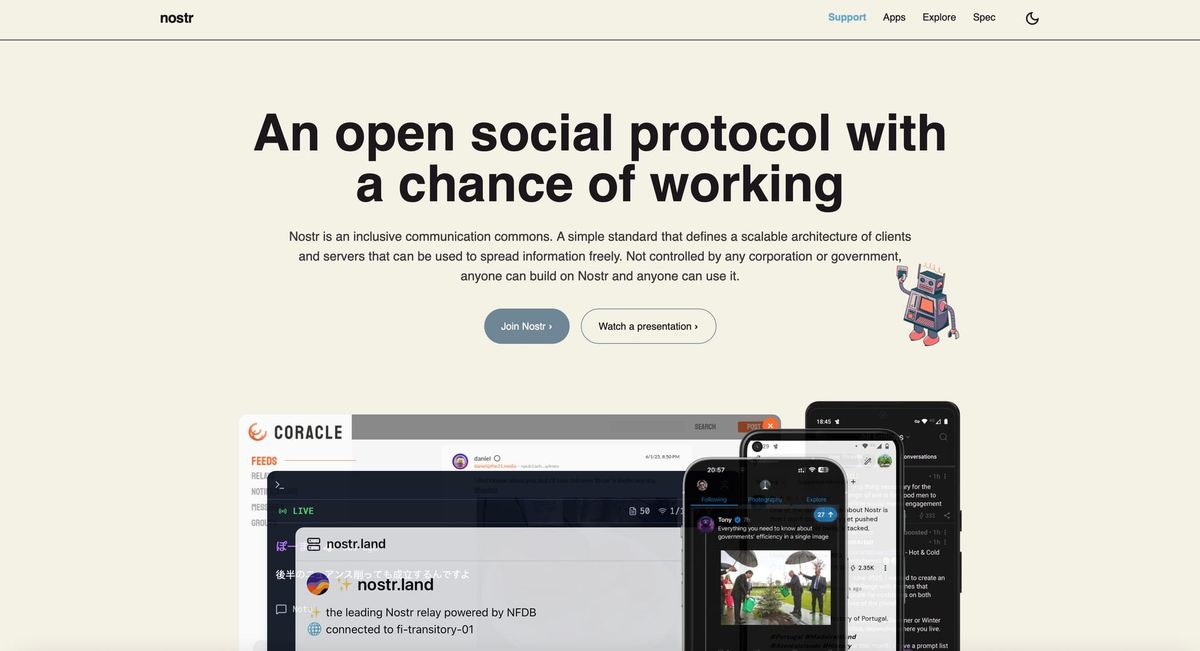 Mark
Mark