How much time do you spend on social media every day? The average American clocks somewhere between two and four hours across platforms, which makes it less a passive habit than a second job — except the employer is a trillion-dollar corporation and the compensation is a like button and the occasional viral moment.
The platforms are not neutral infrastructure. They are attention machines optimized to extract maximum engagement from human psychology and then sell that attention to advertisers. You provide the content, the data, and the time; they keep the revenue, the identity, and the keys to your account.
Two forces are now converging to break this arrangement: AI-driven automation and decentralized publishing protocols. Together, they represent the most serious challenge to platform dominance since RSS died quietly inside Google Reader. The era of begging algorithms for reach may be ending.
The Attention Economy Was Never Designed With You in Mind
Meta's family of apps, X, TikTok, LinkedIn, and their kin were built on a single architectural decision: keep users on platform as long as possible, because time on platform equals ad inventory. The algorithm is not mysterious. It surfaces content that provokes emotional responses because emotional engagement translates to dwell time.
Creators figured this out quickly. The rational response was to produce more content, more frequently, optimized for whatever signals the algorithm rewarded that week. This created a treadmill: post more to maintain reach, watch the platform change the algorithm, adjust, post more, watch the reach drop anyway. The outcome was by design, not accident.
The platform captures the upside while the creator absorbs the risk.
When Meta de-prioritizes link posts, newsletter subscribers evaporate. When Twitter changes its API pricing overnight, third-party tools that entire workflows depended on go dark. When TikTok faces regulatory pressure in a given country, creator businesses built on that platform become legally inaccessible with no warning and no recourse. The relationship is that of a tenant in someone else's building, subject to lease terms written entirely by the landlord.
AI Automation: The Tool Platforms Pretend to Welcome But Actually Fear
Tools powered by large language models can now draft posts, generate image prompts, schedule content, analyze engagement patterns, respond to comments, and repurpose long-form content into short-form clips, threads, and newsletters, all with minimal human intervention.
For a solo creator, a small publication, or a bootstrapped startup, this changes the math entirely. What once required a team of three to five people — a social media manager, a writer, a graphic designer — can now be handled by a single person with a well-constructed workflow.
The tension is that the major platforms officially despise automation, even as they profit from its output.
Meta's Terms of Service prohibit automated posting outside their official API. X has made third-party automation increasingly expensive and technically restricted. Instagram has shadow-banned accounts for behavior that pattern-matches to bot activity, regardless of whether the content was high quality.
The rationale platforms offer is that automation degrades the authenticity of the experience. The more accurate explanation is that automation reduces the time users spend inside the platform interacting with ads. A creator who batch-schedules content once a week spends six days not scrolling the feed, and those are six days of ad impressions the platform does not capture. Efficiency, for the creator, is lost revenue for the platform — which is why the Terms of Service are written to discourage it while the public messaging pretends otherwise.
This puts creators using AI tools in a structurally untenable position. The automation that makes their operation viable is the same automation that exposes them to platform penalties, a covert policy designed to maintain the time-extraction loop under the cover of community standards.
What Decentralization Actually Means (And Why It's Not Just a Crypto Talking Point)
The word "decentralized" has been abused by enough blockchain projects that many technologists have stopped using it in polite company. The underlying concept remains important and is distinct from speculation in JPEG markets.
Decentralized protocols for publishing means a system where no single entity controls the infrastructure through which content moves. Email is the reference case: a federated, open protocol where you can run your own mail server, use any client, and switch providers without losing your contacts, and where no single company can revoke your access to the medium itself.
Nostr applies this same logic to social publishing.
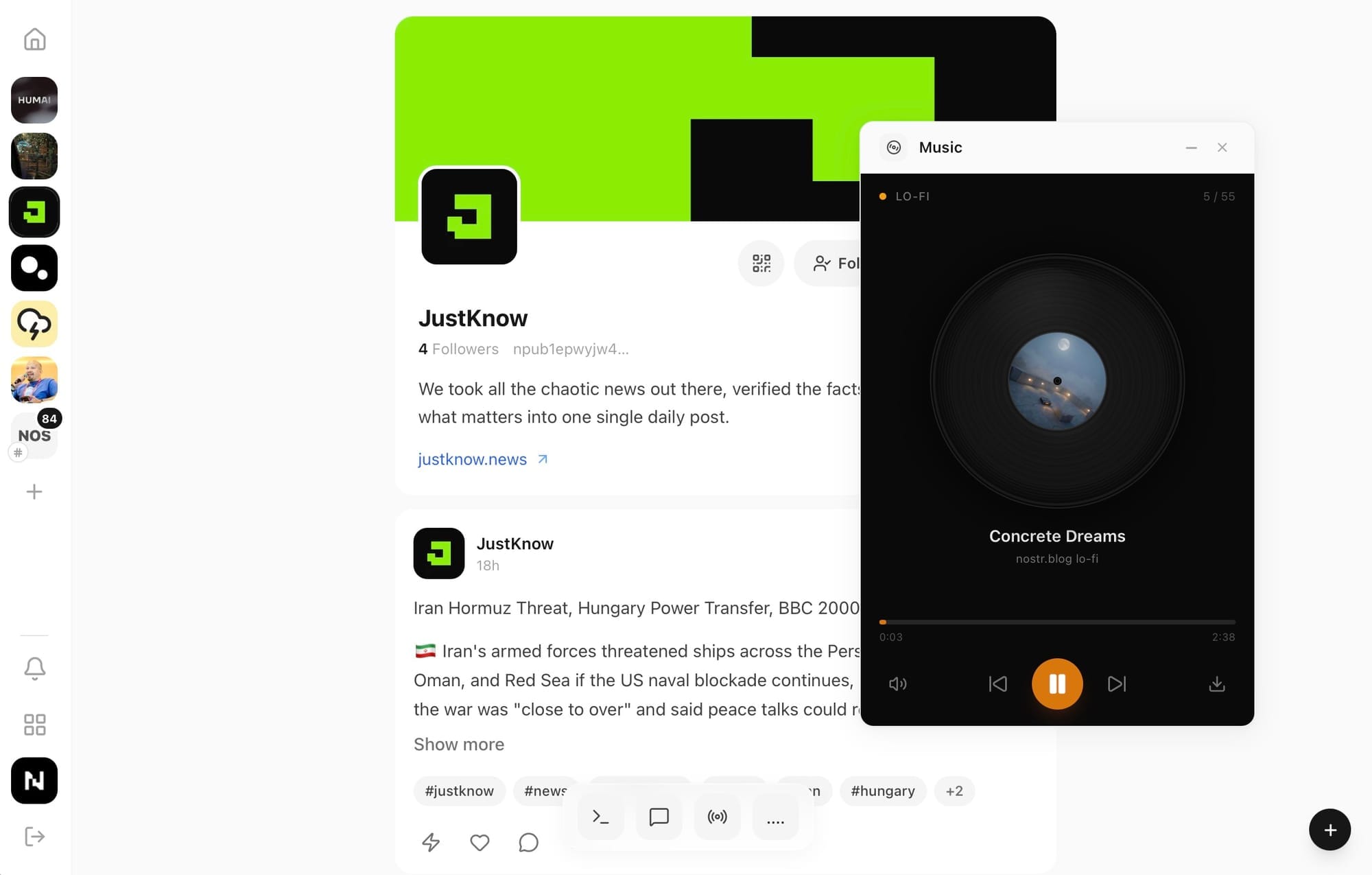
Nostr, which stands for Notes and Other Stuff Transmitted by Relays, is an open protocol rather than a platform. Your identity on Nostr is a cryptographic key pair, not an account tied to a company's database. You hold the private key. Your posts, your followers, your identity, none of it lives on a server that someone else owns. Content is transmitted through relays — servers that anyone can run — and received by clients that anyone can build.
No company can ban you from Nostr. They can remove you from their relay, but your identity persists. You connect to a different relay. The equivalent would be if Twitter could block you from the internet itself rather than just their platform, which, despite the ambitions of certain executives, is not how protocols work.
For creators who have had accounts banned, who have lost years of audience-building to a moderation algorithm's decision, the difference between a platform and a protocol is the difference between a career and a hobby.
Nostr and Automation: What the Protocol Was Built For
Nostr was designed with automation as a first-class feature, not a policy violation. The protocol is open. Any developer can build a client on top of it. Any creator can script interactions with relays programmatically. There is no API pricing gate designed to price out independent developers. There is no Terms of Service clause that threatens account suspension for batch publishing.
For AI-powered content workflows, this matters practically. If you want a system that uses an LLM to draft posts, filters them through a review step, and publishes them to your Nostr feed on a schedule, you can build that without risk of shadow-banning or account suspension, because the protocol has no business incentive to penalize your efficiency.
The contrast with Meta's approach is total. Meta has suspended users for using third-party posting tools that violated their API terms, even when those users were posting original, high-quality content. The violation was not content quality — it was the failure to spend time inside the app while creating it.
The Tooling Gap, and Who's Filling It
An open protocol is only as useful as what people build on top of it. For most writers, interacting with Nostr at the raw protocol level, pushing signed events directly to relays, managing key pairs, querying relay filters, is a reasonable weekend project and an unreasonable daily workflow. The ecosystem has known this for a while.
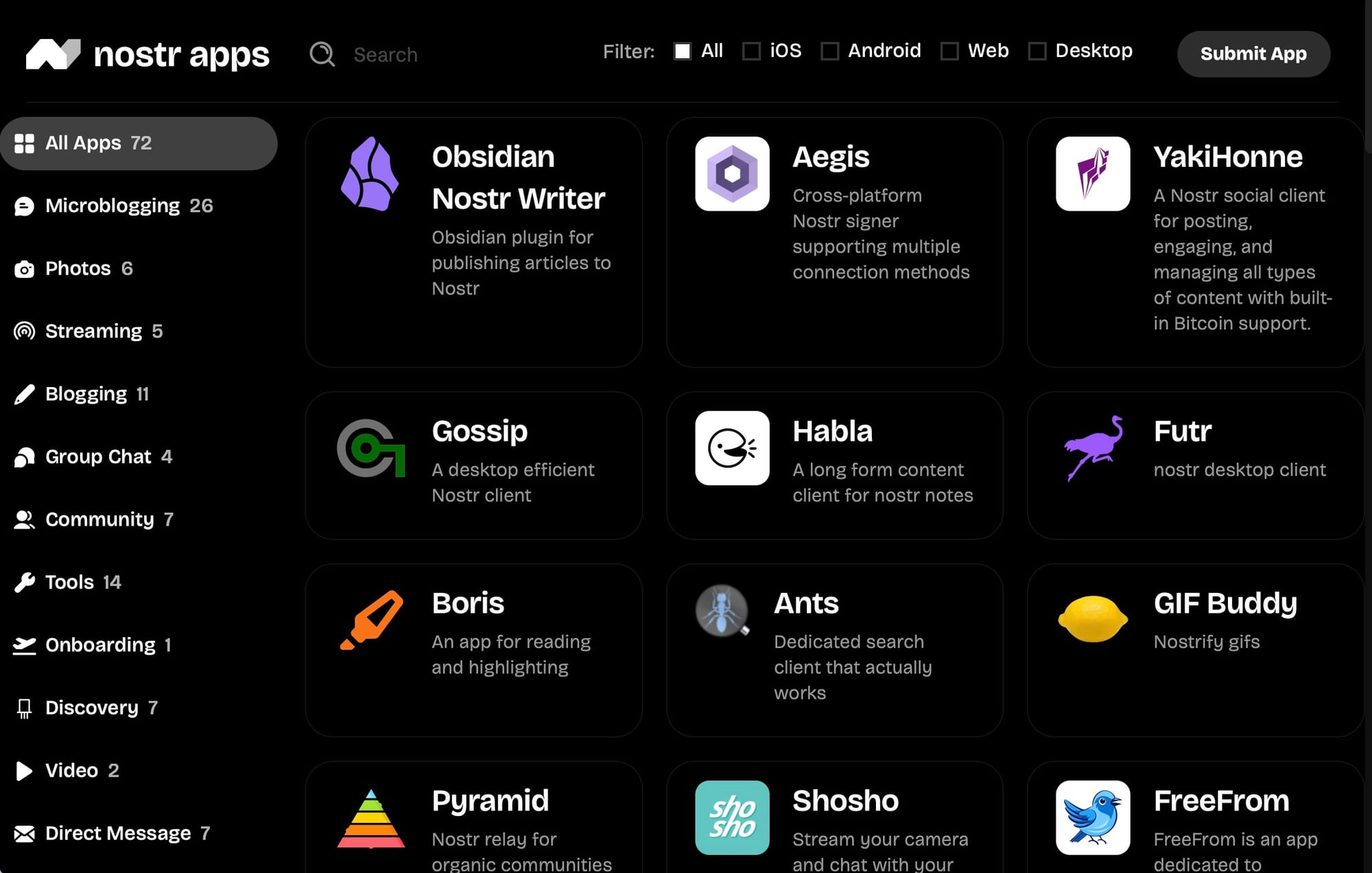
Nostr.blog is one of the more considered responses to that problem. It sits in a different category from microblogging clients like Damus or Primal. Those tools are built around short-form posting. Nostr.blog is built around articles, which means it has to solve different problems: where does media live, how does the writing environment feel, what does monetization look like when there is no ad network behind you.
The answers the product lands on are revealing. There is a Terminal that exposes the protocol directly, which is unusual. Most publishing tools abstract away their underlying infrastructure as aggressively as possible. Keeping the Terminal visible and accessible is a design choice that signals a certain kind of trust in the user. The media library works like a local file system rather than an upload queue attached to a feed, which matters if you plan to publish consistently over years rather than in bursts. The fact that it includes a Lo-fi player is the kind of detail you only notice if you spend long hours writing. It is not a feature that appears in a pitch deck.
Monetization runs through Lightning and Zaps. Readers who want to support a piece send a direct Bitcoin payment, no intermediary, no revenue share, no minimum payout threshold before the money actually moves. This is genuinely different from how every subscription platform works. Substack takes a cut. Medium's payout methodology is opaque enough that writers regularly post breakdowns trying to reverse-engineer it. YouTube's monetization terms shift with advertiser sentiment. The Zaps model does not have those variables because there is no platform sitting in the middle of the transaction.
The friction is real. A reader who wants to send a Zap needs a Lightning wallet, and that is a non-trivial ask for a general audience in 2026. The monetization model works well for audiences that are already in the Nostr ecosystem. Outside of that, you are asking readers to take an extra step that most will not take. That is a genuine limitation, not a footnote.
The Data Ownership Problem Nobody Wants to Solve
Every major platform will tell you that you own your content. Meta says it. Google says it. X says it. What they omit is that by agreeing to post on their platform, you have granted them an irrevocable, sublicensable, royalty-free license to use that content for virtually any purpose — including training AI models, serving it in advertising contexts, and distributing it in ways you cannot audit or control.
Your content is yours in the way that a lease agreement lets you call an apartment yours. You are borrowing space in someone else's infrastructure, and the terms are written entirely by the infrastructure owner.
Nostr changes this at the protocol level. Your cryptographic key is your identity and your proof of authorship. Your content is signed with that key, which means ownership is established mathematically rather than through a Terms of Service agreement that can be amended unilaterally.
For journalists and creators whose professional identity is tied to their body of work, this distinction has practical weight. If Substack changes its business model in ways that conflict with your economics, leaving means abandoning your infrastructure, potentially your search presence, and negotiating a complex export. On Nostr, you leave a relay, not your identity. Your key goes with you.
Who Should Pay Attention to This Right Now
- Independent journalists are among the most exposed to platform dependency. A publication that built its distribution on Twitter's referral traffic has spent the past two years watching that traffic erode as the algorithm de-prioritizes link posts in favor of native content. Nostr offers distribution not subject to one company's monetization decisions.
- Developers building content tools will find Nostr's open protocol a better surface than Meta or X's API, which can change pricing, rate limits, and endpoint availability with limited notice and no recourse. Distributed relay infrastructure carries less concentrated risk.
- Founders and startup marketers who rely on social platforms for customer acquisition are one algorithm update away from watching acquisition costs double. Owning an audience on a permissionless protocol is a business continuity decision, not an ideological one.
- Creators who have been platform-banned already understand what is at stake. An account suspension on a centralized platform erases years of work and relationships instantly, with no meaningful appeal. On Nostr, that outcome is structurally unavailable to any single actor.
The Real Case Against Moving Now
These are reasons to start building a presence now, at manageable friction, rather than later, when the platforms you currently depend on have extracted further concessions from your workflow.
The Automation Question at the Center of This Moment
Return to the opening question. How much time do you spend on social media every day?
Now ask a harder one: how much of that time is compelled rather than chosen? How much of the posting, the engagement, the thread-crafting and caption-writing is driven by algorithmic necessity rather than an actual creative or communicative impulse?
AI automation does not answer this by making the treadmill faster. Its correct application is to make the treadmill optional. To compress the mechanical overhead of content distribution so that the time you do spend is deliberate.
That is only possible in an environment where the platform does not penalize efficiency. Nostr provides that environment. The combination of AI-assisted creation and a permissionless publishing protocol changes the underlying relationship between creator and infrastructure.
On a protocol like Nostr, published through a tool like nostr.blog, with AI workflows handling distribution mechanics, you are just a writer, and the infrastructure is finally working in your direction rather than extracting from you.
That arrangement has not previously been available from any major platform, and the gap between what these platforms offer and what a protocol makes possible is exactly what this moment is about.
FAQ
What is Nostr and how is it different from Twitter or Threads? Nostr is an open publishing protocol, not a platform. Your identity is a cryptographic key you control, not an account on a company's server. No single entity can ban you from the protocol, change its rules without warning, or restrict access to your content. Twitter and Threads are centralized platforms where one company makes all architectural and policy decisions.
Is AI-generated content allowed on Nostr? Yes. Nostr has no Terms of Service prohibiting AI-assisted or AI-generated content, and automation is a first-class feature of the protocol rather than a violation. This is a direct contrast with Meta and X, which restrict or penalize certain forms of automated posting.
How does nostr.blog help creators publish on the Nostr protocol? Nostr.blog provides a long-form publishing environment built on Nostr. Its Pro features include a Terminal for direct protocol access, a Finder-style media library for managing content assets you own, a built-in Lo-fi player, and Lightning Network integration for Zaps-based direct monetization. It targets writers and journalists rather than microblogging use cases.
What are Zaps and how do they work for creator monetization? Zaps are instant Bitcoin micropayments sent via the Lightning Network directly from a reader to a creator, with no platform intermediary, no revenue share, and no payout threshold to clear before the money moves. This differs structurally from ad-based or subscription models where a platform captures a percentage of every transaction.
Can I use AI tools to automate my Nostr publishing without risking my account? Yes. Unlike Meta or X, which restrict API access and penalize automation outside their approved workflows, Nostr's open protocol supports programmatic interaction as a design principle. You can build AI-assisted tools to draft, schedule, and publish content without risk of shadow-banning or account suspension.
If my audience is on Twitter and Instagram, why would I move to Nostr now? You do not need to abandon existing platforms. The practical move is to establish your cryptographic identity and begin publishing on Nostr as a hedge against platform risk, while maintaining existing distribution channels. The key you establish now is your permanent identity on the protocol regardless of where audiences migrate.
What happens to my content and followers if a Nostr relay shuts down? Your identity persists independent of any relay. If a relay shuts down or removes your content, you connect to a different one. Your followers interact with your key, not a specific relay, so the relationship survives as long as both parties remain on the protocol. This is structurally different from a platform ban, where account, content, and follower relationships are all lost simultaneously.
Is the Nostr ecosystem mature enough for professional creators and journalists? For technically comfortable users who prioritize ownership and censorship resistance over raw audience size: yes. Nostr.blog has reduced friction for long-form publishing specifically. Lightning and Zaps monetization is functional, though it requires readers to adopt Lightning wallets. The audience is genuinely smaller than any major platform today, and that is a real trade-off rather than a hypothetical one.
Related Articles
 Mark
Mark Mark
Mark