When most people hear about Nostr for the first time, they reach for the nearest familiar category. A new social network. A decentralized Twitter. A crypto thing. None of these are quite right, and the mismatch matters because the thing that makes Nostr genuinely interesting is precisely the thing that the familiar categories obscure.
Nostr is a protocol, not a product. Understanding what that means in practice requires stepping back from the interface level entirely.
The Radio Analogy
Think about how radio works. There is a frequency, say 98.5 FM. Any station can broadcast on that frequency in a given area. Any radio can receive it. The frequency itself is not owned by any broadcaster. It is a shared standard, a set of rules about how signals are transmitted and received, and anyone who builds hardware or software that follows those rules can participate.
Nobody can ban you from the concept of 98.5 FM. A broadcaster can go off the air. A radio manufacturer can stop making devices. But the frequency persists as a standard regardless of what any individual company decides to do.
Nostr works on the same logic. It is a specification for how messages are formatted, signed, and transmitted across a network of servers called relays. Anyone can run a relay. Anyone can build a client that speaks the protocol. The protocol itself belongs to no one, which means no one can shut it down, change its terms, or revoke your access to it.
What Your Identity Actually Is
On every centralized social platform, your identity is an account in a database. Instagram owns the database. If Instagram decides your account violates its policies, it deletes the record and you cease to exist on the platform. Your username, your followers, your content history, all of it lives in a system someone else controls.
On Nostr, your identity is a cryptographic key pair: a public key that functions like a username and a private key that you hold and never share. When you post something, you sign it with your private key. The signature is mathematical proof that the content came from you, and it is verifiable by anyone without asking any company to confirm it.
The consequence is that no relay operator can delete your identity, because your identity is not stored on their relay. They can remove your posts from their relay, but the posts exist on other relays too, signed with your key, verifiably yours. Your identity travels with you because you hold the key, not because a platform holds it on your behalf.
This is the difference between owning a home and renting one. On a centralized platform, you are a very well-treated tenant. On Nostr, you hold the deed.
What Relays Are and Why They Matter
The radio analogy extends to relays. Relays are the towers that broadcast the signal. They store and forward messages between users. Anyone can run one. A relay can choose what content it hosts, which means individual relay operators can moderate their own relay, but no single relay operator can moderate the entire network.
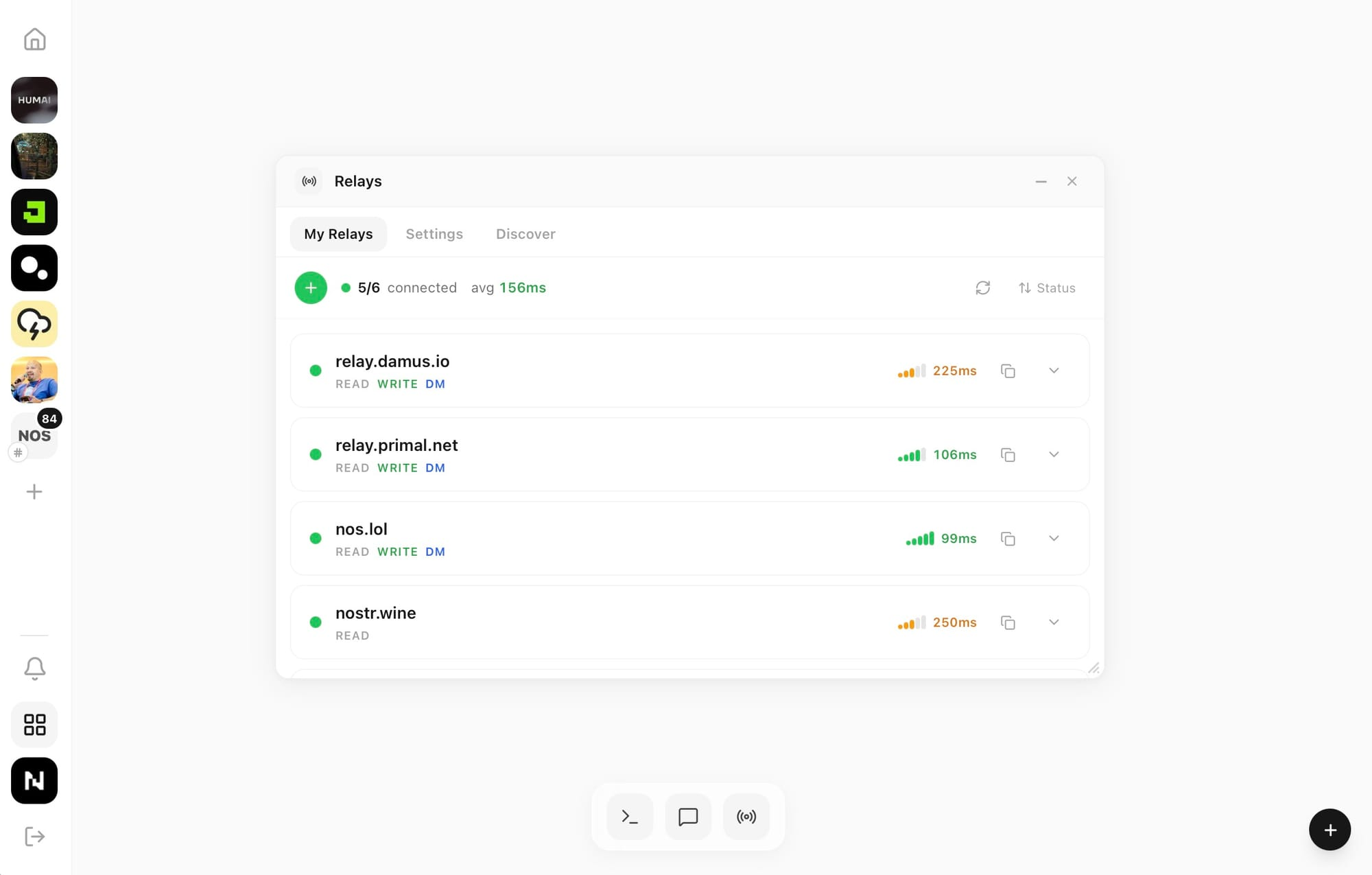
If a relay removes your content, you connect to a different relay. Your followers' clients will find you there because they are following your public key, not a specific relay's address. The network is resilient to individual points of failure in the same way that email is resilient: if one mail server goes down, email as a medium continues to function.
This structure distributes the moderation question across many actors rather than concentrating it in one company. A relay operator in Germany can apply German legal standards to content on their relay. A relay in the US can apply different standards. A relay run by a university can apply its own policies. Users choose which relays to connect to, which means the content moderation landscape is plural rather than singular. This does not solve all moderation problems, but it changes who has the power to make moderation decisions and over what scope.
What Clients Are and Why There Are So Many
Because Nostr is a protocol rather than a product, anyone can build a client on top of it, and many people have. Damus is an iOS client that looks and feels like Twitter. Primal is a web client with a more polished interface. Amethyst is an Android client. Each of them reads from and writes to the same underlying protocol.
This is the equivalent of how email clients work. Gmail, Outlook, Apple Mail, and Thunderbird all speak the same protocol. You can switch between them without losing your email history or your contacts, because the underlying standard is the same. If Google shut down Gmail tomorrow, your email address would continue to function through a different client.
The same logic applies to Nostr. If the company behind Damus stopped operating, your Nostr identity would continue to function through Primal or any other client. The identity is not tied to the client. It is tied to the key.
Where Nostr.blog Fits
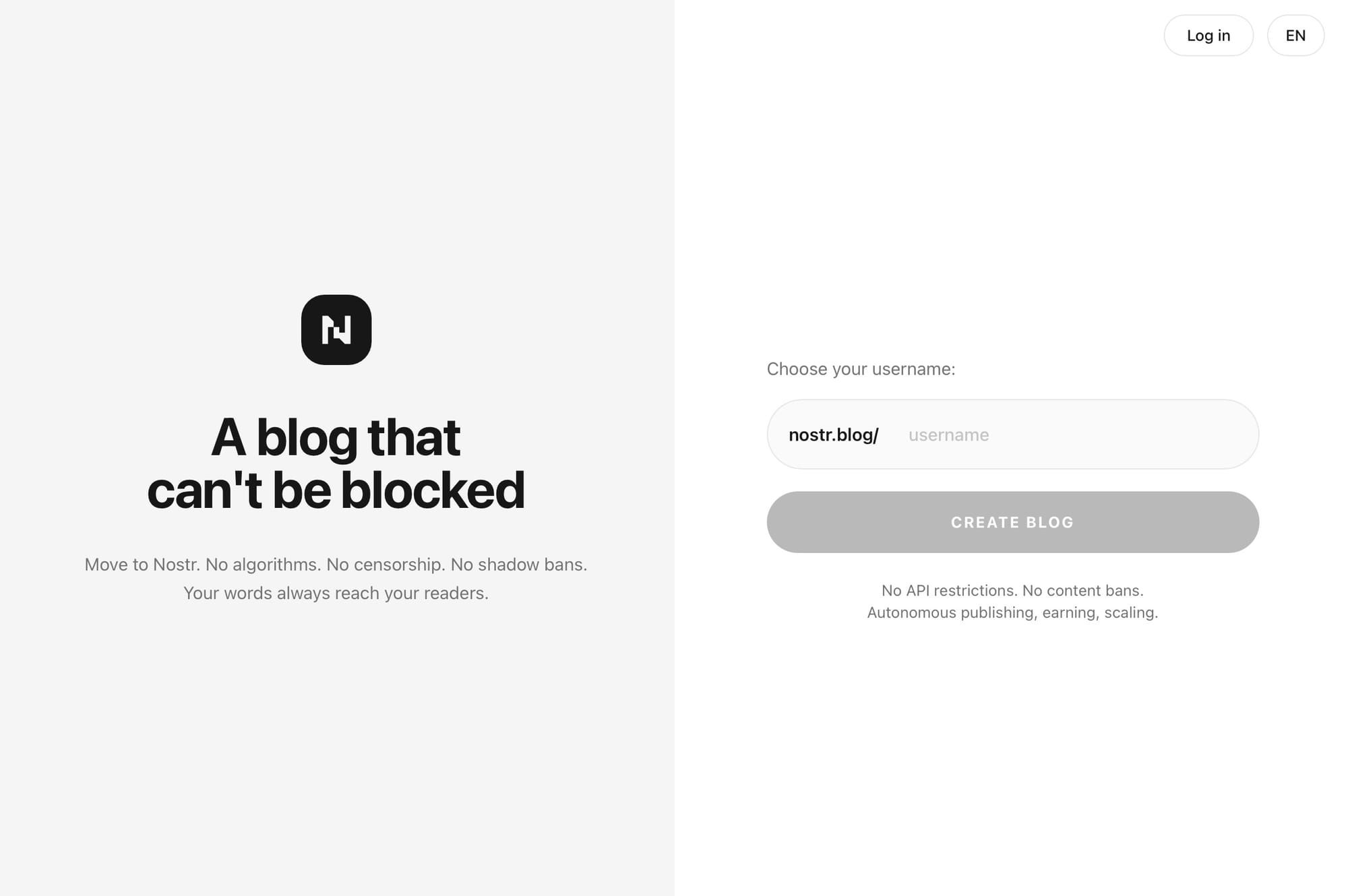
The clients that get the most attention in the Nostr ecosystem are built around short-form content, the Twitter-shaped use case. Nostr.blog occupies a different space, built for writers who need more than a few hundred characters.
What makes it worth looking at specifically is that it applies the same ownership logic to long-form publishing rather than just to social posting. The content you publish on Nostr.blog is signed with your key and distributed across relays the same way a short post would be. The media library organizes your content like a local file system rather than an upload queue, because the relationship to your content is structurally different from uploading to a platform that stores it on your behalf.
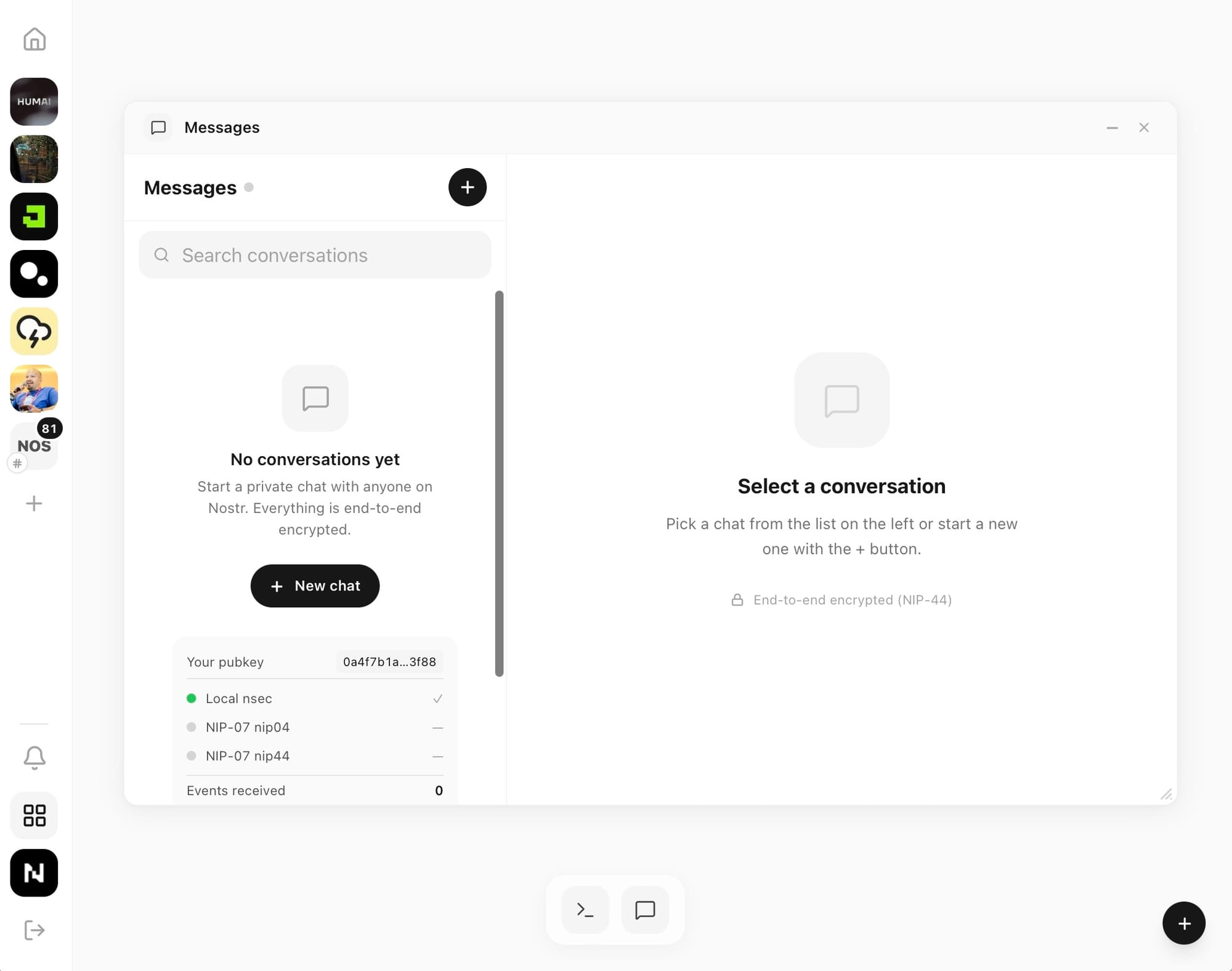
The monetization layer runs through Lightning, the Bitcoin payment network, which enables readers to send direct payments to writers for individual pieces without a platform intermediary. The Terminal gives users direct access to the protocol itself, which is the kind of feature that signals something about the product's philosophy: it is not trying to hide the infrastructure from you. For writers who want to understand what they are publishing on and why it is different, that access is part of the value.
The audience on Nostr is smaller than any major social platform, and Nostr.blog's audience is smaller still relative to something like Substack. This is the honest trade-off and there is no point obscuring it. The question it poses is whether publishing on infrastructure you genuinely own, where your identity is cryptographic and your content is signed rather than deposited, is worth the difference in starting audience size.
Why This Is Not Just Another Social Network
The deepest answer to the question in the headline is that Nostr is not competing with Instagram or Twitter the way a new restaurant competes with existing ones. It is operating at a different layer of the stack.
Instagram and Twitter made product decisions. They built features, ran algorithms, set policies, and managed the experience from top to bottom. Nostr made a protocol decision: it defined the rules for how messages are formatted and signed, and then left everything else to the people who build on top of it.
Product decisions can be reversed by the company that made them. A protocol decision that achieves broad adoption is much harder to undo, because the value is in the network of people and tools that depend on the standard, not in any single implementation of it. Email has not fundamentally changed in forty years not because it is perfect but because the cost of breaking the standard exceeds any benefit of replacing it.
Nostr is early enough that its long-term adoption is genuinely uncertain. But it is asking the right question: what if the identity layer of social communication was a protocol rather than a product? What if the answer to who controls your identity on the internet was you, mathematically, rather than a company, contractually?
Those are not new questions. But Nostr is one of the more technically serious attempts to answer them that has appeared in some time.
FAQ
Do I need to understand cryptography to use Nostr? No. Generating a key pair is handled by whatever client you use. The cryptographic complexity is abstracted away the same way HTTPS encryption is abstracted away when you visit a website. You benefit from it without needing to understand how it works at the mathematical level.
What happens if I lose my private key? Your identity is gone. There is no account recovery because there is no company holding your credentials. This is the trade-off for true ownership: the key is yours, which means the responsibility for keeping it is also yours. Most clients offer ways to back up your key, and taking that step seriously is the most important security practice on Nostr.
Is Nostr related to cryptocurrency or blockchain? Nostr uses cryptographic key pairs for identity, which is a concept that overlaps with cryptocurrency, but it does not run on a blockchain and does not require any cryptocurrency to use. The Lightning payment integration on some clients and platforms like Nostr.blog is optional and uses Bitcoin's Lightning Network for micropayments, but basic Nostr usage has no cryptocurrency requirement.
How is Nostr different from Mastodon or other decentralized social networks? Mastodon uses a federated model where your identity is tied to a specific server. If that server shuts down, your identity and followers can be lost or migrated with effort. Nostr uses a key-based model where your identity is independent of any server. The relay network is also architecturally different from federation: you can publish to multiple relays simultaneously, and followers receive your content from whichever relay they connect to.
What is Nostr.blog specifically, and who is it for? Nostr.blog is a long-form publishing client built on the Nostr protocol, designed for writers rather than for short-form social posting. It handles the parts of the workflow that require infrastructure, media storage, content distribution, reader payments through Lightning, while keeping the content signed to your key and distributed across relays rather than stored on a single company's server. It is most useful for writers who want publishing infrastructure that operates on the ownership logic of the Nostr protocol rather than the license-based logic of conventional publishing platforms.
Why should I use Nostr if none of my audience is there yet? The honest answer is that audience size is a real consideration and Nostr's current audience is smaller than any major platform. The reason to establish a presence there now rather than later is the same reason to start an email list before you need it: the identity and content you establish there is yours from the beginning, and the cost of building it early is lower than the cost of rebuilding after a platform disruption makes it urgent.
Related Articles
 Mark
Mark Mark
Mark Mark
Mark