The pitch takes about ten seconds to understand, and that is entirely the point.
You are walking to a meeting and an idea surfaces. You are in the shower and suddenly remember a follow-up email you forgot to send three days ago. You are driving and the title of a book someone mentioned last week finally resurfaces.
In every one of these cases, the standard solution is to reach for your phone, unlock it, navigate to a notes app, and type before the thought dissolves. That sequence takes long enough, and requires enough attention, that a meaningful percentage of fleeting thoughts simply do not survive it.
The Pebble Index 01 is Eric Migicovsky's answer to that problem.
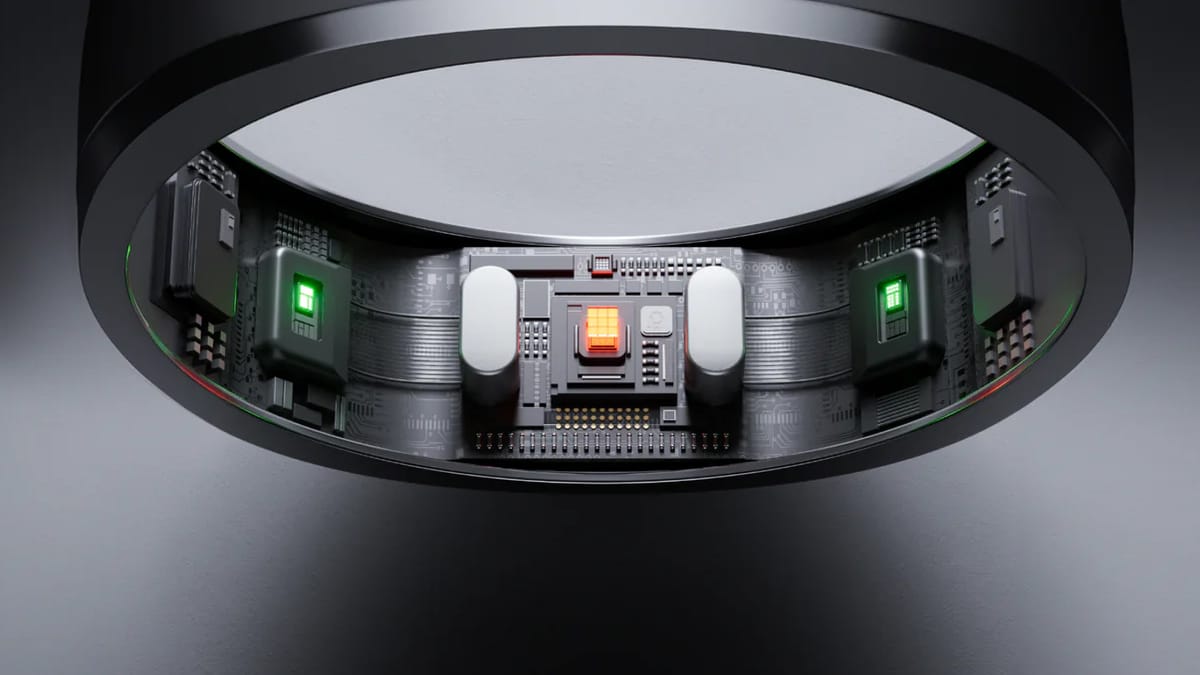
Press and hold the single button on the side of a stainless steel ring. Speak your thought. Release. The ring stores the audio locally, syncs to your phone when nearby, and an on-device AI model transcribes the recording and routes it to the right place: a note, a reminder, a timer, or an answer to a question.
No unlocking. No app navigation. No subscription fee. No charging.
The device was announced in December 2025 and shown at CES 2026, where it stood out at a show crowded with AI hardware that could not clearly articulate what problem it was solving. The Index 01 could. Android Authority named it the best thing at the show. An Android Police reviewer bought one on the show floor. Pre-orders opened at $75 and the retail price settled at $99 after March 2026.
Quick Specs
| Detail | Spec |
|---|---|
| Price | $99 (was $75 preorder) |
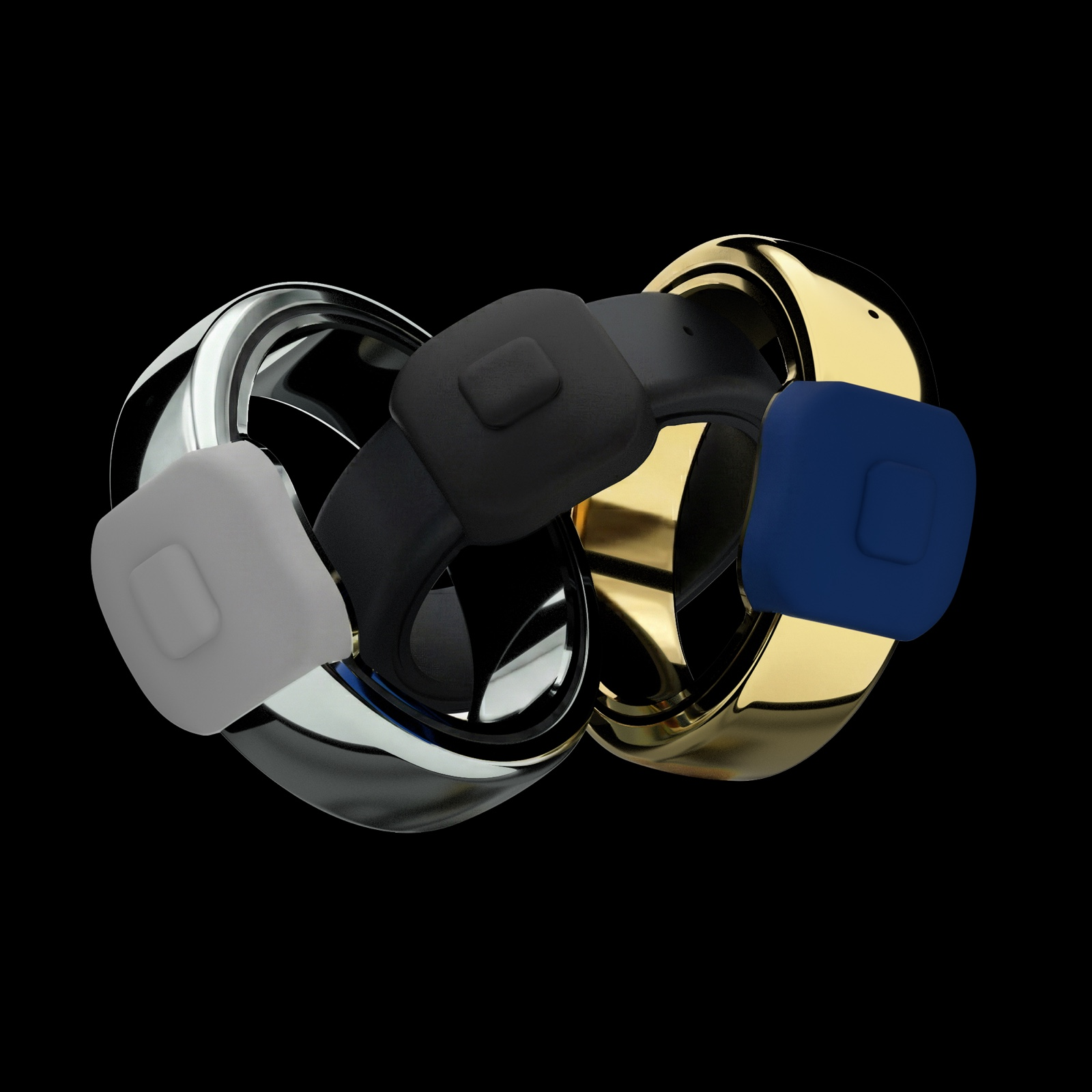
| Colors | Silver, polished gold, matte black |
| Sizes | 8 options (size 6–13) |
| Battery | Non-rechargeable, ~2 years average use |
| Local storage | Up to 5 minutes of audio |
| Water resistance | Yes (shower/rain safe, not for submersion) |
| Works with | iOS and Android |
| Subscription | None |
| AI processing | On-device (open-source models) |
| Powered by | Claude (for question-answering mode) |
Who Made This, and Why That Background Matters
Pebble's Second Act
Eric Migicovsky founded the original Pebble smartwatch company, which launched via Kickstarter in 2012 and raised over $10 million — one of the largest crowdfunding campaigns in history at the time. Pebble popularized the smartwatch before Apple and Samsung entered the category. The company was acquired by Fitbit in 2016.
Migicovsky is candid about how it ended: "I didn't earn any money during Pebble. We exited, but it was not a great exit." Fitbit was later acquired by Google in 2021.
When Google open-sourced significant parts of PebbleOS, it created the technical foundation for a revival. Migicovsky founded Core Devices, relaunched the Pebble brand, shipped the Pebble 2 Duo smartwatch to a sold-out first run, and collected 25,000 preorders for the Pebble Time 2 with its color e-ink display.
The Index 01 is the first completely original hardware from the new company.
Core Devices operates with five people, is self-funded, and is built for profitability from day one rather than venture-backed hypergrowth. Migicovsky is explicit about the model: "There's a time and a place for building a venture-backed startup. What I'm doing now is trying an alternative path, which is start from profitability."
That context shapes the Index 01 more than the spec sheet does. This is not a product designed to capture a market or establish a platform. It is designed to solve one specific problem well, at an accessible price, and grow from there.
What the Index 01 Is — and What It Deliberately Is Not
The Hardware
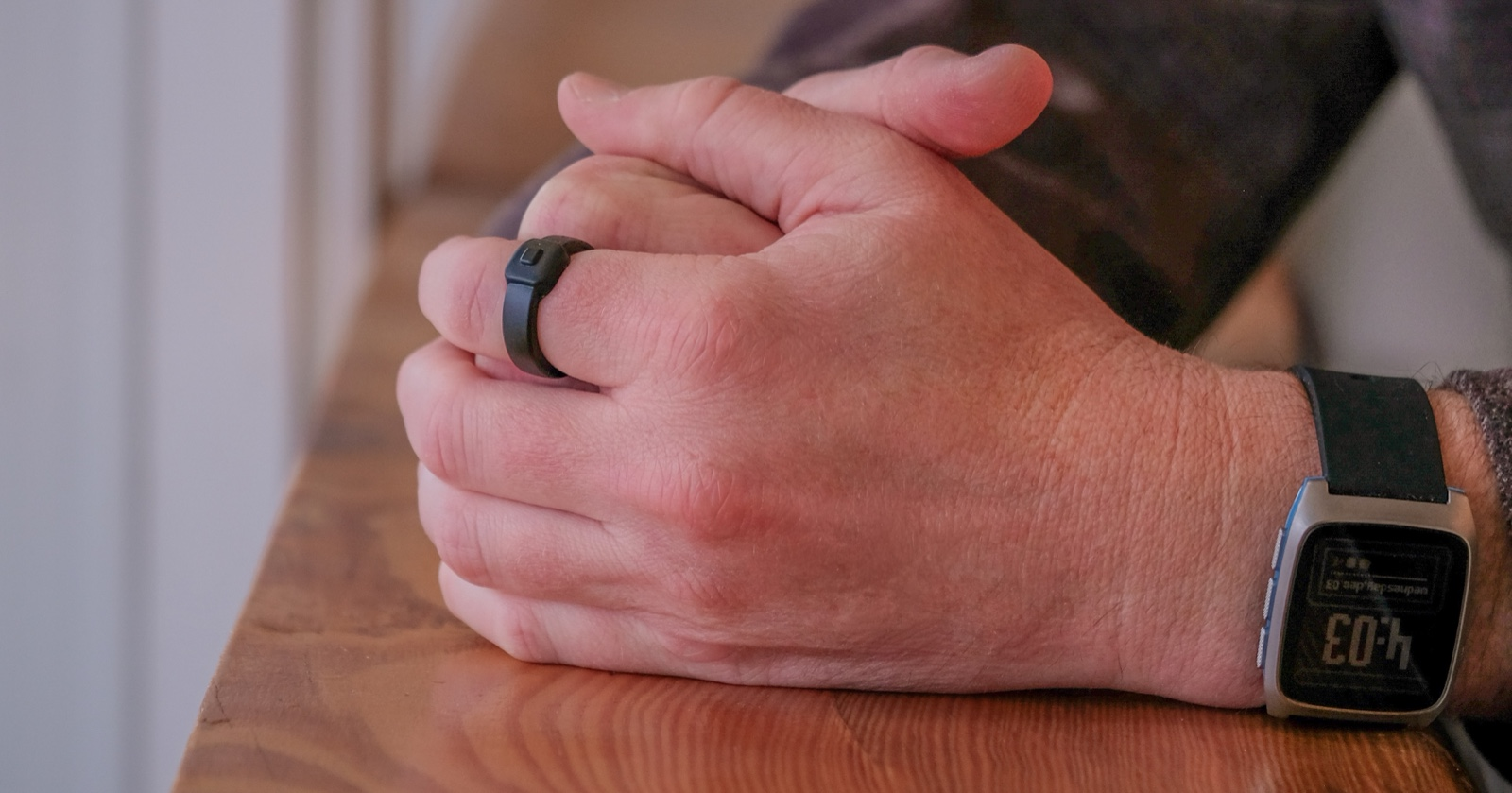
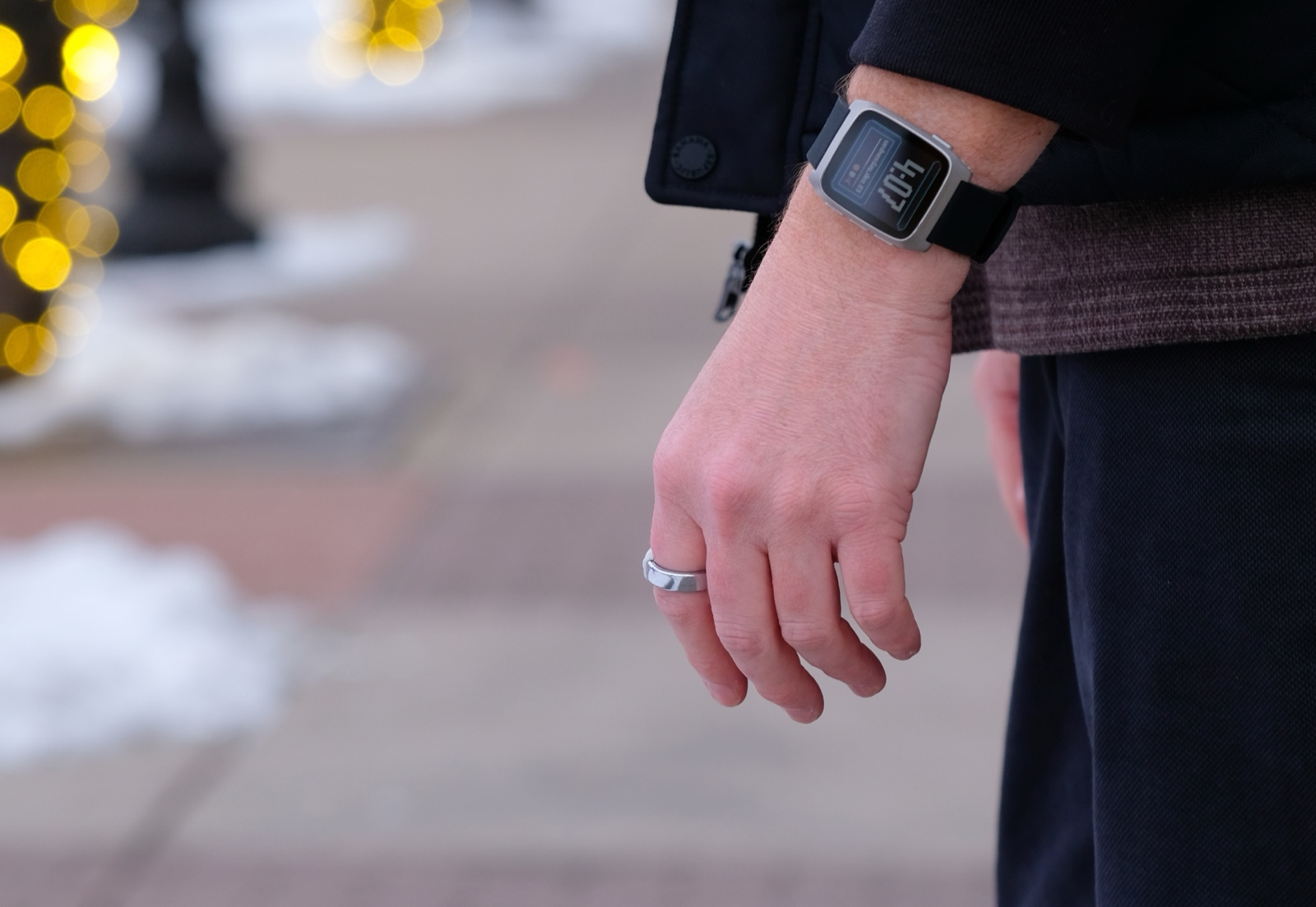
The ring is stainless steel, sized like a wedding band, and worn on the index finger. Migicovsky arrived at that placement after experimenting with gesture controls and voice activation, and concluded that a physical button accessible to the thumb of the same hand was the most reliable and discreet interaction model.
Inside the ring:
- A single microphone
- A Bluetooth chip
- A non-rechargeable battery
The button protrudes visibly from the band. Some reviewers noted the aesthetic; Android Authority described the overall device as "incredibly lightweight and much slimmer" than an Oura Ring 4, comparable in profile to a wedding band.
The battery deserves its own attention. It is not rechargeable and cannot be replaced. At average use (10 to 20 short recordings per day), it lasts roughly two years and supports approximately 12 to 14 hours of total recording time. When the battery dies, the user ships the ring back to Core Devices for recycling.
Migicovsky frames this as a deliberate trade-off: no dock to forget, no battery percentage to monitor, no dead device at a critical moment. Reviewers consistently noted that the "always available" psychology of a ring that never needs charging changes how you relate to wearing it. You never take it off. Which means it is always there when you need it.
The ring can store up to five minutes of audio locally, so it keeps recording even out of Bluetooth range and syncs everything when the connection is restored.
The Software
When a recording reaches your phone, everything is processed on-device using open-source AI models in the Pebble app:
- An open-source speech-to-text system converts audio to text locally
- A separate on-device LLM classifies the clip and routes it appropriately
- A reminder becomes a reminder. A timer request sets a timer. A note goes to notes.
No internet connection required. No data sent to a server.
There is an optional cloud-based transcription mode that produces better results for accented speech or noisy conditions. It stays opt-in, which is a meaningful privacy distinction in a category where competitors default to cloud processing.
The button is also programmable. A single press, a double press, and the press-and-hold recording gesture can each be assigned to different actions:
- Music playback controls
- Camera shutter trigger
- Beeper messages (Migicovsky's own universal chat app)
- Custom voice actions via MCP integration for developers
A double-click followed by a hold switches from recording mode into question-answering mode, powered by Claude, without touching or unlocking the phone.
How It Compares to the Competition
The most direct competitor is the Sandbar Stream Ring from two former Meta interface designers, which calls itself "a mouse for voice." It offers note capture, AI assistant chat, and music control at $249, with a $10 per month subscription for unlimited AI interactions.
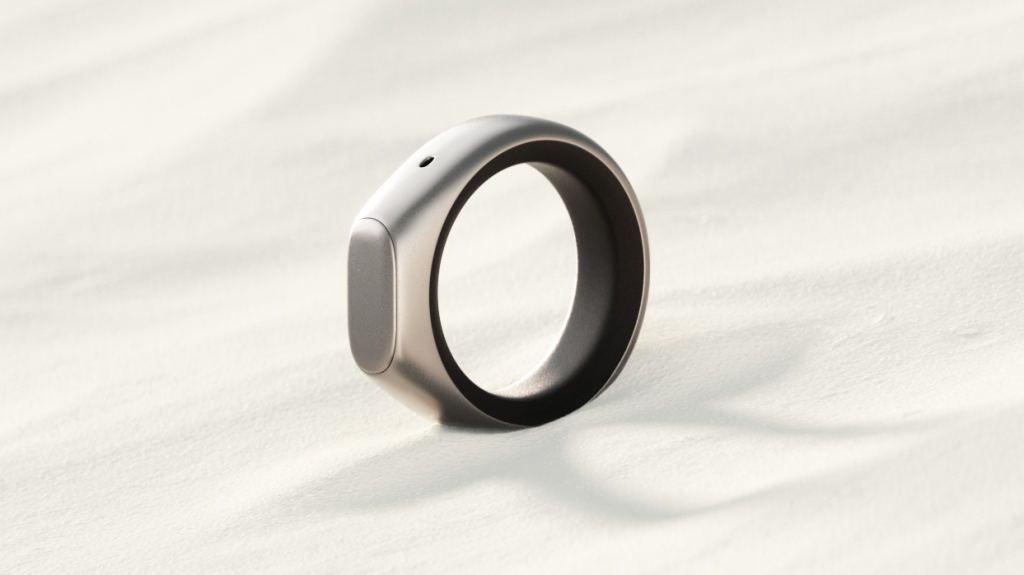
The comparison is straightforward: the Stream Ring costs more than twice as much, adds ongoing subscription costs, and does more. The Index 01 costs $99, has no subscription, and does significantly less. Which one wins depends entirely on what the buyer needs.
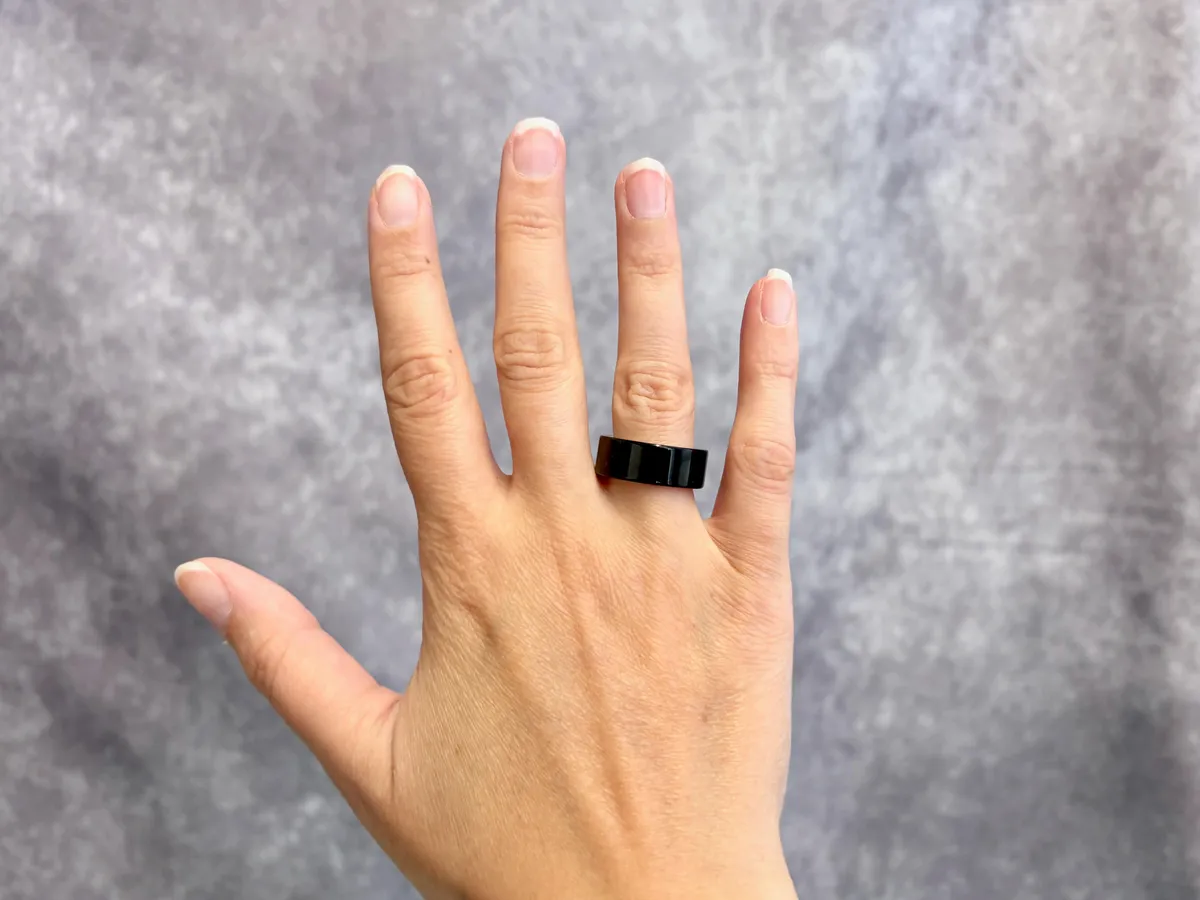
The broader smart ring market — the Oura Ring 4 at $349 and the Samsung Galaxy Ring at $399 — is not directly competitive. Both are health tracking platforms. The Index 01 shares the ring form factor and nothing else with either device.
| Product | Price | Subscription | Core Function | Battery |
|---|---|---|---|---|
| Pebble Index 01 | $99 | None | Voice note capture | ~2 years, non-rechargeable |
| Sandbar Stream Ring | $249 | $10/month (Pro) | Voice notes + AI chat | Rechargeable |
| Oura Ring 4 | $349 | $5.99/month | Health tracking | ~7 days, rechargeable |
| Samsung Galaxy Ring | $399 | None | Health tracking | ~7 days, rechargeable |
Migicovsky has been explicit about his positioning: "I'm not trying to build some AI assistant thing. I build things that solve one main problem, and they solve it really well."
The Design Philosophy: One Problem, Solved Well
The pattern in Migicovsky's product history is consistent. The original Pebble did not try to be a phone on your wrist. It tried to surface notifications and control music without requiring you to take your phone out. It did those things well at an accessible price and built a loyal following before being overtaken by manufacturers with vastly larger resources.
The Index 01 follows the same template.
Every design trade-off in the product reflects the same prioritization of reliability over sophistication:
- Physical button over gestures or wake words. Less technically impressive, more reliable, harder to trigger accidentally.
- Non-rechargeable battery over rechargeable. Less flexible, but always available.
- On-device AI over cloud processing. Less capable in edge cases, faster for common cases, private by architecture rather than policy.
- $99 price over premium positioning. Designed to be replaced rather than to extract subscription revenue.
That last point is unusual. Core Devices priced the hardware to be replaced, acknowledged that the battery will eventually die, and built a recycling program around the planned obsolescence rather than pretending it does not exist. In a category defined by overclaiming, that transparency earns some trust.
The Context: What Came Before
The AI hardware space has not been kind to ambitious wearables. The Humane AI Pin launched at $699 plus a $24 monthly subscription and effectively shut down within a year. The Rabbit R1 generated strong initial excitement and rapid abandonment. Both products overpromised on ambient AI and underdelivered on execution.
The Index 01's refusal to overclaim may be its most strategically intelligent quality.
Who Should Buy It — and Who Should Skip It
The Index 01 is for you if:
- You regularly lose thoughts before you can capture them
- You want to record ideas without unlocking your phone
- You have tried voice memos but find the activation friction too high
- You do not need health tracking in a wearable
Skip it if:
- Your thought-capture process already works
- You want a wearable that also tracks sleep, heart rate, or fitness
- The idea of a $99 device with a two-year planned lifespan is a deal-breaker
- You want an AI assistant rather than a note-capture tool
Migicovsky has said this plainly: "If your memory already holds everything you need, this ring solves no problem you have."
The disposable battery is the most significant objection, and it is a legitimate one. Accepting a planned two-year lifespan requires either comfort with the replacement economics at $99 or genuine alignment with the framing that removing charging anxiety is worth it. There is no right answer — only whether that trade-off fits your life.
The absence of health tracking is not a missing feature. It is a deliberate choice that keeps the device slim, inexpensive, and battery-efficient enough to last years rather than days. Adding sensors would require a rechargeable battery, which would add the charging friction that the entire product is designed to eliminate.
The Bigger Picture
The AI wearable category's first generation was defined by products that set ambitious expectations and struggled to deliver on them. Always-listening devices raised privacy concerns. Cloud-dependent devices failed without connections. Products that tried to replace the smartphone created more friction than they eliminated.
The Index 01 is a deliberate counter-narrative.
It is not always listening. It processes data locally. It does not try to replace the smartphone — it reduces one specific friction point in using it. The AI is invisible in normal use: the LLM classifies the recording quietly when it syncs, and the user experiences a correctly sorted note, not a model.
That positioning was visible at CES 2026, where reviewers who had spent days evaluating AI gadgets that required explanation to justify their existence described the Index 01 as the clearest value proposition on the floor.
One reviewer put it directly: "Here was a device that did what hundreds of other gadgets I saw at CES 2026 couldn't: do one thing really well."
At $99, no subscription, and on-device processing, the Index 01 makes a coherent argument for what AI hardware should look like when the goal is utility rather than demonstration. Whether that argument holds up over months of daily wear depends on how well the transcription and classification work in real-world conditions. But coherence is a higher bar than most of the category currently clears.
Frequently Asked Questions
What is the Pebble Index 01, and how does it work?
The Pebble Index 01 is a $99 smart ring with a single button and a built-in microphone. Press and hold the button, speak your thought, and release. The ring stores audio locally and syncs to the Pebble app on your phone, where on-device AI transcribes the recording and routes it to the right destination: a note, a reminder, a timer, or an answer to a voiced question.
How long does the Pebble Index 01 battery last?
The non-rechargeable battery lasts approximately two years with average use of 10 to 20 short recordings per day. The ring supports roughly 12 to 14 hours of total recording time across its lifetime. When the battery dies, users ship it back to Core Devices for recycling. There is no charging dock.
Does the Pebble Index 01 require a subscription or internet connection?
No. There is no subscription fee and no internet connection required for core functionality. All AI processing runs locally on the smartphone through the Pebble app using open-source models. An optional cloud transcription mode is available for improved accuracy but is not required.
How does the Index 01 compare to the Oura Ring and Samsung Galaxy Ring?
The comparison is largely irrelevant because the products do different things. The Oura Ring 4 and Samsung Galaxy Ring are health tracking platforms with heart rate sensors, sleep analysis, and fitness metrics, priced at $349 and $399 respectively. The Index 01 has no health sensors. It exists solely to capture voice notes. The shared form factor is the only meaningful overlap.
Who is Eric Migicovsky, and what is Core Devices?
Eric Migicovsky founded the original Pebble smartwatch company in 2012, one of the most successful Kickstarter campaigns in history before being acquired by Fitbit in 2016. After Google open-sourced PebbleOS, Migicovsky founded Core Devices — a five-person, self-funded company — to revive the Pebble brand. Core Devices has shipped the Pebble 2 Duo and has 25,000 preorders for the Pebble Time 2. The Index 01 is its first completely original product.
What makes the Index 01 different from other AI voice note devices?
The Index 01 is lower-priced than competitors like the Sandbar Stream Ring, carries no subscription, uses on-device AI rather than cloud processing, and eliminates charging through a non-rechargeable battery. It does not offer AI chat or health tracking. The design is intentionally narrow: one problem, solved reliably, rather than many features done adequately.
Related Articles
 Dani
Dani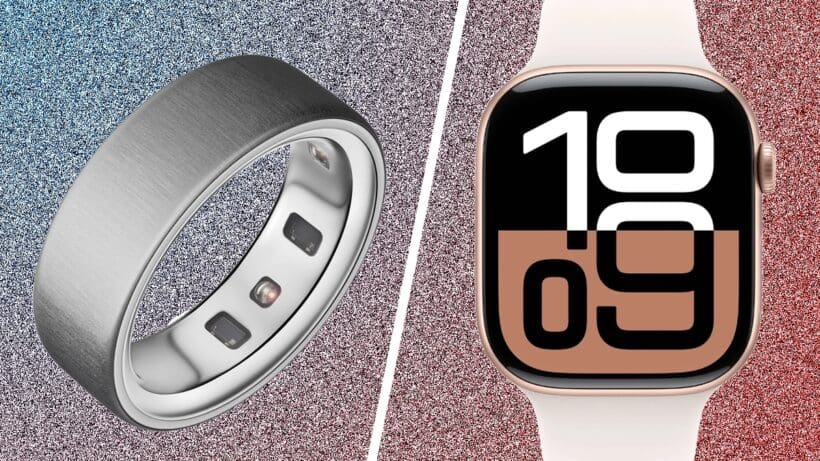
 Dani
Dani
 Dani
Dani