

The Pattern You Might Not See
You've started a dozen projects. Bought courses you never completed. Downloaded apps you opened once. Collected tools, books, ideas — all with genuine excitement, all abandoned somewhere between "this is amazing" and "done."
You're not lazy. You're not undisciplined. You might be caught in a loop.
This is about a psychological pattern that affects creators, entrepreneurs, learners, and anyone with a curious mind. It's the tendency to live in potential rather than results. To start rather than finish. To accumulate beginnings while avoiding endings.
I discovered this pattern through an unexpected lens: music production. But once I saw it, I started noticing it everywhere — in work, relationships, learning, and life itself.
How I Found the Loop
I have a hobby and a passion—sometimes I make music on hardware instruments. Over the years, I've collected synthesizers, drum machines, sequencers — some of them expensive flagship units that people post reverently on Instagram.
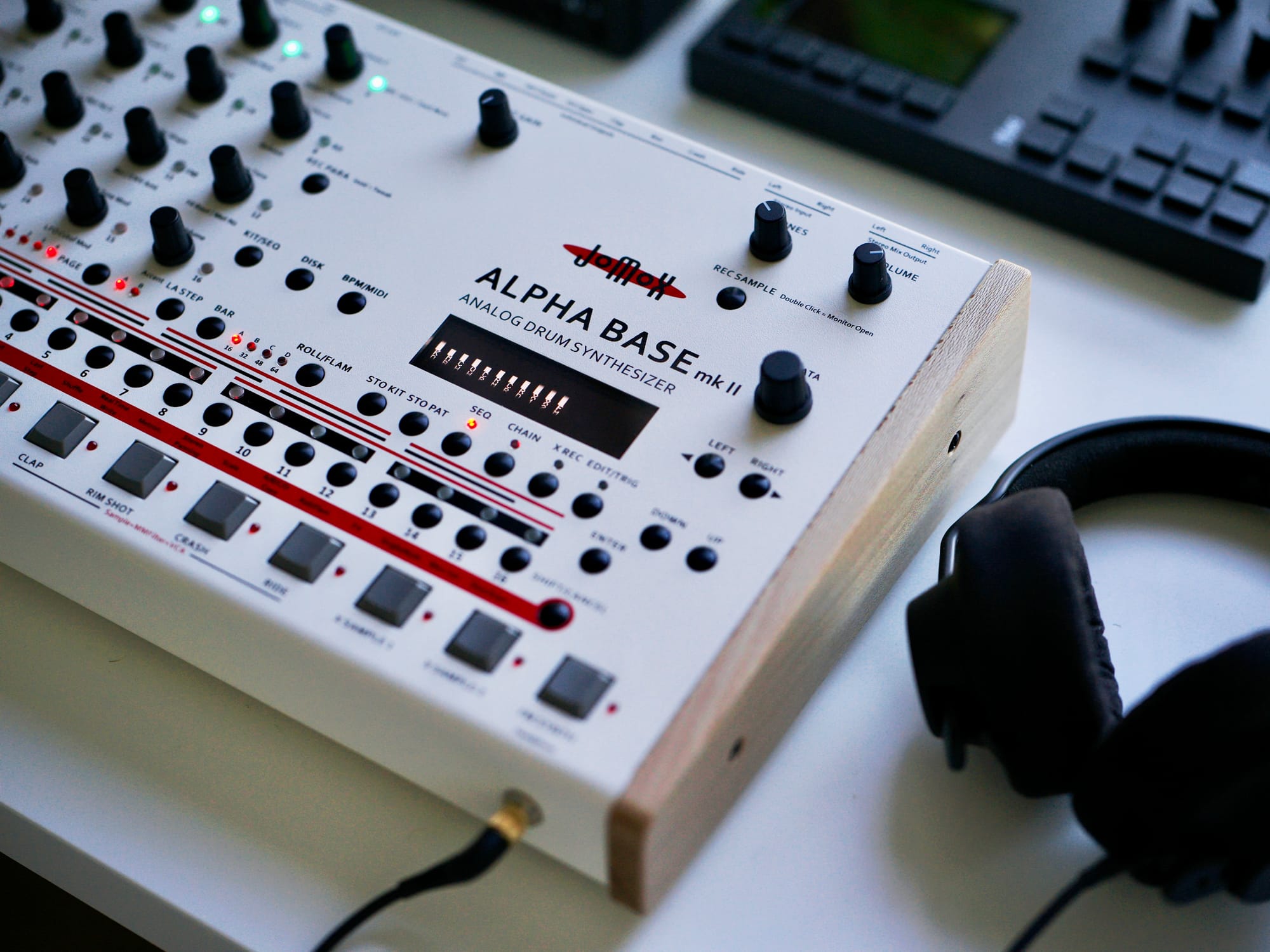
But here's the strange part: I'm not really a musician. I mean — I know a lot about music, I understand sound design, I can spend hours tweaking knobs and creating patterns. But I've never released a single complete track.
The cycle was always the same. Buy a new instrument — excitement, anticipation. First session — play, listen, marvel at the sounds. Second session — figure out the features. Third session — record something. Fourth session — put it on the shelf. Done. I've "figured it out." No longer interesting.
I liked owning it. I liked knowing I could return to it whenever I wanted. But I only returned when I'd forgotten how it sounded.
And then it hit me: in all my years of making music, I never moved beyond loops.
I made patterns. Lots of patterns. 20, 30, 40 of them. Hoping I'd somehow combine them into a live set. Never happened. I made loop samples to sell. But never a complete composition.
I told myself that making a full track was complex, tedious, boring. But the truth was simpler: I was afraid of finishing.
Loops vs Tracks
What insight did I realize for myself through the lens of my musical creativity?
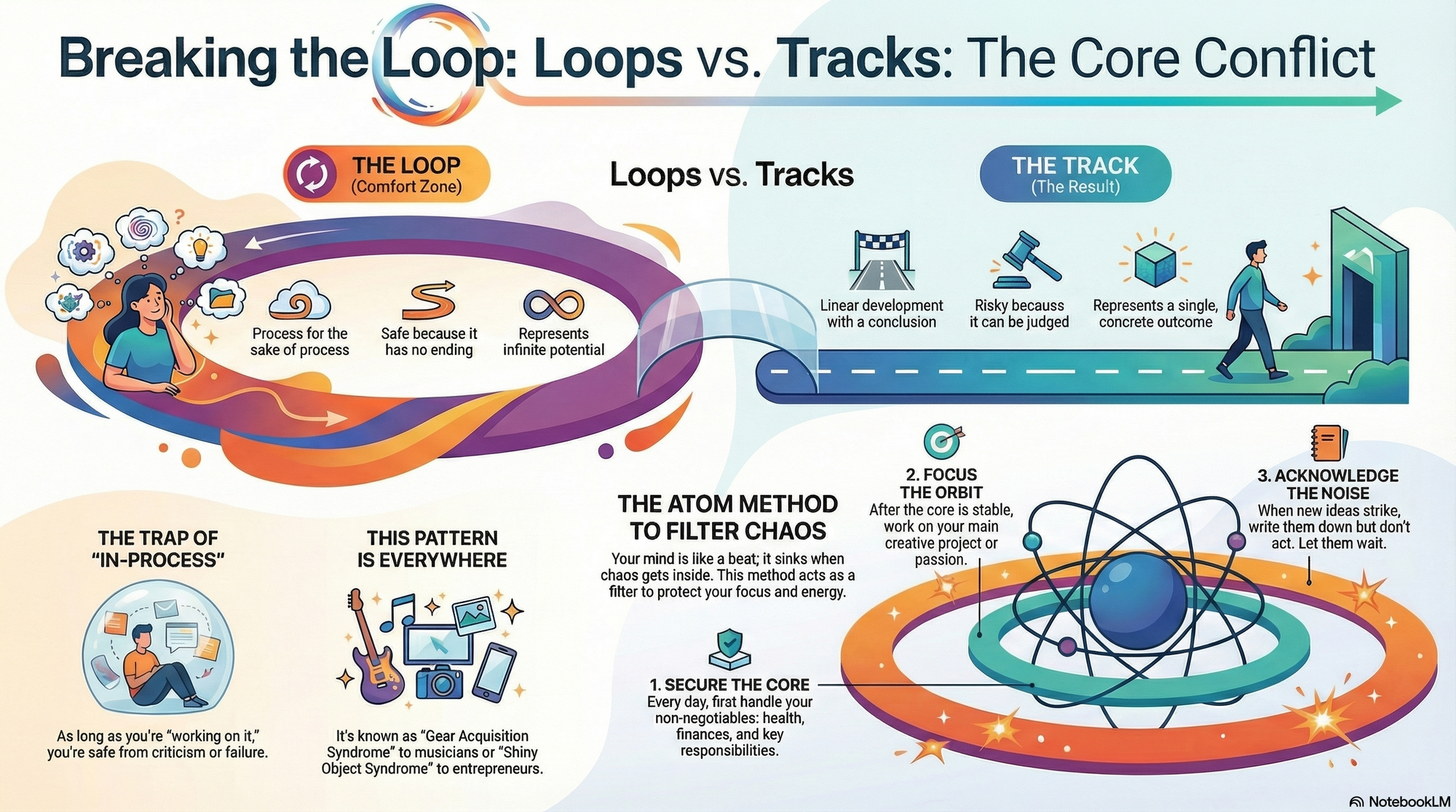
A Loop is a comfort zone. It's process for the sake of process. It's safe because it's circular — it has no ending. This is a quick result that doesn't require development; as a structure, it essentially has neither a beginning nor an end—it is simply endlessly looped without any progression. It is a moment.
A Track is a result. It's linear development with a conclusion. It's the risk of being judged. A complete track and composition is something that pushes you beyond your comfort zone, it's a long journey where everything changes, and it must have its own distinct phases: a beginning, a climax, and an end.
For years, I chose loops.
This isn't just about music. It's a metaphor for how we approach everything.
The Trap of Infinite Potential
I was living in the impulse of possibility. Every new synthesizer was potential. Every new pattern was the beginning of something great. Every idea was "what if this becomes a masterpiece?"
But potential stayed potential. I never put a period at the end of a sentence. Never said "it's done." Because "done" means the end of possibilities. It's a concrete result that can be evaluated, criticized, rejected.
As long as you're "in process," you're safe. You can always say "I'm still working on it."
And so I spun in this loop for years: new instrument → figured it out → lost interest → new instrument. Endless loops instead of tracks. Endless beginnings instead of completions.
GAS: Buying Future Success
In music gear communities, there's a term: GAS — Gear Acquisition Syndrome. It's usually explained as consumerism or the search for a "magic button."
But I think it goes deeper. Buying an instrument gives you the feeling that you've already become better, already almost created a masterpiece — even though you haven't started yet. It's selling yourself future success without present effort.
A new synthesizer isn't a tool. It's a promise. And as long as you haven't truly tried to create something with it, the promise remains untouched. Perfect.
This applies far beyond music gear. New courses. New apps. New business ideas. New relationships. We collect promises.
This Pattern Is Everywhere
Once I recognized it, I started seeing the same pattern in completely different contexts.
Leonardo da Vinci — one of the greatest geniuses in history — was exactly like this. His unreliability was so well known that the Duke of Milan wanted him to sign a contract obligating him to finish work "within the stipulated period." In his entire lifetime, he left fewer than 17 paintings, and several of them unfinished. The Mona Lisa took over 15 years.
On his deathbed, Leonardo lamented that he had "offended God and mankind in not having worked at his art as he should have done."
In business, it's called "Shiny Object Syndrome." Nine out of ten entrepreneurs admit they've struggled with it. There's even a term: "serial starter" — someone who gets tired of operational work and jumps to the next idea instead of finishing what they started.
In psychology, it's called "novelty seeking." People high in this trait are characterized by a tendency to get bored easily and a need for constant change.
The programmer with a dozen unfinished side projects. The entrepreneur who starts a new business every year but never reaches profitability. The person who falls in love with a partner's "potential" but loses interest once they truly know them. The eternal student who starts a hundred courses but completes none.
It's all the same pattern. And it can consume your entire life.
How to Filter the Chaos: The Atom Method
There's an old saying: a boat doesn't sink because it's in the water — it sinks because water gets inside it.
The same applies to your mind. Chaos around you isn't the problem. The problem is when you let it in without a filter.
You've probably heard of "Eat the Frog" — the productivity method where you tackle your hardest task first thing in the morning. My approach is similar, but I think of it differently. I call it pushing off from the core.
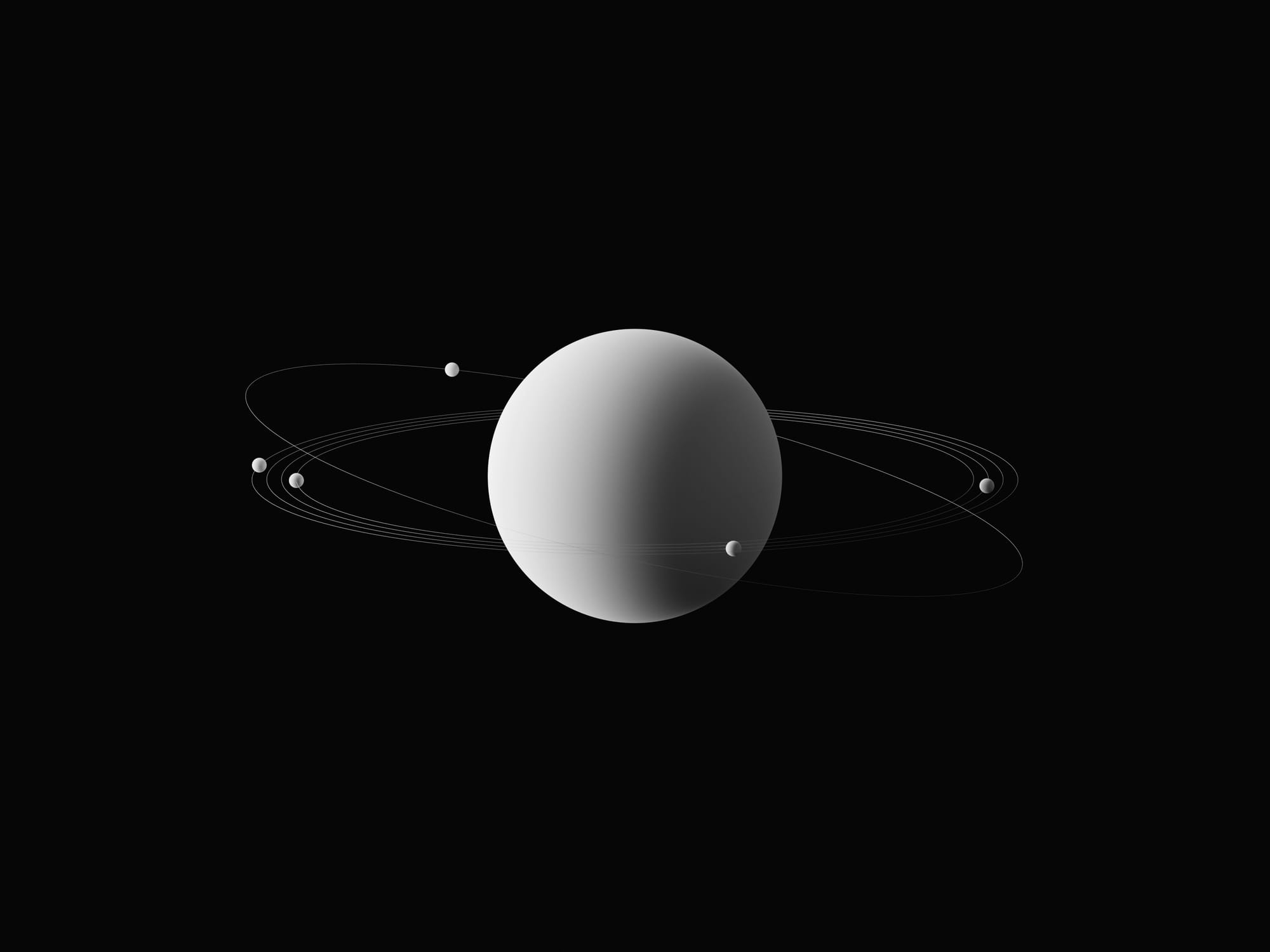
Imagine yourself as an atom. You have three layers:
The Core — this is what holds you together as a functioning human being. Your health. Your finances. Your responsibilities. Your non-negotiables. These aren't exciting, but without them, you fall apart. Every morning, before anything else, identify what belongs to the core today — and do it. No negotiation. No "I'll do it later." This is gravity. You don't argue with gravity.
The Orbit — this is what you do for your soul. Creative work. Learning. Passion projects. Things that don't pay the bills but feed your growth and potential. Once the core is handled, you move here. Pick one or two things. Move them forward. Not everything — just what matters today.
The Noise — this is everything else. The million ideas that hit you throughout the day. The sudden urge to start something new. The shiny objects. The "what if I tried this instead?" thoughts. This is where most people lose themselves. They react to noise as if it's signal. They let it pull them away from both the core and the orbit.
Here's the key: don't fight the noise — just don't let it in.
When a random idea strikes, don't act on it. Write it down in a notebook and move on. That's it. You're not rejecting it forever. You're just acknowledging that it wasn't part of your plan. It can wait. You can always return to it — in a calm moment, when you're grounded, when you can actually evaluate whether it matters.
The noise isn't dangerous by itself. What's dangerous is the reflex to react to it immediately. That's what pulls you away from the core. That's what keeps you spinning between beginnings without ever reaching an end.
Push off from the core. Move through the orbit. Let the noise stay outside.
And then — return to the core. Rebuild it. Day after day.
Without a stable form, you dissolve. You become indistinguishable from the chaos around you.
Discipline is the only tool that gives you form. And here's what most people get wrong: discipline isn't a limitation. It's liberation. It's what frees you from everything that doesn't matter — from the noise, the distractions, the endless pull of "maybe this instead."
Discipline isn't a cage. It's a spine. Without it, you collapse into shapelessness.
That's how you stop the water from sinking your boat.
That's how you stop the water from sinking your boat.
Three States of Being
As I tried to understand how this works, I identified three possible states:
First: You're in the noise. You react to every impulse. New idea — you grab it. New tool — you buy it. New project — you start it. Nothing gets finished because the next shiny object is already calling. You're constantly in motion but never arriving anywhere.
Second: You're between the core and the noise. You have some foundation — work, obligations, routine. But the rest of your time is spent bouncing between ideas. You do the minimum necessary, then disappear into endless exploration of possibilities. Loops instead of tracks. Plans instead of actions.
Third: You push off from the core. You have a stable foundation, and from it, you move toward completion. You choose one thing and finish it. Then the next. Each completed form becomes the foundation for something new.
For years, I lived in the second state. Sometimes I fell into the first. I rarely reached the third.
Why We Get Stuck
Potential is a drug. It gives dopamine without risk. You can endlessly plan, explore, begin — and feel productive. But it's an illusion of movement.
Finishing requires something different. It requires saying: "This is my result. It's not perfect, but it exists." That's scary. That's vulnerable. That's the end of all "what ifs."
One researcher studying da Vinci said: "ADHD is not linked to low IQ or lack of creativity but rather the difficulty of capitalizing on natural talents."
That's the key word: capitalizing. Turning potential into results. Talent is worthless if it never becomes form.
How to Break the Loop
Step one: Recognize that you're in it. Look at your life honestly:
- How many projects have you started and not finished?
- How many tools, courses, books have you bought and abandoned after the first encounter?
- Where are you creating endless "loops" instead of "tracks"?
- In what areas are you living in potential while avoiding completion?
Step two: Understand that finishing is not an end, but a beginning of the next level. You can't write a second track until you've finished the first. You can't scale a business until you've launched an MVP. You can't deepen a relationship while running from one "potential" to another.
Step three: Discipline. Nothing gives form to chaos like discipline. Not inspiration. Not motivation. Not a new tool. Discipline is the decision to finish even when it's no longer interesting. Especially when it's no longer interesting.
What I Did
I stopped making patterns. But not because I just "pulled myself together."
The problem was different: I simply didn't understand how to do it. How do you create a complete composition from patterns without using 100 layers in a DAW? Drum machines and sequencers are far more primitive. How do you do it within hardware limitations, with only 8 tracks and one-shots? How do you achieve transitions and development?
I searched for an answer for years and couldn't find a clear explanation anywhere.
Then I asked AI to help me figure it out. Together, we built a composition generator that shows how patterns assemble into a complete track structure. Which elements to introduce, when, how to create fills and transitions in a constrained environment.
And for the first time, I built something on my gear that wasn't just separate loops — it was a complete composition with development.
That was my first step beyond loops.
Sometimes it's not just about fear or procrastination. Sometimes you simply lack the understanding and knowledge to take the next step. And when you find the missing piece — the loop breaks.
Think about your own life. Is there something that keeps you from breaking out of your loop and moving forward?
It might not be a psychological block at all. It might be a simple lack of knowledge — a missing skill, a gap in understanding, an answer you've never found. And that gap keeps pulling you back to the same place, day after day.
You feel like you're moving. You're doing things. You're busy. But nothing ever reaches completion. No finish lines. No new beginnings that come from real endings.
That's the cruelest kind of loop: the illusion of progress. Motion without movement. Activity without results.
Ask yourself: what piece of knowledge might be missing? What would you need to understand to finally take the next step?
Sometimes the lock isn't in your head. It's just that no one ever gave you the key.
Three Insights to Take With You
1. "Done" is scary because it's the end of possibilities.
While a project is a draft, it can be genius. When it's finished — it is what it is.
2. Talent is worthless without form.
The ability to generate ideas (loops) is not the same as the ability to create products (tracks).
3. Infinite beginnings kill completions.
Serial starters live in an illusion of productivity.
A Question for You
Where in your life are you creating endless loops?
Maybe you don't need another course. Maybe it's time to finish what you started.
Maybe you don't need another tool. Maybe it's time to ship something.
All the potential in the world is worthless until it becomes form.
P.S. If you want a system for working with chaos — think about the atom metaphor: the core (the foundation that holds you), the orbit (what you're moving toward completion), the noise (what you note down and don't touch). But these are details. The main thing is to see the loop first.


