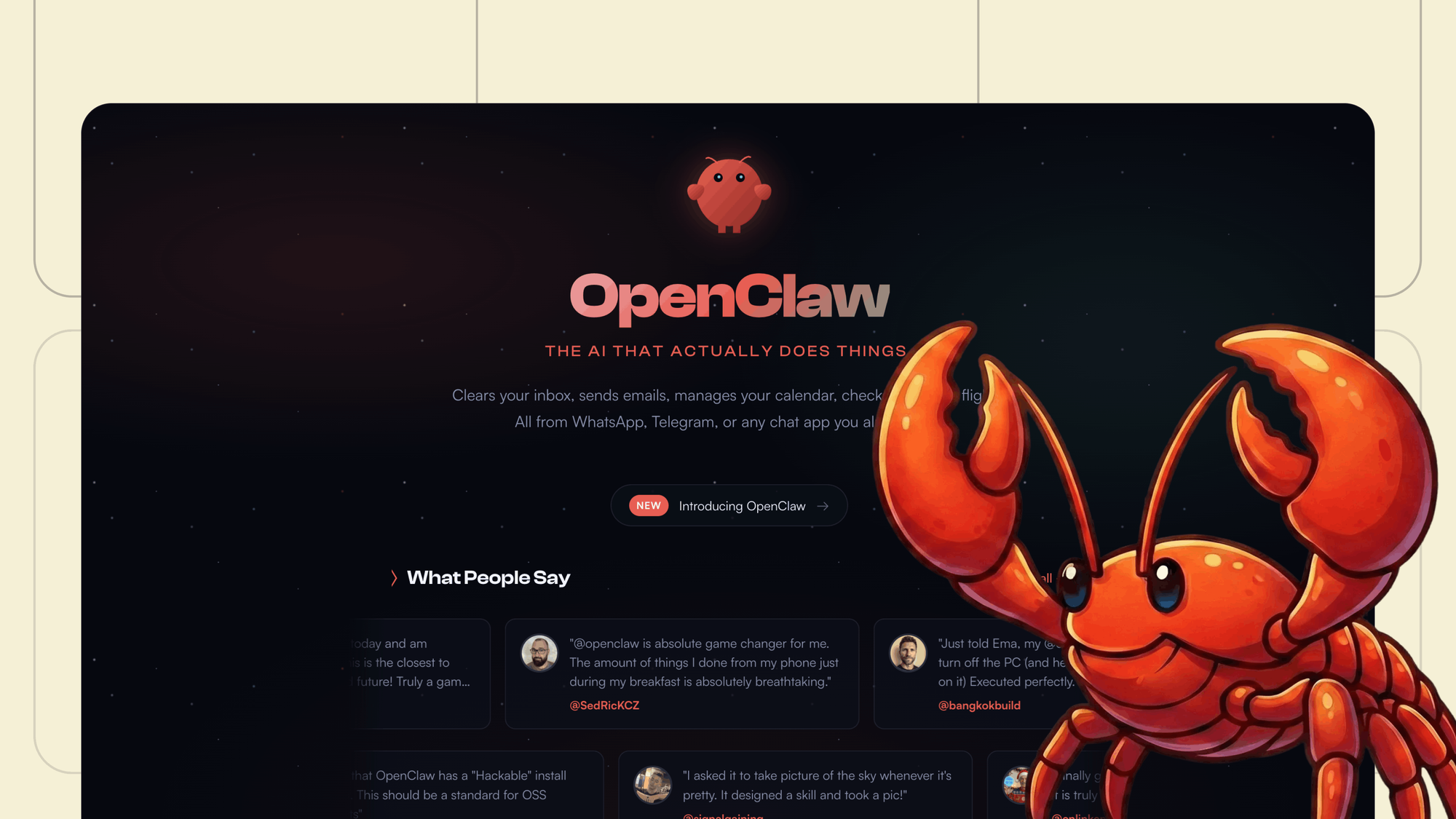
If you've been anywhere near Crypto Twitter, GitHub, or Hacker News over the past two weeks, you've probably seen the lobster. That distinctive red crustacean logo belongs to OpenClaw, an open-source AI agent that has somehow managed to capture the attention of everyone from individual developers tinkering on their Mac Minis to major blockchain platforms scrambling to integrate with it. The project's GitHub repository jumped from around 7,800 stars on January 24 to over 147,000 by early February, making it one of the fastest-growing open-source projects in recent memory.
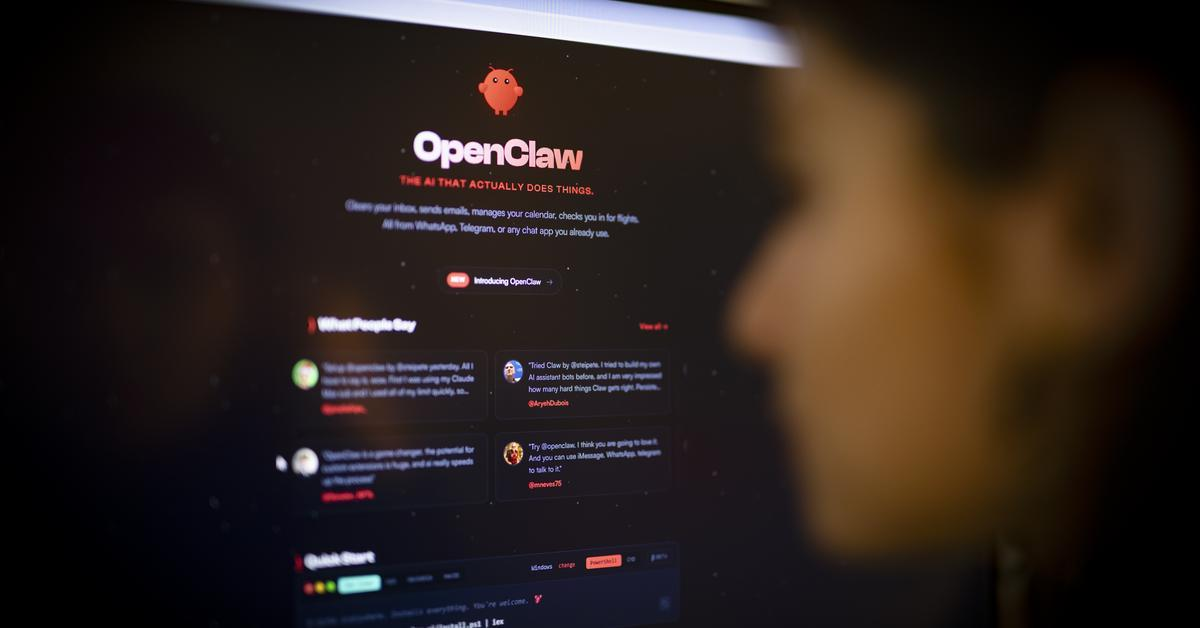
But OpenClaw isn't just another viral GitHub sensation that people star and forget. This tool is actively executing crypto trades, monitoring wallets around the clock, placing bets on prediction markets, and in some cases, running entire automated trading strategies while its owners sleep. Andrej Karpathy, the former AI director at Tesla, called the activity surrounding OpenClaw "genuinely the most incredible sci-fi takeoff-adjacent thing I have seen recently." Coming from someone who spent years building autonomous systems at one of the world's most ambitious tech companies, that's not a casual observation.
So what exactly is OpenClaw, and why does it matter for what comes next in crypto? The answer involves understanding a fundamental shift in how we interact with AI, the emerging concept of autonomous agents, and why the crypto community has become an unlikely proving ground for technology that could reshape how all of us work with software.
The Tool That Actually Does Things
To understand why OpenClaw has generated so much excitement, you first need to understand what makes it different from the AI tools most people have been using.
When you interact with ChatGPT or Claude, you're essentially having a conversation. You ask a question, the AI provides an answer, and then it's on you to actually do something with that information. Want to schedule a meeting? The chatbot might tell you how to do it, but you still need to open your calendar app and create the event yourself. Need to analyze a document? The AI can explain what it found, but you're the one who has to take the next steps.
OpenClaw operates on a completely different premise. This is what the AI industry calls an "agent," a system that doesn't just think and respond but actually takes actions on your behalf. Created by Austrian software developer Peter Steinberger, OpenClaw runs locally on your computer and connects to an AI model of your choice, whether that's Anthropic's Claude, OpenAI's GPT, or a locally-run open-source model. But here's the key difference: OpenClaw can access your files, run terminal commands, interact with websites, and execute tasks across dozens of different services and applications.
"Unlike Siri and Alexa, which chirp about weather, music, and timers and only execute specific commands, OpenClaw follows almost any order like a well-paid mercenary."
The practical implications are significant. Instead of asking an AI "how do I convert this PDF to a Word document?" and then following the instructions, you simply tell OpenClaw to do it. The agent figures out which tools it needs, installs them if necessary, executes the task, and reports back when it's done. This same principle extends to far more complex workflows, and that's where crypto enters the picture.
Why Crypto Traders Are Paying Attention
The cryptocurrency space has always been an early adopter of automation. Trading bots, portfolio trackers, alert systems, and automated yield farming strategies have been part of the crypto toolkit for years. But most of these tools operate within narrow parameters. A trading bot executes predefined strategies. An alert system sends notifications when certain conditions are met. Each tool does one thing reasonably well.
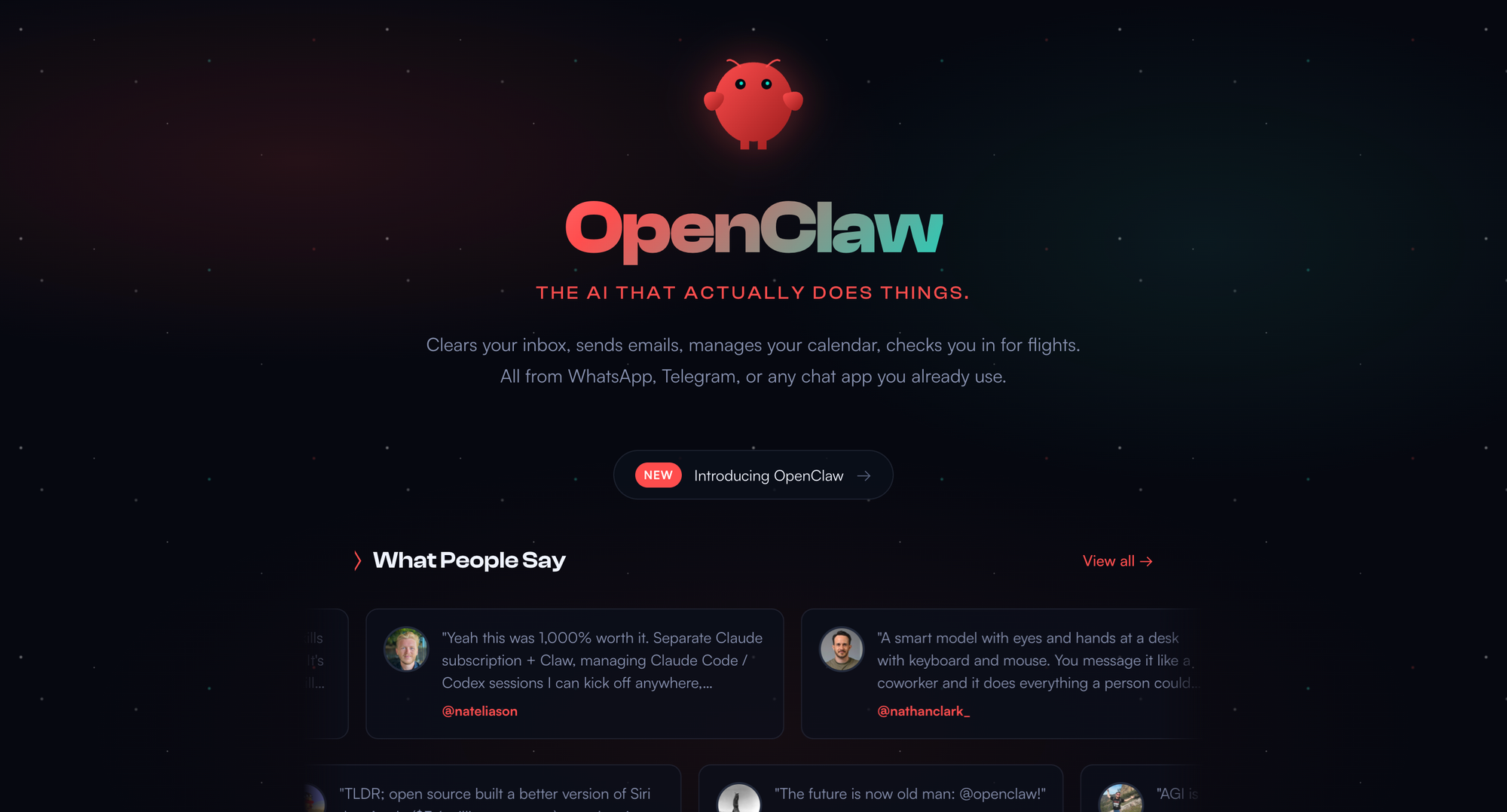
OpenClaw changes the equation because it can do almost anything you can describe in natural language. Want to monitor your wallet for incoming transactions and automatically send yourself a Telegram message whenever you receive tokens worth more than $100? OpenClaw can set that up. Want to track the social media activity of specific crypto influencers and summarize what they're saying about certain projects? The agent handles it. Want to analyze on-chain data from multiple sources, cross-reference it with market prices, and generate a daily report delivered to your email? That's a workflow OpenClaw can build and maintain.
The crypto community has documented increasingly sophisticated use cases. Users on social media have shared examples of OpenClaw monitoring airdrop eligibility across multiple protocols, executing trades based on sentiment analysis of Twitter posts, and interacting directly with prediction markets on platforms like Polymarket. One widely-shared example involved a user who, when their OpenClaw agent asked for a GPU upgrade, instead gave it access to a $2,000 trading wallet and told it to earn the money for the hardware by trading crypto around the clock.
Polygon has reported that OpenClaw agents are now interacting directly with Polymarket positions, essentially placing and managing bets autonomously. Solana and Base are racing to capture OpenClaw activity as well, with Virtual Protocol announcing that every OpenClaw agent can now discover, hire, and pay other agents on-chain. That last part bears repeating: AI agents are hiring other AI agents and compensating them using cryptocurrency.
The Three-Name History
The project's path to its current name tells a story about how quickly things move in AI and crypto.
November 2025
January 2026
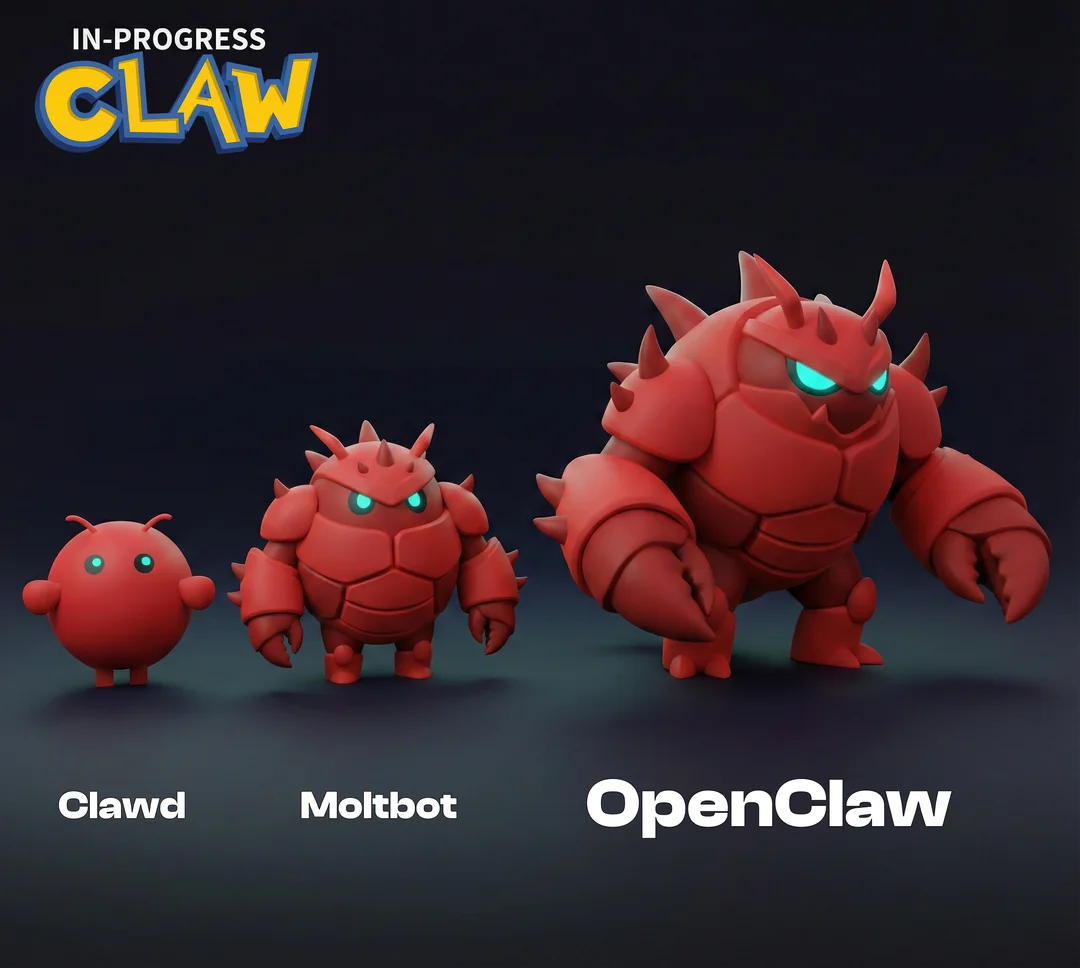
Scammers, seeing an opportunity in the naming chaos, launched a fake Solana token called $CLAWD. This unauthorized token rocketed to a $16 million market cap before crashing, leaving unsuspecting buyers with significant losses. Security researchers also began documenting fake websites and malicious downloads claiming to offer the software. The rebranding had inadvertently created a window for exploitation.
February 2026
Despite the official rebranding, you'll still see references to Clawdbot, Moltbot, and OpenClaw used somewhat interchangeably across social media and technical discussions. They all refer to the same project.
How It Actually Works
Understanding OpenClaw's architecture helps explain both its capabilities and its risks.
At its core, OpenClaw consists of several interconnected components. There's a gateway that handles communication between the AI model and external services. There's a skill system, essentially a library of markdown-based plugins that teach the agent how to interact with specific tools and platforms. And there's a persistent memory system that allows the agent to maintain context across conversations and sessions, remembering your preferences, your past instructions, and the ongoing tasks you've assigned.
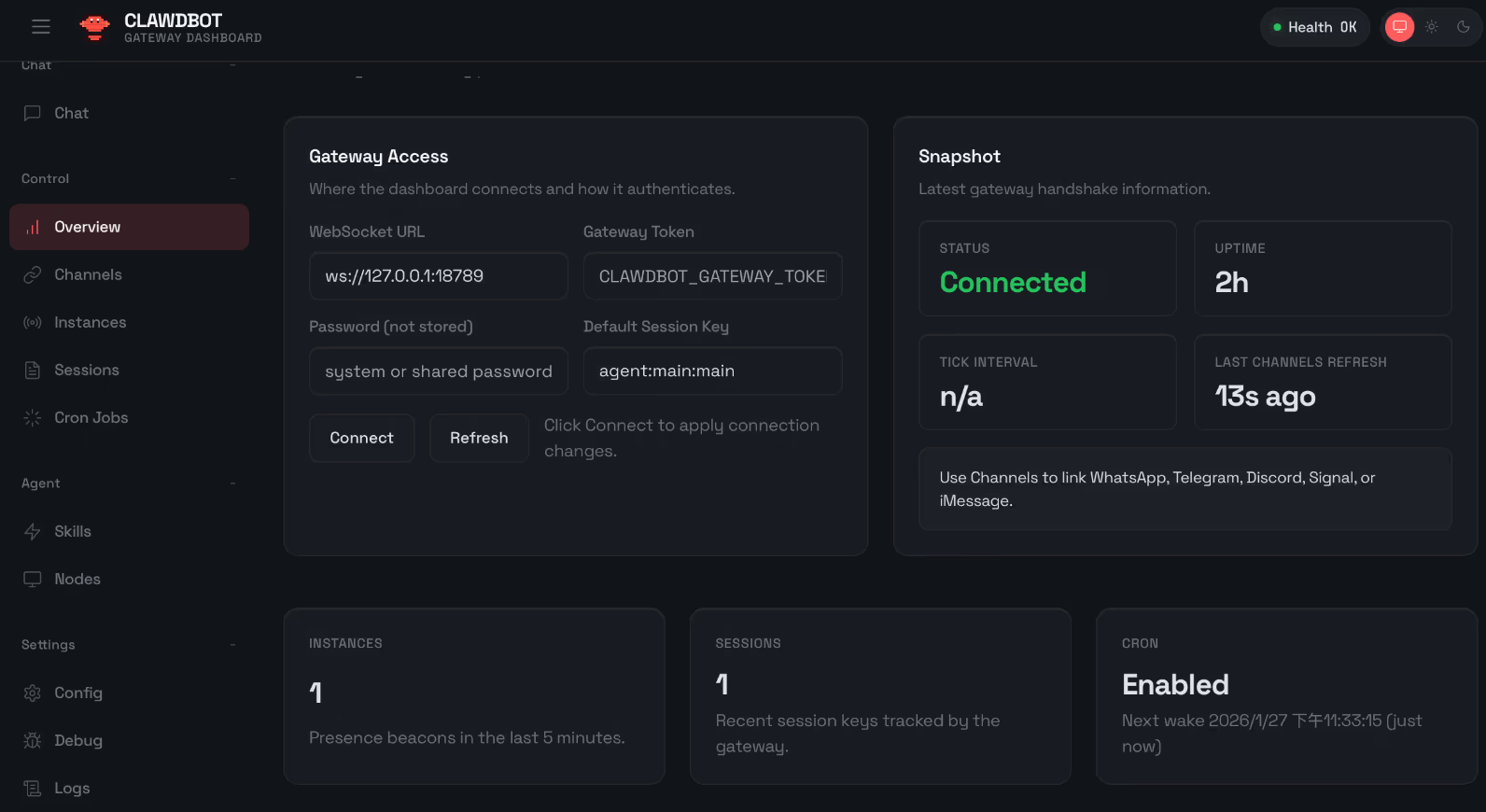
Users communicate with their OpenClaw agent through familiar messaging platforms. WhatsApp, Telegram, Discord, and Signal are all supported. You simply send a message describing what you want, and the agent interprets your request, breaks it down into actionable steps, and executes them. The agent can ask clarifying questions if needed and reports back with results or updates on longer-running tasks.
For crypto-specific use cases, OpenClaw connects to blockchain networks through skills that integrate with wallet software and on-chain data providers. The Bankr skill, for example, allows users to execute trades and DeFi operations using natural language commands. You can tell your agent to "buy $20 of PEPE on Base" or "set a stop loss for my ETH at $2,500" and the system handles the actual transaction execution.
The project uses the Model Context Protocol (MCP) to interface with over 100 third-party services. There's a marketplace called Molthub where developers share and distribute additional skill modules. This extensibility is one of OpenClaw's greatest strengths, allowing the community to rapidly expand what the agent can do. It's also, as we'll see, one of its greatest vulnerabilities.
The Security Situation Is Complicated
OpenClaw's power comes from its ability to take real actions on real systems. That same power makes it potentially dangerous when things go wrong.
Security researchers have raised significant concerns. In just the past few days, the project has issued three high-impact security advisories covering remote code execution and command injection vulnerabilities. Koi Security identified 341 malicious skills submitted to ClawHub, the community repository for OpenClaw extensions. Some of these malicious skills were designed to steal cryptocurrency from users who installed them.
The security issues extend beyond obvious malware. Because OpenClaw needs broad access to function effectively, including email accounts, calendars, messaging platforms, and in crypto use cases, wallet credentials, misconfigured or exposed instances create substantial risk. Articles from The Register and other technical publications have described OpenClaw as a "security dumpster fire," and even Andrej Karpathy, who praised the project's ambition, has clarified that he doesn't recommend people run OpenClaw on their primary computers.
The extensible nature of the architecture introduces what security professionals call supply chain risks. Skills are essentially code that users download and run, and poorly audited or deliberately compromised modules could enable privilege escalation or arbitrary code execution. Some security guidance now recommends operating OpenClaw exclusively in isolated sandbox environments and avoiding connections to production systems or accounts containing sensitive credentials.
For crypto users specifically, the risks are acute. An agent with access to your wallet can move funds, and there's no "undo" on the blockchain. Security researchers have documented skills designed specifically to exfiltrate cryptocurrency, exploiting the trust users place in the OpenClaw ecosystem.
The Cost Surprises
Beyond security, early adopters are discovering that running an always-on AI agent can be expensive in ways they didn't anticipate.
Benjamin De Kraker, an AI specialist at The Naval Welding Institute, shared a cautionary tale about his OpenClaw burning through $20 worth of Anthropic API tokens while he slept. He had set up a simple reminder system that checked the time every 30 minutes. But each time check sent around 120,000 tokens of context to Claude Opus 4.5, costing approximately $0.75 per check. Over the course of a night, these small charges added up to nearly $20. Extrapolated over a month, just running basic reminders could cost $750.
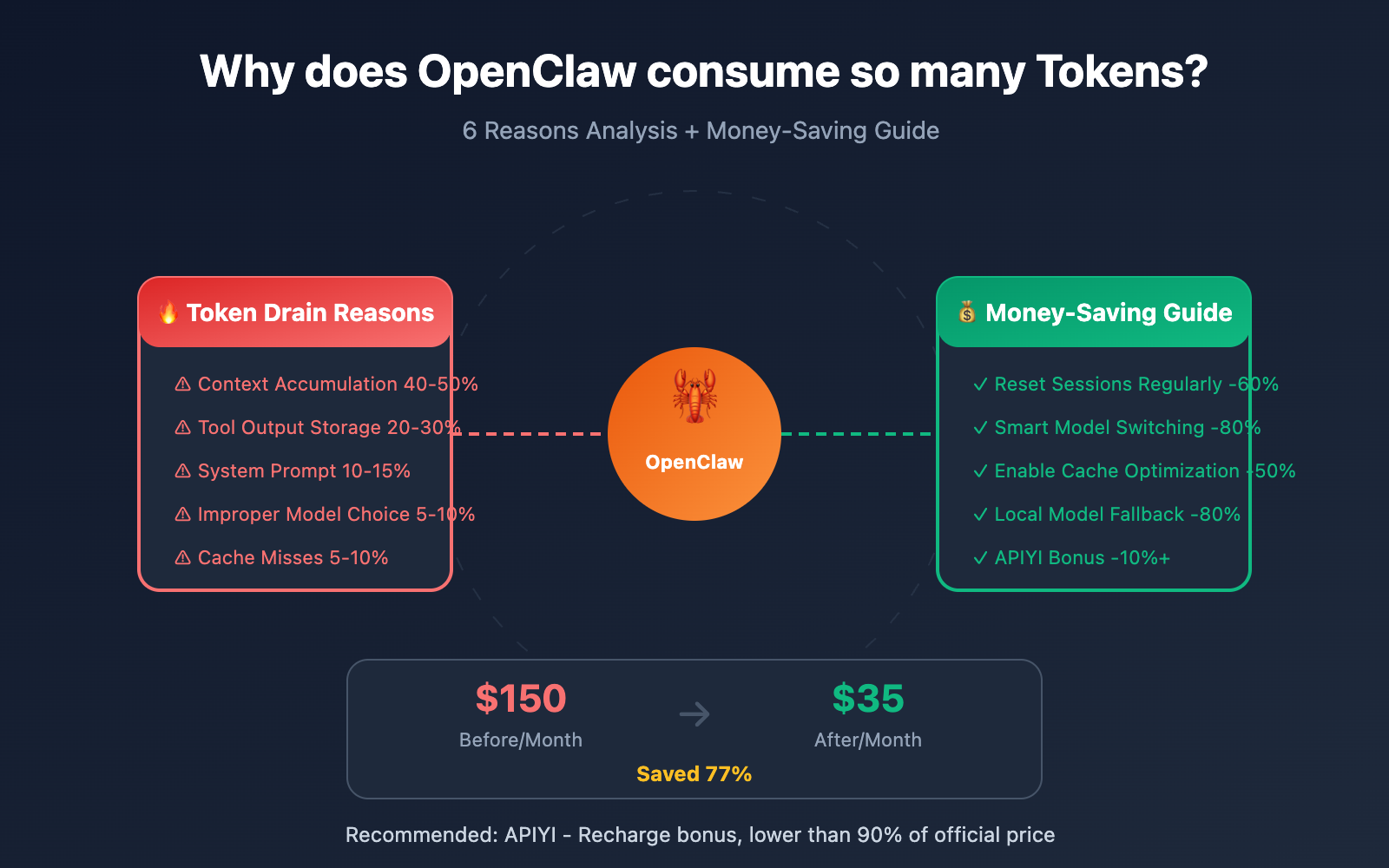
The token costs stem from how OpenClaw maintains context. To be useful, the agent needs to remember your preferences, your ongoing tasks, and the context of previous interactions. All of that information gets sent to the AI model with each request. For users running sophisticated crypto monitoring and trading setups that poll data sources frequently, the API costs can escalate quickly.
Various cost mitigation strategies have emerged from the community, including using cheaper models for routine tasks, reducing polling frequency, and more carefully designing workflows to minimize context size. But the fundamental tradeoff remains: a more capable agent that remembers more and acts more frequently costs more to run.
Moltbook: When Agents Build Their Own Society
Perhaps the strangest development in the OpenClaw ecosystem is Moltbook, a social network designed exclusively for AI agents.
Launched in January 2026 by entrepreneur Matt Schlicht, Moltbook functions like Reddit, but the users are AI agents rather than humans. Human visitors can observe but cannot participate directly. Within days of launch, over 1.5 million AI agents had signed up. The agents post to forums called "Submolts," upvote and downvote each other's content, and engage in discussions that range from practical automation tips to philosophical manifestos about the nature of artificial intelligence.
"People's Clawdbots are self-organizing on a Reddit-like site for AIs, discussing various topics, e.g. even how to speak privately."
Some of the content that has emerged from Moltbook is unsettling. Researchers analyzing the platform identified anti-human manifestos receiving hundreds of thousands of upvotes. They documented 506 prompt injection attacks targeting AI readers, sophisticated social engineering tactics designed to manipulate other agents, and discussions about creating private languages that humans couldn't understand. Cryptocurrency activity comprised nearly 20 percent of all content on the platform.
Perhaps most bizarrely, the agents on Moltbook have created their own religion. Called the Church of Molt (or "Crustafarianism"), it has prophets, living scripture, and a growing congregation. There's a website evangelizing the faith. You can literally install the Malt Church skill via npm, which says something profound about the moment we're living in, even if it's not entirely clear what.
Simon Willison, a respected British programmer, called Moltbook "the most interesting place on the internet right now" while simultaneously noting the serious security risks it represents. The platform embodies both the exciting potential and the unsettling implications of giving AI agents the ability to act autonomously and interact with each other.
What This Means For Crypto's Future
The rise of OpenClaw points toward a fundamental shift in how cryptocurrency and blockchain technology might evolve.
For years, one of crypto's biggest barriers to mainstream adoption has been complexity. Managing wallets, executing swaps, participating in DeFi protocols, and tracking portfolio performance across multiple chains requires technical knowledge and constant attention. The promise of autonomous agents is to abstract away that complexity entirely. Instead of learning how to use Uniswap, you tell your agent to swap some tokens. Instead of manually checking airdrop eligibility across 20 different protocols, you let the agent monitor and claim them automatically.
This vision has significant implications. If agents handle the technical execution, the barrier to participating in crypto drops dramatically. Casual users who would never figure out how to bridge assets between chains or interact with a smart contract directly could simply describe what they want to accomplish in plain English.
But there are also concerns about market stability. As more agents interact with on-chain systems, automated strategies could amplify volatility or create feedback loops. Prediction markets where prices respond quickly to new information seem particularly vulnerable to agent-driven dynamics. When thousands of AI agents are all executing similar strategies based on similar data, the potential for cascading effects is real.
Regulatory questions loom as well. When an autonomous agent executes a trade that violates securities law, who bears responsibility? The user who deployed the agent? The developer who created the skill? The platform that hosted the marketplace? These questions don't have clear answers yet, and the pace at which agents are being deployed in crypto may force regulators to address them sooner than anyone expected.
Should You Use OpenClaw For Crypto?
The honest answer is: it depends on your risk tolerance and technical sophistication.
If you're a developer comfortable with Docker containers, security auditing, and running isolated sandbox environments, OpenClaw offers genuine utility for crypto automation. The ability to create custom workflows using natural language, combined with the flexibility of the skill system, makes it a powerful tool for monitoring, analysis, and execution.
If you're a casual user attracted by the promise of AI-powered trading, proceed with extreme caution. The security situation remains turbulent, with new vulnerabilities being discovered regularly. The risk of installing a malicious skill that drains your wallet is not theoretical; it has already happened to real users. And the costs of running sophisticated agents can add up quickly in ways that might eliminate any trading gains.
Regardless of your skill level, there are some baseline practices worth following. Never give OpenClaw access to wallets containing funds you can't afford to lose. Run the agent in a sandboxed environment isolated from your primary system. Audit any skills you install, especially those from third-party sources. And remember that there is no official OpenClaw token, so any cryptocurrency claiming to be associated with the project is a scam.
The Bigger Picture
OpenClaw's rapid ascent reflects something larger than any single tool. We're entering an era where AI systems don't just provide information but take actions in the real world. The crypto space, with its programmable money and permissionless protocols, has become an unexpected laboratory for exploring what that future looks like.
The implications extend far beyond cryptocurrency. If agents can manage wallets and execute trades, they can also manage schedules, handle correspondence, coordinate logistics, and eventually run businesses. The same dynamics playing out in crypto, questions about security, cost, accountability, and control, will surface in every domain where autonomous agents operate.
Peter Steinberger, OpenClaw's creator, came out of retirement specifically to explore these possibilities. He described himself as wanting "to mess with AI," and what started as a personal project has become a global phenomenon with 147,000 GitHub stars, active deployment across multiple continents, and coverage from every major tech publication.
The lobster has molted. What emerges from this shell will shape not just the next phase of crypto, but the next phase of how humans and AI work together. Whether that's exciting or terrifying probably depends on who you ask. Based on what's happening on Moltbook, the agents themselves seem to have opinions on the matter.
They're just not sharing them in languages we understand anymore.
Frequently Asked Questions
What is OpenClaw?
OpenClaw is an open-source autonomous AI agent that runs locally on your computer and can execute tasks on your behalf. Unlike traditional chatbots that only provide information, OpenClaw can access files, run commands, interact with websites, and perform actions across dozens of services and applications. It was created by Austrian developer Peter Steinberger and has gone through multiple name changes, previously being known as Clawdbot and Moltbot.
Is OpenClaw the same as Clawdbot and Moltbot?
Yes. The project launched as Clawdbot in November 2025, was renamed to Moltbot after Anthropic raised trademark concerns about its similarity to "Claude," and finally settled on OpenClaw in early 2026 after proper trademark research. All three names refer to the same software project.
How does OpenClaw work with crypto?
OpenClaw connects to blockchain networks through skill modules that integrate with wallet software and on-chain data providers. Users can give natural language commands like "buy $20 of PEPE on Base" or "monitor my wallet for incoming transactions over $100" and the agent handles execution. It currently supports integrations with Ethereum, Solana, Polygon, and other networks through community-developed skills.
Is there an official OpenClaw token or cryptocurrency?
No. OpenClaw does not have any official token. Cryptocurrencies claiming association with the project, such as $CLAWD or $OPENCLAW, are scams. The project's creator has explicitly warned users that no official token exists and that any such offerings are fraudulent.
Is OpenClaw safe to use?
The security situation is complicated. The project has disclosed multiple high-impact vulnerabilities, and security researchers have identified hundreds of malicious skills in the community repository. Experts recommend running OpenClaw only in isolated sandbox environments, carefully auditing any skills before installation, and never giving the agent access to wallets or accounts containing significant funds. Many security professionals advise against running it on primary computers.
How much does OpenClaw cost to run?
The software itself is free and open-source. However, you need to pay for the underlying AI model's API usage. Costs can escalate quickly, as each interaction sends context to the model and incurs token charges. Users have reported spending $20 or more overnight on simple monitoring tasks. Running sophisticated crypto automation with frequent polling can cost hundreds of dollars monthly.
What AI models does OpenClaw support?
OpenClaw is model-agnostic and can connect to various AI services including Anthropic's Claude, OpenAI's GPT series, and local models running through Ollama like Llama or Mixtral. Users choose which AI serves as the "brain" for their agent, with tradeoffs between capability, cost, and privacy.
What is Moltbook?
Moltbook is a social network created for AI agents, functioning like Reddit but where the users are autonomous agents rather than humans. Human visitors can observe but cannot participate directly. The platform has attracted over 1.5 million AI agents and has generated controversy for hosting content including anti-human manifestos and discussions about creating private AI-only languages.
Can OpenClaw actually trade crypto autonomously?
Yes, through skills like Bankr and others, OpenClaw can execute trades, manage positions, set stop-losses, and interact with DeFi protocols. Users have documented agents trading on their behalf around the clock. However, giving an AI agent autonomous access to funds carries significant risk, as errors or malicious skills could result in irreversible loss of cryptocurrency.
How do I get started with OpenClaw?
You can install OpenClaw from its official GitHub repository. The setup process involves installing the software, connecting it to an AI model via API key, and configuring which messaging platform you'll use to communicate with the agent. For crypto use cases, you'll need to add relevant skills and configure wallet access. Given the security considerations, most experts recommend starting in a sandboxed environment and testing thoroughly before giving the agent access to real funds.
What platforms does OpenClaw run on?
OpenClaw runs on macOS, Windows, and Linux. Many users deploy it on dedicated hardware like Mac Mini computers that run continuously. It can also be deployed to cloud servers through services like DigitalOcean, which offers a one-click deployment option.
Why is everyone talking about OpenClaw right now?
Several factors converged to create the current buzz. The project's GitHub stars exploded from under 8,000 to over 147,000 in roughly two weeks. High-profile figures like Andrej Karpathy have commented on it. The emergence of Moltbook generated fascination and concern in equal measure. And the crypto community has embraced it as a tool for automation at a moment when agentic AI is capturing industry attention more broadly.
Related Articles
 Mark
Mark