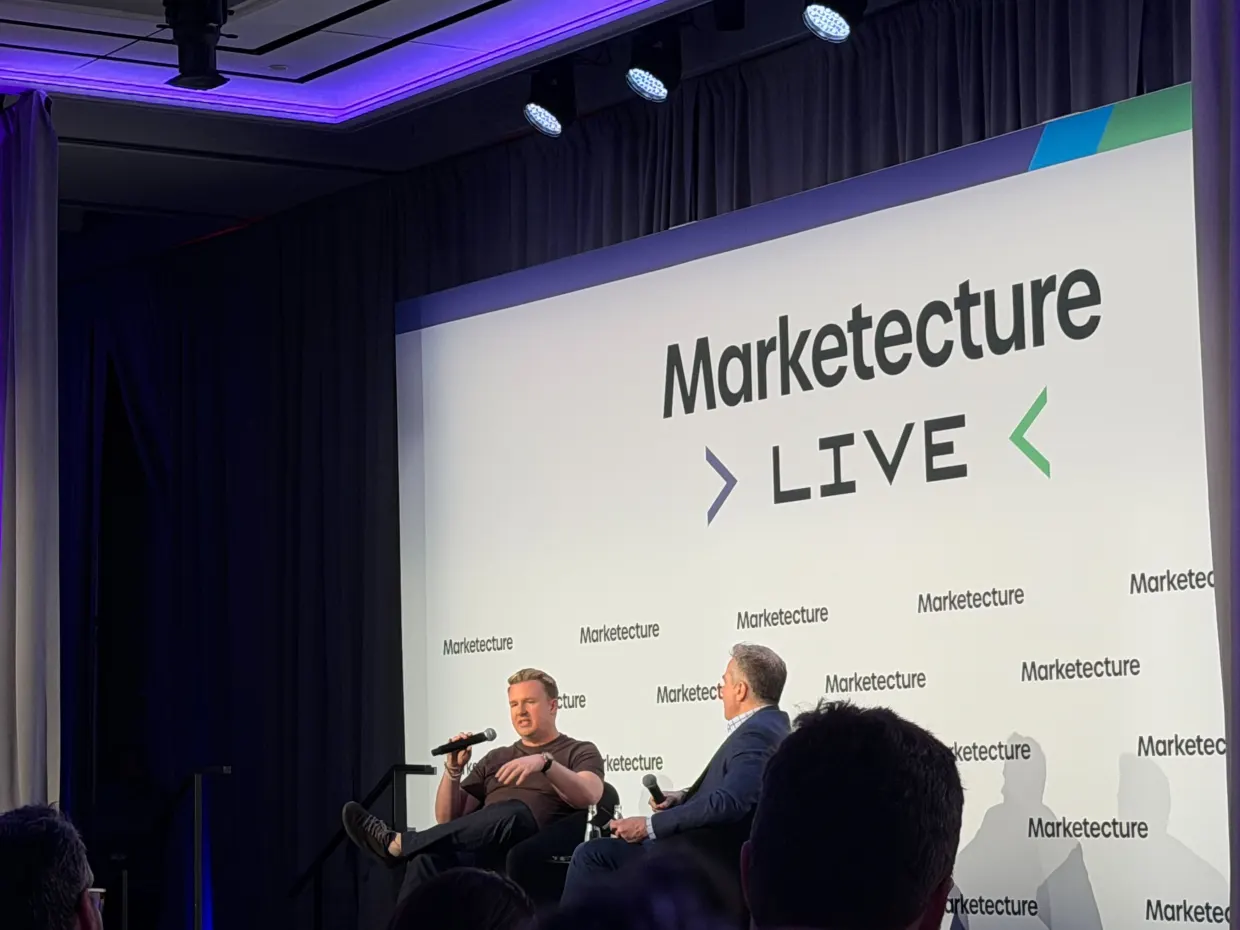
On March 11, 2026, in front of roughly 1,000 people at Marketecture Live in New York City, Trade Desk CEO Jeff Green confirmed something the programmatic advertising industry had been anticipating: the company is running a closed beta that allows advertisers to create campaigns on its Kokai platform using Anthropic's Claude.
Advertisers describe campaign objectives in natural language, and Claude translates those instructions into programmatic campaign configurations. No manual setup required, at least in theory.
The disclosure came during a recorded conversation with Marketecture Media founder Ari Paparo, published as episode 164 of the Marketecture podcast on March 13. Green framed it as a preview of where programmatic advertising is heading rather than a finished product. The Trade Desk is betting that the campaign creation layer, long the domain of specialized human traders with deep platform expertise, can now be handled by a large language model.
What the Beta Actually Does

The core functionality is straightforward. Advertisers in the closed beta describe what they want to achieve: a campaign objective, a target audience, a budget, a flight date. Claude interprets those instructions and generates the corresponding configuration inside Kokai, The Trade Desk's AI-powered media buying platform.
In practical terms, the structured multi-step process of building a programmatic campaign, including choosing inventory sources, setting bid strategies, defining audience segments, selecting targeting parameters, and configuring pacing, gets compressed into a conversational interface. The expertise required to navigate that process manually is, in principle, offloaded to the model.
The scale of what the model is working with is worth understanding. Green described the environment during the panel: "We are looking at 20 million ad impression opportunities every single second, representing millions of ad campaigns and billions of users on the other side, and we have 10 milliseconds or less."
Kokai is already running AI-driven decisions at that speed. The Claude beta adds a natural language layer on top of the campaign setup process, before those real-time decisions happen.
The Technical Foundation: OpenTTD and Kokai
The likely infrastructure connecting Claude to Kokai is OpenTTD, a unified developer portal The Trade Desk launched on March 4, 2026, one week before the Marketecture Live disclosure. OpenTTD consolidates The Trade Desk's suite of open infrastructure tools, including UID2, EUID, OpenPass, OpenAds, and OpenPath, under a single API access point. It is designed to enable data providers, publishers, and brands to build on The Trade Desk's programmatic infrastructure using open APIs.
Kokai itself has been the platform's AI-powered core since its launch in June 2023. Green described its capabilities in his March 2026 essay published through The Current: "Kokai is able to analyze 20 million ad opportunities every second, each with thousands of variables, all in the context of first- and third-party data, in milliseconds."
By February 2026, Green confirmed on the company's earnings call that nearly 100 percent of clients had migrated to Kokai. The platform transition is complete, and the agentic layer is what comes next.
The Claude beta is positioned as a campaign creation interface sitting on top of that existing infrastructure. OpenTTD is the API layer that almost certainly enables Claude to interact with Kokai's campaign configuration systems. The broader agentic AI framework for partners that Green has hinted at for 2026 would likely build on the same foundation.
Why Green Is Calling This the Right Industry for AI
Green's argument at Marketecture Live was specific and worth taking seriously. His claim is not simply that AI is useful in advertising, but that programmatic advertising is structurally better suited to AI automation than almost any other industry.
His reasoning centers on the nature of programmatic decisions. Every impression opportunity arrives with a defined set of variables, a real-time bidding environment, measurable outcomes, and a strict time constraint of 10 milliseconds. There is no ambiguity about what success looks like, the feedback signals are clear, and the data is structured and abundant. These are exactly the conditions under which AI systems tend to perform well.
Green extended this to a comparison with other agentic AI use cases that have received more press coverage. The flight-booking analogy is his test case: an AI agent booking a flight still needs to ask about dates, airlines, and seat preferences, which are simply the Expedia interface rendered in conversational form. In programmatic advertising, many of those preference inputs are already encoded in campaign objectives, first-party data, and historical performance signals, giving the model significantly more to work with.
The $150 Million Signal
Green's personal conviction in this direction is not purely rhetorical. On March 5, 2026, he announced a stock purchase of approximately $150 million in Trade Desk shares, which he described as the biggest purchase of his life.
In the essay explaining the rationale, published through The Current on March 6, he was direct about AI as a central thesis: "Agentic AI is an evolution of outcome-based platforms, such as Kokai, not a shortcut around them."
His broader argument is that as advertising becomes more automated, the platforms that will capture the most value are not the AI models themselves but the neutral, data-rich infrastructure those models run on. The Trade Desk, in this framing, becomes the rails rather than the engine. The Claude integration is not a bet that Anthropic wins the AI model race; it is a bet that programmatic infrastructure with deep data and objective measurement becomes more valuable as agents handle more of the execution.
At the time of the disclosure, Trade Desk's stock had declined roughly 65 percent from its peak. Full-year 2025 revenue came in at $2.896 billion, with growth decelerating to 18 percent year over year from 26 percent in 2024. Q1 2026 guidance targets at least $678 million. The market read the results as a slowdown, while Green's read is that the market is undervaluing what comes next.
The Competitive Picture
The Trade Desk is not the first demand-side platform to move in this direction, and the timing of the disclosure reflects a broader arms race across the ad tech industry.
- Yahoo DSP announced natural language agentic AI capabilities integrated natively into its platform in January 2026, enabling campaign management through conversational input with human approval gates. No usage numbers have been released.
- Amazon launched a closed beta for a Model Context Protocol server for its advertising APIs on November 13, 2025, enabling natural language interactions with ad APIs. That moved to open beta on February 2, 2026.
- Meta integrated its acquired Manus AI platform directly into the Ads Manager navigation panel in February 2026, positioning it as a conversational agent for audience research, reporting, and campaign analysis. Early practitioner reactions were mixed, with at least one widely circulated report of the agent misreading campaign data and attributing phone call conversions to an ad that contained no phone number.
The distinctions between these approaches matter. Meta's implementation sits on top of Advantage+, which already automates targeting, creative variation, and placement decisions at a scale where expert oversight is already difficult. The Manus integration multiplies the distance between advertiser intent and campaign execution. The Trade Desk's beta, by contrast, sits on top of a platform that still offers direct control for traders who want it. Whether that distinction holds as the beta evolves remains to be seen.
The Open Questions
The Claude beta raises a set of practical questions that matter considerably to agency trading desks and in-house programmatic teams, none of which have been answered publicly yet.
- Default settings. When Claude configures a campaign, what trading modes and platform defaults does it apply? Kokai includes both automated optimization and more direct control options. Which settings an AI-generated campaign uses by default will determine how much of the platform's decision-making is handed to the model versus retained by the advertiser.
- Expertise preservation. Programmatic campaign setup is a specialized skill. Experienced traders make deliberate choices about bid strategies, inventory sources, audience construction, and pacing that reflect both platform knowledge and client-specific context. When that process moves to a conversational interface, it is not yet clear whether Claude replicates those choices, approximates them, or replaces them with different defaults.
- Optimization transparency. Once a campaign is running, how visible is the logic behind the AI's configuration choices? If a campaign underperforms, can practitioners trace the cause to a specific configuration decision that Claude made? The ability to audit and adjust is central to how programmatic trading currently works.
- Verification. Whether the beta's outcomes are made public, or remain internal, will determine how much of the design the industry can evaluate. The broader agentic AI framework Green has described for 2026 will require more transparency to be adopted at scale by agencies and enterprise advertisers.
What It Means for Ad Buyers and Agencies
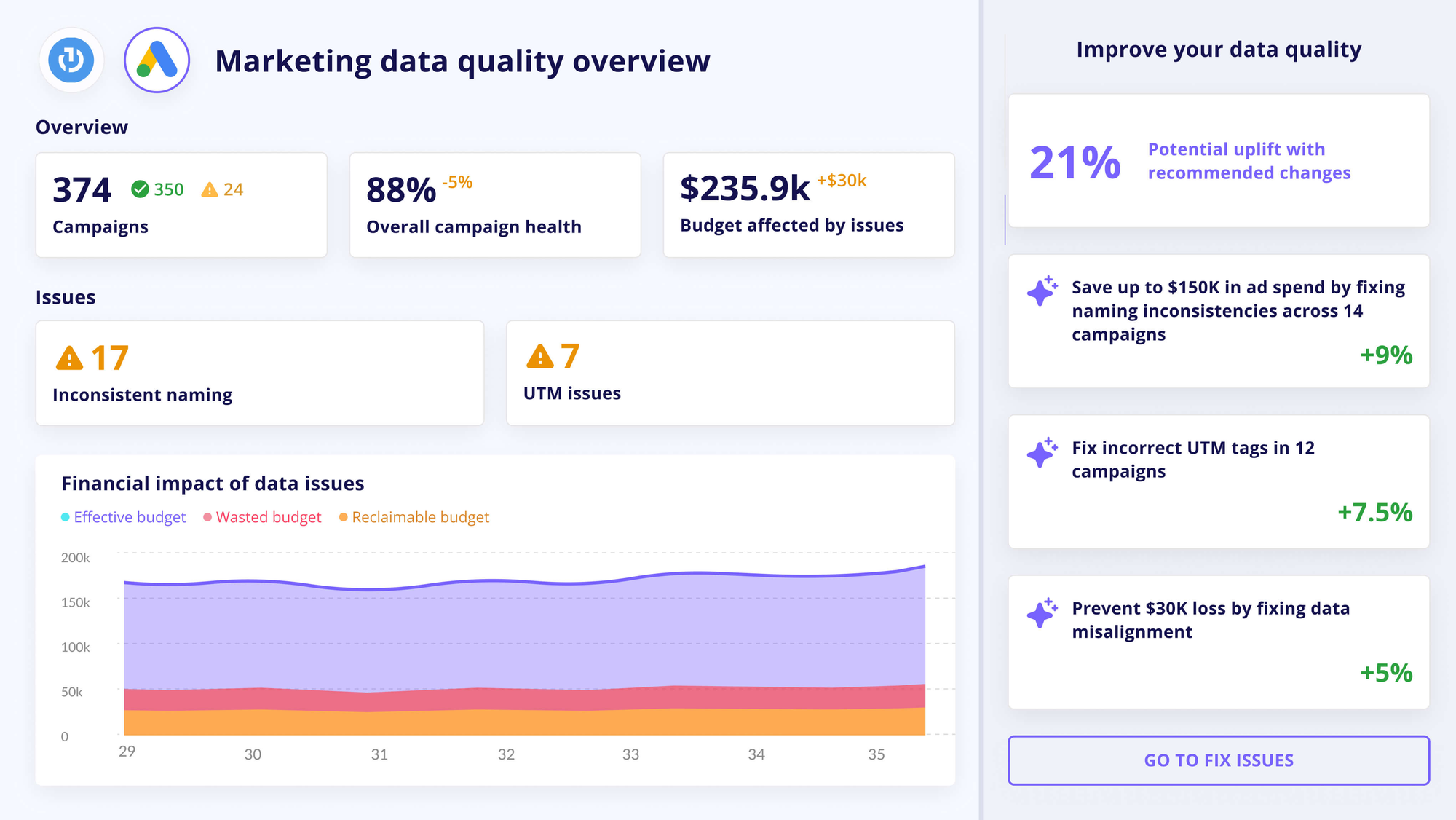
For in-house programmatic teams and agency trading desks, the Claude beta represents an early version of a shift in what the job actually requires. Setting up and configuring campaigns manually is currently a core competency at most organizations that run programmatic advertising. If that layer moves to a natural language interface, the skill requirement shifts from platform configuration to campaign strategy, quality review, and performance interpretation.
That transition is not inherently negative for practitioners. Time spent navigating a complex UI to input targeting parameters is not the highest-value part of the job. What matters is whether AI-generated configurations perform comparably to human-built ones, and whether practitioners retain enough visibility into what the model is doing to identify and correct problems when they arise.
The precedent from Meta's Advantage+ is instructive but not fully analogous. Advantage+ operates in a closed environment where the advertiser's primary inputs are budget and creative. The Trade Desk's open internet environment is more complex and more configurable. The degree to which Claude-generated campaigns preserve or reduce that configurability will define how much the beta matters to serious programmatic buyers.
Green's argument is that AI does not replace the expertise required for good advertising outcomes but amplifies the capacity of practitioners who have it. The closed beta is the first test of whether that argument holds at the campaign creation layer.
Wrap up
The Trade Desk's Claude beta is a meaningful data point in the automation of programmatic advertising: not a finished product, but a directional signal from one of the industry's most influential platforms. The case for why this category is well-suited to AI automation is strong, given structured data, measurable outcomes, real-time feedback, and a well-defined decision space.
The questions that remain are equally real. What defaults apply, how transparent the configuration logic is, and how much human expertise is preserved in a natural language workflow are not abstract concerns. They are the practical design decisions that will determine whether this becomes a tool that helps experienced buyers do more, or a system that produces adequate campaigns without revealing why they perform the way they do.
The broader agentic AI framework Green has outlined for 2026 will answer some of those questions. The Claude beta is the beginning of that answer.
Frequently Asked Questions
What is The Trade Desk testing with Claude?
The Trade Desk is running a closed beta that allows advertisers to create programmatic campaigns on its Kokai platform using Anthropic's Claude. Advertisers describe campaign objectives in natural language, and Claude translates those instructions into campaign configurations. CEO Jeff Green confirmed the beta during a panel at Marketecture Live in New York City on March 11, 2026.
What is Kokai and how does it work?
Kokai is The Trade Desk's AI-powered media buying platform, launched in June 2023. It processes 20 million ad impression opportunities per second, evaluating thousands of variables per opportunity in under 10 milliseconds. By early 2026, nearly 100 percent of The Trade Desk's clients had migrated to Kokai. The platform uses distributed AI across campaign optimization, measurement, and reporting, and the Claude beta adds a conversational campaign creation layer on top of that existing infrastructure.
What is OpenTTD and why does it matter for the Claude integration?
OpenTTD is a unified developer portal The Trade Desk launched on March 4, 2026, consolidating UID2, EUID, OpenPass, OpenAds, and OpenPath under a single API access point. It enables data providers, publishers, and brands to build on The Trade Desk's programmatic infrastructure. OpenTTD is the likely technical layer through which Claude accesses and configures Kokai's campaign systems in the closed beta.
How does this compare to what Amazon and Meta are doing?
Amazon launched a closed beta for a Model Context Protocol server for its advertising APIs in November 2025 and moved to open beta in February 2026. Yahoo DSP announced natural language agentic AI in January 2026. Meta integrated its Manus AI platform into Ads Manager in February 2026, though early practitioners reported data interpretation errors. The Trade Desk's implementation sits on top of a platform with direct control options still available, while Meta's Manus layer sits on top of Advantage+, which already operates with significant automation.
Why did Jeff Green spend $150 million on Trade Desk stock?
Green announced a personal stock purchase of approximately $150 million in Trade Desk shares on March 5, 2026, and published a detailed explanation on March 6. His central argument is that as advertising becomes more automated, data-rich and neutral programmatic infrastructure becomes more valuable rather than less. He framed the Claude integration and the broader agentic AI strategy as an evolution of Kokai's outcome-based optimization model rather than a replacement for it.
What are the unanswered questions about the Claude beta?
The most important open questions involve what default settings apply to AI-generated campaigns, how much advertiser expertise is preserved when campaign configuration moves to a conversational interface, how transparent the model's configuration logic is to practitioners, and whether performance can be independently verified. None of these have been answered publicly because the beta is closed and the outcomes have not been disclosed.
What does this mean for programmatic advertising professionals?
If campaign creation moves to a natural language interface, the skill requirement shifts from platform configuration to campaign strategy, quality review, and performance interpretation. The value of human expertise does not disappear, but where it is applied changes. Whether practitioners retain enough visibility into AI-generated configurations to identify and correct problems is the design question that will most directly affect how the tool is used in practice.
Is this part of a broader industry trend?
Yes. Amazon, Meta, Yahoo DSP, FreeWheel, and PubMatic have all announced or deployed AI automation capabilities in the campaign workflow within the past six months. The Trade Desk's Claude beta is notable because of the company's position as the largest independent demand-side platform and because Green has been explicit about the agentic AI strategy this beta is building toward.
Related Articles
 Dani
Dani
 Mark
Mark
 Dani
Dani