The software-as-a-service model that dominated the last two decades is undergoing its most radical transformation since the cloud itself. And the catalyst isn't a new business model or market trend, it's artificial intelligence fundamentally rewriting the rules of how software creates value.
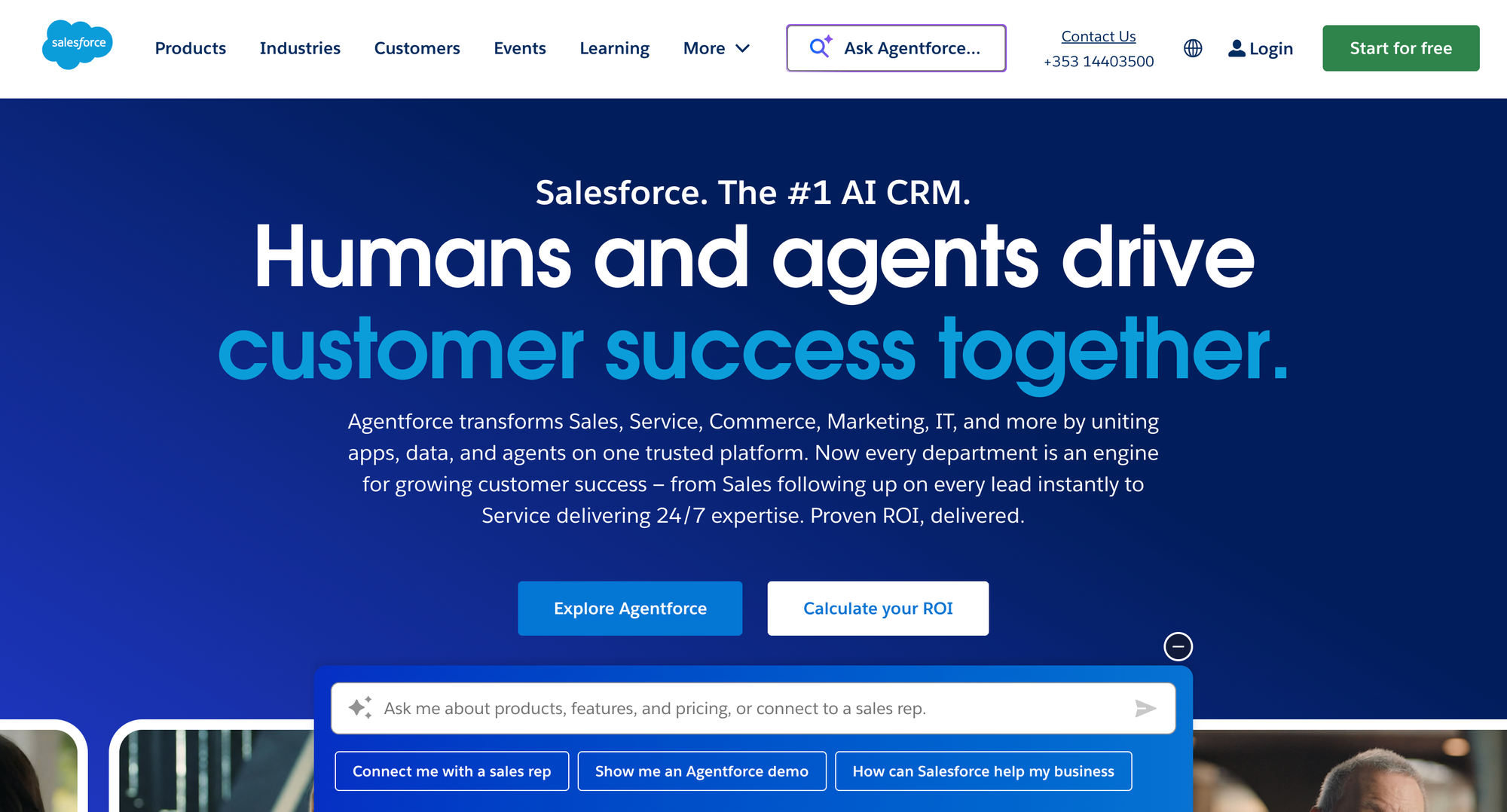
Consider what happened at Salesforce. The company that practically invented cloud CRM reduced its customer support workforce from 9,000 to 5,000 employees in a single year. Not through layoffs driven by financial pressure, but because AI agents now handle 50% of all customer conversations. CEO Marc Benioff described it as "the most exciting thing that's happened in the last nine months."
This isn't an isolated case. It's the leading edge of a transformation reshaping the entire SaaS landscape. The global SaaS market, valued at $317 billion in 2024, is projected to reach $1.22 trillion by 2032. But the software delivering that revenue will look nothing like what we use today.
The companies that understand this shift will define the next era of technology. Those that don't will find themselves selling horse carriages in the age of automobiles.
Part One: The Rise of Agentic AI
From Tools to Workers
Traditional SaaS operates as a tool. You log in, click buttons, fill forms, and the software executes your explicit instructions. The value proposition is access – pay monthly, get features.
Agentic AI flips this entirely. Instead of executing instructions, AI agents understand goals, plan multi-step approaches, and take autonomous action. They don't wait for commands and do work.
The difference is profound. A traditional CRM records customer interactions. An agentic CRM identifies at-risk accounts, drafts personalized retention emails, schedules follow-up calls, and adjusts its approach based on customer responses—all without human intervention.
Gartner reports a staggering 1,445% surge in multi-agent system inquiries from Q1 2024 to Q2 2025. The market for agentic AI is projected to grow from $7.8 billion today to over $52 billion by 2030. These aren't speculative projections about distant possibilities. This is capital flowing into products shipping now.
What Agents Actually Do
The term "AI agent" gets thrown around loosely, so let's be specific about capabilities that exist today.
- Autonomous task execution. Agents can break complex goals into subtasks, execute each step, validate results, and iterate until success. Salesforce's Agentforce enables companies to build digital labor forces that automate routine tasks and provide real-time insights. IBM's Orchestrate handles everything from HR workflows to IT service requests.
- Multi-system orchestration. Modern agents don't just work within one application—they coordinate across your entire tech stack. They pull data from your CRM, update records in your ERP, send notifications through Slack, and trigger workflows in project management tools. The siloed SaaS experience is dissolving.
- Adaptive decision-making. Unlike rule-based automation that follows predetermined scripts, agentic AI can dynamically adjust its strategy based on new information and changing circumstances. This allows handling of complexity and ambiguity that was previously exclusive to human workers.
- Continuous learning. Agents improve over time. They learn from outcomes, refine their approaches, and become more effective the longer they operate. Your software gets better at its job every day, without updates or new features.
The 25% Threshold
The reason? Return on investment is immediate and measurable. Klarna cut customer service costs by 66% using AI. Companies implementing AI chatbots report 87% reductions in average resolution times. AI-enabled self-service cuts support incidents by 40-50% with cost-to-serve reductions exceeding 20%.
When software can do work that previously required hiring people, the economic math becomes irresistible.
Part Two: The Death of Per-Seat Pricing
Why Traditional Models Break
The SaaS industry was built on per-seat licensing. More users meant more value, which meant more revenue. Simple, predictable, and aligned with how software created value when humans were the ones doing the work. AI agents don't need seats. They don't log in. One agent can do the work of many users.

This creates a fundamental misalignment. If your AI tool replaces ten analysts with one autonomous system, charging per seat dramatically undervalues the automation. The customer captures enormous value while paying for a single license.
The shift reflects a deeper truth: in an AI-powered world, the price should reflect work done, not dashboards viewed.
Three Pricing Models Emerging
- Usage-based pricing charges by consumption—API calls, tokens processed, compute time, or workflows executed. This aligns cost with value but introduces unpredictability. Heavy users can see costs spike; light users may question whether they're getting value.
- Outcome-based pricing ties revenue directly to results. Intercom's Fin AI agent charges $0.99 per customer issue fully resolved—not per conversation started, not per minute of compute, but per actual resolution. If the AI resolves 10,000 issues, you pay $9,900. If it resolves none, you pay nothing.
- Hybrid models combine base subscriptions with usage or outcome components. A typical structure might include a platform fee covering infrastructure and basic features, plus variable charges for AI workloads that scale with actual use.
The common thread? All three models move away from paying for access toward paying for value delivered.
The Outcome Revolution
Outcome-based pricing represents the most radical departure from traditional SaaS economics. Instead of metering inputs (tokens, minutes, seats), you meter the results customers actually want.
Consider how this changes the vendor-customer relationship. Under per-seat pricing, SaaS companies benefit from having more users, regardless of whether those users achieve anything. Under outcome-based pricing, vendors only get paid when customers succeed.
This alignment of incentives could prove transformative. Vendors become partners in customer success rather than landlords collecting rent. The software that delivers measurable results will command premium prices. The software that doesn't will struggle to justify its cost.
Part Three: Vertical SaaS 2.0
The End of Horizontal Dominance
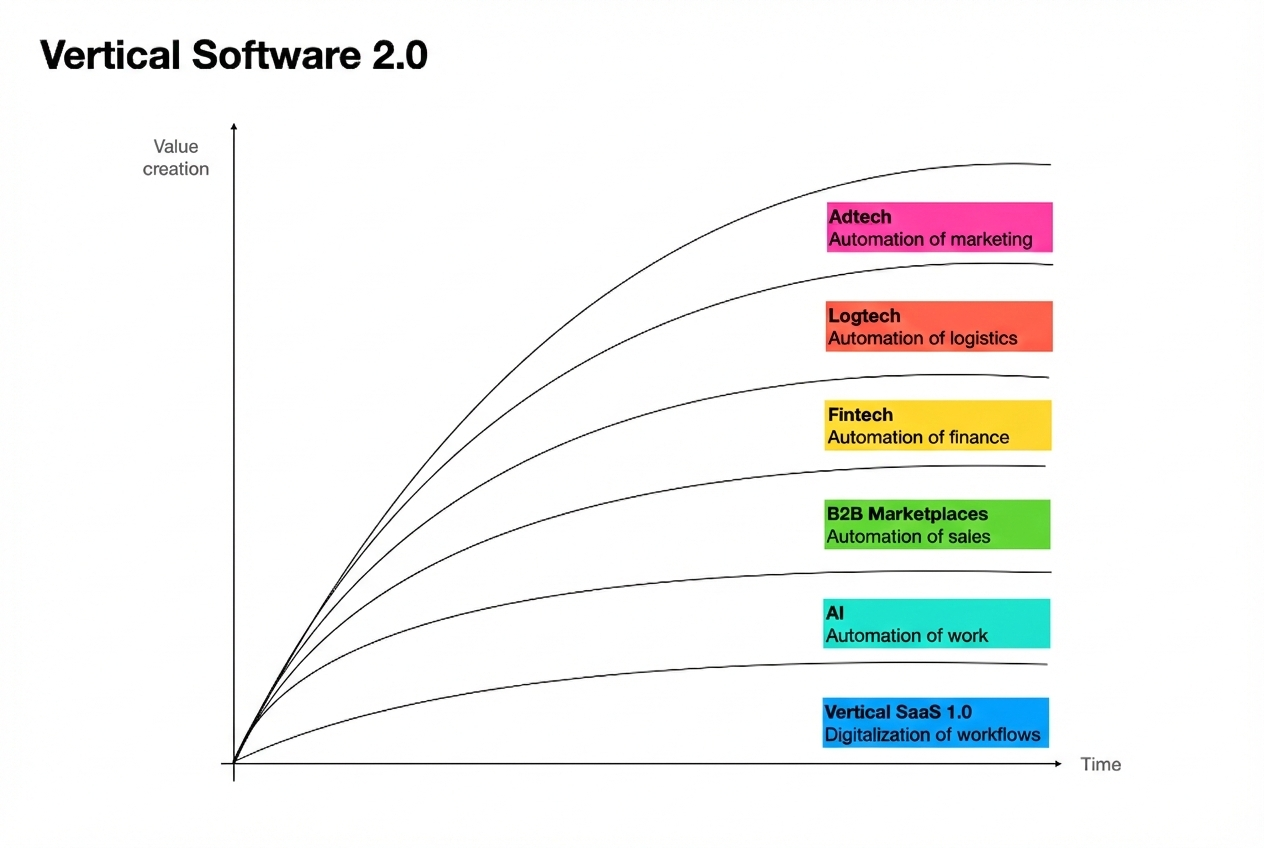
The era of one-size-fits-all horizontal SaaS is giving way to Vertical SaaS 2.0—deeply specialized solutions for specific industries.
Vertical SaaS companies are outperforming their horizontal counterparts, with median growth rates of 31% compared to 28% for horizontal players. The reason is simple: deep industry expertise creates competitive moats that generic tools can't match.
A construction management platform speaks the language of general contractors. A healthcare scheduling system understands HIPAA compliance and clinical workflows. A legal research tool knows case law and court procedures.
When you combine this specialization with AI, something powerful happens. The AI can be trained on industry-specific data, understand domain terminology, and automate workflows that are unique to that vertical.
Compound Workflows and Deep Niches
The most successful vertical SaaS companies in 2025 aren't just serving industries – they're owning entire workflows within those industries.
Instead of building a generic project management tool and hoping construction companies use it, successful vertical players build end-to-end solutions that handle everything from bid management to materials ordering to subcontractor coordination to final inspection documentation.
AI amplifies this advantage. Industry-specific AI can be trained on proprietary data that horizontal competitors can't access. It understands the nuances that generalists miss. It can automate workflows that require deep domain knowledge.
For developers and entrepreneurs, this creates clear opportunity. The winners won't be those who build slightly better versions of Salesforce or HubSpot. They'll be those who become indispensable to specific industries by combining deep vertical expertise with AI capabilities.
The Data Moat
Vertical SaaS companies accumulate industry-specific data that becomes increasingly valuable in the AI era. Every transaction, every workflow, every outcome feeds models that become better at serving that industry.
This creates a compounding advantage. More customers generate more data. More data trains better AI. Better AI delivers better outcomes. Better outcomes attract more customers.
For established vertical players, this represents an enormous opportunity to deepen their moats. For new entrants, it represents both a barrier to overcome and a prize worth pursuing.
Part Four: The Workforce Transformation
Jobs Being Automated Now
The impact of AI on SaaS-related jobs is no longer theoretical. It's happening at scale.
Customer support faces the most immediate transformation. By 2027, 50% of service cases are expected to be resolved by AI, up from roughly 30% in 2025. Salesforce's 4,000 job cuts in customer support are just the most visible example of a widespread trend.
AI chatbots can now manage up to 80% of routine tasks and customer inquiries. Companies report AI being in the top 10% of all agents for customer satisfaction scores. Not because AI has replaced the best human agents, but because it handles routine queries so efficiently that human agents can focus on complex cases where they excel.
Sales development is next in line. AI can now qualify leads, schedule meetings, send follow-up emails, and maintain CRM records—tasks that previously required armies of SDRs. Transactional sales under $10K are increasingly handled by AI, with human salespeople focusing on complex, relationship-driven deals.
Data entry and administrative work faces near-complete automation. Manual data entry clerks face a 95% risk of automation as AI systems process over 1,000 documents per hour with error rates below 0.1%, compared to 2-5% for humans.
The Bifurcation of Work
The future isn't universal job loss—it's a splitting of roles into those that AI enhances and those that AI replaces.
- Roles at risk: Routine customer support, basic data entry, simple sales transactions, standard report generation, first-level ticket triage.
- Roles being enhanced: Complex problem-solving, relationship-intensive sales, strategic analysis, creative work, oversight and governance of AI systems.
- New roles emerging: AI trainers, prompt engineers, AI system managers, human-AI collaboration specialists, AI ethics and compliance officers.
The World Economic Forum predicts AI will create 170 million jobs while displacing 92 million—a net addition of 78 million roles. But those new jobs require different skills than the jobs being eliminated.
For SaaS vendors, this workforce transformation creates both opportunity and responsibility.
The opportunity: Products that genuinely help customers do more with fewer people will command premium prices and fanatical loyalty. If your software reduces headcount while improving outcomes, the ROI case writes itself.
The responsibility: The transition won't be painless. Companies that help customers navigate workforce transformation—providing training, supporting role evolution, ensuring smooth transitions—will build trust that transactional vendors won't.
Part Five: Technical Architecture Changes
From Features to Intelligence
Traditional SaaS architecture centered on features – discrete capabilities that users could access through interfaces. Success meant shipping more features faster than competitors.
AI-native SaaS architecture centers on intelligence – the ability to understand context, learn from data, and take appropriate action. Success means building systems that get smarter over time.
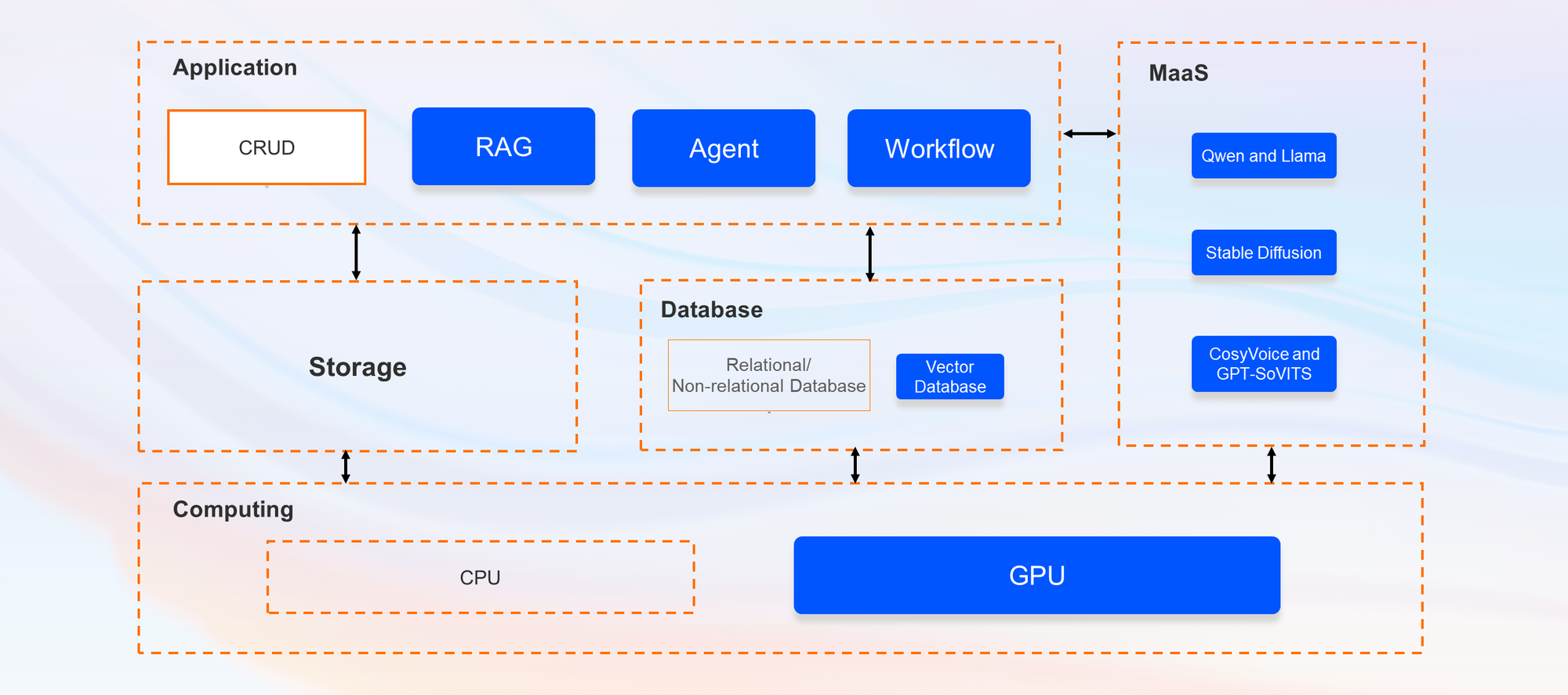
This shift affects every layer of the stack.
- Data layer. AI-native applications require vast amounts of clean, well-organized data. The companies with the best data pipelines and the richest datasets hold structural advantages.
- Model layer. Whether training custom models or fine-tuning existing ones, SaaS companies need ML infrastructure that was previously only relevant to AI-first startups.
- Orchestration layer. Multi-agent systems require coordination—deciding which agent handles which task, managing handoffs, ensuring consistency.
- Interface layer. Conversational interfaces, natural language processing, and multimodal interactions replace traditional GUI paradigms.
The Three-Layer Stack
Research from Bain suggests SaaS is rebundling around a three-layer stack:
- Systems of record at the foundation store the authoritative data that powers everything else. These become more valuable as AI demands more data.
- Agent operating systems in the middle orchestrate autonomous workflows, manage agent coordination, and provide the infrastructure for AI operations.
- Outcome interfaces at the top deliver results to users—often conversationally, often proactively, often without users needing to log in at all.
Companies must decide where to play in this stack. Few can effectively compete at all three layers. The strategic question becomes: which layer offers the best combination of defensibility and value capture?
Security and Governance
AI introduces security challenges that traditional SaaS never faced.
- Data privacy becomes more complex when AI models train on customer data. Who owns insights derived from that data? How do you ensure sensitive information doesn't leak through model outputs?
- Autonomous action creates new attack surfaces. If AI agents can take real-world actions—sending emails, moving money, modifying records—compromised agents can cause real damage.
- Audit and compliance requirements multiply when AI makes decisions. Regulated industries need explainability, logging, and human oversight capabilities that many AI systems don't natively provide.
By 2025, 78% of organizations are using AI in at least one function. But research shows 15% of employees routinely use unsanctioned generative AI tools on corporate devices, with 72% using personal email accounts. Shadow AI has become as significant a concern as shadow IT ever was.
Part Six: What Winners Do Differently
The companies winning the AI transition aren't treating it as a feature to add. They're treating it as a fundamental reimagining of their value proposition.
Bain's research is blunt: "Make AI central to your roadmap. Look for the key jobs that your software helps users accomplish, and deploy AI to automate and speed them up."
This means more than adding a chatbot or AI-powered search. It means asking: what would this product look like if we built it today, knowing what AI can do?
Shift from "Help Me Do It" to "Do It For Me"
Traditional SaaS helps users accomplish tasks. AI-native SaaS accomplishes tasks for users. This shift requires letting go of interface-centric thinking. If the software does the work, users don't need elaborate dashboards and configuration options. They need to specify outcomes and review results.
The most successful AI-native products will be those where users forget the software exists, where outcomes simply appear, where work gets done without human attention, where the product delivers value even when no one is logged in.
Own Unique Data
In the AI era, differentiation comes from data more than features. Anyone can integrate GPT-4. Not everyone has proprietary data that makes their AI better than competitors.
The strategic imperative is building data moats – accumulating information that competitors can't easily replicate and using it to train AI that delivers superior outcomes.
This favors incumbents with historical data and vertical specialists with industry-specific information. It challenges new entrants to find creative ways to generate unique datasets.
Price for Value, Not Access
The companies pricing AI capabilities most successfully are aligning price with customer-perceived value, using simple metrics customers understand, and iterating quickly based on usage and willingness-to-pay data.
This often means hybrid models: base platform fees for predictability, plus usage or outcome components that capture upside when customers derive significant value.
Part Seven: The Road Ahead
Near-Term (2025-2026)
- Agentic AI moves from pilots to production. The 25% of enterprises currently experimenting become 50% actively deploying.
- Usage-based and outcome-based pricing becomes standard for AI-powered features. Per-seat licensing remains for traditional capabilities but looks increasingly anachronistic.
- Customer support and sales development see significant automation. First-mover companies gain structural cost advantages.
- Vertical SaaS accelerates as domain-specific AI proves more effective than horizontal alternatives.
Medium-Term (2027-2028)
- The 33% of enterprise applications with agentic AI that Gartner predicts becomes reality. Software-as-a-service transforms into software-as-a-worker.
- New job categories centered on AI management and oversight mature. The workforce rebalancing that started with automation of routine tasks reaches middle-skilled work.
- Pricing models stabilize around hybrids of subscription, usage, and outcome components. The industry develops standard metrics for AI value measurement.
- Consolidation accelerates as AI advantages compound. Companies with superior data and AI capabilities acquire or outcompete those without.
Long-Term (2029+)
- The distinction between "AI-powered SaaS" and "SaaS" disappears. All software incorporates AI by default, just as all software now incorporates the cloud.
- Outcome-based pricing becomes the norm, not the exception. Customers pay for results achieved, not tools accessed.
- Human work centers on creativity, judgment, and relationship-building. Routine cognitive tasks are automated as thoroughly as routine physical tasks were by previous industrial revolutions.
Conclusion
AI isn't just changing the SaaS industry. It's forcing a choice.
SaaS companies can embrace the transformation—making AI central to their products, shifting to value-based pricing, helping customers navigate workforce changes, and building data moats that compound over time.
Or they can treat AI as a feature to add, a threat to manage, a trend to monitor. They can keep selling seats and shipping features while the industry transforms around them.
The first path is hard. It requires rethinking products, pricing, sales motions, and organizational capabilities. It means cannibalizing existing revenue streams before competitors do it for you.
The second path is easier in the short term and catastrophic in the long term.
The SaaS industry as we knew it is ending. What replaces it will be more valuable, more capable, and more transformative than anything that came before. The only question is whether you'll be building that future—or watching from the sidelines as others do.
FAQ
How is AI changing the SaaS industry?
AI is transforming SaaS from tools that help users complete tasks to autonomous agents that complete tasks independently. This shift affects everything from product architecture to pricing models to workforce requirements. By 2028, Gartner predicts 33% of enterprise software will include agentic AI capabilities that can plan and execute complex multi-step tasks without human intervention.
What is agentic AI in SaaS?
Agentic AI refers to autonomous software systems that can understand goals, plan multi-step approaches, and take action without continuous human oversight. Unlike traditional automation that follows predetermined scripts, agentic AI dynamically adapts its strategy based on new information. Examples include AI customer service agents that fully resolve issues and AI sales assistants that autonomously manage lead follow-up.
Will AI replace SaaS companies?
AI won't replace SaaS companies, but it will fundamentally transform them. Companies that successfully integrate AI will deliver more value with less human effort. Those that fail to adapt risk being displaced by AI-native competitors. Bain & Company research indicates "disruption is mandatory, but obsolescence is optional"—the winners will be those who make AI central to their product roadmaps.
How is AI affecting SaaS pricing models?
AI is driving a shift from per-seat pricing toward usage-based and outcome-based models. Per-seat pricing breaks down when AI agents do work that previously required many users. By 2025, over 30% of enterprise SaaS solutions incorporate outcome-based components where customers pay for results achieved rather than access granted. Examples include Intercom charging $0.99 per customer issue fully resolved by AI.
What jobs is AI replacing in SaaS companies?
Customer support faces the most immediate impact, with 50% of service cases expected to be AI-resolved by 2027. Salesforce reduced its support workforce from 9,000 to 5,000 employees as AI agents now handle half of all customer conversations. Sales development, data entry, and administrative roles also face significant automation. However, complex problem-solving, relationship-intensive sales, and AI oversight roles are growing.
What is vertical SaaS 2.0?
Vertical SaaS 2.0 refers to deeply specialized SaaS solutions for specific industries, enhanced by AI trained on domain-specific data. Unlike horizontal SaaS that serves all industries generically, vertical solutions understand industry terminology, workflows, and requirements. Combined with AI, these platforms can automate complex industry-specific processes that horizontal competitors cannot match.
How should SaaS companies prepare for AI disruption?
Make AI central to your product roadmap by identifying the key tasks your software helps users accomplish and deploying AI to automate them. Shift your value proposition from "help me do it" to "do it for me." Build unique data assets that train superior AI. Experiment with usage-based and outcome-based pricing. Help customers navigate workforce transitions rather than just selling automation.
What is the future of SaaS pricing?
The future combines subscription fees for platform access with usage-based charges for AI consumption and outcome-based fees for measurable results. This hybrid approach balances predictability (customers know their minimum spend) with value alignment (customers pay more when they receive more value). Companies will charge for work completed, not dashboards accessed.
How big will the AI SaaS market be?
The global AI SaaS market is expected to grow at a 38.28% compound annual growth rate, from $71.54 billion in 2023 to $775.44 billion by 2031. The broader SaaS market is projected to reach $1.22 trillion by 2032. AI capabilities are becoming table stakes for SaaS products, with 92% of SaaS companies planning to increase AI integration in 2025.
What is outcome-based pricing in SaaS?
Outcome-based pricing ties software costs directly to measurable results rather than usage or access. Instead of charging per seat or per API call, vendors charge when specific outcomes are achieved. For example, an AI customer support tool might charge per ticket resolved, or an AI sales tool might charge per qualified meeting booked. This aligns vendor incentives with customer success.
How is AI changing customer support in SaaS?
AI is automating routine customer support at scale. By 2025, AI handles 95% of basic customer interactions. AI chatbots manage up to 80% of routine inquiries, with companies reporting 87% reductions in resolution times. Salesforce cut support costs by 17% while reducing headcount by 45%. Human agents increasingly focus on complex, high-empathy situations while AI handles volume.
What skills do SaaS professionals need in the AI era?
Critical skills include understanding AI capabilities and limitations, prompt engineering, AI system management, and human-AI collaboration. Strategic thinking, complex problem-solving, and relationship building become more valuable as routine tasks are automated. Technical professionals need ML infrastructure skills. Sales teams must learn to sell business outcomes rather than features.
Should startups build AI-native SaaS products?
Yes. New entrants have structural advantages in building AI-native products without legacy architecture or existing customer expectations. The agentic AI market is growing rapidly, and first-movers in vertical niches can build data moats before incumbents respond. However, startups face challenges in data acquisition and need clear differentiation beyond simply using AI.
How do SaaS companies build AI data moats?
Data moats come from accumulating proprietary information that competitors can't easily replicate. Vertical SaaS companies collect industry-specific data through normal operations. Platforms with network effects generate user data that improves their AI. Companies can also acquire unique datasets, partner for exclusive data access, or create data through novel product features that encourage user input.
What are the security risks of AI in SaaS?
AI introduces new security challenges including data privacy concerns when models train on customer data, attack surfaces from autonomous AI actions, and compliance requirements for AI decision-making. Shadow AI—employees using unsanctioned AI tools—affects 15% of corporate devices. Companies need governance frameworks for AI use, audit trails for AI decisions, and security controls for AI agents with system access.
Related Articles
 Mark
Mark
 Dani
Dani
 Dani
Dani