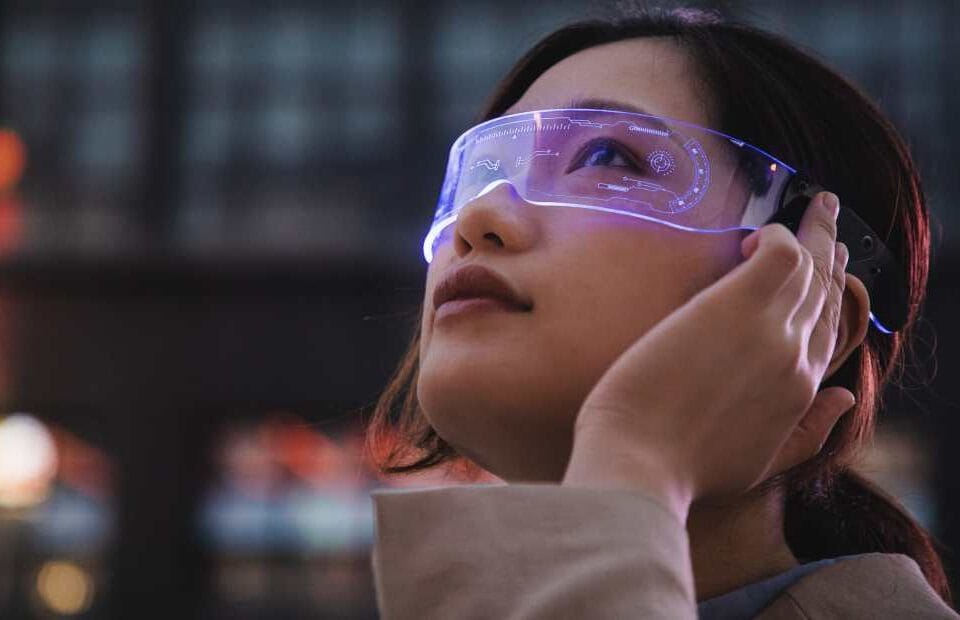
There is a quiet contradiction running through the consumer tech industry right now. At the same moment that Apple, Google, and Samsung are racing to pack more AI, more sensors, and more capability into every device they sell, a growing segment of buyers is paying real money for gadgets that deliberately do less.
Minimalist phones with no social media. E-ink tablets with no notification systems. Alarm clocks that are just alarm clocks. The market for intentionally limited technology is not a fringe curiosity anymore. It is a product category with its own premium pricing, its own brand loyalty, and a customer base that skews younger than most industry analysts expected.
Understanding why this is happening requires being honest about what the mainstream smartphone has become, and what it has done to the people who use it.
The Problem the Anti-Gadget Trend Is Responding To
The numbers around screen time have been climbing steadily for years, but the 2025 figures are striking in their specificity. The average screen time for adults in the United States reached approximately 7 hours and 3 minutes per day in 2025, a figure that has steadily risen over the past decade. That is not recreational leisure time. That is the aggregate of work, communication, entertainment, and the compulsive in-between checking that most people recognize in themselves but struggle to stop.
Global smartphone use hit an average of 4.6 hours per person daily in 2025, a 20 percent jump since 2022 and still climbing. For teenagers, the numbers are considerably higher. Teens aged 13 to 17 are among the most active phone users, spending over 7 hours per day on average, mainly on social media apps like TikTok, Instagram, and Snapchat.
The research connecting this usage to mental health outcomes has been accumulating for years, but it has become harder to dismiss. A 2025 randomized controlled trial published in BMC Medicine found that reducing smartphone screen time to two hours per day over a three-week period produced measurable improvements in stress, well-being, depressive symptoms, and sleep quality. The study was notable for establishing causality rather than just correlation, which had been the standard critique of earlier research.
None of this is news to the people buying minimalist devices. Many of them are not waiting for regulators or platform companies to solve the attention economy. They are opting out of parts of it, device by device.
What the Anti-Gadget Market Actually Looks Like
The category breaks down into a few distinct segments, each solving the same core problem from a different direction.
Minimalist Phones
The most visible corner of the market is what people call "dumb phones," which is an increasingly inaccurate name for devices that are neither unsophisticated nor cheap.
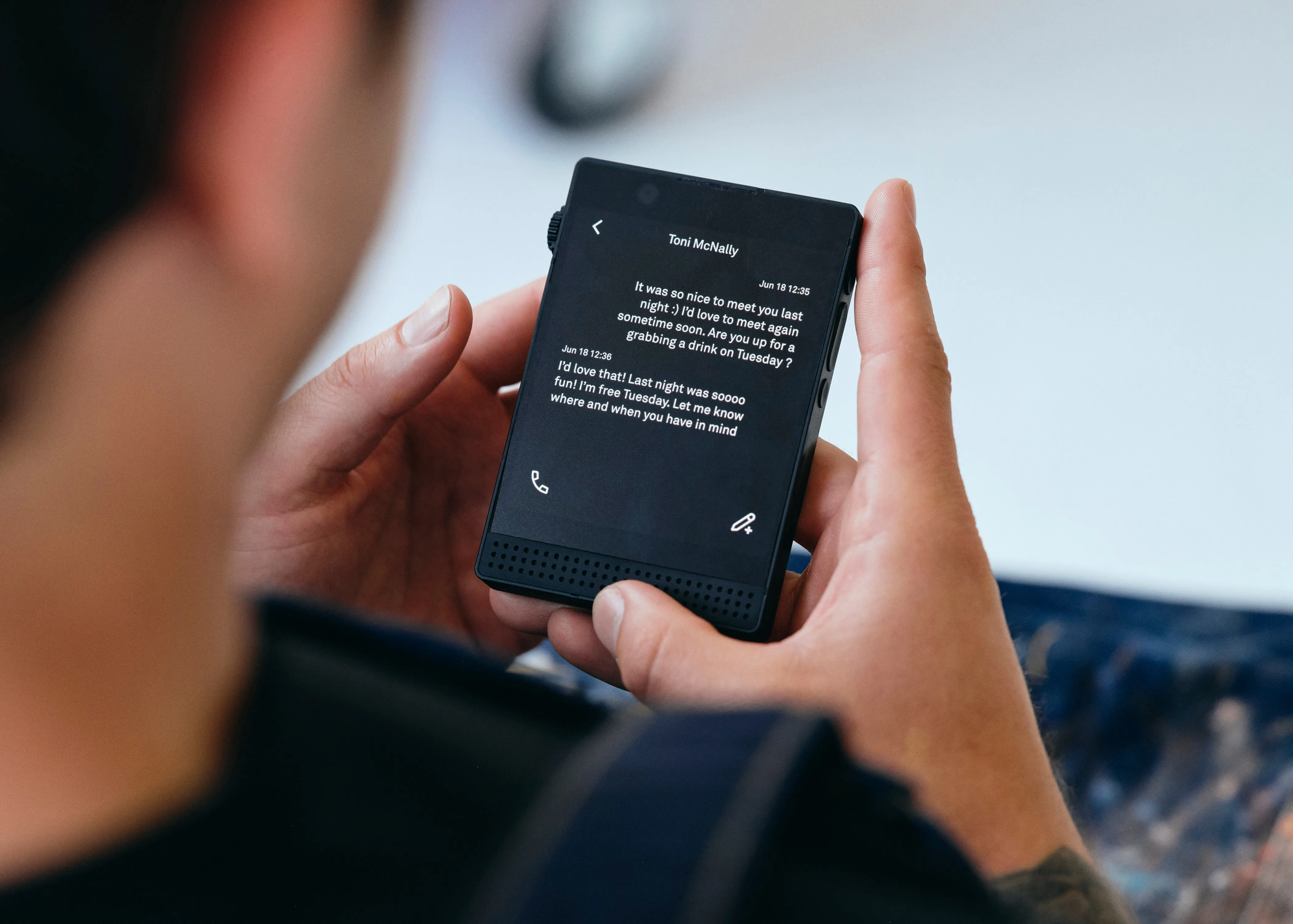
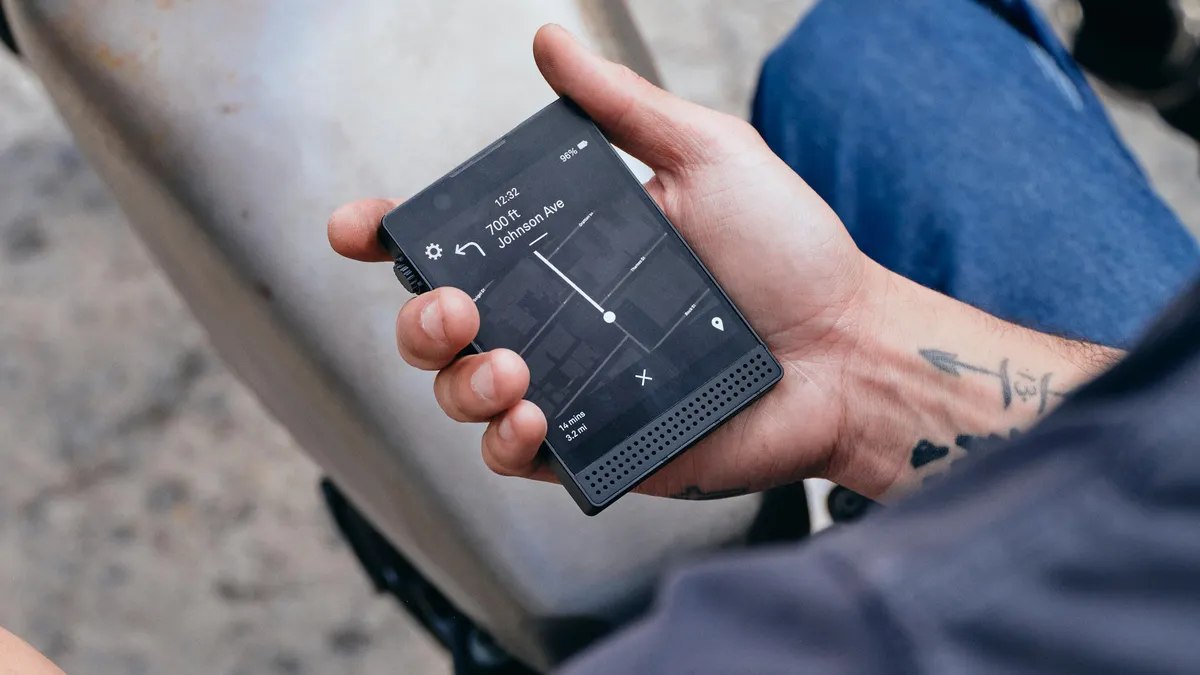
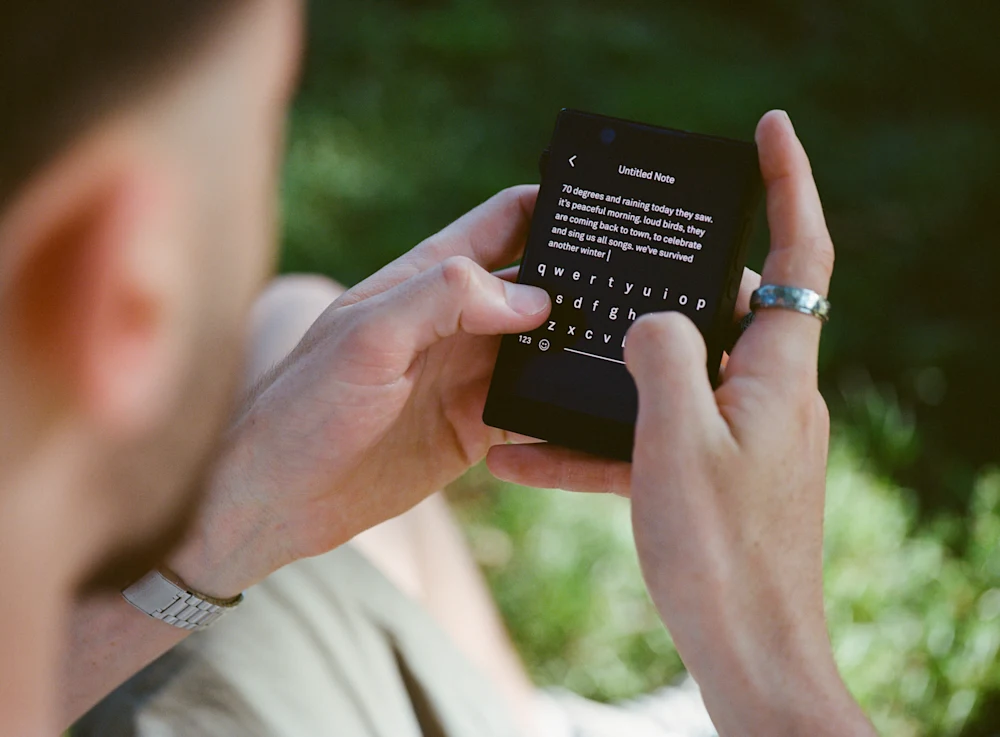
Light launched the Light Phone III in the spring of 2025, and over 100,000 people are using its devices worldwide, despite Light forgoing paid advertising and retailing for a premium price. The Light Phone III sells for $799 and includes a camera, a maps tool built from scratch by the company, and a deliberately limited set of features. There is no email client, no web browser, and no social media access. That last part is a selling point, not an oversight.
Kaiwei Tang, co-founder of Light, has been clear about the philosophy behind the product. "I want to make it boring," Tang said of the user experience, which leans into a black and white, text-based display. The same grayscale approach is used by Punkt, the Swiss company behind the MP02, where some research and growing anecdotal evidence suggests that switching to grayscale can measurably reduce screen time.
Tang stressed: "We're not anti-technology. We see ourselves as a lifestyle brand. We're promoting a lifestyle that's very different from a smartphone-centric lifestyle."
That framing matters. The most successful minimalist phone companies are not marketing their products as a rejection of technology. They are marketing them as a different relationship with it, one where the user decides the terms rather than the algorithm.
The broader market context confirms real demand. The feature phone market reached approximately 210 million units valued at $3.2 billion in 2024, with sales in Western Europe increasing by 4 percent, and premium models like the Punkt MP02 and Light Phone III are establishing high-margin lifestyle categories. That growth is concentrated in developed markets, where digital exhaustion is most acute and disposable income makes a $799 phone an accessible statement.
E-Ink Tablets
While minimalist phones replace the smartphone entirely, e-ink tablets carve out a different approach: they give you a high-function device for reading, writing, and thinking, stripped of the ambient anxiety that comes with a connected screen.
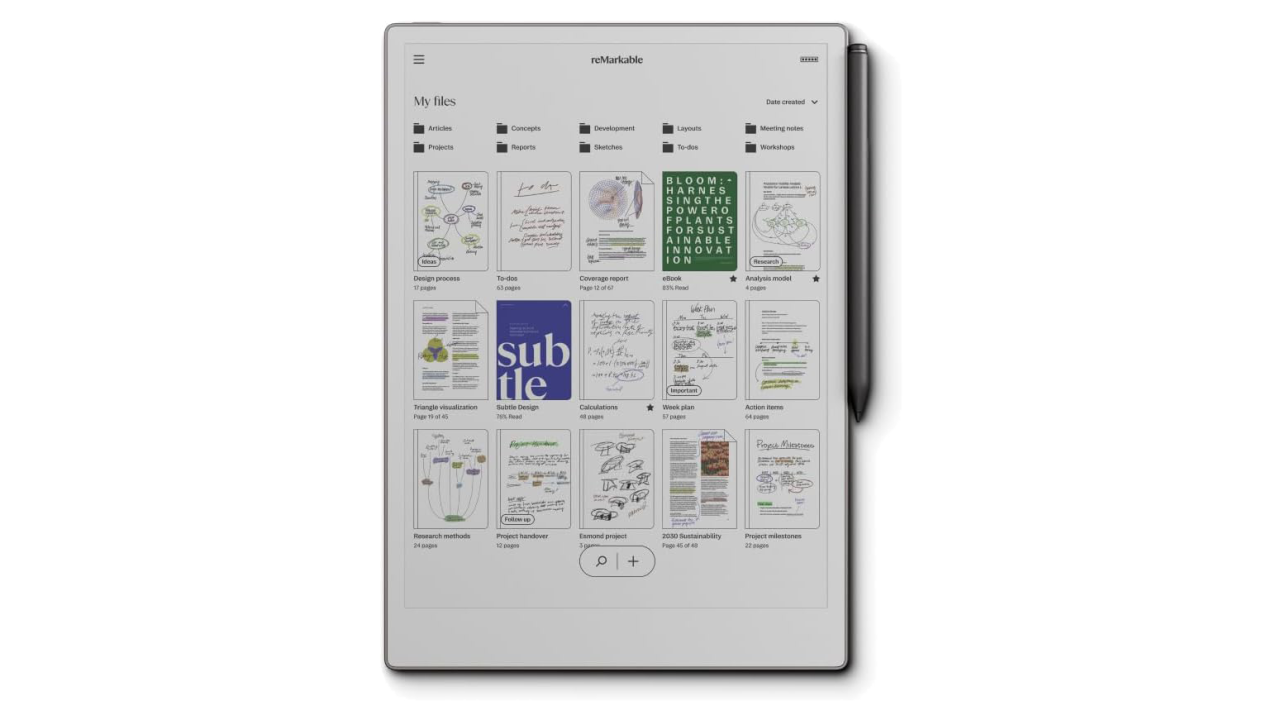
The reMarkable Paper Pro introduced a focus-first canvas with an 11.8-inch e-ink screen capable of displaying 20,000 colors and a battery life of two weeks, and TIME magazine named it one of the best inventions of 2025. The device does not support apps. It does not push notifications. Its entire design premise is that focused attention is worth protecting.
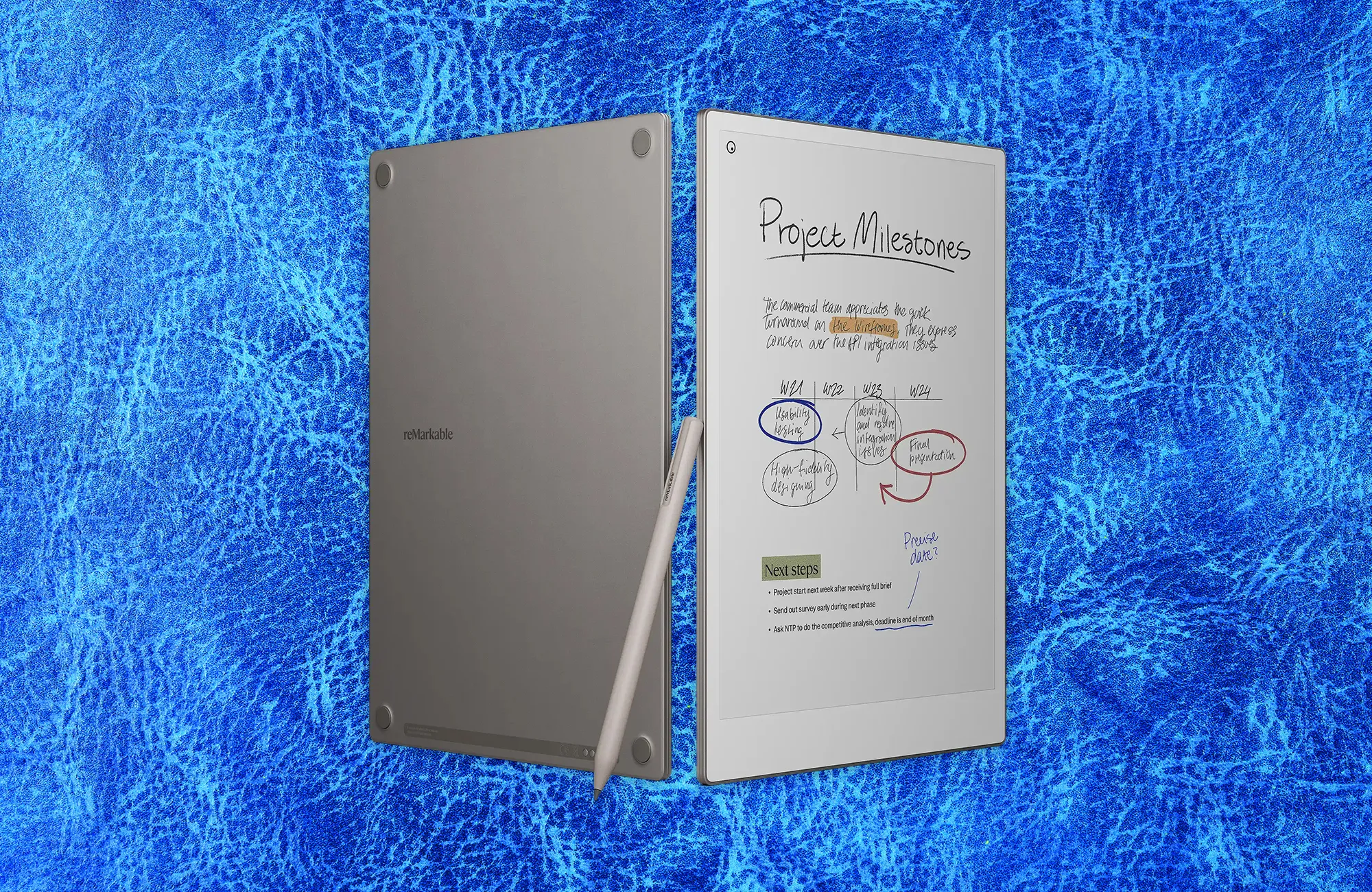
North America remains the largest market for e-ink tablets, valued at $850 million in 2024, with Asia-Pacific the fastest growing region at 9.1 percent CAGR. The category has expanded well beyond basic e-readers, now encompassing devices like the Boox Note Air 5C, the Kindle Scribe Colorsoft, and the Supernote A5 X2, each targeting a slightly different version of the same user: someone who wants to do serious intellectual work without the constant friction of a standard tablet.
The reMarkable Paper Pro's CEO, Phil Hess, has signaled that AI integration is coming but will be handled carefully. "If we're a thinking surface, then the level of integration we have with these thinking-assisted tools like AI... you can expect much more out of that," Hess said. The implication is that AI on an e-ink device will be oriented around the work rather than around keeping the user engaged. Whether that actually plays out differently in practice than AI on an iPad remains to be seen, but the intent reflects the market realities the company is responding to.
The Broader Ecosystem
Beyond phones and tablets, the anti-gadget sensibility is showing up across product categories in ways that do not always get labeled as part the same trend.
Single-purpose physical devices, things like dedicated music players, analog alarm clocks, and standalone GPS units, are seeing renewed interest from people who want to stop using their phone for everything. The instinct is the same: reduce the number of reasons you need to pick up the device that happens to also contain TikTok and your work email.
There is a definite trend toward minimalist, focus-preserving devices, including e-paper readers for distraction-free reading and notification-only smartwatches that do not pull users into attention-draining experiences.
Who Is Actually Buying This Stuff
The demographic picture challenges some obvious assumptions.
Gen Z's adoption of minimalist phones is a powerful indicator that the "more is better" philosophy of the Silicon Valley era is reaching its breaking point. By choosing a device that does less, young people are finding that they can do and feel more.
This is counterintuitive if you think of Gen Z primarily as the generation that grew up on TikTok. But the same generation that was handed iPhones in early adolescence is now the generation most acutely aware of what that did to their attention, their sleep, and their sense of control. 72 percent of Gen Z believe their mental health would improve if apps were less addictive. That awareness is converting, for a growing subset, into buying decisions.
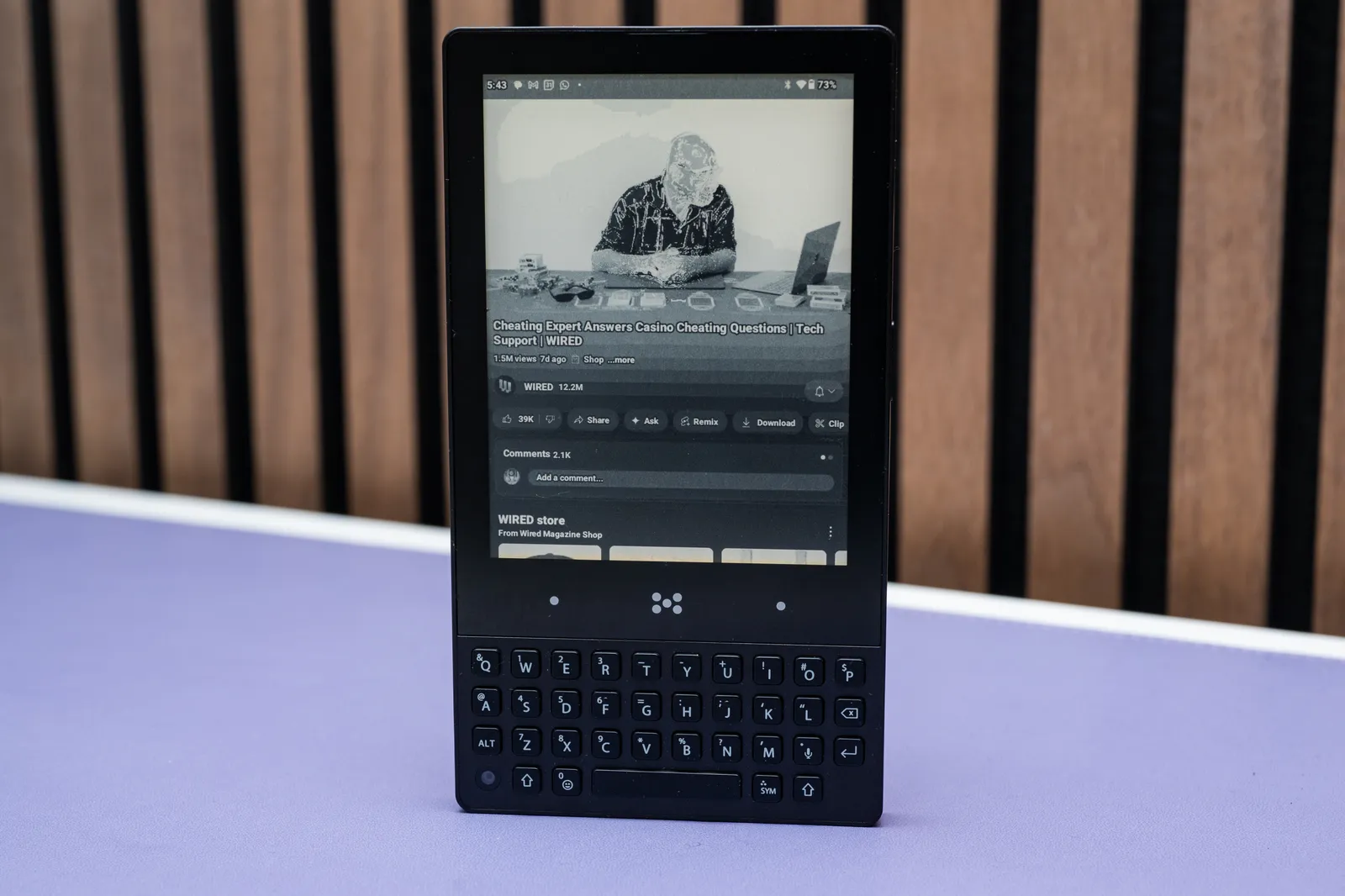
The minimalist phone market is not monolithic, though. It draws from a few different motivations. There are the ideologically committed digital minimalists, many of whom document their phone-free lives extensively, with some irony, on social media. There are the pragmatists who simply want to stop checking their phone every ten minutes and have found that willpower alone does not do it. There are parents who want an alternative for their teenagers. And there are professionals who have decided that a focused mind is a professional asset worth investing in.
The market is characterized by three distinct themes: the "Reliable Classic" led by Nokia, the "Senior and Child Safety" niche focusing on large buttons and SOS features, and the "Premium Detox" movement involving high-end minimalist devices. The Premium Detox segment is the one with the most interesting brand dynamics, because it is where identity signaling, mental health awareness, and consumer tech overlap.
The Business Logic Behind Selling Less
From a pure product standpoint, there is something unusual about the minimalist tech market. These companies are competing not just on features but on the absence of features, and charging for that absence.
The Light Phone III at $799 costs more than many fully capable Android flagship devices. The reMarkable Paper Pro starts at $579 for the device alone, before accessories. These are not budget products positioning themselves as affordable alternatives to mainstream devices. They are premium products selling a specific quality of experience.
That pricing strategy reflects a market reality: the people most motivated to buy these products are often those with the most demanding cognitive work lives, and therefore the most to gain from protecting their attention. A knowledge worker who recovers two productive hours a day from reduced phone distraction can calculate that return in professional terms. A parent trying to manage their child's relationship with screens can calculate it in different terms but with equal urgency.
What the category has figured out is that "doing less" can be a luxury positioning when the thing being avoided has real costs. In an environment where people unlock their phones an average of 96 times per day, or roughly once every ten to twelve minutes, the device that makes that behavior structurally impossible is offering something genuinely scarce.
The Tension in the Market: Useful Limitations vs. Real Friction
The honest version of this conversation has to acknowledge what the critics of minimalist devices get right.
Writing for the New York Times, Brian X. Chen tried the Light Phone III and concluded: "The downsides of a dumber phone chipped away at my enjoyment, and over all I felt more stressed and less capable. I suddenly found myself unable to get into a train station, look up the name of a new restaurant or control my garage door."
That is a real-world friction cost, and it is not trivial. The smartphone is embedded in enough infrastructure, from transit apps to two-factor authentication to contactless payment, that removing it entirely requires a level of pre-planning and inconvenience that not everyone is willing to absorb.
The companies making minimalist devices are aware of this tension and responding to it in different ways. Light is exploring adding two-factor authentication support and contactless payment to the Light Phone. Punkt has focused on premium build quality and security features. The reMarkable ecosystem is adding selective connectivity features without opening the notification floodgates.
The emerging design philosophy seems to be intentional friction: make the things that encourage distraction harder, while making the things that enable essential function easier. It is a harder product problem than it sounds, because the line between essential and distracting is different for every user.
What This Means for the Mainstream Tech Industry
The anti-gadget trend is, so far, a niche market. Minimalist phones represent a small fraction of global handset sales. E-ink tablets are a niche within tablets. The mainstream consumer electronics industry is not fundamentally threatened by the category.
But the trend is pointing at something that the big platform companies and device manufacturers are starting to have to account for: a growing segment of users who believe that the standard smartphone is not designed in their interest, and who are willing to act on that belief.
The dominant lifestyle tech trend is digital detoxing. People are moving toward "dumb phones," e-ink tablets, and devices that limit distractions to improve mental health and focus. That is not a fringe opinion. It is a market signal.
The question for Apple, Google, and Samsung is whether they respond to this by offering more robust focus and limitation tools within their existing platforms, which they have begun doing with features like Focus Mode and app time limits, or whether they treat it as a separate market that will remain small enough to ignore.
The companies in the minimalist device space are largely betting on the latter. "It's not easy to be a dwarf in this field of giants," Punkt founder Petter Neby told CNN. He argued there is a necessity for feature phone businesses to exist, and even thrive, amid cultural change.
The bigger pressure on mainstream manufacturers may ultimately come not from competing products but from regulation. Several countries are moving toward or already implementing restrictions on smartphones in schools. The U.S. Surgeon General has called for warning labels on social media platforms. The cultural conversation around attention, mental health, and deliberate technology use has shifted enough that the business model of maximizing engagement is facing friction it did not have five years ago.
The Real Insight Behind the Trend
At its core, the anti-gadget movement is about something relatively simple: people have discovered that the costs of being always connected are real, measurable, and worth paying money to reduce.
As Vail Health licensed therapist Matt Lawson has noted: "We weren't biologically created to take in this much input, between social media, emails and the internet in general." His point is not that technology is bad. It is that unregulated consumption of it produces predictable outcomes, and that recognizing those outcomes is the first step toward addressing them.
The tech industry spent roughly fifteen years optimizing for engagement, building products that were as compelling and habit-forming as possible. The anti-gadget trend is a market response to the downstream effects of that optimization, produced not by critics or regulators but by consumers who are spending their own money to draw different boundaries.
That the devices being sold to enable those boundaries are themselves technically sophisticated, thoughtfully designed, and, in some cases, quite expensive is the central irony of the moment. The hottest consumer tech of 2026 is selling the proposition that you should use technology less. And it turns out people are willing to pay for that.
FAQ
What is the anti-gadget trend in tech?
The anti-gadget trend refers to growing consumer demand for intentionally limited technology products, including minimalist phones with no social media access, e-ink tablets with no notification systems, and single-purpose devices designed to reduce screen time and improve focus. The trend is driven by growing awareness of digital fatigue and its mental health consequences.
What is a dumb phone and why are people buying them in 2026?
A dumb phone, more accurately called a minimalist or feature phone, is a mobile device that strips out the features that encourage excessive use, typically social media, web browsing, and addictive apps, while retaining calling, texting, and essential navigation tools. In 2026, people are buying them to reduce screen time, improve focus, and take back control over their attention, with premium models like the Light Phone III retailing for $799 and targeting users who see intentional disconnection as worth paying for.
What is the Light Phone and how does it work?
The Light Phone is a minimalist mobile device made by the company Light. The current model, the Light Phone III, features a grayscale OMLED display, a limited set of tools including maps, a camera, and a music player, and deliberately excludes email, web browsing, and social media. It is designed to function as a complete phone replacement for users committed to reducing their smartphone use.
Are e-ink tablets worth buying for reducing screen time?
E-ink tablets like the reMarkable Paper Pro and Kindle Scribe Colorsoft offer a paper-like display that does not emit blue light, typically exclude notification systems, and are designed around reading, writing, and focused work rather than entertainment. For people who need to do substantive intellectual work but want to avoid the distraction patterns of standard tablets, they have a strong track record. The tradeoff is a more limited feature set and higher price points.
Is the dumb phone trend actually growing or just a niche?
The trend is real but remains a niche within the broader handset market. Feature phone sales in Western Europe grew by 4 percent, and the global feature phone market was valued at approximately $3.2 billion in 2024. Search interest in minimalist phones peaked significantly in 2025. Premium minimalist devices from companies like Light, Punkt, and Mudita are establishing viable product lines, though they represent a small percentage of total smartphone sales.
How much screen time is the average American getting in 2025?
According to available data, the average screen time for adults in the United States reached approximately 7 hours and 3 minutes per day in 2025, counting all devices including work computers, smartphones, and televisions. Global smartphone-specific daily use averaged 4.6 hours per person, a 20 percent increase since 2022.
Does reducing screen time actually improve mental health?
Research published in BMC Medicine in 2025 conducted a randomized controlled trial and found that reducing smartphone screen time to two hours or less per day over three weeks produced measurable improvements in stress levels, overall well-being, depressive symptoms, and sleep quality. This study was notable for establishing a causal rather than merely correlational link between phone use reduction and mental health improvements.
What are the downsides of minimalist phones?
The primary downsides are practical friction costs: modern smartphones are embedded in a lot of everyday infrastructure, including transit apps, contactless payment, two-factor authentication, and navigation, that minimalist devices either do not support or support imperfectly. Users who switch often need to plan ahead differently and accept some inconveniences. Reviewers have noted that the adjustment period can feel stressful before it feels liberating, and that the transition works better for people who commit to it longer term rather than treating it as a short experiment.
Related Articles
 Dani
Dani
 Dani
Dani
 Dani
Dani