The idea has circulated in tech renderings and patent filings for years: a phone that folds not once but twice, producing something genuinely tablet-sized from a device that fits in a pocket. The Huawei Mate XT demonstrated that the form factor was physically possible. The question was whether Samsung, with its decade of foldable manufacturing experience and its global distribution, could bring it to market as a real consumer product.
On December 1, 2025, Samsung answered that question. The Galaxy Z TriFold launched in South Korea on December 12 and arrived in the United States on January 30, 2026, priced at $2,899. It sold out almost immediately after the U.S. launch, with no trade-in discounts required and no carrier incentives pushing the volume. Samsung is reportedly producing only 100,000 to 200,000 units, making availability as constrained as the ambition behind the hardware.
The Galaxy Z TriFold is the most interesting smartphone Samsung has ever made. It is also, at this point in its first-generation life, a device with real limitations that buyers need to understand before committing nearly $3,000.
What the Galaxy Z TriFold Actually Is
Three Panels, Two Hinges, One Pocket
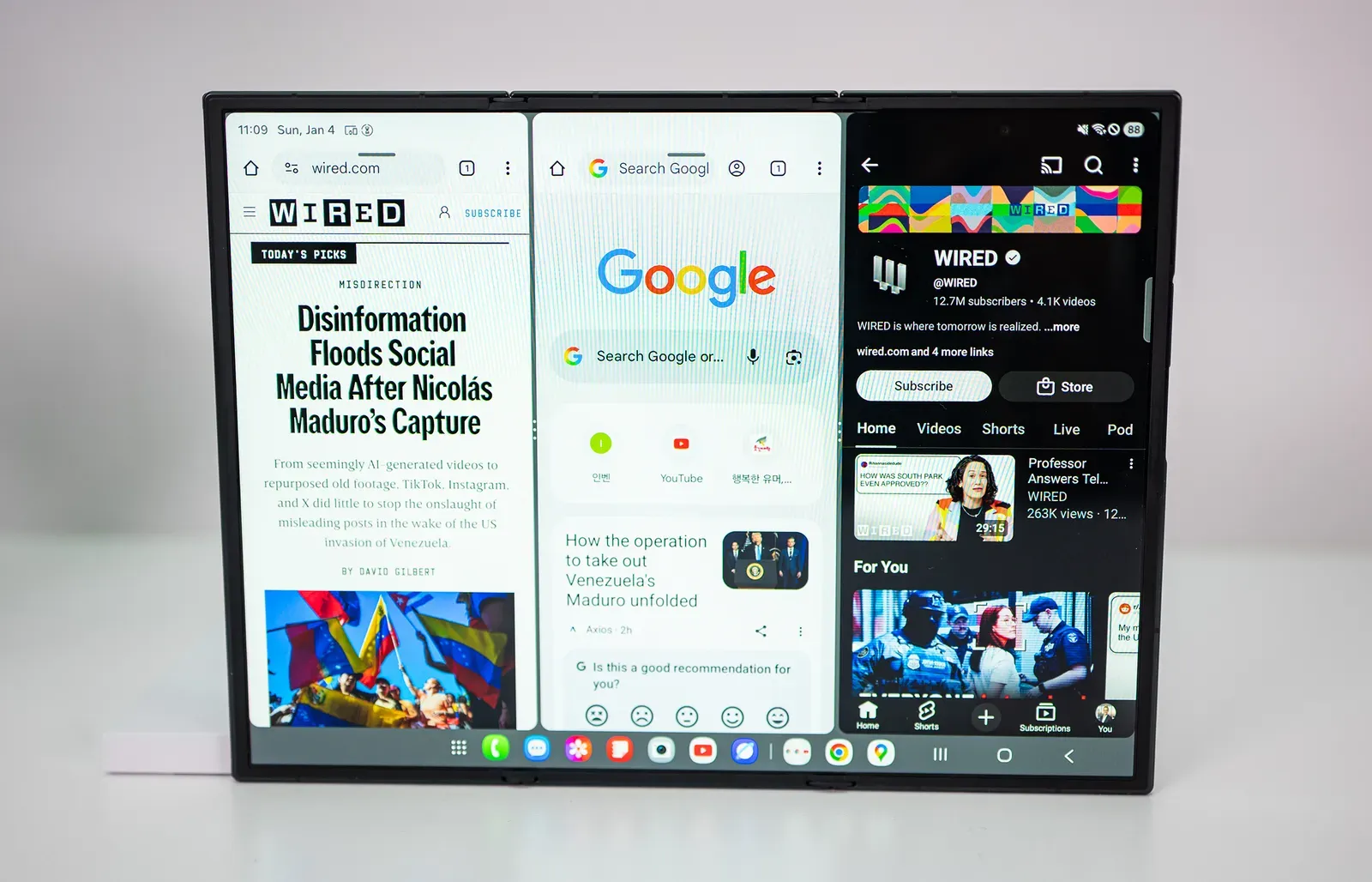
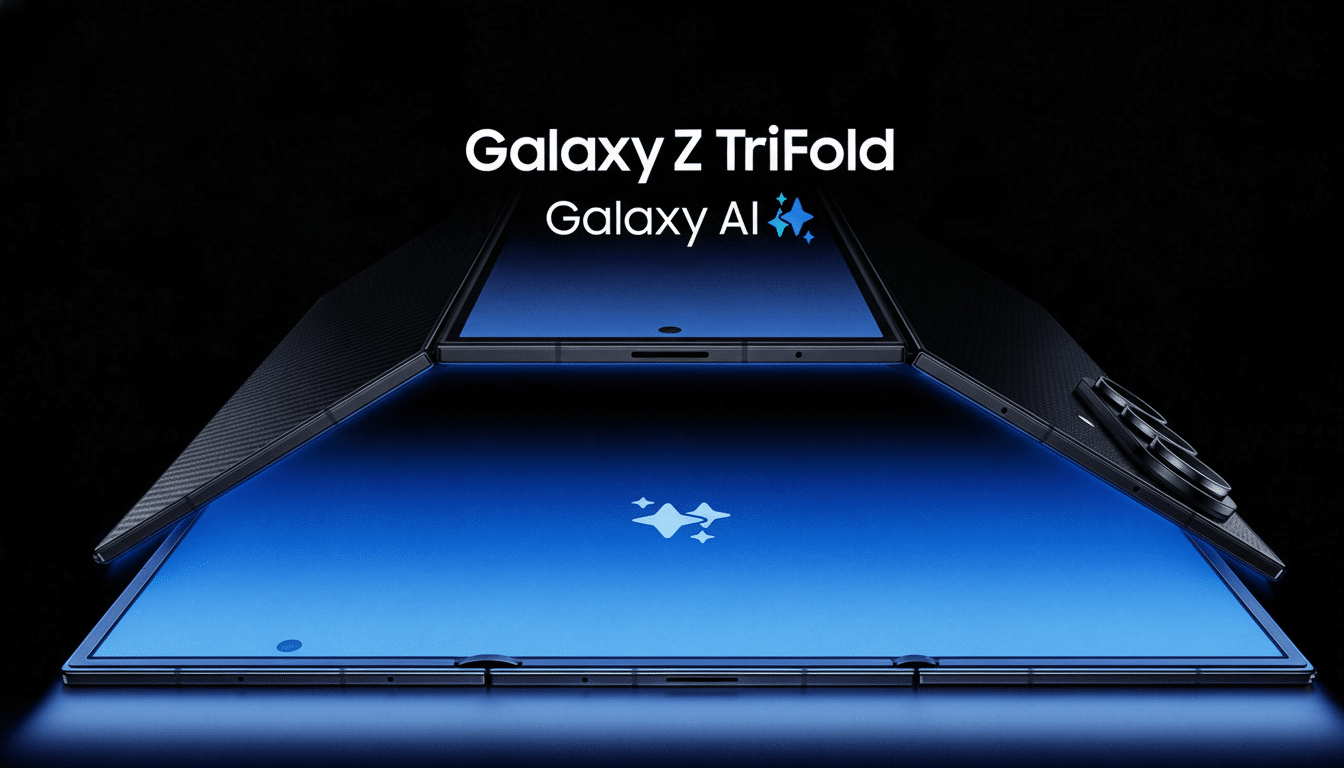
The TriFold's architecture is straightforward to describe and genuinely difficult to execute. The device has three separate panels connected by two hinges, all folding inward. In its closed state it looks like a premium flagship phone with a 6.5-inch Dynamic AMOLED cover screen. Open the first fold and it resembles a conventional foldable like the Galaxy Z Fold 7. Open the second fold fully and a 10-inch Dynamic AMOLED main display is revealed, making it the largest screen ever on a Galaxy smartphone.
The design makes a point of its own thinness. At its narrowest unfolded point, the TriFold measures just 3.9 millimeters, thinner than a standard credit card stack. The central panel, which also carries the outer display, measures 4.2mm, and the panel with the fingerprint sensor measures 4.0mm. Folded closed, the device is 12.9mm thick and 159.2 x 75.0mm in footprint, meaning it genuinely fits in a normal pants pocket.
Samsung built a sequential folding safety system into the device. Users must fold the left panel first and then the right. Attempting to fold it out of sequence triggers haptic feedback and an on-screen warning. This is not a gimmick — it is a necessary protection mechanism for a display architecture that can be damaged by incorrect manipulation.
Core Specifications
| Component | Specification |
|---|---|
| Main display | 10-inch Dynamic AMOLED, 2160 x 1584, 269 ppi, 120Hz, 1600 nits |
| Cover screen | 6.5-inch Dynamic AMOLED, 2520 x 1080, 422 ppi, 120Hz, 2600 nits |
| Processor | Snapdragon 8 Elite for Galaxy (customized) |
| RAM | 16GB |
| Storage | 512GB (U.S.) / 512GB or 1TB |
| Main camera | 200MP wide, 12MP ultrawide, 10MP 3x telephoto |
| Selfie cameras | 10MP cover screen, 10MP inner display |
| Battery | 5,600 mAh three-cell system |
| Charging | 45W wired, 15W wireless |
| Weight | 309 grams |
| OS | Android 16, One UI 8 |
| Water resistance | IP48 |
| Price | $2,899 |
The Experience: What Changes When a Phone Has a 10-Inch Screen
Multitasking Finally Makes Sense
Every foldable phone promises a better multitasking experience. The Galaxy Z Fold 7's 7.6-inch unfolded display delivered a genuine improvement over conventional smartphones, but it still felt constrained when running three apps simultaneously. On a 10-inch display that genuinely approaches iPad Pro territory, that constraint dissolves.
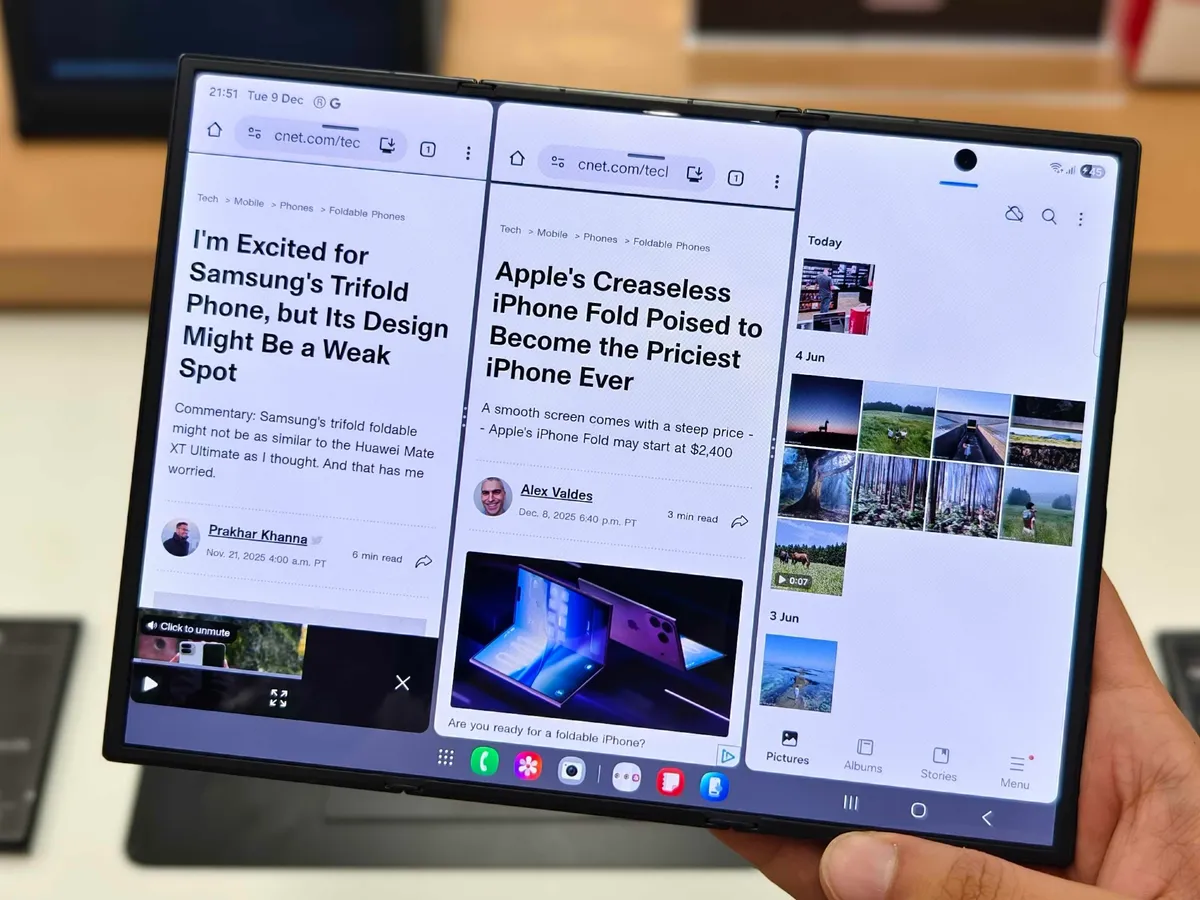
Reviews from SamMobile and other outlets have noted that running three apps side by side on the TriFold's main display makes the feature feel practical rather than forced. Each panel has enough horizontal real estate to actually use the content it contains. Reading a document, monitoring email, and running a messaging app simultaneously stops being a demonstration of technical capability and becomes a functional workflow.
Samsung DeX, the company's desktop mode that transforms the interface into a more traditional windowed computing environment, works on the TriFold without requiring an external monitor. Combined with the 10-inch display and a Bluetooth keyboard, the result is something close to a genuine portable workstation. This is not a new capability for Samsung's foldables, but the usable surface area of the TriFold's main display makes it the first device in the lineup where DeX feels like a primary use case rather than an add-on feature.
The cover screen handles the standard smartphone experience. At 6.5 inches and 422 ppi, it is sharper than most flagship displays and comfortably usable for everything that does not require the main panel. Samsung designed One UI 8 to move naturally between the two states, so switching from the folded phone to the full tablet is a smooth software transition rather than a jarring context change.
AI Integration on a Bigger Canvas
Gemini Live is integrated as the primary AI assistant, capable of responding to questions with conversational continuity and, in the live camera mode, analyzing what the camera sees in real time. On a 10-inch display, the ability to share your camera view and receive AI commentary about what is visible has a different practical utility than on a conventional phone. The display surface is large enough to make document analysis, image editing guidance, and multitask coordination genuinely useful during a Gemini Live session rather than feeling crowded.
Samsung also includes Writing Assist for organized summaries, Transcript Assist for voice recording transcription, and Generative Edit for AI-powered photo manipulation. The TriFold comes with a six-month Google AI Pro trial, including video generation through Veo3 and 2TB of cloud storage.
The Durability Question That Cannot Be Ignored
More Folding Points, More Failure Points
The Galaxy Z TriFold's durability picture is the most important consideration for any potential buyer, and it needs to be addressed honestly.
Independent testing by JerryRigEverything, the most widely followed durability tester for smartphones, produced concerning results. The TriFold became the first Samsung foldable to fail the channel's bend test. Under pressure applied in the unintended direction, pixels tore and went dark almost immediately, and the lower section of the right hinge snapped. The ultra-thin 3.9mm frame that makes the device remarkable when unfolded leaves almost no structural reinforcement for off-axis force. Samsung's own Galaxy Z Fold 7 performed significantly better under comparable test conditions.
The fold count test conducted by Korean YouTube channel OMG_electronics found the device reached 144,000 folds in automated testing before the hinge lost friction and could no longer open and close properly. Samsung's marketing claims 200,000 folds, a figure the independent test fell 28 percent short of reaching. For context, the Galaxy Z Fold 7 carries a 500,000-fold rating, meaning the TriFold represents a significant regression in rated durability from Samsung's established single-hinge foldable.
Beyond stress testing, real-world early adopter reports have documented spontaneous display failures in devices that owners describe as well-cared-for. At least three cases of display failures have been documented in Samsung's own support forums, including a device whose inner display stopped rendering anything after approximately one month, and another whose left panel developed a line of white pixels running down the fold crease. Samsung does not currently offer insurance coverage for the TriFold in the United States. The company does offer a one-time 50 percent discount on display repair as a purchase incentive, which suggests internal acknowledgment that display service costs are a relevant concern.
These issues need to be placed in proportion. The documented failures represent a small fraction of the total units shipped, and Samsung's warranty covers manufacturing defects. The TriFold was subjected to catastrophic off-axis force in the JerryRigEverything test, which no device including conventional slab phones is designed to withstand. Automated fold-count testing that runs continuously for nearly eight days is not representative of normal daily use.
The honest framing is this: the Galaxy Z TriFold is a first-generation device with a fundamentally more complex mechanical architecture than any previous Samsung phone, and the engineering tradeoffs required to achieve 3.9mm thinness across a three-panel design have produced a device that requires more careful handling than a Galaxy S26 Ultra and carries a meaningfully higher repair risk if damaged. At $2,899 without insurance, that risk profile deserves serious consideration before purchase.
Who This Phone Is For, and Why the Price Is What It Is
The Early Adopter Premium
Samsung is reportedly selling the TriFold at or below production cost in its home Korean market, with price variation across regions reflecting different margin targets and regulatory costs. The company has acknowledged the device requires custom components throughout, and the engineering complexity involved in a dual-hinge inward-folding design makes manufacturing cost control difficult at the production volumes Samsung is currently running.
Jeff Moore, Principal of Wave7 Research, described the launch dynamic accurately: "We read the Galaxy Z TriFold launch line to be an indication of solid interest among techies and Samsung fans, not that the TriFold will be broadly adopted. I suspect that it will have a niche among techies and enterprise users."
That assessment is correct, and it clarifies who the TriFold is genuinely for. A specific buyer profile makes rational sense for this device:
Someone who currently carries both a flagship phone and a tablet, spending money on two devices and managing two screen sizes, two battery charges, and two points of connectivity. The TriFold consolidates that into a single device at a premium price point that is still less than the combined cost of a Galaxy S26 Ultra and an iPad Pro.
A professional who spends extended time reading, annotating, or working in documents on mobile and finds the 6-inch form factor genuinely limiting for those workflows, but cannot justify carrying a tablet as a second device.
An early adopter who places high value on being at the frontier of mobile hardware development and accepts the first-generation risk that implies.
For anyone outside those profiles, the rational recommendation is to wait. Samsung has not confirmed a second-generation TriFold, and the durability questions are real enough that buying one as a daily driver without backup options or insurance coverage is a meaningful financial risk.
The Competitive Context
What This Means for the Industry
The Galaxy Z TriFold's arrival changes the competitive conversation in foldable mobile hardware in ways that will matter beyond Samsung's own product roadmap.
Apple is widely reported to be developing a foldable iPhone, with various supply chain analysts pointing toward a 2026 or 2027 debut depending on which reports prove most accurate. A PhoneArena headline from the post-TriFold news cycle captured the tension in Apple's position: "Apple was right to delay the foldable iPhone, just look at the Galaxy Z TriFold's broken displays." The durability challenges Samsung is navigating in the TriFold's first generation are precisely the engineering obstacles that reportedly led Apple to delay its own foldable program until the technology matured sufficiently.
Huawei's Mate XT, which demonstrated tri-fold form factor viability in 2024, remains unavailable in the United States and most Western markets due to trade restrictions. Samsung is therefore the only company currently selling a consumer trifold to American buyers, giving the TriFold a first-mover position in a category that competing manufacturers will not be able to challenge domestically in the near term.
The Galaxy Z Fold 8, expected later in 2026, will offer a significant data point on how quickly Samsung can translate TriFold engineering learnings back into its mainstream foldable lineup. The durability and hinge refinements required for the TriFold's dual-hinge system should produce improvements in the single-hinge Fold 8 that directly address the limitations the TriFold has exposed.
The Verdict
The Samsung Galaxy Z TriFold is a genuinely remarkable piece of hardware engineering. The fact that it exists at all, that Samsung managed to produce a pocketable phone that unfolds into a 10-inch tablet while keeping the device thinner when unfolded than many conventional smartphones are, is a legitimate achievement. The Snapdragon 8 Elite runs it properly, the 10-inch display is as impressive in person as the specifications suggest, and the multitasking and productivity use cases that the form factor enables are real.
The $2,899 price, the durability concerns documented through independent testing and early adopter reports, the absence of insurance coverage, and Samsung's own uncertain posture on a sequel all point toward the same conclusion: this is a first-generation device for buyers who specifically want this exact experience and are prepared for the risk that comes with being first.
For that buyer, it delivers something no other phone can. For everyone else, watching what Samsung does with the second generation will be the smarter move.
Frequently Asked Questions
What is the Samsung Galaxy Z TriFold and when was it released?
The Samsung Galaxy Z TriFold is Samsung's first tri-fold smartphone, featuring two hinges that allow the device to fold into a compact pocket form while unfolding into a 10-inch display. It was announced December 1, 2025, launched in South Korea on December 12, and became available in the United States on January 30, 2026, at $2,899 with 512GB storage in Crafted Black.
How large is the Galaxy Z TriFold when fully unfolded?
When fully unfolded, the Galaxy Z TriFold reveals a 10-inch Dynamic AMOLED main display at 2160 by 1584 resolution, making it the largest screen ever on a Galaxy smartphone. The device measures 159.2 by 214.1mm when open, achieving a tablet-sized footprint from a device that is only 3.9mm thick at its thinnest point.
What are the main durability concerns with the Galaxy Z TriFold?
Independent testing by JerryRigEverything found the TriFold failed its bend test when pressure was applied in the unintended direction, making it the first Samsung foldable to fail the test. Automated fold-count testing found the device reached 144,000 folds before hinge degradation, falling short of Samsung's 200,000-fold marketing claim by 28 percent. Early adopters have also reported a small number of spontaneous display failures. Samsung offers a one-time 50 percent discount on display repair at purchase but does not currently offer insurance coverage for the device in the United States.
What is the battery life like on a device this large?
The Galaxy Z TriFold uses a three-cell battery system totaling 5,600 mAh, the largest battery Samsung has placed in any foldable phone. The cells are distributed across the three panels for balanced power delivery. Samsung claims all-day battery life under typical use, and the 45W wired charging can bring the device to approximately 50 percent in around 30 minutes. Wireless charging at 15W is also supported.
How does the Galaxy Z TriFold compare to the Galaxy Z Fold 7?
The TriFold offers a substantially larger unfolded display at 10 inches versus the Fold 7's 7.6 inches, making multitasking and productivity use cases meaningfully more practical. Both use the Snapdragon 8 Elite processor and 16GB RAM. The TriFold has a larger battery and a more capable 200MP camera system. The Fold 7 offers significantly better durability ratings, with a 500,000-fold rating compared to the TriFold's 200,000, better structural integrity under independent testing, and a lower starting price at $1,899 versus $2,899.
Is the Galaxy Z TriFold available outside the United States?
The TriFold launched in South Korea in December 2025 and rolled out to the U.S., China, Taiwan, Singapore, and the UAE in early 2026. The device is not currently available in Europe, which several analysts attribute to potential challenges meeting European repairability and sustainability certification requirements for a limited-production-volume device. Samsung has not announced a European launch timeline.
Should you buy the Galaxy Z TriFold now or wait for a second generation?
For buyers who specifically want the trifold form factor and the unique productivity experience it enables, the current device delivers that experience. For most buyers who are curious about the form factor but do not have a specific use case that justifies the premium, waiting for a second generation that addresses the current durability limitations and potentially comes with insurance coverage is the more rational decision. Samsung has not confirmed a sequel, though analyst and industry expectation is that a TriFold 2 would follow if the first generation demonstrates sufficient market demand.
Related Articles
 Dani
Dani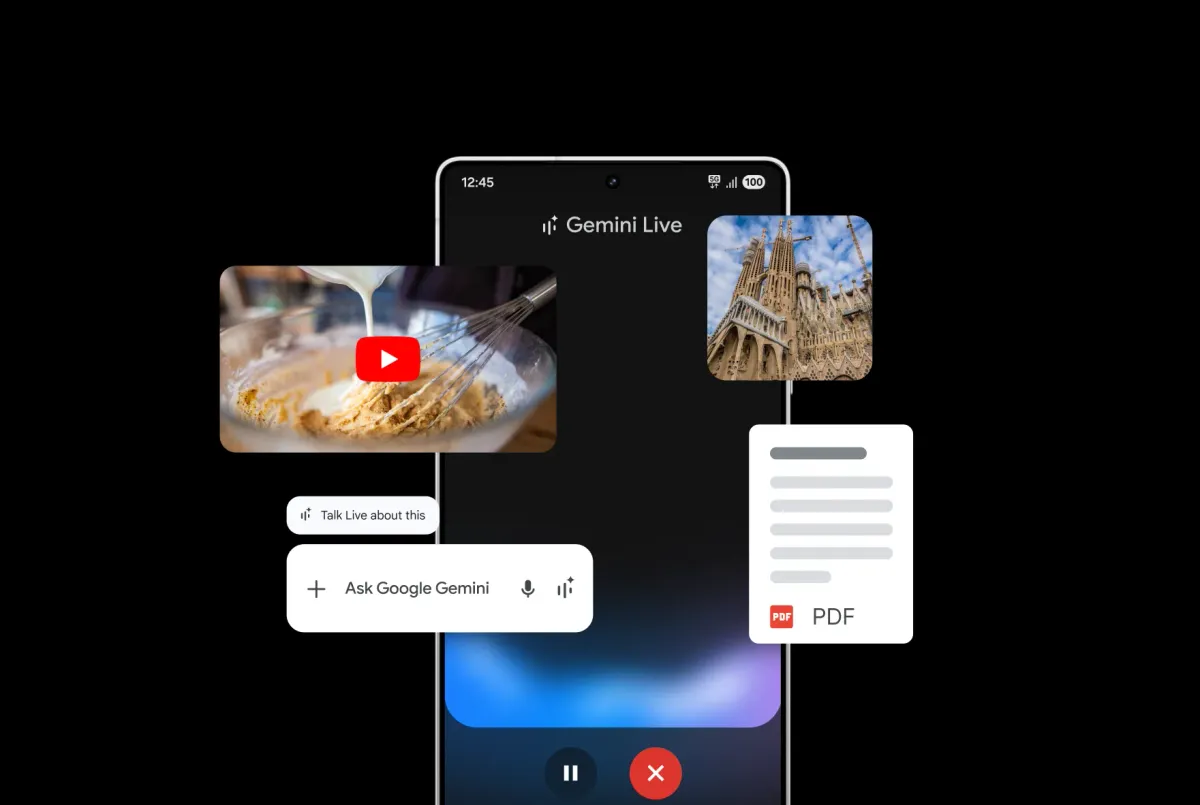
 Dani
Dani
 Mark
Mark