Let me tell you something—if you're even remotely interested in technology, Samsung's presence at CES 2026 is something you absolutely cannot afford to ignore. I've been following tech shows for years, and I can confidently say that what Samsung is bringing to Las Vegas this year is unlike anything we've seen before.
The Korean tech giant isn't just showing up with a few new products and calling it a day. No, they've literally built an entirely new, massive exhibition space at The Wynn hotel just to showcase their ambitious AI vision. When a company builds a whole new venue just for their CES presentation, you know they mean business.
In December alone, Samsung pushed out 18 press releases—and that doesn't even count the embargoed stuff that's been rolling out during the show itself. They're firing on all cylinders, and honestly, it's exciting to watch. From revolutionary TV technology that might make you forget about OLEDs to gaming monitors that sound like they're from the future, Samsung has something for everyone at CES 2026.
So grab your favorite beverage, get comfortable, and let me walk you through everything Samsung is bringing to the biggest tech show on Earth. Trust me, there's a lot to cover.
The "Companion to AI Living" Vision: What's Samsung Really Up To?
Before we dive into the specific products, I think it's worth understanding Samsung's broader strategy at CES 2026. The company unveiled what they're calling their "Companion to AI Living" vision at The First Look event, held at the Latour Ballroom at the Wynn Las Vegas.
TM Roh, CEO and Head of Samsung's Device eXperience (DX) Division, opened the event by explaining how Samsung sees AI not just as a feature, but as a philosophy that connects everything—from R&D and product development to operations and user experience. The idea is that Samsung's vast, AI-enabled, connected ecosystem can provide users with a true AI companion experience in their daily lives.
Here's the key quote that really sums it up: "Samsung is building a more unified, more personal experience across mobile, visual display, home appliances and services." That's not just marketing speak—it's a genuine roadmap for how Samsung sees all their products working together.
And they have the scale to back it up. As of December 2025, SmartThings now serves more than 430 million users. That's not a typo—430 million people are using Samsung's smart home platform. That kind of scale gives Samsung insights that other companies simply can't match.
The exhibition space itself is newsworthy. Samsung describes it as an "industry-leading, large-scale premium standalone exhibition space" where they can showcase AI innovation "with no limitations." I'll be honest—that kind of confidence is either impressive or overblown, and based on what I've seen so far, it's leaning heavily toward impressive.
Micro RGB TVs
Okay, let me break this down because Micro RGB is genuinely exciting technology, and I want you to understand why it matters.
Traditional LCD TVs use white LEDs for backlighting, then pass that light through color filters to create red, green, and blue. The problem? You lose a lot of light in those filters, and color accuracy suffers as a result.
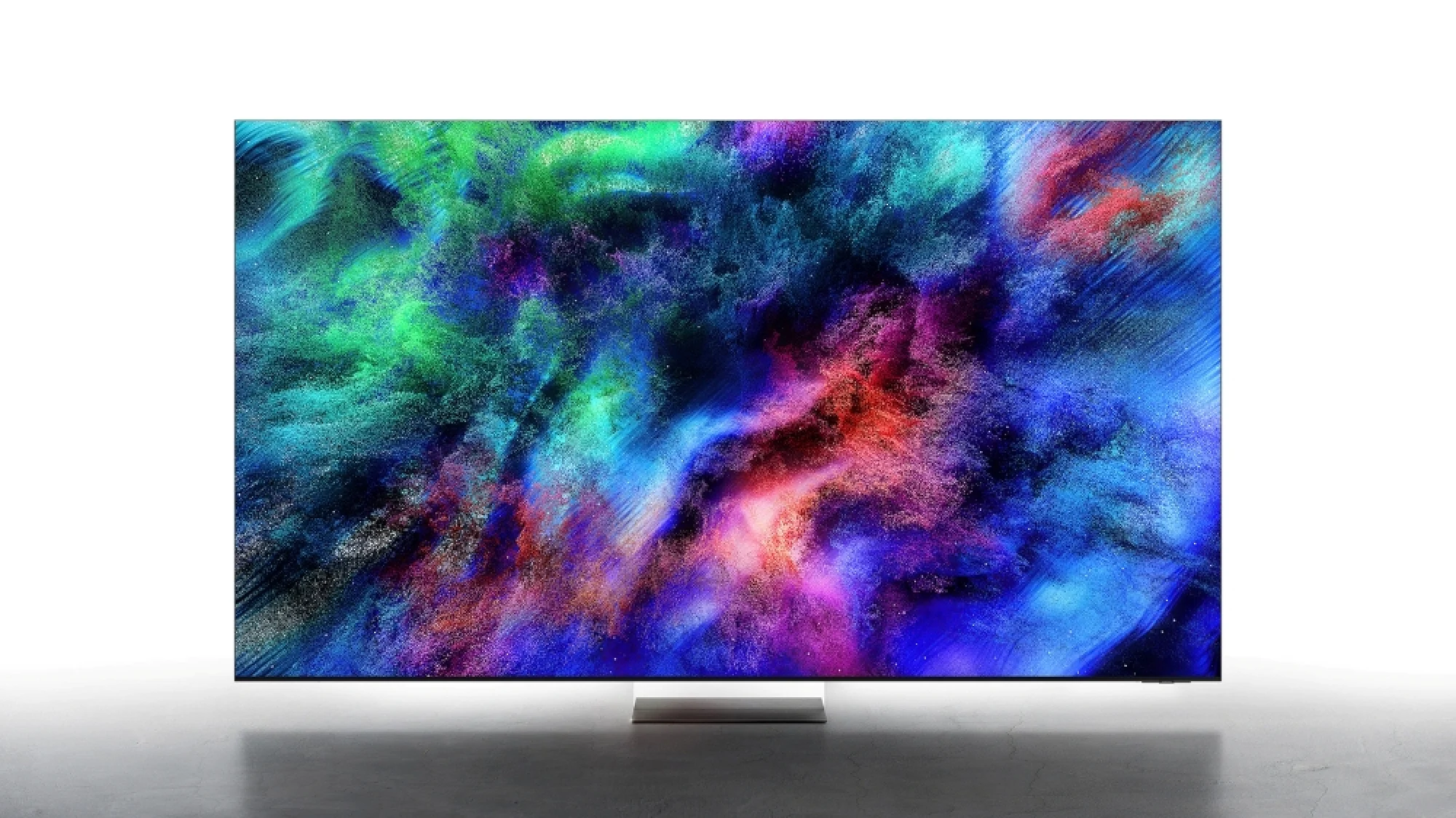
Micro RGB takes a completely different approach. Instead of white LEDs, it uses tiny individual red, green, and blue LEDs—each smaller than 100 micrometers—that emit light independently. Each little LED creates its own pure color, which means incredibly precise light control and color accuracy that approaches (and in some ways matches) what you'd get from OLED.
The result? TVs that should come close to OLED picture quality but potentially at lower prices. That's a big deal for anyone who's been eyeing those gorgeous OLED displays but couldn't quite justify the premium price tag.
Samsung's 2026 Micro RGB Lineup
Samsung introduced a 115-inch Micro RGB TV in 2025, but for 2026, they're going much, much bigger in terms of lineup options. The new Micro RGB TV lineup will be available in 55-, 65-, 75-, 85-, 100-, and 115-inch models. That's a full range from sizes that fit in normal living rooms all the way up to home theater territory.
But the real showstopper at CES 2026 is the new 130-inch Micro RGB TV (R95H model)—the world's first display of this size using Micro RGB technology. Hun Lee, Executive Vice President of Samsung's Visual Display Business, called it "the peak of our picture quality innovation."
And honestly? The specs back that up. The 130-inch model features what Samsung calls "Micro RGB Precision Color 100," which has been certified by VDE to achieve 100% of the BT.2020 wide color gamut. For those who don't speak color science, that's basically the gold standard for color accuracy—we're talking hyper-real hues and brilliant brightness that should make everything on screen look incredibly lifelike.
The AI Features That Make These TVs Smart
What really sets the 2026 Micro RGB lineup apart isn't just the display technology—it's the intelligence built into every panel.
The Micro RGB AI Engine Pro uses a next-generation AI chipset for precise frame-by-frame clarity and realism. Combined with 4K AI Upscaling Pro and AI Motion Enhancer Pro, these TVs can refine brightness, smooth out motion, and add clarity in real time. That's particularly important for sports fans who want every play to look smooth and crisp.
Then there's Vision AI Companion, Samsung's multi-agent platform that combines large language model (LLM) intelligence with natural Bixby voice control. You can have actual conversations with your TV—asking it to find content, getting recommendations, even asking questions while you're watching something. It can enable Live Translate for foreign language content, generate custom wallpapers, and integrate with services like Perplexity for web search.
For sports fans specifically, AI Soccer Mode Pro automatically adapts picture and motion settings when it detects soccer games. AI Sound Controller Pro lets you separately adjust the volume of crowd noise, commentary, and background music. Imagine being able to turn down the announcers while keeping the roar of the crowd—that's the kind of personalization we're talking about.
Should You Care About Micro RGB?
Here's my honest take: Micro RGB represents a genuinely significant step forward in TV technology. It's not just Samsung hyping up incremental improvements—this is a new approach to display technology that addresses real limitations of current LCD/Mini-LED systems.
That said, pricing hasn't been announced yet, and that's going to be the key factor for most people. If Samsung can deliver Micro RGB at prices significantly below OLED, this could be the technology that brings premium picture quality to mainstream consumers. If it's priced at or above OLED levels, the value proposition becomes murkier.
We're still early in the Micro RGB journey—both Samsung and LG are pushing this technology, and Sony is rumored to be working on something similar called "True RGB." Competition is good for consumers, so I'm optimistic about where this is heading.
Gaming Monitors
If you're a gamer, this is the section where you should really pay attention. Samsung's 2026 Odyssey gaming monitor lineup is, frankly, insane. They're introducing five new models that push resolution and refresh rates into territory that wasn't possible even a year ago.
Odyssey 3D with 6K Glasses-Free 3D
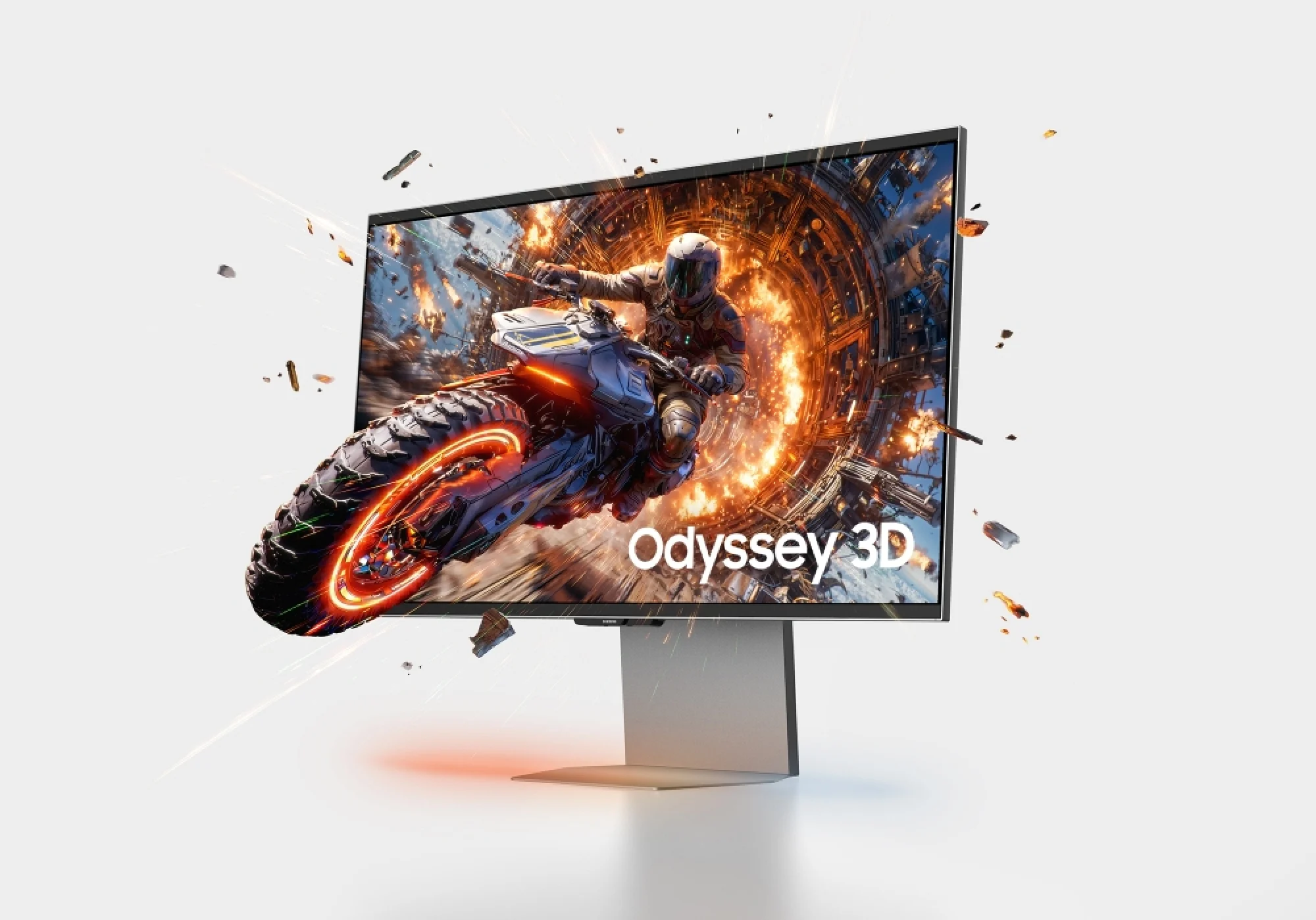
The headline grabber is the 32-inch Odyssey 3D (G90XH model), which Samsung claims is the world's first 6K display with glasses-free 3D. Yes, you read that correctly—6K resolution and 3D without needing to wear anything on your face.
The technology behind it is genuinely clever. It uses real-time eye tracking to adjust depth and perspective based on where you're looking. As you move your head, the display adapts to maintain the 3D illusion. The result is a layered sense of dimension that creates smooth, uninterrupted gameplay without requiring a VR headset.
The specs are impressive beyond the 3D aspect: 6K resolution (6,144 x 3,456 pixels), a 165Hz refresh rate that can boost to 330Hz through Samsung's Dual Mode feature, and a 1ms gray-to-gray response time. For fast action games, those specs mean movements stay sharp and smooth even during the most intense moments.
Samsung has partnered with game studios to optimize 3D effects for specific titles. Games like The First Berserker: Khazan, Lies of P: Overture, and Stellar Blade will offer enhanced 3D that adds dimensionality to terrain, distance, and object separation beyond what you'd experience in standard 2D.
I'll admit I'm cautiously optimistic about glasses-free 3D. We've seen this technology attempted before without mainstream success, but the combination of eye tracking and high resolution might finally crack the code. At the very least, it's something I want to experience firsthand before making a judgment.
Odyssey G6 with 1,040Hz Refresh Rate
For competitive gamers who prioritize frame rate above all else, Samsung has the 27-inch Odyssey G6 (G60H model)—the world's first 1,040Hz gaming monitor.
Now, I need to be clear about how this works. The 1,040Hz refresh rate is achieved through Dual Mode at HD resolution. At native QHD resolution, it supports up to 600Hz. That's still absolutely wild—600Hz is more than enough for any human eye to appreciate, and the 1,040Hz mode provides what Samsung calls "esports-level motion clarity" for professional-level competitive gaming.
The monitor supports both AMD FreeSync Premium and NVIDIA G-Sync Compatible technologies, so you'll get tear-free performance regardless of which graphics card camp you're in.
The Odyssey G8 Family
Samsung is also expanding its Odyssey G8 series with three distinct models, each targeting different priorities.
The 32-inch Odyssey G8 (G80HS) is the industry's first 6K gaming monitor (separate from the 3D model). It delivers native 165Hz performance with Dual Mode supporting up to 330Hz in 3K mode. This is designed for users who want both the extreme resolution for immersive gaming and creative work, plus the option to drop down to 3K for higher frame rates when needed.
The 27-inch Odyssey G8 (G80HF) offers 5K resolution with native support up to 180Hz and Dual Mode boosting to 360Hz in QHD. It's a sharper option for gamers who want that extra resolution without going all the way to 6K.
For users who prioritize contrast and color over extreme resolution, the 32-inch Odyssey OLED G8 (G80SH) features a 4K QD-OLED panel with a 240Hz refresh rate. It includes Glare Free viewing, 300-nit brightness, VESA DisplayHDR True Black 500 certification, and DisplayPort 2.1 (UHBR20) supporting up to 80Gbps bandwidth for seamless HDR and VRR playback.
All three G8 models support AMD FreeSync Premium Pro and NVIDIA G-Sync Compatible for stable, tear-free performance.
My Take on the Gaming Monitor Lineup
Samsung has been the global leader in gaming monitors with refresh rates over 144Hz for several years now, holding about 18.8% of the market. This lineup shows they're not content to rest on that success.
The 6K 3D monitor is the attention-grabber, but I think the G6's 1,040Hz refresh rate might be more immediately impactful for competitive gamers. And the OLED G8 offers a compelling option for gamers who want the best of both worlds—great picture quality and gaming performance.
Pricing will be announced later, but expect premium prices for these flagship features. Still, if you're in the market for a new gaming monitor in 2026, you'd be doing yourself a disservice not to at least consider what Samsung is offering.
The Galaxy Z TriFold: Samsung's Most Ambitious Foldable Yet
I've been waiting to talk about this one. The Samsung Galaxy Z TriFold was officially unveiled in early December, and while it's already on sale in Korea, CES 2026 is the first chance for many people to see this remarkable device up close.
What Makes It Special
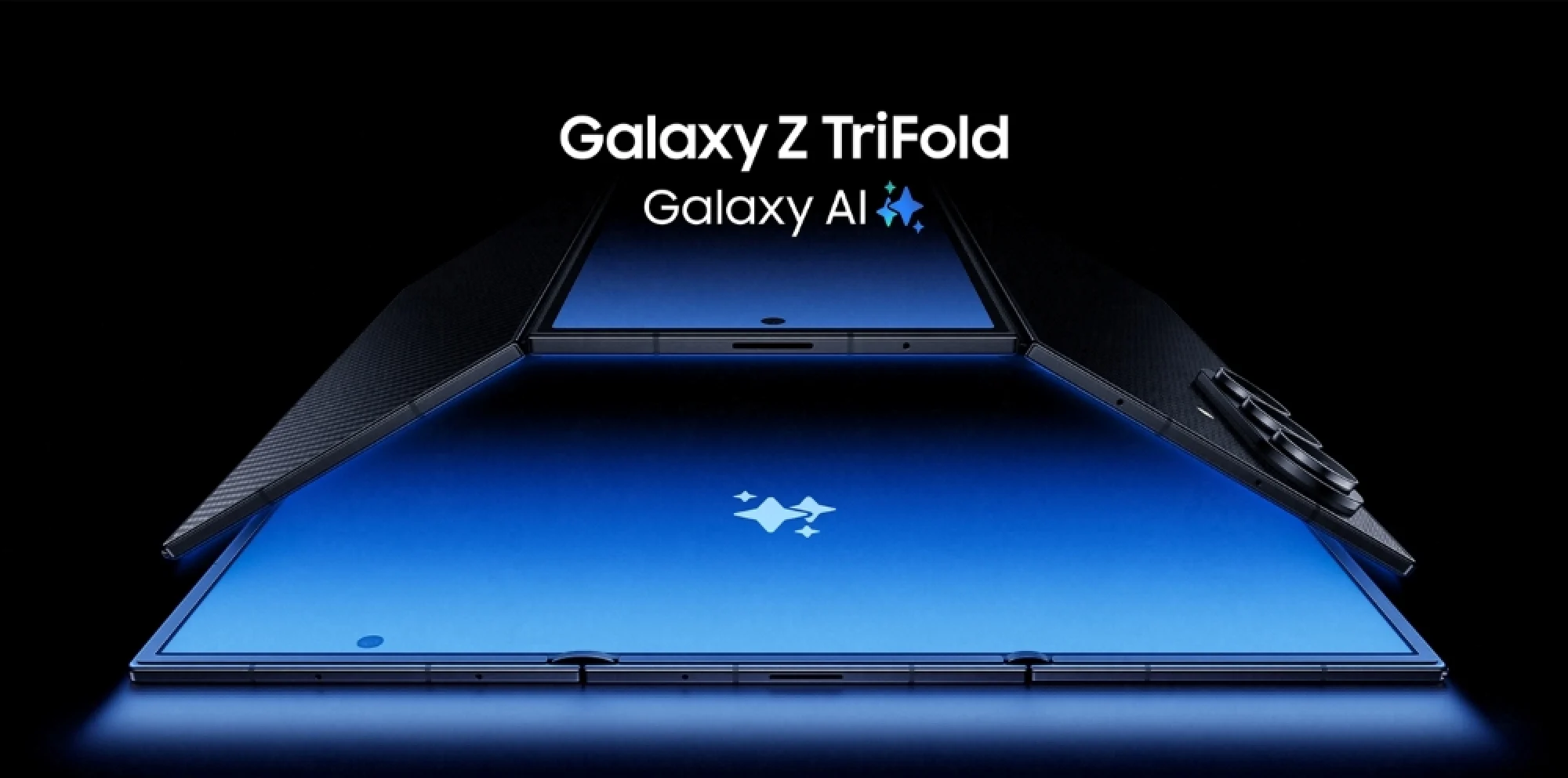
The Z TriFold is exactly what it sounds like: a phone that folds twice. It features a 6.5-inch cover display that, when unfolded twice, reveals a massive 10-inch inner display. Samsung calls it "the shape of what's next in mobile innovation," and honestly? That's not hyperbole.
The device uses two inward-folding hinges to create what's essentially a tablet that fits in your pocket. When fully folded, it measures 12.9mm thick—noticeably thicker than a regular smartphone, but remarkably thin considering it contains a 10-inch display.
At its thinnest point when unfolded, it measures just 3.9mm. For context, the iPhone Air is 5.6mm, and the Galaxy Z Fold 7 is 4.2mm. This is genuinely impressive engineering.
The Specs That Matter
Under the hood, the Z TriFold runs on the Snapdragon 8 Elite for Galaxy chipset with 16GB of RAM. Storage options include 512GB and 1TB variants. The camera setup mirrors Samsung's flagship formula: a 200MP main sensor, 12MP ultrawide, and 10MP telephoto with 3x optical zoom on the rear, plus two 10MP selfie cameras for the cover and inner displays.
The battery is the largest Samsung has ever put in a foldable phone at 5,600 mAh, using a three-cell design with one cell in each of the three panels. It supports 45W super-fast charging, which can get you to 50% in about 30 minutes.
The display quality is what you'd expect from Samsung's flagship technology. The inner 10-inch AMOLED panel has a QXGA+ resolution (2,160 x 1,584) with a 120Hz refresh rate. The cover screen is FHD+ with the same 120Hz adaptive refresh.
The US Release
Here's the slightly frustrating news for American readers: the Galaxy Z TriFold is launching in Korea first (December 12, 2025), followed by China, Taiwan, Singapore, and the UAE by the end of the year. The US release is planned for Q1 2026—so sometime between January and March.
Pricing in Korea is 3,590,400 won, which translates to roughly $2,450 USD. Samsung hasn't confirmed US pricing yet, but expect it to be in that ballpark—possibly slightly higher when you factor in import costs and local market adjustments.
Is It Worth the Excitement?
Early hands-on impressions have been remarkably positive. Reviewers have praised the build quality, noting that despite the complexity of two hinges, the device feels solid and well-constructed. Samsung has used durable materials including ceramic-glass fiber-reinforced polymer, Corning Gorilla Glass Ceramic 2, and Advanced Armor Aluminum across different parts of the device.
The software experience leverages Samsung's years of foldable development. App continuity works smoothly when switching between the cover and inner displays, and the three-panel layout enables true three-column views that emulate desktop paradigms—a document, browser, and chat side by side without compromise.
For creative professionals and frequent travelers, the Z TriFold represents the first phone that genuinely functions like a pocketable mini workstation. Whether that justifies a $2,400+ price tag is a personal decision, but the technology itself is undeniably impressive.
Wireless Speakers and Soundbars: Samsung's New Audio Direction
Samsung hasn't just been focused on displays—they're also bringing some interesting audio products to CES 2026.
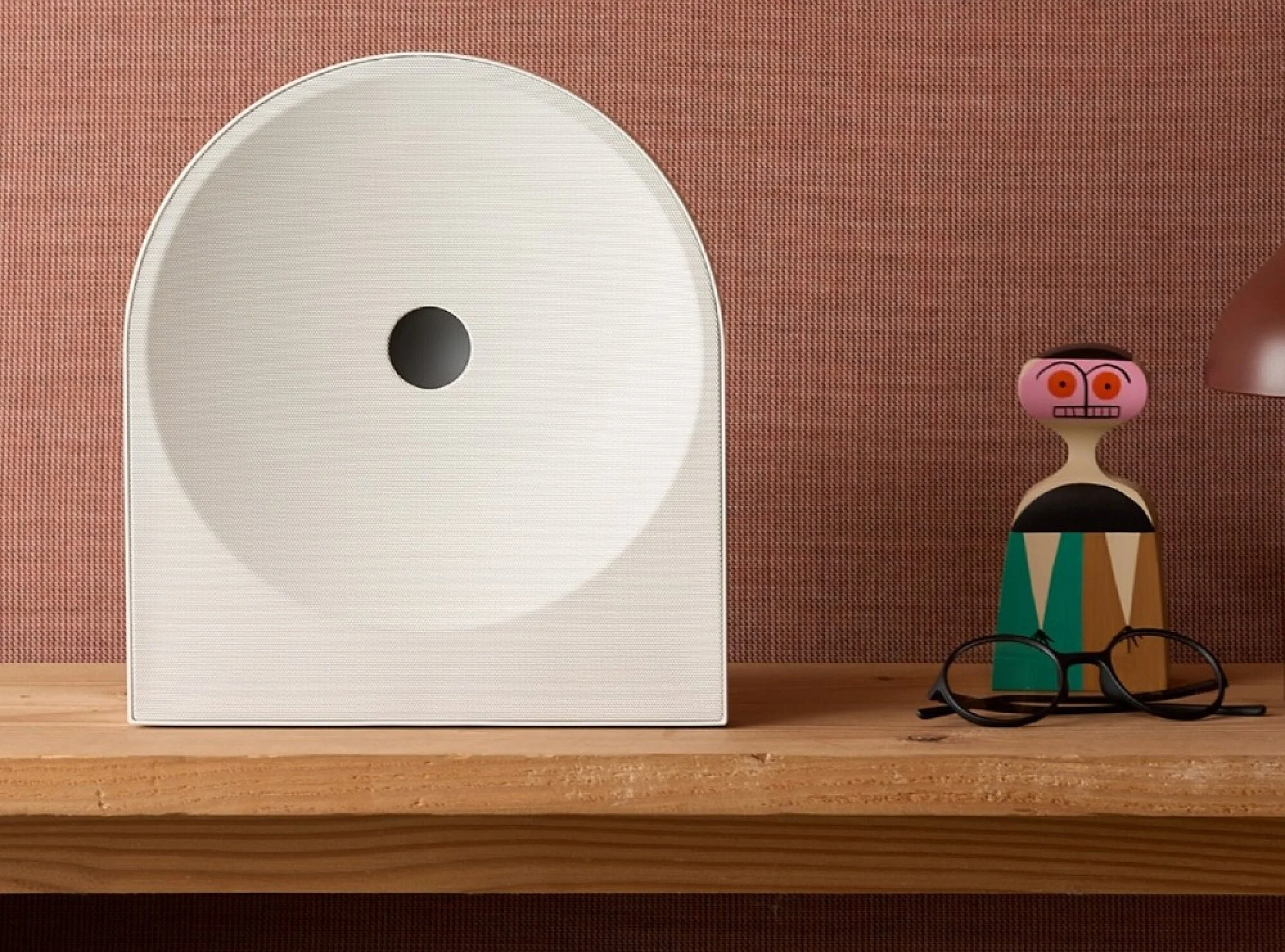
The Music Studio Series
The new Music Studio 5 and Music Studio 7 are WiFi speakers that represent a new design direction for Samsung's audio lineup. They're designed by renowned designer Erwan Bouroullec, featuring what Samsung calls a "dot design" that's available in black and white.
The Music Studio 7 is the larger option—a 3.1.1 channel speaker system with left, front, right, and top-firing speakers designed to create what Samsung calls "natural 3D immersion." It supports hi-res audio and includes Samsung's AI Dynamic Bass Control and Audio Lab Pattern Control technologies.
The Music Studio 5 is a more compact version with a four-inch woofer and dual tweeters. It also includes AI Dynamic Bass Control and supports WiFi casting, streaming services, and Bluetooth connectivity.
What I find most interesting about these speakers isn't necessarily the technology—it's the design approach. Samsung is clearly trying to create speakers that look good enough to display prominently in your living space rather than hiding them away. In an era where smart speakers often sacrifice aesthetics for functionality, that's a welcome direction.
New Q-Series Soundbars
Samsung is also introducing new Q-series soundbars for 2026, though specific details are still emerging. Given Samsung's 11 consecutive years of global soundbar leadership, I'd expect these to be competitive options for anyone looking to upgrade their TV audio.
AI-Connected Home Appliances: Your Smart Home Gets Smarter
Samsung isn't just about displays and phones—they're also pushing hard into smart home appliances with new AI-connected devices that make Jetsons-level automation feel increasingly real.
The Bespoke AI Lineup
Samsung is unveiling several new AI-connected home appliances at CES 2026:
The Bespoke AI Laundry Combo is a smart washing machine that uses AI to optimize wash cycles. The Bespoke Samsung AirDresser is a smart clothes freshener that sanitizes and refreshes garments without traditional washing. The Bespoke AI WindFree Pro Air Conditioner delivers climate control without direct airflow. And the Bespoke AI Jet Bot Steam is a cleaning robot designed to handle floor care with steam sanitization.
The Google Partnership
Perhaps most significantly, Samsung has partnered with Google to add Gemini AI capabilities to some of its home appliances. The Bespoke AI Refrigerator Family Hub and the Bespoke AI Wine Cellar will both feature Gemini smarts, enabling more sophisticated voice interactions and intelligent assistance.
This partnership is noteworthy because it represents Samsung embracing Google's AI capabilities rather than trying to build everything in-house. For consumers, that likely means more capable and intelligent appliances that can leverage Google's massive AI investments.
The Bigger Picture
Samsung's home appliance strategy at CES 2026 reflects their "Companion to AI Living" vision. The goal isn't just to make individual appliances smarter—it's to create an ecosystem where everything works together intelligently.
With SmartThings now serving over 430 million users, Samsung has the scale to make this vision a reality. Your refrigerator can talk to your phone, which can talk to your TV, which can talk to your laundry machine. It sounds like the smart home future we've been promised for years, and Samsung seems closer than ever to actually delivering it.
What This All Means: Samsung's CES 2026 Strategy
Looking at everything Samsung is bringing to CES 2026, a clear strategy emerges. They're not just introducing new products—they're making a statement about their position in the consumer electronics industry.
The Micro RGB TV expansion shows Samsung isn't content with current display technology and is willing to invest in genuinely new approaches. The gaming monitor lineup demonstrates their commitment to remaining the leader in that growing market segment. The Galaxy Z TriFold represents their determination to stay ahead in foldable innovation. And the AI-connected appliance lineup shows their vision for the future of the smart home.
It's an ambitious agenda, but Samsung has the resources and scale to execute it. Whether all of these products succeed in the market remains to be seen, but the technology itself is genuinely impressive.
For consumers, the message is clear: 2026 is going to be an exciting year for Samsung products. Whether you're looking for a new TV, a gaming monitor, a phone, or smart home appliances, Samsung is offering something worth considering.
Frequently Asked Questions About Samsung at CES 2026
What is Samsung's biggest announcement at CES 2026?
Samsung's biggest announcement is arguably the expanded Micro RGB TV lineup, including the world's first 130-inch Micro RGB TV (R95H model). The company is also showcasing revolutionary gaming monitors including the world's first 6K glasses-free 3D display and the first 1,040Hz gaming monitor. Additionally, the Galaxy Z TriFold—Samsung's first tri-folding smartphone—is making its first major public appearance outside of Korea.
When will the Samsung Galaxy Z TriFold be available in the US?
Samsung has confirmed the Galaxy Z TriFold will be available in the United States during Q1 2026, meaning sometime between January and March. The device is already on sale in Korea and is rolling out to China, Taiwan, Singapore, and the UAE by the end of 2025. US pricing hasn't been officially announced, but the Korean price of 3,590,400 won (approximately $2,450 USD) gives an indication of what to expect.
What is Micro RGB TV technology and why does it matter?
Micro RGB is a display technology that uses individual red, green, and blue LEDs smaller than 100 micrometers, each emitting light independently. Unlike traditional LCD TVs that use white LEDs filtered through color filters, Micro RGB creates color directly at the source, enabling more precise light control and color accuracy. Samsung claims Micro RGB TVs can approach OLED picture quality while potentially offering better value at certain price points.
What sizes will Samsung Micro RGB TVs come in for 2026?
Samsung's 2026 Micro RGB TV lineup will be available in 55-, 65-, 75-, 85-, 100-, 115-, and 130-inch sizes. This represents a significant expansion from the single 115-inch model introduced in 2025, making the technology accessible for a wider range of living spaces.
How does the Samsung Odyssey 3D glasses-free 3D monitor work?
The 32-inch Odyssey 3D uses real-time eye tracking to adjust depth and perspective based on the viewer's position. The display dynamically adapts the 3D effect as you move, creating a layered sense of dimension without requiring glasses or a headset. Combined with its 6K resolution and up to 330Hz refresh rate (via Dual Mode), it's designed to provide immersive 3D gaming without the typical drawbacks of 3D technology.
What is the refresh rate of Samsung's fastest gaming monitor for 2026?
The Samsung Odyssey G6 (G60H model) achieves a world-first 1,040Hz refresh rate through Dual Mode. At native QHD resolution, it supports up to 600Hz. This extreme refresh rate is designed for competitive esports players who need the absolute fastest response times and smoothest motion clarity possible.
What AI features are included in Samsung's 2026 TVs?
Samsung's 2026 TVs feature Vision AI Companion, a multi-agent platform that combines large language model (LLM) intelligence with Bixby voice control. Features include conversational search, interactive Q&A, proactive content recommendations, Live Translate for foreign language content, Generative Wallpaper, and integration with services like Perplexity. For sports fans, AI Soccer Mode Pro optimizes picture and sound for live matches, while AI Sound Controller Pro allows separate adjustment of commentary, crowd noise, and background music.
What is Samsung's "Companion to AI Living" vision?
"Companion to AI Living" is Samsung's philosophy that AI should serve as a foundation connecting all aspects of their products—from R&D and development to user experience. The vision aims to create a unified, personal experience across mobile devices, visual displays, home appliances, and services. With SmartThings now serving over 430 million users, Samsung has the scale to create an interconnected ecosystem where AI enhances every aspect of daily life.
Are Samsung's new gaming monitors compatible with both AMD and NVIDIA graphics cards?
Yes, Samsung's 2026 Odyssey gaming monitors support both AMD FreeSync Premium Pro and NVIDIA G-Sync Compatible technologies. This means you'll get tear-free, smooth performance regardless of whether you're using an AMD Radeon or NVIDIA GeForce graphics card.
What new audio products is Samsung showing at CES 2026?
Samsung is introducing the Music Studio 5 and Music Studio 7 WiFi speakers, designed by Erwan Bouroullec with a distinctive "dot design" aesthetic. The Music Studio 7 is a 3.1.1 channel system with left, front, right, and top-firing speakers for 3D sound immersion. Samsung is also unveiling new Q-series soundbars and updating its entire 2026 TV lineup with Eclipsa Audio, a new spatial sound system for immersive 3D audio.
How does the Samsung Galaxy Z TriFold compare to the Huawei Mate XT?
Both are tri-folding smartphones with 10-inch inner displays when fully unfolded. The Galaxy Z TriFold measures 12.9mm when folded (slightly thicker than the Huawei Mate XT at 12.8mm) and weighs 309g. Samsung's device features a 200MP main camera, Snapdragon 8 Elite chipset, and 5,600 mAh battery. The key difference is availability—while the Mate XT is primarily available in China, the Galaxy Z TriFold is planned for wider global release including the US, making it the first widely available tri-folding phone for Western markets.
Wrap up: Why CES 2026 Matters for Samsung
As I wrap up this comprehensive look at Samsung's CES 2026 presence, I'm genuinely impressed by the breadth and ambition of what they're showing. This isn't a company resting on past success—it's a company pushing forward on multiple fronts simultaneously.
The Micro RGB TV technology represents a genuine advancement in display quality that could reshape the premium TV market. The gaming monitors are breaking records in ways that matter to competitive gamers. The Galaxy Z TriFold shows Samsung isn't afraid to take risks with new form factors. And the AI-connected appliance lineup demonstrates a coherent vision for the smart home future.
Will every product be a hit? Probably not. Some of these technologies are still early-stage, and pricing will ultimately determine whether they reach mainstream consumers. But the technology itself is impressive, and Samsung's commitment to innovation is clear.
If you're in the market for any of these product categories in 2026, Samsung deserves a spot on your consideration list. And if you're just a tech enthusiast like me who loves seeing what's possible, CES 2026 is delivering plenty to be excited about.
The future of consumer electronics is being shaped right now in Las Vegas, and Samsung is at the center of it.
Related Articles
 Dani
Dani
 Dani
Dani
 Dani
Dani