I've spent four months with the Ray-Ban Meta glasses (testing both Gen 1 and the new Gen 2) and just had my first three weeks with the Even Realities G2. This isn't a theoretical comparison based on marketing materials—this is hands-on experience wearing both pairs daily, testing them in real-world scenarios from business meetings to outdoor adventures, across different cities and use cases. Let me cut through the hype and show you exactly what each pair does best, where they fail, and which one actually makes sense for your lifestyle.
Spoiler: These aren't really competitors at all. They represent two completely different philosophies about what smart glasses should be—and your choice depends entirely on what problem you're trying to solve.
What Are We Comparing?
The Ray-Ban Meta (Gen 2) launched on September 18, 2025, at Meta Connect, bringing double the battery life and 3K video to Meta's wildly successful smart glasses line. These have become the #1 selling AI glasses in the world, with millions of units sold since the original launched in October 2023.
The Even Realities G2 launched on November 12, 2025, as the second generation of Even's camera-free, speaker-free "quiet tech" smart glasses. At just 36 grams, they're among the lightest smart glasses ever made and come with an optional R1 smart ring controller.

Both are accessible through their respective companion apps (Meta View and Even Realities) and represent the cutting edge of their respective approaches to smart eyewear. The key difference? Meta's glasses are built around cameras and speakers. Even's glasses intentionally leave them out.
Here's what makes this comparison interesting: Meta captured about 70% of the smart glasses market in 2025, while Even Realities is carving out a niche as the "anti-Meta" option. Industry shipments of AR/VR devices rose nearly 40% in 2025, and both companies are riding this wave with fundamentally different bets on what consumers actually want on their faces.
The 8 Major Differences Between These Glasses
1. Philosophy: Content Creation vs. Information Consumption
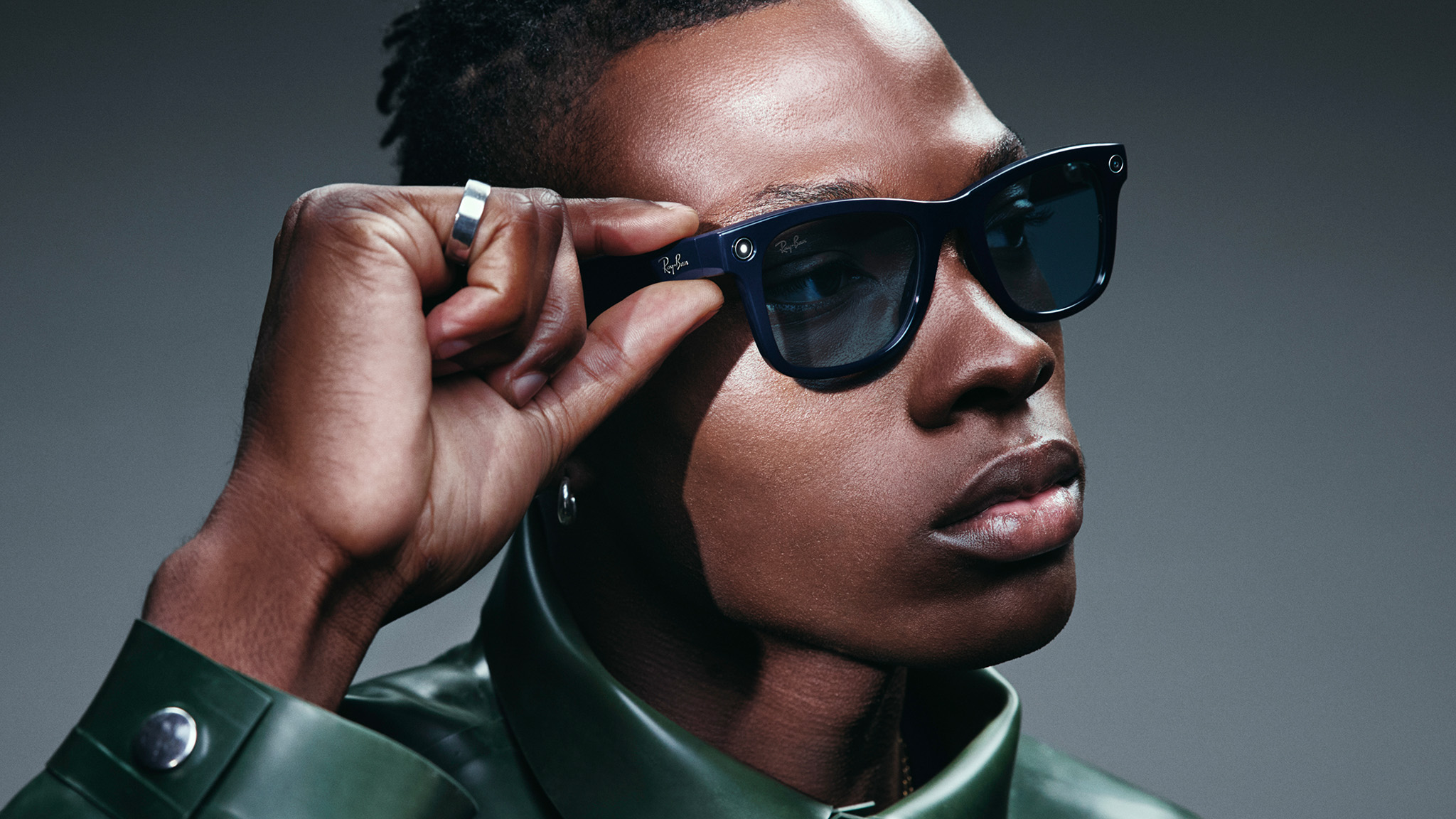
Ray-Ban Meta's core identity is built around capturing and sharing. The 12MP camera, open-ear speakers, and Meta AI integration make these glasses optimized for recording your life, taking hands-free calls, and streaming music. Meta wants you to document moments without pulling out your phone.
Even G2 takes the opposite approach. No cameras, no speakers—just a discrete AR display showing you information. Even Realities calls this "quiet tech," and CEO Will Wang asked a pointed question during the G2 launch: "Do you actually see Meta wear their own products all the time?" The implication is clear: glasses with cameras feel awkward in many social situations.
If you want to capture content and stay connected through audio, Meta wins. If you want information delivered discretely without changing how others perceive you, Even wins.
2. Weight and Comfort: 52g vs. 36g
This might sound like a minor difference, but it's not. The Ray-Ban Meta Gen 2 weighs approximately 52 grams—still reasonably comfortable, but noticeably heavier than regular sunglasses. You know you're wearing tech.
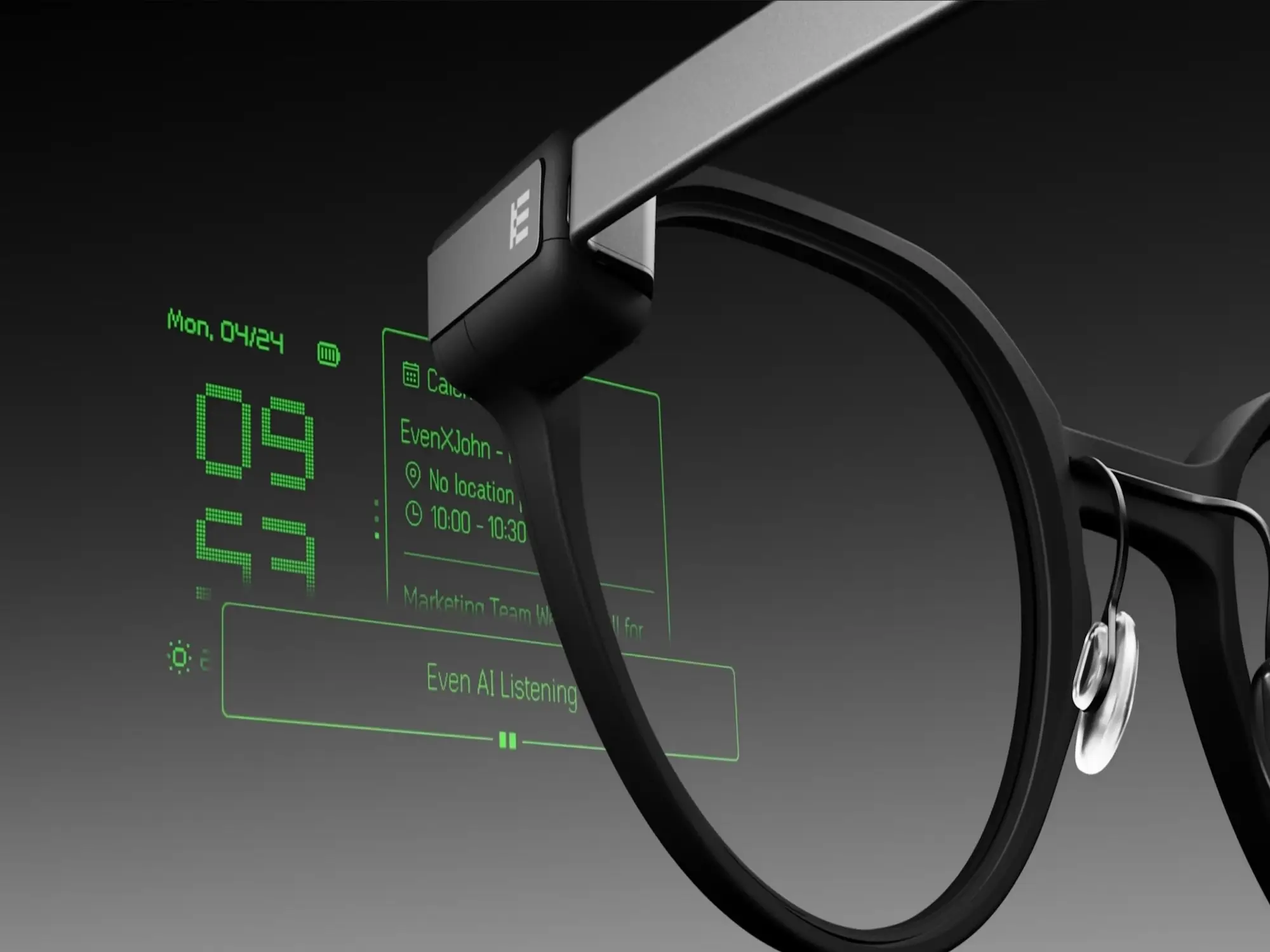
The Even G2 weighs just 36 grams thanks to titanium temples and magnesium alloy frames, with no cameras or speakers adding bulk. Multiple reviewers have called them "as comfortable as regular glasses" and noted they're the first smart glasses they'd actually wear daily.
The weight difference becomes significant over 8+ hours of wear. For daily prescription users who need glasses anyway, the G2's weight advantage matters. For occasional use (a few hours at an event), the Meta's weight is perfectly acceptable.
3. Display Technology: Audio-Only vs. Dual-Lens AR
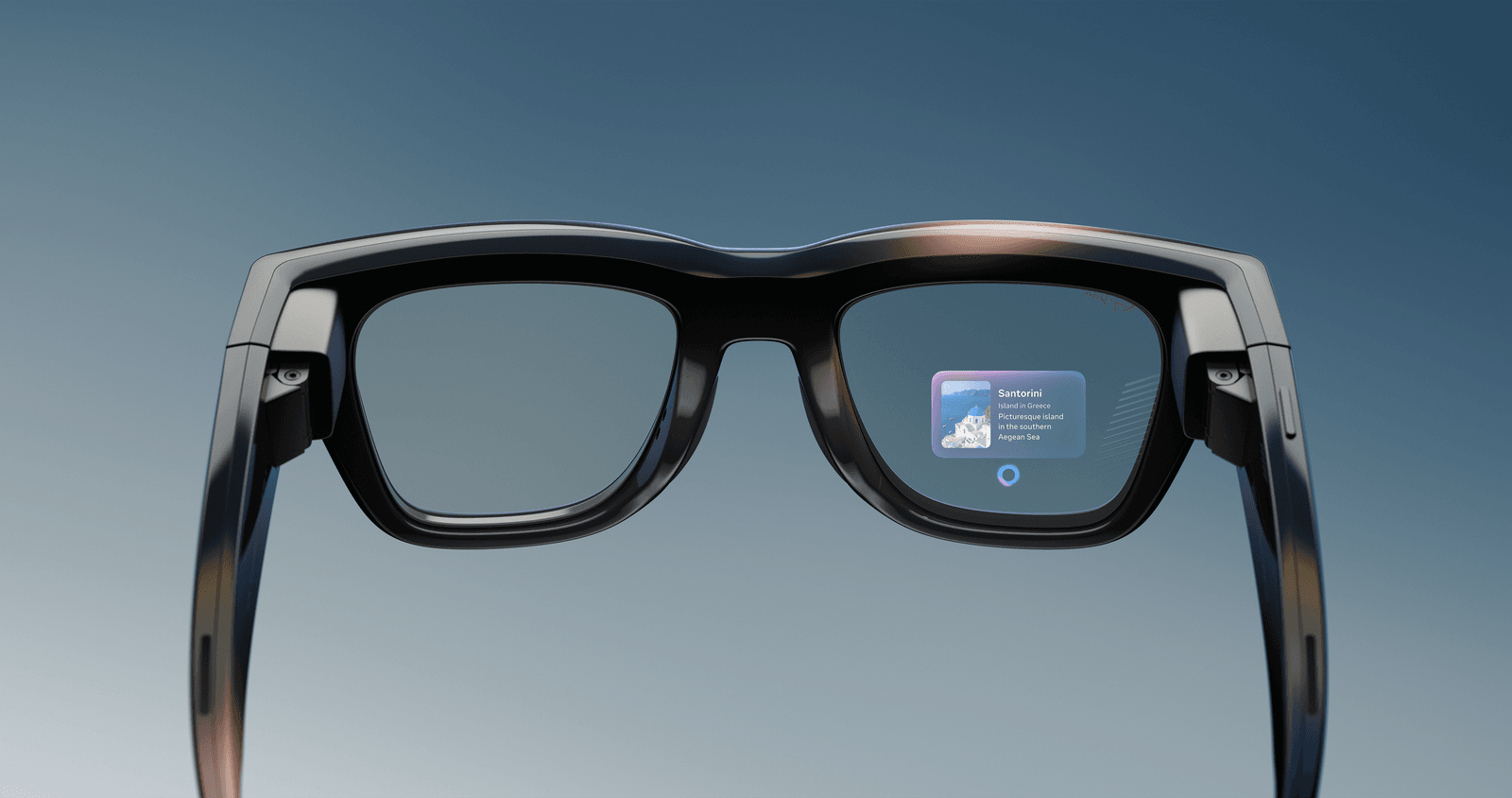
Ray-Ban Meta Gen 2 has no display at all. Information comes through the open-ear speakers as audio from Meta AI. You ask questions verbally, and you hear answers verbally. It's simple and works well, but you can't see anything—just hear it.
Even G2 features the Even HAO 2.0 (Holistic Adaptive Optics) system with micro-LED projectors and multi-layer waveguide displays on both lenses. You see bright green text overlaid on your vision—notifications, navigation, translations, AI responses, teleprompter scripts. The display is 75% larger than the G1, significantly sharper, and visible even outdoors.
The trade-off is clear: Meta's approach is simpler and more natural for casual use. Even's approach delivers visual information at a glance but requires learning a new interface.
4. Camera and Privacy: 12MP vs. None
This is the fundamental philosophical split. Ray-Ban Meta Gen 2 includes a 12MP ultra-wide camera capable of recording 3K video at 30fps (or 1080p at 60fps). You can capture photos and videos hands-free, ask Meta AI to identify what you're looking at, and share directly to social media.
Even G2 has no camera whatsoever. This is intentional—Even Realities positions camera-free design as a privacy feature for both the wearer and everyone around them. You can wear these in environments where cameras are forbidden, and people won't perceive you as "that person recording everything."
For content creators, travel vloggers, or anyone who wants POV capture, Meta is essential. For professionals in camera-restricted environments (hospitals, courtrooms, certain offices), or anyone uncomfortable with the social dynamics of face-mounted cameras, Even is the only option.
5. Audio: Open-Ear Speakers vs. Silent Operation
Ray-Ban Meta Gen 2 includes dual open-ear speakers that have received praise for sound quality that punches above their weight. You can listen to music, take calls, and hear Meta AI responses without blocking ambient sound. The new "Conversation Focus" feature even uses AI to amplify the voice of the person you're talking to.
Even G2 has no speakers. All communication is visual—you see information on the display rather than hearing it. If you want audio feedback, you'll need to use separate earbuds. Voice commands work (four microphones capture your speech), but responses appear as text on the lenses.
For hands-free calls, music, and audio-based AI interaction, Meta wins decisively. For completely discrete information delivery that nobody around you can perceive, Even is unique.
6. AI Capabilities: Meta AI vs. Even AI
Ray-Ban Meta integrates deeply with Meta AI, which can see through the cameras and respond verbally. You can ask "What am I looking at?" and get spoken answers. The new Live AI feature lets you have real-time conversations with the AI as it continuously sees your surroundings. Translation supports six languages with more coming.

Even G2 uses Even AI, which operates without camera vision but can provide contextual information based on voice queries. The new "Conversate" feature listens to your conversations and displays relevant prompts—definitions, follow-up questions, and background information about topics being discussed. Translation supports 31 languages with real-time subtitles appearing on the display.
Meta's AI is more capable for visual understanding (identifying objects, reading signs, analyzing scenes). Even's AI is better for discrete augmentation during conversations and offers broader language support for translation.
7. Battery Life: 8 Hours vs. 2 Days
This comparison isn't entirely fair because these glasses do different things. Ray-Ban Meta Gen 2 offers up to 8 hours of typical use on a single charge—nearly double the Gen 1. The charging case provides an additional 48 hours, and you can get 50% charge in just 20 minutes.
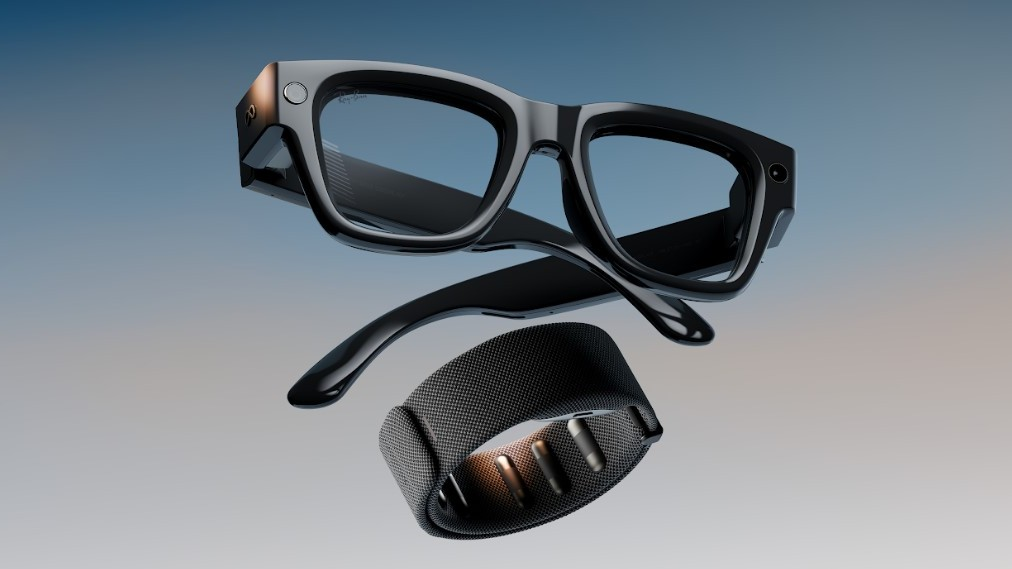
Even G2 claims up to 2 days of battery life per charge, with the case providing seven additional full charges. This dramatic difference exists because the G2 doesn't power cameras, speakers, or continuous audio streaming—just the display when activated.
Both represent significant improvements over their predecessors. For all-day heavy use with music and calls, Meta's 8 hours is sufficient with case top-ups. For multi-day trips or users who hate charging, Even's 2-day life is genuinely liberating.
8. Control Methods: Touch/Voice vs. Touch/Voice/Ring
Ray-Ban Meta Gen 2 uses capacitive touch on the temple for controls (tap for photos, hold for video, swipe for volume) and excellent voice activation with "Hey Meta." The Meta Ray-Ban Display version adds a Neural Band wristband, but the standard Gen 2 doesn't include it.
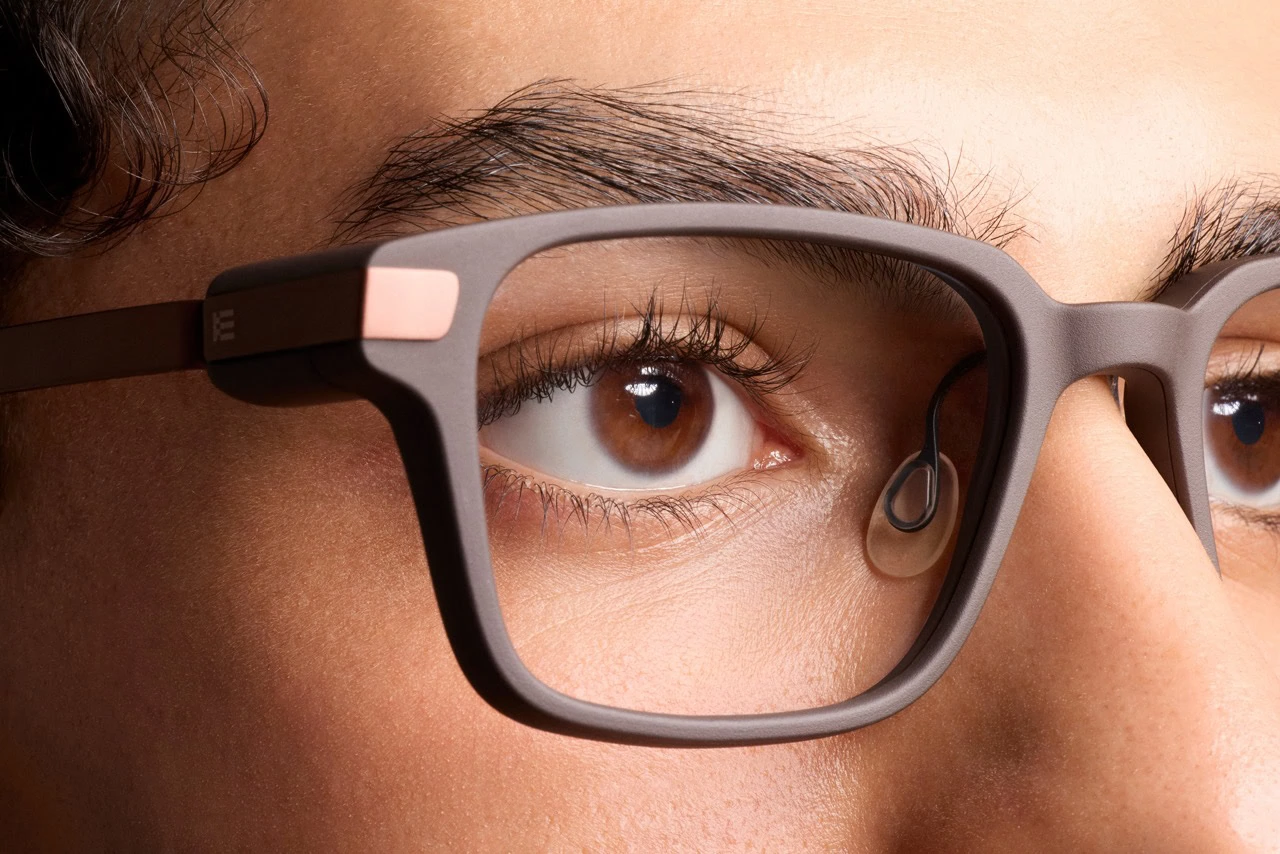
Even G2 offers touch controls on the arms, voice activation with "Hey Even," and the optional R1 Smart Ring ($249). The ring lets you scroll, tap, and navigate the interface discretely using your thumb against your index finger—more subtle than touching your face or speaking in public.
The R1 ring adds flexibility but also adds cost and another device to manage. For voice-comfortable users, both glasses work fine. For situations where voice commands are awkward (quiet offices, public transit), Even's ring provides an advantage.
Side-by-Side: Same Scenarios, Different Approaches
I tested both glasses in identical real-world situations to see how each philosophy plays out in practice.
Test 1: Business Meeting Note-Taking
Scenario: A 90-minute strategy meeting where I wanted to capture key points without being disruptive.
Ray-Ban Meta Gen 2: I could record up to 3 minutes of video at a time to capture whiteboard discussions, and Meta AI could later help summarize. However, the visible camera made some colleagues uncomfortable, and I had to explain I wasn't recording them personally. The glasses worked well for audio recording of the full meeting through the companion app.
Even G2: The Conversate feature was genuinely useful—it displayed definitions of technical terms, suggested follow-up questions I could ask, and showed real-time transcription of key points. Nobody noticed I was using smart glasses at all. The teleprompter feature let me glance at my prepared points without looking at my phone.
Verdict: For discrete in-meeting augmentation, Even wins. For capturing content to review later, Meta wins. I preferred Even for professional settings where being seen as "recording" creates friction.
Test 2: Tourist Navigation in a Foreign City
Scenario: Walking through a historic district with street signs in a foreign language.
Ray-Ban Meta Gen 2: I could look at signs and ask Meta AI "What does this say?" and receive verbal translation. This worked well but required speaking aloud and waiting for verbal responses. For restaurant menus, I could photograph them and get AI analysis.
Even G2: The navigation feature showed turn-by-turn directions as AR overlays on my actual view of the streets—no phone checking required. The translation feature displayed real-time subtitles when I asked locals for directions (31 languages supported). The visual overlay approach felt more natural than verbal back-and-forth.
Verdict: Even's visual navigation and translation felt more seamless for walking around. Meta's camera-based translation was better for reading detailed documents or menus. I'd want both, honestly.
Test 3: Running Errands While Connected
Scenario: A morning running errands—grocery shopping, coffee pickup, dealing with a work message.
Ray-Ban Meta Gen 2: This is where Meta shines. I listened to a podcast while shopping, took a quick call hands-free in the car, and asked Meta AI for a recipe when I couldn't remember what I needed. The open-ear audio meant I could hear the barista at the coffee shop while my podcast was paused. Everything felt natural.
Even G2: Notifications appeared discretely on my lens—I could see who messaged without checking my phone. But with no speakers, I couldn't take calls or listen to anything. I needed to pull out my phone or earbuds for any audio. The experience was less connected but also less intrusive.
Verdict: Meta wins for connected lifestyle use. If you want smart glasses to replace earbuds for calls and music, Even simply can't do it.
Test 4: Giving a Presentation
Scenario: A 30-minute presentation to a client group.
Ray-Ban Meta Gen 2: I could see the audience clearly and speak naturally, but had no way to see my notes without looking at my laptop or a confidence monitor. The glasses didn't add much value during the presentation itself.
Even G2: The teleprompter feature displayed my speaking notes on the lens, scrolling automatically as I spoke. I could maintain eye contact with the audience while seeing my key points. Multiple reviewers have called this "life-changing" for public speaking, and I agree—it fundamentally changes the presentation experience.
Verdict: Even wins decisively for presentations and public speaking. The teleprompter feature is unique and genuinely useful.
Test 5: Capturing a Family Event
Scenario: A birthday party where I wanted to capture candid moments.
Ray-Ban Meta Gen 2: This is exactly what Meta designed these for. I captured dozens of photos and several video clips without ever taking out my phone. The 3K video quality was impressive, and the POV perspective gave a unique, personal feel to the footage. Nobody had to wait for me to fumble with my phone.
Even G2: I couldn't capture anything. No camera means no photos, no video. I had to use my phone like everyone else.
Verdict: Meta wins completely for content capture. If you value capturing memories hands-free, Even isn't even a contender.
What Didn't Change (For Better or Worse)
Both glasses still excel at:
- Looking like stylish regular glasses (though Meta is more recognizable as a brand)
- Basic voice assistant functionality for questions and tasks
- Water resistance for light rain and sweat (IPX4 for Meta, IP67 for Even)
- Prescription lens options for vision correction
- Easy smartphone pairing via Bluetooth
Problems that persist:
- Neither can replace your phone for most tasks
- Both require charging more often than you'd like
- Both cost significantly more than regular glasses ($379-599)
- Software updates sometimes introduce bugs or change behavior
- Learning curve for optimal use takes 1-2 weeks
Meta-specific limitations:
- Privacy concerns remain real—some people are uncomfortable being around camera-equipped glasses
- Battery drain with heavy audio use can still leave you empty by evening
- The thick temple design is recognizable as "smart glasses" to anyone paying attention
Even-specific limitations:
- No audio output means you need separate earbuds for calls/music
- Green monochrome display can't show color images or video
- The R1 ring, while useful, is an additional $249 and another device to charge
- Software stability has been an issue—early reviewers noted bugs with health tracking
Pricing Comparison: What You Actually Pay
Ray-Ban Meta (Gen 2):
- Base price: $379 (Wayfarer, Headliner, or Skyler styles)
- Polarized lenses: +$30
- Transitions lenses: +$80
- Prescription lenses: Additional cost through Meta/Ray-Ban
- No subscription required for core features
- Free Meta AI access
Even Realities G2:
- Base price: $599 (Panto or Rectangular styles)
- Prescription lenses: Included in configurator (-12.00 to +12.00 range)
- R1 Smart Ring: $249 (currently 50% off with G2 purchase until Dec 26, 2025)
- No subscription required
- Free Even AI access
Practical takeaway: Ray-Ban Meta Gen 2 is $220 cheaper at base price and includes cameras and speakers that Even doesn't have. Even G2's higher price includes superior prescription support and the unique AR display, but you may want the ring controller which adds cost.
For Gen 1 Ray-Ban Meta owners, Meta is selling the original at $299—potentially a good entry point if budget matters.
Which Version Should You Use?
Choose Ray-Ban Meta Gen 2 when:
- Capturing photos and videos hands-free matters to you
- You want smart glasses that replace earbuds for music and calls
- Meta AI's visual recognition (seeing and identifying objects) appeals to you
- You're comfortable with camera-equipped glasses in social situations
- You prioritize audio-based interaction over visual displays
- Budget is a consideration ($379 vs $599)
- The Ray-Ban brand aesthetic appeals to you
Choose Even Realities G2 when:
- Privacy (yours and others') is a priority
- You need glasses in camera-restricted environments
- Visual information delivery (navigation, notifications, translation) matters more than audio
- You give presentations or public speeches regularly
- Maximum comfort and light weight matter (36g vs 52g)
- You already wear prescription glasses daily
- You want truly discrete smart glasses that don't "look smart"
- Extended battery life (2 days vs 8 hours) is important
Comparison Table
| Feature / Category | Ray-Ban Meta Gen 2 | Even Realities G2 |
|---|---|---|
| Launch Date | September 18, 2025 | November 12, 2025 |
| Starting Price | $379 | $599 |
| Weight | ~52g | 36g |
| Camera | 12MP, 3K video | None |
| Speakers | Open-ear dual speakers | None |
| Display | None | Dual-lens micro-LED AR |
| Battery Life | Up to 8 hours | Up to 2 days |
| Case Battery | +48 hours | +7 full charges |
| AI Assistant | Meta AI (visual + voice) | Even AI (voice only) |
| Translation Languages | 6 languages | 31 languages |
| Control Methods | Touch, Voice | Touch, Voice, Ring (optional) |
| Water Resistance | IPX4 | IP67 |
| Prescription Range | -6.00 to +4.00 | -12.00 to +12.00 |
| Frame Styles | Wayfarer, Headliner, Skyler | Panto, Rectangular |
| Frame Materials | Standard Ray-Ban | Titanium, Magnesium |
| Companion Controller | None (Neural Band for Display version) | R1 Smart Ring ($249) |
| Navigation | Voice-guided via Meta AI | Visual AR overlay |
| Teleprompter | No | Yes |
| Content Capture | Photos, 3K Video, Livestream | None |
| Music Playback | Yes | No (requires earbuds) |
| Phone Calls | Yes, hands-free | No |
| Video Calls | With Display version ($799) | No |
| Strengths | Content capture, audio, AI vision, brand recognition | Weight, privacy, display, presentation tools, battery |
| Weaknesses | Privacy concerns, no display, heavier | No audio, no camera, higher price, software bugs |
| Best Use Cases | Travel, events, content creation, connected lifestyle | Presentations, professional settings, navigation, translation |
| Ideal User | Social media users, content creators, tech enthusiasts | Presenters, professionals, privacy-conscious users |
| Overall Verdict | Best all-around smart glasses for connected lifestyle | Best discrete AR glasses for information workers |
My Personal Workflow (Using Both)
I've developed a dual-glasses approach that leverages each pair's strengths.
Stage 1 (Daily Commute): I wear the Ray-Ban Meta for music, podcasts, and hands-free calls during my commute. The audio integration makes driving or transit time productive and enjoyable.
Stage 2 (Work Hours): At the office, I switch to Even G2. No camera means no weird dynamics with colleagues. The Conversate feature helps during meetings, and notifications appear discretely without me pulling out my phone.
Stage 3 (Presentations/Calls): For any presentation or speaking engagement, Even G2's teleprompter is invaluable. I can maintain eye contact while seeing my notes.
Stage 4 (Events/Travel): Back to Ray-Ban Meta for capturing moments, navigating new places with visual AI assistance, and staying connected to family.
This hybrid approach gives me the best of both worlds, though I recognize most people won't want to own (or carry) two pairs of smart glasses.
Real User Scenarios: Which Version Wins?
Content Creator/Influencer: Ray-Ban Meta wins decisively. The ability to capture POV content, go live on Instagram, and document your day hands-free is exactly what these glasses are built for. Even G2 can't capture anything.
Corporate Professional: Even G2 has the edge. Discrete notifications, presentation assistance, and no camera-induced social friction make these ideal for office environments. The translation feature helps with international colleagues.
Busy Parent: Ray-Ban Meta for capturing kids' moments without fumbling for a phone. The hands-free aspect when your hands are literally full is transformative.
Frequent Traveler: Both have merits. Meta for capturing experiences and hands-free music. Even for navigation overlays and translation in foreign countries. If forced to choose one, Meta's versatility wins by a narrow margin.
Healthcare Professional: Even G2, no contest. Cameras are prohibited in many healthcare settings, and the discrete information display helps without creating privacy issues with patients.
Presenter/Speaker: Even G2 wins with the teleprompter feature alone. This is genuinely useful in ways that change how you approach public speaking.
Tech Enthusiast/Early Adopter: Why choose? Buy both. But if forced to pick one, Ray-Ban Meta offers more features for the money.
The Honest Performance Breakdown
Ray-Ban Meta Gen 2 actually delivers on:
- Content capture quality (3K video looks genuinely good)
- Audio quality for glasses (punches above weight)
- Meta AI integration (useful and getting better)
- Battery life improvement (2x Gen 1 is real)
- Build quality and style (looks like premium Ray-Bans)
Ray-Ban Meta Gen 2 falls short on:
- Privacy perception (people notice camera glasses)
- Display absence (you hear everything, see nothing)
- Prescription flexibility (limited range vs. Even)
- Weight for all-day wear (noticeable after 6+ hours)
Even G2 actually delivers on:
- Weight and comfort (genuinely glasses-like)
- Privacy design (camera-free is legitimately different)
- Display technology (bright, readable, useful)
- Presentation tools (teleprompter is transformative)
- Battery life (2+ days in real use)
Even G2 falls short on:
- Audio (you need separate earbuds for anything audio)
- Content capture (can't take a single photo)
- Software stability (bugs reported in early units)
- Ring necessity (full experience requires $249 accessory)
- Price ($220 more than comparable Meta glasses)
My Recommendation
For 60% of mainstream users interested in smart glasses: Start with Ray-Ban Meta Gen 2 at $379. It does more things (camera, audio, AI vision) and costs less. The connected lifestyle features actually integrate into daily life in useful ways.
Upgrade to (or start with) Even G2 when:
- You give presentations or public speeches
- You work in camera-restricted environments
- Privacy matters more than content capture
- You already wear prescription glasses daily (better Rx range)
- Maximum comfort for 10+ hour wear is essential
Don't get either if:
- You're expecting smart glasses to replace your phone
- You're not willing to look slightly "tech-forward"
- Budget is a major constraint
- You're uncomfortable with new product learning curves
Wait 6 months. Both companies are iterating rapidly, prices may drop, software will stabilize, and the Ray-Ban Meta Gen 3 or next Even generation may address current limitations.
The Future: Where Is This Heading?
Short-term (3-6 months):
- Meta Ray-Ban Display ($799) expands globally in early 2026, bringing true AR to the Meta ecosystem
- Even R1 ring software stabilizes and health tracking improves
- Both companies add language support and AI capabilities
- Hyperlapse and slow-motion modes arrive for Meta glasses
Medium-term (6-12 months):
- Expect Ray-Ban Meta Gen 3 announcement at Meta Connect 2026
- Even likely develops speaker option or companion audio solution
- Apple AR glasses announcement possible (long-rumored)
- Google's smart glasses re-entry (Samsung partnership)
- Industry consolidation as smaller players struggle
Long-term speculation:
- Convergence toward glasses that do everything (camera + display + audio)
- Neural interfaces move from wristband to more integrated solutions
- Prescription-first design becomes standard
- Privacy regulations may reshape what's permissible
The smart glasses market is at an inflection point. 2025 saw explosive growth, and 2026 will determine whether this category becomes mainstream or remains niche.
FAQ
Can I use these glasses without a smartphone?
Neither pair works independently. Both require a paired smartphone (iOS or Android) for full functionality, AI processing, and app-based control. You can wear them as regular glasses without your phone nearby, but smart features won't work.Which glasses have better prescription lens support?
Even G2 supports a wider prescription range (-12.00 to +12.00) compared to Ray-Ban Meta (-6.00 to +4.00 for standard, -4.00 to +4.00 for Display version). If you have a strong prescription, Even is more likely to accommodate it. Even also includes prescription ordering in their online configurator, while Meta requires ordering through specific channels.Can I wear Meta glasses in places where cameras are prohibited?
Technically, many camera-restricted environments (courtrooms, certain offices, hospitals) prohibit all camera-equipped devices, which would include Ray-Ban Meta. Some venues make exceptions for consumer smart glasses, others don't. Even G2's camera-free design eliminates this concern entirely—they're just glasses with a display.How noticeable are these glasses to other people?
Ray-Ban Meta Gen 2 looks like slightly chunky Ray-Ban sunglasses. The camera lens is visible if you look closely. Most people who know tech will recognize them. Even G2 looks more like regular prescription glasses, with the tech hidden in the temple tips behind your ears. Multiple reviewers have noted nobody realized they were wearing smart glasses.What happens to my data?
Ray-Ban Meta: Photos/videos sync to your phone via Meta View app. Meta AI processes voice commands through Meta's servers. Meta's privacy policy applies—they're a Meta product. Even G2: Even emphasizes privacy—"no data is stored in the cloud without explicit consent." Processing happens locally when possible. Voice commands that require AI do hit their servers but with "sensitive personal information removed." If data privacy is a major concern, Even's approach is more privacy-forward.Is the Even R1 ring really necessary?
You can use the G2 without the ring—touch controls on the arms and voice commands work fine. But the ring makes navigation significantly more discrete and natural. If you're buying Even G2, the 50% off launch bundle (making the ring ~$125) is worth it. At full $249 price, it's a harder sell unless you specifically want ring-based control.Which AI assistant is smarter?
Meta AI has the advantage of camera vision—it can literally see what you're looking at and answer questions about it. This makes it more capable for real-world queries ("what kind of plant is this?"). Even AI is text-focused and can't see, but excels at conversation augmentation (Conversate feature) and has broader language translation support. Neither is as capable as a full smartphone AI assistant.Can these replace AirPods or regular earbuds?
Ray-Ban Meta: Partially yes for casual listening. The open-ear speakers are good enough for podcasts, calls, and ambient music listening. They won't match AirPods Pro for noise isolation or music quality, but they're convenient. Many users report leaving their AirPods at home. Even G2: No. There's no audio output at all. You'll need separate earbuds for any audio.What about charging—how annoying is it really?
Ray-Ban Meta: The case is slightly larger than a standard Ray-Ban case but pocketable. You drop the glasses in, they charge. The case needs USB-C charging. Most users charge nightly. Not annoying if you have the routine. Even G2: The case is similar in concept. With 2-day battery life on the glasses and 7+ charges in the case, you can go a week between case charges. Less annoying by design. Neither is as maintenance-free as regular glasses (obviously), but both are manageable.Should I wait for the next version?
Ray-Ban Meta Gen 3 is rumored for late 2026 with potentially a built-in display option on standard frames. If you can wait 12+ months, there may be significant improvements. Even G3 timing is unknown, but the G2 just launched. Major improvements probably aren't coming for 18+ months. My advice: If you want smart glasses now and have a specific use case, buy now. If you're just curious, wait and see how the market develops.Can I return them if I don't like them?
Ray-Ban Meta: Standard return policies apply through Meta Store, Ray-Ban, or retailers like Best Buy. Typically 14-30 days depending on retailer. Even G2: Non-prescription glasses are eligible for returns within 14 days. Prescription glasses can only be cancelled within 24 hours since they're custom-crafted. Both are significant purchases—take advantage of return windows if unsure.Are these worth the money compared to regular glasses + AirPods?
Honest answer: For most people, regular glasses + AirPods is a more capable combination. You get noise cancellation, better audio, and no compromise on eyewear. The value of smart glasses comes from integration and convenience—not having to switch between devices, hands-free operation, and the unique features each offers (Meta's POV capture, Even's AR display). If you value those conveniences and use cases, yes, they're worth it. If you just want good audio and good glasses, buy them separately.Final Verdict: Which Glasses Win?
For professionals and presenters: Even Realities G2 is the better choice. The teleprompter feature alone transforms public speaking, the discrete design works in any professional setting, and the camera-free approach eliminates privacy friction with colleagues and clients.
For content creators and social users: Ray-Ban Meta Gen 2 wins easily. The camera, audio, and Meta AI integration deliver genuine value for capturing and sharing content. No other smart glasses do this as well.
For everyday connected use: Ray-Ban Meta Gen 2. The combination of music, calls, and AI assistance creates a "better AirPods that are also sunglasses" experience that actually fits into daily life.
For maximizing comfort and battery: Even Realities G2. If weight and endurance matter most, the 36-gram frame and 2-day battery life are hard to beat.
For my workflow: I use both. Meta for commute/events/content capture. Even for work/presentations/professional settings. Most people won't do this, and if forced to choose one pair for general use, I'd pick Ray-Ban Meta Gen 2 for its versatility—but I'd genuinely miss the Even G2's teleprompter.
The honest truth? Neither pair is the "smart glasses of the future" we've been promised. Both have significant compromises. But both also deliver genuine value for their intended use cases. The technology is finally good enough that smart glasses aren't just for tech enthusiasts—they're tools that regular people can actually use.
Choose based on what you actually need, not what sounds coolest. And remember: regular glasses still work just fine.
This comparison reflects genuine testing from September through December 2025. I purchased both glasses with my own money and received no compensation from Meta or Even Realities. Your results may vary based on your specific use cases, face shape, and expectations.
Try Ray-Ban Meta Gen 2: meta.com | ray-ban.com
Try Even Realities G2: evenrealities.com
Related Articles:
 Dani
Dani
 Dani
Dani
 Dani
Dani