For years, the smartwatch chip felt like an afterthought. Phone processors evolved through multiple generations of architectural leaps while the silicon on your wrist stayed a step behind, often repurposed mobile silicon squeezed into a smaller case. The result was wearables that were useful, but clearly limited.
At MWC 2026 in Barcelona, Qualcomm changed that calculation with a single announcement.
The Snapdragon Wear Elite is the company's most ambitious wearable platform yet, and its defining feature is one that no previous wrist-worn chip has offered: a dedicated Hexagon neural processing unit capable of running AI models with up to two billion parameters directly on the device, no cloud required. Samsung, Google, and Motorola have already signed on. The next-generation Galaxy Watch is confirmed to run it. First commercial devices are expected within months.
This is not a spec bump. It's a category shift.
What Is the Snapdragon Wear Elite?
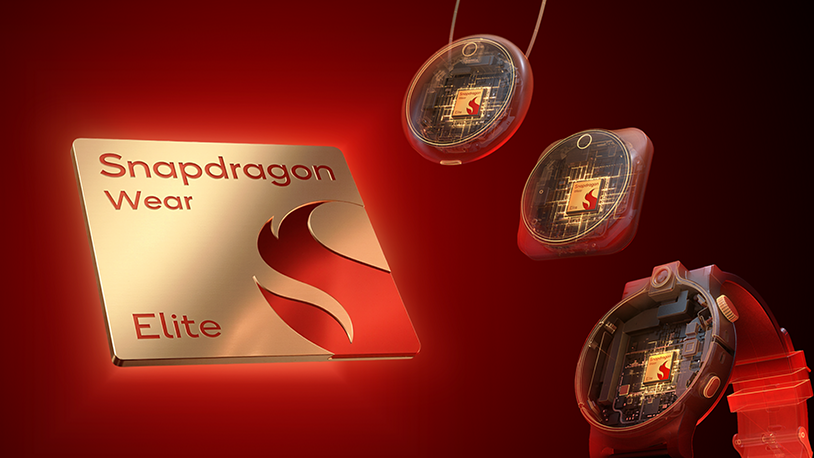
The Snapdragon Wear Elite is Qualcomm's new premium-tier wearable processor, introduced at MWC 2026 and positioned above the Snapdragon W5+ Gen 2 that currently powers devices like the Google Pixel Watch 4. The W5 lineup isn't going anywhere — Qualcomm has confirmed it will continue serving the mainstream market — but the Elite tier establishes a new ceiling for what a wearable chip can do.
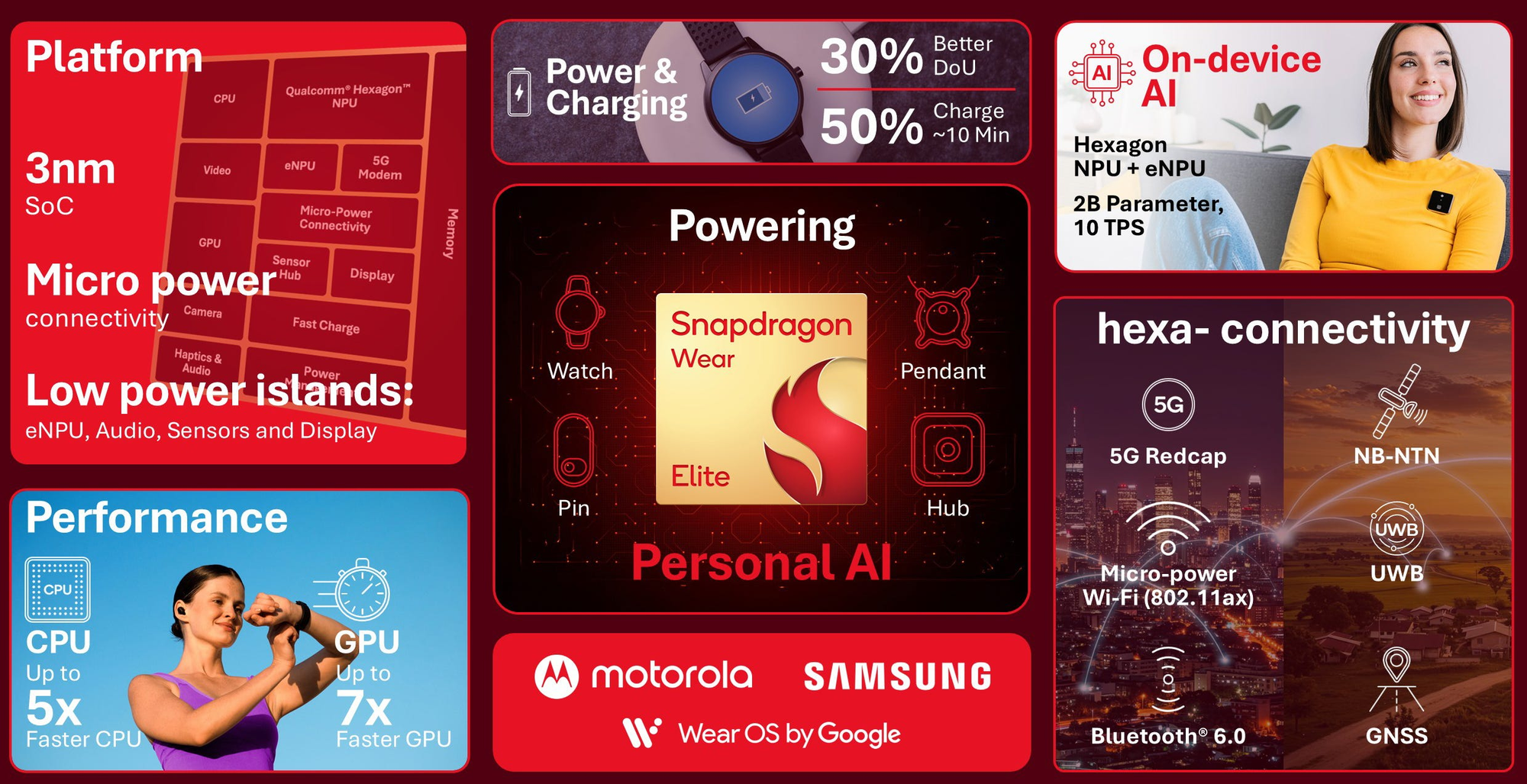
Built on a 3nm process node and introducing a big.LITTLE CPU architecture to Qualcomm's wearable lineup for the first time, the chip features a 2.1 GHz big core for demanding tasks alongside four 1.95 GHz smaller cores. That architecture should be familiar to anyone who follows smartphone silicon: the fast core handles heavy lifting like app launches and complex inference tasks, while the efficiency cores manage background work at lower power draw.
Qualcomm stated during briefings that this is the fastest wearable platform currently available, delivering up to 5x faster single-core CPU performance and 7x faster GPU performance compared to the Snapdragon W5+ Gen 2. On the graphics side, the Adreno A622 GPU now supports 1080p rendering at 60 frames per second, something that wasn't achievable on previous wearable chips.
The physical package is also thinner than its predecessor, a detail that matters more than it sounds in a product category where millimeters determine whether a device feels comfortable on a small wrist.
The NPU Is the Real Story
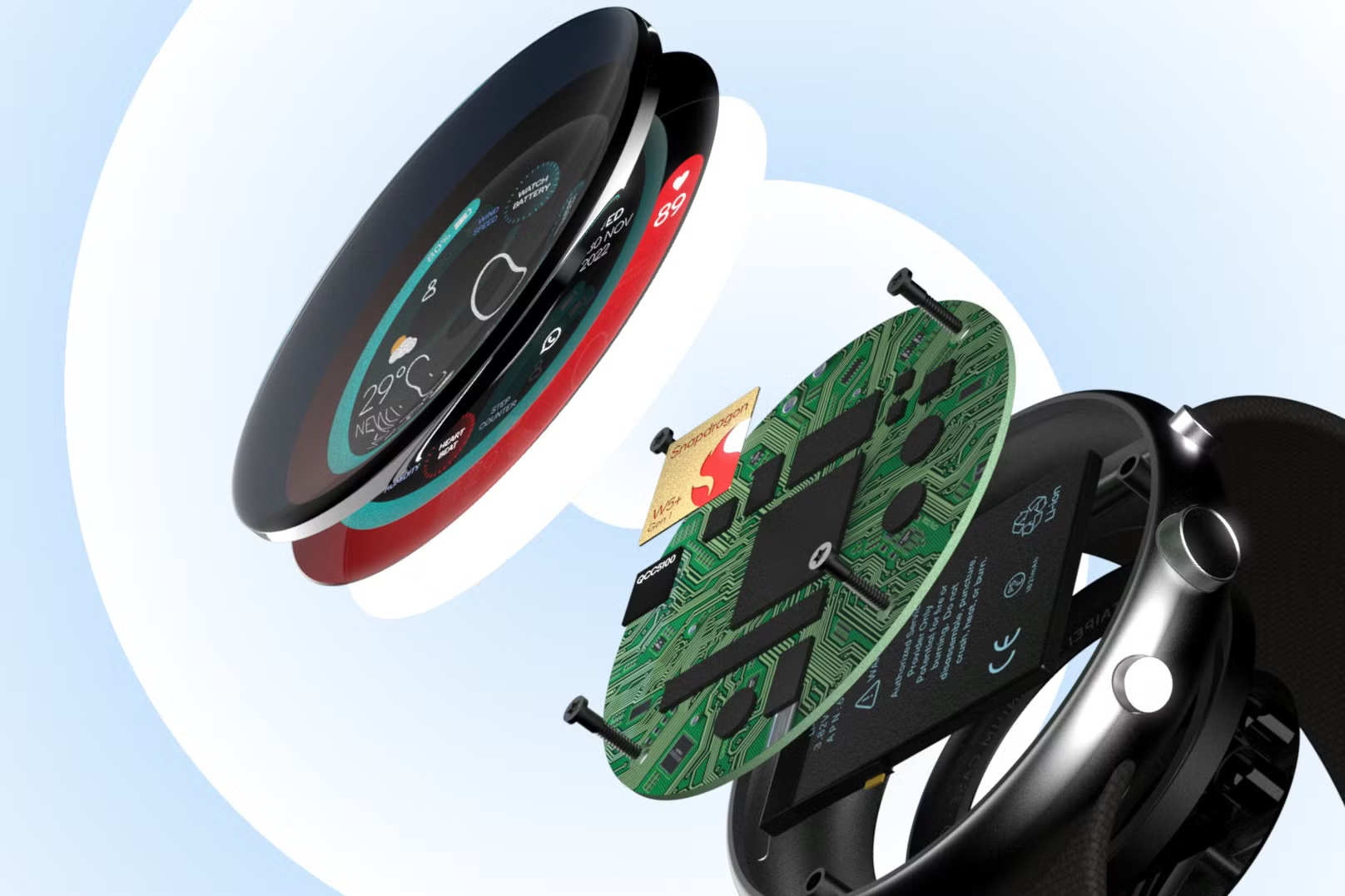
Performance gains are welcome, but the headline here is the Hexagon NPU.
This is the first time Qualcomm has integrated a dedicated Hexagon NPU inside a wearable platform, and the company says it can support AI models up to 2 billion parameters directly on the device. To put that in context: the AI capabilities running on many smartphones today operate at similar parameter counts. The Snapdragon Wear Elite is bringing that class of compute to a device sitting on your wrist.
The dedicated NPU allows the chip to run billion-parameter AI models at speeds of up to 10 tokens per second, enabling real-time life logging, on-device transcription, and AI agents that can execute tasks across apps.
There's also a secondary eNPU alongside the main NPU, designed for always-on low-power AI tasks. Think continuous keyword detection, ambient noise monitoring, passive health tracking. The eNPU keeps these lightweight functions running in the background without drawing down the battery the way a full NPU would if it stayed active all day.
The architecture is layered deliberately: always-on lightweight inference handled by the eNPU, heavier on-demand tasks routed to the Hexagon NPU when needed. It's a design decision that reflects a real understanding of how people actually use wearables, where battery life often matters more than raw capability.
Why Running AI Locally Changes the Experience
The phrase "on-device AI" gets thrown around frequently enough that it's starting to lose meaning. With wearables, it's worth being precise about what local inference actually buys you.
Latency. When a smartwatch sends a voice query to the cloud, there's a round-trip delay: the audio travels to a server, gets processed, and a response comes back. With Snapdragon Wear Elite's on-device AI, complex requests can be handled without delay time, marking a clear shift from basic metrics analysis to a truly personal AI experience. The watch responds in the moment, not after a pause that breaks the interaction.
Privacy. Any feature that keeps data on the device doesn't transmit it anywhere. For health metrics, sleep data, transcribed conversations, and ambient context, that distinction matters to a significant number of users. On-device processing means the data stays with the person wearing the device, not on a server owned by someone else.
Reliability. Cloud-dependent AI features fail without a connection. When your watch is in airplane mode, underground, or in an area with poor cellular coverage, AI features that depend on the cloud simply stop working. Local inference keeps functioning regardless of network availability.
The platform also includes NB-NTN, which enables two-way messaging via satellite when cellular and Wi-Fi coverage are unavailable, in collaboration with ecosystem partners including Skylo. That's a meaningful backup layer for scenarios where both local AI and connectivity matter simultaneously.
A Connectivity Stack That Goes Beyond the Wrist
One of the less-discussed aspects of the Snapdragon Wear Elite is the breadth of its connectivity integration.
The new Snapdragon Wear platform introduces a first-of-its-kind multi-mode connectivity architecture integrating six advanced technologies: 5G RedCap, Micro-Power Wi-Fi, Bluetooth 6.0, UWB, GNSS, and NB-NTN.
5G RedCap (Reduced Capability) is a lighter version of 5G specifically designed for devices that don't need the full bandwidth of a smartphone modem but still benefit from cellular connectivity and low latency. For a smartwatch operating independently of a phone, that distinction is significant.
Micro-Power Wi-Fi is designed for always-on connectivity at lower energy draw, enabling continuous AI context syncing in the background without the battery penalty of conventional Wi-Fi. Ultra-wideband (UWB) enables precise spatial awareness, useful for digital car keys, indoor navigation, and proximity-based interactions.
The aggregate effect is a wearable platform that can operate meaningfully without a smartphone nearby, pulling relevant context from multiple connectivity sources, and maintaining AI features throughout. That's the underlying prerequisite for wearables graduating from smartphone accessories to standalone intelligent devices.
Battery Life and Charging
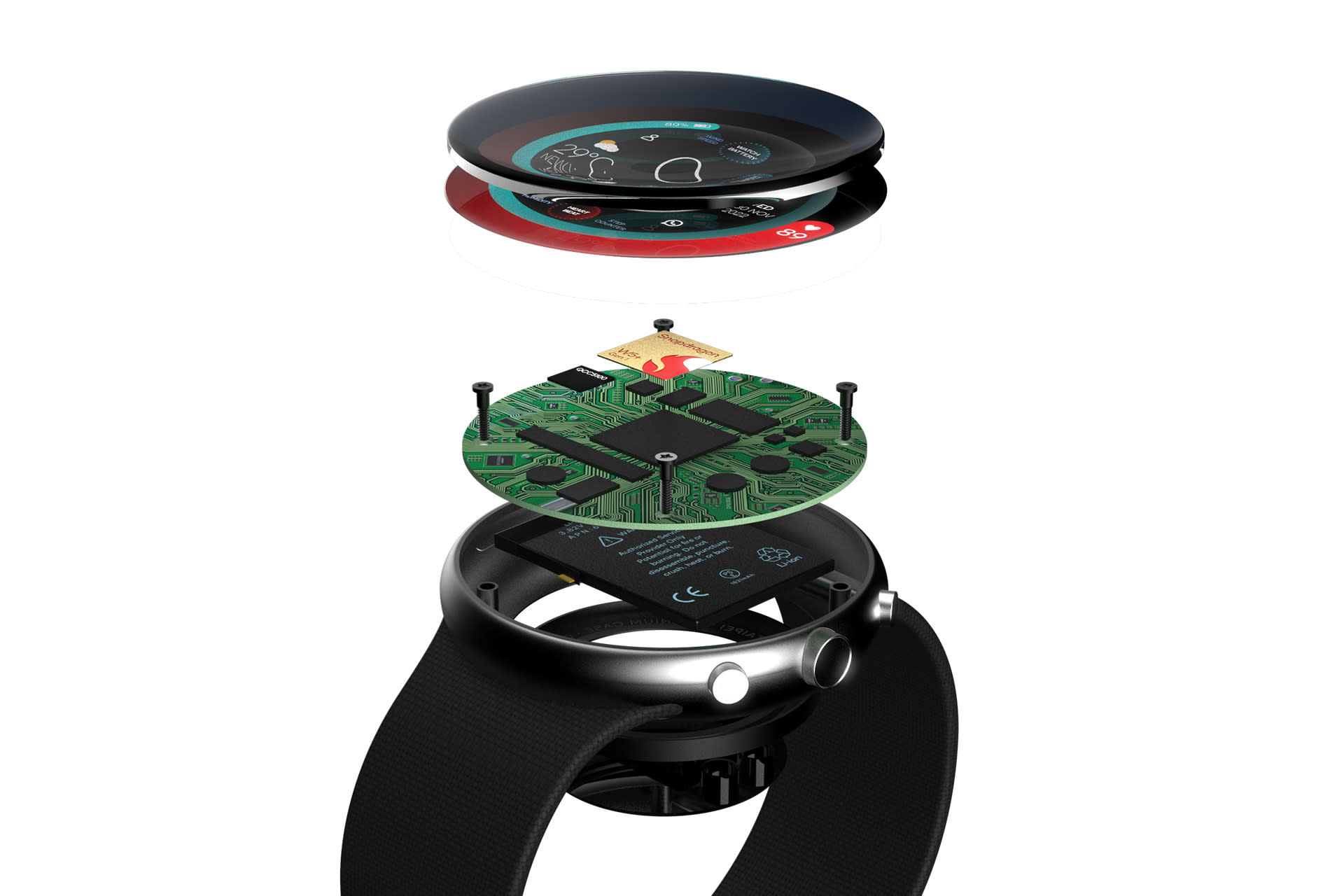
Wearable AI is only useful if the device survives the day.
Battery improvements include support for 9V quick charging, with up to 50% charge in approximately 10 minutes on typical 300-600 mAh wearable batteries. Overall battery life is expected to improve by up to 30% compared to the previous generation.
Qualcomm has noted that the 30% figure is based on internal testing with typical smartwatch battery configurations, and that final charging speeds will depend on how each OEM implements the hardware. Multi-day battery life is also supported depending on device configuration, though the specifics will vary by form factor and use case.
The shift to 3nm manufacturing is the primary driver here. Smaller process nodes mean transistors are more efficient, producing less heat and drawing less power for equivalent workloads. Moving from 4nm (the W5+ Gen 2) to 3nm while simultaneously adding an NPU and a more sophisticated CPU is an engineering balance that previous wearable generations couldn't pull off.
Samsung Drops Exynos for the Galaxy Watch — That's the Real Headline
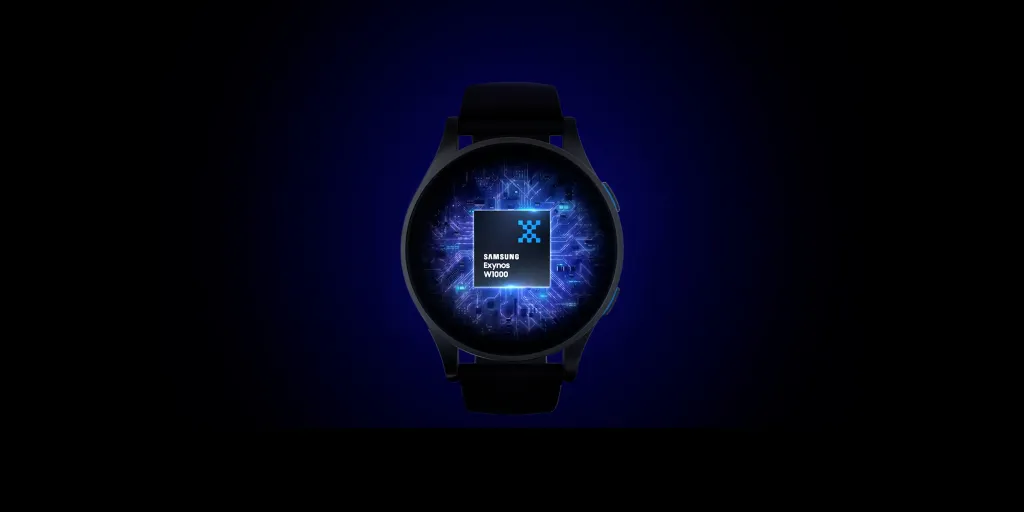
The partner list for the Snapdragon Wear Elite includes Google, Motorola, and Samsung. The Google and Motorola confirmations were expected. Samsung's wasn't.
Samsung has used its own Exynos processors in the Galaxy Watch for as long as the line has existed. That streak just ended.
Samsung executive InKang Song, Executive Vice President and Head of the Technology Strategy Team at MX Business, confirmed on stage at Qualcomm's press conference in Barcelona that the next-generation Galaxy Watch will integrate the new Snapdragon Wear Elite SoC. Song described the next Galaxy Watch as set to become an "even more holistic wellness companion" powered by the platform.
The decision to abandon Exynos in wearables reflects the same calculus that has driven Samsung to use Qualcomm's chips in flagship phones in certain markets: when a competitor's silicon offers a meaningful lead in a critical area, the brand loyalty to one's own chips becomes harder to justify to consumers.
Most Galaxy AI features on Samsung wearables have been mostly passive, meaning the device analyzes your data and tells you what happened. With the Galaxy Watch 8, Samsung included an active component in the AI experience, but the "brains" remained in the smartphone. Future Galaxy watches, by utilizing the Snapdragon Wear Elite, will have an agentic AI brain of their own.
That's a meaningful shift in what a Galaxy Watch can do. Features that previously required a paired phone to execute — running inference, handling multi-step tasks, responding to context in real time — become native to the watch itself.
The next Galaxy Watch is rumored for a July launch, which would align with Qualcomm's stated timeline of first commercial devices arriving within months.
Beyond Watches: The Platform Qualcomm Actually Built This For
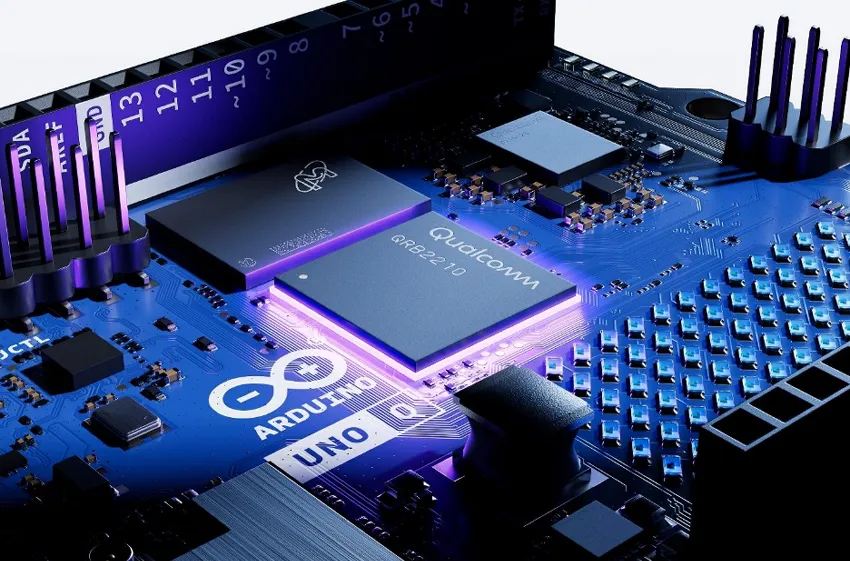
The smartwatch is the obvious first market for the Snapdragon Wear Elite. But Qualcomm's framing of this chip is considerably more ambitious.
Qualcomm envisions this chip as the foundation for a new generation of personal AI devices — not just smartwatches, but pins, pendants, and other on-body or near-body form factors designed to operate as standalone AI nodes rather than smartphone companions.
Beyond smartwatches, Snapdragon Wear Elite can be used for other AI form factors, including smart glasses and pins that have cameras. Depending on the camera and display being used, Wear Elite can be used for glasses instead of the Snapdragon AR1/2 family.
Motorola has already shown where this thinking leads. The company's Project Maxwell concept, previewed at CES 2026 and linked to the Wear Elite platform at MWC, is an AI-perceptive pendant: a screenless wearable that uses ambient sensing and AI to assist its wearer without requiring interaction with a display at all.
New hardware from companies like OpenAI, reportedly involving Sam Altman and Jony Ive, could introduce entirely new categories. Whether Wear Elite becomes the silicon powering those devices remains to be seen, but Qualcomm is clearly betting that the next wave of personal computing will be AI-driven, wearable, and far more diverse than today's watches and glasses.
The life-logging potential is also worth sitting with. Qualcomm envisions the Wear Elite powering devices that can recall contextual information on demand: where you left your keys, which cafe you visited in Paris last week, what someone said during a meeting yesterday. That's a very different product than a fitness tracker with a notification screen, and it requires both local AI inference and persistent ambient sensing to work. The Snapdragon Wear Elite is built to enable exactly that.
How It Compares to the Competition
Samsung's Exynos W1000, which powers the Galaxy Watch 7, Galaxy Watch 8, and Galaxy Watch Ultra, was itself built on a 3nm process. So the manufacturing node isn't what separates the Wear Elite from the current Samsung silicon.
The real difference isn't the process. It's what Qualcomm packed inside. The Exynos W1000 has the CPU cores and the GPU, but it doesn't have a dedicated Hexagon NPU for on-device AI inference at the level the Wear Elite supports. That gap is why Samsung made the switch.
Apple's situation is different. The Apple Watch runs on Apple's own internally designed S-series chips, and Apple has been integrating neural engine hardware into those chips for several generations. The Apple Watch Series 10 includes an S10 chip with an in-house neural engine, giving it on-device AI capabilities that the Wear OS ecosystem has largely lacked until now.
With the Snapdragon Wear Elite, the Wear OS ecosystem is now positioned to compete directly with Apple Watch on AI inference at the hardware level for the first time. Whether Samsung, Google, and Motorola build software experiences that fully leverage the NPU is a separate question — and ultimately the more important one.
What This Means for Developers and Consumers
For developers building Wear OS applications, the Snapdragon Wear Elite opens practical possibilities that didn't exist before. On-device voice processing without latency. Real-time transcription that doesn't require a network connection. AI agents that can handle multi-step tasks across apps without offloading to a phone.
The platform supports Android, Wear OS, and Linux-based systems, giving OEMs flexibility to build across a broad range of form factors. Other specifications include LPDDR5 memory at 6,400 MHz, up to 32GB eMMC storage, Qualcomm Spectra ISP for camera-enabled wearables, support for over 50 sensors, and security features such as Qualcomm Trusted Execution Environment.
Support for 50-plus sensors is significant for health and fitness applications. More sensors, combined with an NPU capable of processing their data locally in real time, means devices can offer genuinely continuous health monitoring rather than periodic sampling. Blood oxygen, heart rate variability, stress indicators, sleep stages: the accuracy and resolution of these features depends heavily on how much compute the chip can devote to sensor fusion.
For consumers, the near-term benefit will show up first in whatever the next Galaxy Watch offers in terms of AI assistant capabilities. The longer-term shift is subtler: as more AI features move on-device, wearables become less dependent on a paired phone and more capable as independent devices. That changes the relationship between the watch and the phone, gradually shifting the wearable from an accessory into something closer to a peer.
Frequently Asked Questions
What is the Qualcomm Snapdragon Wear Elite? The Snapdragon Wear Elite is Qualcomm's new premium wearable processor, announced at MWC 2026. It is the first wearable chip from Qualcomm to include a dedicated Hexagon NPU, enabling on-device AI inference without relying on cloud connectivity. It targets smartwatches, AI pins, pendants, smart glasses, and other wearable form factors.
How is the Snapdragon Wear Elite different from the W5+ Gen 2? The Snapdragon W5+ Gen 2 powers current Wear OS devices like the Google Pixel Watch 4 and does not include a dedicated NPU. The Wear Elite adds the Hexagon NPU capable of running AI models up to 2 billion parameters on-device, delivers 5x faster single-core CPU performance, offers 7x better GPU performance, moves to a 3nm process node, and improves battery life by approximately 30%. The W5 lineup continues in the market; the Wear Elite is a new premium tier above it.
Which devices will use the Snapdragon Wear Elite? Samsung has confirmed the next-generation Galaxy Watch will use the chip. Google and Motorola are also confirmed partners. Motorola's Project Maxwell AI pendant concept is also linked to the platform. First commercial devices are expected within months of the MWC 2026 announcement.
Why does on-device AI matter for smartwatches? On-device AI eliminates the round-trip latency that cloud-based features introduce, keeps sensitive health and personal data on the device rather than on remote servers, and ensures AI features continue working when cellular or Wi-Fi connectivity is unavailable. For a device worn continuously, those distinctions affect both the usefulness and trustworthiness of the product.
Is Snapdragon Wear Elite only for smartwatches? No. Qualcomm has explicitly designed the platform for a broader range of wearable form factors, including AI pins, pendants, smart bands, and smart glasses. Depending on the display and camera configuration, the chip can serve roles currently filled by Qualcomm's Snapdragon AR1 and AR2 families. It supports Android, Wear OS, and Linux.
How does the Snapdragon Wear Elite compare to Apple Watch silicon? Apple's S-series chips in the Apple Watch have included neural engine hardware for multiple generations, giving Apple a head start in on-device wearable AI. The Snapdragon Wear Elite brings the Wear OS ecosystem to a comparable hardware position for the first time. Whether the software experiences built on Wear Elite match Apple's integration is a question that will be answered when actual devices ship.
When will the first Snapdragon Wear Elite devices be available? Qualcomm stated at MWC 2026 that the first commercial devices are expected "in the next few months." Given Samsung's public confirmation, the next Galaxy Watch — rumored for a mid-2026 release — is expected to be one of the earliest products to use the chip.
Related Articles
 Dani
Dani
 Mark
Mark
 Dani
Dani