Picsart, the AI-powered design platform with more than 130 million users globally, has launched an AI agent marketplace that lets creators delegate specific creative tasks to specialized AI assistants rather than completing them manually. The move positions Picsart at the intersection of two fast-moving trends: the creator economy's demand for faster production, and the broader industry shift toward agentic AI that executes workflows rather than simply responding to prompts.
The framing the company is using is intentional. Creators "hire" agents in the same way they might bring on a freelancer, assigning tasks, setting parameters, and reviewing the output without doing the execution themselves. Hovhannes Avoyan, Picsart's founder and CEO, put it directly: "Creators have been stuck as the operator of every workflow, the one doing, not deciding. Our agents change that relationship: you set direction, the agent builds a plan using real data, you approve, it executes."
What Picsart Is and Why This Move Makes Sense
Founded in 2012, Picsart grew into one of the dominant mobile editing platforms for Gen Z creators and social media managers. The company reached unicorn status in 2021 after raising a $130 million Series C led by SoftBank Vision Fund 2, pushing its valuation above $1 billion. At the time, Picsart had already passed $100 million in annual recurring revenue and reported more than 150 million monthly active users across 180 countries.
The platform occupies a specific niche in the creative software landscape. Canva has become the standard for polished, template-driven design accessible to non-designers. Adobe's Creative Cloud remains the professional suite. Picsart has carved out a position between the two, serving creators who need speed and flexibility without the learning curve of professional tools, with a core audience that is young, mobile-first, and producing high volumes of social content.
Maintaining relevance in this space requires continuous product evolution. Adobe has been aggressively embedding AI across Creative Cloud. Canva has made a series of AI acquisitions, including Leonardo AI in 2024 and MagicBrief in 2025. Picsart's response has been to lean into agentic AI, a category that moved from research novelty to active product investment across the industry throughout 2025 and into 2026.
The Four Launch Agents
At launch, the marketplace offers four agents, with Picsart saying it will introduce additional specialized agents on a weekly cadence.
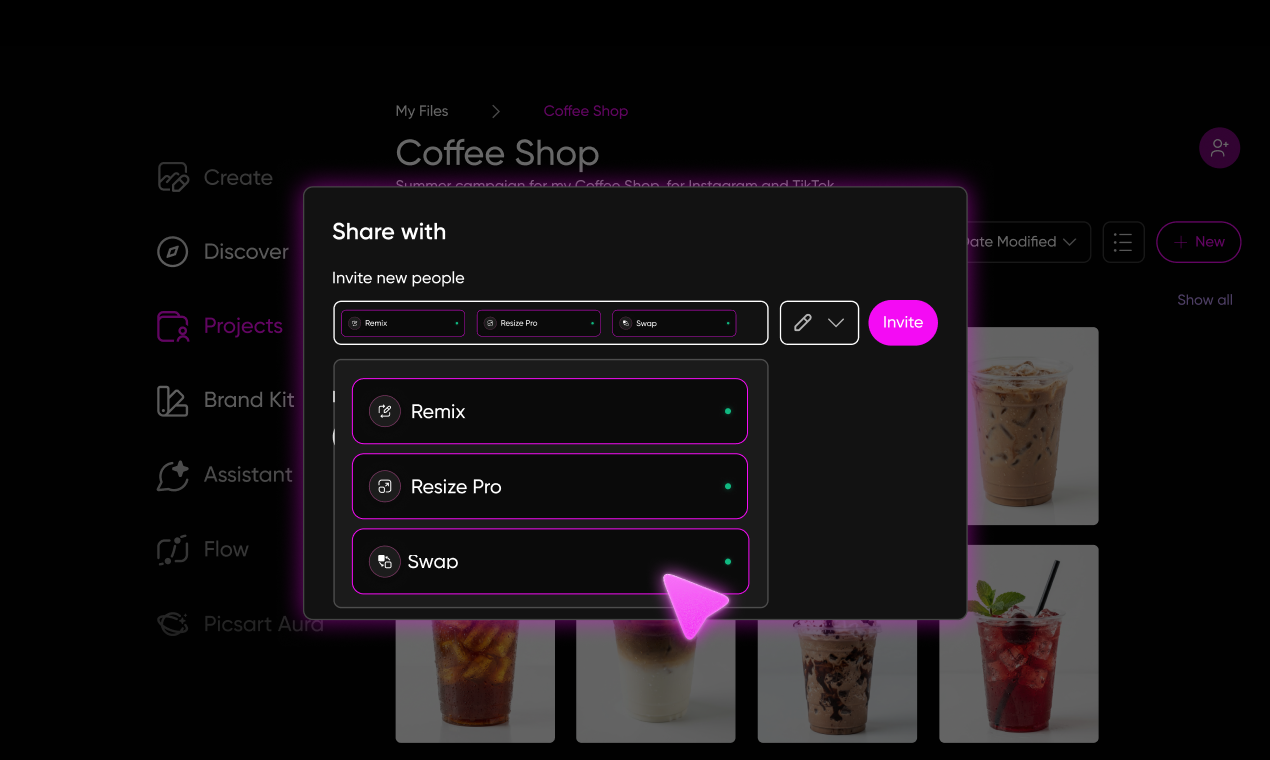
Flair is the most sophisticated of the four. It integrates directly with Shopify to act as an asynchronous assistant for online store owners, analyzing market trends and store performance data to surface recommendations for improving product listings and storefront visuals. A future update will add A/B testing capabilities and the ability to identify underperforming products with proactive improvement suggestions. Flair runs in the background, surfacing findings for creator approval rather than waiting for explicit prompts.
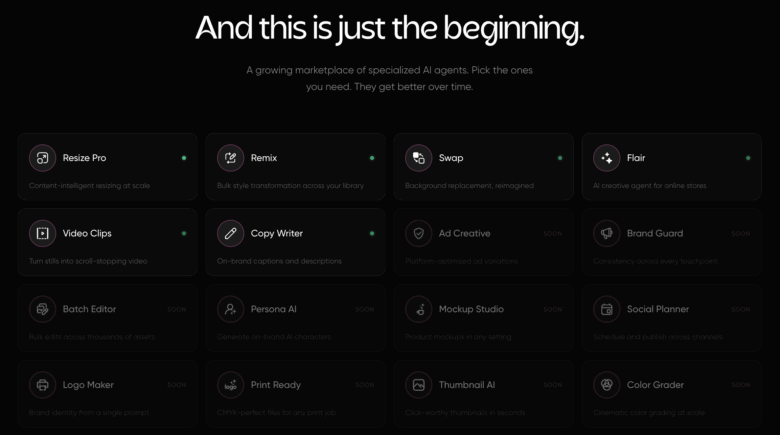
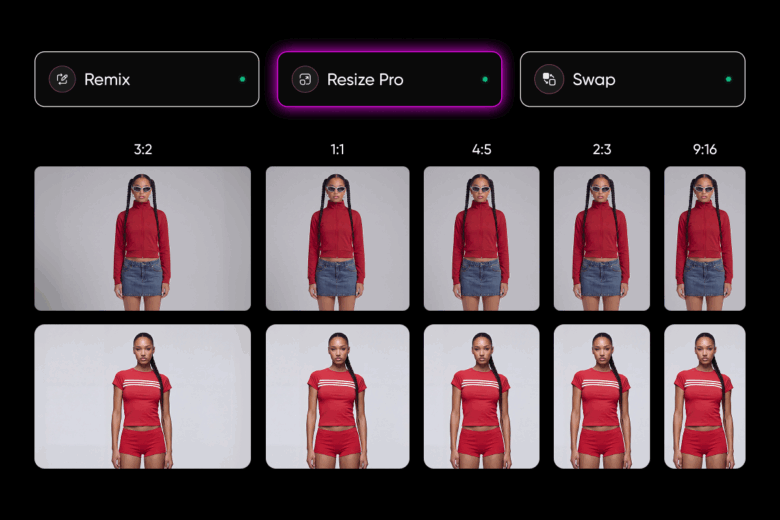
Resize Pro addresses one of the most persistent time sinks in professional content production: reformatting assets for different platforms. It automatically adapts images and videos to the recommended aspect ratios for major social channels, using generative expansion to extend frames so the final crop looks composed rather than cropped. For teams producing dozens of variations per campaign, the agent collapses a process that can take hours into minutes.
Remix applies consistent visual styles across entire photo libraries. Creators can specify aesthetic directions like "vintage film," "cyberpunk," or "watercolor," and the agent applies those treatments at scale, which fits brand refreshes, themed content drops, and any situation where a creator needs visual consistency across a large body of work without manually editing each asset.
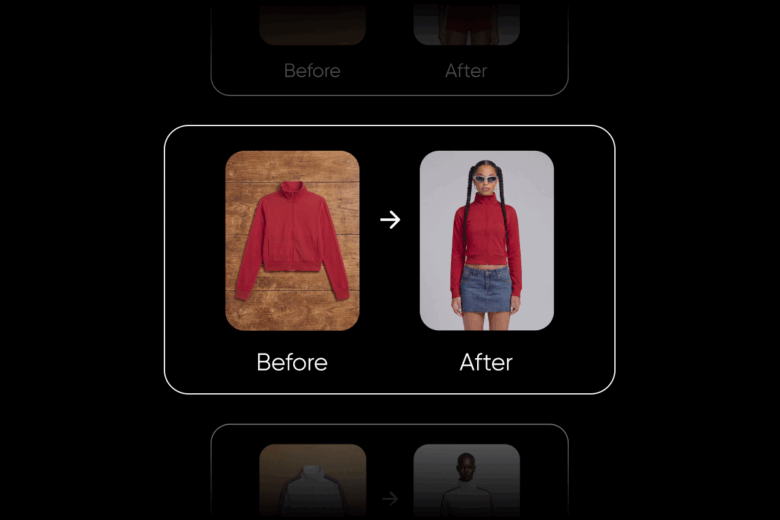
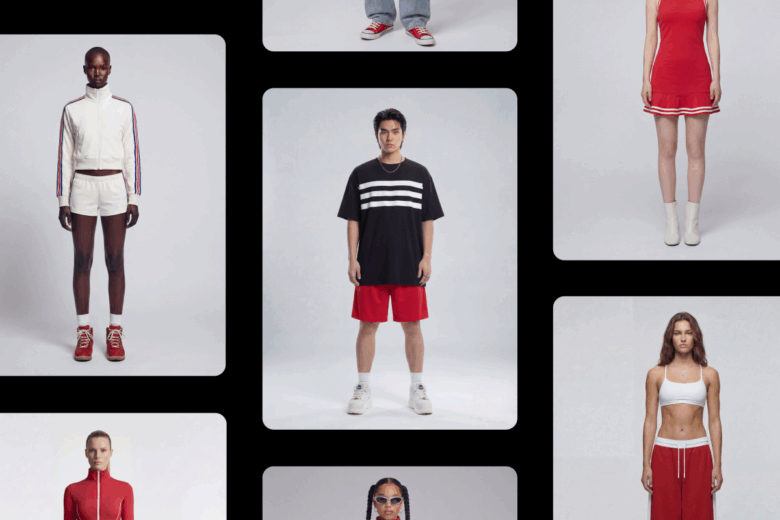
Swap handles batch background changes, useful for e-commerce sellers who need cohesive catalog imagery across dozens or hundreds of product shots without the labor-intensive process of individual masking.
How the Agents Work in Practice
Agents in the Picsart marketplace run asynchronously in the background, surfacing drafts and recommendations for creator review rather than demanding real-time attention. For an agent like Flair, which is continuously analyzing store data, this model is particularly practical since creators are notified of findings and can review or approve actions through WhatsApp or Telegram, platforms Picsart has integrated with because their APIs support business chatbot functionality.
The conversational interface through messaging apps reflects a deliberate design choice. Rather than requiring creators to log into the Picsart platform to check on agent progress, Picsart brings the interaction into the apps already open on a creator's phone throughout the day.
Picsart also gives creators direct control over agent autonomy. Users can configure an agent to require approval before taking any action, which addresses the genuine concern that any LLM-based system can hallucinate or take actions the user did not intend. The company has also noted that agents operating within a creator's own data and tool ecosystem face lower prompt injection risk than more publicly exposed agents, though that risk profile could change if Picsart expands agents to interact more broadly with external surfaces.
The Broader Market Context
The launch comes at a moment when agentic AI has moved from a concept discussed in research papers to a product category that major platforms are actively building and shipping. OpenAI's GPT-based assistants and Agents API established commercial appetite for customizable, task-oriented AI systems. Enterprise platforms including Salesforce and Microsoft have been building agent infrastructure for business users throughout 2025.
Picsart's marketplace applies the same architecture to a different audience: individual creators and small brands who want automation without complexity. The tasks the launch agents handle, specifically resizing, remixing, background swapping, and e-commerce analysis, are exactly the kind of high-frequency, low-creativity work that creative professionals most want to eliminate. McKinsey estimated in 2023 that generative AI could add between $2.6 trillion and $4.4 trillion in annual economic value, with marketing and sales among the biggest beneficiaries, and the operational pressure on social media teams to produce more assets for more platforms, faster, has only intensified since.
The marketplace model itself is a notable product decision. Rather than building a single general-purpose AI assistant embedded in the platform, Picsart is creating a modular ecosystem of specialists. This mirrors how real creative teams are often structured, with different people handling different categories of work, and it creates a natural engagement loop since new agents arriving weekly give existing users a reason to return while giving Picsart real-world usage data to guide what to build next.
Competitive Positioning
Picsart's agent marketplace puts it in competition not just with Adobe and Canva, but with a broader category of tools that automate creative production for social media and e-commerce. Platforms targeting e-commerce specifically, including background removal tools and AI product photography services, are increasingly common. What Picsart is attempting to do is pull these capabilities into a unified platform with a consistent approval and control layer, accessible through messaging apps the creator is already using.
The Shopify integration for Flair is the most commercially significant piece of the launch. E-commerce is a strong anchor use case for agentic AI in creative work because the tasks are repetitive, the quality bar is relatively well-defined, and the commercial value of improved product imagery and listing performance is direct and measurable. If Flair's promised A/B testing and underperforming SKU identification capabilities deliver in practice, it moves Picsart from a creative tool into something closer to an e-commerce optimization assistant, which is a meaningfully different category with different buyer intent.
Pricing follows the freemium model Picsart has used throughout its history. A free tier provides limited AI credits per week, and paid subscriptions starting at around $10 per month when billed annually unlock significantly more capacity. Whether agents are included in existing tiers or require separate payment is something Picsart has not fully disclosed, and the answer will matter considerably for creator adoption.
Conclusion
Picsart's AI agent marketplace represents a genuine shift in how the company is positioning itself in the creator economy. Moving from a toolkit of individual editing features to a marketplace of specialized autonomous agents changes what the product is fundamentally about: less about what creators can do with Picsart's tools, and more about what Picsart's agents can do on a creator's behalf.
For social media managers and small e-commerce operators producing large volumes of content without dedicated design resources, the promise of delegating resizing, remixing, and catalog management to AI agents is practically compelling. The execution, including how reliably the agents perform, how well the autonomy controls work in practice, and whether the Shopify integration delivers its promised depth, will determine whether the marketplace becomes a meaningful part of how creators actually work or remains a product feature that looks better in an announcement than in a weekly workflow.
Frequently Asked Questions
What is Picsart's AI agent marketplace?
It is a marketplace within the Picsart platform where creators can access specialized AI agents to handle specific creative tasks autonomously. Rather than using individual editing tools manually, creators assign tasks to agents, set parameters and approval requirements, and review the output. Picsart launched with four agents and plans to add new ones weekly.
What can the launch agents actually do?
The four initial agents are Flair, Resize Pro, Remix, and Swap. Flair integrates with Shopify to analyze store data and surface recommendations for improving product imagery and listings. Resize Pro reformats images and videos to platform-specific dimensions using generative expansion. Remix applies consistent visual styles across entire photo libraries, and Swap handles batch background changes for product catalogs.
How do creators interact with the agents?
Creators can interact with agents through WhatsApp and Telegram in addition to the Picsart platform directly. For asynchronous agents like Flair, this allows creators to receive updates and approve actions through messaging apps they are already using, rather than logging into the platform specifically to check progress.
Can creators control how much autonomy agents have?
Yes. Picsart allows creators to configure autonomy levels for each agent, with the strictest setting requiring creator approval before the agent takes any action. This addresses the risk of LLM hallucinations or unintended actions, particularly for agents like Flair that operate with more independence over business data.
How does this compare to what Adobe and Canva are doing?
Adobe has been embedding AI broadly across Creative Cloud, targeting professional workflows. Canva has pursued AI acquisitions including Leonardo AI and MagicBrief, expanding capabilities for marketing and advertising use cases. Picsart's marketplace takes a more modular approach, offering specialized agents for specific tasks, and targets the Gen Z creator and social media manager audience that has been the platform's core base.
What does Picsart's Flair agent do for Shopify sellers?
Flair analyzes market trends and store performance data to recommend improvements to product listings and storefront visuals. In a future update, it will gain the ability to run A/B tests and identify underperforming products with recommendations for improving conversion. It operates asynchronously in the background and surfaces findings for creator approval.
What is the pricing model for the agent marketplace?
Picsart offers a free tier with limited AI credits per week. Paid subscriptions start at approximately $10 per month when billed annually and provide significantly more capacity. The specific terms for agent access within different subscription tiers have not been fully disclosed.
Why is Picsart launching this now?
The timing reflects broader industry momentum around agentic AI and competitive pressure in the creator tools space. Agentic systems that execute multi-step workflows moved from research concepts to commercial products throughout 2025, with OpenAI, Salesforce, Microsoft, and others shipping agent frameworks for different use cases. Picsart is applying the same model to the creator and social media workflow category, where demand for faster, higher-volume production has intensified.
Related Articles
 Mark
Mark
 Dani
Dani
 Dani
Dani