Sam Altman has a confession. In his group chat with fellow tech CEOs, there is a betting pool running on a single question: what year will the first one-person billion-dollar company emerge?
"Which would have been unimaginable without AI," Altman has said publicly. "And now it will happen."
Dario Amodei put the odds even sharper. When asked directly at Anthropic's Code with Claude conference, he said 70 to 80% probability that it happens in 2026, naming three likely categories: proprietary trading, developer tools, and businesses built around automated customer service.
These are not idle predictions from people prone to hyperbole. They are founders and operators watching, in real time, what AI agents are doing to the fundamental economics of building a company. And the evidence around them is starting to catch up with the rhetoric.
We Have Already Seen What Lean Looks Like
Before discussing what is coming, it helps to understand how far the trajectory has already moved.
Midjourney, the AI image generation company founded by David Holz, generated $500 million in revenue in 2025 with roughly 107 employees. That works out to approximately $4.7 million in revenue per employee. For context, traditional SaaS companies typically generate $200,000 to $300,000 per employee, a figure that has long been considered strong performance.
Midjourney achieved this without a single dollar of external venture capital, without traditional marketing, and without the organizational infrastructure that most companies at this revenue level consider non-negotiable.
The rest of the AI industry tells a similar story:
- Cursor (Anysphere): roughly $3.3 million in revenue per employee
- OpenAI: approximately $1.5 million per employee on a $3.7 billion revenue run rate
- Anthropic, Runway, Perplexity: all operating above $1 million per employee
The question is no longer whether lean AI companies can generate serious revenue. It is how lean the team can get before the model breaks
The Case Study Everyone Is Citing
In November 2025, an Austrian software developer named Peter Steinberger sat down on a Friday evening and built the first version of what would become OpenClaw in a single hour. He wired a large language model into Telegram so it could read messages, browse the web, and run shell commands on his behalf.
Steinberger had spent over a decade building PSPDFKit, a PDF developer kit used by apps running on nearly a billion devices, before selling it in a nine-figure exit in 2024. After the sale, he burned out completely. He described the experience to Lex Fridman as staring at his screen feeling empty. He booked a one-way ticket to Madrid and disappeared for months.
When he eventually came back to building, the tools had changed. AI could now handle the repetitive plumbing of code, freeing him to focus on the parts he found genuinely interesting.
In January 2026 alone, he made more than 6,600 commits to OpenClaw while running four to ten AI coding agents simultaneously. He told the Pragmatic Engineer: "From the commits, it might appear like it's a company. But it's not. This is one dude sitting at home having fun."
Within weeks, OpenClaw surpassed 145,000 GitHub stars, a record for a new project. Both Meta and OpenAI submitted acquisition bids. Steinberger chose OpenAI, announcing on February 15, 2026 that he was joining to lead personal agent development. Sam Altman called him "a genius with a lot of amazing ideas about the future of very smart agents interacting with each other to do very useful things for people."
The project had no revenue. It was costing Steinberger $10,000 to $20,000 per month in server costs. Two of the most valuable companies on earth were competing to acquire it.
What Has Actually Changed
The Steinberger story is a useful illustration, but it points to something structural rather than exceptional. Three forces have shifted simultaneously to make the solo founder model genuinely viable at scale.
Multi-Agent Systems Moved From Research to Production
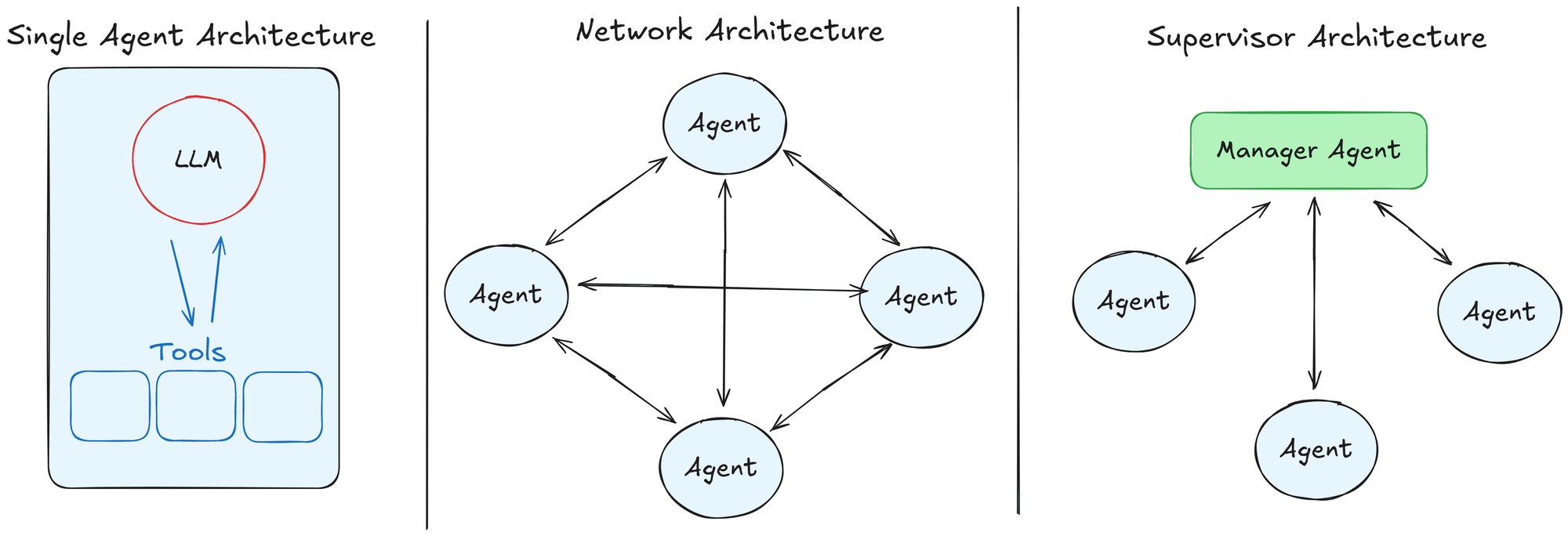
Gartner reported a 1,445 percent surge in enterprise inquiries about multi-agent AI orchestration in 2025. A solo founder can now deploy specialized agents for distinct functions: a coding agent that understands the entire codebase, a marketing agent generating and testing campaigns, a support agent handling customer tickets, and an analytics agent monitoring key metrics.
These agents do not just respond to queries. They take actions, use tools, and coordinate with each other. One person can orchestrate a team of specialists without managing a single human employee.
AI-Native Development Collapsed the Cost of Building Software
Platforms like Cursor, Lovable, and Bolt.new have made it possible to ship functional software products in days rather than weeks. Andrej Karpathy coined the term "vibe coding" in February 2025 to describe this shift: describing what you want in natural language and letting AI generate the implementation.
The concept has since expanded well beyond code into marketing, design, operations, and legal work. The unit cost of building almost anything digital has dropped dramatically.
The Economics of Capital Formation Have Changed
Sequoia Capital has begun adjusting its underwriting models to account for what it calls "agentic leverage," the ability of tiny teams to produce outsized output through AI orchestration. Solo-founded startups now represent 36.3 percent of all new ventures, according to Scalable.news research from early 2026.
What was once read as a signal of an undercapitalized team is increasingly read as a sign of exceptional operational efficiency.
What a One-Person Unicorn Actually Looks Like
The term needs some precision. A one-person unicorn is not literally a company with zero employees forever. It is a company where a single founder makes every meaningful strategic decision while AI agents and a small number of contractors handle execution.
Pieter Levels, the indie developer behind Nomad List, RemoteOK, and PhotoAI, runs a portfolio generating over $3 million in annual recurring revenue as a solo operator. He is not a unicorn, but he is a working proof of concept for the underlying model.
The distinction between Levels-scale and unicorn-scale is not the number of people. It is the category of problem being solved and the rate at which the business compounds. Consumer software, developer tools, and markets with network effects are the categories most cited as the likely birthplace for the first solo unicorn. These are businesses where the unit of production is digital, marginal costs are near zero, and distribution can be built algorithmically.
A proprietary trading firm run by one person with AI agents analyzing markets, executing strategies, and managing risk across multiple instruments is no longer a fantasy. Several quant traders are already operating structures that approach this description. The gap between that and a unicorn is scale and valuation, not organizational structure.
The Friction That Remains Real
The bullish case is compelling. The honest case requires naming what current models are not yet capable of handling.
- Agents are still unreliable at high stakes. Tom Coshow, senior director analyst at Gartner, has been direct: current LLM-based agents require very simple, scoped decisions to produce reliable outputs. The fantasy of an autonomous VP of sales closing deals without human supervision is not a 2026 reality. Agents excel at repetitive, well-defined tasks. They struggle when decisions compound in unpredictable ways or require genuine contextual judgment.
- The single point of failure problem is structural. A company run by one person has no redundancy at the strategic level. A health crisis, burnout, or a single catastrophic decision collapses the entire organization. This is not a problem AI agents solve. It is a governance risk that investors and enterprise customers have legitimate reasons to take seriously.
- Compliance, trust, and relationships still require humans. Regulated industries, enterprise sales cycles, and partnerships requiring institutional trust are not domains where AI agents can substitute for human presence and accountability. The solo founder model works best where distribution is digital and customer relationships are transactional. It faces structural limits where they are not.
- Building becomes easier as the bar rises. Venture firm Flashpoint makes this point clearly: because AI lowers the cost of early progress, investor expectations have risen. What counted as meaningful traction two years ago is now table stakes. A solo founder using AI agents has less of a structural advantage than they might think, because every competitor now has access to the same tools.
What Investors Are Actually Watching
The conversation among venture capitalists has shifted from skepticism to framework-building. The question is no longer whether solo or near-solo founders can build serious businesses. It is how to evaluate them properly.
Traditional diligence frameworks weight team size heavily, on the theory that a larger team signals execution capacity and the ability to attract talent. That heuristic is breaking down. Revenue per employee has emerged as a more useful signal than headcount, particularly for early-stage AI companies where the ratio of output to overhead is what actually matters.
Sequoia's adjustment to account for agentic leverage is not cosmetic. It reflects a genuine recognition that the input-output relationship for software startups has been structurally altered. A team of three with the right AI infrastructure can now do what a team of thirty did five years ago. That compresses burn rates, extends runways, and changes the math on when and whether a company needs institutional capital at all.
The flip side is that solo founders in competitive markets face a different kind of pressure. The same tools that give one person leverage give every competitor the same leverage. The moat is no longer team size. It is speed of iteration, quality of judgment, and the specific domain knowledge that allows a founder to deploy agents more effectively than anyone else.
The Broader Implications
If the one-person unicorn arrives, and the weight of current evidence suggests it is a matter of when rather than if, the implications extend well beyond entrepreneurship.
The organizational unit of value creation is shrinking. Salesforce cut 4,000 customer service roles in early 2025, citing AI agents. Amazon confirmed plans to cut roughly 14,000 corporate roles. These are not small adjustments. They represent a fundamental shift in where economic value is created and who captures it.
The divergence between founders who merely experiment with AI tools and those who operationalize them will widen. The advantage goes not to the person who uses the most tools, but to the person who builds the most effective system around a small number of deeply mastered ones.
There is also a question about what gets lost. Venture-backed companies built by teams create employment, spawn talent networks, and generate the organizational density that drives regional economies. Ultra-lean companies contribute less to these dynamics. The efficiency gains are real. The spillover effects are smaller.
Conclusion
The one-person billion-dollar company is not guaranteed to arrive in 2026. It may be 2027. It may already exist in a form that has not yet been publicly valued. What is no longer in question is whether the underlying mechanics make it possible.
The tools exist. The evidence of what lean AI companies can produce is mounting. Capital markets are beginning to price agentic leverage into their models. The founders who understand this shift most clearly are not waiting for permission to act on it. The betting pool in Altman's group chat has a date coming due.
Frequently Asked Questions
What is a one-person unicorn?
A one-person unicorn is a startup valued at $1 billion or more that is founded and primarily operated by a single person, with AI agents and minimal contractors handling most execution. The founder makes all strategic decisions while automated systems manage coding, marketing, customer support, operations, and other functions that traditionally required dedicated teams.
Has a one-person unicorn been built yet?
Not officially, but the conditions are in place. Peter Steinberger's OpenClaw attracted billion-dollar acquisition bids from both Meta and OpenAI within weeks of launch, built entirely by one developer, though it had no revenue. Midjourney generated $500 million in revenue in 2025 with roughly 107 employees, producing around $4.7 million in revenue per employee.
What AI tools are enabling solo founders to scale?
The core stack includes AI coding environments like Cursor and Lovable, multi-agent orchestration tools like n8n, and AI agents for customer support, marketing, and analytics. The shift from using individual tools to orchestrating multiple specialized agents is what separates modest productivity gains from genuine organizational leverage.
What did Sam Altman and Dario Amodei say about one-person unicorns?
Sam Altman has said there is a betting pool among tech CEOs for the first year a one-person billion-dollar company emerges, calling it something that "would have been unimaginable without AI and now will happen." Dario Amodei put the probability at 70 to 80 percent that it happens in 2026, naming proprietary trading, developer tools, and automated customer service as the most likely categories.
What are the real risks of the one-person company model?
The key risks include a single point of failure at the strategic level, the unreliability of current AI agents on high-stakes decisions, limited ability to build trust in regulated industries or enterprise markets, and rising investor expectations that reduce the structural advantage of lean teams as AI tools become universally accessible.
How are venture capitalists responding to solo founder companies?
Firms like Sequoia Capital are adjusting their underwriting models to account for what they call agentic leverage. Revenue per employee is becoming more important than headcount as a signal of operational quality. Investors also note that the rising bar for traction means solo founders face higher expectations than earlier lean-team models did.
What industries are most likely to see one-person unicorns first?
The most commonly cited categories are consumer software with network effects, developer tools, proprietary trading, and businesses built around automated customer service. These share common traits: digital products with near-zero marginal costs, distribution that can be built algorithmically, and markets where delivering value does not require human-to-human interaction.
What does this mean for employment more broadly?
The same dynamics enabling solo founders are reducing headcounts at large companies. Salesforce and Amazon have announced significant job reductions citing AI automation. Anthropic's CEO has warned that AI could increase U.S. unemployment by 10 to 20 percent over the next five years. The productivity gains from agentic AI are real and concentrated, while the distributional effects remain an open and urgent question.
Related Articles
 Mark
Mark
 Dani
Dani
 Dani
Dani