The theme of Mobile World Congress 2026 was "The IQ Era," and for once, the branding actually fit.
Barcelona's Fira Gran Via has always been the place where phone makers announce their annual upgrades, but the show that ran from March 2 through March 5 felt different. This wasn't a parade of incremental hardware refreshes dressed up with AI stickers. The devices that generated the most buzz in 2026 were doing things that simply weren't possible even two years ago: phones with motorized camera arms that track your face, wearable chips that run language models without touching the cloud, smart glasses that project your notifications without a camera in sight.
AI, in other words, has grown up. The hype cycle has given way to products you can actually hold, evaluate, and eventually buy.
What follows are the ten gadgets from MWC 2026 that best illustrate where this technology has landed, and what it means for the people expected to use it every day.
1. Honor Robot Phone: The Gadget Nobody Saw Coming
If you had to pick one device that captured the spirit of MWC 2026, it was the Honor Robot Phone, a device that sounds like a concept but is reportedly headed to market in the second half of this year.
The hardware is genuinely strange. The phone houses a 200MP camera mounted on a three-axis motorized gimbal, similar in function to a DJI Osmo Pocket. The camera physically rotates and extends from the body of the phone. When you start recording, the AI tracks your movement and adjusts the gimbal in real time to keep you in frame. When music plays nearby, the phone nods. It can respond to its environment with small physical gestures that feel less like a feature and more like a personality.
For content creators, the implications are real. Portable video stabilization at this level typically requires a separate gimbal rig. Folding that capability into the phone itself, combined with subject-tracking AI, removes a piece of gear from the workflow entirely.
Honor hasn't confirmed pricing or final specs, but the company has made clear this is a commercial product, not a prototype. That alone puts it in rare company at a trade show where "concept" too often means "never shipping."
2. Samsung Galaxy S26 Ultra: Agentic AI Becomes the Flagship Feature
Samsung held its Galaxy Unpacked event before MWC began, but the show floor in Barcelona served as a reminder of just how central AI has become to the company's flagship strategy. The Galaxy S26 Ultra dominated booth traffic throughout the week, and not just because of the camera upgrades.
The device is powered by a custom Snapdragon 8 Elite Gen 5 chip, built exclusively for Samsung, and the thermal management has been redesigned to support sustained AI workloads. Photo Assist lets users describe edits in plain language, turning day scenes into night, or restoring missing elements in a photo, all through a voice prompt.
The feature drawing the most attention at the show was the Privacy Display: an industry-first built-in screen privacy mode that can be activated automatically on a per-app basis. Unlike clip-on privacy filters, the effect is precise enough to obscure only your notifications while keeping the rest of the screen visible to you. It's a small feature in isolation, but it solves a real problem that has never had a clean hardware solution.
Samsung is also positioning the S26 Ultra as the center of a broader agentic AI ecosystem that spans watches, buds, and the company's forthcoming XR glasses. This show was as much about the ecosystem roadmap as it was about any single device.
3. Qualcomm Snapdragon Wear Elite: The Chip That Changes Wearables
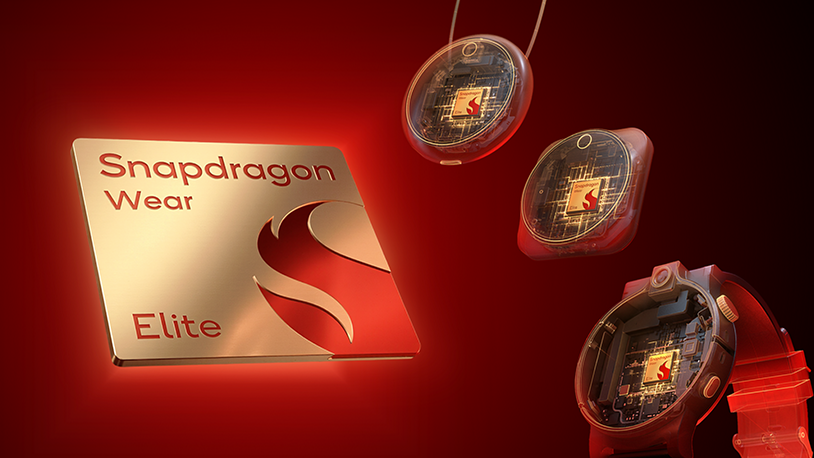
Most people attending MWC weren't looking at a chip announcement as headline news, but Qualcomm's Snapdragon Wear Elite is arguably the most consequential announcement of the entire show.
The chip sits above the existing Wear Elite W5 Plus and is designed for a wider category than just smartwatches. Qualcomm is targeting AI pendants, pins, display-free smart glasses, and the next generation of wearable form factors. The defining capability is on-device AI processing: the Snapdragon Wear Elite includes dedicated AI hardware that allows wearables to run small language models locally, without sending data to the cloud.
That distinction matters more than it might initially seem. Cloud-dependent AI features introduce latency, require connectivity, and raise legitimate questions about what data leaves the device. Local inference eliminates all three concerns. Features like smart replies, text summaries, activity recognition, and real-time fitness coaching become faster and more private when they don't require a round trip to a server.
First commercial devices powered by the chip are expected in the second half of 2026. Given the breadth of form factors Qualcomm is targeting, this could end up being the hardware foundation for a significant wave of new AI wearables before the year is out.
4. Xiaomi 17 Ultra: The Camera Phone That Takes Leica Seriously
Xiaomi's 17 Ultra made its global debut at MWC 2026, and it arrived with the kind of camera system that makes every other flagship phone feel like it's playing catch-up.
The 17 Ultra is built around a three-camera Leica system co-engineered with the German optics company: a 50MP main sensor, 50MP ultrawide, and a 200MP telephoto capable of reaching 17.2x optical zoom. The mechanical zoom range, which handles 3.2x to 4.3x smoothly, is something reviewers noted as genuinely uncommon in a smartphone. Add a 6,000mAh battery, 90W wired charging, and a Dual-Channel IceLoop cooling system that Xiaomi claims is twice as effective as its predecessor, and you have a phone that challenges the Galaxy S26 Ultra on nearly every hardware dimension.
At 8.29mm, the 17 Ultra is also thinner than its predecessor despite the improved thermal performance, a combination that usually doesn't happen together.
The AI angle here is more subtle than some competitors. On-device AI is present throughout the camera pipeline, including in the tuning algorithms developed with Leica, but Xiaomi isn't leading with AI as a marketing hook. The hardware does the talking, and the hardware is very good.
5. XGIMI MemoMind One: Smart Glasses That Don't Need a Camera
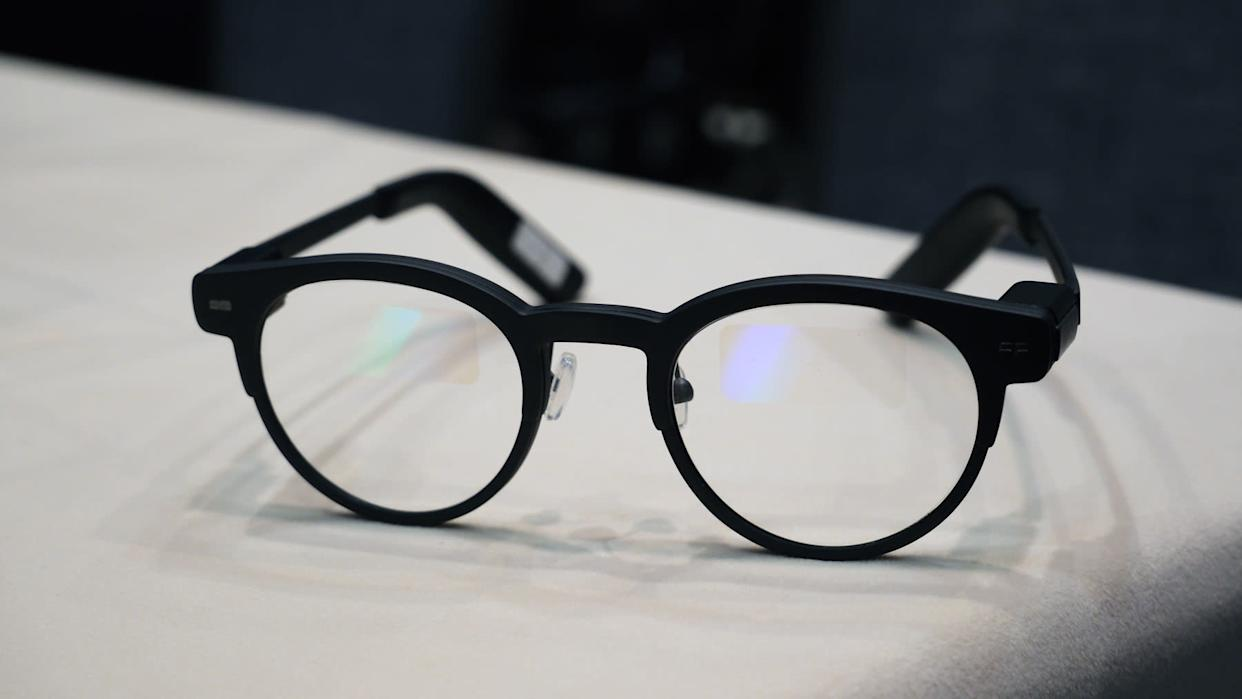
Smart glasses have been stuck in a frustrating pattern. Companies either build something that looks strange and records everything (awkward in social settings), or they build something that looks good and does almost nothing. The XGIMI MemoMind One, shown at MWC 2026, takes a third path.
The MemoMind One skips the camera entirely. Instead, the glasses use a waveguide display that projects information directly in front of your eyes, showing notifications, summaries, and contextual information without requiring the device to capture your surroundings. The result is a pair of glasses that look closer to normal frames than any camera-equipped competitor, available in full-rim and half-rim styles with prescription support.
Expected to launch in April 2026 starting at $599, with a more affordable model also in development, the MemoMind One represents a deliberate philosophical choice about what smart glasses should prioritize. The display-over-camera approach is the right one for the vast majority of use cases most people would actually encounter, from glancing at a message during a meeting to reviewing turn-by-turn directions on a walk.
Whether that $599 price point lands with consumers is a separate question. But the design decision itself is one the broader smart glasses industry should probably study.
6. Lenovo Legion Go Fold: Foldable Gaming Gets Serious
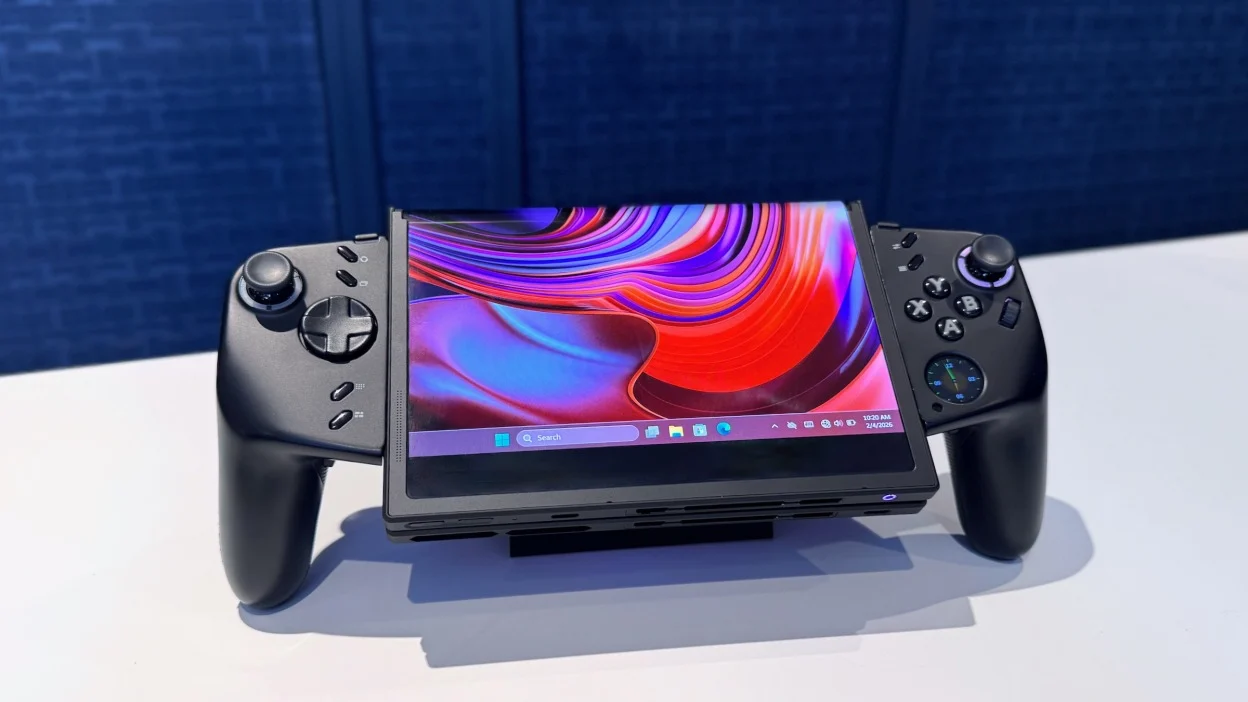
Lenovo arrived at MWC 2026 with several products worth discussing, but the Legion Go Fold is the one that will stay in people's memory. The device is a foldable gaming handheld, currently a concept rather than a shipping product, that combines the portable appeal of a dedicated gaming device with a flexible display that expands the screen real estate when needed.
The context here matters. The gaming handheld market has grown dramatically since the original Steam Deck, and Lenovo's Legion Go has already established itself as a credible Windows-based alternative. The Fold concept signals where the category might go next: devices that are genuinely pocketable in one configuration but capable of delivering a wider display experience when you're settled in.
Lenovo was also showing the Modular AI PC Concept, a laptop with two displays and hot-swappable ports, and the Yoga Book Pro 3D, a dual-screen machine that renders three-dimensional content without glasses using hand gestures for control. None of these are shipping products yet, but the direction they collectively point is clear: Lenovo is betting that modular, AI-aware, multi-surface computing is the next frontier in PC design.
7. TECNO Modular Concept Phone: Solving a Problem Thin Phones Created
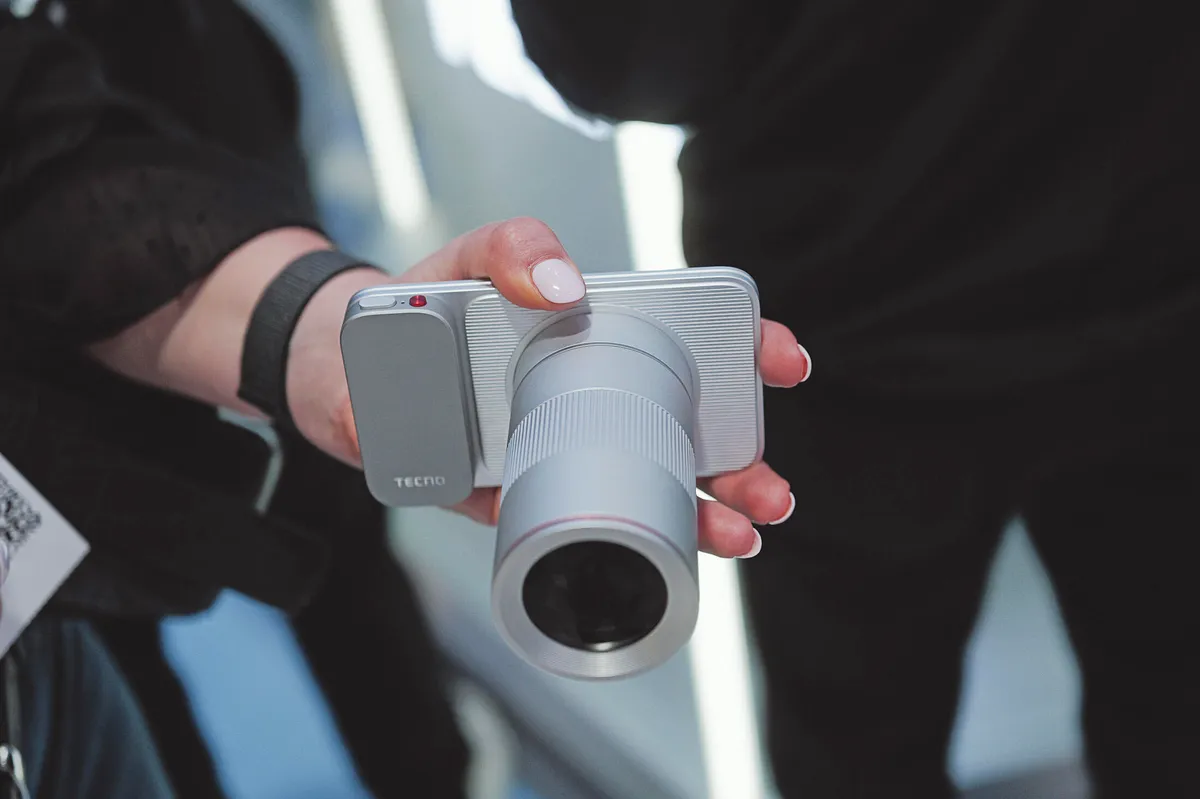
TECNO's contribution to MWC 2026 was easy to overlook in a week full of major brand announcements, but the modular phone concept deserves attention for a simple reason: it might finally make the modularity idea work.
The base device measures 4.9mm thin. At that thickness, attaching a hardware module doesn't turn the phone into something unwieldy. TECNO demonstrated several magnetic add-ons at the show, including a telephoto lens attachment offering up to 20x optical zoom, a battery pack for extended use, a microphone module for recording, and a walkie-talkie add-on.
Previous modular phone attempts, most notably Project Ara, failed partly because the base device was thick enough that adding modules made the result impractical. Starting from a genuinely slim foundation changes the calculation. The phone remains usable on its own, and the modules become optional enhancements rather than essential components that justify a chunky chassis.
Whether TECNO can ship this concept commercially at a competitive price is an open question. But the design logic is cleaner than anything the modular phone category has produced before.
8. Deutsche Telekom Magenta AI Call Assistant: AI That Lives in the Network
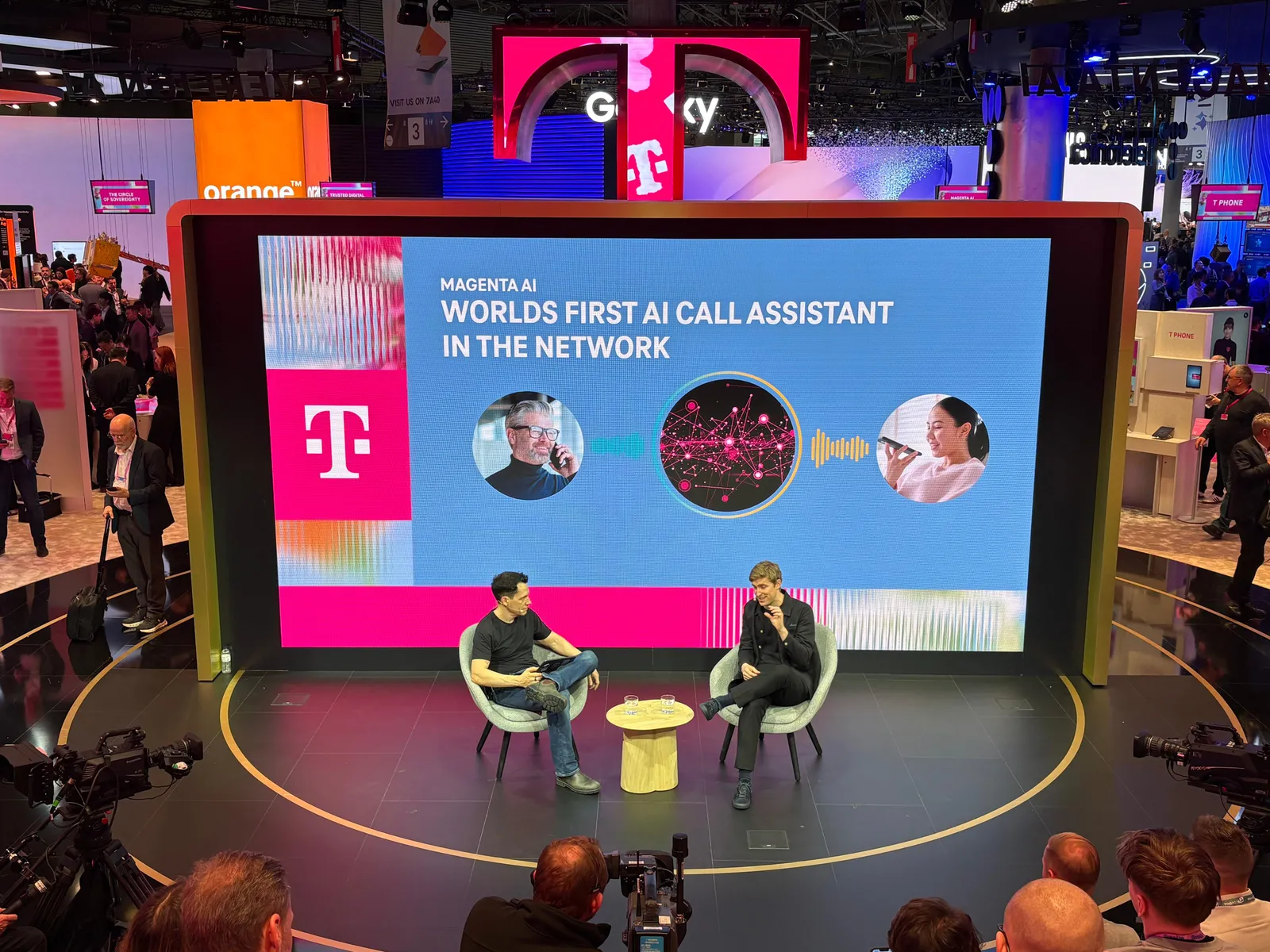
Not every important announcement at MWC 2026 came in a physical box, and the Deutsche Telekom Magenta AI Call Assistant is a good example of why.
Built with ElevenLabs, the Magenta assistant doesn't live on your phone. It lives inside the call network itself, which means it works on any device, including landlines. Users activate it by saying "Hey Magenta" during a live call. Without that activation, the company says no content is stored or analyzed, and all participants are notified when the assistant is active.
Initial features include live translation, call summaries, and real-time question answering during a call. Future capabilities on the roadmap include the assistant taking direct action mid-call: booking restaurant reservations, scheduling doctor appointments, filling out forms, and documenting confirmations on the user's behalf.
The implications are significant. Network-level AI that requires no app download, works on any connected device, and handles real-world tasks during a live call is a fundamentally different model from what smartphone AI assistants have offered so far. Deutsche Telekom employees are already testing it internally, with a business customer launch on Samsung devices planned for Europe later in 2026.
9. Honor Magic V6: Foldables Finally Get the Thin Treatment
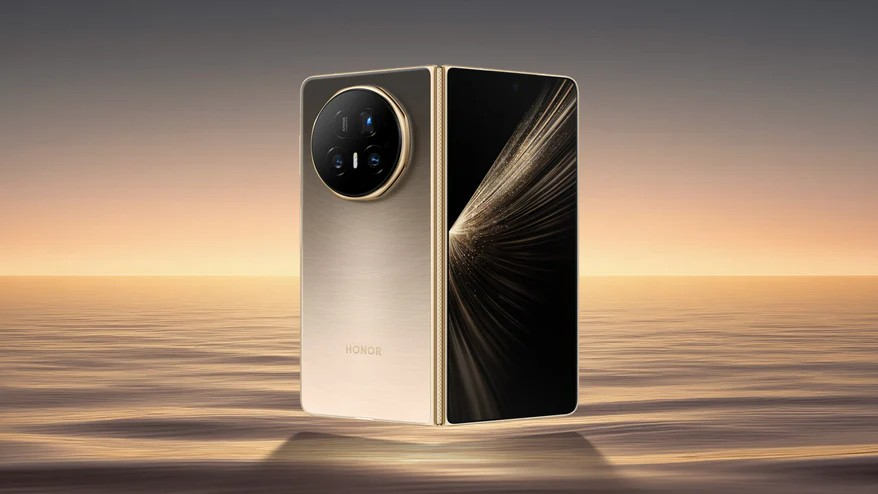
Foldable phones have faced a persistent hardware problem: they've been thicker and heavier than their flat counterparts, making them a difficult sell against premium slabs. The Honor Magic V6, shown at MWC 2026, pushes hard against that trade-off.
The Magic V6 is one of the thinnest foldables shown at the event, and it pairs the slim form factor with AI features that benefit specifically from the larger unfolded canvas. Honor is positioning the device alongside the MagicPad 4 tablet as part of a connected AI ecosystem, where tasks can move fluidly between form factors.
The broader story here is that foldable hardware has reached a point where the compromises are becoming acceptably small. The Magic V6 won't make you forget you're carrying a foldable, but it won't remind you constantly either. Combined with AI features designed for the expanded screen, it makes a stronger case for the category than anything Honor has shipped before.
10. Qualcomm FastConnect 8800 (Wi-Fi 8): The Invisible AI Upgrade
It would be easy to close this list with another flashy device. Instead, the Qualcomm FastConnect 8800 deserves a spot because it represents the infrastructure layer that makes everything else possible.
Qualcomm's first Wi-Fi 8 chips, announced at MWC 2026, offer potential peak speeds above 10 Gbps and integrate Bluetooth 7.0, UWB, and Thread on a single chip. The company is calling the entire portfolio "AI-native," meaning the chip is designed from the ground up to support the kind of low-latency, high-throughput data demands that on-device and edge AI applications require.
When people talk about AI features on phones and wearables, the conversation usually focuses on the compute chip doing the inference. But connectivity is equally important, particularly for hybrid AI models that split workloads between the device and the cloud. Faster, more reliable Wi-Fi with lower latency means better performance for AI features that depend on network access, and better support for the always-connected wearable ecosystem Qualcomm is helping to build.
The first Wi-Fi 8 devices are coming. When they arrive, the Snapdragon FastConnect 8800 will be the reason AI-powered features feel as fast as they do.
What MWC 2026 Actually Tells Us About AI in Consumer Tech
Step back from the individual devices, and a few patterns emerge from this year's show.
- On-device AI is now a baseline expectation. Almost every device at MWC 2026 featured some form of local AI processing, whether in a camera pipeline, a wearable chip, or a privacy feature. The question is no longer whether a device has AI, but whether the AI is doing something the user can actually feel.
- The hardware is getting weird, and that's a good sign. The Honor Robot Phone, the TECNO modular concept, the XGIMI no-camera glasses: these are products that couldn't have shipped five years ago, not just because the AI wasn't ready, but because the supporting hardware wasn't either. The strangeness of the best products at MWC 2026 is a signal that the category has enough confidence in the technology to take real risks with the form factor.
- AI is moving off the device and into infrastructure. The Deutsche Telekom announcement is easy to underestimate, but it points to a future where AI assistance isn't something you install or carry. It's embedded in the network layer, available on any connected device, without an app or an account.
The "IQ Era" framing that MWC 2026 adopted was easy to roll your eyes at when the show began. By the time it wrapped, it was harder to argue with.
Frequently Asked Questions
What was the biggest announcement at MWC 2026? The Honor Robot Phone generated the most conversation, thanks to its motorized 200MP camera mounted on a three-axis gimbal. It's also notable as a commercial product rather than a concept, with Honor confirming a target release in the second half of 2026. Samsung's Galaxy S26 Ultra had the largest booth presence and introduced the smartphone industry's first built-in Privacy Display.
What is the Snapdragon Wear Elite and why does it matter? The Snapdragon Wear Elite is Qualcomm's newest wearable chip, announced at MWC 2026. It's designed not just for smartwatches but for a broader range of AI-powered wearables including smart glasses, AI pins, and audio accessories. Its key feature is dedicated on-device AI hardware that allows wearables to run AI models locally, without relying on cloud connectivity, which improves speed, privacy, and battery life.
When will the XGIMI MemoMind One smart glasses be available? XGIMI plans to launch the MemoMind One in April 2026, starting at $599. A more affordable variant is also in development. The glasses use a waveguide display to project information and deliberately skip the camera that most smart glasses include, making them more practical for everyday social use.
How does the Deutsche Telekom Magenta AI Call Assistant work? The Magenta assistant is built into the cellular network rather than installed on a device, which means it works on any phone including landlines. Users activate it during a live call by saying "Hey Magenta." Current features include live translation and call summaries. Future features will include taking actions mid-call, such as booking appointments. The company states no call content is stored or analyzed without explicit activation.
What is Wi-Fi 8 and when will devices support it? Wi-Fi 8 is the next generation of Wi-Fi standard, with Qualcomm's FastConnect 8800 being among the first chips to support it. The technology offers potential peak speeds above 10 Gbps and is designed with AI-native connectivity in mind. First consumer devices with Wi-Fi 8 are expected to arrive in the near future as phone and router manufacturers integrate the new chips.
Is the Xiaomi 17 Ultra available in the United States? The Xiaomi 17 Ultra made its global debut at MWC 2026, but Xiaomi's U.S. retail availability has historically been limited. The device is expected to launch in multiple international markets, and availability in North America will depend on carrier agreements and regional distribution decisions that Xiaomi has not fully confirmed.
What made MWC 2026 different from previous years? The most notable shift at MWC 2026 was the quality and specificity of AI integration in consumer hardware. Rather than AI being listed as a feature among many, the best devices at the show were defined by their AI capabilities. The show also saw a broadening of the device category itself, with humanoid robots, modular phone concepts, and network-level AI assistants all competing for attention alongside traditional smartphone launches.
Related Articles
 Dani
Dani
 Dani
Dani
 Dani
Dani