Let me be honest with you—if you've been watching the AI space over the past year, you've probably noticed that something big is happening. We've moved past the initial excitement of chatbots and simple automation tools. We're now entering an era where AI doesn't just respond to our prompts; it actually gets things done. And I'm not talking about one AI doing one thing. I'm talking about teams of AI agents working together, communicating, collaborating, and solving problems that would make any single AI throw up its digital hands in frustration.
Welcome to the world of multi-agent systems—and trust me, once you understand how they work, you'll never look at AI automation the same way again.
I've spent countless hours digging into this technology, talking to developers who are building these systems, and watching companies transform their operations with multi-agent architectures. What I've learned has genuinely changed how I think about what's possible with AI. So grab a coffee, get comfortable, and let me walk you through everything you need to know about multi-agent systems—from the basic concepts to the cutting-edge implementations that are reshaping industries right now.
What Exactly Is a Multi-Agent System?
Let's start with the fundamentals, because I think there's a lot of confusion out there about what we're actually talking about.
A multi-agent system (MAS) is exactly what it sounds like—multiple AI agents working together to accomplish tasks. But here's where it gets interesting: these aren't just a bunch of separate AIs running in parallel. They're intelligent entities that can communicate with each other, share information, divide up work, and coordinate their actions toward a common goal.
Think about it like this. Imagine you're running a small business, and you need to launch a new product. You wouldn't expect one person to handle market research, create the marketing materials, manage the supply chain, handle customer inquiries, and analyze sales data all at once. You'd build a team where each person has specialized skills and responsibilities. That's essentially what a multi-agent system does, except your team members are AI agents that never sleep, never need coffee breaks, and can process information at speeds no human team could match.
The concept isn't entirely new—researchers have been exploring multi-agent systems for decades in academic settings. But what's changed is that we now have large language models (LLMs) sophisticated enough to power these agents, and we have the frameworks and tools to orchestrate them effectively. The result is a technology that's finally ready for real-world deployment.
According to Gartner, there's been a 1,445% surge in inquiries about multi-agent systems from early 2024 to mid-2025. That's not a typo. Companies are waking up to the potential here, and they're scrambling to understand how this technology can transform their operations.
The Difference Between Single Agents and Multi-Agent Systems
Before we go deeper, I want to make sure we're clear on how multi-agent systems differ from the single-agent AI tools you might already be using.
A single AI agent is like having a really talented generalist on your team. It can handle a variety of tasks, make decisions within its area of expertise, and work autonomously. If you've used a sophisticated chatbot, an AI writing assistant, or an automated customer service tool, you've interacted with a single-agent system. These are great for focused, well-defined problems where the scope is clear and the complexity is manageable.
But here's the limitation: single agents start to struggle when tasks become too complex, when they need to access information from multiple domains, or when the workflow requires different types of expertise applied at different stages. It's like asking your generalist to suddenly become an expert in five different fields simultaneously—eventually, the quality of work starts to suffer.
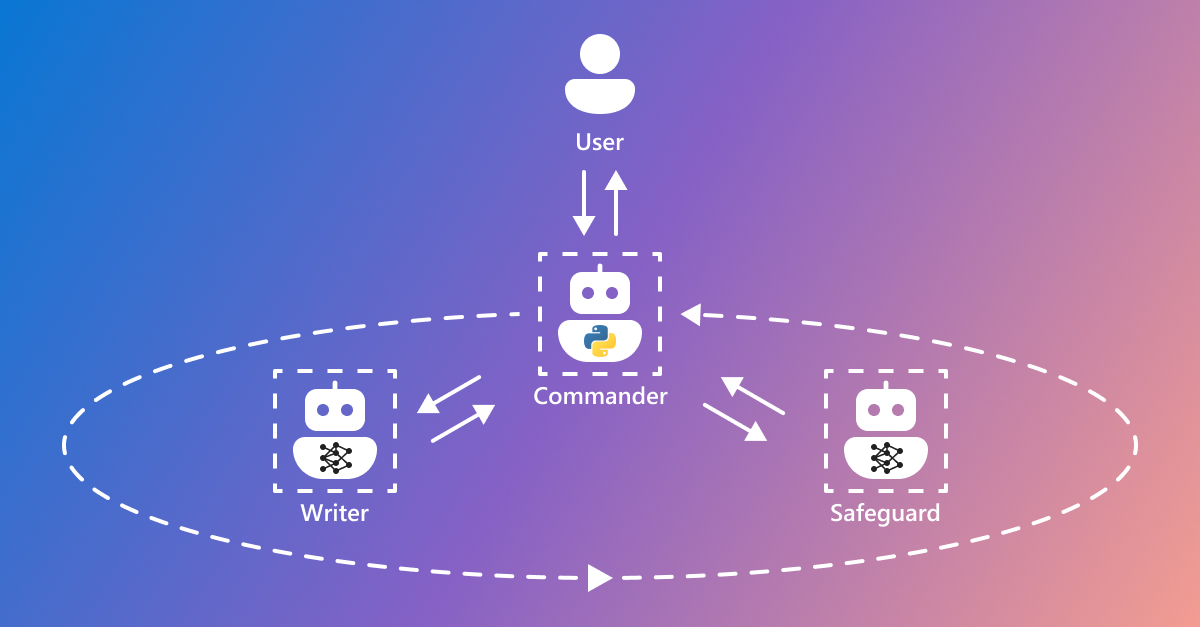
Multi-agent systems take a fundamentally different approach. Instead of one agent trying to do everything, you have specialized agents that each focus on what they do best. One agent might be responsible for gathering data, another for analyzing it, a third for generating recommendations, and a fourth for executing actions. These agents communicate with each other, pass along information, and work together in ways that amplify their individual capabilities.
The real magic happens when you add an orchestrator—a central coordinating agent that manages the workflow, delegates tasks to the right specialists, and synthesizes their outputs into coherent results. This hierarchical structure mirrors how effective human organizations work, and it turns out that this approach scales remarkably well for AI systems too.
How Multi-Agent Systems Actually Work
Okay, let's get a bit more technical—but don't worry, I'll keep it accessible. Understanding the architecture of multi-agent systems will help you appreciate why they're so powerful.
At the core of any multi-agent system, you have three essential components: the agents themselves, the environment they operate in, and the communication protocols that allow them to interact.
The Anatomy of an AI Agent
Let me break down what an individual agent actually looks like under the hood, because this helps explain why multi-agent systems can be so effective.
Each agent in the system is typically built around a language model (like GPT-4, Claude, or an open-source alternative) that serves as its "brain." But an agent is more than just a language model—it also has access to tools (like databases, APIs, or web browsers), memory (so it can remember context from previous interactions), and specific instructions that define its role and expertise.
IBM categorizes AI agents into five main types, and understanding these helps you design better multi-agent systems. Simple reflex agents react directly to their environment using basic if-then logic. Model-based reflex agents use internal models of how the world works to handle situations where they can't directly observe everything they need. Goal-based agents make decisions based on desired outcomes, using planning techniques to figure out how to achieve their objectives. Utility-based agents take this further by quantifying their preferences among different possible outcomes, choosing actions that maximize expected value. Learning agents adapt and improve over time based on experience and feedback.
In practice, the agents in modern multi-agent systems often combine several of these approaches. A customer service agent might use learning capabilities to improve its responses over time while also maintaining an internal model of customer satisfaction and optimizing for utility functions that balance customer happiness against resolution time.
Architecture Patterns You Should Know
Multi-agent systems don't all look the same. There are several distinct architecture patterns, and the right choice depends on your specific use case.
The environment is the shared space where agents operate. This could be a virtual environment like a software system, a physical environment like a warehouse with robots, or a hybrid of both. The environment provides the context that agents need to make decisions and the resources they need to take actions.
The most common architecture pattern is hierarchical—with a lead agent (sometimes called an orchestrator or supervisor) that coordinates the work of specialized worker agents. The lead agent understands the overall goal, breaks it down into subtasks, delegates those subtasks to the appropriate specialists, and synthesizes their outputs. This pattern works well when you have a clear chain of command and well-defined agent roles.
Another pattern is the collaborative or peer-to-peer architecture, where agents work together more democratically without a strict hierarchy. Agents in this pattern can communicate directly with each other, negotiate about who handles what, and dynamically reorganize based on the situation. This is more flexible but also more challenging to implement reliably—without careful design, agents can end up working at cross-purposes or duplicating effort.
There's also the pipeline pattern, where agents are arranged in a sequence and each agent's output becomes the next agent's input. This is simpler to implement and reason about, but it doesn't take advantage of the parallelization benefits that multi-agent systems can offer. It's often used as a starting point before moving to more sophisticated architectures.
Communication between agents happens through defined protocols. Some systems use direct message passing, where agents send specific requests and responses to each other. Others use shared workspaces where agents can read and write information that others can access. The most sophisticated systems use a combination of both, with different communication patterns for different types of interactions.
Here's a simplified example of how this might work in practice. Let's say you ask a multi-agent research system to analyze market trends for a new product launch. The orchestrator agent receives your request and breaks it down into subtasks. It might delegate data gathering to a research agent, competitive analysis to a market specialist agent, and trend identification to an analytics agent. Each of these agents works on their piece of the puzzle, potentially using their own specialized tools and data sources. As they complete their work, they report back to the orchestrator, which synthesizes their findings into a comprehensive report for you.
What makes this powerful is that the agents can work in parallel (speeding up the overall process), each agent can be optimized for its specific task (improving quality), and the system can scale by adding more agents without fundamentally changing the architecture.
Real-World Applications That Are Already Changing Industries
Theory is great, but let me show you where multi-agent systems are actually making a difference right now. The range of applications is honestly pretty staggering.
Healthcare: Coordinating Complex Care
In healthcare, multi-agent systems are being used for patient care coordination—one agent monitors patient data, another handles scheduling, a third manages communication with specialists, and a fourth ensures compliance with treatment protocols. The result is more coordinated care with fewer things falling through the cracks.
Medical teams are increasingly relying on AI agents that automatically pull data from multiple sources, spot care gaps, and schedule follow-ups. For patients with chronic conditions requiring input from multiple specialists, multi-agent systems can synthesize information from electronic health records, care management platforms, and scheduling systems to optimize the entire care workflow. Early implementations report up to 30% reductions in review times through optimized approval processes.
Logistics and Warehousing: The Amazon Model
Amazon's warehouse operations represent one of the most impressive deployments of multi-agent technology. Hundreds of Kiva robots work as individual agents, each retrieving items from shelves while a task allocation agent manages their assignments and a traffic management agent prevents collisions. These agents communicate and coordinate in real-time, optimizing warehouse operations at a scale that would be impossible for human managers to coordinate manually.
What's particularly clever about this implementation is the distributed intelligence. Each robot has enough local awareness to navigate and avoid immediate obstacles, while higher-level agents handle strategic coordination. This combination of local autonomy and central orchestration is a pattern you see in many successful multi-agent deployments.
Financial Services: From Trading to Fraud Detection
In the financial sector, multi-agent systems are transforming everything from trading (where different agents monitor different market signals and coordinate trading strategies) to fraud detection (where specialized agents watch for different types of suspicious behavior and share information to catch complex fraud schemes).
Microsoft's Security Copilot uses a multi-agent approach for cybersecurity operations, with different agents handling alert triage, investigation, and response. The company Contraforce built on this approach and reported that incident response times dropped from 30 minutes to just 30 seconds—that's a 98% reduction. The cost per incident fell from $15 to less than $1, and they could scale their services without proportionally scaling their human teams.
Customer service is another area seeing rapid transformation. Companies are deploying multi-agent systems where one agent handles initial triage, another manages frequently asked questions, a third deals with account-specific issues, a fourth provides product recommendations, and a fifth ensures compliance with company policies. The result is faster, more accurate, and more personalized customer support.
What makes these customer service implementations particularly powerful is the ability to handle context that spans multiple domains. A single agent might struggle to connect a billing question with a product issue with a shipping inquiry—but a multi-agent system can route each aspect to the right specialist while maintaining a coherent view of the overall customer interaction.
Travel and Research: Personalized Intelligence at Scale
A fascinating recent example is Vaiage, a multi-agent system developed for personalized travel planning. It combines LLM reasoning with external data sources to create adaptive itineraries. Different agents handle different aspects of the travel planning process—one searches for flights, another researches hotels, a third looks up local activities, and others handle constraints like budget and timing. These agents collaborate through a shared memory structure called TravelGraph that enables real-time updates as circumstances change.
Anthropic built a multi-agent research system that exemplifies this pattern for knowledge work. When a user submits a research query, a lead agent analyzes it, develops a strategy, and spawns subagents to explore different aspects simultaneously. The subagents act as intelligent filters—iteratively using search tools to gather information, evaluating what they find, and returning synthesized insights to the lead agent. Users report that this approach helps them find business opportunities they hadn't considered, navigate complex healthcare options, and save days of work by uncovering research connections they wouldn't have found alone.
In the retail space, Ocado—the online grocery giant—orchestrates over 2,000 robot agents in their warehouses. Each robot moves along a grid, picking items while coordinating with others to avoid collisions and optimize routes. The company reports a 15% reduction in fuel costs just from better route optimization enabled by their multi-agent approach.
The Frameworks and Tools Making This Possible
If you're wondering how companies are actually building these systems, let me walk you through some of the key frameworks and platforms that have emerged.
AutoGen, developed by Microsoft, is one of the most popular open-source frameworks for creating multi-agent systems. It specializes in creating collaborative agent systems where multiple AI agents work together on complex tasks, with a role-based architecture that mirrors how human teams actually work.
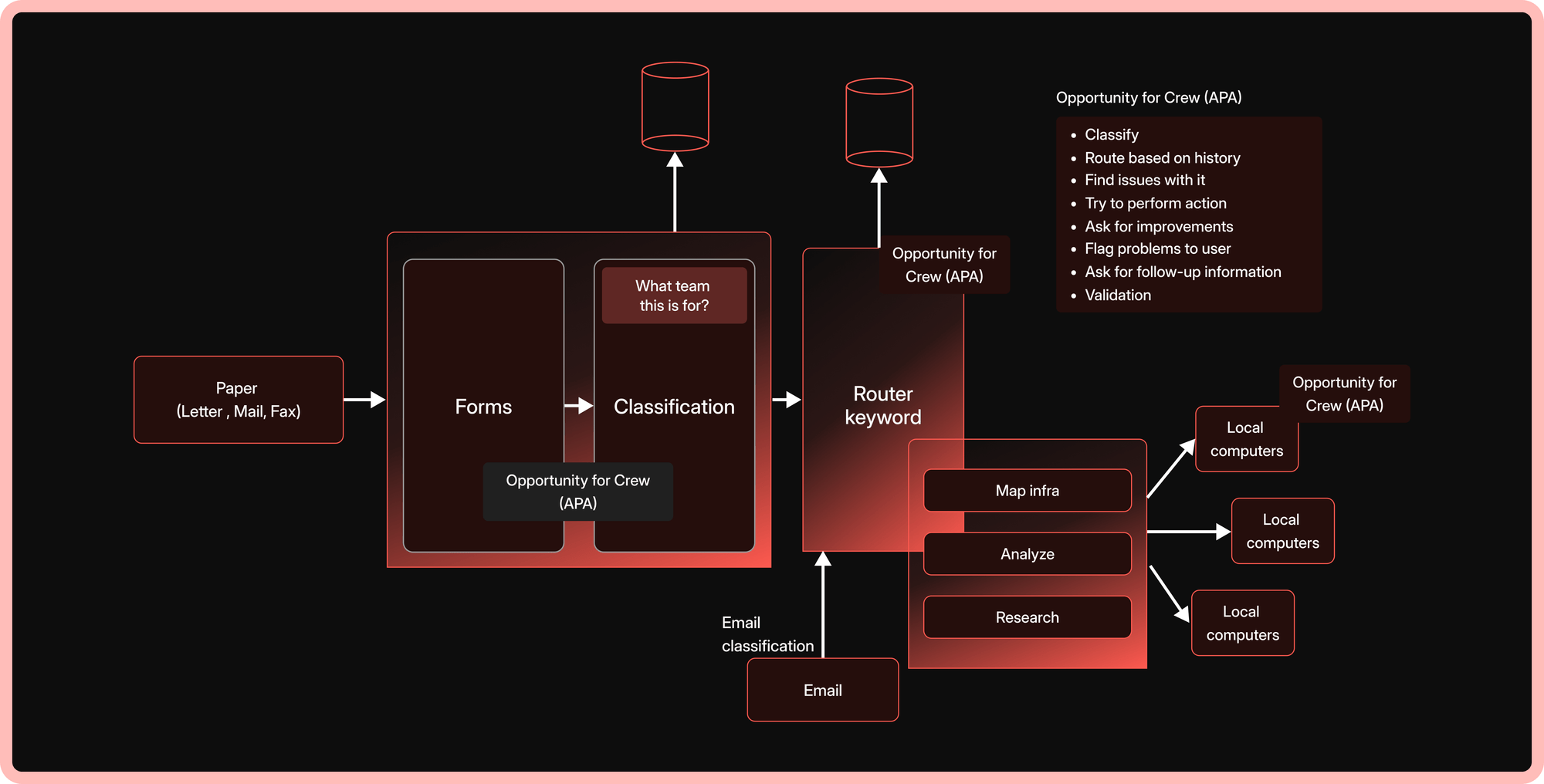
CrewAI has gained significant traction, especially among startups building collaborative AI systems. It excels at applications requiring multiple agents to interact—think virtual assistants, fraud detection systems, or personalized learning platforms. The framework offers both no-code and code-based tools to build, deploy, and manage AI-driven automation.
LangGraph, from the team behind LangChain, takes a graph-based approach that's particularly well-suited for workflows requiring conditional logic. This makes it a favorite for machine learning engineers who need flexibility in how they design agent interactions.
For enterprises, platforms like Salesforce's Agentforce, Oracle's GenAI Agents, SAP's Joule Agents, and ServiceNow's AI-powered workflows offer more integrated solutions that work with existing business software. These platforms often provide pre-built agent capabilities that can be customized and deployed relatively quickly.
Docker has recently entered the space with cagent, an open-source tool that lets developers define multi-agent systems declaratively in YAML files. The pitch is compelling: describe your agents, their models, their tools, and how they coordinate in a simple configuration file, and cagent handles the orchestration. It's a sign that multi-agent development is maturing toward more accessible, standardized approaches.
The Challenges You Need to Know About
I wouldn't be doing you any favors if I only talked about the benefits. Multi-agent systems come with real challenges that you need to understand before diving in.
Context Engineering: The Hidden Complexity
The first and probably biggest challenge is context engineering. This is the term that's emerged to describe the difficulty of ensuring each agent has the right information to do its job. In a multi-agent system, context doesn't flow automatically between agents. You have to deliberately design how information gets shared, and getting this wrong can lead to agents making decisions based on incomplete or outdated information.
Here's the thing—even the smartest AI model can't do good work without understanding what it's being asked to do and having access to the relevant information. In a single-agent system, context management is already challenging. In a multi-agent system, it becomes exponentially more complex because you're managing context across multiple agents, each with their own limited "view" of the overall situation.
The engineering challenge isn't just about moving data around. It's about deciding what information each agent needs, when it needs it, how to compress or summarize context that's too large, and how to keep context synchronized as the situation evolves. Get this wrong, and you'll see agents making confidently wrong decisions based on stale or partial information.
As the team at Cognition (the company behind Devin, the AI software engineer) puts it, every action an agent takes carries implicit decisions. When multiple agents are making decisions that affect each other, conflicting decisions can lead to bad results. This is why some experts actually caution against jumping to multi-agent architectures too quickly—if you're building agents that primarily write or modify things (as opposed to just gathering and analyzing information), the coordination challenges multiply quickly.
Reliability is another major concern. Carnegie Mellon's benchmark study tested leading agentic systems on common workplace tasks and found success rates hovering around 30-35%. Even Google's Gemini 2.5 Pro could only complete about 30% of multi-step tasks autonomously. That means roughly 7 out of 10 agent deployments fail to deliver what users expect. These numbers are improving, but they're a sobering reminder that we're still in the early stages of this technology.
Security represents an expanding attack surface. When you have multiple agents interacting with different systems and each other, there are more potential points of vulnerability. Hallucinations, adversarial attacks, and even unintended agent behaviors can all create risks. UC Berkeley's Sutardja Center warns that the complexity of multi-agent reasoning makes these systems more susceptible to compromised execution.
Debugging and Observability: Finding the Needle in the Haystack
There's another challenge that doesn't get enough attention: debugging. Multi-agent systems are non-deterministic—even with identical prompts, agents might take different paths to reach their goals. This makes it incredibly hard to reproduce bugs and understand why something went wrong.
Traditional debugging assumes you can trace a clear path from input to output. With multi-agent systems, you have multiple agents making decisions that affect each other, potentially in parallel, with emergent behaviors that arise from their interactions. When a user reports that the system "didn't find obvious information," you need to figure out whether agents used bad search queries, chose poor sources, hit tool failures, or had some other issue. Without comprehensive tracing and logging, this becomes nearly impossible.
The teams building successful multi-agent systems have invested heavily in observability tooling from day one. They track every decision each agent makes, every message passed between agents, every tool call and its results. This creates overhead, but it's essential for diagnosing problems and improving system reliability over time.
Cost management is also a real consideration. Multi-agent systems typically require multiple model calls—for planning, memory updates, tool use, and agent-to-agent communication. Even with more efficient inference, costs can rise quickly, especially for high-concurrency applications. You need to think carefully about which tasks actually justify the overhead of a multi-agent approach.
Finally, there's the challenge of evaluation. Traditional software testing assumes that given the same inputs, you'll get the same outputs. Multi-agent systems don't work that way—even with identical starting points, agents might take completely different paths to reach their goals. This makes debugging harder and requires new approaches to testing and monitoring.
When Should You Actually Use Multi-Agent Systems?
Given these challenges, you might be wondering when it actually makes sense to adopt a multi-agent approach. Let me share some frameworks for thinking through this decision.
The first question to ask is whether your task is primarily about reading or writing. This distinction comes from practical experience building these systems, and it's a useful heuristic. Tasks that are primarily about reading—research, analysis, information gathering—tend to parallelize well and benefit from multi-agent approaches. You can have different agents exploring different sources simultaneously without worrying too much about conflicts.
Tasks that are primarily about writing—code generation, content creation, document editing—create coordination problems when you try to parallelize them. When multiple agents are modifying the same thing, you need sophisticated mechanisms to merge their outputs coherently. For these tasks, a single agent approach is often more reliable.
The second consideration is the complexity and scale of your workflow. If your task can be clearly defined and completed by a single agent, adding more agents just adds overhead. The sweet spot for multi-agent systems is when you have genuinely different types of expertise needed, when subtasks can be meaningfully separated, and when the benefits of parallelization outweigh the costs of coordination.
A third factor is your timeline and risk tolerance. Multi-agent systems are more complex to build, debug, and maintain than single-agent solutions. According to a Gartner survey, over 80% of AI projects fail due to scope creep and inadequate architectural planning. Starting lean with a single-agent model is often safer unless scalability is mission-critical from day one.
One approach that's gaining favor is the hybrid architecture—using a single agent for high-level decision making and coordination, with specialized multi-agent subsystems handling specific domains. Amazon's warehouse automation reportedly uses this pattern: centralized AI for high-level logistics and inventory management, combined with swarms of local robots that coordinate in real-time for actual item movement.
What's Coming Next: The Future of Multi-Agent AI
If you think multi-agent systems are impressive now, wait until you see what's coming. Based on the trends I'm tracking and what industry experts are predicting, here's what to expect in the near future.
The Internet of Agents
First, we're going to see the emergence of what's being called the "Internet of Agents"—multi-agent systems that can discover, negotiate, and collaborate across organizational boundaries. Imagine your company's AI agents being able to work directly with your suppliers' agents, your customers' agents, and your partners' agents, all coordinating without human intermediaries for routine transactions. This is already being enabled by new interoperability standards and protocols.
Salesforce and Google Cloud are already building cross-platform AI agents using the Agent2Agent (A2A) protocol—a significant step toward establishing an open, interoperable foundation for agentic enterprises. As Marshall Van Alstyne from MIT notes, companies will soon need to design interfaces for agents, create value with agents, and even sell to agents. This represents a fundamental shift in how digital markets operate.
Autonomous Workflows and Self-Healing Systems
Google Cloud's 2026 AI Agent Trends Report predicts that agentic workflows will become sophisticated enough to run entire business processes from start to finish. Multiple agents in a system will collaborate, coordinate, and communicate to automate complex, multi-step processes that today require significant human oversight.
We'll also see the rise of self-healing systems—multi-agent architectures where agents can detect and resolve issues autonomously without human intervention. This will reduce downtime and increase overall system reliability, making multi-agent deployments more practical for mission-critical applications. When one agent fails, others can compensate or take over, and the system can automatically reconfigure itself to maintain service.
The Economics Are Shifting
The economics of multi-agent systems are also shifting. Smaller, specialized language models trained on focused data are becoming more capable and cost-effective. These models can deliver high accuracy for specific tasks while running faster and cheaper than general-purpose large models. Combined with better frameworks for orchestration, this means multi-agent systems will become accessible to a much wider range of organizations.
There's also a fascinating trend toward what experts call "relational intelligence"—agents that don't just complete transactions but build ongoing relationships with users. As deep personalization becomes the norm, companies will increasingly need agents that remember context, understand preferences, and build trust over time. The companies that figure out how to create genuine relationship-building capabilities in their agents will have a significant competitive advantage.
Getting Started: Practical Advice for Your First Multi-Agent Project
If you're ready to start experimenting with multi-agent systems, here's my practical advice based on what I've seen work for teams getting started.
Start With a Real Problem
Start with a real problem, not a technology demonstration. The most successful multi-agent implementations I've seen started with a specific business challenge that wasn't being solved well by existing tools. Maybe it's a customer service workflow that's too complex for simple chatbots, or a research process that's too time-consuming for your team. Having a clear use case helps you make better architectural decisions and gives you a concrete way to measure success.
I've seen too many teams get excited about the technology and build impressive demos that never translate to production value. The teams that succeed are the ones who can clearly articulate what problem they're solving and how they'll know if the multi-agent approach is actually working better than alternatives.
Keep It Simple at First
Begin with a simple architecture and add complexity gradually. The temptation is to immediately build something sophisticated with many specialized agents. Resist that urge. Start with maybe two or three agents with clear roles, get that working reliably, and then expand. This approach helps you understand the coordination challenges before they become overwhelming.
A good starting point is often the hierarchical pattern I mentioned earlier—one lead agent that coordinates the work of two or three specialized workers. Get the communication between them working reliably, understand how context flows, and learn where things break down. Only then should you add more agents or more sophisticated coordination patterns.
Build Observability From Day One
Invest heavily in observability from day one. One of the hardest parts of multi-agent systems is understanding why they behaved a certain way when something goes wrong. Build in comprehensive logging, tracing, and monitoring from the start. You'll thank yourself later when you're trying to debug unexpected behavior.
Design for human oversight. Even as agents become more capable, you'll want mechanisms for humans to intervene when needed. Think about how escalation works, what decisions require human approval, and how operators can observe and adjust agent behavior in production.
Pay attention to context engineering. This is the difference between agents that work well and agents that fail mysteriously. Carefully design what information each agent receives, how context flows between agents, and how you prevent agents from making decisions based on stale or incomplete information.
Test with realistic scenarios, not just ideal cases. Multi-agent systems often work great in demonstrations but struggle with real-world messiness. Test with ambiguous inputs, conflicting information, edge cases, and adversarial scenarios. The goal is to understand your system's failure modes before your users discover them.
Choose Your Framework Wisely
The framework you choose matters, but not as much as understanding the fundamentals. All the major frameworks—AutoGen, CrewAI, LangGraph, and others—can build effective multi-agent systems. The differences are in ergonomics, built-in features, and how they handle specific patterns.
If you're just getting started, I'd suggest picking a framework that matches your team's existing skills. If you're already comfortable with Python and have experience with LangChain, LangGraph is a natural extension. If you prefer more structure and pre-built patterns, CrewAI might be a better fit. If you're building something that needs to integrate with Microsoft's ecosystem, AutoGen has advantages.
Don't get paralyzed by framework choice. The concepts transfer between frameworks, and you can always migrate later if needed. What matters more is understanding multi-agent patterns well enough that you can implement them in whatever framework makes sense for your context.
Plan for Failure
Finally, assume things will fail and plan for it. Build in graceful degradation—if one agent fails, can the system still provide value? Think about timeout handling—what happens when an agent takes too long? Consider retry strategies—when should the system try again versus escalating to a human?
The most robust multi-agent systems I've seen treat failure as a normal part of operation rather than an exceptional case. They have clear fallback behaviors, comprehensive error logging, and mechanisms for human escalation when automated approaches aren't working.
Frequently Asked Questions
What is a multi-agent system in simple terms?
A multi-agent system is a group of AI agents that work together as a team to accomplish tasks. Each agent has specific skills and responsibilities, and they communicate and coordinate with each other—much like members of a human team. Instead of one AI trying to do everything, specialized agents each handle what they do best, with an orchestrator managing the overall workflow.
What is the difference between a single AI agent and a multi-agent system?
A single AI agent is one intelligent system that handles tasks independently—it's like a skilled generalist. A multi-agent system involves multiple specialized agents working together, with each focusing on specific tasks. Single agents are simpler to build and maintain but can struggle with complex, multi-faceted problems. Multi-agent systems offer better scalability, fault tolerance, and the ability to tackle problems that require diverse expertise, but they come with additional coordination overhead.
What are some real-world examples of multi-agent systems?
Amazon's warehouse operations use multi-agent systems with hundreds of robots coordinating to retrieve and move items. Microsoft's Security Copilot uses multiple agents for cybersecurity operations. In healthcare, multi-agent systems coordinate patient care across providers. Ocado uses over 2,000 robot agents in their warehouses for grocery fulfillment. Financial institutions use multi-agent systems for trading, fraud detection, and customer service.
Are multi-agent systems better than single agents?
It depends on the task. Multi-agent systems excel when you need specialized expertise in multiple domains, when tasks can be parallelized for speed, and when you need fault tolerance (so the system keeps working if one agent fails). Single agents are better for simpler, well-defined tasks where the overhead of coordination isn't justified. Many successful implementations use hybrid approaches—a single agent for coordination with specialized agents for specific subtasks.
What frameworks can I use to build multi-agent systems?
Popular frameworks include AutoGen (Microsoft's open-source option), CrewAI (focused on collaborative AI systems), LangGraph (for graph-based workflows), and Atomic Agents. Enterprise platforms include Salesforce Agentforce, Oracle GenAI Agents, SAP Joule, and ServiceNow AI workflows. Docker's cagent offers a declarative YAML-based approach. The choice depends on your technical requirements, existing infrastructure, and whether you prefer code-first or no-code development.
What are the biggest challenges with multi-agent systems?
The main challenges include context engineering (ensuring agents have the right information), reliability (current success rates for complex tasks are around 30-35%), security (more agents mean more potential vulnerabilities), cost management (multiple model calls add up), and debugging (agent behavior can be non-deterministic and hard to trace). Coordination between agents, especially when they're modifying shared resources, remains technically challenging.
How much do multi-agent systems cost to implement?
Costs vary widely based on complexity. A basic prototype might cost $10,000-50,000, while complex, scalable implementations can exceed $500,000. Ongoing costs include compute resources for running multiple models, API calls for each agent interaction, and maintenance of the orchestration infrastructure. Costs are coming down as smaller, more efficient models become available and frameworks mature.
Will multi-agent AI replace human workers?
Multi-agent systems are better understood as tools that augment human capabilities rather than replacements for people. They excel at automating routine decisions, processing information at scale, and coordinating complex workflows. However, they lack the full agency and adaptability humans bring to novel situations. The most successful implementations combine AI agents with human oversight, where agents handle routine work while humans focus on creative problem-solving, relationship building, and decisions requiring judgment.
When should a company consider using multi-agent systems?
Consider multi-agent systems when your workflows involve multiple domains of expertise, when you need to scale beyond what single agents can handle, when parallel processing could significantly speed up operations, when you need fault tolerance (so one failure doesn't stop everything), or when you're dealing with complex, interconnected processes that would overwhelm a single agent. Start with clear use cases where you can measure success.
What industries are using multi-agent systems most?
Healthcare, financial services, retail and e-commerce, manufacturing and logistics, and cybersecurity are leading adoption. Healthcare uses them for care coordination and diagnosis support. Finance uses them for trading, fraud detection, and personalized advice. Retail applies them to inventory management and customer service. Manufacturing uses them for supply chain optimization. Cybersecurity deploys them for threat detection and incident response.
Final Thoughts
Multi-agent systems represent a genuine evolution in what's possible with AI automation. We're moving from AI that responds to AI that collaborates, from single-purpose tools to coordinated teams of intelligent agents that can tackle problems at scales and speeds that weren't possible before.
But I want to leave you with a balanced perspective. This technology is powerful, but it's also still maturing. The companies seeing the best results are those treating multi-agent AI as a serious engineering discipline—investing in proper architecture, robust testing, comprehensive monitoring, and thoughtful integration with human oversight.
If you're just getting started, begin with a real problem, keep your initial designs simple, and build complexity gradually as you learn. The potential here is enormous, and the organizations that figure out how to harness multi-agent systems effectively will have a significant competitive advantage in the years ahead.
The future of AI isn't a single superintelligent system—it's teams of specialized agents working together, with humans, to solve problems we couldn't tackle before. And that future is arriving faster than most people realize.
Related Articles
 Mark
Mark
 Dani
Dani
 Dani
Dani