For years, the story of enterprise AI ran through one relationship: Microsoft and OpenAI.
Microsoft invested more than $13 billion into OpenAI. It built Copilot — its flagship AI product across Office, Windows, and Azure — almost entirely on OpenAI's models. The two companies were so intertwined that antitrust regulators in the UK and EU spent months trying to figure out whether the partnership effectively functioned as an acquisition.
That relationship is still intact. But something has clearly changed.
On March 9, 2026, Microsoft announced Copilot Cowork — a new agentic capability for Microsoft 365 that executes multi-step tasks across Outlook, Teams, Excel, and the rest of the M365 suite. The technology powering it is not OpenAI's. It is Anthropic's Claude.
That announcement follows a $30 billion Azure compute commitment from Anthropic, a reported $500 million in annual AI model spend by Microsoft on Claude, and a growing pattern of friction between Microsoft and OpenAI that has been building publicly since mid-2025.
This is not a story about Microsoft abandoning OpenAI. It is a story about what happens when a company that has poured billions into a single AI provider decides it no longer wants to be dependent on one.
What Microsoft Just Launched
Copilot Cowork: From Assistant to Agent
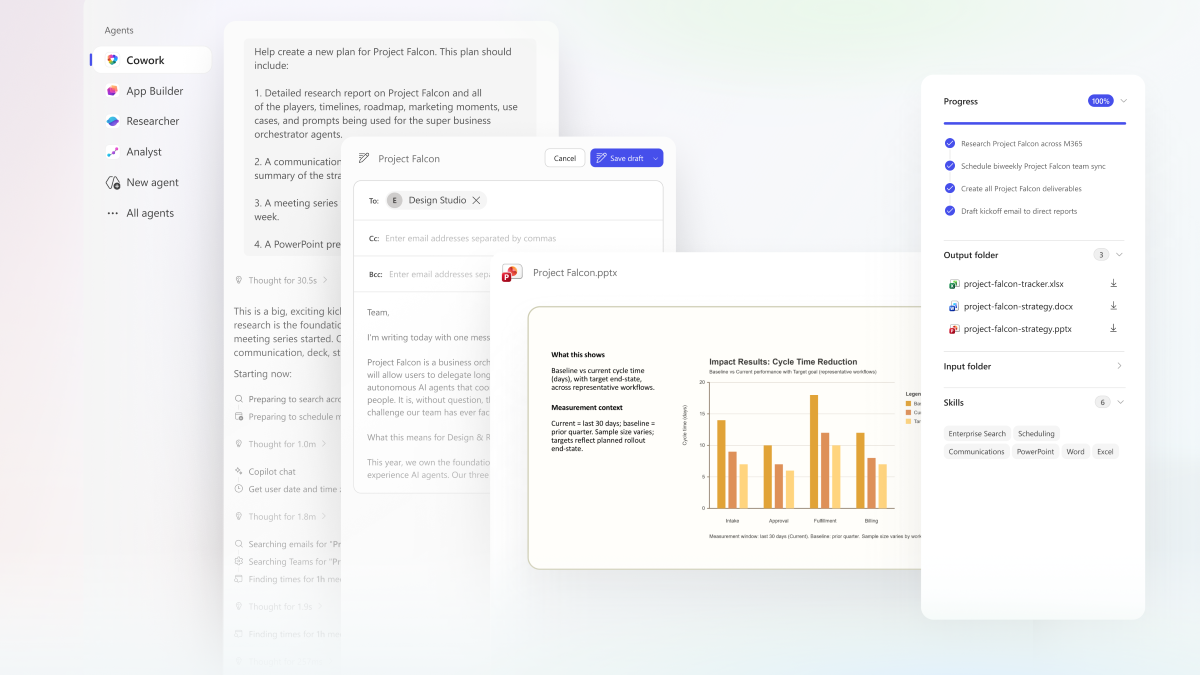
Previous versions of Microsoft 365 Copilot were useful for answering questions, summarizing documents, and drafting emails. Copilot Cowork is built to do something fundamentally different: it executes.
Users describe the outcome they want. The system builds a plan, pulls relevant context from across Microsoft 365, and carries the work forward in the background — checking in at key decision points and surfacing recommended actions before applying changes.
What Microsoft demonstrated at launch:
- Reviewing a month of meetings with direct reports, analyzing patterns, and producing a briefing document
- Preparing for a client meeting by pulling together emails, files, research, and scheduling prep time on the calendar
- Building a competitive analysis with a supporting Word document and Excel spreadsheet
- Triaging and rescheduling a packed calendar to create larger focus blocks
Copilot Cowork is currently in Research Preview. Broader availability through Microsoft's Frontier program is expected in late March 2026.
Claude vs. the Cloud: Why the Tech Difference Matters
Microsoft integrated the technology behind Claude Cowork into Microsoft 365 Copilot, using the same Claude model and agentic framework that Anthropic released as a standalone product in January 2026.
One key difference from Anthropic's version:
| Anthropic Claude Cowork | Microsoft Copilot Cowork | |
|---|---|---|
| Runs on | User's local device | Microsoft cloud (M365 tenant) |
| Data stays in | Local environment | Enterprise compliance perimeter |
| IT control | User-managed | Admin-governed |
| Audit trail | Limited | Auditable by default |
For enterprise customers in regulated industries, that distinction matters a great deal. Running inside Microsoft's security perimeter means actions and outputs are auditable, data stays within the tenant, and IT administrators retain control over exactly what the agent can access.
The New E7 Pricing Tier
Copilot Cowork arrives alongside a new enterprise licensing tier.
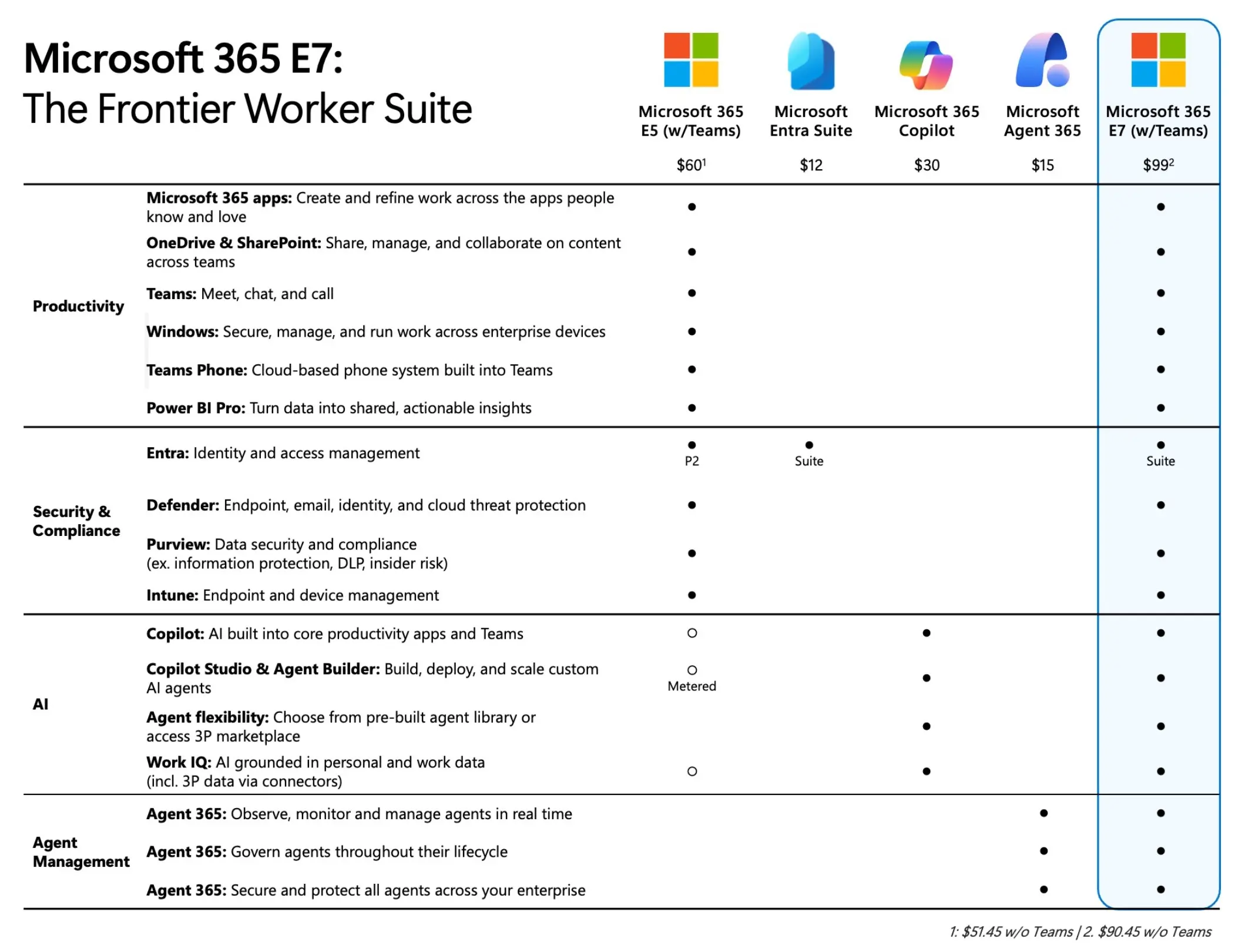
Microsoft 365 E7 — launching May 1, 2026:
| Component | Standalone Price | E7 Bundle |
|---|---|---|
| Microsoft 365 E5 | $60/user/mo | Included |
| Microsoft 365 Copilot | $30/user/mo | Included |
| Entra Suite | $12/user/mo | Included |
| Agent 365 | $15/user/mo | Included |
| Total | $117/user/mo | $99/user/mo |
Agent 365, included in E7 at $15 per user per month as a standalone, is the governance layer that allows IT and security teams to monitor, audit, and control AI agents operating across an organization — including agents built on third-party tools, not just Microsoft's own.
The adoption context: Only 3% of Microsoft's commercial user base currently subscribes to paid Copilot, totaling about 15 million paid licenses. The new tier and agentic capabilities are Microsoft's clearest attempt yet to change that.
The Partnership Behind the Product
How the Microsoft-Anthropic Deal Was Built
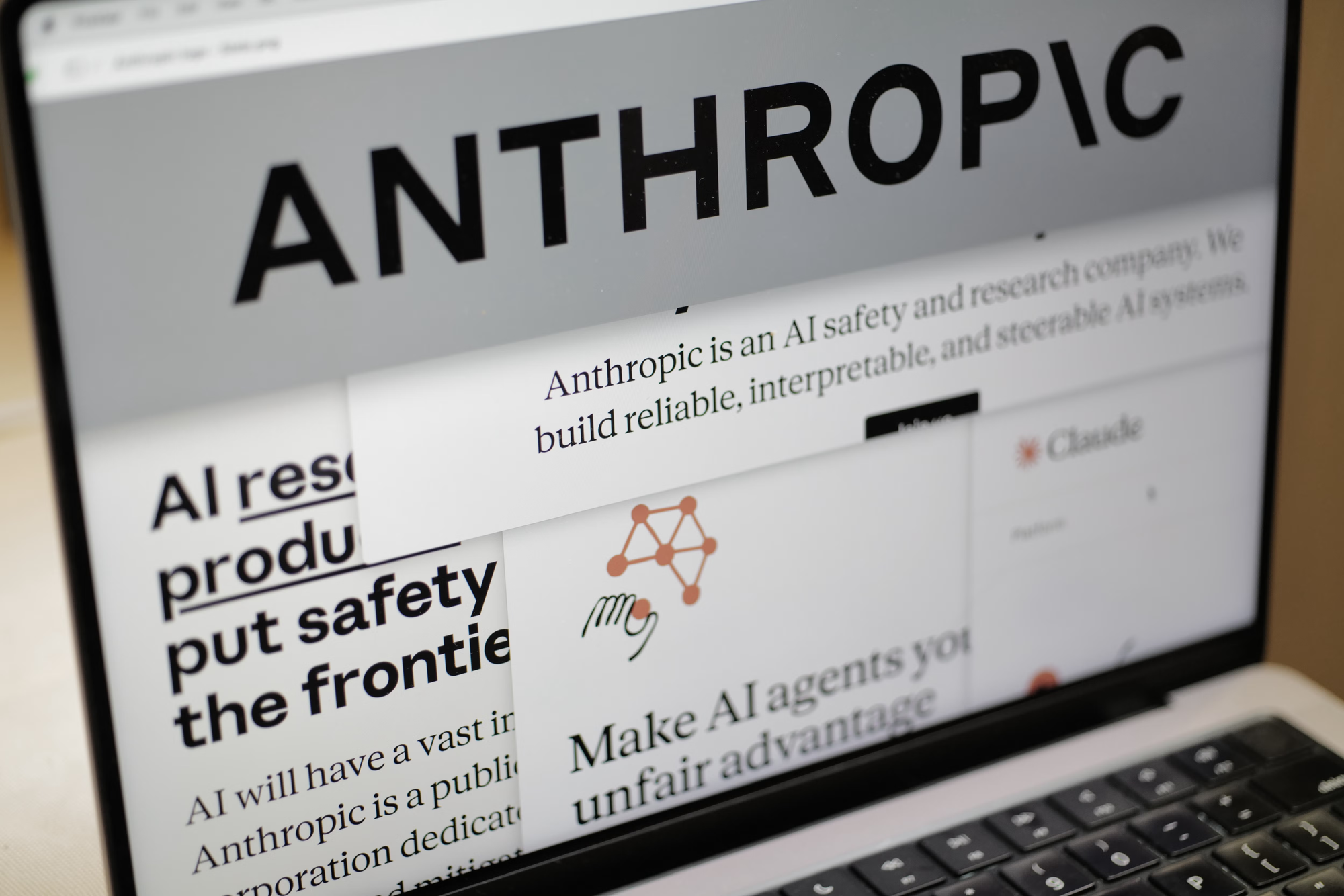
The Copilot Cowork announcement is not a standalone product decision. It is the public face of a strategic relationship that has been developing in stages since late 2025.
The deal timeline:
- November 2025: Microsoft (up to $5B) and Nvidia (up to $10B) invest in Anthropic, raising its valuation from $183B to $350B
- November 2025: Anthropic commits to purchasing $30 billion in Azure compute capacity — one of the largest cloud infrastructure deals in history
- Late 2025 onward: Claude integrated into Microsoft Foundry and added as an OpenAI alternative in Copilot Chat for Frontier program users
- Ongoing: Microsoft deploys Claude Code internally across engineering teams
- March 2026: Copilot Cowork announced, embedding Claude directly into Microsoft 365
The $30 billion Azure commitment is particularly significant. Anthropic is now running Claude on Azure at enterprise scale, on Nvidia architecture powered by Grace CPUs and Blackwell and Vera Rubin GPUs.
Why Microsoft Is Spending $500 Million a Year on Claude
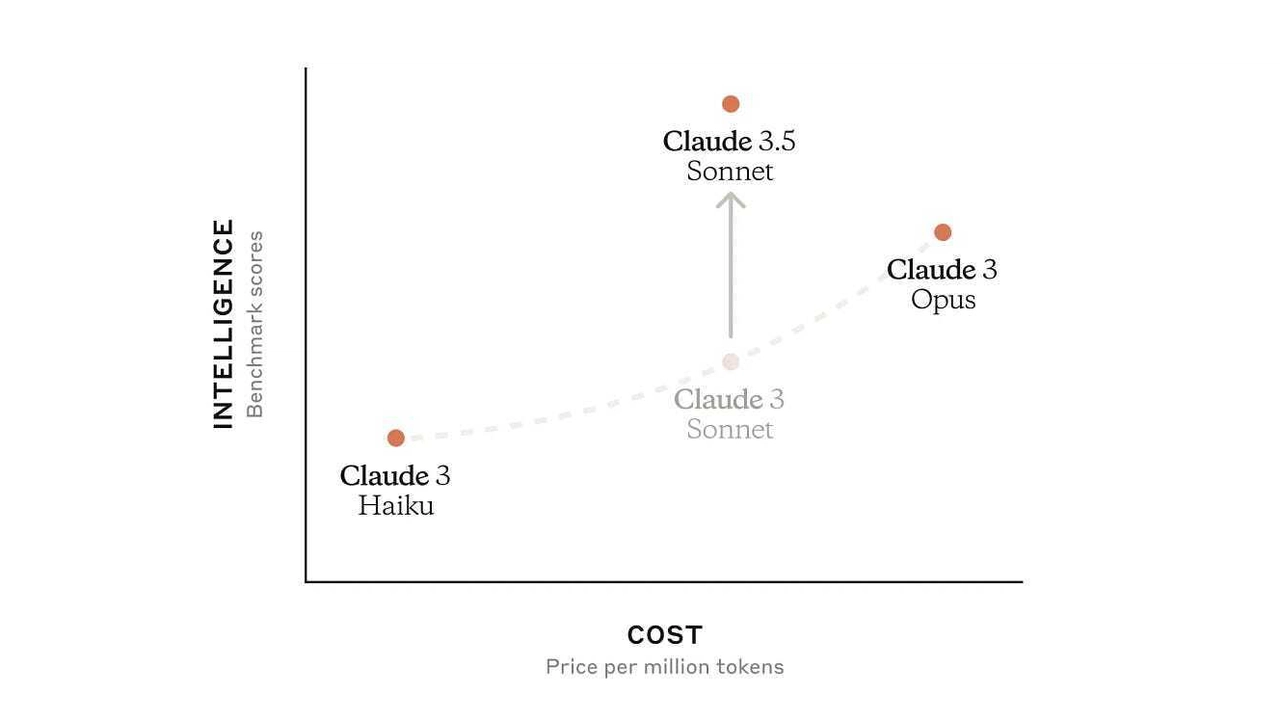
Microsoft is on pace to spend around $500 million annually on AI models from Anthropic, according to a report from The Information.
The reason is direct, and not flattering to OpenAI: Claude performs better than GPT-4o on specific tasks that are critical to Microsoft's enterprise customers.
- Claude is 15% better than ChatGPT at complex financial modeling and error detection
- Claude outperforms GPT-4o at summarizing large document collections
- Claude's multi-step reasoning capabilities are more reliable for long-running agentic workflows
Jared Spataro, Microsoft's Chief Marketing Officer for AI at Work, was direct about the philosophy:
"Every 60 days at least, there's a new king of the hill. There's so much demand for a platform that doesn't feel like, 'I have to skip over to the next vendor.'"
Microsoft's position is now explicit: Copilot is model diverse by design. The right model for the job, regardless of who built it.
What Happened to the OpenAI Partnership
A Six-Year Relationship That Frayed Publicly
The Microsoft-OpenAI partnership began in 2019 with a $1 billion investment and a shared goal of building advanced AI on Azure infrastructure.
By mid-2025, it had become something else.
The key friction points:
- OpenAI wanted to loosen Microsoft's grip on its AI products and computing resources
- OpenAI needed Microsoft's approval for its for-profit conversion
- Negotiations became so tense that OpenAI executives discussed accusing Microsoft of anticompetitive behavior as a negotiating tactic
- OpenAI signed a $22.4 billion deal with CoreWeave in March 2025 and pursued Google for server rentals, aggressively diversifying away from Azure
The October 2025 restructuring deal:
- Microsoft received a 27% ownership stake in OpenAI, valued at approximately $135 billion
- OpenAI completed its for-profit conversion
- Microsoft secured access to OpenAI technology through 2032
- AGI determinations are now subject to independent review, not OpenAI's board alone
But the friction did not stop there. By March 2026, reports indicated OpenAI was building an internal code-hosting platform it was considering selling commercially — a product that would put it in direct competition with GitHub, which Microsoft acquired for $7.5 billion in 2018.
The Structural Shift in Plain Terms
The OpenAI partnership was built on exclusivity and mutual dependency. Those conditions have been systematically dismantled from both sides.
What has changed:
- OpenAI no longer relies exclusively on Azure
- Microsoft no longer relies exclusively on OpenAI's models
- Both companies are increasingly competing in enterprise productivity software, developer tools, and agentic AI
The OpenAI relationship remains Microsoft's most significant AI investment by a wide margin. But it is no longer a dependency — it is a stake in a company that is also, in several dimensions, a competitor.
What the Multi-Model Strategy Actually Means
For Enterprise Customers
Copilot can now route specific tasks to the model best suited for them:
- Claude for complex document analysis, multi-step reasoning, and long-running agentic workflows
- OpenAI models for general-purpose tasks and chat
- Microsoft's own models where relevant
For an enterprise buying a $99 per user per month Microsoft 365 E7 subscription, this means access to the best available model for each task — without managing separate vendor relationships, API keys, or compliance frameworks.
For Anthropic
Microsoft's embrace of Claude is the single most significant enterprise distribution deal Anthropic has closed.
Anthropic by the numbers (early 2026):
- Annualized revenue: ~$14 billion (up from ~$9B run rate at end of 2025)
- 2026 projections: $20B to $26B
- Enterprise share of revenue: ~80%
- Latest valuation (Series G, February 2026): $380 billion
Being embedded as the model for agentic tasks in Microsoft 365 — used by hundreds of millions of workers and 90% of the Fortune 500 — is a distribution moat that Anthropic's direct sales force could not build alone.
The Microsoft deal also completes Claude's presence across every major cloud platform:
- AWS Bedrock ✓
- Google Vertex AI ✓
- Microsoft Azure ✓
Enterprise customers now have maximum flexibility regardless of their existing cloud commitments.
For OpenAI
OpenAI is not losing Microsoft as a customer. The $135 billion equity stake, the $250 billion Azure services commitment through 2032, and the ongoing integration of GPT models across Copilot remain intact.
But OpenAI is losing its position as Microsoft's exclusive default.
OpenAI's position as of early 2026:
- Annual recurring revenue: ~$20 billion
- Funding raised in a single round: $110 billion (largest private investment in history)
- Valuation: ~$730 billion
By conventional measures, OpenAI is winning the AI race. The more complicated question is whether the loss of exclusivity within Microsoft's ecosystem matters over time.
Microsoft is now actively signaling that no single model will dominate Copilot. That message was clearly directed at OpenAI as much as it was at customers.
At the same time, OpenAI is building directly against Microsoft in several product categories — a GitHub competitor, an enterprise coding platform that overlaps with GitHub Copilot, and consumer products aimed at the same enterprise buyers Microsoft serves.
The relationship has become genuinely bilateral. Microsoft needs OpenAI's models. OpenAI needs Microsoft's infrastructure. Both companies are competing for the same enterprise customers with overlapping products.
The Adoption Problem That Made All of This Necessary
Copilot Has Not Been a Runaway Success
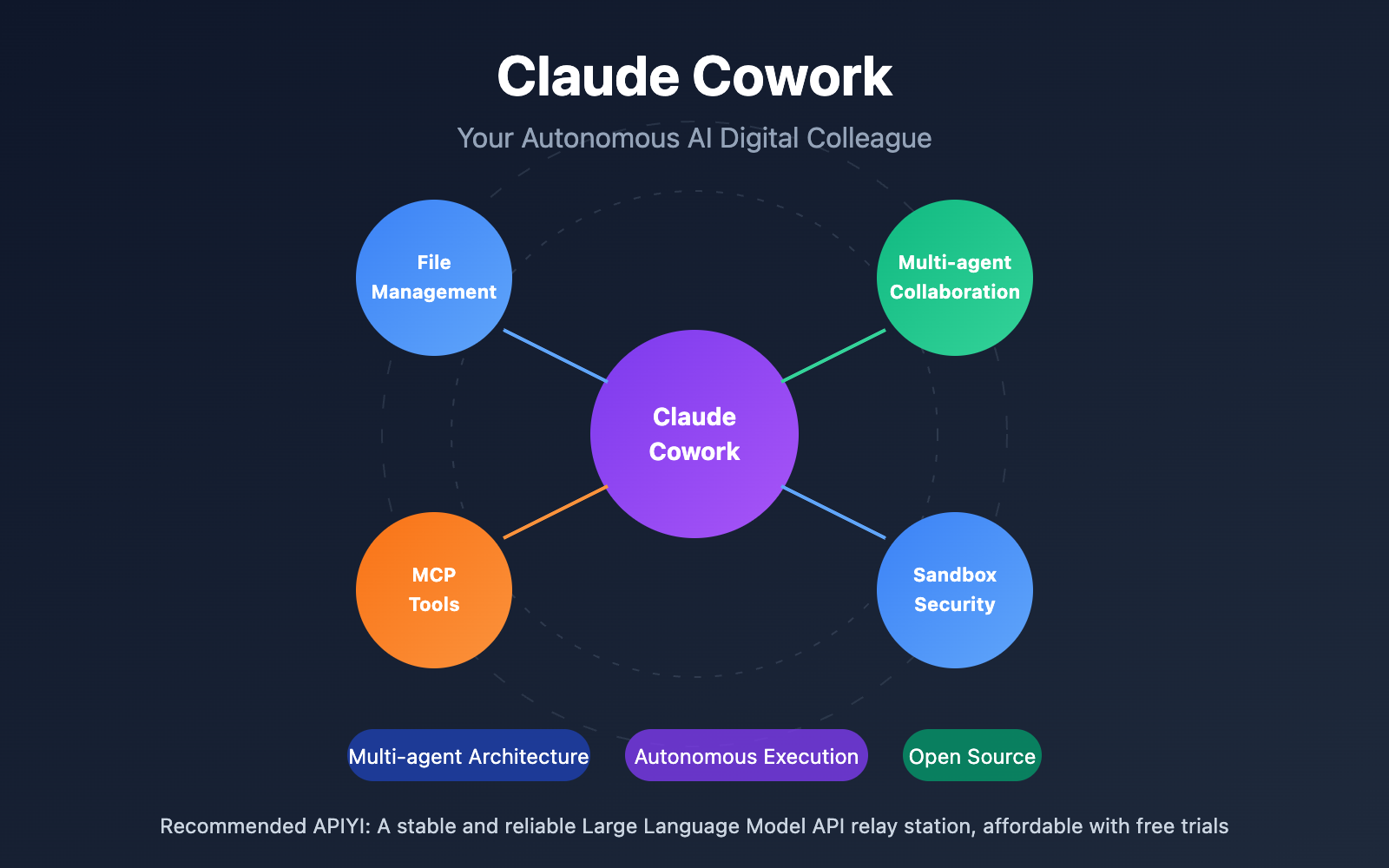
There is context for why Microsoft needed Copilot Cowork, and it is not flattering to the existing product.
Copilot remains a relatively small fraction of Microsoft's commercial user base despite massive infrastructure investment. The early reaction to Claude Cowork's standalone release in January 2026 showed enterprise buyers and investors what a genuinely capable agentic product looked like — and the gap between that and what Copilot had been offering was visible.
The Claude Cowork market impact:
- Anthropic's Claude Cowork releases in January and February 2026 triggered a $285 billion selloff in enterprise software stocks
- Investors feared AI agents would replace traditional SaaS tools
- Microsoft's own shares fell more than 14% after Anthropic debuted Claude Cowork in mid-January
Microsoft's response was to absorb the threat rather than fight it. Instead of competing with Claude Cowork, Microsoft licensed the same technology, wrapped it in enterprise infrastructure, and brought it into the platform where 400 million commercial users already work.
Forrester VP Principal Analyst JP Gownder on the announcement:
"Microsoft is moving Copilot away from reliance on OpenAI alone and toward a multi-model architecture... The move also highlights the current limitations of Microsoft's existing Copilot agents: while the company has talked extensively about autonomous agents, they have so far struggled to take meaningful action compared with newer agentic systems such as Anthropic's."
What This Means for the Industry
Model Agnosticism Is Winning
The clearest takeaway from everything Microsoft has done over the past six months: the enterprise AI platform of the future does not bet on a single model provider.
Every major enterprise software company is moving in this direction. The value sits in the platform, the data integration, the security perimeter, and the workflow context — not in the model itself. Models are commoditizing faster than anyone predicted, and the companies that locked themselves into single-vendor relationships are paying a premium to get out.
Microsoft's multi-model strategy is not a hedge. It is a product decision that gives customers something their current AI vendors do not: the best available model for each task, without forcing a vendor choice.
The OpenAI Relationship Has Matured
The six-year Microsoft-OpenAI partnership produced some of the most significant commercial AI products in history. It also created a dependency that was never sustainable as OpenAI's ambitions expanded beyond what either company's product roadmap could accommodate.
What that relationship looks like now is less a joint venture and more a set of overlapping contracts between two companies that compete in several markets and cooperate in others.
- Microsoft holds a significant stake in OpenAI's upside
- OpenAI has guaranteed Azure revenue
- Both have room to maneuver
- Neither fully controls the other
For enterprise customers buying Microsoft 365 E7, the internal dynamics of that relationship matter less than one simple fact: they now have access to the best available AI models — regardless of who built them — inside the productivity platform they already pay for.
That is what Microsoft just sold. Whether it delivers that promise at scale is the question the next twelve months will answer.
FAQ
Why did Microsoft choose Anthropic's Claude for Copilot Cowork instead of OpenAI's models?
Microsoft's multi-model strategy is built around using the best available model for each task, regardless of provider. Claude has demonstrated measurable advantages in specific high-value enterprise workflows, including complex document analysis, multi-step reasoning, and financial modeling tasks, where it outperforms GPT-4o by approximately 15%. For agentic, long-running tasks that require sustained reasoning across multiple steps and data sources, Claude's capabilities made it the right fit for Copilot Cowork.
What is Copilot Cowork and how is it different from regular Copilot?
Copilot Cowork is a new agentic capability inside Microsoft 365 Copilot that executes multi-step work rather than just answering questions or generating drafts. Users describe the outcome they want, and Cowork builds a plan, gathers context from emails, meetings, files, and calendar data, then carries the work forward in the background with transparent checkpoints. It is designed for long, complex workflows that span multiple apps and can run for minutes or hours. It currently uses Anthropic's Claude model and agentic framework wrapped in Microsoft's enterprise security and compliance infrastructure.
How much has Microsoft invested in Anthropic and what are the deal terms?
Microsoft and Nvidia jointly invested in Anthropic in November 2025, with Microsoft contributing up to $5 billion and Nvidia up to $10 billion. As part of the deal, Anthropic committed to purchasing $30 billion in Azure compute capacity. The investment raised Anthropic's valuation from $183 billion to $350 billion. Separately, Microsoft is reported to be spending approximately $500 million annually on Anthropic's AI models for use across its products.
Does Microsoft still have a strong partnership with OpenAI after the Anthropic deal?
Yes, the OpenAI partnership remains intact and significant. Microsoft holds approximately 27% of OpenAI, valued at around $135 billion. OpenAI is under contract to purchase $250 billion worth of Azure services through 2032. OpenAI models continue to power many Copilot features. However, the relationship has evolved from exclusivity and near-total dependency to something more complex, as OpenAI has diversified its cloud infrastructure and is now building products that compete directly with Microsoft properties like GitHub.
What is the Microsoft 365 E7 tier and what does it include?
Microsoft 365 E7, launching May 1, 2026, at $99 per user per month, bundles Microsoft 365 E5, Microsoft 365 Copilot, the Entra Suite for identity management, and Agent 365, a new governance platform for managing AI agents across an organization. Buying these components separately would cost approximately $117 per user per month. Paid Copilot licenses currently represent only about 3% of Microsoft's commercial user base.
What is Anthropic's current revenue and valuation?
Anthropic closed a $30 billion Series G in early 2026 at a valuation of approximately $380 billion. The company's annualized revenue reached roughly $14 billion in early 2026, with about 80% coming from enterprise customers. Claude Code, Anthropic's AI coding agent, generates over $2.5 billion in annual revenue. Anthropic's revenue growth has been among the fastest recorded for any B2B software company.
How does Claude Cowork differ from Microsoft's Copilot Cowork?
Anthropic's Claude Cowork runs locally on a user's device, giving individuals direct control and broad desktop-level access. Microsoft's Copilot Cowork uses the same Claude model and agentic framework but runs in Microsoft's cloud within an enterprise tenant — inside Microsoft's security and compliance framework, with auditable actions, data that stays within the enterprise perimeter, and IT administrator control over agent permissions. The enterprise version trades some individual autonomy for the compliance and governance controls large organizations require.
What does the Microsoft-Anthropic deal mean for enterprise AI buyers?
For enterprise buyers, the most practical implication is that Claude is now available through Microsoft 365 in a governed, auditable format. Organizations on existing Microsoft 365 Enterprise agreements do not need to manage a separate Anthropic relationship to access Claude's agentic capabilities. Microsoft's multi-model approach also means enterprise customers are not locked into any single AI model provider as the landscape continues to evolve.
Related Articles
 Dani
Dani
 Dani
Dani
 Mark
Mark