Apple has never designed a budget laptop with genuine intent. Older MacBook Air models occasionally lingered in the catalog at reduced prices, and refurbished units sometimes appeared below $700 at third-party retailers, but Apple itself never engineered a brand-new laptop around a sub-$700 price target and released it into the market as a deliberate product. The budget laptop category, dominated by $300 Chromebooks and $500 Windows machines that drive school purchasing and first-time buyer decisions, was territory Apple chose to ignore for the better part of two decades.
On March 4, 2026, that position changed in a meaningful and permanent way.
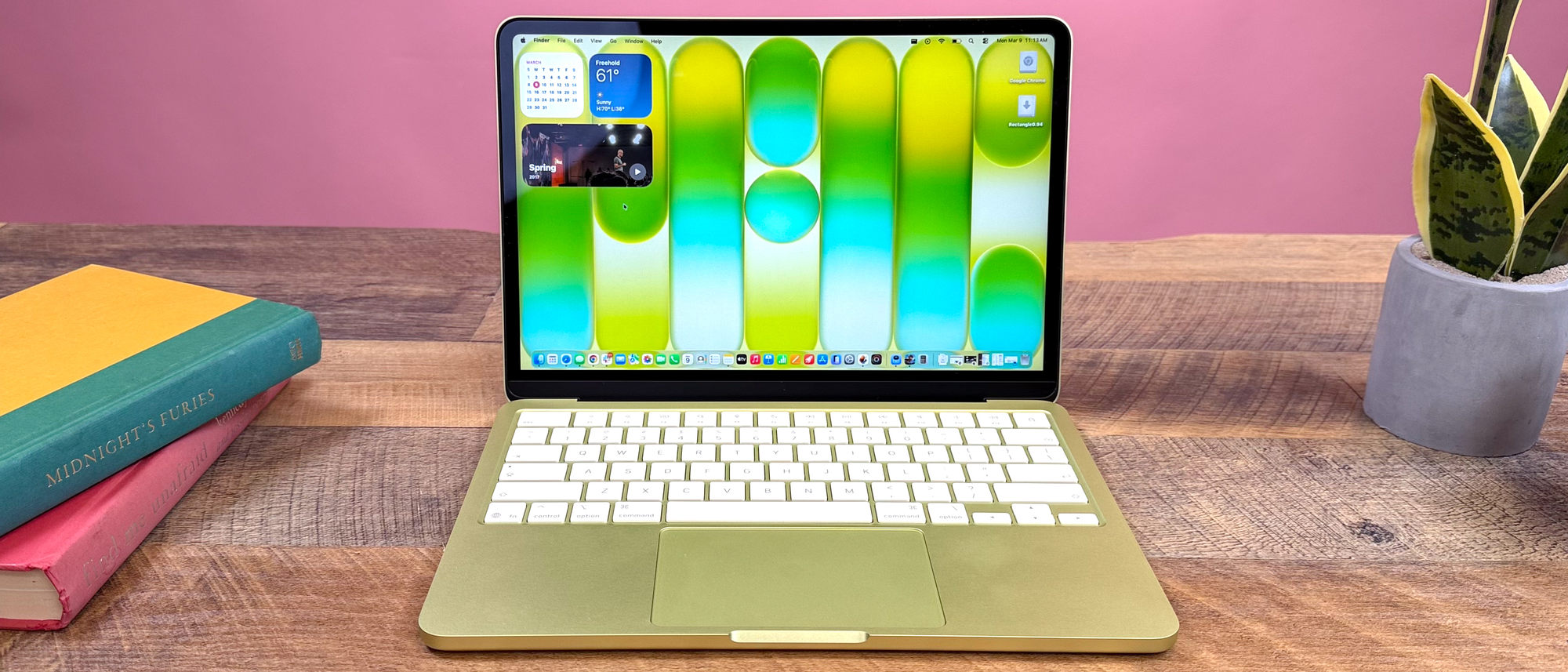
The MacBook Neo starts at $599, or $499 with education pricing. It ships with a 13-inch Liquid Retina display at 2,408 by 1,506 resolution, a genuine aluminum enclosure available in four colors including a new citrus yellow, up to 16 hours of battery life, and Apple's A18 Pro chip, the same silicon that powered the iPhone 16 Pro in 2024. The device weighs 2.7 pounds, runs full macOS Tahoe with Apple Intelligence, and went on sale March 11. At roughly half the price of the MacBook Air, Apple's previously least expensive laptop, the MacBook Neo is also priced below the standard iPhone 17, which retails for $799.
The competitive reaction was immediate and telling. Nick Wu, CFO of Asus, called it "a shock to the entire market," noting that "the entire PC system will launch corresponding products to compete with Apple." When the CFO of one of the world's largest PC manufacturers publicly acknowledges that the industry is "taking it very seriously," the launch has achieved something beyond a standard product refresh.
What Apple Built, and What It Deliberately Chose to Cut
A Premium Chassis Engineered to a Cost Target
Apple's SVP of Hardware Engineering, John Ternus, was explicit at the New York launch event that the MacBook Neo was not derived from the MacBook Air. He described it as built "from a completely blank slate" around a specific cost objective, which is a significant framing distinction: the Neo is not a cheaper version of something else, but a purpose-built machine designed to deliver a carefully defined set of Mac capabilities at a price the company had never previously targeted.
The hardware Apple chose to preserve reflects where it believed quality would be most perceptible to a first-time buyer or student.
What Apple retained at $599:
- A genuine aluminum enclosure, not the plastic chassis common to competing budget laptops
- A 13-inch Liquid Retina display at 2,408 by 1,506 resolution and 500 nits of brightness, with reviewers noting it outperforms any competing display at comparable prices
- The full Magic Keyboard and the same Multi-Touch trackpad found across the MacBook lineup
- A 1080p FaceTime HD camera that exceeds the camera hardware in most budget Windows machines
- Up to 16 hours of battery life, along with Apple's lowest-carbon manufacturing footprint to date, featuring 60 percent recycled materials including 90 percent recycled aluminum and 100 percent recycled cobalt in the battery
What Apple cut to reach the price:
- Keyboard backlighting, which is absent on the base configuration
- Touch ID, which requires the $699 model with 512GB storage
- MagSafe and SD card slot connectivity, replaced by two USB-C ports and a headphone jack
- True Tone display technology and the wider color gamut available on higher-end MacBooks
- Memory configuration options, as 8GB of unified memory is the only available RAM configuration at any price point
The tradeoffs are real and substantive. The 8GB memory ceiling is the most consequential constraint for long-term ownership, and the absence of keyboard backlighting and Touch ID on the base model will frustrate buyers who compare features without reading carefully. Understanding what was cut, and why, is essential to evaluating whether the Neo is the right machine for a given use case.
The A18 Pro: Reframing What an iPhone Chip Means in a Laptop
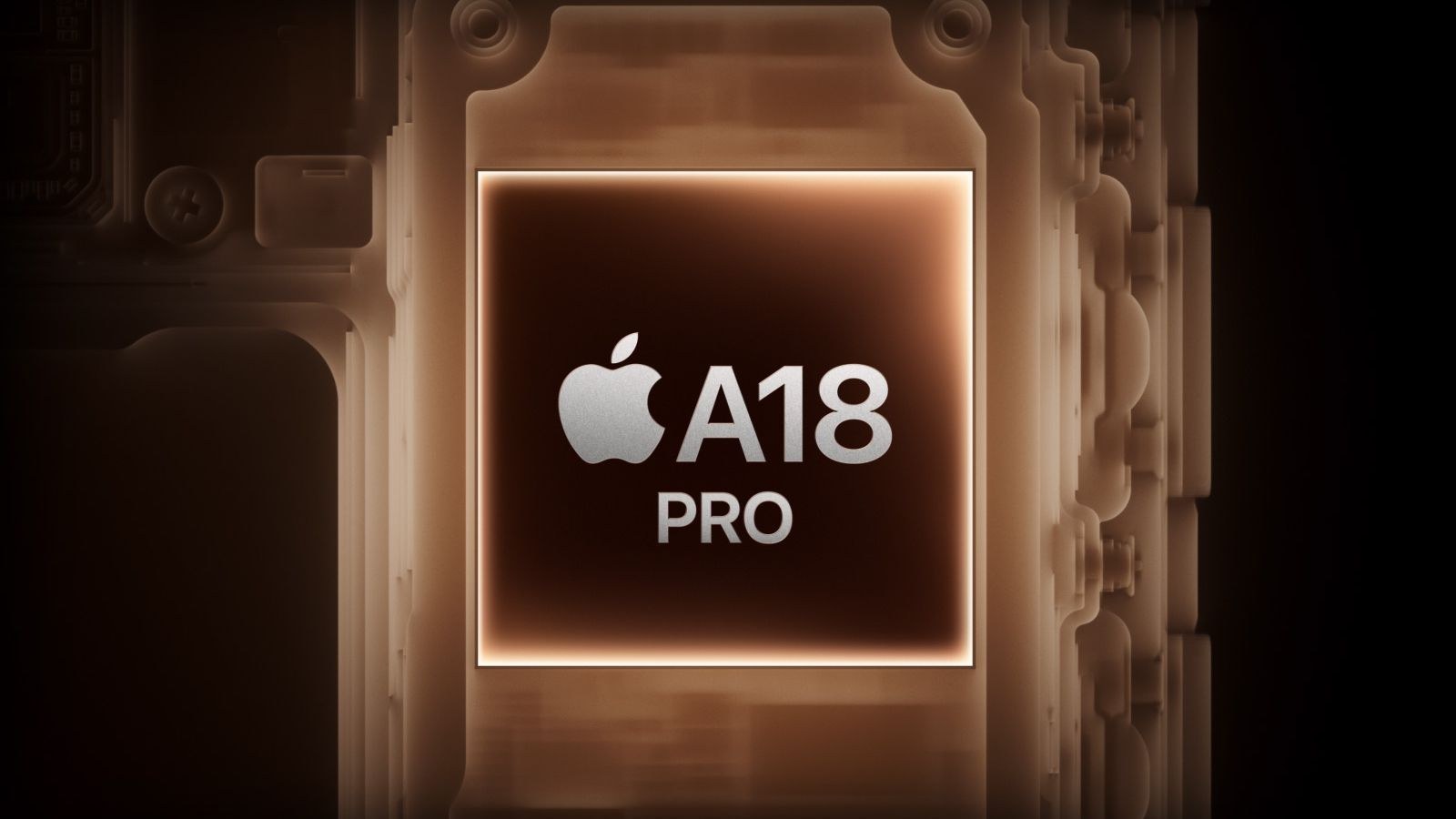
The decision to power the MacBook Neo with the A18 Pro, a chip originally designed for the iPhone 16 Pro, generated more skepticism than any other aspect of the launch. For some observers, the presence of "a phone chip" in a laptop implied a fundamental compromise in computing capability. The benchmark data tells a more analytically precise story.
MacBook Neo (A18 Pro) vs. Key Comparators: Geekbench 6
| Device | Chip | Single-Core | Multi-Core |
|---|---|---|---|
| MacBook Neo | A18 Pro | 3,461 to 3,535 | 8,668 to 8,920 |
| MacBook Air (2020) | M1 | 2,346 | 8,342 |
| MacBook Air (current) | M5 | 3,696 | 14,730 |
| MacBook Air (2023) | M3 | 3,082 | 12,087 |
| Microsoft Surface Laptop 13 | Snapdragon X Plus | 2,486 | 11,321 |
The pattern that emerges from these numbers is analytically important. Single-core performance, which governs the everyday tasks of web browsing, document editing, email, media streaming, and casual photo work, is strong on the Neo: it exceeds the M1, surpasses the M3 in head-to-head single-core comparisons, and outperforms both the Snapdragon X Plus and the Intel Core Ultra 5 processors found in competing budget Windows laptops.
Multi-core performance, which matters for sustained video encoding, 3D rendering, large software compilation, and other CPU-intensive professional workloads, is a different picture: the A18 Pro's six-core configuration puts it roughly on par with the M1, and behind the M3, M4, and M5 chips that feature eight to ten cores and significantly higher memory bandwidth.
The critical framing for any performance discussion is the relevant comparison. The MacBook Neo is not competing with the MacBook Air. Apple claims the Neo is up to 50 percent faster for everyday tasks and up to 3x faster for on-device AI workloads compared to the bestselling Windows laptop with an Intel Core Ultra 5 chip, and independent reviewers have not meaningfully disputed those claims. In 3DMark Steel Nomad graphics benchmarks, the Neo scored 369 against the Surface Laptop 13's 229, illustrating consistent outperformance at the price point where competition actually exists.
The architectural relationship between A-series and M-series chips is also worth stating clearly for readers who encountered the "phone chip" framing uncritically: the A18 Pro and the M-series chips share the same ARM-based CPU architecture, with M-series processors adding more CPU and GPU cores, higher memory bandwidth, and support for larger unified memory configurations. The difference between the two families is fundamentally one of scale, not of design philosophy or silicon generation. Had Apple labeled the A18 Pro as an "M4 Lite," the skeptical discourse would have been substantially muted.
What the A18 Pro cannot do in a laptop context:
- Sustain heavy creative workloads without some degree of thermal throttling on extended exports
- Drive multiple external displays simultaneously at full capability
- Match the M5 MacBook Air in any GPU-intensive or multi-threaded professional workload
- Support ProMotion or any adaptive refresh rate display technology
For the broad majority of buyers the MacBook Neo is targeting, none of those limitations are operationally relevant.
The Ecosystem Strategy Behind the Price Point
Why the MacBook Neo Is More Than a Product Launch

Every substantive analyst note published following the MacBook Neo's announcement reached a consistent conclusion: this is not primarily a product strategy, it is an ecosystem expansion strategy, and the two are not equivalent.
Evercore ISI analyst Amit Daryanani wrote that the Neo "reinforces Apple's flywheel effect by bringing more price-sensitive consumers into the Mac ecosystem, deepening cross-device engagement through iPhone integration... that could ultimately drive incremental hardware and services monetization." That framing reflects the structural reality of Apple's revenue model accurately. The Mac is not Apple's highest-margin product category -- that position belongs to iPhone, followed by services -- but Mac ownership is a powerful upstream predictor of services revenue, App Store spending, iCloud subscriptions, and eventual iPhone upgrade decisions.
A college student who purchases a $499 MacBook Neo in 2026 represents a high-probability future iPhone buyer, a likely Apple One subscriber, and a plausible MacBook Air purchaser in four to five years when the Neo's 8GB of unified memory begins to feel constrained by software evolution and expanded browser workloads. The entry-point pricing does not capture the full lifetime value Apple is likely to realize from each new ecosystem entrant; it creates the conditions under which that value can be realized.
Apple has applied this strategic logic successfully in adjacent categories. The $329 iPad launched in 2017 made tablet deployment financially viable for school districts and brought a generation of students into contact with iPads and iOS at a formative stage. The iPhone SE series established an entry point for cost-sensitive smartphone buyers who might otherwise have remained on Android platforms. The MacBook Neo applies the same framework to the laptop market, where, until March 2026, Apple had no credible answer to the question of what a customer should buy if they wanted a Mac but could not justify spending $1,100.
Buyer Guidance: Who the MacBook Neo Serves Well, and Who Should Look Elsewhere
The MacBook Neo is an excellent computer for a clearly defined profile of user, and a potentially frustrating choice for several others. The tradeoffs Apple made to reach $599 are real, and they will become operationally significant for buyers whose use cases extend beyond the device's designed scope.
The MacBook Neo is well-suited for users who:
- Primarily work in web browsers, Google Workspace, Microsoft 365, or document-centric applications
- Stream video, manage photos casually, attend video calls, and handle email as their core computing activities
- Want all-day battery life without carrying a charger, with the 13 to 14 hours of real-world battery performance reviewers have documented
- Are entering the Apple ecosystem for the first time, particularly students transitioning from Chromebooks or budget Windows machines
- Need Apple Intelligence features and full macOS compatibility at a price point that previously did not exist
The MacBook Air is the more appropriate choice for users who:
- Require more than 512GB of storage, since the Neo's maximum configuration is fixed
- Plan to connect external displays or use high-bandwidth peripherals, as the MacBook Air's USB-C ports offer considerably greater data transfer capability and display support
- Regularly perform video editing beyond basic cuts, run virtualization software, or work with large codebases where multi-core performance and memory headroom are meaningful
- Expect the device to serve as their sole computing platform for more than four years, since the M5's performance ceiling provides substantially more runway than the A18 Pro
The 8GB memory ceiling deserves particular attention because it is the constraint most likely to affect buyers who do not examine specifications carefully before purchasing. Unified memory on Apple silicon operates more efficiently than conventional RAM architectures, which is why 8GB on an M1 MacBook Air in 2020 handled workloads that would have overwhelmed an 8GB Windows machine of the same era. However, macOS memory usage, browser tab loads, and application demands have grown substantially since 2020, and 8GB in 2026 on a machine intended for use through 2030 leaves a narrower operational margin than it might initially appear. For buyers whose everyday computing involves running multiple browser profiles, cloud-connected collaboration tools, photo libraries, and background applications simultaneously, the ceiling will become noticeable within the device's expected ownership period.
The Competitive Landscape: Why the Industry Has No Immediate Answer
The Manufacturing Gap That Protects Apple's Position
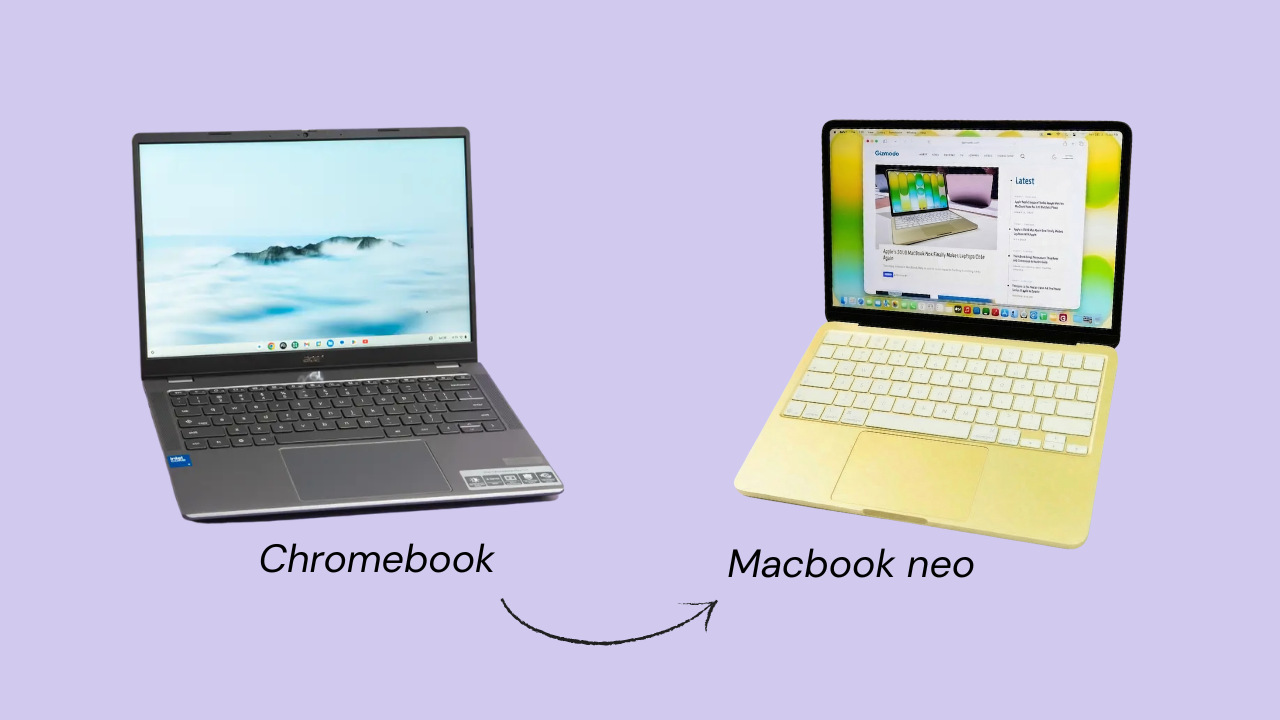
The competitive response from Windows OEM manufacturers and Chromebook producers has, at the time of writing, amounted to recognition of the problem rather than a solution to it. Windows OEMs build $599 laptops routinely, but what they have not been able to deliver at that price is the specific combination of attributes the MacBook Neo assembles: a genuine aluminum enclosure, a Retina-class display at 2,408-by-1,506 resolution, nearly 14 hours of real-world battery life, and a chip that outperforms the Intel Core Ultra 5 processors occupying the competitive price range by 50 percent on everyday tasks and threefold on AI workloads.
The manufacturing economics, chip supply chains, and design investments required to replicate that combination within Windows PC cost structures do not currently exist at the $599 price point. Nick Wu's acknowledgment that "the final market competition outcome is hard to predict" reflects a genuine uncertainty within the OEM community rather than competitive confidence.
| Comparison Dimension | MacBook Neo ($599) | Budget Windows Laptop ($499 to $599) | Chromebook Plus ($399 to $499) |
|---|---|---|---|
| Chassis material | Aluminum | Predominantly plastic | Plastic |
| Display resolution | 2,408 x 1,506 (Retina) | Typically 1,920 x 1,080 | Typically 1,920 x 1,080 |
| Battery life (real-world) | 13 to 14 hours | 8 to 10 hours | 10 to 13 hours |
| Chip performance vs. Intel Ultra 5 | 50% faster everyday tasks | Baseline | Below baseline |
| Operating system | Full macOS with Apple Intelligence | Windows 11 | ChromeOS |
| Memory ceiling | 8GB unified | 8 to 16GB | 4 to 8GB |
| Education pricing | $499 | Variable | $200 to $400 |
Chromebook makers face a distinct structural challenge that the table above does not fully capture. At $499 with education pricing, the MacBook Neo is directly competitive with Chromebook Plus configurations in price, while offering the full macOS software environment rather than the browser-centric ChromeOS experience. For university students who will eventually require full desktop software for data science, software development, design, or professional creative work, the capability gap between the two platforms is not a minor distinction.
The honest counterpoint to this framing is equally important: Chromebook buyers in institutional settings are not primarily making a software capability decision. They are making a procurement-logic decision centered on low total cost of ownership, administrative simplicity, device replaceability, and existing Google Workspace integration. School IT departments that have built their infrastructure around Google's admin console and deployed Chromebooks at scale over the past six years are not going to reverse that institutional investment based on a single product launch from Apple, regardless of how compelling the hardware specifications are.
What the MacBook Neo accomplishes is a different kind of competitive shift: it changes the individual-level question being asked by cost-sensitive consumers who have always wanted a Mac but could not justify the price. For a college student, a first-time laptop buyer, a young professional with a limited budget, or a parent choosing a device for an older child, the calculation has changed. The price barrier that historically redirected those buyers toward Windows or ChromeOS territory has been meaningfully reduced, even if it has not been eliminated entirely.
Frequently Asked Questions
What is the MacBook Neo, and what does it cost?
The MacBook Neo is Apple's new entry-level laptop, announced March 4, 2026, and available for purchase from March 11. The base configuration starts at $599 and includes 256GB of storage and 8GB of unified memory, while a $699 configuration doubles storage to 512GB and adds a Touch ID fingerprint sensor to the keyboard. Education pricing reduces those figures to $499 and $599 respectively. It is the most affordable MacBook Apple has ever designed and released as a new product, priced approximately $500 below the MacBook Air.
What chip powers the MacBook Neo, and how does it perform?
The MacBook Neo is powered by the A18 Pro, the chip Apple introduced in the iPhone 16 Pro in 2024, making it the first Mac to use an A-series rather than an M-series processor. Single-core performance is strong relative to its price class, exceeding the M1 and M2 and approaching M3 performance levels, which makes it well-suited for the everyday tasks of web browsing, document editing, media streaming, and productivity work. Multi-core performance is roughly equivalent to the M1 MacBook Air. The Neo is meaningfully faster than comparably priced Windows laptops with Intel Core Ultra 5 chips but is slower than the M5 MacBook Air for sustained, CPU-intensive creative workloads.
How does the MacBook Neo compare to the MacBook Air?
The MacBook Air costs $1,099, runs on Apple's M5 chip, starts with 16GB of RAM and 512GB of storage, includes Touch ID and MagSafe charging, offers a larger 13.6-inch display, and provides USB-C connectivity capable of driving external displays at full specification. The MacBook Neo costs $599, is limited to 8GB of unified memory with no upgrade path, lacks keyboard backlighting and MagSafe, and offers more restricted port capability. Battery life on the Air runs approximately two hours longer in comparable usage scenarios. The MacBook Air is the more appropriate choice for demanding workloads, creative professionals, power users, and anyone planning to rely on a single device for extended periods. The MacBook Neo serves the everyday computing segment with strong performance and exceptional build quality at a substantially lower entry price.
Who is the MacBook Neo designed for?
Apple's stated target is students, first-time Mac buyers, and general consumers who need a capable everyday laptop without committing to the $1,099-plus MacBook Air price tier. The device is particularly well-matched for college students who need full desktop software rather than browser-only computing, for iPhone users seeking to enter the Mac ecosystem at a lower price point, and for anyone whose computing needs center on web browsing, communication, document creation, media streaming, and casual photo management.
Is the MacBook Neo a genuine competitive threat to Chromebooks in education?
In the K-12 sector, Chromebooks hold approximately 60 percent of the global education device market and are deeply embedded in school procurement infrastructure through Google Workspace for Education and the Google Admin Console. The MacBook Neo is unlikely to displace Chromebooks at institutional scale in primary and secondary education in the near term, because school districts evaluate total cost of ownership, administrative simplicity, and replaceability alongside device price, and Chromebooks retain structural advantages across all of those dimensions. In higher education, where individual students make their own purchasing decisions, the competitive dynamic is more favorable to Apple: a $499 Mac running full macOS represents a genuinely new option for university-level students who previously had no affordable MacBook available to them. Counterpoint Research identifies higher education as Apple's most credible immediate opportunity with this product.
What are the MacBook Neo's most significant limitations?
The most consequential limitation is the 8GB unified memory ceiling, which applies to every MacBook Neo configuration regardless of price and cannot be upgraded after purchase. For buyers planning to use the device as their primary machine for four or more years, this constraint deserves careful consideration given the trajectory of software memory demands. The base $599 configuration also lacks keyboard backlighting and Touch ID, both of which require the $100 upgrade to the 512GB model. Storage is capped at 512GB with no higher-capacity option. The display lacks True Tone and the wide color gamut present on higher-end MacBooks, which is relevant for professional color work. Connectivity is limited to two USB-C ports and a headphone jack, with no MagSafe port and slower charging speeds than the MacBook Air.
Why is Apple launching an affordable MacBook at this particular moment?
Several converging market conditions made March 2026 a strategically favorable moment for Apple to enter the budget laptop segment. Global PC prices are projected to rise by approximately 17 percent in 2026, and Gartner has warned that component shortages driven by AI data center memory demand could force PC manufacturers to eliminate sub-$500 laptop configurations by 2028, potentially repositioning Chromebook Plus devices into direct price competition with a MacBook that did not previously exist. Apple's vertical integration over its silicon supply chain insulates it from those cost pressures in ways that Windows OEMs depending on third-party chip suppliers cannot replicate. The company has also been systematically extending its affordable product strategy across hardware categories over the past decade, applying it first to the iPad in 2017 and subsequently to the iPhone SE line, with the Mac representing the last major product category in which that strategy had not yet been deployed.
Related Articles
 Dani
Dani
 Dani
Dani
 Dani
Dani