I've been covering consumer technology for years, and I thought I'd seen it all. Another smart gadget here, another AI-powered device there. But when Lego took the stage at CES 2026 and showed what they've been working on, I genuinely felt that rare sensation of witnessing something that could actually matter.
They're calling it Smart Play, and at the heart of it is something so simple yet so clever that I'm honestly surprised nobody did it sooner: they've put tiny computers inside regular Lego bricks.
I know that sounds like it could go wrong in a million different ways. We've all seen beloved products get "smartified" to the point of absurdity, where adding technology makes everything worse instead of better. But Lego appears to have done something genuinely different here, and I want to walk you through exactly what they've created, why it matters, and whether it's actually worth your attention (and your money).
Let me start by saying this upfront: what Lego announced at CES 2026 represents the most significant change to their core product since they introduced the minifigure back in 1978. That's not marketing hyperbole. That's actually what this is.
What Exactly Are Lego Smart Bricks?
Let's start with the basics, because the technology here is genuinely fascinating.
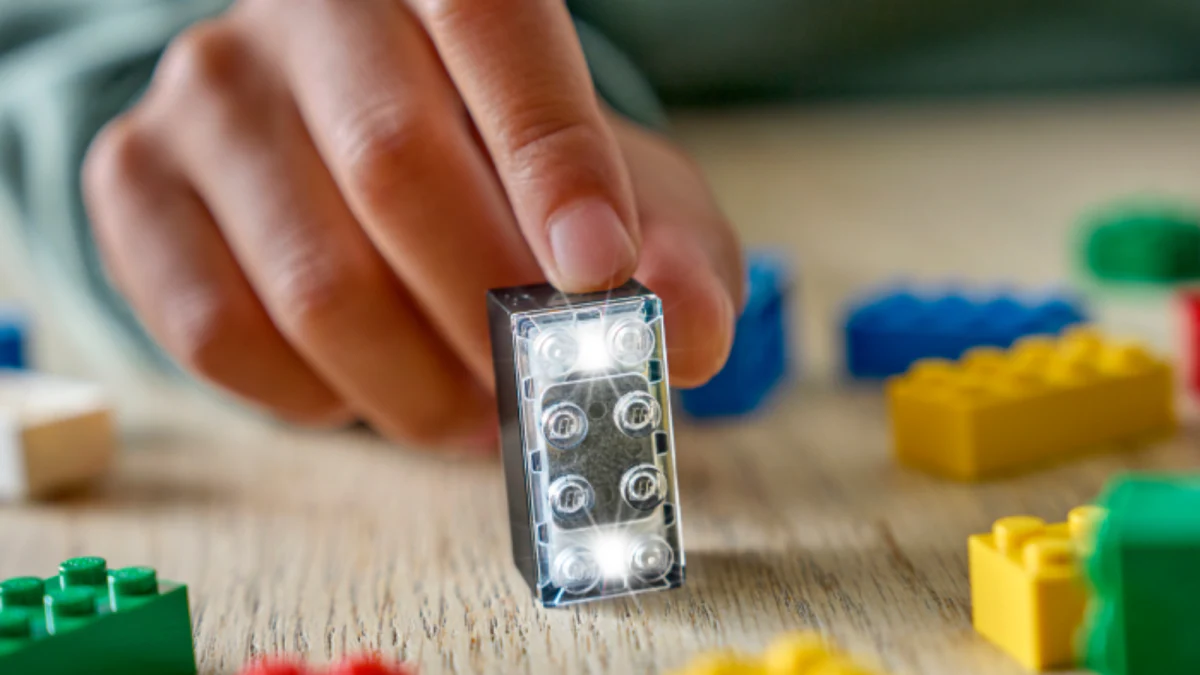
A Lego Smart Brick looks, at first glance, like a completely normal 2×4 brick. Same size, same shape, same satisfying click when you connect it to other bricks. But hidden inside is a custom-designed computer chip that Lego says is smaller than a single Lego stud—that little bump on top of the brick that everything clicks onto.
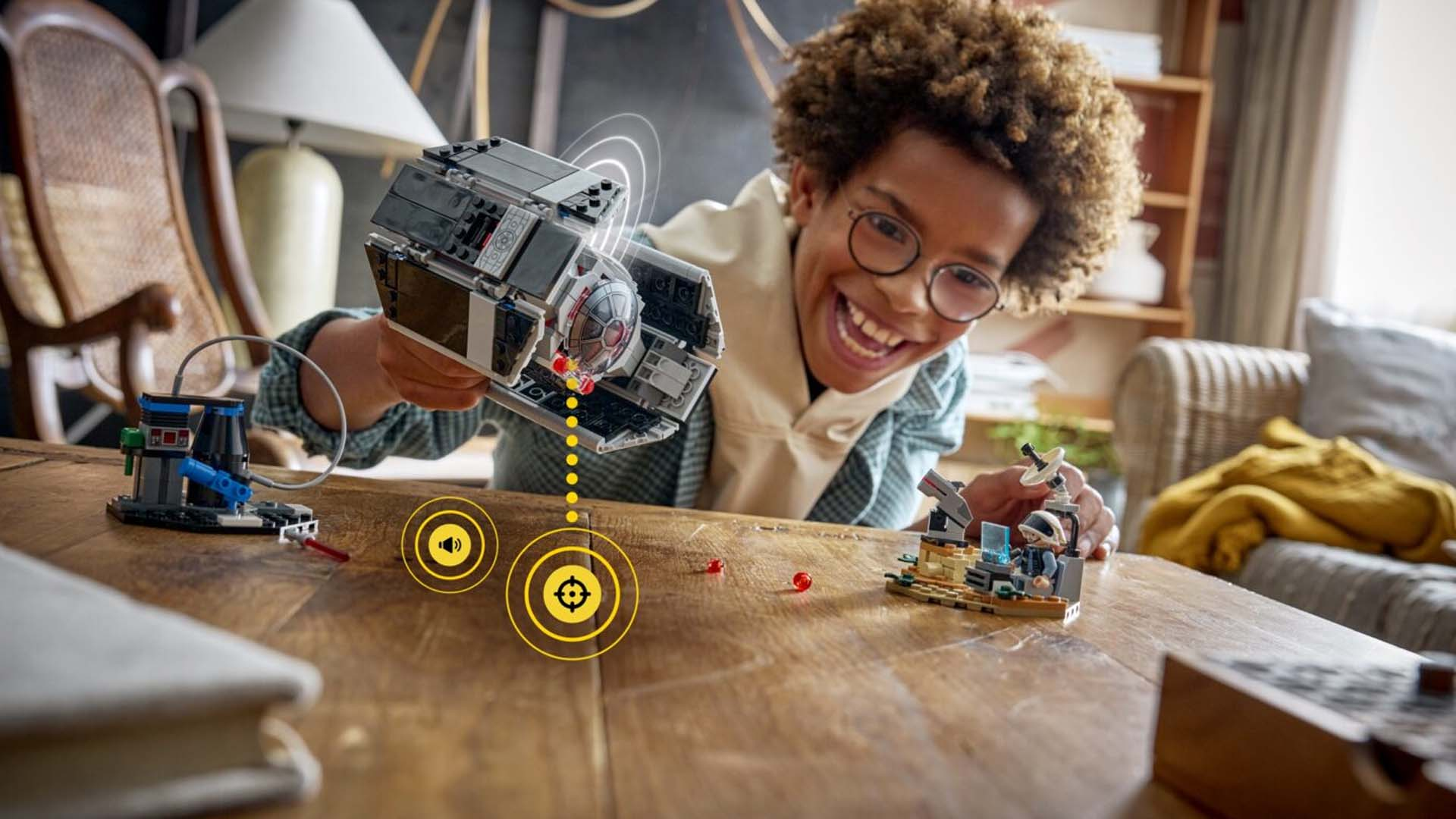
This microscopic chip runs something Lego is calling the Play Engine, which is essentially a tiny brain that can sense and respond to the world around it. The brick contains accelerometers to detect motion and orientation, light sensors to perceive its environment, sound sensors that can respond to noise, and a miniature speaker driven by an onboard synthesizer that can produce sounds tied to how you're actually playing.
The key insight here is that the brick doesn't just play pre-recorded clips. If you build a Lego spaceship with a Smart Brick inside and zoom it through the air, the engine sounds respond to your actual movements. Tilt it, and the sound changes. Send it into a dive, and you'll hear it. Crash it (gently, please), and it reacts.
But the Smart Brick doesn't work alone. It's part of a three-component system that Lego is calling Smart Play.
The second component is the Smart Tag. These are small 2×2 studless tiles—flat pieces without the bumps on top—that contain embedded digital IDs. When a Smart Brick detects a nearby Smart Tag, it reads the ID and understands what context it's being used in. A Smart Tag in a Star Wars X-Wing set tells the brick to behave like a starfighter, making engine sounds and laser noises. A Smart Tag in a different set would trigger completely different behaviors.
The third component is the Smart Minifigure. These are Lego's iconic little people, but with technology embedded inside them as well. When you place a Smart Minifigure near a Smart Brick, the brick recognizes which character it is and responds accordingly. Put Darth Vader on your creation, and you might hear the Imperial March. Luke Skywalker could trigger lightsaber hums.
What makes all of this work together is something Lego created called BrickNet—a local wireless communication layer based on Bluetooth that lets these pieces talk to each other directly. Multiple Smart Bricks can sense each other's position, distance, and orientation, enabling coordinated behaviors across complex builds.
Why No App Required Is the Smartest Decision Lego Made
Here's where Lego really impressed me: there's no app required during play.
I cannot overstate how important this is. We've all experienced the frustration of "smart" toys that require downloading an app, creating an account, connecting to WiFi, pairing via Bluetooth, updating firmware, and then hoping everything still works six months later when the company decides to deprecate their software.
Lego explicitly designed Smart Play to work without any of that nonsense. You don't need to pair anything. You don't need to download anything. You don't need an internet connection. You don't even need a smartphone in the room.
The only time you'll ever need the Lego Smart Assist app is for occasional firmware updates, and those are entirely optional. The bricks work out of the box, exactly like traditional Lego always has. You open the set, you build, you play. The technology is invisible until the moment it enhances your experience.
This was clearly a deliberate philosophical choice. Lego understands that their core audience is children, and forcing kids to navigate app stores and Bluetooth pairing menus would destroy the magic they're trying to create. The whole point of Lego has always been immediate, tactile, imagination-driven play. Smart Play preserves that completely while adding capabilities that weren't possible before.
Power management was another challenge Lego had to solve elegantly. The Smart Bricks contain internal batteries that Lego says can sit unused for years and still work. Charging happens wirelessly on a dedicated charging pad, and multiple bricks can charge simultaneously. You're not dealing with replaceable batteries, USB cables, or any of the usual electronic toy hassles.
The Technology Behind the Magic
For those of you who appreciate the engineering details, let me dig a little deeper into how Lego actually pulled this off.
The custom ASIC chip inside each Smart Brick measures just 4.1mm, which Lego says makes it smaller than one of their standard studs. This chip runs the Play Engine software and coordinates all the sensors and outputs. Lego claims there are more than twenty patented world-first technologies incorporated into the Smart Play platform, which gives you some sense of the R&D investment that went into this.
The communication between components uses what Lego calls "near-field magnetic communication" for the Smart Tags, which sounds very similar to NFC (Near Field Communication) technology found in contactless payment cards and smartphones. The Smart Minifigures also use this technology to broadcast their identity when they're placed near a Smart Brick.
For brick-to-brick communication, the BrickNet protocol uses Bluetooth combined with Lego's proprietary "Neighbor Position Measurement" system. This is what allows multiple Smart Bricks to know where they are relative to each other, enabling features like detecting which of two racing vehicles crosses a finish line first, or having bricks respond when they collide.
The speaker inside each Smart Brick is particularly clever. Rather than storing and playing back audio files, which would require significant memory and limit flexibility, Lego used an onboard synthesizer. This means the brick generates sounds programmatically, allowing for dynamic audio that responds to real-time input from the sensors. Your spaceship doesn't just play a generic engine loop—it generates engine sounds that react to actual movement.
The whole system was developed by Lego's Creative Play Lab team, which has been working on this technology for years. Based on comments from people who participated in product testing as early as 2024, Lego has been iterating on this concept for quite some time before bringing it to market.
Why This Matters: The Bigger Picture
To understand why Smart Play is significant, you need to understand Lego's complicated history with technology.
Lego has been trying to successfully merge electronics with their building system for decades. Sometimes it worked beautifully—Mindstorms, launched in 1998, became an iconic educational robotics platform that introduced countless kids to programming and engineering. It ran for 24 years before being discontinued in 2022.
But many of Lego's technology initiatives have been less successful. Lego Boost simplified the Mindstorms concept but never achieved the same cultural impact. Lego Hidden Side used augmented reality to add ghost-hunting gameplay to physical sets, but required constant smartphone use that detracted from building. Lego Vidiyo tried to let kids create music videos using their sets, but felt gimmicky and disconnected from core Lego play. Various app-controlled trains and vehicles required complicated pairing processes that frustrated users.
The common thread in these less successful attempts was that technology got in the way of play rather than enhancing it. Either the setup was too complicated, the smartphone requirement was too intrusive, or the tech features felt tacked on rather than integrated.
Smart Play appears to have learned from all of these experiments. The technology is invisible until it activates. There's no setup friction. The enhancements feel natural rather than forced. And most importantly, if the batteries die or you choose not to use the smart features, you still have a perfectly good Lego set that works exactly like Lego always has.
This approach also addresses a genuine market need. Parents today are increasingly concerned about screen time, yet many modern toys require tablets or smartphones to function. Lego has positioned Smart Play explicitly as "screenless" technology—you get the benefits of responsive, interactive play without handing your kid another device to stare at.
The First Smart Play Sets: Star Wars Leads the Charge
For the initial launch, Lego partnered with their longest and most successful licensed brand: Star Wars. This makes perfect sense strategically. Star Wars offers instantly recognizable characters, vehicles, and sound effects that showcase exactly what Smart Play can do. When you hear a TIE Fighter scream or a lightsaber hum, you know immediately what it is and why it's cool.
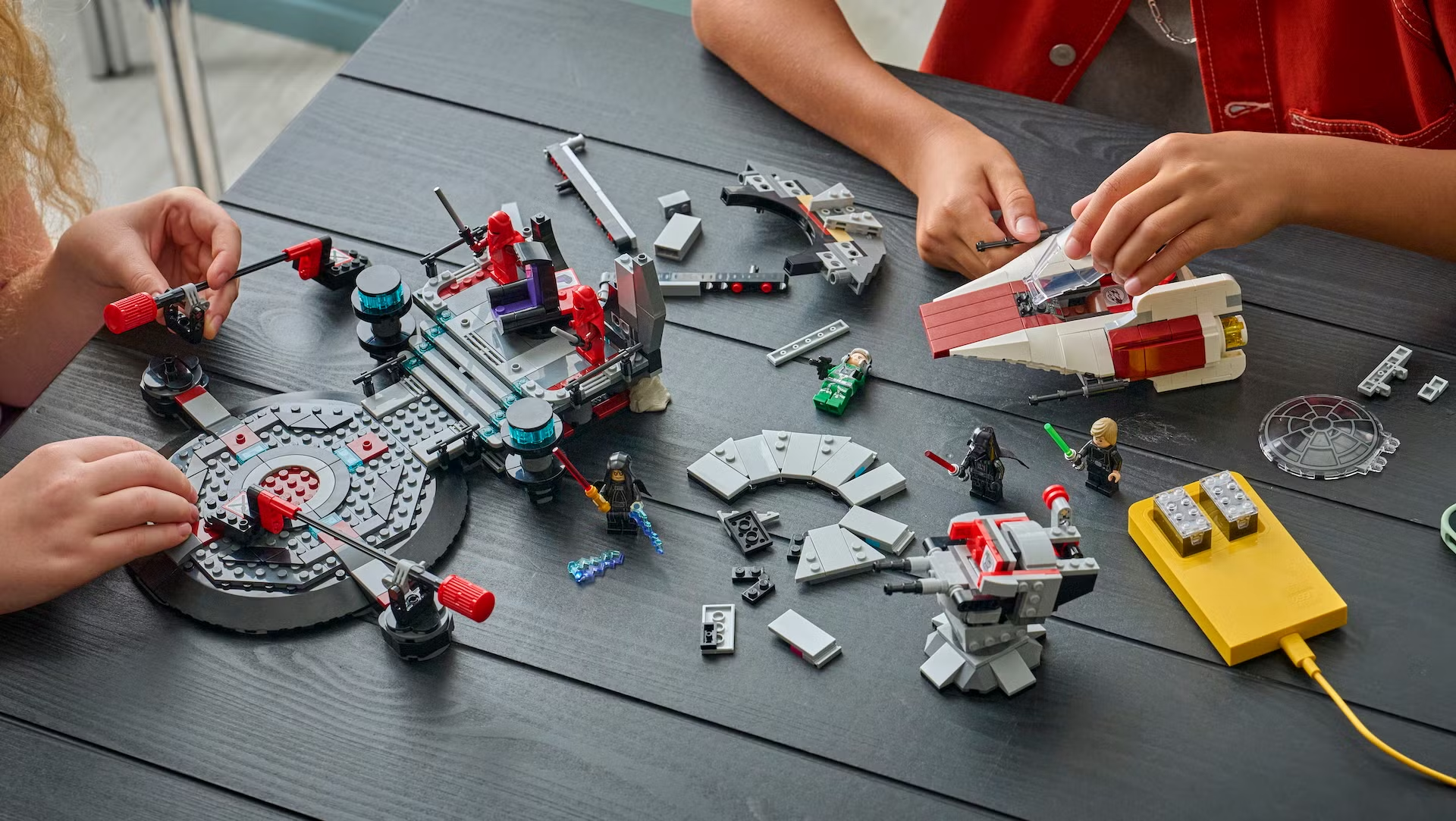
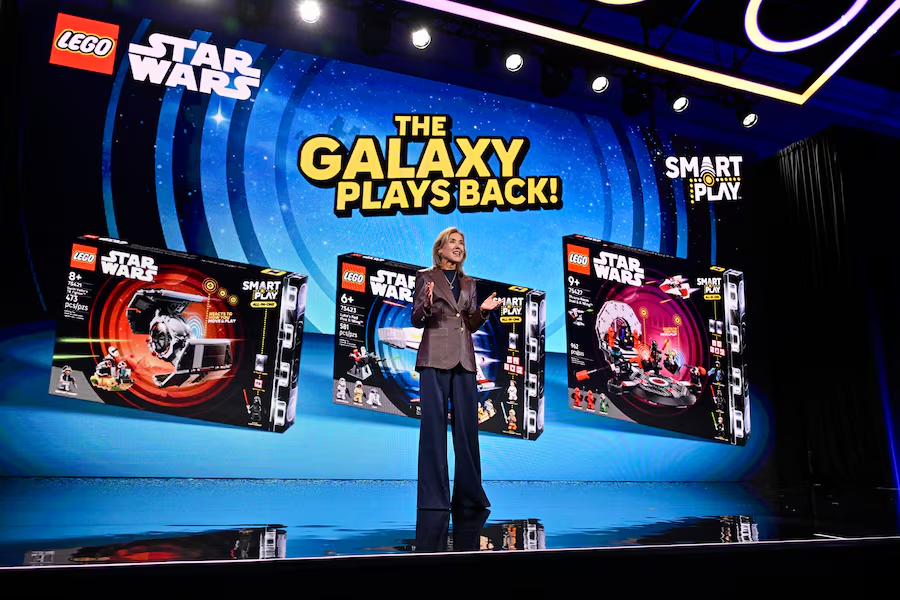
Three sets are launching on March 1st, 2026, with pre-orders opening on January 9th. All three are "All-In-One" sets, meaning they include everything you need for a complete Smart Play experience: at least one Smart Brick with charger, at least one Smart Minifigure, and Smart Tags.
The first set is Darth Vader's TIE Fighter, a 473-piece build priced at $69.99. It comes with a Smart Darth Vader minifigure and a Rebel Fleet Trooper, plus a brick-built Rebel Outpost and Imperial Fueling Station. The star of the show is obviously the TIE Fighter itself, which produces those iconic twin ion engine sounds through the Smart Brick inside it.

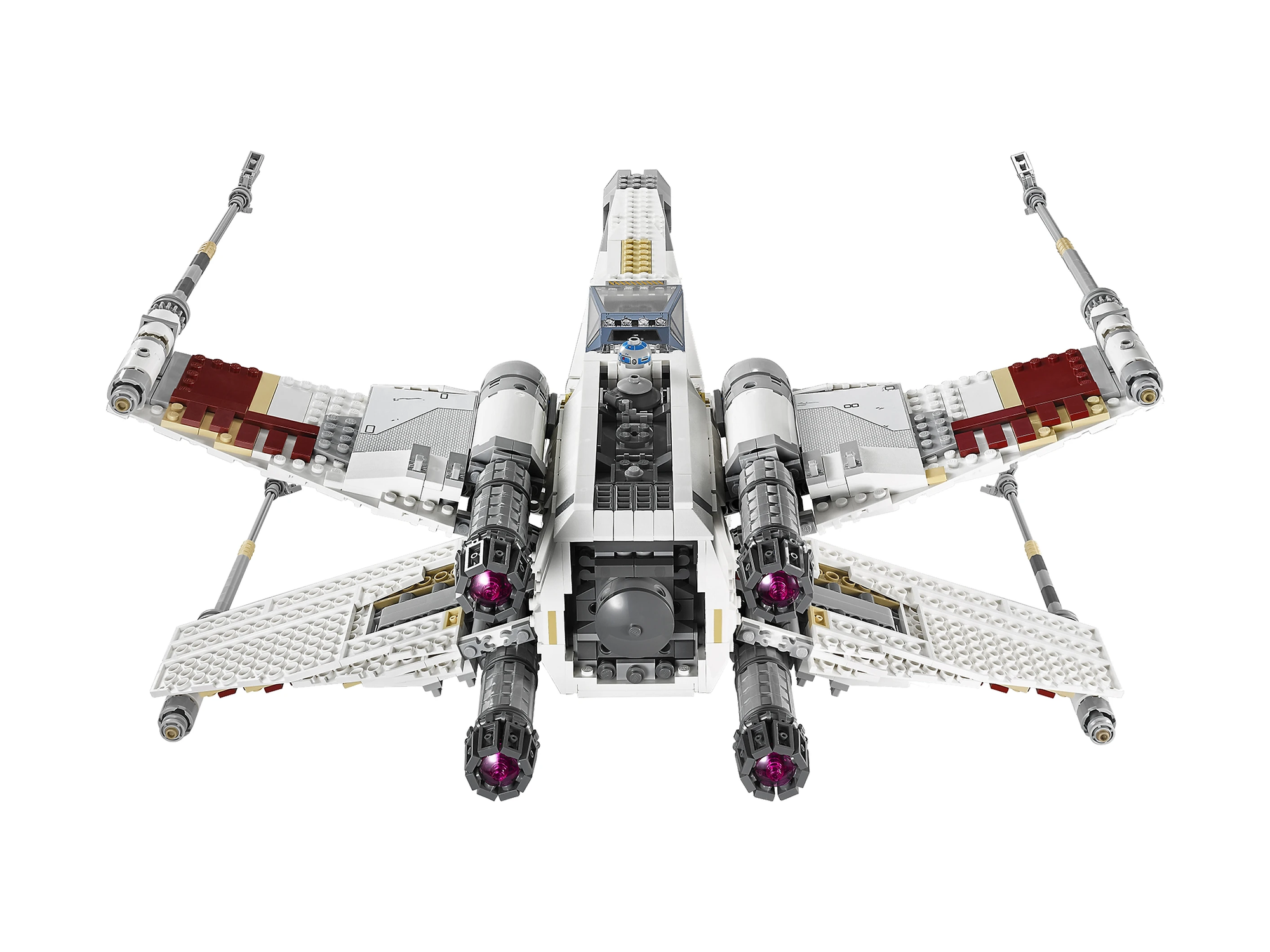
The second set is Luke's Red Five X-Wing, with 584 pieces priced at $99.99. This one includes two Smart Minifigures—Luke Skywalker in his pilot suit and Princess Leia—along with regular minifigures including R2-D2, a Stormtrooper, and a Rebel crew member. The set also includes an Imperial turret, transporter, and command center, each with Smart Tags that unlock different interactive features like laser sounds, engine noises, and refueling effects.
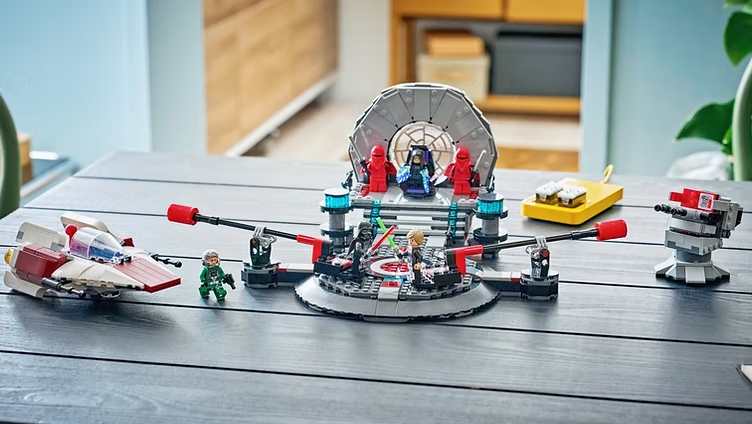
The largest initial set is the Throne Room Duel & A-Wing, a 962-piece build at $159.99. This one recreates the climactic lightsaber duel between Luke and Darth Vader from Return of the Jedi. It includes three Smart Minifigures: Darth Vader, Emperor Palpatine, and Luke Skywalker as a Jedi Knight. There's also an A-Wing Fighter, Royal Guard minifigures, and various buildable elements from the Emperor's throne room. The Smart features include lightsaber hums, the A-Wing's engine roar, and yes—placing Emperor Palpatine on his throne triggers the Imperial March.
Lego has already teased additional Star Wars Smart Play sets in promotional videos, including a Millennium Falcon, Landspeeder, and Mos Eisley Cantina. The platform is clearly designed to expand significantly over time.
Pricing Reality: Are Smart Bricks Worth the Premium?
Let's talk honestly about money, because Smart Play sets aren't cheap.
A standard Lego Star Wars X-Wing without smart features typically runs around $50-60 depending on the specific set. The Smart Play X-Wing is $99.99. That's roughly a 60-70% premium for the smart features.
Is that worth it? That depends entirely on how your family plays with Lego.
If your kids are the type who build a set once and then display it on a shelf, the smart features probably won't justify the extra cost. The sounds and lights are designed to enhance active, imaginative play—swooping ships through the air, staging battles between characters, creating stories and scenarios. If that's not how your household uses Lego, you're paying extra for features that will go largely unused.
On the other hand, if your kids (or you) are the type who play extensively with built sets, who make sound effects with their mouths while flying Lego ships around the room, who stage elaborate battles and adventures, Smart Play could be genuinely transformative. Having the toys themselves produce those sounds—and having those sounds respond to actual play actions—creates a more immersive experience that could significantly extend engagement with each set.
The wireless charging system and long-lasting batteries also factor into value calculations. Unlike many electronic toys with disposable batteries that need constant replacement, Smart Bricks are designed for years of use with minimal maintenance. That potentially offsets some of the upfront cost premium over time.
My honest recommendation: if you're curious but uncertain, start with the $69.99 TIE Fighter set. It's the lowest price point and will give you a clear sense of whether Smart Play adds value for your family before committing to the larger sets.
What This Means for the Future of Lego
Looking beyond the immediate product launch, Smart Play represents a strategic inflection point for Lego as a company.
The toy industry has been struggling to compete with digital entertainment for years. Kids have access to tablets, gaming consoles, and smartphones that offer endless interactive content. Traditional toys, no matter how well-designed, can feel static and limited by comparison.
Lego's response with Smart Play is clever: rather than trying to compete with screens, they've figured out how to add interactive responsiveness to physical play without requiring screens at all. It's an acknowledgment that kids today expect things to react to them, while also preserving the hands-on, creative, imagination-driven play that has made Lego enduringly popular.
If Smart Play succeeds, expect to see the technology expand rapidly across Lego's portfolio. City sets with smart vehicles and characters. Ninjago dragons that roar and respond to play. Harry Potter sets with magical sound effects. Creator sets that let you build anything and have Smart Tags define how it behaves. The possibilities are genuinely vast.
Lego has also positioned Smart Play as fully compatible with existing Lego bricks. Your Smart Brick works with every piece you already own. This backward compatibility is crucial—it means Smart Play enhances rather than replaces your existing collection, and it means Lego isn't asking families to start over with an entirely new system.
The platform is also explicitly designed to grow with software updates. Lego has said they plan to expand Smart Play with "new updates, launches and technology" over time. What exactly that means remains to be seen, but it suggests the initial Star Wars sets are just the beginning of what's possible.
Hands-On Impressions from People Who've Tried It
One of the most interesting aspects of the CES reveal was learning that Lego has been testing Smart Play with real families for years.
A commenter on a Lego fan site mentioned participating in a UK product test back in 2024. They described using the interactive brick with vehicles, minifigures, and various other elements, noting that their kids loved how the sounds, lights, and interactivity changed depending on how the brick was handled. They specifically mentioned that Lego's characteristic attention to detail extended to the smart features—apparently even toilets in test sets had interactive elements, which is very on-brand for Lego's sometimes irreverent sense of humor.
At CES itself, attendees got to see demonstrations of the technology in action. Reports describe cars that screech as they turn, minifigures that make noises when hit, and racing scenarios where Smart Bricks can detect which vehicle crosses a finish line first. The technology appears to work smoothly and responsively in real-world demonstrations, which is encouraging.
Early hands-on impressions have been generally positive, with reviewers praising the seamless integration of technology and the genuinely fun interactions it enables. The main concerns have centered on price premium and questions about long-term durability of the electronic components.
My Honest Take: Is This Actually Revolutionary?
I've thought a lot about this since watching the CES presentation, and here's where I've landed.
Smart Play is genuinely impressive from a technical standpoint. Fitting all that technology into a standard-sized brick while maintaining full compatibility with existing Lego elements is a remarkable engineering achievement. The decision to make everything work without apps or complicated setup shows that Lego understands what makes their product special and was determined to preserve it.
Whether it's "revolutionary" depends on your definition. It's not going to change the world or transform education or any of the grandiose claims that get thrown around about consumer technology. But for what it is—a thoughtful enhancement to one of the most beloved toys ever created—Smart Play represents the kind of innovation that actually improves people's lives in small but meaningful ways.
The comparison to the 1978 minifigure introduction is apt. Minifigures didn't change the fundamental nature of Lego, but they added a dimension of character and storytelling that made the building experience dramatically more engaging. Smart Bricks seem positioned to do something similar, adding a dimension of responsiveness and immersion without changing what Lego fundamentally is.
For families who love Lego and play actively with built sets, Smart Play looks like a genuinely worthwhile evolution. For casual buyers or display-focused collectors, the standard non-smart sets will continue to offer excellent value.
Lego appears to understand this, which is why they're launching Smart Play as a premium option alongside their traditional lineup rather than replacing everything with smart versions. That restraint—knowing that not every Lego brick needs to be smart—might be the smartest decision of all.
FAQ
What are Lego Smart Bricks?
Lego Smart Bricks are standard 2×4 Lego bricks with embedded technology including a custom computer chip, accelerometers, light sensors, sound sensors, and a miniature speaker. They're part of the new Smart Play system that responds to how you play, producing sounds and lights that react to movement, orientation, and interaction with Smart Tags and Smart Minifigures.
Do Lego Smart Bricks require an app or smartphone?
No, Smart Bricks work without any app during play. You don't need to download anything, pair anything, or connect to the internet. The only time you might use the optional Lego Smart Assist app is for firmware updates, which aren't required for the bricks to function. This was a deliberate design choice to keep play screen-free and hassle-free.
When do Lego Smart Play sets release and where can I buy them?
Lego Smart Play sets launch globally on March 1, 2026. Pre-orders begin on January 9, 2026. They'll be available through Lego's official website, Lego retail stores, and major toy retailers. Initial availability is in "select markets," so international rollout timing may vary.
How much do Lego Smart Bricks cost?
The first three Smart Play sets range from $69.99 to $159.99. Darth Vader's TIE Fighter is $69.99 (473 pieces), Luke's Red Five X-Wing is $99.99 (584 pieces), and the Throne Room Duel & A-Wing is $159.99 (962 pieces). These prices represent a premium over comparable non-smart Lego sets, reflecting the embedded technology costs.
What sets are available at launch?
The initial launch features three Star Wars-themed All-In-One sets: Darth Vader's TIE Fighter, Luke's Red Five X-Wing, and the Throne Room Duel & A-Wing. Each set includes everything needed for Smart Play: at least one Smart Brick with wireless charger, Smart Minifigures, and Smart Tags. Lego has teased additional Star Wars sets and will expand to other themes over time.
Are Smart Bricks compatible with regular Lego bricks?
Yes, Smart Bricks are fully compatible with all existing Lego bricks and elements. They click together exactly like regular bricks and can be incorporated into any Lego creation. The smart features enhance your existing collection rather than replacing it.
How are Smart Bricks powered and charged?
Smart Bricks contain internal rechargeable batteries that charge wirelessly on an included charging pad. Multiple bricks can charge simultaneously. Lego says the batteries are designed to retain charge even after years of inactivity, and the charging system is designed for convenient, hassle-free maintenance.
What is BrickNet?
BrickNet is Lego's proprietary Bluetooth-based communication system that allows Smart Bricks to talk to each other wirelessly. Using "Neighbor Position Measurement" technology, Smart Bricks can detect each other's position, distance, and orientation, enabling coordinated features like racing finish-line detection or collision responses.
What are Smart Tags and Smart Minifigures?
Smart Tags are 2×2 flat tiles with embedded digital IDs that tell Smart Bricks what context they're in and how to behave. Smart Minifigures are Lego's classic figures with similar embedded technology. Both use near-field magnetic communication to broadcast their identity to nearby Smart Bricks, triggering character-specific or object-specific sounds and behaviors.
Is this the same as Lego Mindstorms or Lego Boost?
No, Smart Play is fundamentally different. Mindstorms and Boost were robotics/programming platforms that required coding and app interaction. Smart Play is designed for intuitive imaginative play without any programming or smartphone requirements. The technology enhances traditional Lego play rather than creating a separate programming-focused experience.
Will Smart Play expand to other themes besides Star Wars?
Lego has indicated that Smart Play will "continue to expand and grow with new updates, launches and technology." While specific themes haven't been announced, the platform is designed to work across Lego's portfolio. Given Lego's extensive licensed properties and original themes, expansion to City, Ninjago, Harry Potter, and other lines seems likely if Smart Play proves successful.
How durable are Smart Bricks?
Lego has designed Smart Bricks to meet their standard durability requirements, but long-term reliability data isn't yet available since the product hasn't launched. The electronic components are inherently more complex than traditional bricks, which may affect longevity. Warranty and repair policies for Smart Play components haven't been detailed.
What if the batteries die or the smart features stop working?
If Smart Brick batteries are depleted, you can recharge them on the wireless charging pad. If the smart features stop working entirely, the brick can still function as a regular Lego brick for building. Lego hasn't provided specific information about repair or replacement options for failed Smart Play components.
Is this good for kids of all ages?
The initial Star Wars sets are geared toward kids and families rather than adult collectors. The technology is designed to be intuitive and require no setup, making it accessible for children. However, small pieces apply standard Lego age recommendations, and parental judgment about appropriateness remains important.
Does Smart Play use AI?
No, Smart Play does not use artificial intelligence. The sounds and behaviors are generated through programmed responses to sensor inputs, not machine learning or generative AI. Lego has explicitly stated that AI is not part of the Smart Play system.
Related Articles
 Dani
Dani
 Dani
Dani
 Dani
Dani