The podcaster who spent four hours editing a single episode in 2023 now spends thirty minutes. It's the new reality for creators who have embraced AI tools that handle the tedious work of audio cleanup, transcription, clip creation, and content repurposing. In 2026, podcasting has evolved from a labor-intensive hobby into a streamlined production workflow where artificial intelligence handles the repetitive tasks and humans focus on the creative ones.
The shift happened faster than most people expected. According to industry research, podcast creators using advanced AI tools now report an average 30% reduction in production costs, enabling them to scale output without expanding human teams. Time previously spent on editing, scripting, transcription, and scheduling is now automated through platforms that barely existed three years ago.
But here's what makes 2026 different from the AI hype of previous years: these tools actually work. The transcription is accurate, the audio enhancement sounds professional, the social clips actually perform well and perhaps most remarkably, AI dubbing has reached the point where podcasters can publish in ten languages simultaneously while preserving their own voice.
The New Podcast Production Workflow
Before diving into specific tools, it helps to understand how the entire production process has changed.
The old workflow looked something like this: record for an hour, spend three to five hours editing out mistakes and filler words, manually create a transcript, write show notes, design social graphics, cut clips for TikTok and Instagram, and finally publish. Most solo podcasters could manage maybe one episode per week if they were disciplined. Two episodes required serious time investment or hired help.
The 2026 workflow looks radically different. Record your episode, upload the file, and let AI handle the initial processing. Within minutes, you have a cleaned-up audio file with background noise removed, filler words cut, and levels optimized. You also have a full transcript with speaker identification, auto-generated show notes with timestamps and chapter markers, suggested titles and descriptions, and a batch of social media clips ready for posting.
The human work that remains is the important work: reviewing the AI's edits to make sure nothing crucial was cut, refining the show notes to match your voice, selecting which clips best represent the episode, and making creative decisions about packaging and promotion.
Podcast creators who scale in 2026 are not necessarily the most creative. They are often the most operationally consistent. AI has made consistency achievable.
Audio Editing
The most immediate time savings come from AI-powered audio editing tools that handle the technical cleanup work.
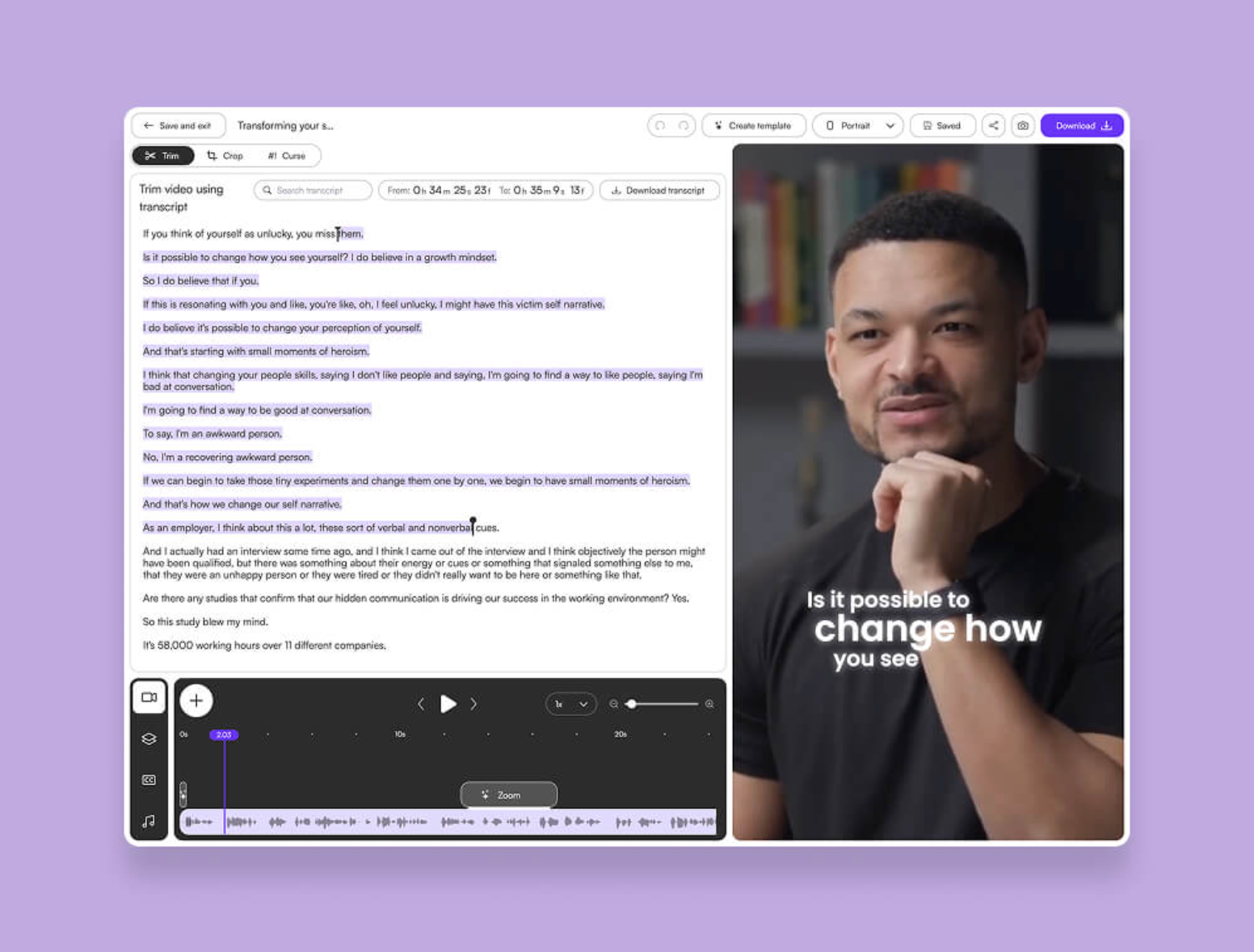
Descript has emerged as one of the most popular platforms because it fundamentally changed how editing works. Instead of manipulating complex waveforms, you edit your podcast by editing the automatically generated transcript. Delete a word from the text, and the corresponding audio disappears. It's exactly like editing a Word document, except the document is your audio file.
The Studio Sound feature removes background noise and enhances vocal clarity with a single click. It can make amateur recordings in untreated rooms sound surprisingly professional. The filler word removal automatically identifies and cuts "ums," "ahs," "likes," and "you knows" throughout an episode, saving what used to be hours of tedious manual work.
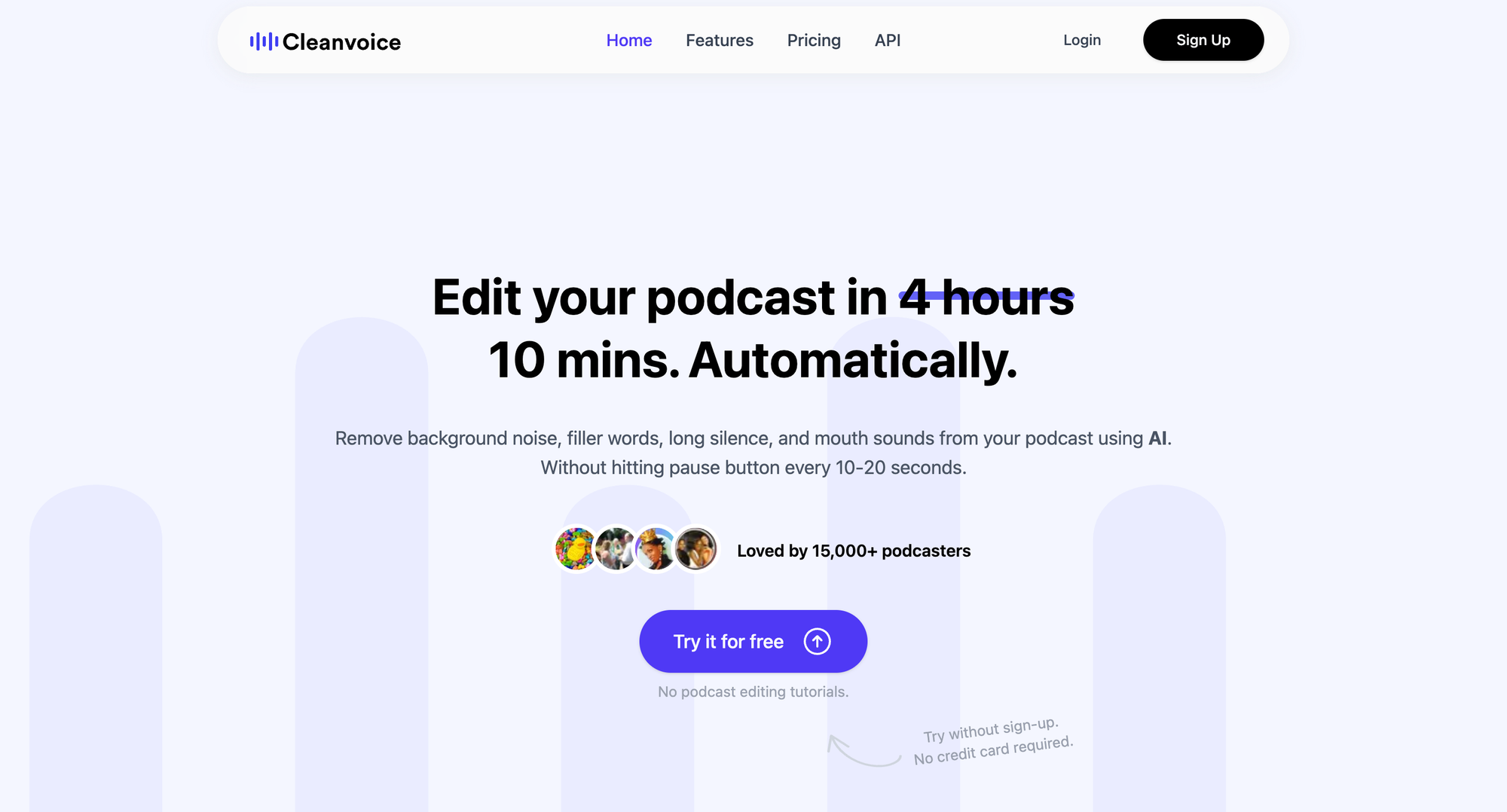
Cleanvoice AI focuses specifically on podcast cleanup. It removes background noise, plosives, and hissing sounds while generating transcripts and show notes. The platform can handle multiple guest tracks simultaneously, syncing them into a single uninterrupted podcast. For creators who record remote interviews where audio quality varies between participants, this is transformative.
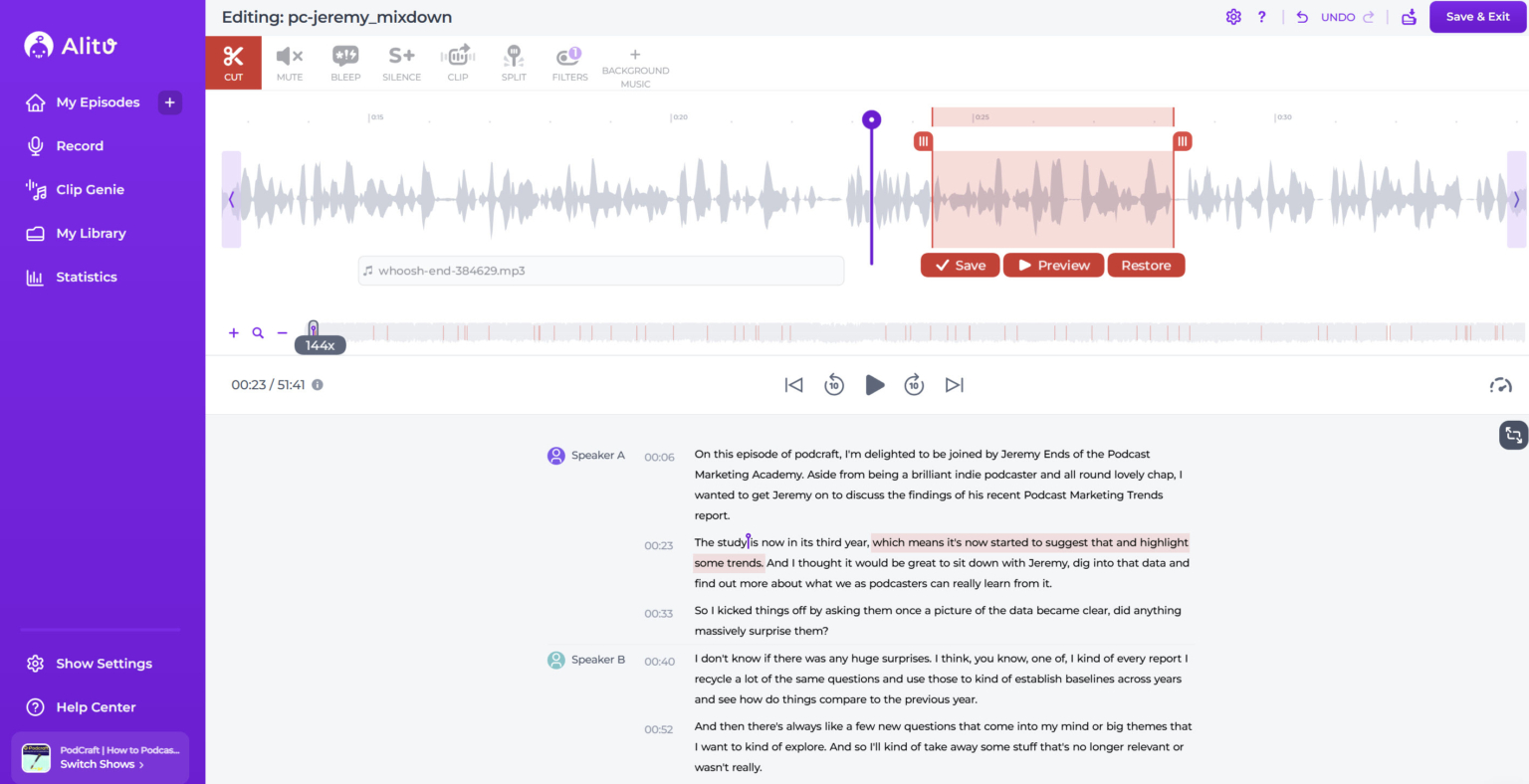
Alitu positions itself as the "podcast maker" app that handles everything in one place. It automatically applies noise reduction, compression, and EQ to uploaded audio. It levels everything and optimizes loudness to meet podcast standards. The AI also generates transcripts, cover art, and suggested episode titles. Firms report finishing episodes significantly faster with these combined capabilities.
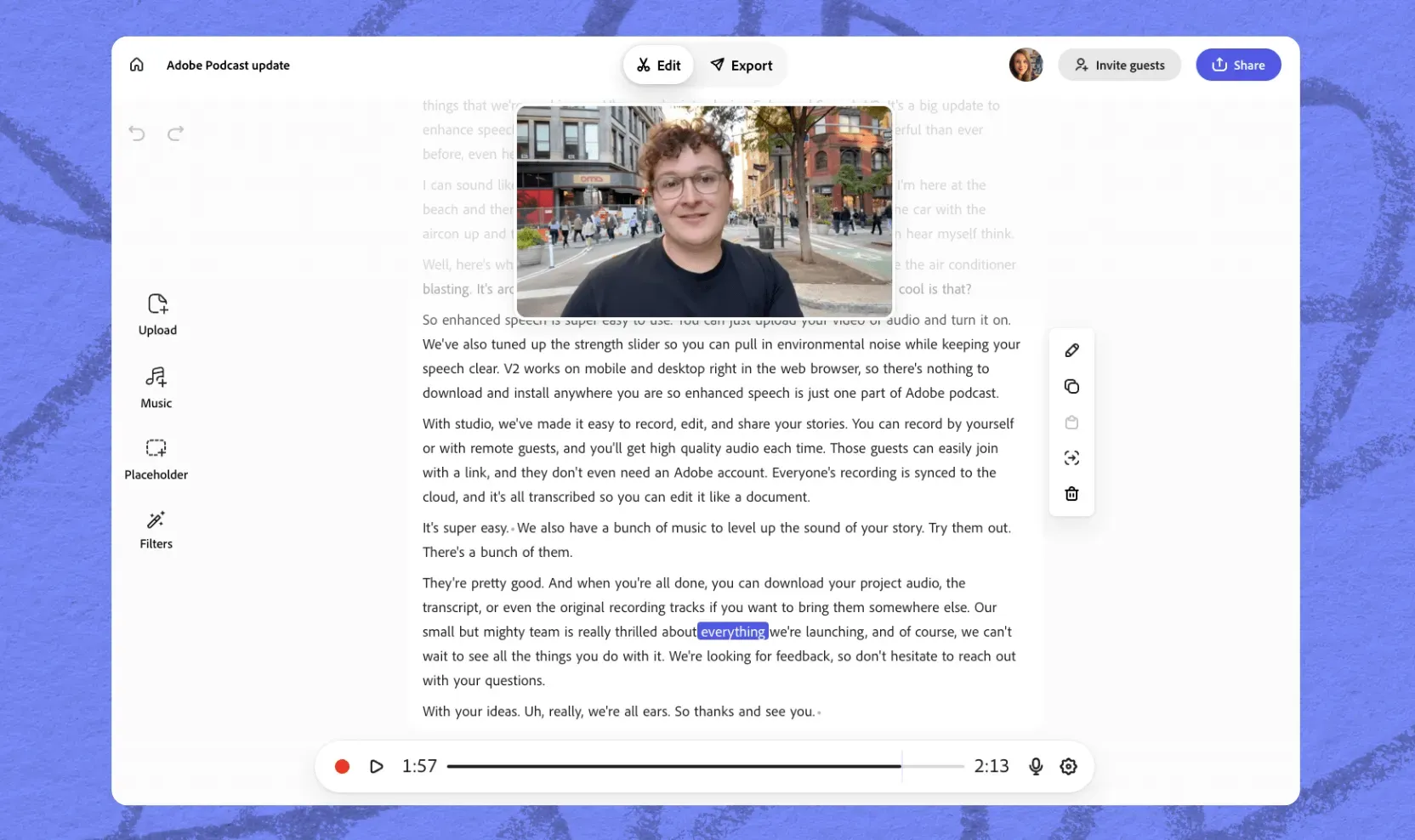
Adobe Podcast Studio integrates AI editing with Adobe's broader creative ecosystem. The transcription technology matches what professional editors use in Premiere Pro, but the interface is designed for podcasters who want to cut, copy, and paste audio like text. For creators already in Adobe's ecosystem, the integration is seamless.
The accuracy of these tools has reached the point where many podcasters trust the AI cleanup without reviewing every cut. That said, experienced creators recommend at least spot-checking the edited audio, especially for episodes with technical terms, unusual names, or intentional pauses that the AI might misinterpret as mistakes.
Transcription
Accurate transcription has become the foundation of the modern podcast workflow because so many other tools depend on it.
OpenAI's Whisper technology, trained on 680,000 hours of audio data, provides the backbone for many transcription services. It can generate some of the most accurate auto-generated transcripts available, handling accents, technical vocabulary, and multi-speaker conversations with impressive precision.
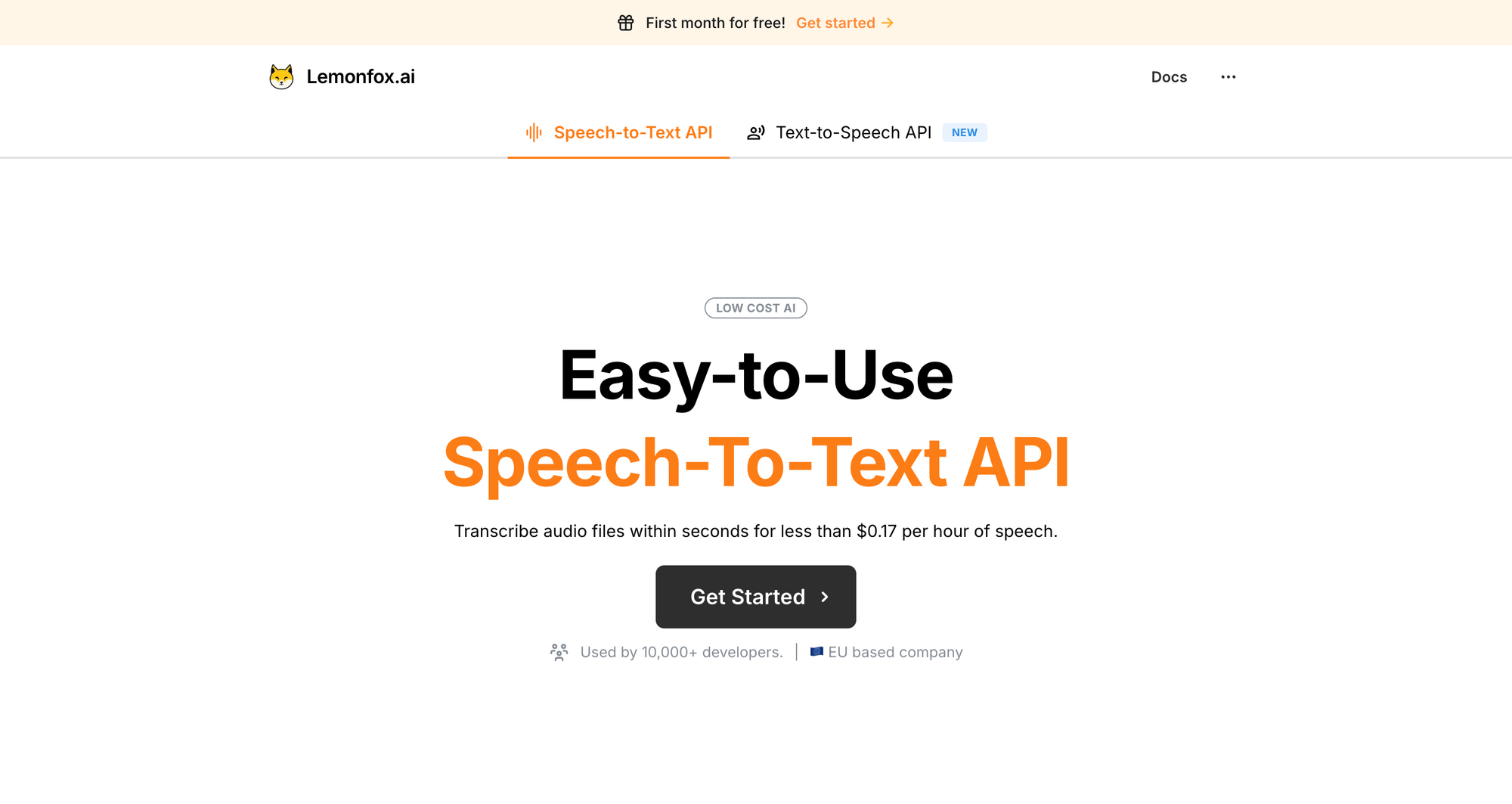
Lemonfox.ai has built a reputation for cost-effective transcription powered by Whisper large-v3. The platform offers speaker diarization that distinguishes between different speakers, invaluable for interview-style podcasts. With support for over 100 languages and pricing below $0.17 per hour after the free trial, it's become accessible for podcasters at any budget level.
Riverside captures up to 4K video and uncompressed audio while generating transcripts that allow text-based editing. The AI can even fix mistakes by regenerating audio based on edited text, syncing lip movements to match changes. This blurs the line between transcription and production in ways that seemed impossible a few years ago.
Beyond accessibility and SEO benefits, accurate transcripts enable everything else in the modern workflow. Show notes, blog posts, social captions, and translation all depend on having reliable text to work from. The quality of downstream content depends entirely on the accuracy of the initial transcript.
Content Repurposing:
The math that drives podcast growth in 2026 is simple: an hour-long episode might get 500 plays on Spotify, but a 60-second clip from that same conversation could reach 50,000 people on TikTok or Instagram.
AI repurposing tools solve the problem of turning that one episode into dozens of pieces of content without spending hours on manual editing.
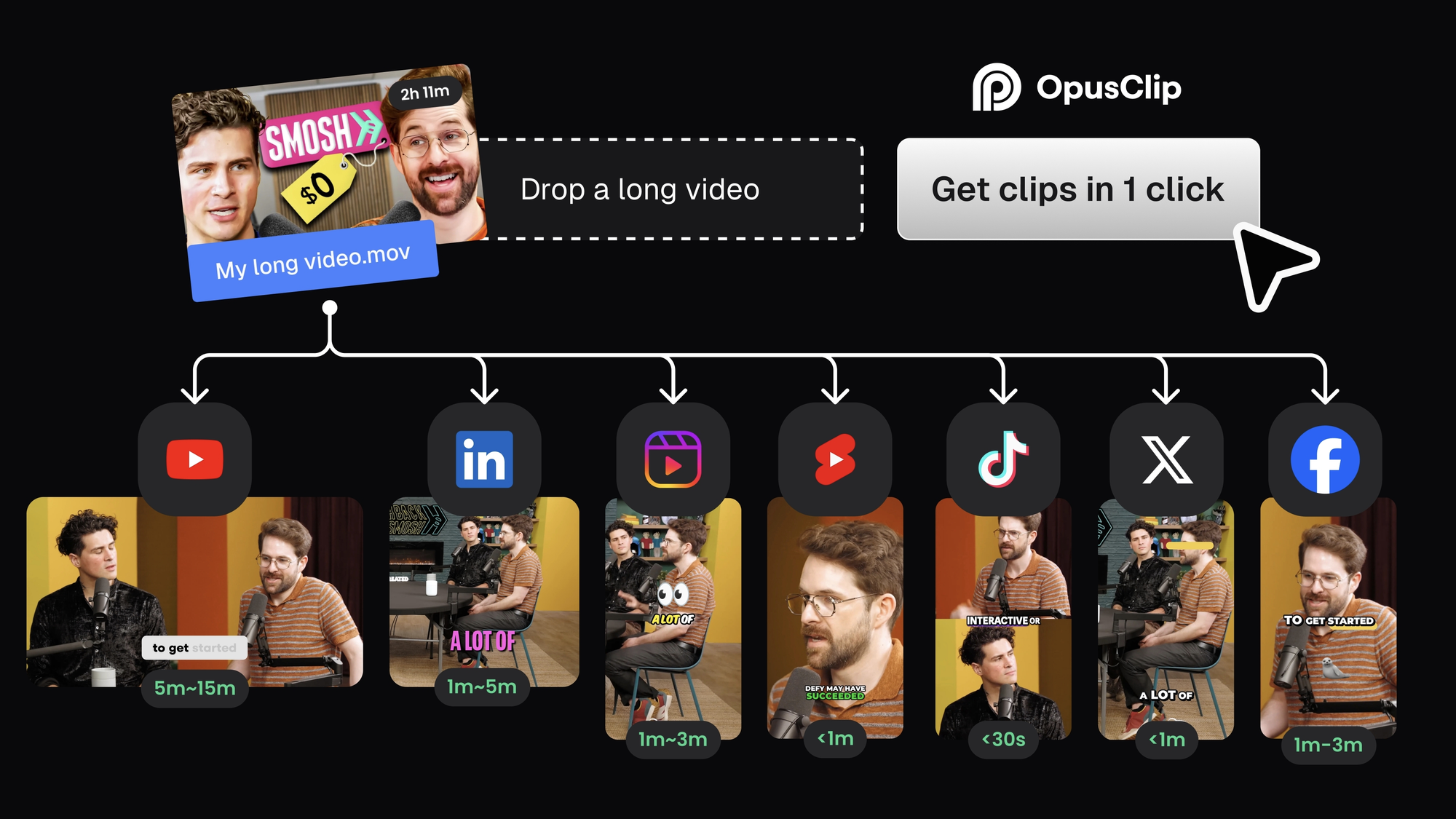
Opus Clip uses what it calls ClipAnything technology to automatically identify engaging segments from long-form content. It assigns AI Virality Scores to rank clips based on potential social performance. The platform adds subtitles, resizes for vertical formats, and can schedule posting across platforms. From a single upload, creators can generate 20 to 50 short clips depending on the richness of the content.
Choppity processes videos in 5 to 15 minutes and uses semantic understanding to identify high-impact moments, jokes, insights, reactions, and teaching points. The speaker detection automatically switches focus in multi-speaker content, keeping whoever is talking centered in the frame. Creators can go from a long-form video to 30 or more polished clips in under 30 minutes.
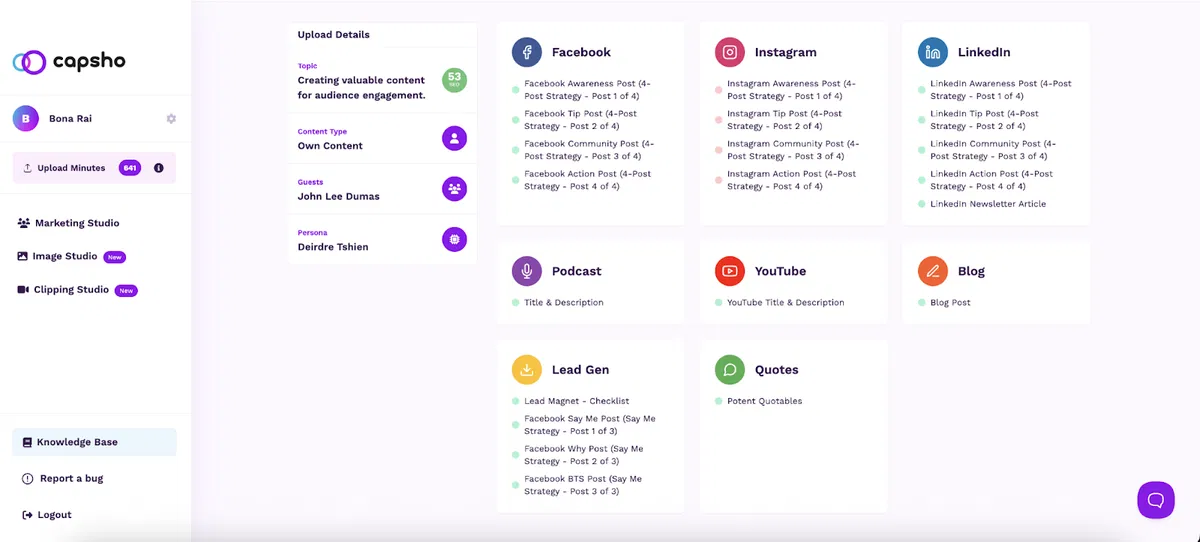
Capsho was built specifically for podcasters and generates optimized episode titles, descriptions, show notes, blog posts, social media captions, emails, and newsletters from uploaded audio or video. The platform automates trimming, lets you choose topic focus for clips, and offers customizable templates.
Podsqueeze turns podcast episodes into shareable content with a few clicks. Upload an episode and AI generates transcripts, show notes, blog posts, social media clips, and short-form videos. It automatically identifies chapters and creates customizable clips with subtitles for each segment.
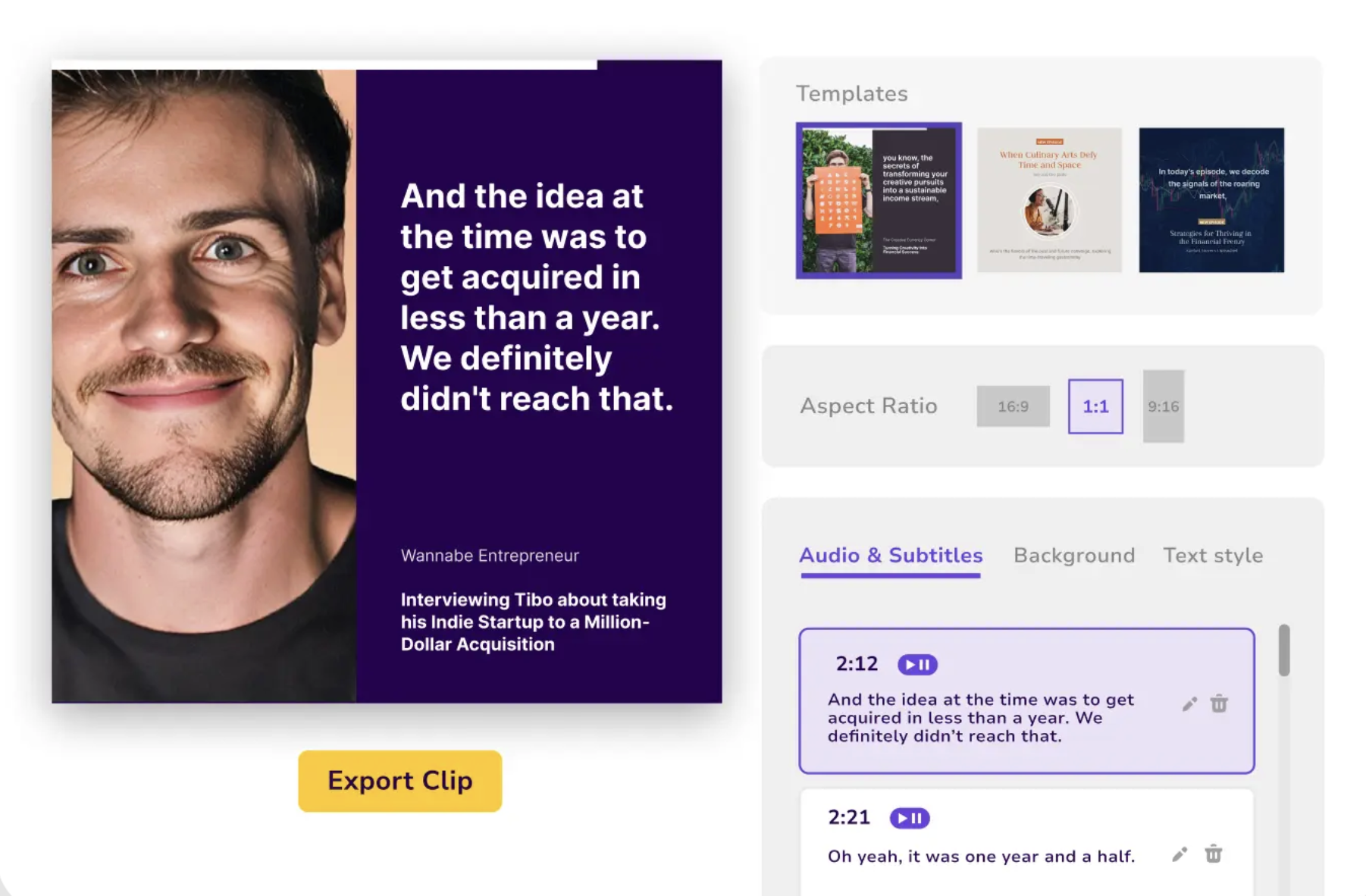
The strategic insight driving all of this is that short-form clips function as samples. They are often the first interaction a new listener has with your show. The audience then decides whether to invest in the full episode. AI makes it possible to create these samples at scale without the manual editing that used to make repurposing impractical for solo creators.
Translation and Dubbing
Perhaps the most remarkable AI capability for podcasters in 2026 is the ability to reach non-English speaking audiences without hiring voice actors or learning new languages.
Approximately 1.5 billion people speak English worldwide, about 20% of the global population. That means 80% of potential listeners can't fully engage with English-only content. Subtitles help, but they don't work for a medium people consume while driving, exercising, or doing chores.
AI dubbing changes this equation entirely. Platforms like ElevenLabs, HeyGen, and Spotify's Voice Translation can clone your voice and generate dubbed versions of your podcast in dozens of languages. The technology analyzes your speech patterns, tonal qualities, and pacing, then replicates these qualities across target languages.
The quality has reached professional standards for most content types. Advanced tools can detect up to 10 distinct speakers and assign unique voice clones to each automatically, preserving the dynamic of group conversations. Multi-speaker detection handles interview shows and panel discussions without requiring manual separation.
Perso AI focuses specifically on podcast localization, combining voice cloning technology with a Cultural Intelligence Engine that analyzes conversation context to preserve meaning rather than providing direct translation. The platform processes episodes and returns dubbed versions with the same voice characteristics maintained across Spanish, French, German, Japanese, Korean, and 30-plus additional languages.
The business case is compelling. AI dubbing can cut localization costs by up to 90% and reduce production times from months to days. Podcasters who adopt multilingual content early gain significant advantages in discoverability, especially in the Asia-Pacific region where podcast consumption is growing fastest.
There are important ethical considerations. Always get written permission from guests before cloning their voice into other languages. Most guests will be thrilled to reach wider audiences, but you must respect their ownership of their biometric data. Standard voice-over contracts from previous years likely won't cover AI replication, so clear agreements defining exactly how, where, and for how long the voice clone will be used are essential.
Show Notes, Summaries, and Marketing Copy
The writing that surrounds each episode, from show notes to social posts to newsletter content, used to consume hours of creative energy. AI tools have automated much of this work while maintaining quality that requires minimal editing.
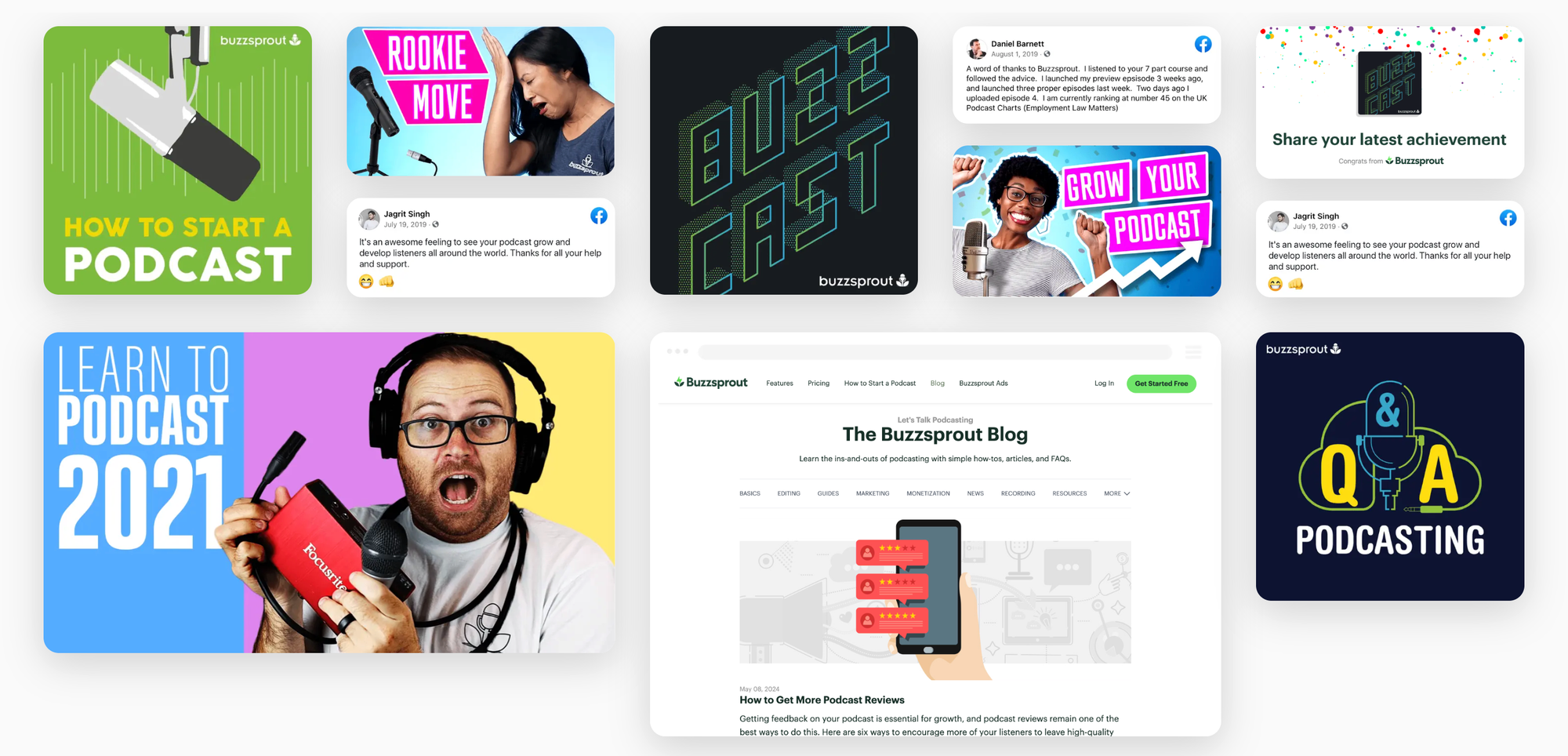
Buzzsprout's Cohost AI transcribes episodes, offers five title suggestions, generates descriptions of roughly 230 words, breaks episodes into chapters, and helps place chapter markers. For an additional $10 to $30 per month, podcasters eliminate one of the most tedious parts of the publishing workflow.
Ausha combines speech-to-text transcription with podcast SEO tools to boost search visibility. The platform identifies keywords relevant to your content and optimizes transcripts and show notes to improve discoverability. Their ChatGPT-powered Social Media Manager generates posts tailored for each platform.
Deciphr's 2.0 platform transforms audio, video, or text into show notes, SEO-formatted articles, newsletters, audiograms, and video clips. It can also create content plans to help maintain consistency across publishing schedules.
The key to using these tools effectively is treating their output as a first draft rather than finished content. AI-generated show notes capture the key points accurately, but they often need refinement to match your voice and brand. A few minutes of editing transforms serviceable AI output into content that sounds authentically yours.
The Tools Actually Worth Your Money in 2026
With dozens of AI podcast tools competing for attention, here's a practical breakdown of what works for different needs.
For all-in-one production, Descript combines transcription, video editing, voice cloning, and Studio Sound cleanup in a single platform. The text-based editing interface has the lowest learning curve for non-technical creators. Pricing starts at $16 per month for the Hobbyist tier.
For audio cleanup specifically, Cleanvoice AI handles noise reduction, filler word removal, and multi-track editing with minimal setup. It's particularly strong for podcasters recording remote interviews with variable audio quality.
For transcription at scale, Lemonfox.ai offers accuracy comparable to premium services at pricing that makes transcribing entire back catalogs affordable. The free trial includes approximately 30 hours of transcription.
For content repurposing, Opus Clip and Choppity both excel at automatically identifying engaging moments and creating social-ready clips. Opus Clip's Virality Score helps prioritize which clips to post first.
For translation and dubbing, ElevenLabs offers the most realistic voice cloning with emotional depth across 20-plus languages. HeyGen adds avatar generation for video podcasts. Perso AI specializes in podcast-specific localization with cultural adaptation.
Most successful podcasters use multiple tools rather than trying to find one platform that does everything. The workflow typically involves a primary editing tool, a separate repurposing tool for social clips, and specialized tools for translation or marketing as needed.
What AI Still Can't Do
For all the capabilities AI has gained, there are limits worth understanding.
- AI can't replace the human connection that makes podcasts compelling. The conversations, stories, and personalities that draw listeners are fundamentally human. AI can clean up the audio and cut the clips, but it can't make boring content interesting.
- AI can't make creative decisions that reflect your unique perspective and brand. It can suggest titles, but you need to choose the one that fits your voice. It can generate show notes, but you need to ensure they represent your episode accurately.
- AI can't verify information or exercise editorial judgment. Generated summaries might mischaracterize nuanced arguments. Transcripts might get technical terms wrong. Human review remains essential for accuracy.
- AI can't build the relationships that drive podcast growth. Guest booking, audience engagement, community building, and networking all require human connection. The tools can free up time for these activities, but they can't replace them.
The podcasters getting AI right in 2026 understand this distinction clearly. They use AI to handle production overhead so they can invest more energy in the creative and relational work that actually matters.
Getting Started Without Getting Overwhelmed
The number of AI tools available can feel paralyzing. Here's a practical starting path.
- Start with transcription. Accurate transcripts enable everything else. Upload one episode to Descript or Lemonfox.ai and see how the transcript quality compares to your current process.
- Add audio cleanup next. Run an episode through Studio Sound or Cleanvoice and compare the before and after. The improvement is usually obvious enough to justify the cost immediately.
- Experiment with clip generation. Upload a recent episode to Opus Clip or Choppity and review the clips they generate. You'll quickly learn whether the AI's judgment about "engaging moments" aligns with your sense of what works.
- Consider translation only after your core workflow is solid. Global expansion is exciting, but it adds complexity. Get your production workflow running smoothly first.
- Measure results with specific numbers. Time saved per episode, clips generated per week, engagement rates on social posts. When metrics improve, expand your AI usage. When they don't, adjust your approach.
The podcasters succeeding with AI in 2026 didn't adopt every tool at once. They started with their biggest time sink, automated that, validated the results, and expanded from there.
FAQ
What AI tools do podcasters use for editing in 2026?
The most popular AI editing tools include Descript for text-based editing and Studio Sound cleanup, Cleanvoice AI for noise reduction and filler word removal, Alitu for all-in-one production, and Adobe Podcast Studio for integration with Adobe's ecosystem. These tools can reduce editing time from hours to minutes by automatically handling technical cleanup tasks.
Can AI really transcribe podcasts accurately?
Yes. AI transcription powered by technologies like OpenAI's Whisper achieves accuracy rates above 95% for clear audio with standard accents. Speaker diarization can distinguish between multiple speakers automatically. Accuracy drops with heavy accents, technical jargon, or poor audio quality, but human review time is still dramatically reduced compared to manual transcription.
How do podcasters use AI to create social media clips?
AI tools like Opus Clip, Choppity, and Podsqueeze analyze long-form episodes to automatically identify engaging moments, add captions, reframe for vertical formats, and generate platform-ready clips. A single hour-long episode can produce 20 to 50 short clips in under 30 minutes, dramatically increasing social media presence without manual editing.
Is AI dubbing good enough for professional podcasts?
In 2026, AI dubbing has reached broadcast quality for most content types. Advanced platforms can clone your voice and maintain emotional nuance across 30-plus languages. The technology handles multi-speaker content automatically. For digital distribution and social media, AI-dubbed content is indistinguishable from traditional dubbing for most listeners.
How much do AI podcast tools cost?
Pricing varies widely. Descript starts at $16 per month. Lemonfox.ai offers transcription below $0.17 per hour after a free trial. Buzzsprout's Cohost AI adds $10 to $30 monthly. Opus Clip has free and paid tiers. Enterprise dubbing platforms range from $99 to custom pricing. Most podcasters can access substantial AI capabilities for $30 to $100 per month.
Will AI replace podcast editors?
AI handles technical tasks like noise reduction, filler word removal, and level optimization better and faster than humans. However, creative editing decisions, narrative pacing, and quality judgment still require human expertise. Professional editors are shifting toward higher-value work like story development and sound design while AI handles routine cleanup.
How do I translate my podcast into other languages with AI?
Upload your episode to a platform like ElevenLabs, HeyGen, or Perso AI. The tool transcribes your audio, translates the text, and generates dubbed audio using a clone of your voice. Processing typically takes minutes to hours depending on episode length. Always get written permission from guests before cloning their voices into other languages.
What's the best AI tool for podcast show notes?
Capsho was built specifically for podcasters and generates the widest range of content including titles, descriptions, show notes, blog posts, social captions, and newsletters. Buzzsprout's Cohost AI integrates directly with hosting. Listener.fm offers SEO-optimized output. Most tools produce solid first drafts that benefit from light human editing.
Can AI help me find my best podcast moments?
Yes. Tools like Opus Clip assign "Virality Scores" based on AI analysis of what makes content engaging. Choppity uses semantic understanding to identify jokes, insights, reactions, and teaching moments. Descript can highlight quotable segments. The AI's judgment isn't perfect, but it dramatically speeds up the process of finding shareable clips.
How are podcasters using AI to grow their audience in 2026?
The primary growth strategies enabled by AI include: repurposing episodes into dozens of social clips for broader reach, translating content into multiple languages for global audience expansion, optimizing show notes and descriptions for search discovery, maintaining consistent publishing schedules through production efficiency, and creating audiograms and video clips that perform well on visual platforms.
Related Articles
 Dani
Dani
 Dani
Dani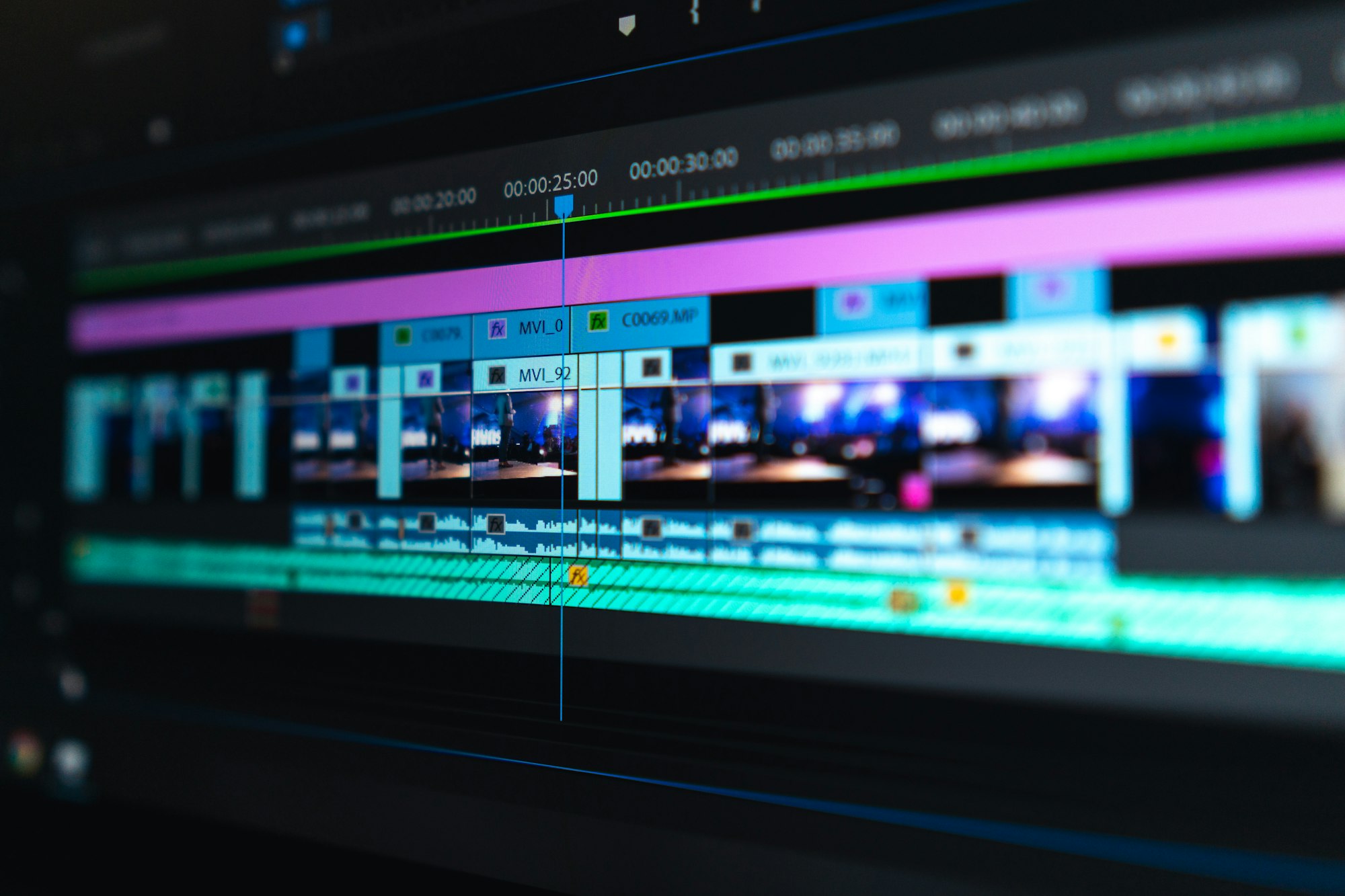
 Mark
Mark