In the span of about three weeks in early 2026, Anthropic managed to panic Wall Street and then calm it back down using essentially the same product. The sequence is worth understanding because it reveals something important about how investors are processing AI's relationship with the enterprise software industry.
On January 30, 2026, Anthropic released 11 open-source plugins for Claude Cowork, its AI agent platform for knowledge workers. The legal, financial analysis, and workflow automation capabilities in those plugins sent software stocks into freefall. By February 3 and 4, a Goldman Sachs basket of US software stocks had fallen 6%, the sector's worst single day since April 2025. Approximately $285 billion in market capitalization was wiped out across software, financial services, and data analytics firms. Traders at Jefferies gave the event a name that stuck: the SaaSpocalypse.
Then on February 24, Anthropic held its "Briefing: Enterprise Agents" event and named its integration partners. Thomson Reuters surged more than 11%. Salesforce rose 4%. DocuSign, LegalZoom, and FactSet all gained. The iShares Expanded Tech-Software Sector ETF, which had closed down nearly 5% on the Monday before the event, closed up more than 1% on the Tuesday after it.
For the companies named as partners, the same platform that caused the panic turned out to be a validation rather than a threat.
What Claude Cowork Actually Is
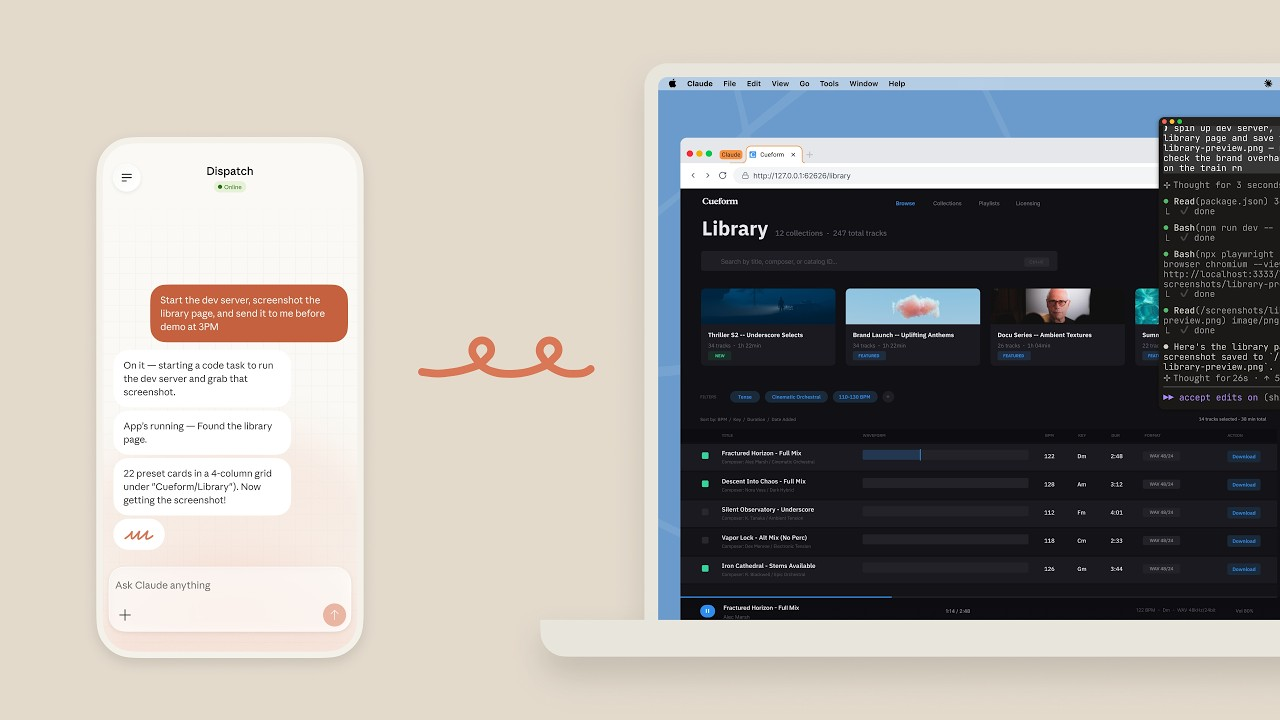
Claude Cowork launched as a research preview on January 12, 2026. The premise is straightforward: an AI agent that runs locally on a user's computer, reads and creates and edits files, and completes multi-step tasks without requiring technical skill to configure.
In practical terms, it can reorganize a cluttered folder structure, build a spreadsheet of expenses from a batch of screenshots, or generate a first draft of a report from scattered notes. Anthropic positioned it explicitly as a co-worker rather than a copilot, capable of taking ownership of a task rather than just assisting with it.
Scott White, Anthropic's head of product for Claude Enterprise, described the ambition during the February event: "Cowork makes it possible for Claude to deliver polished, near-final work."
The January 30 plugin release expanded those capabilities substantially. Eleven open-source plugins added coverage across legal work, financial analysis, sales, marketing, data analysis, customer support, and product management. The legal plugin drew the most attention: it could review contracts clause by clause, triage NDAs, track compliance, and draft responses aligned to a company's specific playbook.
Anthropic was careful to note that results required review by licensed attorneys, but the market read the release as a direct attack on the business models of legal-tech and data analytics firms.
Why the Selloff Happened
The fear had a coherent logic. The SaaS industry's pricing model is built on per-seat subscriptions: companies pay monthly fees for each employee who accesses a given software tool. The implicit assumption is that headcount and software subscriptions scale together.
Claude Cowork disrupted that assumption. If AI agents can do the work of multiple human workers, companies need fewer seats. As SaaStr founder Jason Lemkin explained in widely shared commentary after the selloff: if 10 AI agents can do the work of 100 sales reps, a company no longer needs 100 Salesforce seats. It needs 10. That is a 90% reduction in seat revenue for the same work output.
Thomas Shipp, head of equity research at LPL Financial, put the investor psychology plainly: "Why do I need to pay for software if internal development of these systems now takes developers less time with AI? Furthermore, with the release of offerings like Anthropic's Claude Cowork, fewer technical users are now empowered to replace existing workflows."
The damage to individual stocks was severe. Thomson Reuters fell 15.83% on February 3, its biggest single-day drop on record. LegalZoom sank 19.68%. RELX, which owns LexisNexis, fell 14% in London. ServiceNow, Salesforce, and Atlassian all took significant hits. Indian IT exporters, heavily reliant on staffing-intensive service models, saw stocks dive more than 6% as the automation implications became clear.
The market was not entirely wrong to be concerned. Anthropic's own data showed that roughly 40% of Claude's enterprise use cases involved genuine automation of human tasks rather than augmentation. And CEO Dario Amodei had said publicly that AI could displace "half of all entry-level white-collar jobs in the next one to five years." The selloff reflected investors finally pricing what had been treated as theoretical.
The February 24 Pivot
The February 24 Enterprise Agents event was part product announcement and part market management exercise. William Blair, in a note following the event, described Anthropic's goal as establishing Claude as a "platform-level intelligence layer across enterprise workflows," presenting the model as infrastructure that enhances existing enterprise systems rather than displacing them.
The integration list did most of the communicative work. Thirteen new MCP connectors were announced, spanning Google Workspace tools including Calendar, Drive, and Gmail, alongside DocuSign, Apollo, Clay, Outreach, SimilarWeb, MSCI, LegalZoom, FactSet, WordPress, and Harvey. Partners including Slack by Salesforce, LSEG, S&P Global, and Common Room also announced plugins for joint customers.
The message to the market was structural: these are not companies Anthropic is replacing, but companies Anthropic is integrating with. That integration validates the continued relevance of their data and workflows rather than rendering them obsolete.
Wedbush Securities captured the resulting view in a note, arguing that AI's threat to SaaS companies is "overblown." The analysts added: "The reality is that these new AI tools will not rip and replace existing software ecosystems and data environments. These tools are only as useful as the data they can reach."
What the Integrations Actually Do
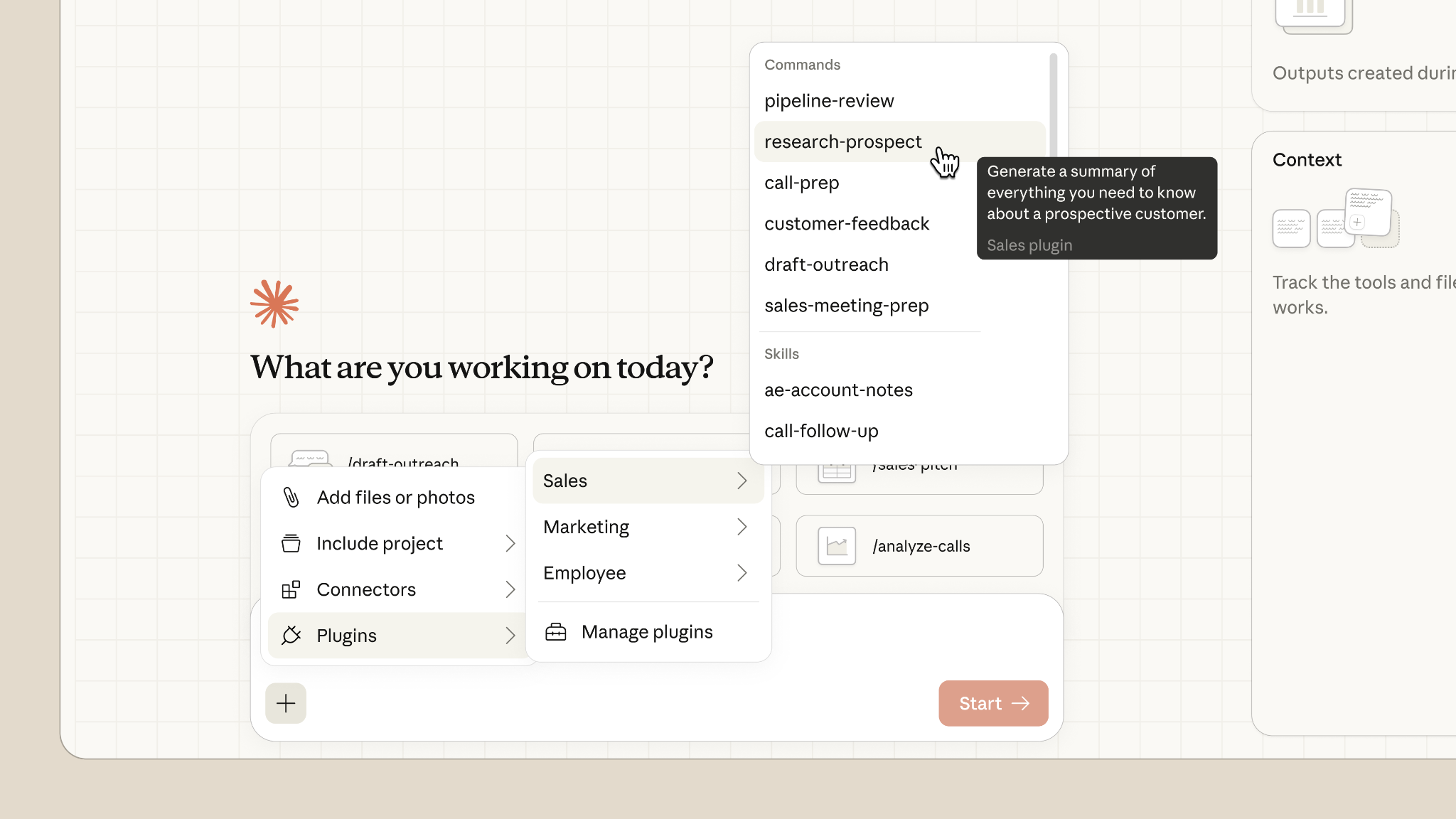
For practitioners, the integration details matter more than the stock movements. The core mechanism across all the connectors is the same: Claude gains access to a connected application's data within a shared context window, enabling it to act across multiple tools in a single workflow.
Slack by Salesforce
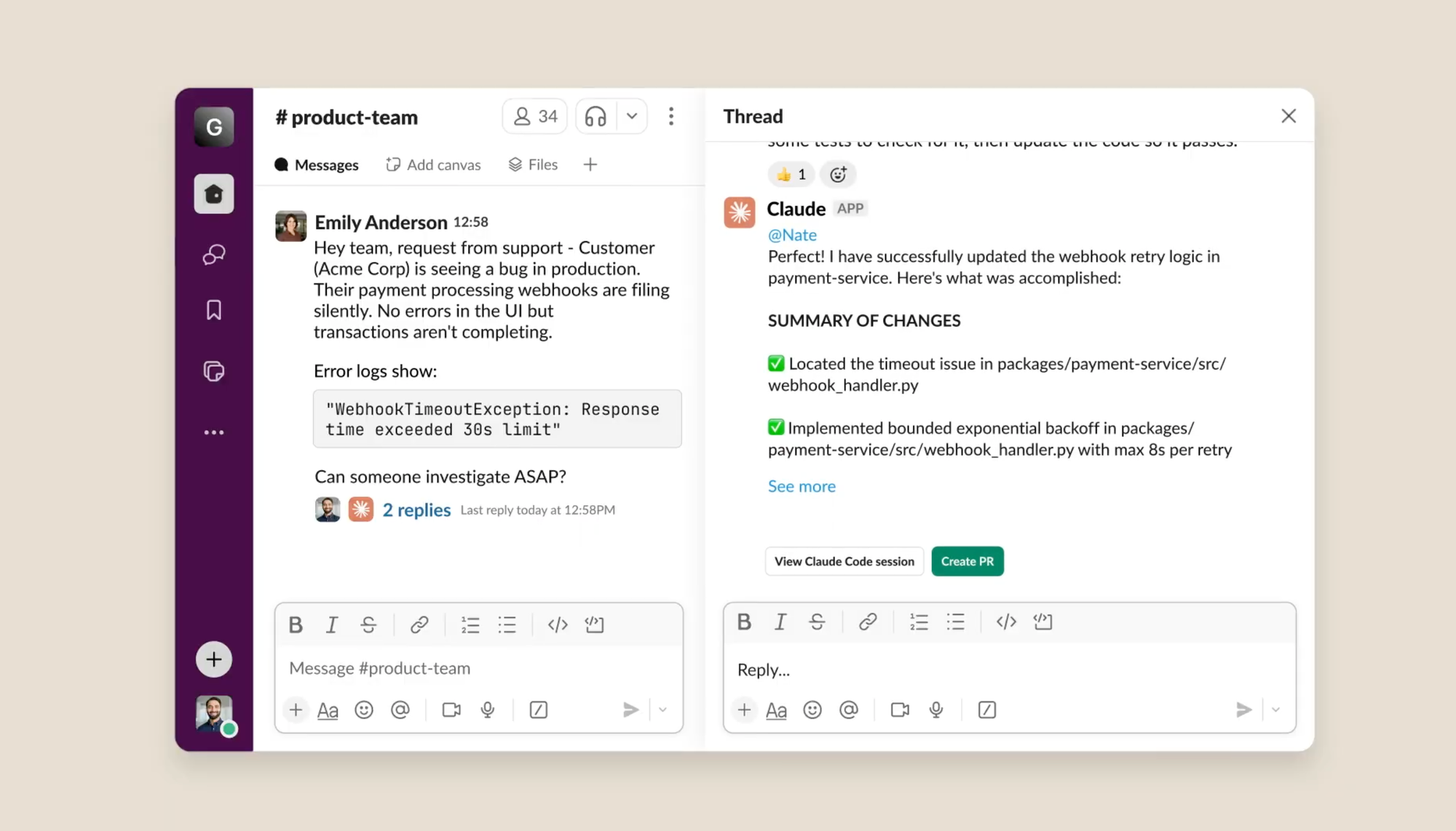
Salesforce reported a 96% satisfaction rate for Claude-powered tools in Slack, including a Slack bot that delivers summarization and recap features. Salesforce estimated those tools save customers approximately 97 minutes per week. The integration positions Claude as an embedded intelligence layer within Slack's communication infrastructure rather than a replacement for the platform itself.
DocuSign
The DocuSign connector enables Claude to read contracts, extract key terms, flag risks, and surface relevant clauses for review. For legal and deal teams, this collapses the manual process of reviewing documents before executing them. Anthropic has been explicit that the agent surfaces and analyzes but that execution remains with the human, a distinction that matters considerably in regulated industries.
FactSet
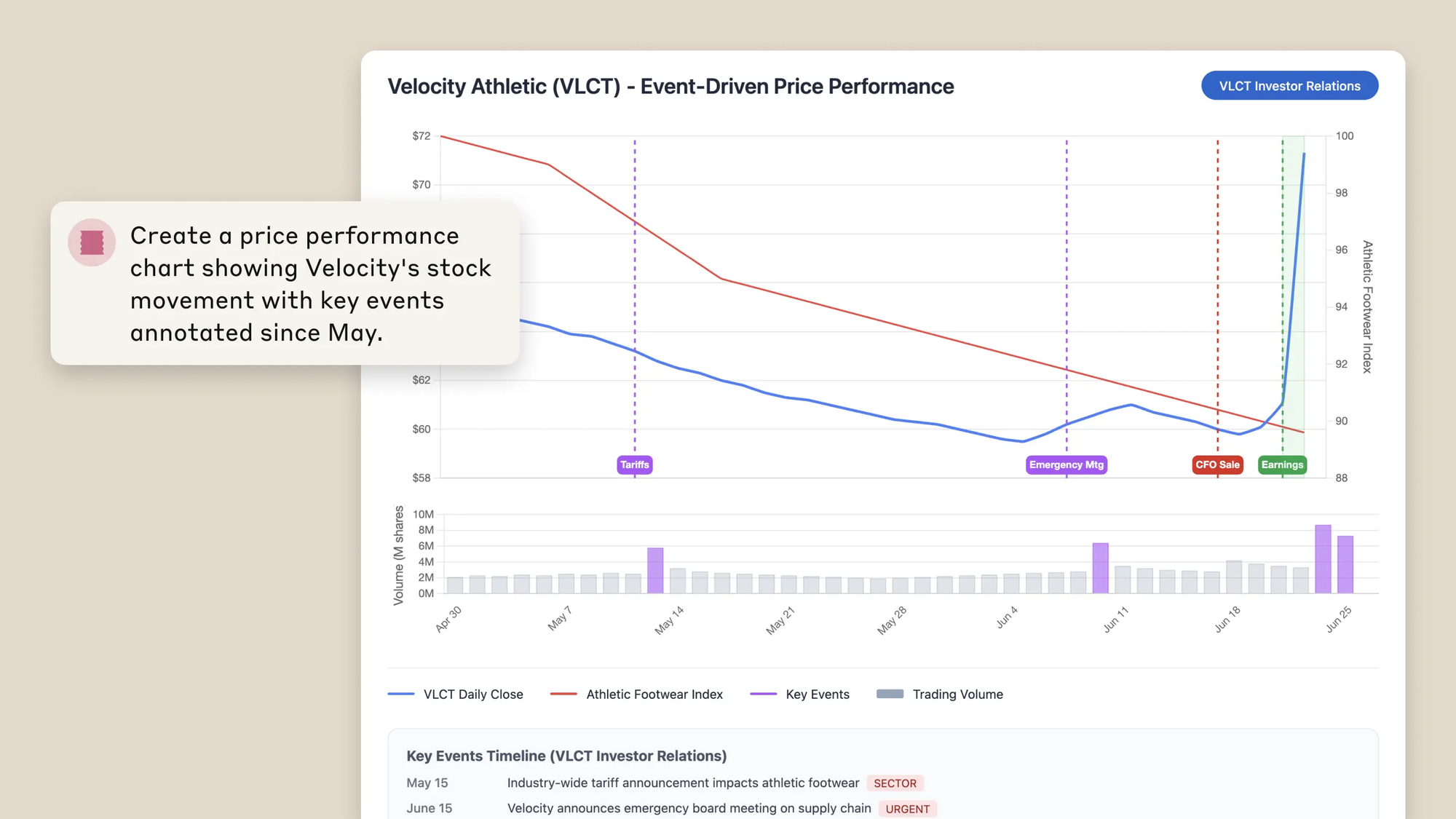
The FactSet plugin brings live financial data directly into Claude's context window within Excel or Google Sheets. An analyst can ask Claude to pull FactSet data for a set of comparable companies, build a trading comps table, and format it for a presentation, all without leaving Excel and without manually exporting from FactSet's interface. The MSCI connector provides a similar capability for ESG data, risk factors, and index data.
These integrations reflect a broader pattern. The connectors are most useful in workflows where the value is not the data itself but the speed and quality of the analysis that data enables. FactSet's market data does not become less valuable when Claude can access it. If anything, the data becomes more valuable because more analysis gets built on top of it.
The Broader Enterprise Strategy
The February 24 event featured executives from Thomson Reuters, the New York Stock Exchange, and Epic in a customer panel that provided candid assessments of what AI actually looks like inside large organizations.
Steve Hasker, CEO of Thomson Reuters, described Anthropic as a key model for his company while noting that Thomson Reuters is multi-model. The nuance matters: Thomson Reuters operates Co-Counsel, a legal AI tool with more than 1 million users, while also integrating Claude as a foundation model. Anthropic is simultaneously a vendor to Thomson Reuters and a competitor in the legal AI market through Co-Counsel. That tension was visible at the event without being resolved.
Sridhar Masam, CTO of the NYSE, described his organization as "rewiring our engineering process" with Claude Code and building internal AI agents using the Claude Agent SDK that can take instructions from a Jira ticket all the way to a committed code change. Epic's SVP of R&D, Seth Hain, described a shift from AI as an assistive tool to AI as a collaborator, citing Claude 4.6 and Claude Code's ability to do code exploration and compose support ticket responses as meaningful workflow changes.
Customer evidence extended the picture further. Spotify reported a 90% reduction in engineering time alongside more than 650 AI-generated code changes shipped per month, with roughly half of all Spotify updates now flowing through its Claude-integrated system. PwC's Anthropic Alliance Leader described the firm's partnership as bringing enterprise-grade agents into the office of the CFO.
What the Economic Index Data Shows
The event included a data presentation from Peter McCrory, Anthropic's head of economics, drawing on the Anthropic Economic Index, which analyzes Claude usage patterns using privacy-preserving methods across more than 150 countries and every US state.
The headline finding: the share of US jobs where a quarter or more of associated tasks appear in Claude usage data has roughly doubled in a year, rising from about one-third to approximately half of all US jobs. McCrory presented this data explicitly to counter the displacement narrative, noting that Anthropic was not seeing evidence of widespread labor market disruption.
The usage patterns showed augmentation as the dominant mode, with workers using Claude to work faster and better rather than employers using Claude to hire fewer people. The 40% automation figure Amodei has cited publicly represents a subset of that usage, skewed toward specific task categories rather than wholesale job replacement. The distinction is analytically important, even if it is difficult to hold in a market environment where fear moves faster than nuance.
What This Means for Enterprise Software
The SaaSpocalypse and its reversal together produced a more useful framework for thinking about AI's relationship with enterprise software than either the original panic or the subsequent relief rally fully captured.
Constellation Research analyst Holger Mueller offered the most precise framing: "Anthropic knows that it needs to get to the enterprise data, and is going for the integration of the productivity suites. That is a good first step, but the key one will be to get to the transactional data."
Productivity suite integration captures the document and communication layer. The harder and more commercially significant territory is the transactional systems that run core finance, supply chain, and operations. Anthropic's Snowflake partnership, signed in late 2025, points in that direction. The February 24 connectors represent the front-office layer, and back-office integration is what would make the SaaS disruption narrative accurate rather than premature.
For the companies named as Anthropic partners, the February 24 event demonstrated something concrete about the new market structure. Companies integrated into the AI ecosystem receive a premium over those that are not. Thomson Reuters, DocuSign, and FactSet all benefited from what analysts are calling the "integration premium," while companies perceived as substitutes absorbed the "disruption discount."
The practical implication for enterprise software companies is that the choice is increasingly binary: build integration into the AI layer or be positioned as a replacement target. Announced partnerships do not guarantee execution, but being outside the announced partner list in early 2026 is a market liability.
Wrap up
The arc from the SaaSpocalypse to the February 24 rally tells a story about where enterprise AI actually is: genuinely disruptive at the task and workflow level, but not yet at the point of replacing the underlying data and platform infrastructure that enterprises depend on.
For Anthropic, the partner announcement was more than a market stabilization exercise. It reflects the company's actual strategic posture. Getting Claude into the systems where enterprise work happens requires the cooperation of the companies that own those systems. The connectors are not a concession; they are the strategy.
The open question is whether "platform-level intelligence layer" is a sustainable position or a transition state. Holger Mueller's transactional data point is the right place to watch. If Claude gets deeply enough into the systems where enterprise transactions happen, the integration partner framing becomes harder to maintain. For now, the market has decided that embedded is better than displaced. How long that assessment holds depends on what Anthropic announces next.
Frequently Asked Questions
What is Claude Cowork and when did it launch?
Claude Cowork is Anthropic's AI agent platform for knowledge workers, launched as a research preview on January 12, 2026. It runs locally on a user's computer, reads and edits files, and completes multi-step tasks without requiring technical configuration. Anthropic positions it as a co-worker rather than a copilot, capable of taking ownership of tasks rather than just assisting with them.
What caused the SaaSpocalypse selloff in February 2026?
The selloff was triggered by Anthropic's January 30 release of 11 open-source plugins for Claude Cowork, particularly the legal automation capabilities. Investors concluded that AI agents could reduce the headcount that uses enterprise software, directly shrinking per-seat subscription revenues. A Goldman Sachs basket of US software stocks fell 6% on February 3, the sector's worst single day since April 2025, wiping out approximately $285 billion in market capitalization.
Which software stocks were hardest hit?
Thomson Reuters fell 15.83% on February 3, its biggest single-day drop on record. LegalZoom sank 19.68%. RELX, which owns LexisNexis, fell 14% in London. ServiceNow, Salesforce, and Atlassian also took significant hits. The iShares Expanded Tech-Software Sector ETF fell over 23% year-to-date in 2026, entering a technical bear market.
What happened on February 24 to reverse the declines?
Anthropic held its Enterprise Agents event and announced 13 new MCP connectors including DocuSign, FactSet, MSCI, and Google Workspace, alongside partnership plugins from Slack by Salesforce, LSEG, and S&P Global. Naming these companies as integration partners rather than disruption targets reassured the market. Thomson Reuters surged more than 11%, Salesforce rose 4%, and DocuSign and FactSet both gained.
What does the DocuSign integration actually do?
The DocuSign connector enables Claude to read contracts, extract key terms, flag risks, and surface relevant clauses for review within the Cowork environment. It is designed for legal and deal teams to reduce the manual review process before executing documents. Anthropic has emphasized that human review remains required for contract execution.
What does the FactSet integration do for finance teams?
The FactSet plugin brings live financial data, company fundamentals, estimates, and market news directly into Claude's context window within Excel or Google Sheets. An analyst can pull FactSet data for comparable companies, build a trading comps table, and format it for a presentation, all without leaving Excel or manually exporting from FactSet. This reduces the friction between data access and analysis for equity research and corporate development workflows.
What is the Anthropic Economic Index and what did it find?
The Anthropic Economic Index tracks Claude usage patterns across more than 150 countries using privacy-preserving methods. Peter McCrory presented at the February 24 event that the share of US jobs where a quarter or more of associated tasks appear in Claude usage data has roughly doubled in a year, rising from about one-third to approximately half of all US jobs. No evidence of widespread labor market displacement was found, with augmentation remaining the dominant usage pattern.
Is AI actually replacing enterprise software or just integrating with it?
Current evidence suggests augmentation at the task level rather than replacement at the platform level. Constellation Research analyst Holger Mueller identified the more significant battleground as transactional data systems running core finance, supply chain, and operations. Productivity suite integration is a meaningful first step, but the extent to which Claude reaches back-office systems will determine whether the disruption narrative was premature or merely early.
Related Articles
 Mark
Mark
 Dani
Dani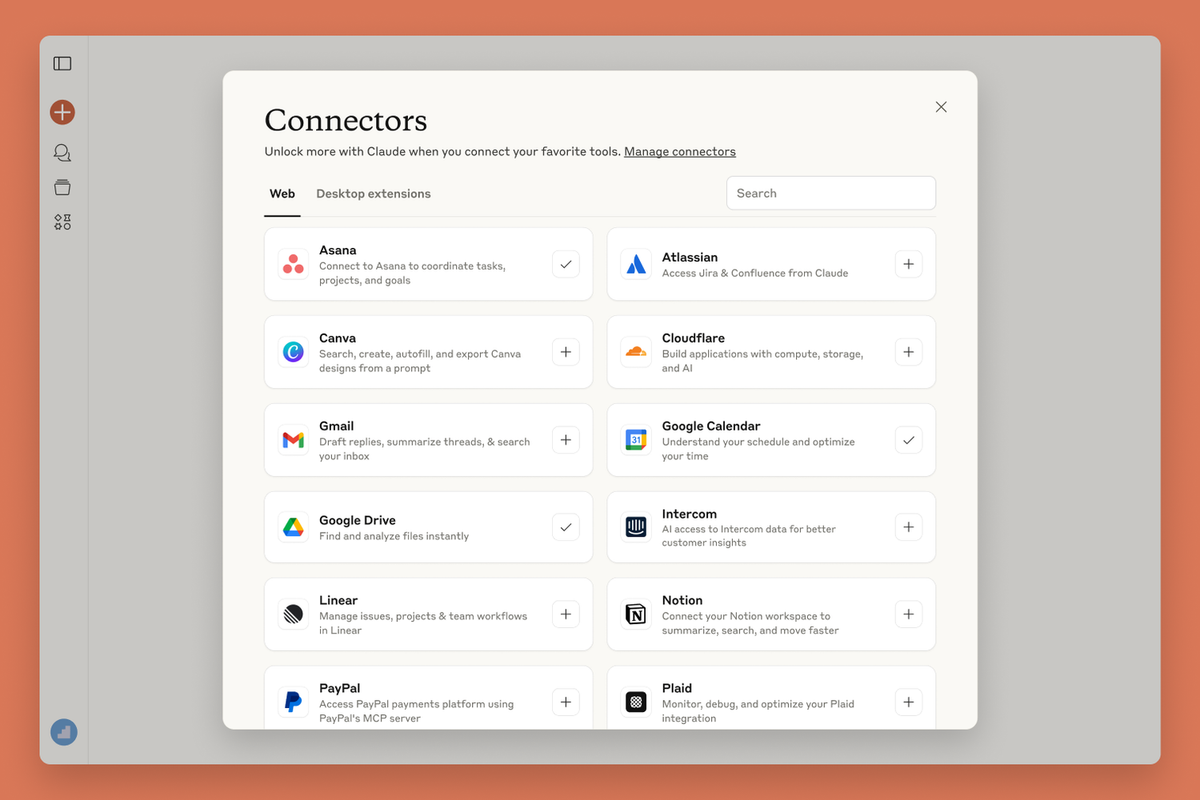
 Dani
Dani