For most people, making music has always required either talent, expensive software, or both. Google is trying to change that. On Wednesday, the company announced it is rolling out music generation inside the Gemini app, powered by DeepMind's Lyria 3 model. The feature is currently in beta, but it is available globally to all Gemini users 18 and older, with support for eight languages at launch.
The timing is not accidental. Every major AI platform is racing to expand into creative tools, and music is one of the last frontiers that general-purpose assistants have not fully colonized. OpenAI has Sora for video. Adobe has Firefly for images. Google, which has been developing its Lyria music model for over a year, is now ready to put it directly in front of its largest consumer audience.
The question is not whether AI music generation works. It does, at a basic level, and has for some time. The more interesting question is whether Google has built something compelling enough to shift how people actually think about creating and sharing music, and whether it can do so without igniting another wave of legal conflict with the music industry.
What Google Announced
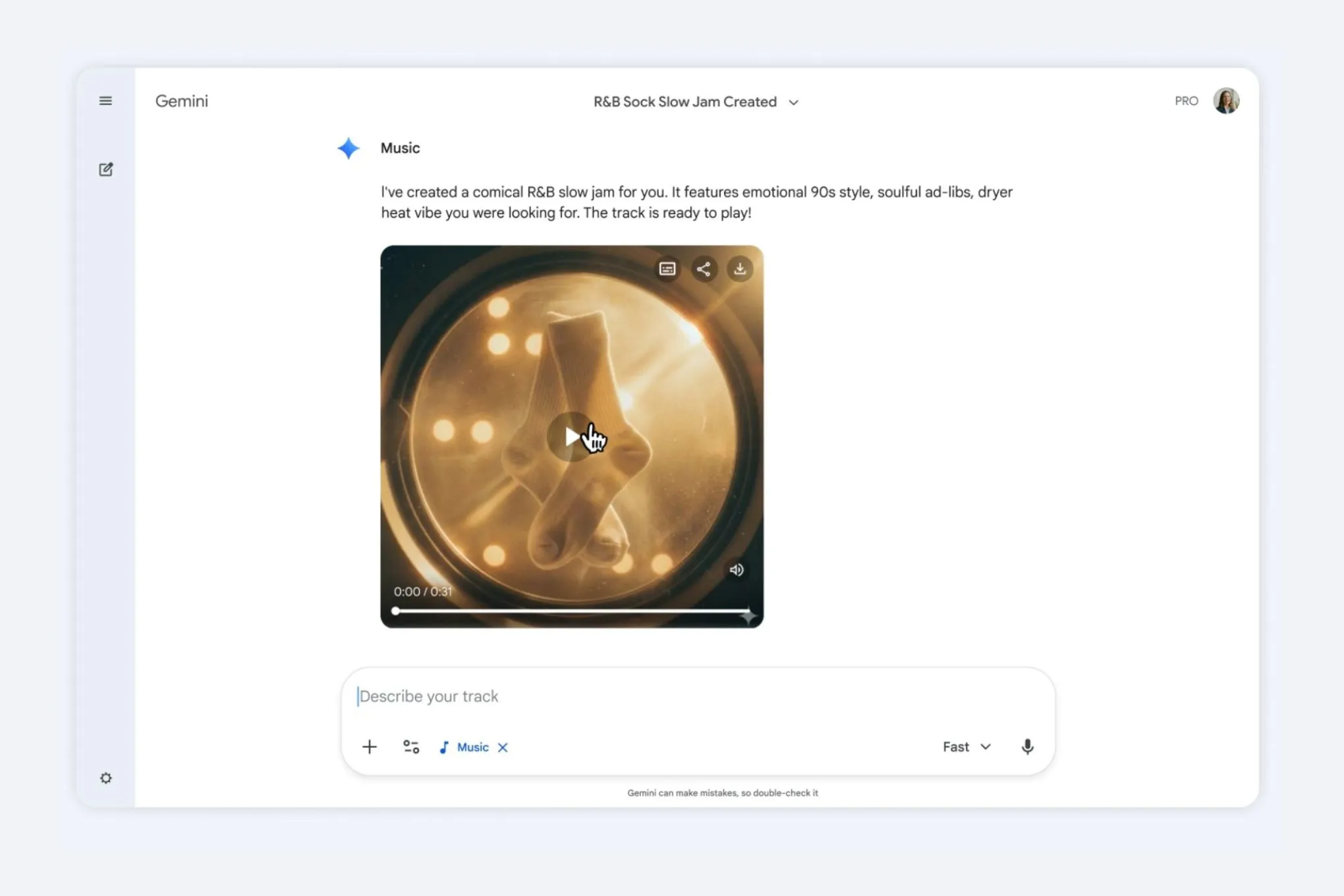
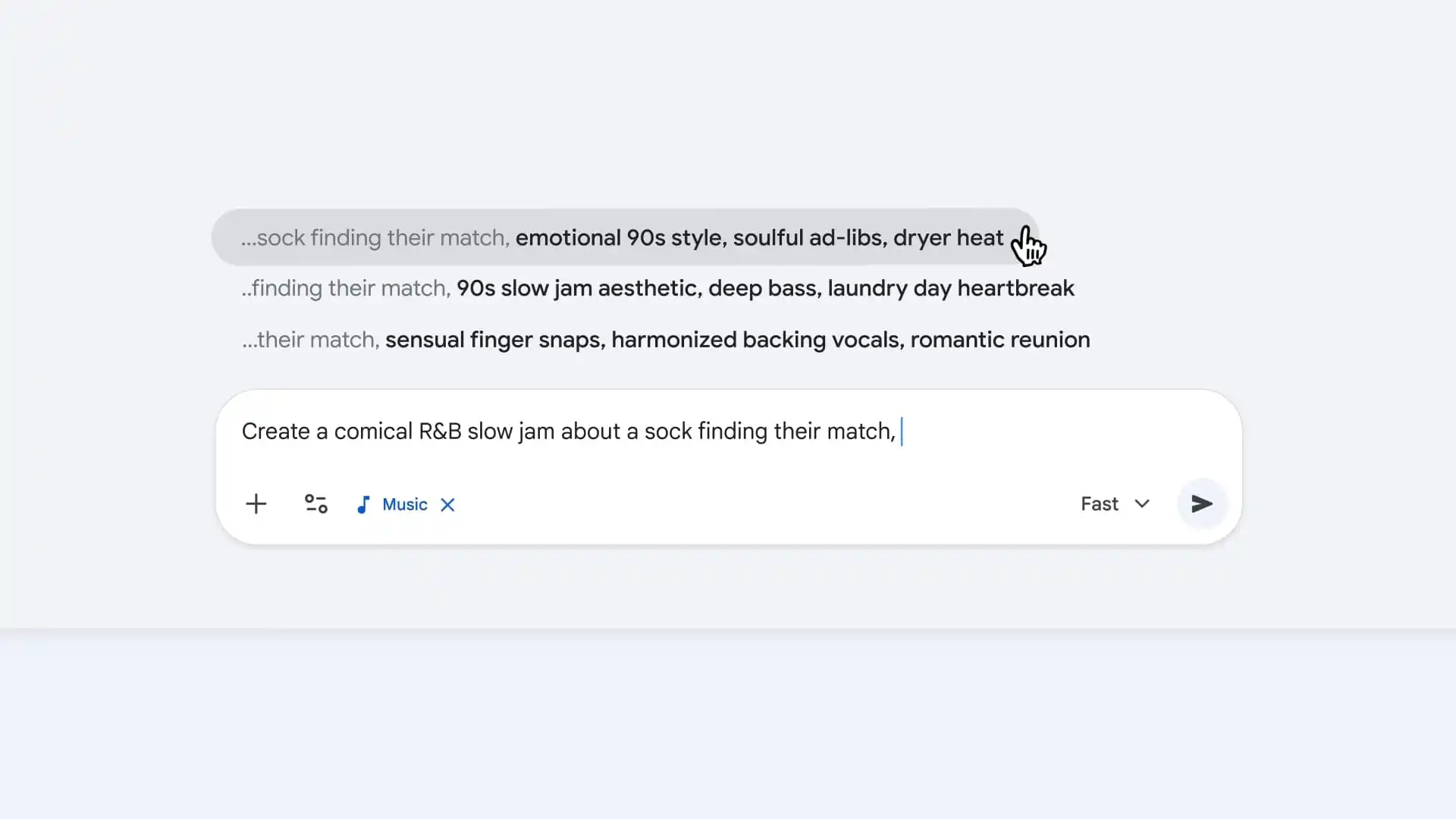
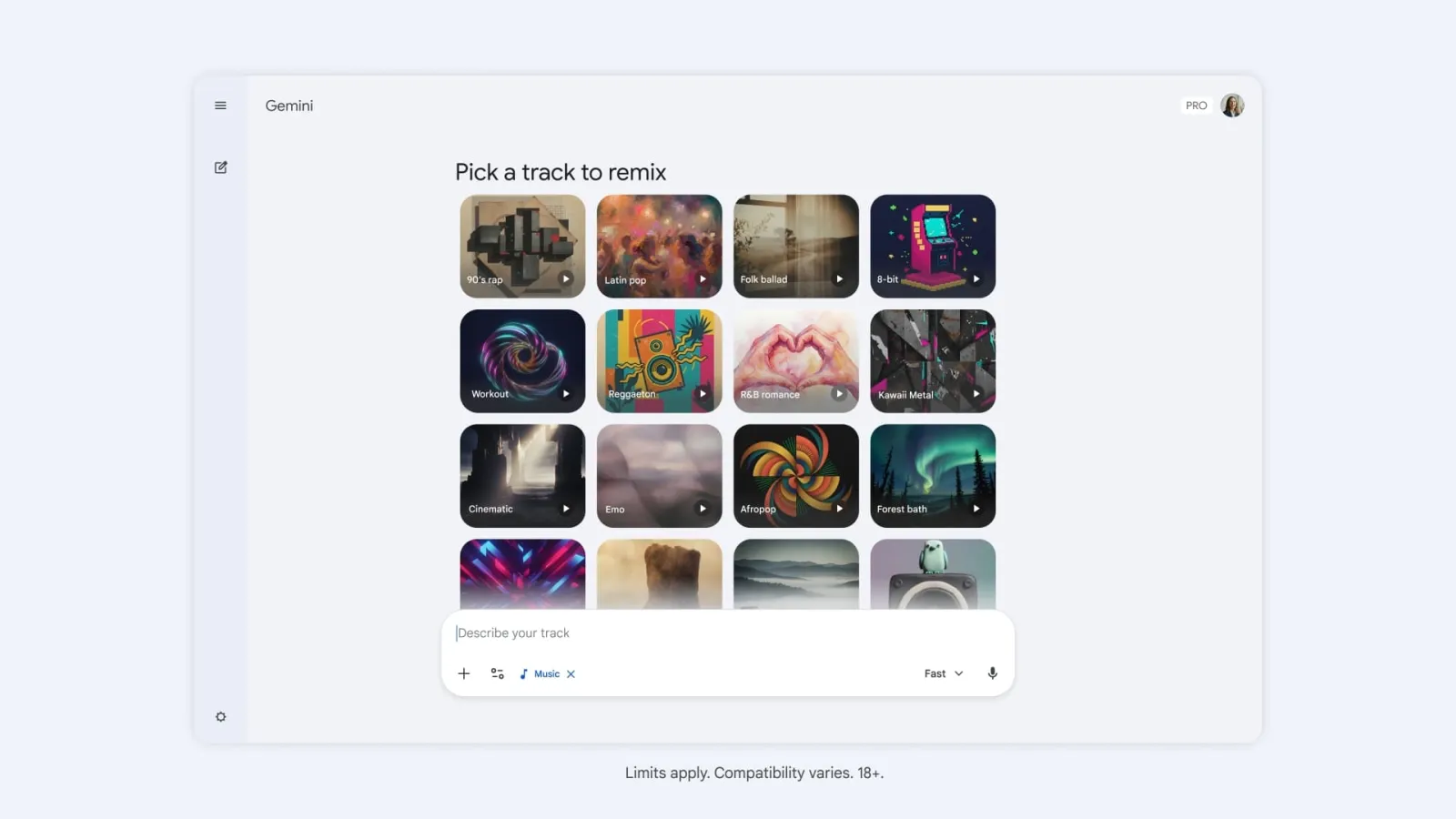
The core feature is straightforward. A user describes the song they want, and Gemini generates a 30-second track complete with lyrics. Google offered a representative example in its announcement: asking Gemini to create a "comical R&B slow jam about a sock finding its match." The app produces audio and pairs it with cover art generated by Nano Banana, Google's image generation layer.
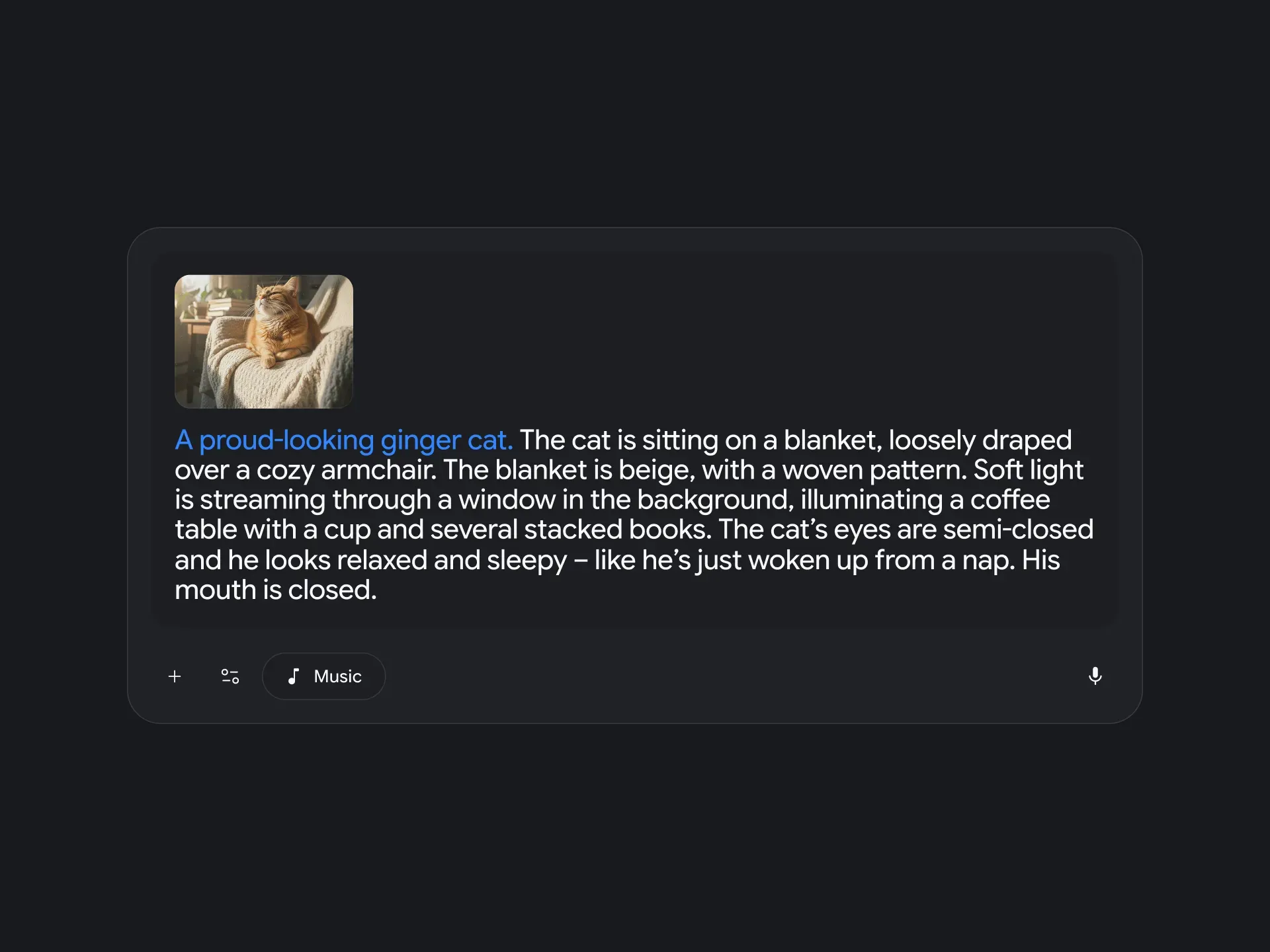
Beyond text prompts, the feature accepts photos and videos as input. Upload a clip from a birthday party, a moody landscape shot, or a video from a recent trip, and Gemini will analyze the media and generate a track intended to match its emotional tone. That is a more novel capability than text-to-music alone, and it points toward practical use cases that go beyond novelty. Short-form video creators, in particular, have a constant need for music that fits a specific mood without licensing complications.
Users can also adjust style, vocals, and tempo after the initial generation, giving them some degree of creative control over the output rather than simply accepting or rejecting what the model produces.
Alongside the Gemini app rollout, Google is expanding its Dream Track feature on YouTube globally. Dream Track is a tool that helps YouTube creators generate original AI music for their videos. Until this week, it was available only to creators in the United States. The Lyria 3 upgrade and global expansion happen simultaneously, which is a signal that Google views the creator economy as a primary target market for this technology.
How Lyria 3 Works and What Changed From Previous Versions
Google's DeepMind lab has been developing the Lyria model family as its dedicated music generation system. Lyria 3 is described as a meaningful step forward from its predecessors, capable of producing more realistic and complex tracks than earlier versions.
At a high level, music generation models like Lyria 3 are trained on large datasets of existing music to learn the structural and acoustic patterns that define different genres, instruments, tempos, and vocal styles. Given a text description, the model generates audio that matches the described characteristics by predicting what a track fitting that description should sound like at a very granular level.
What separates newer generation models from earlier attempts is the quality of that prediction. Earlier music AI tended to produce outputs that were recognizable as music but felt thin or synthetic, particularly on vocals and complex instrumental arrangements. Lyria 3's improvements in realism and complexity suggest the model has gotten better at the hardest parts: maintaining consistent style across an entire track, generating vocals that do not sound like a computer reading a script, and handling genre blends without the output collapsing into incoherence.
The 30-second output length is a practical constraint, not a technical limitation. It reflects where demand actually exists, primarily in social media clips, YouTube content, and short-form video. Full-length track generation is technically possible but introduces quality consistency challenges that shorter formats avoid.
The Artist Style Question
One of the more sensitive aspects of any music generation tool is how it handles requests that reference specific artists. Google addressed this directly in its announcement, and the answer is carefully worded.
Users can name an artist in their prompt, but Gemini will not attempt to replicate that artist outright. Instead, the model uses the name as "broad creative inspiration" to generate something in a similar style or mood. Google says it has content filters in place to check outputs against existing recordings.
The company's stated position is that the feature is designed for original expression, not mimicry. That distinction matters both legally and commercially. A tool that could reliably generate music that sounds indistinguishable from a specific artist would face immediate legal challenge from labels and artists themselves, as has happened to other AI music platforms. By producing style-influenced rather than artist-replicating output, Google is trying to stay on the right side of that line.
Whether the filters are robust enough to prevent edge cases is a different question, and one that will be tested in practice. It is also worth noting that even stylistic influence is legally complex territory. Copyright law in the United States does not protect style directly, but that has not stopped litigation, and the music industry has shown little appetite for drawing fine distinctions when AI is involved.
SynthID and the Watermarking Layer
Every track generated through Lyria 3 in Gemini will carry a SynthID watermark. SynthID is Google's system for embedding invisible, machine-readable markers into AI-generated content, including images, text, and now audio. The watermark is designed to survive compression, format conversion, and other common transformations that content undergoes as it circulates online.
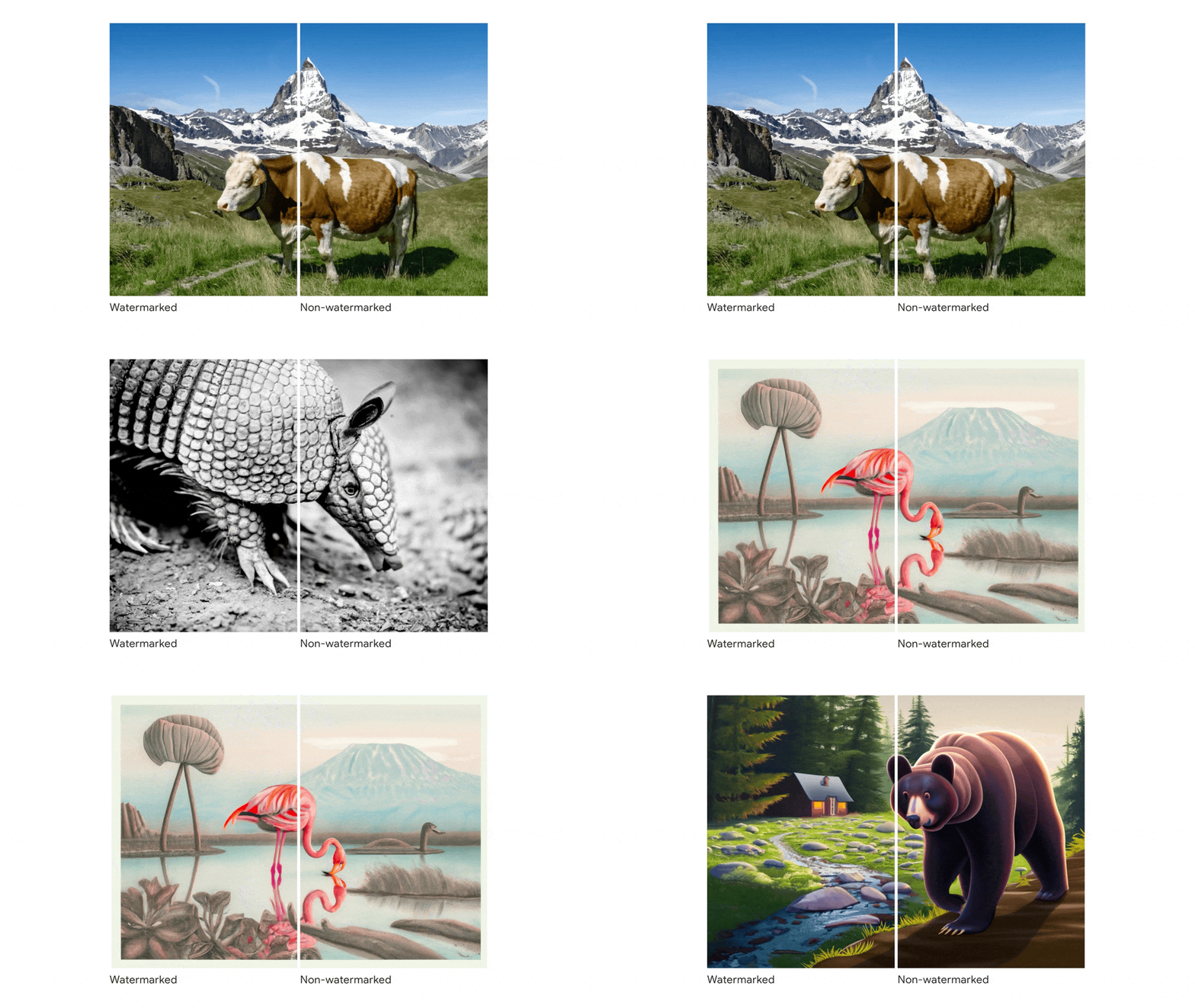
More notable is what Google announced alongside the watermarking: Gemini will also be able to detect SynthID watermarks in audio that users upload. In practice, this means users will be able to drop an audio file into Gemini and ask whether it was AI-generated. The system will check for the SynthID signature and respond accordingly.
The caveat is obvious. SynthID can only identify content that was watermarked with SynthID. Audio generated by other platforms, or by older models, will not carry the marker. As a detection tool, it is inherently limited to Google's own ecosystem, at least for now.
Still, the move is consistent with a broader industry push toward AI content identification. Deezer has published its own tools to flag AI-generated tracks, partly to address the problem of artificial streams inflating royalty payments for music that has no human artist behind it. Google's approach embeds the identification layer at the point of generation rather than relying on post-hoc detection, which is architecturally cleaner even if the coverage is incomplete.
Why This Matters for Creators
For YouTube creators, the global expansion of Dream Track is the most immediately practical development in this announcement. Music licensing has been a persistent headache for video creators for years. Using a popular song in a video risks automated copyright strikes, demonetization, or in some cases the revenue from the video being redirected to the rights holder. Royalty-free music libraries exist but tend toward generic, recognizable stock sounds.
AI-generated music offers a way out of that bind, at least partially. A creator who can generate a custom track tuned to the mood and pacing of a specific video, without worrying about licensing, has a genuine advantage over one working with a library of pre-cleared tracks. The quality of the output matters, but even imperfect AI music that fits the video is more valuable than generic library music that does not.
The photo and video input feature is worth highlighting specifically for this use case. A creator who has already edited a video can upload it to Gemini and receive a music track calibrated to its emotional arc. That workflow is meaningfully different from choosing music first and cutting the video to it, or manually searching a library for something that works. It inverts the process in a way that could be genuinely useful.
For casual users, the appeal is simpler. Creating a personalized song, even a 30-second novelty track, and sharing it with friends is a social behavior that fits naturally into existing patterns on platforms like Instagram, TikTok, and iMessage. Whether Gemini music generation becomes a viral sharing mechanic is impossible to predict, but the use case is clearly there.
The Competitive Landscape
Google is not the first to market with a consumer-facing AI music tool. Suno and Udio have been offering text-to-music generation directly to users for over a year and have built substantial audiences doing it. Both have also faced copyright lawsuits from major music labels, which claimed the tools were trained on copyrighted recordings without permission.
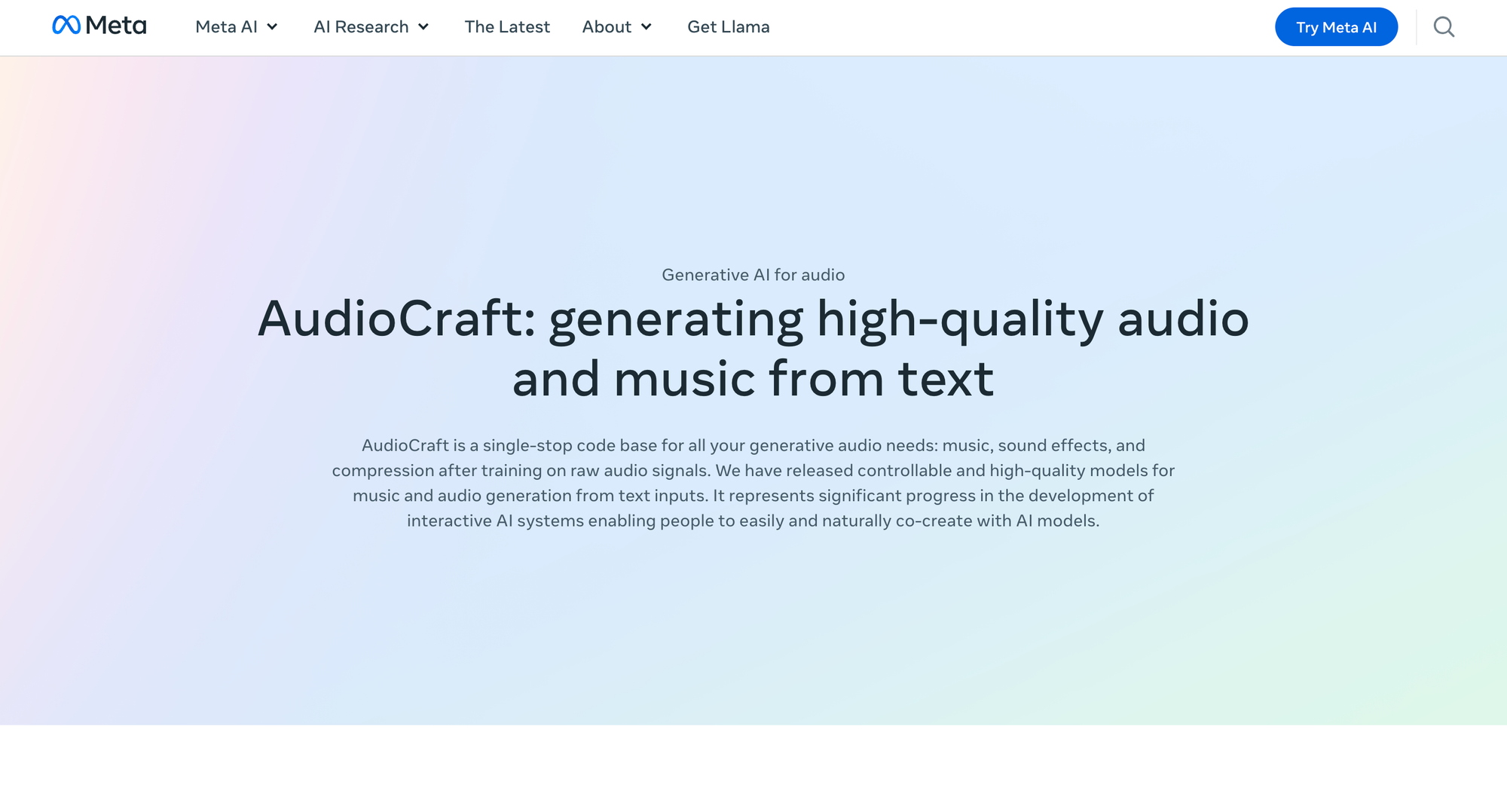
Meta has released AudioCraft, its open-source music generation framework. OpenAI has not released a dedicated music tool to consumers but has the underlying capability. Stability AI's Stable Audio is another active player in the space.
What Google brings that most of these do not is distribution. Gemini has tens of millions of active users, and Dream Track is embedded directly in YouTube, which has over 2 billion monthly users. The quality of Lyria 3 relative to Suno or Udio will matter, but Google does not need to win on quality alone to dominate adoption. The advantage of being the default option in the apps people already use is significant.
The YouTube connection is particularly strategic. Google has already negotiated AI music licensing deals with major labels including Universal Music Group, Sony Music, and Warner Music Group. Having those agreements in place before rolling out a mass-market music generation tool to YouTube creators gives Google a layer of legal protection that independent platforms lack. The deals are not a complete shield, but they represent a different risk posture than companies shipping AI music tools with no label relationships at all.
What Users Should Know
Music generation in Gemini is available now to users 18 and older across all markets, with support for English, German, Spanish, French, Hindi, Japanese, Korean, and Portuguese. The feature is in beta, which means the experience may evolve, and there will likely be refinements to both quality and the available controls over the coming months.

The 30-second output length is worth keeping in mind for anyone hoping to generate longer tracks. The tool is explicitly designed for short-form content, and that constraint shapes what it is useful for. It is a creative starting point and a content accessory, not a full music production tool.
For YouTube creators specifically, Dream Track's global availability is the most actionable change. Creators outside the U.S. who had been watching the feature with interest can now start experimenting and building it into their workflows.
The AI detection feature, the ability to ask Gemini whether an uploaded track carries a SynthID watermark, is a minor addition for most users but could become more relevant as AI music proliferates. Having a quick way to check the provenance of a track is the kind of utility that seems low-stakes until it is needed.
Looking Ahead
Google is building toward a version of Gemini that handles creative production across all media types. Images, video, code, and now music are all part of that vision. The Lyria 3 rollout fits into a broader pattern of the company moving DeepMind's research capabilities out of the lab and into consumer products, a process that has accelerated noticeably over the past year.
The music industry's legal and commercial relationship with AI remains unsettled. The outcomes of the Suno and Udio cases, expected sometime in the next year or two, will set important precedents. Google's label agreements provide some insulation, but the broader question of what AI companies owe creators whose work shaped the models has not been resolved.
For users, the more immediate question is whether the feature is good enough to use regularly. Beta releases from Google have a mixed track record of graduating into polished, permanent products. If Lyria 3 produces tracks that users actually want to share, the feature will grow. If it produces novelties that entertain once and are then forgotten, it will follow the same trajectory as many Google experiments before it.
The technology is clearly capable. What happens next depends on whether the product is, too.
Frequently Asked Questions
What is Google Lyria 3 and how does it work? Lyria 3 is a music generation model developed by Google DeepMind. It is trained to produce original audio tracks based on text descriptions or uploaded media. When given a prompt, it generates a 30-second track with lyrics, and it can also analyze the mood of a photo or video to create music that fits it. Lyria 3 improves on previous versions with more realistic and complex audio output.
How do I use music generation in the Gemini app? Open the Gemini app and describe the type of song you want to create. You can also upload a photo or video and ask Gemini to generate music that matches its mood. The app will produce a 30-second track with lyrics and cover art. You can adjust elements like style, vocals, and tempo after the initial generation.
Is Gemini music generation free? Google has not announced a specific paywall for the feature. It is currently rolling out to all Gemini users 18 and older as a beta feature. Pricing and access tiers may change as the feature moves out of beta.
Can Gemini generate music in the style of a specific artist? You can reference an artist's name in your prompt, but Gemini will not replicate that artist directly. Instead, it uses the name as broad creative inspiration to generate a track in a similar style or mood. Google has content filters in place to prevent direct mimicry of existing recordings.
What is SynthID and why does it matter for AI music? SynthID is Google's system for watermarking AI-generated content. Every track created through Lyria 3 in Gemini carries an invisible SynthID marker that identifies it as AI-generated. Gemini can also detect SynthID watermarks in audio files that users upload, offering a basic way to check whether a track was made with Google's AI tools.
What is Dream Track on YouTube and who can use it now? Dream Track is a YouTube feature that allows creators to generate original AI music tracks for their videos using Lyria 3. It was previously available only to U.S.-based creators. As of this week, it is now available to YouTube creators globally.
What languages does Gemini music generation support? At launch, the feature supports English, German, Spanish, French, Hindi, Japanese, Korean, and Portuguese.
Is AI-generated music legal to use in YouTube videos? Google has licensing agreements with major music labels including Universal Music Group, Sony Music, and Warner Music Group that cover AI-generated music on YouTube. Tracks created through Dream Track or the Gemini app using Lyria 3 are designed for original expression and carry SynthID watermarks. For questions about specific commercial uses, consulting current platform policies is advisable, as this area of law is still evolving.
Related Articles
 Dani
Dani
 Mark
Mark
 Mark
Mark