If you've been anywhere near tech Twitter or developer forums lately, you've probably seen the heated debates: DeepSeek R1 or OpenAI o3? Which reasoning model is actually worth your time and money?
I've been in those debates. Actually, I've been obsessed with this question for the past several months. When DeepSeek R1 dropped in January 2025 and sent shockwaves through the AI industry, literally crashing Nvidia's stock. I knew I had to dig deeper. And when OpenAI responded with o3 (and later o3-mini, o4-mini, and o3-pro), the comparison became even more critical.
So here's what I did: I spent over 200 hours testing both models across every task I could think of. Coding challenges. Mathematical proofs. Logic puzzles. Creative writing. Real-world software engineering problems. The works.
This isn't going to be another article that just throws benchmark numbers at you. I'm going to tell you what actually happened when I used these models for real work, where each one excels, where they fall flat, and — most importantly — which one deserves your subscription dollars based on what you're actually trying to accomplish.
Let's get into it.
The Reasoning Model Revolution: Why This Matters
Before we dive into the comparison, let me quickly explain why reasoning models are such a big deal. If you already know this, feel free to skip ahead.
Traditional language models like GPT-4 or Claude respond almost instantly. They generate text token by token without much "thinking" beforehand. This works great for many tasks, but it struggles with complex problems that require multi-step logic.
Reasoning models, like DeepSeek R1 and OpenAI's o-series are different. They spend extra compute time "thinking" before answering. They work through problems step by step, consider different approaches, catch their own mistakes, and refine their reasoning. This makes them dramatically better at math, coding, logic puzzles, and scientific reasoning.
The trade-off? They're slower and often more expensive. You're paying for that thinking time.
Understanding this trade-off is crucial for deciding which model to use. Sometimes you need instant responses. Sometimes you need the model to really think through a problem. The right choice depends on your specific use case.
Now let's see how DeepSeek R1 and OpenAI o3 actually compare.
DeepSeek R1: The Open-Source Disruptor
DeepSeek R1 burst onto the scene in January 2025 and immediately turned heads. This wasn't just another incremental improvement, it was a statement. A Chinese AI company had created a reasoning model that rivaled OpenAI's best work, and they released it as open source.
The model uses a Mixture-of-Experts (MoE) architecture with 671 billion total parameters, but only 37 billion are activated for any given token. This clever design lets the model achieve impressive performance while keeping computational costs relatively low.
What makes R1 special is how it was trained. Rather than relying heavily on supervised fine-tuning (teaching the model by showing it correct answers), DeepSeek used large-scale reinforcement learning. The model essentially learned to reason by trial and error, discovering effective strategies on its own. This approach led to some fascinating emergent behaviors, self-verification, reflection, and genuinely long chains of thought.
The May 2025 update (R1-0528) addressed some early issues like repetition and readability, adding features like JSON output and function calling that made it more practical for real-world applications.
From my testing, here's what DeepSeek R1 does well:
- The transparency is remarkable. Unlike OpenAI's models, which show you a summarized version of their reasoning, R1 lets you see the raw chain of thought. When I'm debugging a tricky problem or trying to understand why the model reached a particular conclusion, this visibility is invaluable. I can actually follow the model's logic and identify where it went wrong.
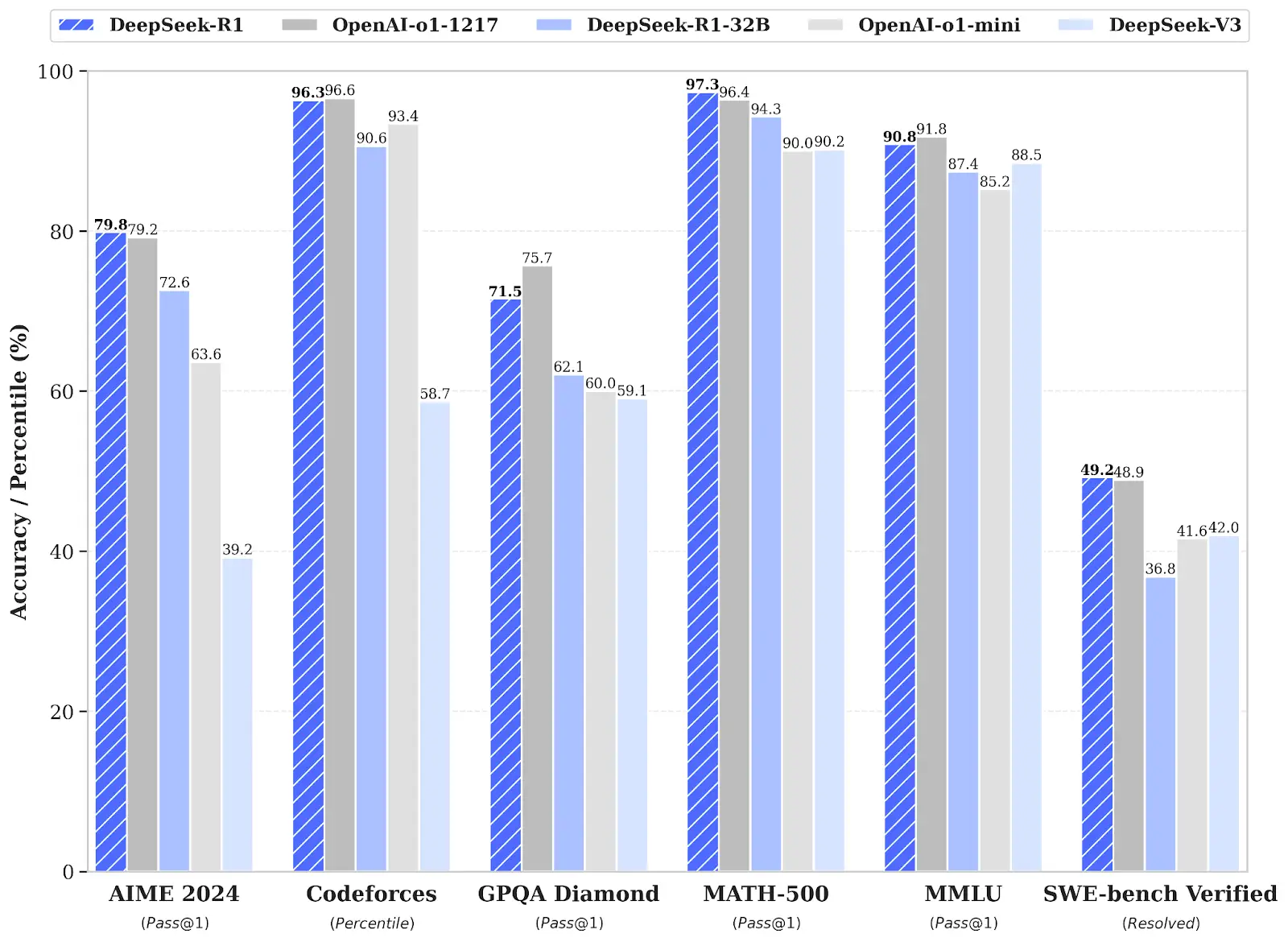
- For mathematical reasoning, R1 is genuinely impressive. It achieved 97.3% on MATH-500 and around 79.8% on the American Invitational Mathematics Examination (AIME). These are numbers that would have seemed impossible just a couple of years ago.
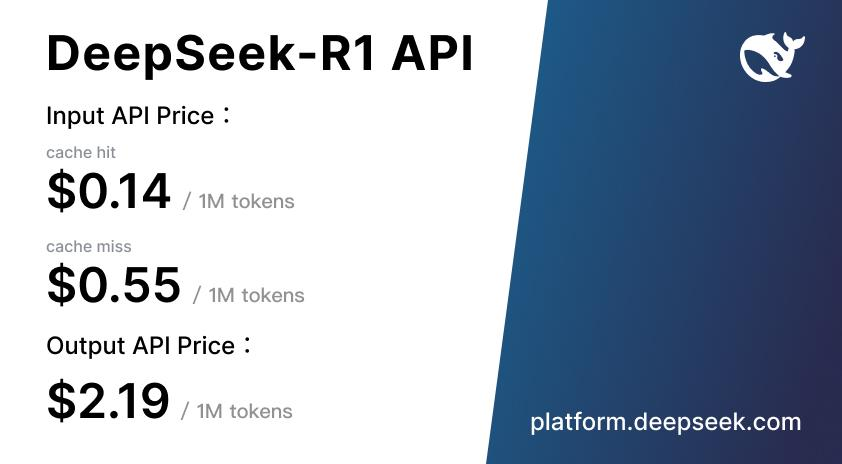
- The cost efficiency is the elephant in the room. At roughly $0.55 per million input tokens and $2.19 per million output tokens through DeepSeek's official API, R1 is approximately 20-30 times cheaper than OpenAI's comparable offerings. That's not a typo. For high-volume applications, this difference can mean saving thousands of dollars monthly.
But R1 has real limitations. Response times are noticeably slower, in my testing, complex coding tasks took around 1 minute 45 seconds compared to about 27 seconds for o3-mini. The model occasionally falls into repetitive patterns, especially with certain prompt styles. And because it's running through a Chinese company's servers, some organizations have legitimate data privacy concerns.
OpenAI o3
OpenAI's o3 represents the culmination of their reasoning model research that began with o1 in late 2024. The full o3 model became generally available in April 2025, alongside o4-mini, with o3-pro following in June 2025.
The o3 family uses what OpenAI calls a "private chain of thought", the model reasons internally before responding, but you only see a summarized version of that reasoning. This is different from DeepSeek's more transparent approach, and it's a deliberate design choice by OpenAI.
What struck me immediately about o3 was the consistency. In benchmark after benchmark, o3 delivers strong performance across a wide range of tasks. It scored 88.9% on AIME 2025, hit 87.7% on GPQA Diamond (a graduate-level science benchmark), and achieved a breakthrough 87.5% on ARC-AGI at high compute, nearly tripling the reasoning score of o1 models.
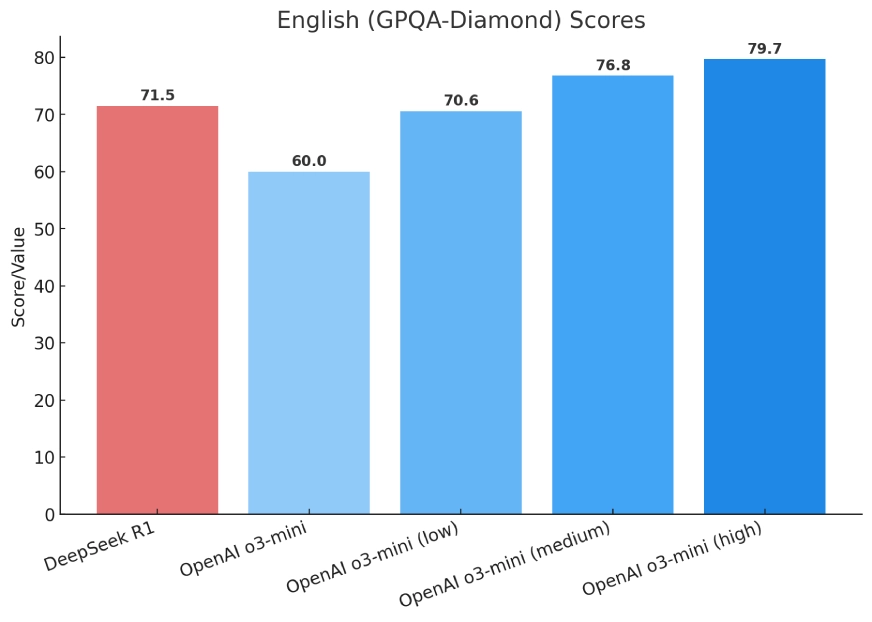
The o3-mini variant deserves special mention. It's optimized for speed and cost-efficiency while maintaining impressive capabilities. With three reasoning effort levels (low, medium, high), you can balance between deep thinking and faster responses depending on your needs.
From my hands-on testing, o3's strengths are clear:
- Speed is consistently better. On the same coding task that took R1 nearly two minutes, o3-mini completed it in about 27 seconds. For STEM problems, o3-mini can respond in as little as 11 seconds compared to R1's 80 seconds. When you're iterating quickly on a problem, this speed difference matters enormously.
- The function calling and structured output support is more mature. o3-mini was the first OpenAI reasoning model with official function-calling support, which is huge for building AI agents and automated workflows. If you're integrating AI into production systems, these features save significant development time.
- Tool use is integrated natively. o3 and o4-mini can use tools directly, web browsing, Python code execution, file operations, and image generation, strategically determining when and how to use them. This makes o3 feel less like a chat model and more like an actual reasoning system that can take action.
But o3 has its downsides too. The cost is substantially higher, roughly $15 per million input tokens and $60 per million output tokens for o3, though o3-mini brings this down significantly. The reasoning process is a "black box" compared to DeepSeek's transparency. And while o3-pro offers the highest level of performance, it's only available to Pro subscribers at $200/month.
Head-to-Head: The Real Benchmarks
Let me break down how these models actually compare across the metrics that matter.
Mathematical Reasoning
This is where both models shine, but with important differences.
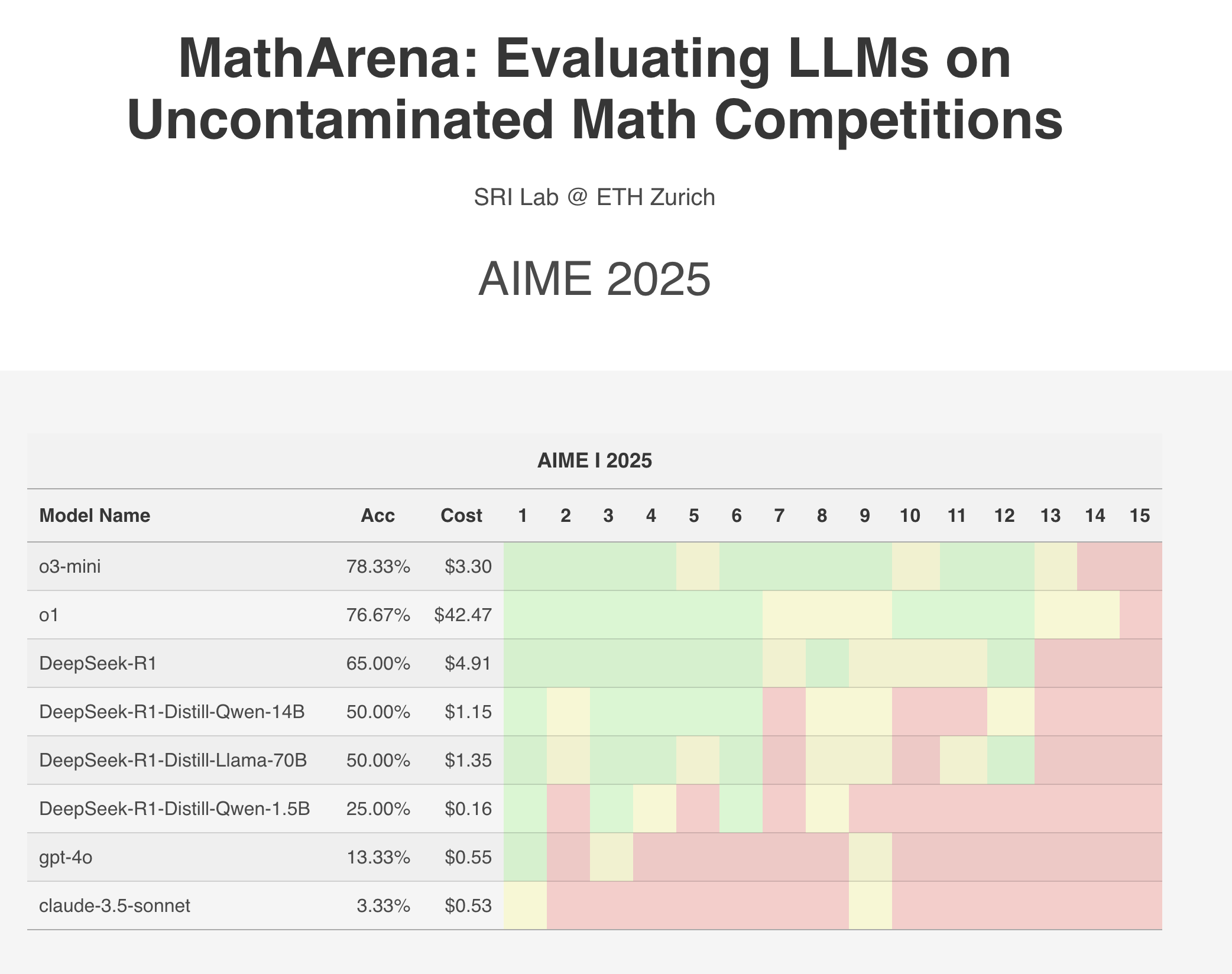
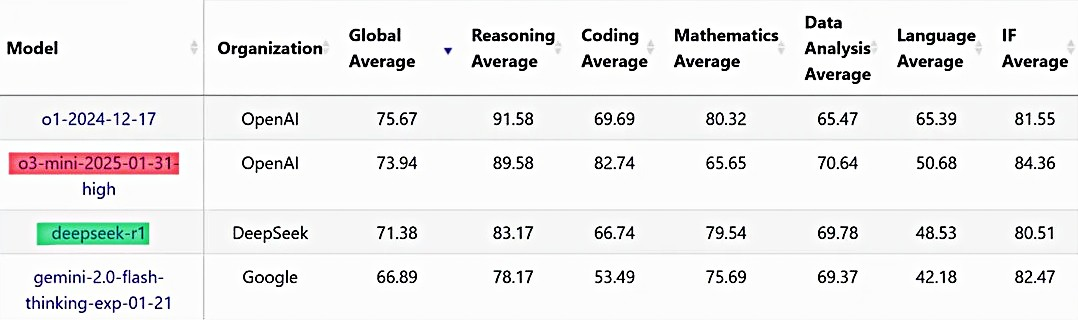
On AIME 2025 (American Invitational Mathematics Examination), o3-mini (high) achieved approximately 83.6%, outperforming DeepSeek R1 by over 10%. This benchmark tests competition-level math that challenges even gifted high school students.
However, on MATH-500, DeepSeek R1 scored 97.3%, which is actually slightly higher than many GPT-4 variants achieved. In my testing, both models can solve complex calculus problems, work through proofs, and handle multi-step word problems reliably.
Where o3 pulls ahead is in novel mathematical reasoning, problems that require genuine insight rather than applying known techniques. On FrontierMath, which tests the boundaries of mathematical reasoning with problems at the level of mathematical research, o3 achieved a 25% accuracy rate compared to the previous best of 2%. That's a massive leap.
Coding and Software Engineering
Coding is where I spent most of my testing time, and the results were nuanced.
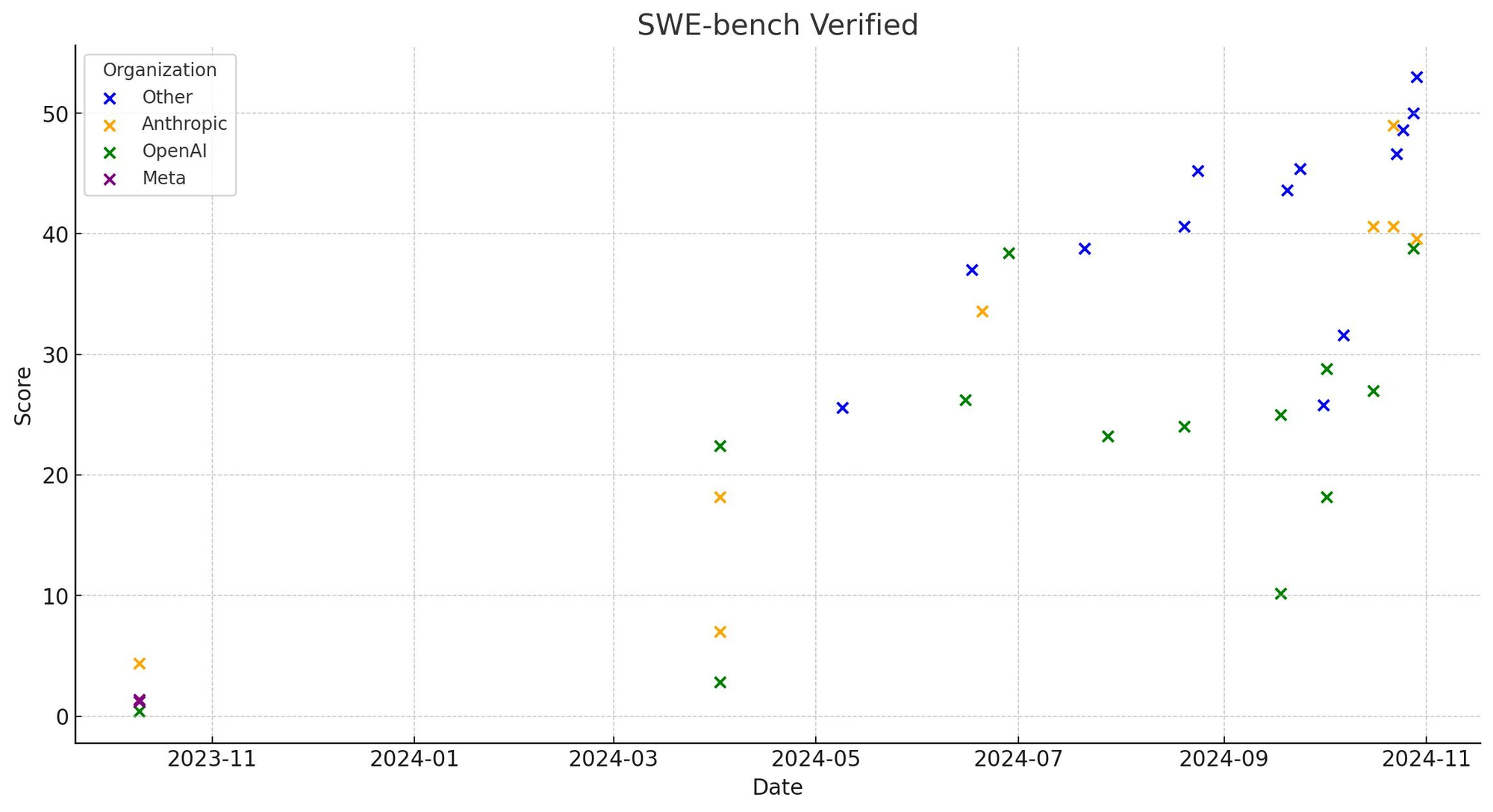
On competitive programming (Codeforces), o3-mini achieved a rating of 2,029, surpassing DeepSeek R1's 1,820. On SWE-bench Verified, which tests ability to solve real GitHub issues — o3 scored around 71.7% compared to R1's 49.2%.
But here's what the benchmarks don't capture: DeepSeek R1's visible chain of thought makes it easier to understand and correct the model's approach when it goes wrong. Several times during my testing, I could see exactly where R1's reasoning went off track and guide it back. With o3, I was more dependent on the model figuring things out on its own.
For quick coding tasks where I need an answer fast, o3-mini is clearly better. For complex debugging sessions where I want to understand the model's thinking, R1's transparency is valuable.
Logical Reasoning and Abstract Thinking
The ARC-AGI benchmark (Abstraction and Reasoning Corpus) is specifically designed to test genuine reasoning ability while resisting memorization. It's one of the best tests we have for measuring how well a model can think through novel problems.
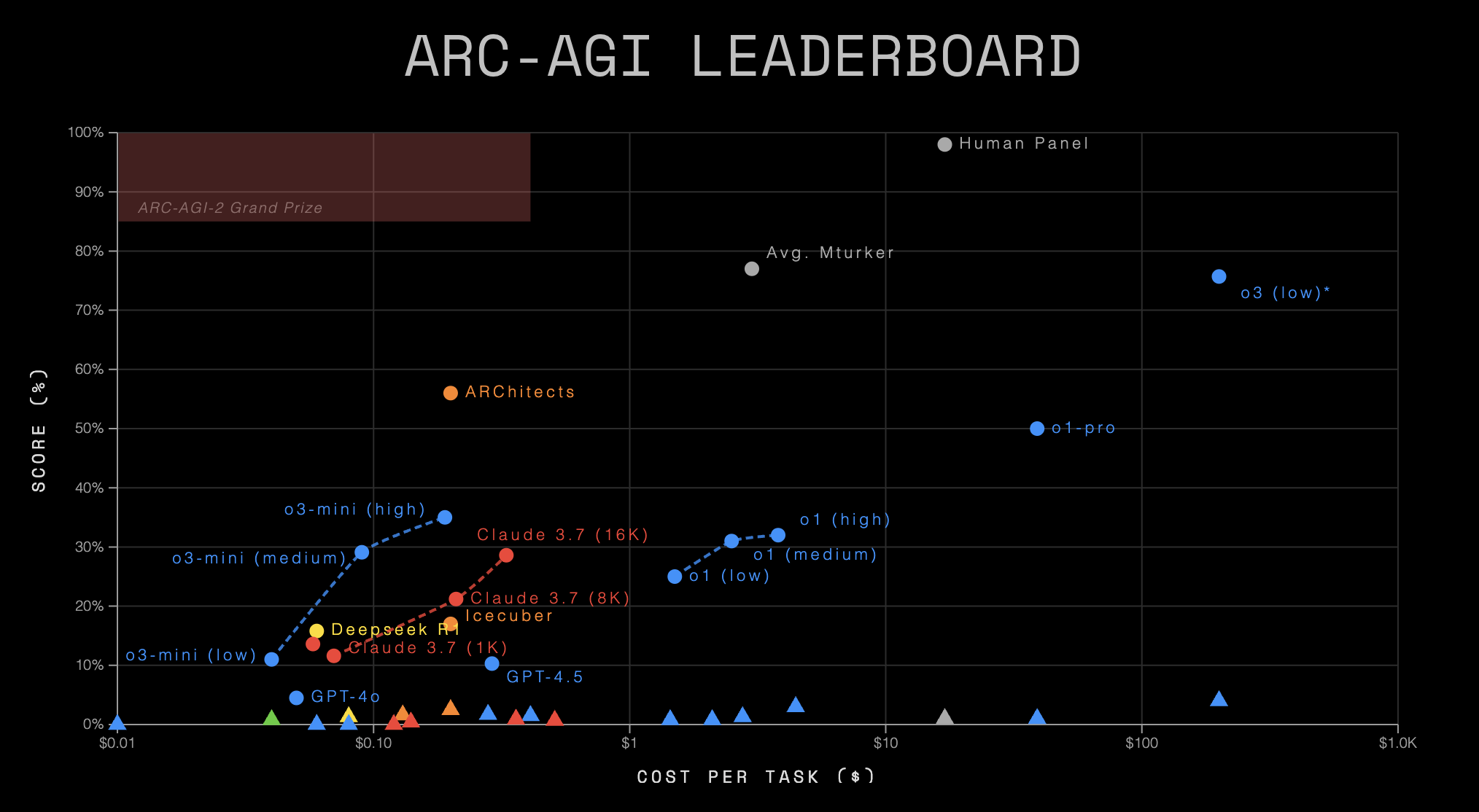
o3's results here are frankly astonishing. The high-compute configuration scored 87.5% on ARC-AGI-1, nearly three times the reasoning score of o1 models. This represents a genuine step-function improvement in AI reasoning capabilities.
DeepSeek R1 performs respectably on reasoning tasks but doesn't reach o3's heights. On GPQA Diamond (graduate-level science questions), o3 scored 87.7% compared to R1's 71.5%.
Speed and Latency
This is where o3-mini dominates decisively.
In my testing across various tasks, o3-mini was consistently 3-6x faster than DeepSeek R1. For a simple logic puzzle, o3-mini responded in 6 seconds; R1 took 80 seconds. For a coding task, o3-mini finished in about 27 seconds compared to R1's 1 minute 45 seconds.
If you're building real-time applications or need rapid iteration during development, o3-mini's speed advantage is substantial.
The Cost Question: Is DeepSeek R1 Really 30x Cheaper?
Let's talk about money, because this is where DeepSeek R1 makes its strongest case.
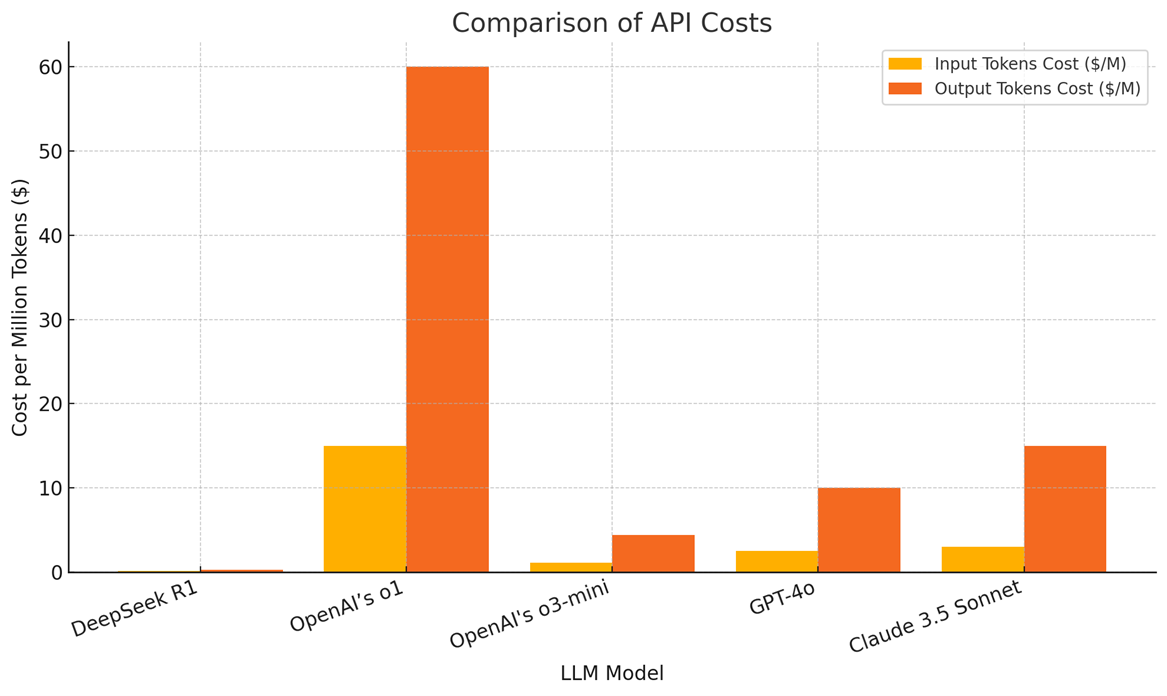
OpenAI's pricing for reasoning models is premium. o3 runs approximately $15 per million input tokens and $60 per million output tokens. o3-mini is more affordable at around $1.10 input and $4.40 output per million tokens.
DeepSeek R1 through the official API costs roughly $0.55 per million input tokens and $2.19 per million output tokens. If you're using context caching efficiently, the effective cost drops even further.
Let me put this in practical terms. Imagine you're running an AI-powered code review system that processes 10 million tokens per month (input and output combined). With o3, you might be looking at $300-400 monthly. With DeepSeek R1, the same workload costs around $15-20.
For high-volume applications, startups on tight budgets, or academic researchers without enterprise funding, DeepSeek's pricing genuinely democratizes access to reasoning-level AI capabilities.
But there's a catch: DeepSeek's servers are located in China, and your data flows through their infrastructure. For many enterprise applications, especially those involving sensitive data, this is a non-starter regardless of cost savings. You can self-host DeepSeek models (they're MIT-licensed), but that requires significant infrastructure investment that may negate the cost advantage.
Several cloud providers now offer DeepSeek R1 through their platforms – AWS, Microsoft Azure, Google Cloud, which addresses some privacy concerns but at higher prices than the direct API.
Real-World Testing: What I Actually Experienced
Benchmarks are useful, but they don't tell the whole story. Here's what happened when I used these models for actual work.
Debugging a Complex React Application
I had a bug that was causing inconsistent state updates across components. The kind of thing that makes you question your career choices.
With o3-mini, I described the problem, pasted the relevant code, and got a clear, actionable response in about 30 seconds. The model identified the issue (a closure capturing stale state in an effect hook), explained why it was happening, and provided the fix. Done.
With DeepSeek R1, the process took longer (about 2 minutes), but I could watch the model work through different hypotheses in its reasoning chain. It actually considered and rejected two other possibilities before landing on the correct diagnosis. This transparency was educational; I learned something about how to approach similar bugs in the future.
For this task, o3's speed won. But R1's reasoning visibility had its own value.
Solving a Competition Math Problem
I grabbed a problem from a recent math olympiad. It involved proving an inequality through a series of algebraic manipulations that weren't immediately obvious.
Both models eventually solved it, but the experience differed significantly. o3 presented a clean, elegant solution after thinking for about 15 seconds. It was correct, well-formatted, and easy to follow.
R1 took about a minute but showed me every attempt — including a promising approach it abandoned after realizing it led to a dead end. This peek behind the curtain was fascinating. I could see the model's mathematical intuition developing in real-time.
For pure correctness, both succeeded. For learning or understanding the problem-solving process, R1's transparency was more valuable.
Writing a Technical Blog Post
I asked both models to outline and draft a technical article about microservices architecture.
Honestly? Neither impressed me. Reasoning models are optimized for problems with clear right and wrong answers. Open-ended creative writing isn't their strength. Both produced competent but somewhat generic content.
If writing is your primary use case, you'd be better served by GPT-4o, Claude, or even standard DeepSeek-V3 rather than paying the premium (in time or money) for reasoning capabilities.
Building an AI Agent Workflow
I wanted to create an automated system that could research a topic, summarize findings, and generate a report.
o3-mini's native tool support made this significantly easier. Function calling worked out of the box, structured outputs were reliable, and the model handled multi-step workflows without losing track of the goal. I had a working prototype in a few hours.
With R1, I had to implement more scaffolding myself. The May 2025 update added function calling, but it's not as polished as OpenAI's implementation. The development time was roughly double.
For production agent systems, o3's developer-friendly features are a meaningful advantage.
Which Model Should You Choose?
After all this testing, here's my honest recommendation based on different use cases:
Choose OpenAI o3 (or o3-mini) if:
- You need speed. If latency matters, whether for user-facing applications, rapid development iteration, or real-time systems, o3-mini's 3-6x speed advantage is decisive.
- You're building production AI systems. Function calling, structured outputs, developer messages, and tool integration make o3 significantly easier to work with when building real applications. The developer experience is more polished.
- You're working on cutting-edge reasoning problems. For novel mathematical or scientific reasoning, o3 (especially o3-pro) represents the current state of the art. If you're pushing the boundaries of what AI can reason about, o3 is likely your best bet.
- Data privacy is a concern. Running through OpenAI's infrastructure keeps data within US jurisdiction, which matters for many enterprise and government applications.
Choose DeepSeek R1 if:
- Cost is a primary concern. If you're processing high volumes of tokens, running a startup on a bootstrap budget, or doing academic research, R1's 20-30x cost advantage is transformative.
- You want to understand the reasoning process. R1's transparent chain of thought makes it excellent for educational purposes, debugging complex problems, or situations where you need to verify the model's logic step by step.
- You prefer open-source. R1's MIT license means you can run it locally, modify it, fine-tune it, and integrate it without restrictions. For organizations that want complete control over their AI infrastructure, this matters.
- You're okay with slower responses. If your use case isn't time-sensitive, batch processing, offline analysis, research projects, R1's slower speed is an acceptable trade-off for the cost savings.
The Hybrid Approach
Here's what I actually do: I use both.
- For quick coding questions during development, I reach for o3-mini. Speed matters when I'm in flow.
- For complex problems where I want to understand the reasoning, or for high-volume batch processing where cost matters, I use DeepSeek R1.
- For production systems, I default to o3 because the developer experience and reliability are worth the premium.
The models aren't mutually exclusive. The smart approach is understanding what each does best and choosing accordingly.
The Future: Where Are Reasoning Models Heading?
Both companies continue to push forward rapidly.
DeepSeek has released V3.1 and V3.2, which combine the reasoning capabilities of R1 with the conversational abilities of their general models. The V3.2-Speciale variant achieved gold medals in the 2025 IMO and IOI competitions – a remarkable achievement for an AI system.
OpenAI continues to advance the o-series, with o3-pro offering the most reliable responses for challenging questions and rumors of further improvements in the pipeline.
The broader trend is clear: reasoning is becoming a standard capability rather than a specialized feature. By late 2025, the distinction between "reasoning models" and "regular models" was already blurring, with reasoning depth becoming just another parameter to tune based on the task.
For users, this means more choices, better performance, and, if DeepSeek's competitive pressure continues, likely lower prices across the board.
Frequently Asked Questions
Is DeepSeek R1 really as good as OpenAI o3?
DeepSeek R1 achieves comparable performance to OpenAI o1 and approaches o3 on many benchmarks. On mathematical reasoning (MATH-500: 97.3%) and coding tasks, R1 is genuinely competitive. However, o3 leads on cutting-edge benchmarks like ARC-AGI (87.5% vs approximately 40-50% for R1) and provides faster, more consistent responses. For most practical applications, both are capable; o3 leads at the frontier of reasoning capabilities.
Why is DeepSeek R1 so much cheaper than OpenAI o3?
DeepSeek's cost advantage comes from several factors: their Mixture-of-Experts architecture activates only 37 billion of 671 billion total parameters per token, making inference more efficient; they price closer to marginal cost rather than including substantial profit margins; and their hardware and operational costs in China may be lower. The 20-30x price difference is real and substantial for high-volume users.
Is it safe to use DeepSeek R1 with sensitive data?
This depends on your risk tolerance and compliance requirements. Using DeepSeek's official API routes data through Chinese servers, which may be subject to Chinese government regulations. For sensitive data, consider self-hosting the open-source model, using DeepSeek through Western cloud providers (AWS, Azure, Google Cloud), or sticking with OpenAI if compliance is critical.
Which model is faster: DeepSeek R1 or OpenAI o3?
OpenAI o3-mini is significantly faster, typically 3-6x quicker than DeepSeek R1 for comparable tasks. In testing, o3-mini completes coding tasks in about 27 seconds versus R1's 1 minute 45 seconds. For real-time applications or rapid development iteration, o3's speed advantage is substantial.
Can I run DeepSeek R1 locally?
Yes. DeepSeek R1 is released under the MIT license, and model weights are available on Hugging Face. However, the full 671B parameter model requires substantial hardware, typically 8 high-end GPUs with 141GB of memory each. Smaller distilled versions (DeepSeek-R1-Distill) are available ranging from 1.5B to 70B parameters, which are more practical for local deployment.
Which is better for coding: DeepSeek R1 or OpenAI o3?
OpenAI o3 leads on coding benchmarks, scoring 71.7% on SWE-bench Verified versus R1's 49.2%, and achieving a higher Codeforces rating (2,727 vs 2,029). o3-mini also provides faster responses for coding tasks. However, R1's visible chain of thought can be valuable for understanding complex bugs and learning. For professional development work, o3 is generally the better choice; for educational purposes or tight budgets, R1 is compelling.
What's the difference between o3, o3-mini, and o3-pro?
o3 is OpenAI's full reasoning model, released April 2025. o3-mini is a smaller, faster, cheaper version optimized for STEM tasks with three reasoning effort levels (low, medium, high). o3-pro, released June 2025, is the highest-performance variant that "thinks longer" for the most reliable responses, available to ChatGPT Pro subscribers ($200/month). For most users, o3-mini provides the best balance of capability and cost.
Does DeepSeek R1 support function calling and tool use?
Yes, as of the May 2025 update (R1-0528). The model now supports JSON output and function calling. However, OpenAI's implementation is more mature and better documented. If building production AI agents, o3's tool support is currently more reliable and developer-friendly.
How do DeepSeek R1 and OpenAI o3 compare on math problems?
Both excel at mathematical reasoning. o3-mini (high) achieves approximately 83.6% on AIME, outperforming R1 by about 10%. DeepSeek R1 scores 97.3% on MATH-500. For competition-level mathematics and novel problem-solving, o3 has an edge. For standard mathematical tasks, both are highly capable.
Which model should I use for a startup on a tight budget?
DeepSeek R1 is the clear choice for budget-conscious startups. At 20-30x lower cost than OpenAI's pricing, R1 can save thousands of dollars monthly on high-volume workloads. Consider using R1 for batch processing, internal tools, and non-time-sensitive applications, while reserving o3 for user-facing features where speed matters.
Can DeepSeek R1 replace ChatGPT for everyday tasks?
Not ideally. Reasoning models like R1 and o3 are optimized for complex problems requiring multi-step logic. For everyday tasks like writing emails, casual conversation, or creative content, standard models (GPT-4o, Claude, DeepSeek-V3) are faster, cheaper, and often more appropriate. Use reasoning models when you actually need deep reasoning.
Are these models improving quickly?
Extremely quickly. Since January 2025, both companies have released multiple updates. DeepSeek went from R1 to R1-0528 to V3.1 to V3.2-Speciale. OpenAI went from o3-mini to o3 to o4-mini to o3-pro. Performance continues to improve while costs decrease. Check for the latest models before committing to a long-term strategy.
Architecture Deep Dive: Understanding the Technical Differences
For those who want to understand why these models behave differently, the architectural choices are revealing.
DeepSeek R1 uses a Mixture-of-Experts (MoE) architecture. Think of it like a company with many specialists, when a problem comes in, it gets routed to the experts best suited to handle it. Of R1's 671 billion total parameters, only about 37 billion are activated for any given token. This selective activation is what enables DeepSeek to offer competitive performance at dramatically lower costs.
The model was trained primarily through reinforcement learning rather than the supervised fine-tuning approach that most companies use. Instead of showing the model millions of correct answers and saying "be like this," DeepSeek let the model discover effective reasoning strategies through trial and error. This led to emergent behaviors, self-verification, reflection, extended chains of thought, that feel more organic and exploratory.
OpenAI's o3, by contrast, uses a dense transformer architecture where all parameters participate in processing each token. This approach is more computationally expensive but can lead to more consistent performance across different types of tasks. The "private chain of thought" training means o3 learns to reason internally without always showing its work.
The practical implications? R1 tends to be more verbose and exploratory in its reasoning, sometimes going down paths it later abandons. o3 is more direct and confident, but you can't always see why it reached its conclusions. Neither approach is objectively better, they're different tools optimized for different priorities.
The Open Source Advantage: Why R1's License Matters
One aspect of DeepSeek R1 that deserves more attention is its MIT license. This isn't just a technical detail, it fundamentally changes what you can do with the model.
With OpenAI's models, you're always dependent on their API. Your costs, your access, your capabilities, everything flows through their infrastructure. If OpenAI changes their pricing, deprecates a model, or modifies behavior, you adapt or suffer.
With R1's open-source release, you have options. You can run the model on your own hardware, eliminating API costs entirely for high-volume workloads. You can fine-tune it on your specific domain, creating a customized version that performs better on your particular use case. You can inspect the weights, understand the behavior, and modify it as needed.
Several companies have already built products on top of self-hosted R1 deployments, achieving costs that would be impossible with any API-based approach. For organizations with the technical capability to manage AI infrastructure, this represents genuine freedom.
Of course, self-hosting isn't free, you need serious hardware (typically 8 high-end GPUs for the full model) and engineering expertise to manage it. But for the right organizations, the economics are compelling.
The distilled versions (DeepSeek-R1-Distill) offer a middle ground. These smaller models — ranging from 1.5B to 70B parameters — capture much of R1's reasoning capability in a more manageable package. The 32B distilled version actually outperforms OpenAI's o1-mini on several benchmarks while being practical to run on more modest hardware.
Wrap up
The competition between DeepSeek R1 and OpenAI o3 represents one of the most exciting developments in AI. For the first time, an open-source model genuinely competes with the best proprietary offerings, and the resulting pressure benefits everyone through better performance and lower prices.
If I had to pick one model for all purposes, I'd lean toward o3-mini for its combination of speed, capability, and developer experience. But that recommendation comes with a significant caveat: DeepSeek R1's cost advantage is enormous and its transparent reasoning process offers unique value.
The real answer is that these models serve different needs. Understanding those differences — and matching the right tool to your specific use case — is how you get the best results.
Now stop reading comparisons and start building something. That's what these tools are for.
Related Articles
 Mark
Mark