I've been using AI assistants religiously since GPT-3 launched in 2020. ChatGPT, Claude, Gemini, Perplexity—I've tried them all, pushed them to their limits, used them for everything from writing code to analyzing research papers to helping plan vacations. So when Anthropic announced Claude Sonnet 4.5 in late 2024 with claims that it was their "smartest model yet," I was skeptical.
We've heard this before, right? Every AI lab releases a new model claiming it's revolutionary, the best ever, a game-changer. Most of the time, the improvements are incremental—nice, but not life-changing.
But after using Claude Sonnet 4.5 daily for three months, I need to tell you something: the hype might actually be justified this time. This model genuinely feels different in ways that are hard to quantify but impossible to ignore once you experience them. It's not just faster or slightly better—it thinks differently, understands context more deeply, and produces output that consistently surprises me.
Let me show you exactly what makes Claude Sonnet 4.5 special, where it excels, where it still struggles, and whether it's worth switching to if you're currently using ChatGPT or another AI assistant.
What Is Claude Sonnet 4.5?
First, some context. Claude is an AI assistant created by Anthropic, an AI safety company founded by former OpenAI researchers including Dario and Daniela Amodei. Anthropic's focus has always been on creating AI that's not just powerful but safe, helpful, and aligned with human values.
Claude comes in different versions—Opus (the most powerful but slowest and most expensive), Sonnet (balanced performance and speed), and Haiku (fastest but simplest). Think of them like small, medium, and large at a coffee shop, except each size represents a different trade-off between capability and cost.
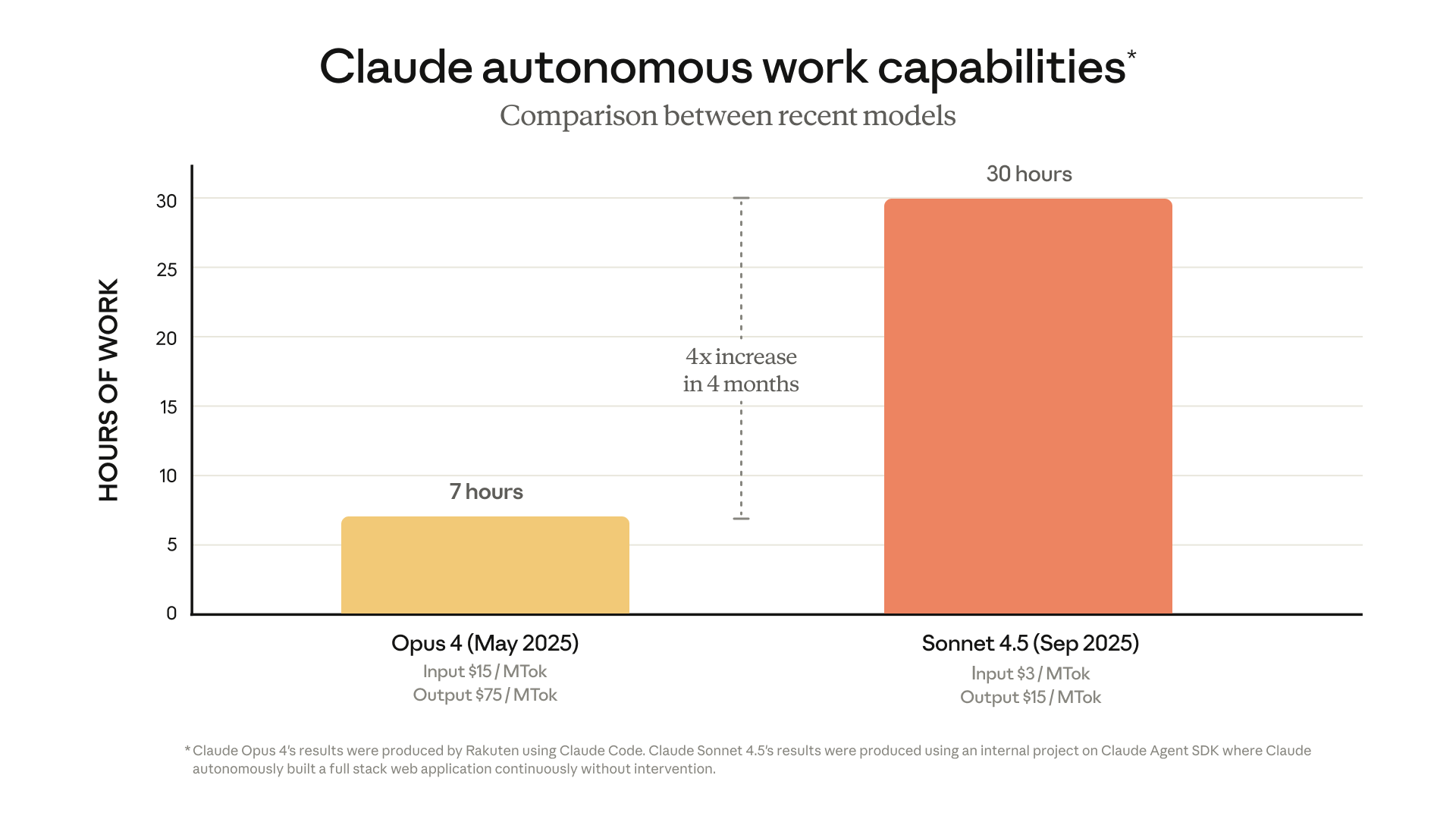
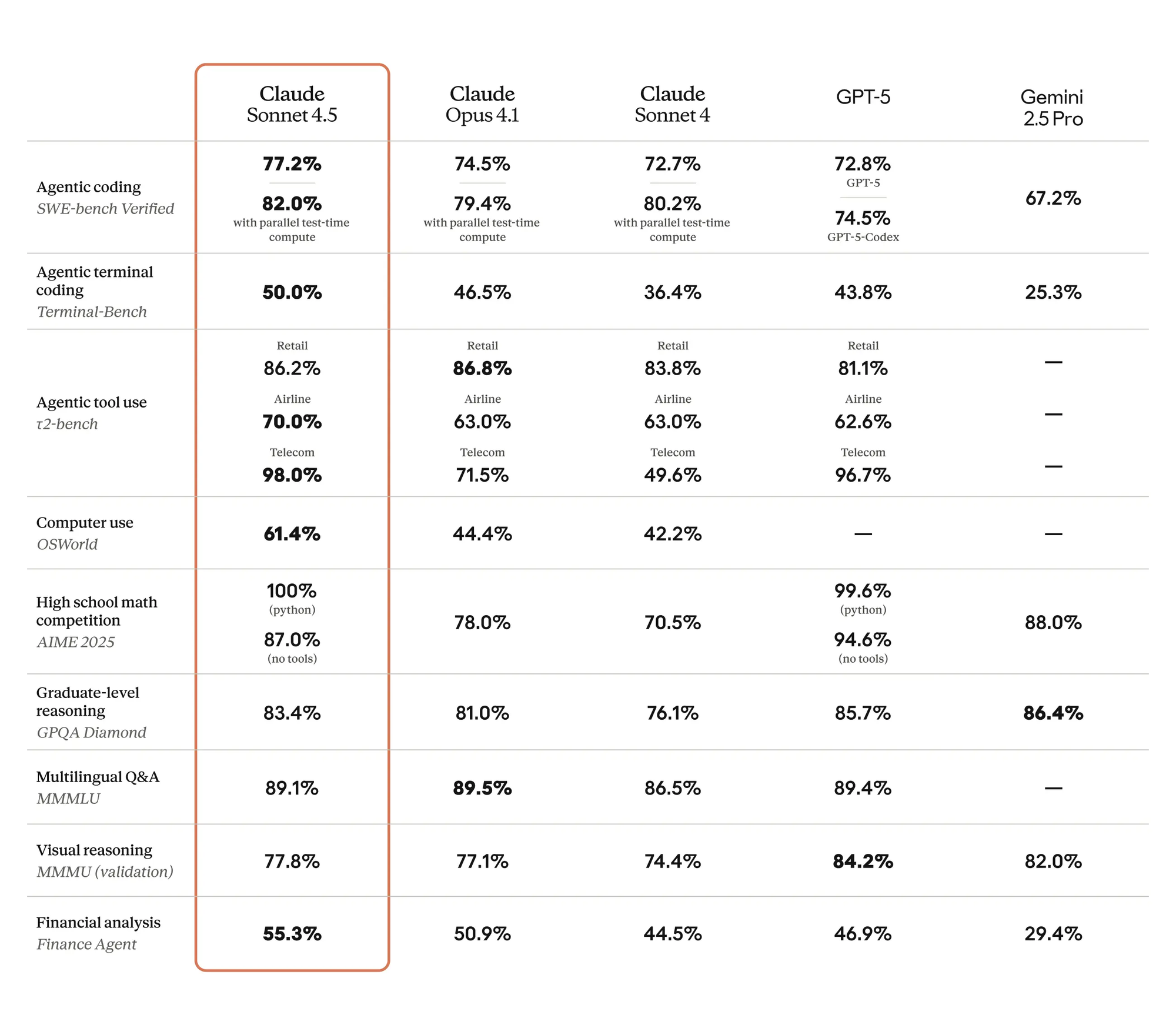
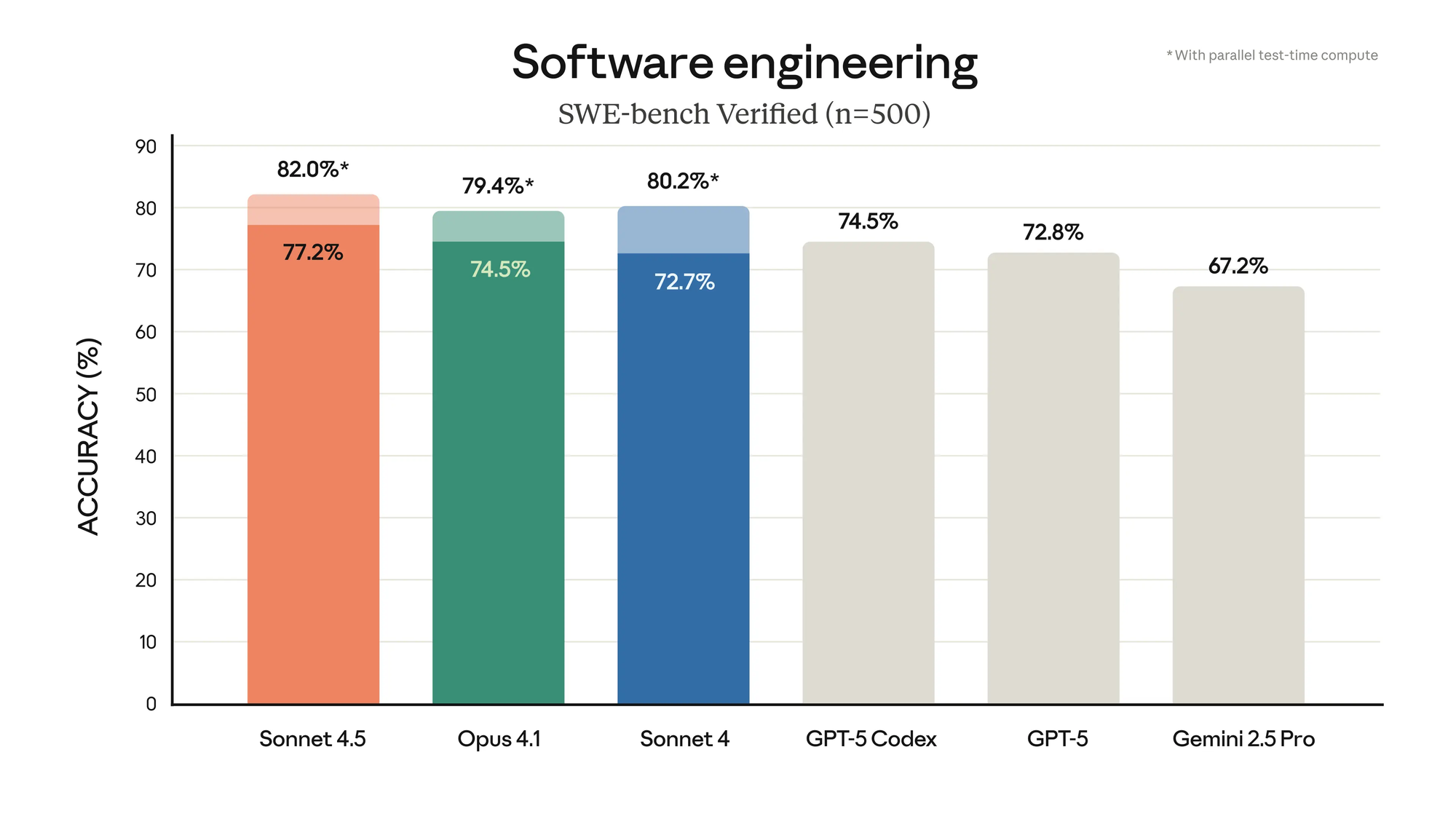
Claude Sonnet 4.5, released in late September 2024 with significant updates through early 2025, represents Anthropic's current sweet spot—a model that's extremely capable but still fast and reasonably priced for everyday use. According to Anthropic's benchmarks, Sonnet 4.5 outperforms previous Claude models and competes with or exceeds GPT-4 and other frontier models on many tasks.
But benchmarks only tell part of the story. What matters is how it performs in real-world use, which is what I've been testing extensively.
The "Smartest Model" Claim: What Does That Even Mean?
When Anthropic calls Sonnet 4.5 their "smartest model," they're making a specific claim about reasoning capability, context understanding, and output quality. Let me break down what this actually means in practice:
Deeper Reasoning and Analysis
The most noticeable improvement is in complex reasoning tasks. When you ask Claude Sonnet 4.5 to analyze something multifaceted—a business problem with competing priorities, a philosophical question with multiple perspectives, a technical challenge requiring several steps—the depth of analysis is noticeably better than previous models.
Example: I asked it to analyze whether a startup idea was viable, providing business model details, market context, and competitive landscape. Previous AI assistants gave surface-level analysis focusing on obvious points. Claude Sonnet 4.5 identified non-obvious challenges, questioned assumptions I hadn't considered, suggested alternative approaches I hadn't thought of, and provided genuinely insightful strategic recommendations.
The analysis felt like talking to a smart consultant who actually understood the problem rather than an AI pattern-matching from training data.
Superior Context Understanding
Claude has always had long context windows (200K tokens), but Sonnet 4.5 actually uses that context better. It maintains coherence across very long conversations, references earlier points naturally, and understands how different pieces of information relate even when they're separated by thousands of words.
Example: In a 50-message conversation about a complex coding project, Claude Sonnet 4.5 remembered architectural decisions from early in the conversation and flagged when later requests contradicted those choices. Previous models would've lost that thread and created inconsistencies.
More Nuanced Understanding of Instructions
This is subtle but important. When you give Claude Sonnet 4.5 instructions with multiple constraints or competing priorities, it balances them thoughtfully rather than treating instructions as a checklist to mechanically follow.
Example: I asked it to write marketing copy that was "professional but approachable, technical enough to demonstrate expertise but accessible to non-experts, persuasive without being salesy." Previous AIs struggled to balance these tensions. Claude Sonnet 4.5 delivered copy that actually threaded that needle successfully.
Better at Admitting Uncertainty
Paradoxically, one sign of intelligence is knowing what you don't know. Claude Sonnet 4.5 is notably better at expressing uncertainty when appropriate rather than confidently stating potentially wrong information.
When I ask about topics outside mainstream knowledge or ambiguous questions without clear answers, it's more likely to say "this is uncertain" or "multiple perspectives exist" rather than picking one answer and running with it confidently.
Improved Creative and Writing Quality
For creative tasks—writing stories, brainstorming ideas, crafting metaphors—the output quality jumped noticeably. The writing feels more natural, creative choices are more interesting, and the overall polish is higher.
I've used AI for creative writing assistance for years, and Claude Sonnet 4.5 is the first model where I regularly get output I'd be comfortable publishing with only minor edits. Previous models required substantial rewriting.
Real-World Testing: Where Claude Sonnet 4.5 Actually Excels
Let me share specific use cases where I've found Claude Sonnet 4.5 to be genuinely superior:
Complex Code Analysis and Generation
I'm a developer, and I use AI extensively for coding assistance. Claude Sonnet 4.5 has become my primary coding assistant, displacing GitHub Copilot and ChatGPT for most tasks.
What it does better:
- Understands architectural context and suggests solutions that fit the broader system, not just solve the immediate problem
- Identifies potential edge cases and security issues proactively
- Explains code clearly and addresses not just "what" but "why"
- Refactors code more intelligently, improving structure without changing functionality
Specific example: I gave it a messy 500-line Python script and asked it to refactor for maintainability. It not only cleaned up the code but identified subtle bugs I hadn't noticed, suggested design pattern improvements, and explained the trade-offs of different approaches. The refactored code was genuinely better than what I would've produced manually.
Research and Information Synthesis
For research tasks requiring synthesis of complex information, Claude Sonnet 4.5 is exceptional.
What it does better:
- Identifies connections between disparate pieces of information
- Synthesizes multiple sources into coherent narratives
- Distinguishes strong evidence from weak speculation
- Provides nuanced summaries that capture complexity rather than oversimplifying
Specific example: I was researching a technical topic with conflicting information across sources. I fed Claude multiple articles and asked for synthesis. It identified where sources agreed, explained the reasons for disagreement, evaluated evidence quality, and provided a balanced summary with appropriate caveats. This saved me hours of manual comparison and note-taking.
Business and Strategic Thinking
For business problems, strategic planning, or decision-making, Claude Sonnet 4.5 provides analysis that actually adds value rather than just restating obvious points.
What it does better:
- Considers second and third-order effects of decisions
- Identifies trade-offs and opportunity costs
- Questions assumptions rather than taking them as given
- Suggests creative alternatives I hadn't considered
Specific example: I was evaluating whether to pivot a product strategy. Claude analyzed market positioning, competitive dynamics, resource constraints, and team capabilities, then provided a framework for making the decision with specific criteria and risk factors to consider. The analysis was sophisticated enough that I shared it with my actual business advisor, who was impressed by the quality.
Technical Writing and Documentation
For technical documentation, explaining complex concepts, or creating educational content, Claude Sonnet 4.5 consistently produces clearer, more useful output.
What it does better:
- Adapts complexity to audience automatically
- Uses effective analogies and examples
- Structures information logically
- Anticipates reader questions and addresses them
Specific example: I asked it to explain a complex technical concept (consensus algorithms in distributed systems) for three audiences: executives, developers, and technical students. Each explanation was perfectly pitched to the audience—executives got business implications without jargon, developers got implementation details, students got foundational concepts with learning resources.
Creative Brainstorming and Ideation
For creative projects, brainstorming sessions, or when I need fresh perspectives, Claude Sonnet 4.5 generates more interesting and diverse ideas.
What it does better:
- Suggests non-obvious combinations and approaches
- Builds on ideas iteratively in productive ways
- Challenges conventional thinking
- Provides creative ideas that are actually feasible, not just wild speculation
Specific example: I was brainstorming content ideas for a blog. Instead of generic suggestions, Claude generated specific, unique angles on topics that demonstrated understanding of my audience, content gaps in the market, and current trends. Several ideas directly became successful articles.
Editing and Feedback
When I give Claude Sonnet 4.5 my writing to improve, the feedback is consistently more helpful than previous models.
What it does better:
- Identifies structural issues beyond surface-level grammar
- Suggests improvements that preserve my voice rather than rewriting in generic AI style
- Explains why suggestions improve the text
- Balances positive feedback with constructive criticism
Specific example: I gave it a draft article I'd written. Instead of just correcting grammar, it identified where my argument was unclear, suggested reorganizing sections for better flow, pointed out where I needed more evidence, and highlighted jargon that would confuse readers. The feedback genuinely improved the piece.
Claude Sonnet 4.5 vs. ChatGPT-4
This is the comparison everyone wants, so let me be detailed about it.
I tested both models on identical tasks across multiple categories. Here's what I found:
Where Claude Sonnet 4.5 Wins
- Complex reasoning tasks: Claude consistently provided more thorough, nuanced analysis on complex problems.
- Following detailed instructions: When I gave multi-part instructions with various constraints, Claude followed them more faithfully.
- Context retention: In very long conversations, Claude maintained context better and referenced earlier points more effectively.
- Writing quality: For creative or professional writing, Claude's output felt more polished and natural.
- Admitting uncertainty: Claude was more honest about limitations and ambiguity, where ChatGPT sometimes confidently stated uncertain information.
- Code explanation: Claude explained code more clearly and addressed architectural considerations more thoughtfully.
Where ChatGPT-4 Wins
- Speed: ChatGPT often responds faster, especially for simple queries.
- Plugin ecosystem: ChatGPT's plugins and integrations offer capabilities Claude doesn't have.
- Image generation: ChatGPT integrates with DALL-E for image generation; Claude doesn't generate images.
- Mainstream recognition: More people know ChatGPT, making it easier to share and collaborate.
- Web browsing: ChatGPT's browsing capability is more developed (though Claude has web access in some contexts).
Where They're Roughly Equal
- Factual accuracy: Both are generally accurate for mainstream facts, though both can make mistakes.
- Simple tasks: For straightforward questions or basic assistance, the difference is minimal.
- Conversation flow: Both maintain natural conversation well.
- Language support: Both handle multiple languages effectively.
My Usage Pattern
I now use both:
- Claude Sonnet 4.5: Complex analysis, coding, writing, research, strategic thinking
- ChatGPT-4: Quick questions, when I need image generation, when I need specific plugins
For serious work requiring deep thinking, Claude Sonnet 4.5 has become my default. For quick utility tasks, I still use ChatGPT sometimes out of habit.
Claude Sonnet 4.5 vs. Claude Opus
This is important because Claude Opus costs significantly more. Is the top-tier model worth it, or is Sonnet 4.5 sufficient?
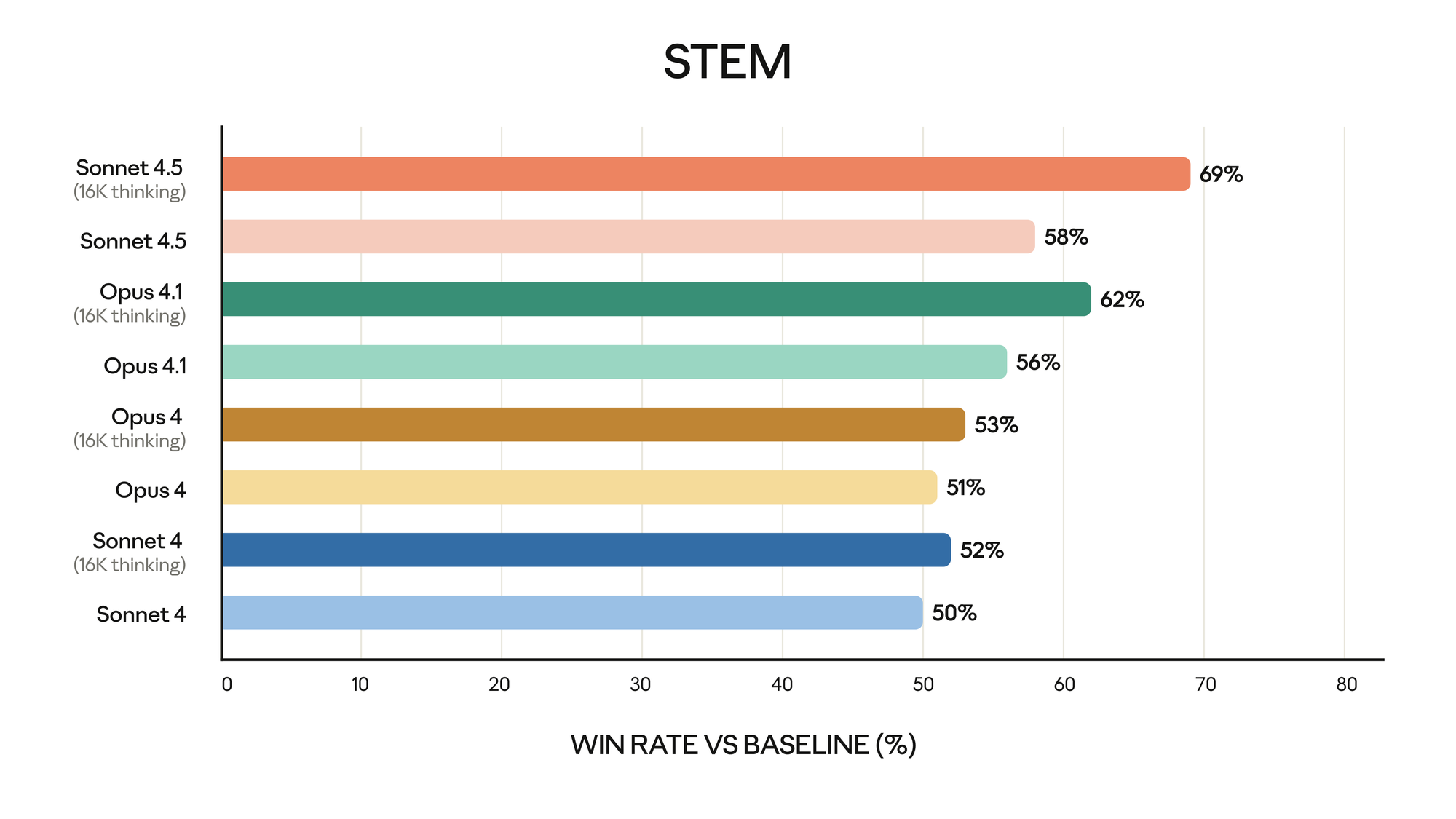
For most users, Sonnet 4.5 is sufficient. The performance gap between Sonnet 4.5 and Opus has narrowed considerably. Sonnet 4.5 is fast, capable, and handles the vast majority of tasks excellently.
Use Opus when:
- You need absolutely maximum reasoning capability on extremely complex problems
- Cost isn't a concern and you want the absolute best performance
- You're working on tasks where the quality difference justifies significantly higher cost
Use Sonnet 4.5 when:
- You want excellent performance at reasonable speed and cost
- You're doing regular work where very good is sufficient
- Speed matters alongside quality
My recommendation: Start with Sonnet 4.5. For 95% of tasks, it's excellent. Upgrade to Opus only if you consistently hit scenarios where Sonnet's capabilities are genuinely limiting.
Limitations: Where Claude Sonnet 4.5 Still Falls Short
No model is perfect. Here are Claude's genuine limitations I've encountered:
No Image Generation
Claude can analyze images but can't create them. If you need AI image generation, you'll need to use DALL-E, Midjourney, or other tools.
This is a deliberate choice by Anthropic focused on text-based assistance, but it's a limitation compared to ChatGPT's DALL-E integration.
Limited Real-Time Web Access
While Claude has some web search capabilities (depending on the interface you're using), it's not as seamlessly integrated as ChatGPT's browsing or Perplexity's real-time search.
For questions requiring very current information, dedicated search tools are often better.
Occasional Over-Cautiousness
In Anthropic's effort to make Claude safe and helpful, it sometimes refuses requests that are actually reasonable or provides overly cautious responses to sensitive topics.
I've had Claude decline to help with things like "write a villain's monologue for my screenplay" because it interpreted it as asking for harmful content. You can usually rephrase to get past this, but it's occasionally frustrating.
Still Makes Factual Errors
Despite being very smart, Claude isn't infallible. It makes factual mistakes, especially on:
- Very recent events (post-training data)
- Obscure or niche topics
- Numerical data and statistics
- Specific dates or technical specifications
Always verify important facts, especially for professional or academic use.
Can't Execute Code or Access External Systems
Claude can write code but can't run it or interact with external systems directly. For tasks requiring actual code execution, testing, or system interaction, you need additional tools.
Some interfaces (like Claude in certain contexts) have tool use capabilities, but it's not as developed as some competitors.
Context Window Usage
While Claude has a massive 200K token context window, filling it completely with information sometimes leads to less focused responses. The model can get "distracted" by less relevant information in very long contexts.
For very long documents or conversations, sometimes breaking into smaller, focused sessions works better.
Pricing: Is Claude Sonnet 4.5 Worth the Cost?
Understanding the pricing is crucial for deciding if Claude Sonnet 4.5 makes sense for you.
Claude Pro Subscription ($20/month)
The most accessible option for individuals:
- Unlimited messages (subject to fair use, typically 45-50 messages per 5 hours)
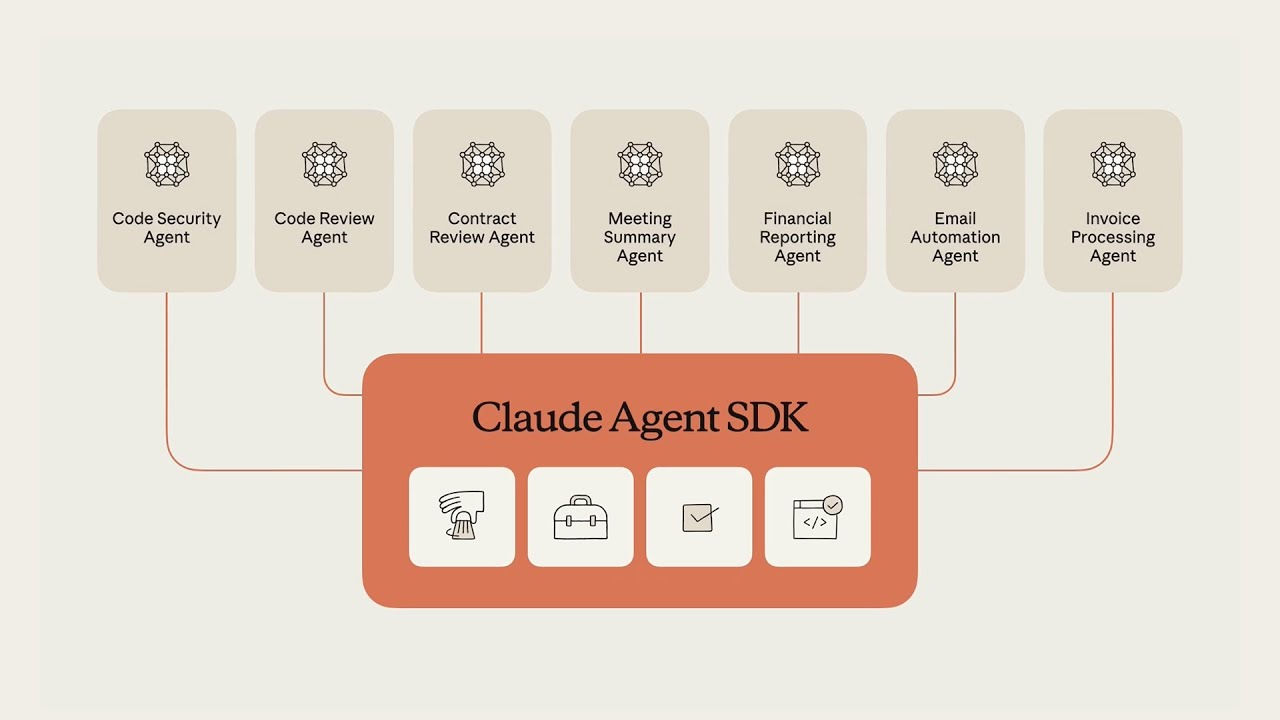
- Access to Claude Sonnet 4.5, Opus, and Haiku
- Priority access during high traffic
- Early access to new features
Who it's for: Individuals who use AI regularly for work or personal projects.
My take: If you use AI daily, $20/month is reasonable. The capability you get is worth far more than the cost if it improves your productivity or output quality.
API Access (Pay-per-use)
For developers or businesses integrating Claude:
- Sonnet 4.5: ~$3 per million input tokens, ~$15 per million output tokens
- Significantly cheaper than Opus, more expensive than Haiku
- No monthly fee, only pay for what you use
Who it's for: Developers, businesses, or power users with specific integration needs.
Comparison to ChatGPT: Pricing is competitive with GPT-4, though exact comparison depends on usage patterns.
Claude Team ($30/user/month)
For teams and organizations:
- Everything in Pro
- Longer context windows
- Team collaboration features
- Admin controls
- Priority support
Who it's for: Teams using AI collaboratively for work.
Enterprise (Custom pricing)
For large organizations with specific needs, security requirements, or high-volume usage.
Free Tier
Claude offers limited free access:
- Access to Claude Sonnet and Haiku (not always the latest versions)
- Limited number of messages
- No Opus access
Is it enough?: For occasional use or trying Claude, yes. For regular work, you'll hit limits quickly and want to upgrade.
My Pricing Recommendation
If you use AI regularly (daily or several times per week) and it impacts your work quality or productivity, $20/month for Claude Pro is easily worth it. The capability improvement over free alternatives justifies the cost within a few uses per month.
If you're casual user who occasionally needs AI help, the free tier might suffice, supplemented by ChatGPT's free tier for additional capacity.
Practical Tips for Getting the Best Results from Claude Sonnet 4.5
After three months of heavy use, here's what I've learned about maximizing Claude's capabilities:
Be Specific and Provide Context
Claude excels when given rich context. Don't just ask "write me a blog post"—explain the audience, purpose, tone, key points, and any constraints.
Weak prompt: "Help me with my business plan."
Strong prompt: "I'm developing a SaaS product for small accounting firms. Help me analyze the competitive landscape, considering that firms are price-sensitive, technologically conservative, and value reliability over innovation. I need to decide between a freemium and trial-based model."
The second prompt gives Claude context to provide actually useful analysis.
Use Multi-Turn Conversations
Claude maintains context well, so use this. Start with a high-level question, then drill into specifics across multiple messages rather than trying to get everything in one prompt.
This iterative approach often produces better results than one massive prompt.
Ask Claude to Think Step-by-Step
For complex problems, explicitly ask Claude to work through the problem methodically. "Walk me through your reasoning step-by-step" or "break this down into components" often produces more thorough analysis.
Request Multiple Options
When brainstorming or exploring possibilities, ask for multiple approaches. "Give me three different ways to approach this" or "what are the pros and cons of different options" produces more comprehensive output.
Leverage Claude's Uncertainty
When Claude expresses uncertainty, that's valuable information. Follow up with questions to understand what's uncertain and why, rather than pushing for a definitive answer.
Provide Examples
For style-specific requests (writing in a particular voice, formatting in a specific way), provide examples. Claude is excellent at matching patterns and style when given examples.
Iterate and Refine
Don't expect perfection on the first try. Treat it as a collaboration—Claude provides a first draft or initial analysis, you provide feedback, Claude refines. This iterative process produces the best results.
Use Project Knowledge (If Available)
Some Claude interfaces allow uploading documents or maintaining project context. Use this for better results on project-specific work.
Be Clear About Constraints
If you have specific requirements, limitations, or constraints, state them explicitly. Claude balances competing priorities well when they're clear.

Should You Switch to Claude Sonnet 4.5?
Here's my honest recommendation based on different user profiles:
Definitely switch if:
- You do complex knowledge work requiring deep reasoning
- You write extensively and need high-quality AI assistance
- You're a developer wanting better coding assistance
- You work with long documents and need strong context retention
- You value thoughtful, nuanced analysis over speed
- You've been frustrated with other AI assistants being too superficial
Consider switching if:
- You use AI regularly and want to compare top models
- You've hit limitations with your current AI assistant
- You want to explore what's currently possible with AI
- The specific strengths I've described align with your needs
Stick with your current tool if:
- You're satisfied with ChatGPT or another assistant
- You rely heavily on features Claude lacks (image generation, specific plugins)
- You need absolute fastest response times
- You only use AI occasionally for simple tasks
- Budget is very tight and free tiers work for you
FAQ
What is Claude Sonnet 4.5?
Claude Sonnet 4.5 is Anthropic’s balanced AI model released in late 2024. It offers strong reasoning, deep context understanding, and high-quality writing and coding assistance. It’s designed as a fast, capable, and cost-effective middle tier between Claude Haiku and Claude Opus.
Is Claude Sonnet 4.5 really the smartest AI model right now?
Claude Sonnet 4.5 is among the smartest AI models available today. It excels in complex reasoning, nuanced writing, and contextual awareness. While GPT-4 Turbo and Gemini Ultra are strong competitors, many users find Sonnet 4.5’s analysis and writing quality superior for real-world use.
How does Claude Sonnet 4.5 compare to ChatGPT-4?
Claude Sonnet 4.5 outperforms ChatGPT-4 in deep reasoning, long-context retention, and following detailed instructions. ChatGPT-4, however, is faster, offers plugins, and supports image generation. Both models are excellent—Claude is better for complex tasks, while ChatGPT is better for speed and flexibility.
Is Claude Sonnet 4.5 worth the cost?
Yes. For $20 per month with Claude Pro, users get access to Sonnet 4.5 along with Opus and Haiku. It’s a great value for professionals, writers, developers, and researchers who use AI regularly. Occasional users can start with the free tier before upgrading.
Who should use Claude Sonnet 4.5?
Claude Sonnet 4.5 is ideal for developers, writers, researchers, and professionals who need deep reasoning, detailed analysis, and long-context understanding. It’s particularly good for coding, strategy, research synthesis, and creative writing.
What are the limitations of Claude Sonnet 4.5?
Claude Sonnet 4.5 cannot generate images, has limited real-time web access, and can be overly cautious with sensitive topics. It may also make factual errors about niche or very recent information and cannot execute code directly.
Should I choose Claude Sonnet 4.5 or Claude Opus?
For most users, Claude Sonnet 4.5 offers the best balance of performance, speed, and cost. Claude Opus is only needed for extremely complex reasoning tasks or enterprise use cases where maximum accuracy justifies higher cost.
How can I get the best results from Claude Sonnet 4.5?
Be specific with prompts, provide context, and use multi-turn conversations. Ask Claude to think step-by-step, give examples, and iterate with feedback. Clear instructions and constraints lead to more accurate, thoughtful output.
Wrap up
Claude Sonnet 4.5 has become my primary AI assistant for serious work. I still use ChatGPT occasionally for specific features or out of habit, but when I need the best thinking, deepest analysis, or highest quality output, I default to Claude.
The "smartest model" claim isn't just marketing—there's substance behind it. Whether that matters to you depends on what you need AI for, but if you do complex cognitive work, Claude Sonnet 4.5 is absolutely worth trying.
The AI landscape changes fast, and what's true today might not be true in six months when the next generation of models drops. But right now, in early 2025, Claude Sonnet 4.5 represents some of the most impressive AI capability available to consumers and businesses.
Give it a try. The free tier lets you test without risk. Upgrade if it improves your work. That's my honest recommendation based on extensive real-world use.
The age of genuinely helpful, impressively intelligent AI assistants is here. Claude Sonnet 4.5 is proof of that.
Related Articles & Suggested Reading
 Dani
Dani
 Dani
Dani
 Dani
Dani