At CES 2026 in Las Vegas on January 5, Boston Dynamics and Google DeepMind announced a partnership that the robotics industry had been speculating about for months. Gemini Robotics, DeepMind's suite of AI foundation models for physical robots, will be integrated into Boston Dynamics' new production-ready Atlas humanoid robot. The two teams will conduct joint research at both company sites, with a fleet of Atlas units shipping to Google DeepMind for that research.
The partnership arrives at an unusual moment for both organizations. Boston Dynamics has just entered commercial production of Atlas for the first time in its 30-year history, transitioning from the expensive, research-oriented hydraulic Atlas that the internet fell in love with to an electric, factory-ready version designed for industrial scale. Google DeepMind, meanwhile, released a suite of robotics-specific AI models in 2025 that needed capable hardware to run on. The Atlas-Gemini pairing puts the two together.
There is also an institutional dimension worth noting. Nearly a decade ago, Google sold Boston Dynamics to SoftBank. The two organizations are now working together again, under very different circumstances, with Boston Dynamics majority-owned by Hyundai Motor Group and DeepMind sitting at the center of Google's AI strategy.
What Atlas Actually Is Now
The Atlas that Boston Dynamics has been making famous with viral videos of backflips and parkour is not the robot entering production in 2026. That hydraulic prototype was retired in April 2024. The production Atlas is a fundamentally different machine.
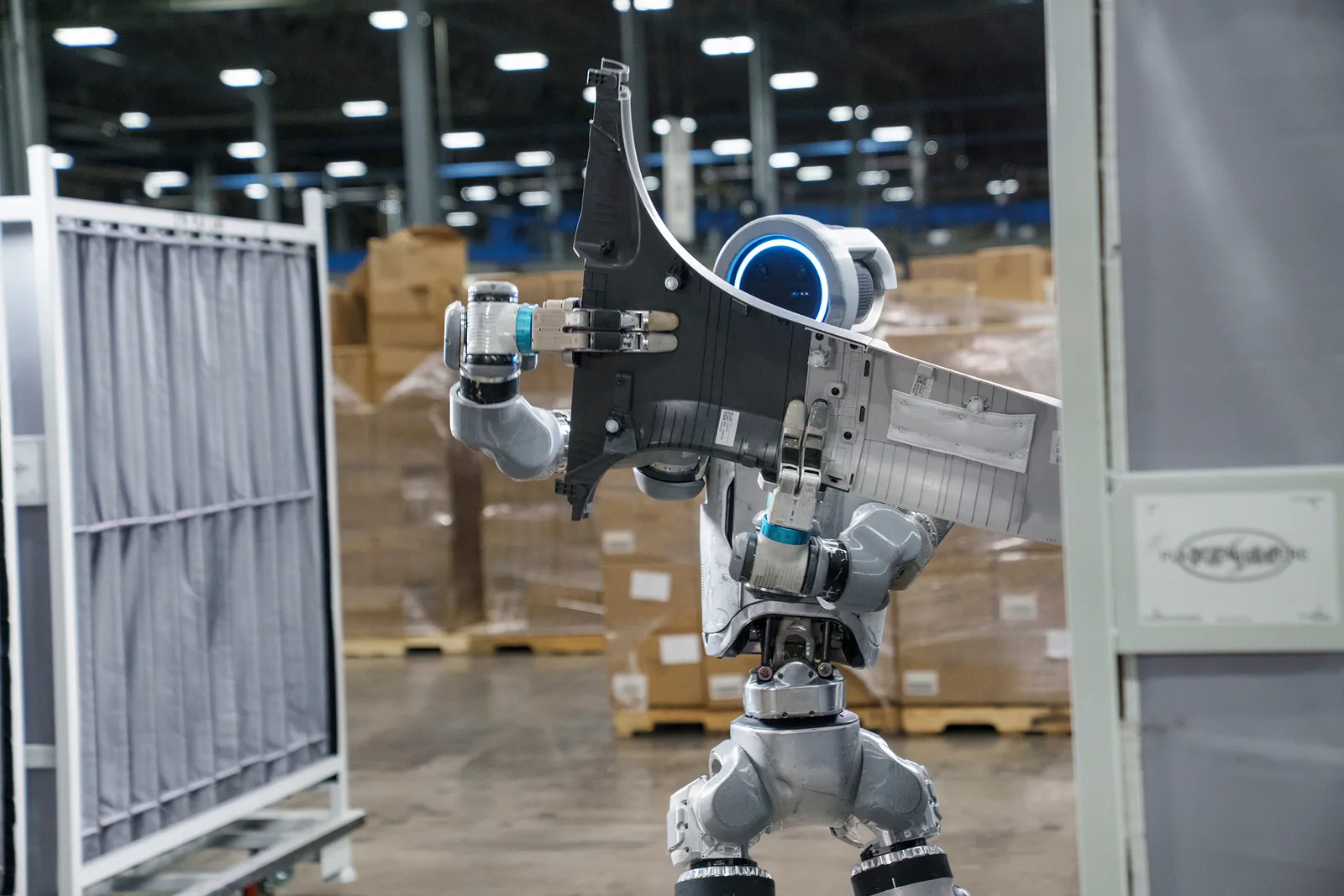
The new Atlas is fully electric, which matters for reliability, maintenance, and operational cost in industrial settings. Its specifications reflect the engineering shift from demonstration to deployment:
- Height: 6.2 feet (1.9 meters), roughly the scale of a tall adult
- Reach: 7.5 feet (2.3 meters) at full extension
- Weight: 198 pounds (90 kg)
- Payload: Can lift up to 110 pounds (50 kg), sustained lift rated at 66 pounds (30 kg)
- Degrees of freedom: 56, most with fully rotational joints
- Hands: Human-scale grippers with tactile sensing
- Vision: 360-degree cameras for full environmental awareness
- Battery: 4-hour runtime; self-swaps battery packs in under three minutes
- Setup time: Boston Dynamics claims new tasks can be configured in under a day
The 360-degree cameras are specifically designed so Atlas can detect when people are approaching from any direction and pause automatically. Boston Dynamics built fenceless operation into the design: the robot pauses when a person enters its working radius and resumes when they clear. This matters in factory environments where human workers and robots occupy the same space.
The self-swapping battery is an engineering detail that carries more operational significance than it might appear. A robot that requires human intervention to swap its battery cannot run 24/7 without downtime. A robot that handles battery changes autonomously can theoretically operate continuously across multiple shifts. Combined with the standard 110V or 220V charging input, which means existing factory infrastructure needs no rewiring, the practical deployment picture for Atlas is substantially different from humanoid robots that require dedicated infrastructure.
What Gemini Robotics Brings to the Robot
Boston Dynamics has spent three decades developing robots with extraordinary physical capability. The new Atlas represents the company's best work on the hardware side. The limitation has never been the body: it has been the intelligence that determines what the body does.
This is the gap Gemini Robotics is designed to close.
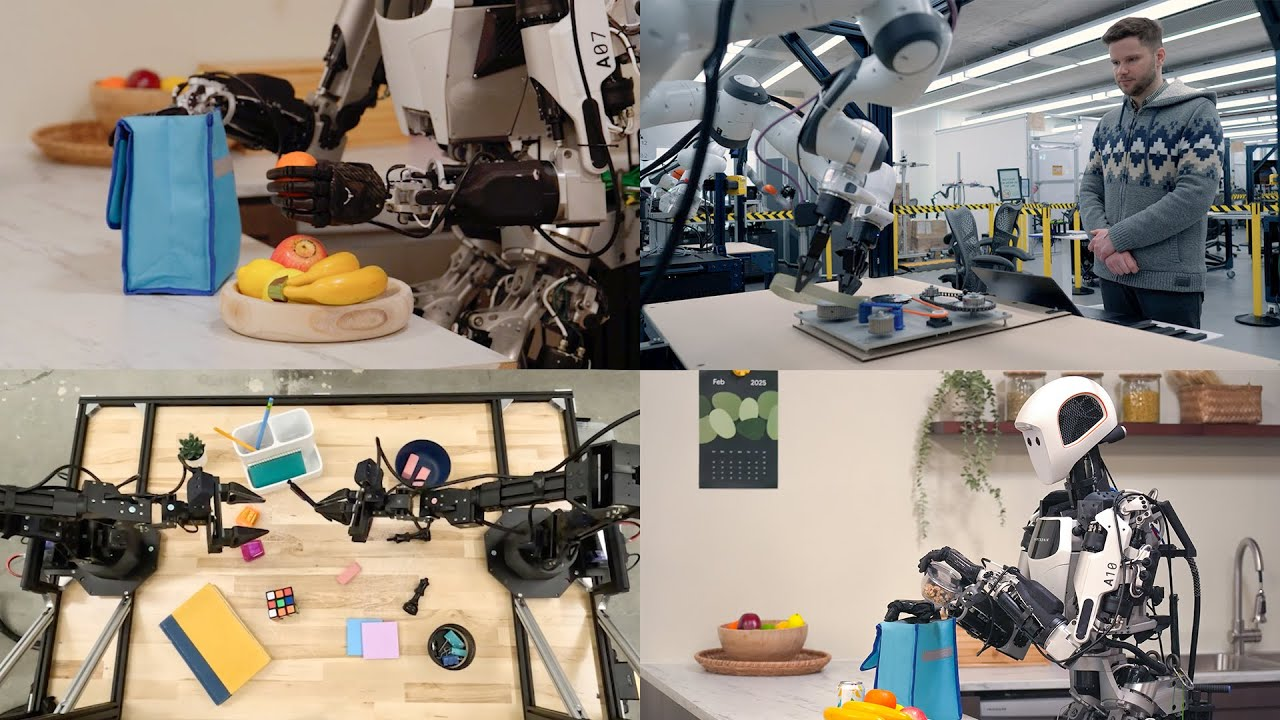
Google DeepMind's robotics models are built on the multimodal Gemini foundation. The suite includes several components targeting different layers of robotic intelligence. Gemini Robotics is a vision-language-action model for direct robot control: it takes visual input and language instructions and produces motor commands. Gemini Robotics-ER handles higher-level planning, can access tools like Google Search, communicates in natural language, and evaluates whether actions are progressing as intended. DeepMind also released Gemini Robotics On-Device, a model that runs directly on robot hardware without a cloud connection.
Carolina Parada, Senior Director of Robotics at Google DeepMind, described what the models are designed to enable: "Rather than having a set of predefined, loaded tasks onto the robot, we think robots should understand the physical world the same way we do. They should be able to learn from their experience, should be able to generalize to new situations and get better over time. Whether it is to assemble a new car part or to tie your shoelaces, robots should learn the same way we do from a handful of examples, and then get better very quickly with a little bit of practice."
That framing represents the core value proposition of the partnership. Atlas already has the physical capability to perform complex manipulation tasks. What it gains from Gemini Robotics is the ability to understand context, interpret natural language instructions, learn from observation, and generalize to novel situations. The goal is a robot that can be deployed in a new environment and adapt, rather than one that requires extensive pre-programming for each specific scenario.
Alberto Rodriguez, Director of Robot Behavior for Atlas at Boston Dynamics, articulated the practical need: "We are building the world's most capable humanoid, and we knew we needed a partner that could help us establish new kinds of visual-language-action models for these complex robots. Nobody in the world is better suited than DeepMind to build reliable, scalable models that can be deployed safely and efficiently across a wide variety of tasks and industries."
One of the specific technical challenges DeepMind is working on is data efficiency: how to train robots without requiring them to see every object in advance. Real-world data collection is expensive, and a humanoid that needs to encounter every possible object in a factory before it can handle it is not scalable. DeepMind is exploring methods that allow Atlas to learn from limited demonstrations and generalize to new objects based on understanding.
The Fleet-Learning Advantage
One capability already built into Atlas before the DeepMind partnership is worth understanding because it shapes why the partnership has particular value at scale.
When one Atlas unit learns a task, that knowledge can be deployed across an entire Atlas fleet. Training is not repeated for each robot individually. This fleet-learning architecture means that improvements developed in DeepMind's research environment, or in Hyundai's factory, can propagate to every deployed Atlas unit. As the DeepMind partnership produces more capable foundation models, those models update the entire installed base rather than just new units.
Boston Dynamics' Orbit platform manages this at the operational level. Orbit connects Atlas units to a Manufacturing Execution System or Warehouse Management System, tracks metrics, assigns work, and enables remote monitoring and control through a VR headset or tablet. The fleet-learning capability runs underneath that operational layer.
Where Atlas Is Actually Going in 2026
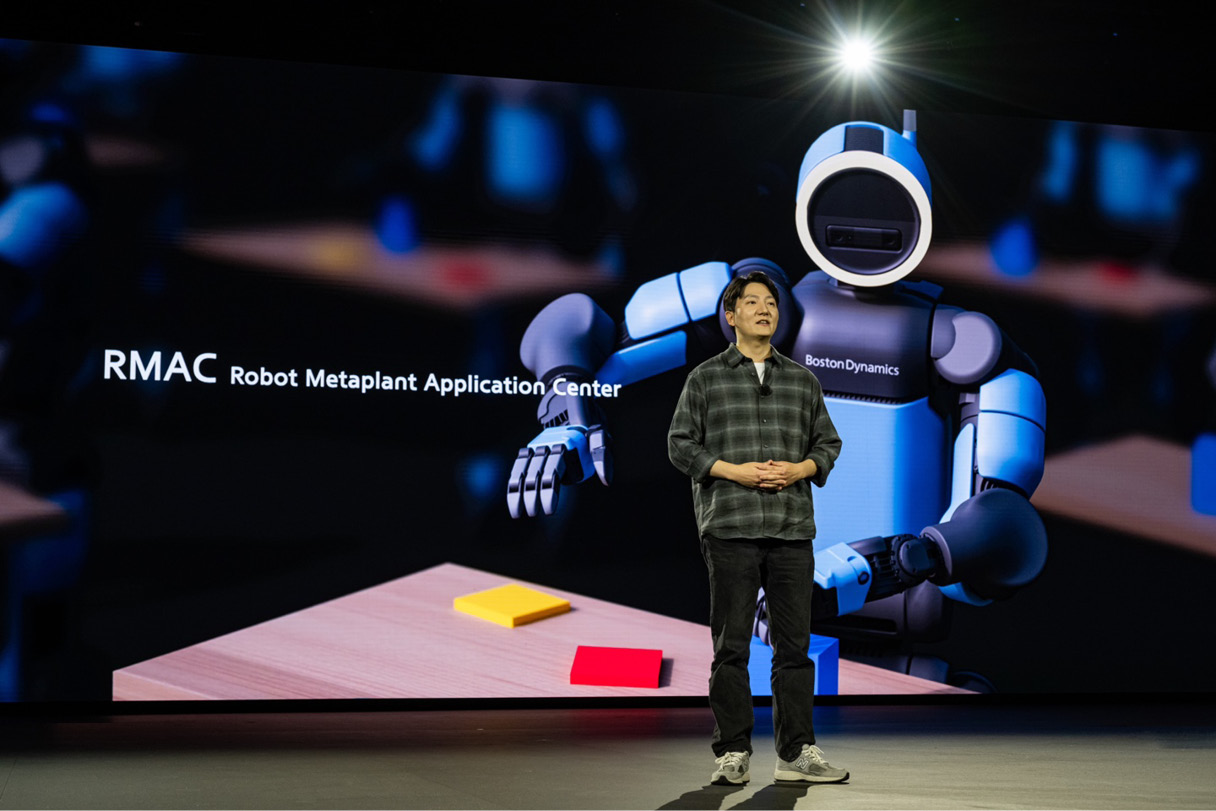
All Atlas units produced in 2026 are already committed to two customers: Hyundai's Robotics Metaplant Application Center (RMAC) and Google DeepMind's research facilities. Additional customers will begin receiving units in early 2027.
The RMAC is a dedicated facility where Hyundai will use real factory data to train Atlas for complex manufacturing tasks. It functions as both a working environment and a training data collection center. The data collected there feeds back into the AI models, creating a continuous improvement loop between deployment and capability development.
Hyundai's deployment roadmap is specific:
- 2026: Atlas fleet ships to RMAC; field testing and training begins
- 2028: Atlas begins performing high-precision parts sequencing at scale in Hyundai factories
- 2030: Atlas takes on component assembly tasks and other jobs involving repetitive motions and heavy loads
The initial focus on parts sequencing reflects where the technology is most reliable today. Sorting and moving known parts in a structured environment is a well-defined task with consistent inputs. It is also a high-value application: parts sequencing on automotive assembly lines is labor-intensive, physically demanding, and requires precision. Atlas can lift parts that would be ergonomically challenging for human workers and can operate without breaks.
The progression toward assembly tasks by 2030 reflects both a roadmap and a constraint. Complex assembly requires the combination of physical dexterity, contextual understanding, and adaptability to variation in components that is genuinely difficult for robots today. The Gemini Robotics integration is specifically aimed at enabling that progression.
What This Means for Manufacturing
Boston Dynamics CEO Robert Playter was direct at CES: "This is the best robot we have ever built. Atlas is going to revolutionize the way industry works."
That is a strong claim, but the underlying dynamics support taking it seriously, even if the timeline may stretch beyond what the announcement suggests.
The humanoid form factor matters for manufacturing specifically because most factories were designed for humans. Workstations, aisles, storage systems, and tool access are scaled to human dimensions. A humanoid robot can operate in these environments without requiring redesign. Specialized industrial robots are typically more capable at their specific task, but they require dedicated infrastructure. Atlas can walk up to a workstation, use a tool, move to another station, and adapt when the workstation layout changes.
The economics are still being established. Boston Dynamics has reportedly priced Atlas below the cost of employing two US manufacturing workers for two years, roughly $320,000, which positions it as a capital investment that competes with labor cost over a multi-year horizon rather than as a one-for-one human replacement with immediate payback.
Hyundai's $26 billion US manufacturing investment includes plans to build a robotics factory capable of producing 30,000 robots per year. When that production capacity is reached, the economics of Atlas will look substantially different from the current early-production pricing. Volume production is what drives component costs down, and Hyundai Mobis supplying the actuators through an automotive supply chain is specifically designed to access those economies of scale.
What Remains Uncertain
The scale of ambition in the Atlas-Gemini partnership is real. So are the challenges that remain unsolved.
- Task generalization is still hard. The goal of a robot that can understand verbal instructions and adapt to new situations without extensive pre-programming is technically achievable in narrow circumstances and much harder in open-ended factory environments. The progression from "sort these specific parts" to "assemble a new component we haven't shown you before" is not a software update; it is a research problem that the Gemini Robotics integration is designed to accelerate but not immediately solve.
- Battery life constrains full-shift operation. Four hours of runtime with a three-minute swap is a reasonable starting point for controlled industrial environments, but multi-shift factory operations require either a choreography of robots and battery stations or human intervention for battery management. The self-swap capability addresses this, but the workflow implications for factory floor planning are real.
- ROI takes time to establish. Boston Dynamics has stated that most customers will see return on investment within two years, a claim based on their experience with Spot and Stretch. Atlas is a substantially more complex and expensive system. The early deployments at Hyundai and DeepMind will generate the data needed to validate or revise that projection.
- Regulatory and workforce questions are unresolved. The introduction of humanoid robots that can perform a wide range of tasks previously done by humans in manufacturing raises workforce questions that go beyond the technology. Hyundai has framed the Atlas deployment as making work safer and less taxing for factory employees, an accurate description of the initial parts-sequencing tasks. What happens when the task range expands to 2030's assembly applications is a question that factories, unions, and regulators are beginning to engage with but have not resolved.
Wrap up
The Boston Dynamics Atlas and Google DeepMind Gemini Robotics partnership represents the clearest and most credible effort to date to pair industrial-grade humanoid hardware with general-purpose AI intelligence. Neither element is hypothetical: Atlas is in production, Gemini Robotics models exist and have been tested across multiple robot platforms, and the first units are shipping to Hyundai's factory and DeepMind's research facility in 2026.
The honest characterization of where this is right now is early commercial deployment in controlled industrial settings, with a clear research roadmap toward general-purpose task capability, and a manufacturing scale plan through Hyundai that could make the economics competitive with human labor in specific applications within this decade.
What the partnership does not represent, yet, is the general-purpose domestic robot that Robert Playter gestured toward when he described the long-term goal of "useful robots that can walk into our homes." The path from factory floor to home application runs through years of capability development that the Gemini Robotics integration is designed to accelerate but has not yet achieved. The factory work comes first, and that work is now actually happening.
Frequently Asked Questions
What was announced at CES 2026 between Boston Dynamics and Google DeepMind?
Boston Dynamics and Google DeepMind announced a strategic AI partnership to integrate Google's Gemini Robotics foundation models into Boston Dynamics' new production-ready Atlas humanoid robot. The joint research effort will be conducted at both company sites using a fleet of Atlas robots. The partnership aims to develop what the companies described as the world's most advanced robot foundation model for industrial applications, starting with the automotive manufacturing sector.
What are the key specs of the new production Atlas robot?
The production Atlas stands 6.2 feet tall with a 7.5-foot reach at full extension. It weighs 198 pounds, has 56 degrees of freedom with mostly fully rotational joints, human-scale hands with tactile sensing, and 360-degree cameras. It can lift up to 110 pounds and operates for 4 hours before swapping its own battery in under three minutes. The robot is designed to operate without fenced-off areas by detecting nearby humans and pausing automatically. Boston Dynamics claims it can be configured for new tasks in under one day.
What is Gemini Robotics and how does it work?
Gemini Robotics is a suite of AI foundation models from Google DeepMind designed for physical robots. It includes a vision-language-action model for direct robot control (translating visual input and language instructions into motor commands), a higher-level planning model that can access external tools and reason about task progress, and an on-device model that runs on robot hardware without cloud connectivity. The models are designed to allow robots to learn from limited examples, generalize to new situations, and understand natural language instructions.
Where will Atlas actually be deployed in 2026?
All 2026 Atlas production units are committed to two customers: Hyundai's Robotics Metaplant Application Center (RMAC) near Savannah, Georgia, and Google DeepMind's research facilities. The RMAC serves as both a working factory environment and a training data collection center for future capability development. Additional commercial customers will begin receiving Atlas units in early 2027.
What is Hyundai's roadmap for Atlas in its factories?
Hyundai plans to begin introducing Atlas into its production processes in 2028, starting with parts sequencing tasks that have proven safety and quality benefits. By 2030, the plan extends to component assembly and tasks involving repetitive motions and heavy loads. Hyundai's investment includes plans to build a dedicated robotics factory capable of producing 30,000 robots per year. Hyundai Mobis, the Hyundai affiliate, is building the actuator supply chain for Atlas, creating automotive-grade manufacturing economics for key components.
How does Atlas compare to other humanoid robots like Tesla Optimus?
Boston Dynamics has more than 30 years of robotics hardware expertise and two commercially deployed robot products: Spot and Stretch. Atlas's 56 degrees of freedom and payload capacity are industry-leading specifications for a humanoid in production. Tesla Optimus has announced production plans for 2026 but has not matched Boston Dynamics' commercial deployment track record. Figure AI's Figure 02 is being tested at BMW. Agility Robotics' Digit has made the most progress in actual commercial deployment in logistics environments among US-based competitors.
What does the partnership mean for the future of manufacturing?
The Atlas-Gemini partnership represents the most credible current effort to bring a general-purpose humanoid robot into real industrial environments. The combination of Atlas's physical capability and Gemini Robotics' AI intelligence is designed to enable a robot that can adapt to new tasks, operate in environments designed for humans, and improve over time through fleet-wide learning. The near-term impact is in specific applications like parts sequencing where the technology is most reliable. The longer-term trajectory, toward assembly tasks by 2030 and beyond, depends on continued progress in task generalization that the research partnership is specifically aimed at achieving.
Related Articles
 Dani
Dani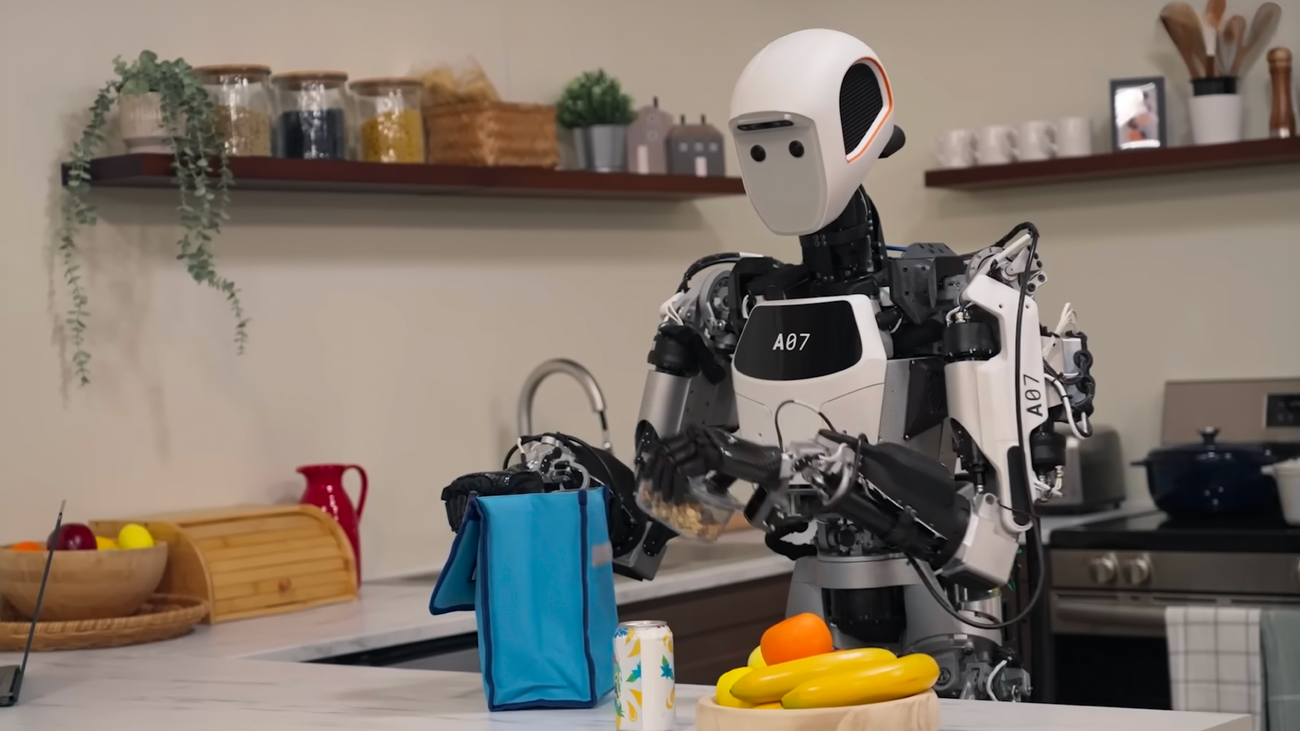
 Mark
Mark