I've been following AI developments for years, but this week felt different. Within days of each other, both OpenAI and Anthropic — the two biggest names in conversational AI — launched dedicated healthcare products. That's not a coincidence. It's a signal that the race to become your AI health assistant just kicked into high gear.
On January 11, 2026, Anthropic announced Claude for Healthcare at the J.P. Morgan Healthcare Conference in San Francisco. The timing was conspicuously close to OpenAI's January 7 launch of ChatGPT Health. Both companies are now offering tools that let you connect your medical records, lab results, and fitness data to their AI systems — and then ask questions about your own health in plain English.
This is simultaneously exciting and a little terrifying. The promise is real: finally making sense of the scattered medical data that exists across dozens of portals, apps, and PDFs. But so are the risks: AI systems that can hallucinate, liability questions that remain unresolved, and privacy concerns that deserve serious scrutiny.
Let me walk you through everything Anthropic announced, how it compares to what OpenAI is offering, and — most importantly — whether you should actually use any of this.
What Anthropic Actually Announced
Claude for Healthcare isn't one feature — it's a suite of tools targeting three different audiences: individual consumers, healthcare providers, and life sciences companies like pharmaceutical firms. Each group gets different capabilities.
For regular users like you and me, the headline feature is the ability to connect personal health records to Claude. If you're a Claude Pro or Max subscriber in the United States, you can now give Claude secure access to your lab results, medical history, and fitness data.
The integrations work through partnerships with companies like HealthEx (which consolidates medical records from over 50,000 healthcare providers), Function Health (which helps schedule and interpret lab tests), and direct connections to Apple Health and Android Health Connect. The Apple and Android integrations are rolling out in beta this week via the Claude iOS and Android apps.
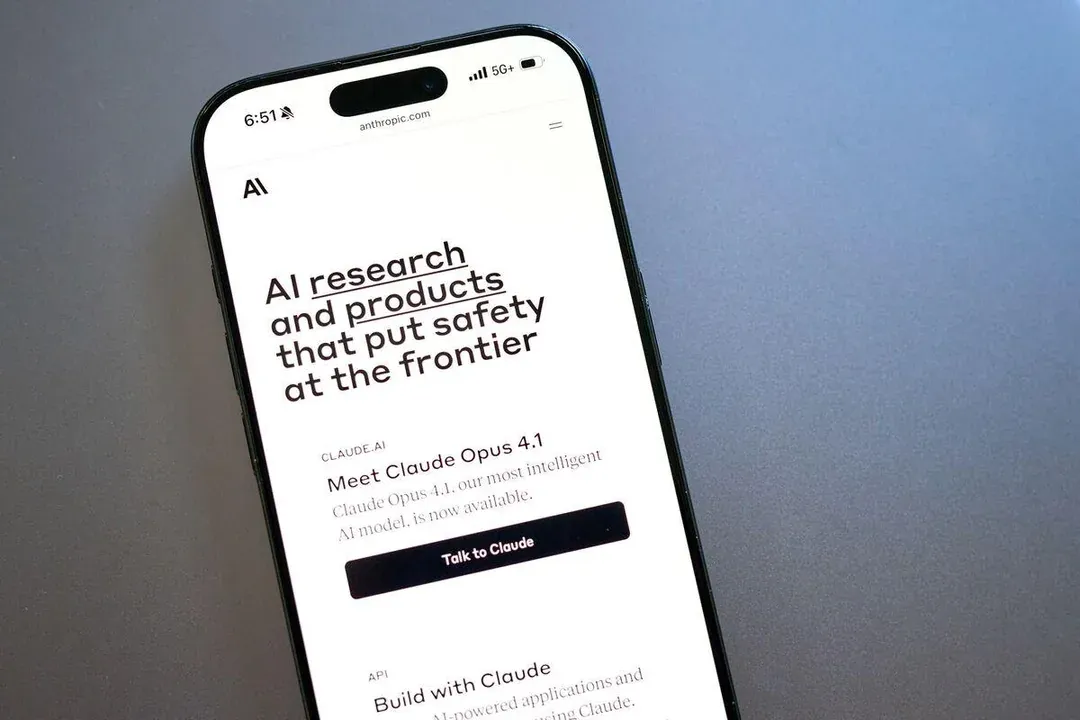
Once connected, Claude can summarize your medical history, explain test results in plain language, detect patterns across your health metrics over time, and help you prepare questions for doctor appointments. The goal, as Anthropic puts it, is to make your conversations with doctors more productive and help you stay well-informed about your own health.
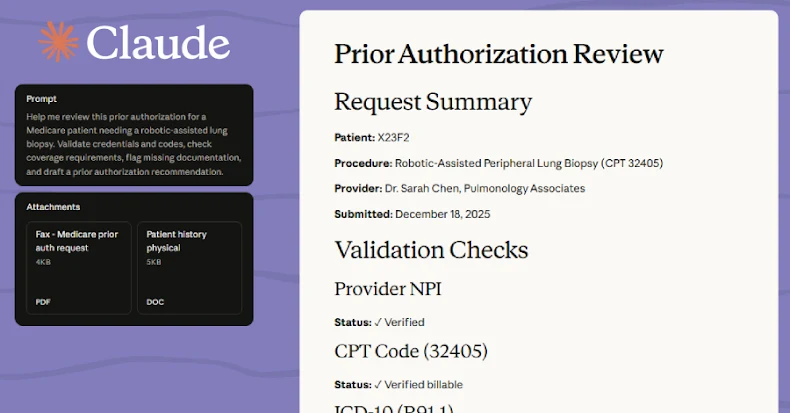
For healthcare organizations — hospitals, insurance companies, clinics — Claude for Healthcare offers something different: HIPAA-ready infrastructure that lets them deploy AI for workflows involving protected health information. This is the first time Anthropic has offered this capability, and it opens the door to using Claude for tasks like prior authorization reviews, claims appeals, care coordination, and patient message triage.
The enterprise version connects to industry-standard databases including the CMS Coverage Database, ICD-10 diagnostic codes, the National Provider Identifier Registry, and PubMed. These integrations let Claude pull relevant information from official sources when helping with administrative tasks.
For life sciences companies, Anthropic expanded its existing Claude for Life Sciences offering (launched in October) with new connectors to clinical trial platforms like Medidata and ClinicalTrials.gov. The pitch here is that Claude can help pharmaceutical companies draft clinical trial protocols, prepare regulatory submissions, and accelerate drug development timelines.
How This Compares to OpenAI's ChatGPT Health
The timing of these launches — within four days of each other — tells you everything about how competitive this space has become. Both companies clearly see healthcare as a massive opportunity, and neither wants to cede ground to the other.
But while the products share similar goals, there are meaningful differences in approach.
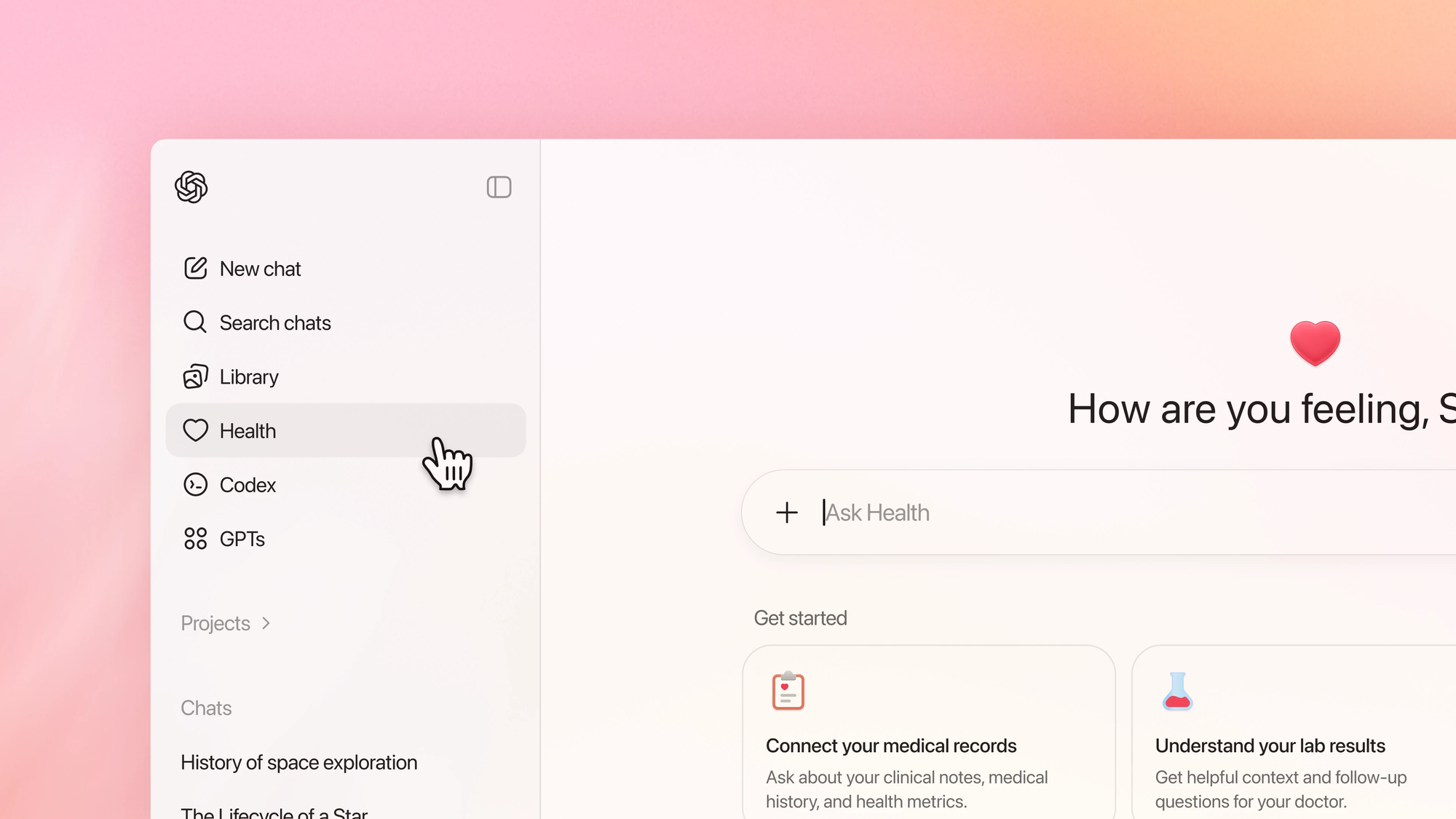
ChatGPT Health operates as a completely separate, sandboxed space within ChatGPT. Your health conversations, files, and connected apps are stored separately from your regular chats. Health has its own memory system, and information from Health conversations never flows back into your non-Health chats. It's like a walled garden within the larger ChatGPT experience.
Claude for Healthcare takes a different architectural approach. Rather than creating a separate space, Anthropic uses what they call Model Context Protocol (MCP) — an open standard they developed for connecting AI to external data sources. When you ask Claude a health question, it dynamically retrieves only the portions of your medical record most likely relevant to that specific question, rather than ingesting your entire history.
For example, if you ask about a specific lab result, Claude might pull just your recent lab reports and medications. If relevance isn't clear, Claude can ask if you want it to look further back in your history. This granular approach is designed to minimize unnecessary data access.
OpenAI's consumer health features are available to users on Free, Go, Plus, and Pro plans, but with geographic restrictions — users in the European Economic Area, Switzerland, and the UK are excluded from the initial rollout, likely due to stricter data regulations in those regions. Claude for Healthcare is similarly US-only for now, and limited to Pro and Max subscribers.
Both companies have partnered with similar types of services. OpenAI works with b.well for medical record connectivity and integrates with Apple Health, MyFitnessPal, Weight Watchers, Function, Instacart, AllTrails, and Peloton. Anthropic's integrations include HealthEx, Function, Apple Health, and Android Health Connect.
The enterprise healthcare offerings also differ. OpenAI's ChatGPT for Healthcare is already rolling out to major institutions like AdventHealth, Boston Children's Hospital, Cedars-Sinai, HCA Healthcare, Memorial Sloan Kettering, Stanford Medicine Children's Health, and UCSF. Anthropic's enterprise customers include Banner Health, Stanford Healthcare, AstraZeneca, Sanofi, AbbVie, Novo Nordisk, Genmab, Flatiron Health, and Veeva.
OpenAI emphasizes that ChatGPT for Healthcare is powered by GPT-5 models specifically built and tested for healthcare workflows. Anthropic highlights Claude Opus 4.5's performance on scientific figure interpretation, computational biology, and protein understanding benchmarks. Both are essentially saying "our AI is really good at medical stuff" — but the proof will come from real-world performance, not benchmark scores.
The Privacy Question: Is Your Medical Data Safe?
This is the question everyone's asking, and it deserves a thorough answer.
Both Anthropic and OpenAI have made strong public commitments about health data privacy. Anthropic states explicitly that they do not use users' health data to train their models. The integrations are described as "private by design," with users able to choose exactly what information they share, opt-in explicitly to enable access, and disconnect or edit permissions at any time.
OpenAI makes similar promises: health conversations in ChatGPT Health are not used to train their foundation models. The Health space has its own separate memory, conversations are encrypted in transit and at rest, and third-party apps can't access your health data unless you explicitly grant permission.
But here's where it gets complicated: consumer products like Claude.ai and ChatGPT are not themselves HIPAA-covered entities. HIPAA — the Health Insurance Portability and Accountability Act — sets strict requirements for how healthcare providers and insurers handle your protected health information. When you voluntarily share your medical records with an AI chatbot, you're operating outside that protected framework.
Anthropic notes that only specific enterprise deployments under Business Associate Agreements (BAAs) can be used with Protected Health Information in a HIPAA-compliant manner. The consumer integrations, while designed with privacy protections, exist in a different regulatory category.
There's also the broader context of how AI companies have handled data in the past. Just weeks ago, controversy erupted over Gmail's AI features and whether Google was using email content to train AI models. A proposed class-action lawsuit in California alleges that Google gave Gemini access to Gmail content without proper consent. While Google disputes the claims, the episode highlights how data use policies can become contentious.
Neither OpenAI nor Anthropic has been accused of similar behavior with health data, and both have made clear commitments against using health conversations for model training. But trust in these promises requires faith in corporate policies that could theoretically change — and in technical architectures that users can't independently verify.
My honest assessment: the privacy protections both companies have announced are reasonable and appropriate for consumer AI products. They're better than nothing, and significantly more thoughtful than what many health apps offer. But they're not equivalent to the legal protections that apply when you share information with your doctor. If you're deeply concerned about health data privacy, these tools may not be for you.
The Hallucination Problem: Can You Trust AI Medical Advice?
Here's the uncomfortable truth that both companies acknowledge but don't emphasize in their marketing: AI systems can and do make mistakes.
Large language models like Claude and ChatGPT work by predicting the most likely next words based on their training data. They don't have a concept of "true" or "false" — they generate responses that sound plausible based on patterns they've learned. This can lead to hallucinations: outputs that seem authoritative but are factually wrong.
In healthcare contexts, hallucinations can be dangerous. Fabricated drug interactions, invented medical conditions, or confident but incorrect interpretations of test results could lead to real harm. Studies have documented AI systems inventing medical citations, fabricating case references, and generating treatment recommendations that contradict clinical guidelines.
Both Anthropic and OpenAI are aware of this risk and have built safeguards. Claude is designed to include contextual disclaimers, acknowledge uncertainty, and direct users to healthcare professionals for personalized guidance. ChatGPT Health explicitly states it's designed to support, not replace, medical care and is not intended for diagnosis or treatment.
Anthropic's acceptable use policy requires that "a qualified professional in the field must review the content or decision prior to dissemination or finalization" for high-risk use cases involving healthcare decisions, medical diagnosis, patient care, therapy, mental health, or other medical guidance. This applies to developers building on Claude's API — but for individual consumers using Claude directly, the responsibility for verification falls on you.
Eric Kauderer-Abrams, Anthropic's head of life sciences, put it this way: "These tools are incredibly powerful, and for many people, they can save you 90% of the time that you spend on something. But for critical use cases where every detail matters, you should absolutely still check the information. We're not claiming that you can completely remove the human from the loop. We see it as a tool to amplify what human experts can do."
This is the right framing, but it places a significant burden on users. When an AI confidently explains your lab results, how do you know whether to trust it? Most people aren't equipped to verify medical information, which is precisely why they're turning to AI in the first place.
My recommendation: use these tools for what they're good at — organizing information, explaining terminology, preparing questions for doctors — but treat any specific medical guidance as a starting point for professional conversation, not a substitute for it.
What Healthcare Providers Are Actually Using This For
While consumer features get the headlines, the enterprise side of these launches may be more consequential for how healthcare actually works.
Administrative burden is crushing American healthcare. Prior authorization — the process where insurers require approval before covering certain treatments — can take hours to review and frequently delays patient care. Claims appeals are expensive and time-consuming for all parties. Care coordination across multiple providers often falls through the cracks.
Claude for Healthcare is designed to help with exactly these problems. By connecting to coverage databases, clinical guidelines, and patient records, Claude can help healthcare organizations speed up prior authorization reviews, support claims appeals by matching clinical criteria to patient documentation, and coordinate care across providers.
Banner Health, a major healthcare system, is already using Claude for these kinds of administrative workflows. Their chief technology officer cited Anthropic's approach to building "more helpful, harmless, and honest AI systems" as a key factor in their adoption.
The potential time savings are significant. Anthropic demonstrated how Claude can help draft a Phase II clinical trial protocol in about an hour — a task that typically takes days. For pharmaceutical companies like AstraZeneca, Sanofi, and Genmab, that kind of acceleration could meaningfully speed up drug development.
OpenAI's ChatGPT for Healthcare is similarly focused on reducing administrative burden. Major hospital systems are using it to synthesize medical evidence, draft clinical documentation, and personalize patient-facing communications.
If these tools work as advertised, they could free up significant time for clinicians to actually spend with patients. That's a genuinely positive outcome — one that both companies emphasize in their messaging.
But there's a risk here too: if AI handles more administrative tasks, cost pressures could lead organizations to reduce staff rather than redirect time to patient care. The technology could improve healthcare or simply make it more profitable for organizations while patients see limited benefit. How it plays out will depend on decisions made by healthcare administrators, not AI developers.
Should You Actually Use This?
After digging into everything both companies announced, here's my honest take on who should and shouldn't use these healthcare AI features.
You should consider using Claude for Healthcare or ChatGPT Health if you're comfortable with the privacy tradeoffs, you have scattered medical records across multiple providers and want help consolidating them, you struggle to understand medical terminology and want plain-language explanations, you want to prepare better questions for doctor appointments, or you're generally tech-savvy and able to critically evaluate AI outputs.
You should probably wait or skip it if you're deeply concerned about health data privacy, you're dealing with a serious or complex medical condition where accuracy is critical, you're likely to act on AI advice without professional verification, you're outside the United States (these features aren't available yet), or you don't have a Claude Pro/Max or ChatGPT Plus/Pro subscription.
If you do use these tools, here's how to get the most value while minimizing risk. First, use them primarily for organization and education, not diagnosis. Having Claude explain what a specific test measures or help you understand medical terminology is relatively low-risk. Having it interpret whether your results are concerning is higher-risk.
Second, always verify specific medical information with a healthcare professional. These tools are designed to make your conversations with doctors more productive, not replace those conversations. Use them as a starting point, not an endpoint.
Third, be thoughtful about what data you connect. You don't have to share everything. Start with less sensitive information and expand access only if you find the tools genuinely useful.
Fourth, understand what you're agreeing to. Read the privacy policies and acceptable use terms. Know that you're operating outside HIPAA protections when you share medical data with consumer AI products.
Fifth, keep your expectations realistic. These are first-generation consumer health AI tools. They'll improve over time, but right now they're best suited for supplementing, not replacing, human healthcare expertise.
The Bigger Picture
The simultaneous launches from OpenAI and Anthropic reflect a broader truth: healthcare represents perhaps the largest untapped opportunity for AI applications.
The numbers are staggering. OpenAI says over 230 million people globally ask health and wellness questions on ChatGPT every week — more than 40 million daily. Healthcare represents a $4 trillion market in the United States alone. Administrative costs consume roughly 30% of healthcare spending.
AI companies see these statistics and see massive potential — both to help people and to build valuable businesses. The land rush is on, and every major AI developer is staking claims.
This creates competitive pressure that could benefit consumers. When Anthropic and OpenAI are racing to build better healthcare tools, users benefit from faster innovation and more choices. The fact that both companies launched within days of each other suggests neither wants to be second.
But it also creates pressure to move fast, potentially faster than safety allows. Healthcare is a domain where mistakes can literally kill people. The appropriate pace of AI adoption should be set by evidence of safety and efficacy, not by competitive dynamics between tech companies.
Both Anthropic and OpenAI have strong safety cultures and have been thoughtful about their healthcare rollouts. But they're also businesses with growth pressures and investors expecting returns. The tension between moving carefully and moving quickly will persist.
For users, the takeaway is simple: be an informed early adopter. These tools offer genuine value, but they also carry real risks. The companies building them are doing their best to be responsible, but ultimate responsibility for how you use them rests with you.
FAQ
What is Claude for Healthcare?
Claude for Healthcare is Anthropic's new suite of AI tools designed for healthcare applications. For individual users, it allows connecting personal medical records and fitness data to Claude to get personalized health insights and explanations. For healthcare organizations, it provides HIPAA-ready infrastructure for deploying AI in clinical and administrative workflows. For life sciences companies, it offers tools to accelerate drug development and clinical trials.
How much does Claude for Healthcare cost?
The consumer health features are available to Claude Pro and Max subscribers in the United States at no additional cost beyond the existing subscription. Claude Pro costs $20/month. Pricing for enterprise healthcare deployments isn't publicly disclosed and likely varies based on organization size and use case.
Is Claude for Healthcare available outside the United States?
Not yet. The consumer health integrations — including connections to HealthEx, Function Health, Apple Health, and Android Health Connect — are currently US-only. Anthropic hasn't announced a timeline for international expansion.
Does Anthropic use my health data to train AI models?
No. Anthropic explicitly states that health data shared through Claude for Healthcare integrations is not used to train their models. Users' integrated health data is also not stored in Claude's memory. Users can disconnect or edit permissions at any time.
What's the difference between Claude for Healthcare and ChatGPT Health?
Both allow users to connect medical records and wellness data to AI assistants for personalized health insights. Key differences include: Claude uses Model Context Protocol to retrieve only relevant portions of records for each question, while ChatGPT Health operates as a completely separate sandboxed space. Both offer enterprise healthcare products for hospitals and clinics. Both are US-only for consumer features. Both claim not to use health data for model training.
Can Claude for Healthcare diagnose medical conditions?
No. Anthropic explicitly states that Claude is not intended for diagnosis or treatment. The acceptable use policy requires professional review for any use involving healthcare decisions, medical diagnosis, patient care, or medical guidance. Claude is designed to help you understand your health information and prepare for medical conversations, not replace professional healthcare.
What apps can connect to Claude for Healthcare?
Currently available integrations include HealthEx (consolidates medical records from 50,000+ providers), Function Health (lab testing and interpretation), Apple Health (via iOS app), and Android Health Connect (via Android app). The Apple and Android integrations are rolling out in beta this week.
Is Claude for Healthcare HIPAA compliant?
The consumer product (Claude.ai) is not a HIPAA-covered entity. Only specific enterprise deployments under Business Associate Agreements (BAAs) can be used with Protected Health Information in a HIPAA-compliant manner. If you're sharing your own health data through the consumer integrations, you're operating outside HIPAA's protected framework.
What healthcare organizations are using Claude?
Announced partners include Banner Health, Stanford Healthcare, AstraZeneca, Sanofi, AbbVie, Novo Nordisk, Genmab, Flatiron Health, and Veeva. These organizations use Claude for workflows including clinical documentation, regulatory submissions, clinical trial analysis, and administrative automation.
Can AI healthcare tools hallucinate or make mistakes?
Yes. All large language models, including Claude, can generate outputs that sound plausible but are factually incorrect — a phenomenon called hallucination. Both Anthropic and OpenAI acknowledge this risk. Claude is designed to include disclaimers, acknowledge uncertainty, and direct users to healthcare professionals. Users should verify specific medical information with qualified providers.
Why did Anthropic and OpenAI launch healthcare products the same week?
The timing reflects intense competition to capture the healthcare AI market. OpenAI announced ChatGPT Health on January 7, 2026; Anthropic announced Claude for Healthcare on January 11 at the J.P. Morgan Healthcare Conference. Healthcare represents a massive market opportunity with over 230 million people asking health questions on ChatGPT weekly. Neither company wants to cede this space to competitors.
Should I share my medical records with AI?
That depends on your comfort with privacy tradeoffs and your intended use. These tools can help organize scattered records, explain medical terminology, and prepare questions for doctors. However, they operate outside HIPAA protections, can make mistakes, and aren't substitutes for professional medical advice. If you're dealing with serious health conditions or are privacy-sensitive, proceed with caution or skip these features entirely.
Final Thoughts
The launch of Claude for Healthcare and ChatGPT Health within days of each other marks a genuine inflection point. The two most prominent AI companies have both decided that healthcare is a priority, and they're investing heavily to prove it.
For consumers, these tools offer real value: finally being able to make sense of scattered health data, getting plain-language explanations of confusing medical information, and being better prepared for conversations with doctors. The vision of AI as a health assistant that knows your complete medical history and can answer questions at 2 AM is genuinely appealing.
But the risks are equally real. Hallucinations can mislead. Privacy protections, while thoughtful, aren't equivalent to HIPAA. Liability questions remain unresolved. And the fundamental limitation persists: these are AI systems that predict plausible responses, not systems that know what's medically true.
My advice: approach these tools as useful supplements to, not replacements for, professional healthcare. Use them for what they're good at — organizing information, explaining terminology, preparing questions. Verify anything consequential with a real doctor. And stay informed as this space evolves, because it's going to evolve quickly.
The AI healthcare race is just beginning. How it plays out will depend not just on what these companies build, but on how thoughtfully we use what they've built.
Related Articles
 Dani
Dani
 Dani
Dani
 Mark
Mark