When Amazon launched the original Echo in 2014, the pitch was simple: a speaker you could talk to. Ask it the weather. Set a timer. Play a song. It worked, and it sold by the hundreds of millions.
But eleven years and 600 million Alexa devices later, Amazon is betting that the voice assistant era it created was only ever a warmup act.
Alexa+ — the generative AI overhaul of Amazon's flagship assistant — launched in early access in early 2025 and went fully live to all U.S. users in February 2026. It is free for Amazon Prime members and $19.99 per month for everyone else. And it is no longer confined to a cylinder on your kitchen counter.
In the span of a few months, Alexa has landed inside Samsung TVs, BMW cars, Bosch espresso machines, hospital rooms, and the Oura Ring on your finger. Each integration is a calculated move in Amazon's broader play: to make Alexa the ambient intelligence layer of daily life — not just a device, but the connective tissue between every device you own.
Whether that vision is exciting or unsettling depends on how much you trust the company behind it.
What Actually Changed with Alexa+
The old Alexa was good at narrow commands. Say the right thing in the right way, and it responded. Say it slightly wrong, and it fell apart.
Alexa+ is genuinely different, not just incrementally better.
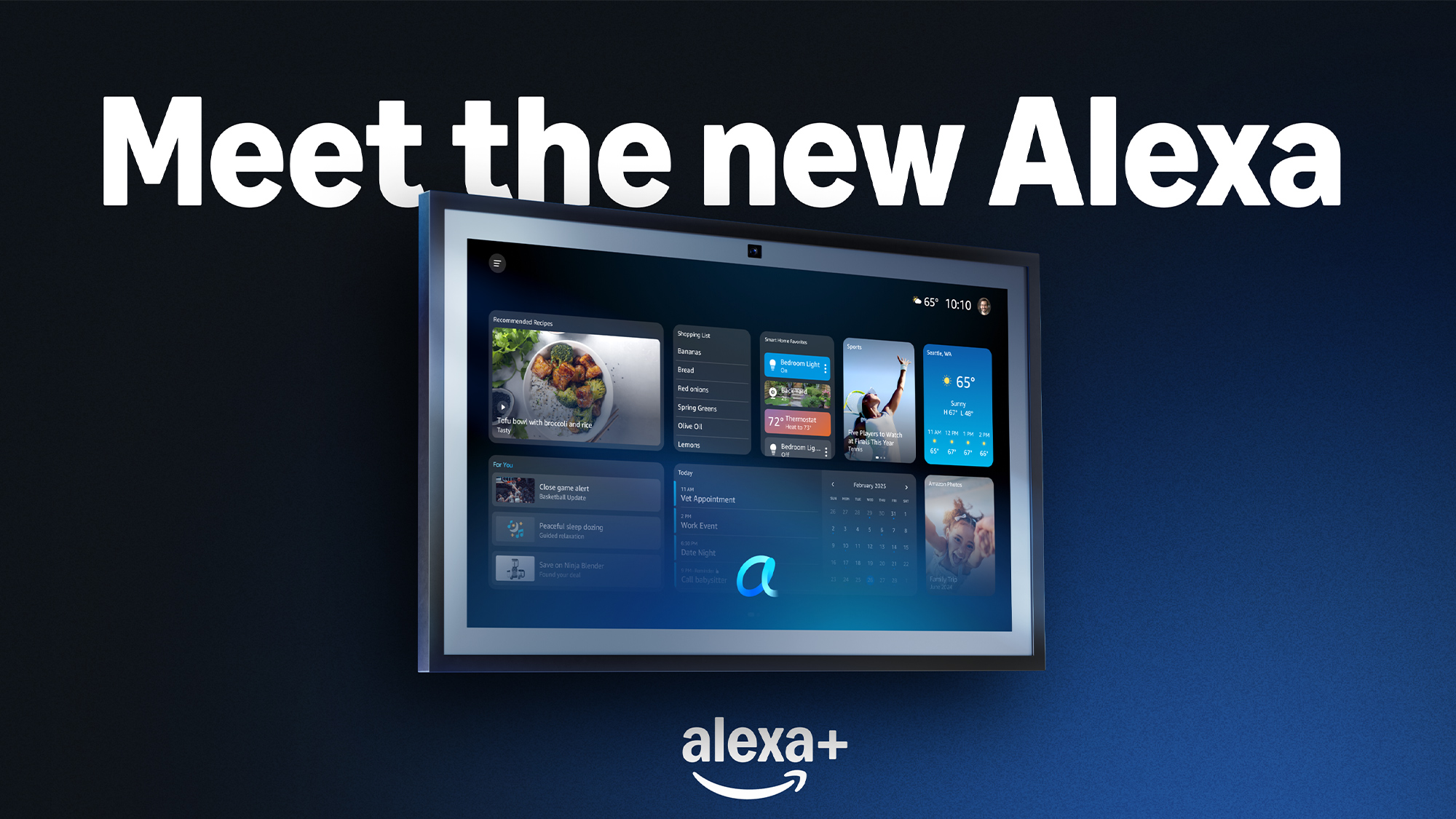
At its core, the new system runs on large language models accessed through Amazon Bedrock — including Amazon's own Nova models alongside third-party frontier models. But the real architectural innovation is something Amazon calls "experts": specialized groups of systems, APIs, capabilities, and instructions organized to handle specific categories of tasks at scale.
These experts allow Alexa+ to orchestrate across tens of thousands of services simultaneously. That is not a marketing claim — it is an engineering constraint that Amazon says has never been attempted at this scale before.
What Alexa+ Can Now Do
- Agentic tasks — Alexa+ doesn't just answer questions. It takes actions. Ask it to get your oven repaired, and it will navigate the web, find a provider on Thumbtack, authenticate, schedule the repair, and report back — without you supervising any step of it.
- Multi-turn conversation — The new Alexa follows context across a conversation the way a human assistant would. No more repeating yourself or crafting precise commands. You can speak in half-formed thoughts and colloquial language and it handles the ambiguity.
- Deep personalization — Alexa+ knows what you've bought, what you've listened to, what you've watched, where you ship things, and how you pay. You can also tell it things: family recipes, dietary restrictions, important dates, preferred routines. It applies that knowledge proactively.
- Proactive intelligence — Rather than waiting to be asked, Alexa+ surfaces information when it matters. A heads-up about heavy traffic before your commute. A reminder that a gift you wanted is on sale. A prompt to start winding down based on your sleep data.
Since launch, Amazon reports users are engaging twice as much in conversations, making three times more purchases, and requesting recipes five times more frequently compared to classic Alexa usage patterns.
The Expansion: Every Surface, Every Room
Amazon's device event in late 2025 and CES 2026 made clear that "Alexa everywhere" is no longer a metaphor. It is an active product strategy.
Samsung TVs: The First Third-Party Built-In

Samsung is adding Alexa+ to their smart televisions, marking the first time Alexa+ is built into a non-Amazon device.
That distinction matters more than it sounds. Previous integrations put Alexa on third-party devices as an app or skill. This is Alexa baked into the operating system of one of the world's most widely sold TV brands.
Alexa+ will soon be available on 2021 to 2025 Samsung TVs with Alexa Built-in. Owners can use natural voice conversations to find content across all their subscriptions, control smart home devices, play music, and manage the thermostat — all without a remote, an app, or switching inputs.
The practical implication: if you own a recent Samsung TV, Alexa+ arrives as a software update. No new hardware required.
BMW: The AI Co-Pilot
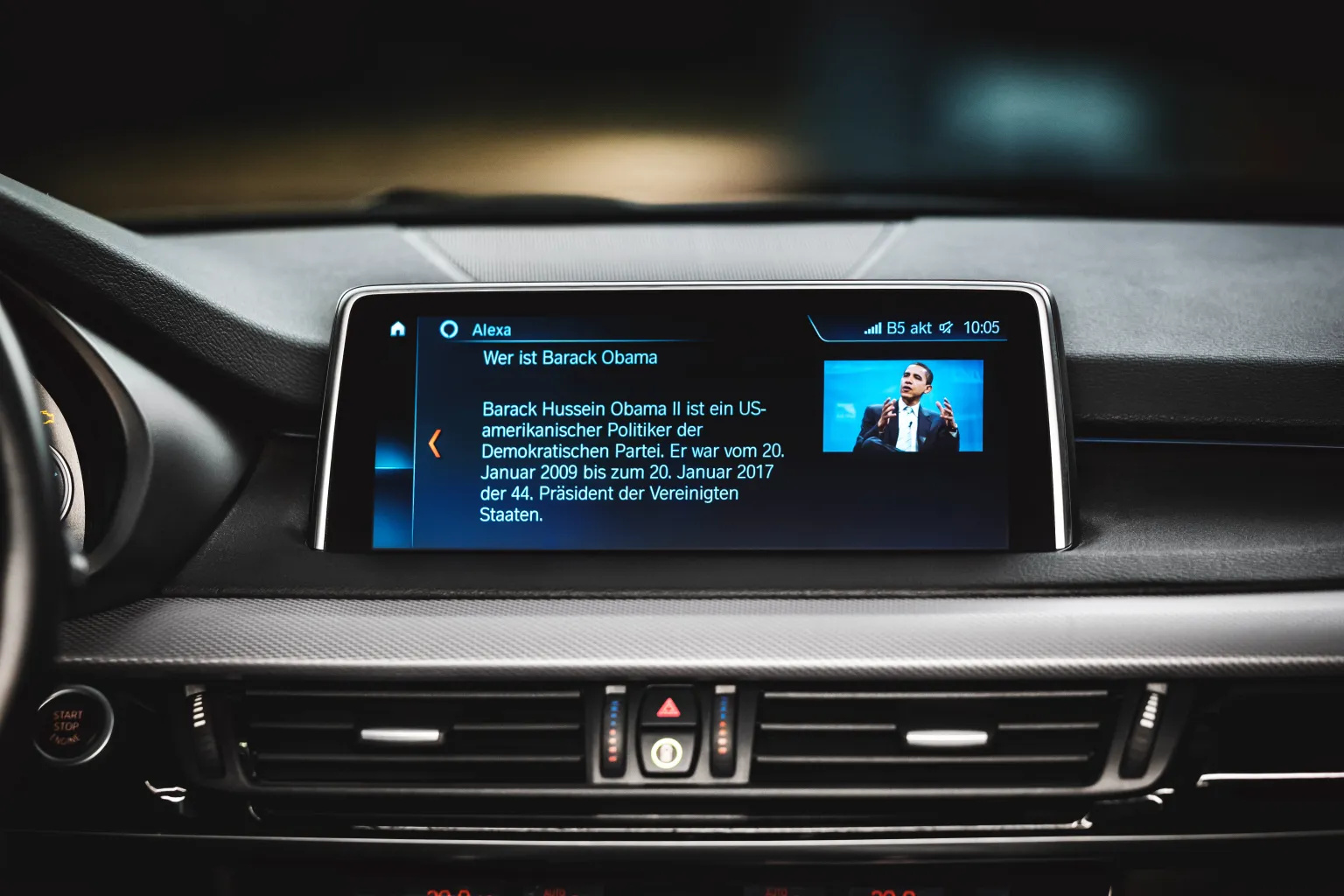
BMW is showcasing its new BMW iX3 model, a cutting-edge electric SUV with the latest technology, including the next generation of BMW Intelligent Personal Assistant, powered by Alexa+. At the core of this innovation is Alexa Custom Assistant (ACA), a comprehensive service that enables automakers to create their own intelligent AI assistants powered by Alexa+ agentic capabilities.
The result is voice control that goes well beyond setting a destination. HERE Technologies and TomTom also integrated Alexa Custom Assistant into their mapping and location technology, enabling customers to speak naturally to plan a trip, add or remove stops, find upcoming electric vehicle charging spots, and more.
The BMW integration is significant because Alexa Custom Assistant lets car manufacturers keep their branded assistant experience — "Hey BMW" stays "Hey BMW" — while the underlying intelligence is powered by Alexa+. Other automakers can now license the same infrastructure.
Bosch Coffee Machine: The Morning Ritual
This one sounds almost trivially small. It is not.
Bosch will launch new capabilities with Alexa+ in 2026 so customers can talk to Alexa to control their coffee machine. Starting with the Bosch 800 Series fully automatic espresso machine, making coffee at home will feel just like talking to a barista. Customers will be able to have a natural conversation with Alexa to make and personalize their favorite coffee, lattes, cortados, and more.
The Bosch integration is the clearest illustration of Amazon's ambient AI thesis. The goal is not to make your coffee machine smarter. The goal is to make Alexa present at the first moment of every morning — before you've looked at your phone, before you've opened your laptop — because whoever controls the first interaction of the day controls the flow of information that follows it.
Oura Ring: Health Data Meets Voice
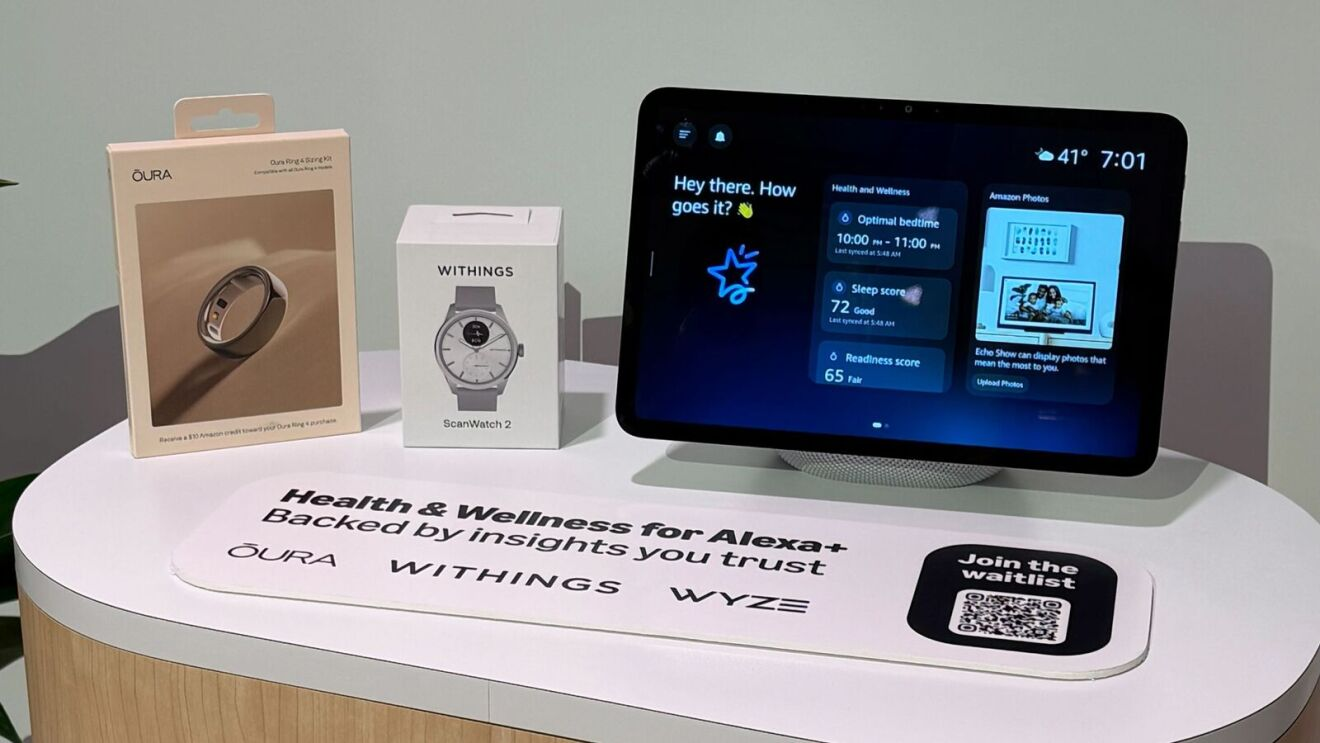
Oura is excited to announce our new integration with Amazon Alexa+, launching early next year. If you choose to connect your Oura Account with Alexa+, your Oura data comes to life in your daily environment, turning wellness guidance into timely, effortless nudges delivered when and where you need them.
The data flow in this integration is specific and opt-in. You can ask Alexa to share your Sleep and Readiness Scores each morning. Alexa can suggest the best time for a workout based on your recovery data and your calendar. In the evening, it can prompt you to wind down as your optimal sleep window approaches. You can log meals by voice directly into Oura.
Oura will only share the select data necessary to power the integrated experience, and your Oura health data is not used for advertising. Women's health data is never shared.
But the partnership is only one layer of a more complex picture. The FDA issued a revised version of the General Wellness Policy for Low Risk Devices in January 2026, clarifying and expanding the FDA's view of what types of software-based and sensor-enabled products constitute low-risk general wellness tools. The regulatory environment is opening up precisely as Alexa and wearables converge.
Alexa in the Hospital Room
The clinical side of Alexa's expansion is less visible to consumers but arguably more consequential.
Amazon's Alexa Smart Properties for Healthcare program has been quietly building out a hospital-grade deployment infrastructure for several years. BayCare Health System, Boston Children's Hospital, Hawaii Pacific Health, and Cedars-Sinai have all used the platform to deploy Echo devices in patient rooms.
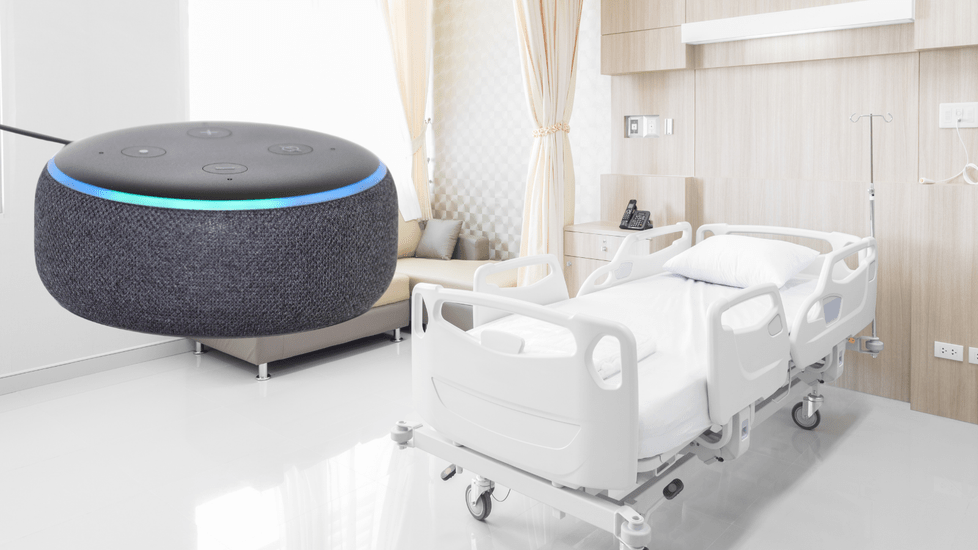
In a hospital context, Alexa handles tasks that traditionally burden nursing staff: routing patient requests to the right care team member, facilitating virtual check-ins, managing in-room entertainment, providing medication reminders, and enabling hands-free communication when a patient cannot easily reach a call button or phone.
The practical value is real. A patient who needs water goes to a CNA. A patient who needs medication gets routed to a nurse. A request that goes unaddressed escalates automatically — which does not happen with a traditional call light. In environments where nursing staff are spread thin, that triage function alone carries significant operational weight.
The devices used in healthcare settings are designed for the environment: the Echo Show 15, which can hang flat on a wall and be sanitized with hospital-grade disinfectants, and standard Echo devices running HIPAA-compliant configurations.
Amazon closed its third-party HIPAA compliance program in late 2022, centralizing healthcare Alexa development to first-party infrastructure. That reduced the breadth of what outside developers could build but improved the consistency and security guarantees of what Amazon builds and maintains directly.
The Competitive Picture
Alexa+ is entering a market that looks very different from the one the original Alexa dominated.
In 2014, Alexa had no real competitors. Today it faces:
| Assistant | Strength | 2026 Status |
|---|---|---|
| Alexa+ | Ecosystem depth, device reach, Prime bundling | Fully live in U.S., expanding to third-party devices |
| Google Assistant / Gemini | Search integration, Android dominance | Rebuilding around Gemini AI across Android and Nest |
| Apple Siri | iPhone integration, privacy positioning | Undergoing AI overhaul; criticized for falling behind |
| ChatGPT (OpenAI) | Conversational depth, agentic browsing | Expanding into commerce and device integrations |
| Samsung Bixby | Samsung ecosystem | Supplemented by Alexa+ partnership |
Amazon's competitive advantage is not the AI model itself. Google's Gemini is stronger on raw intelligence benchmarks. OpenAI's models are more capable at complex reasoning. Apple's privacy architecture is arguably more trustworthy.
What Amazon has that none of its competitors can match is distribution at scale into non-screen environments. Alexa is already in cars, kitchen appliances, security systems, TVs, and smart home devices in ways that neither Siri nor Gemini can claim at comparable scale. Adding generative AI intelligence to an installed base of 600 million devices is a structurally different proposition from convincing consumers to adopt a new platform from scratch.
The Prime bundling is also a significant factor that competitors cannot easily replicate. Alexa+ is free for Prime members, and Amazon Prime has over 200 million subscribers globally. That distribution removes the friction of a separate subscription decision for a meaningful percentage of the total addressable market.
The Privacy Question
Ambient intelligence – AI that is always present, always listening, always connected raises privacy questions that deserve honest treatment rather than dismissal.
What Amazon Actually Collects
Alexa+ is deeply personalized by design. The new Alexa is highly personalized — she knows what you've bought, what you've listened to, the videos you've watched, the address you ship things to, and how you like to pay.
That data profile is not hypothetical. It is constructed from years of Amazon shopping history, Prime Video watching, Alexa interactions, Whole Foods purchases, and Ring camera activity. Connecting Oura health data, BMW location history, and Samsung TV viewing habits to that same profile creates something considerably more comprehensive than any individual data point suggests.
Amazon does offer controls. Users can delete voice recordings, opt out of using interactions for model training, and manage what services are connected. But the default data collection posture is broad, and the burden of managing it falls on the user.
The Oura-Alexa Intersection
The Oura integration brings the most sensitive category of data — physiological health metrics — into direct contact with Amazon's commercial infrastructure.
Oura states clearly that health data is not used for advertising and that women's health data is never shared with any integration partner. The integration is opt-in and the connection can be severed at any time, deleting Oura data from Alexa.
But Oura has its own unresolved privacy questions. Oura announced it would build a plant in Fort Worth, Texas, to support its defense sector work. The company said it has worked in that sector since 2019, deploying tens of thousands of rings in support of the DoD's efforts to enhance human performance across all branches of the armed services. Online backlash followed, with concerns about data sharing with Palantir and government entities.
Oura maintains that consumer data and government data are kept in entirely separate infrastructure, and that civilian data does not touch its DoD-only offering. Those assurances may be accurate. But the combination of intimate health data, a government defense relationship, and integration with Amazon's commercial data infrastructure creates a profile of complexity that reasonable users should be aware of before connecting accounts.
The Hospital Room Question
The healthcare deployment raises the most structurally complex privacy issues of any of these integrations.
Amazon closed its third-party HIPAA compliance program after 2022, meaning that healthcare organizations working with Alexa Smart Properties now depend entirely on Amazon's own HIPAA-compliant infrastructure rather than independently certified third-party apps. Voice recordings in healthcare settings are not stored in the same way as consumer interactions — Amazon has said specifically that recordings are not retained in clinical deployments.
But HIPAA compliance and genuine privacy protection are not identical. HIPAA sets a floor; it does not dictate everything. Healthcare organizations deploying Alexa at scale are making a long-term bet on a commercial vendor's data practices, contractual commitments, and future business decisions. Those bets have historically been complicated in the healthcare technology space.
What This Means for Consumers, Developers, and Businesses
For Consumers
If you are already a Prime member, Alexa+ is effectively a free upgrade to an assistant you already own. The practical improvements — multi-turn conversation, agentic task completion, proactive health insights — are real and immediately useful for most households.
The decision calculus gets more complicated when you start connecting third-party accounts. Each integration (Oura, BMW, Bosch) expands the data surface that Amazon can access in aggregate. The individual integrations may each have reasonable privacy practices. The aggregate profile that results from combining all of them is something most users have not consciously chosen to create.
Managing that deliberately — connecting only what you actually use and reviewing permissions periodically — is the more defensible approach than defaulting to connecting everything because the setup flow makes it easy.
For Developers
Amazon previewed the new Alexa AI Multi-Agent SDK that will let brands showcase their agent alongside Alexa. This is the opening of a platform play. Brands can now build specialized AI agents that plug into the Alexa ecosystem, appearing as extensions of the assistant rather than separate apps or skills.
For developers, this is a meaningful opportunity — Alexa's installed base provides distribution that would be difficult to replicate independently. The tradeoff is building inside Amazon's platform constraints, with Amazon as the primary relationship with the end user.
For Businesses
The Alexa Custom Assistant program, powering the BMW integration, is the clearest signal of Amazon's B2B ambitions. Any company that sells a product with an interface — a car, an appliance, a piece of medical equipment — is a potential ACA customer. The pitch is: let us power the intelligence layer of your branded experience, and your customers get a dramatically better product without you having to build a frontier AI model.
That pitch will be compelling for mid-sized manufacturers who lack the resources to build proprietary AI assistants. It is more complicated for large brands that have invested significantly in their own voice and AI ecosystems — and who understand the strategic cost of ceding the customer relationship to Amazon's platform.
The Honest Assessment
Alexa+ is the most capable version of Amazon's assistant by a significant margin. The jump from classic Alexa to Alexa+ is not incremental — it is categorical. For users who have found older Alexa frustrating, the new version is worth revisiting.
The expansion strategy is also coherent in a way that Amazon's previous hardware efforts often were not. Connecting health wearables, cars, hospital rooms, and kitchen appliances to a central AI assistant that understands context across all of them is a genuinely compelling product vision, not just a feature list.
But several things are worth watching:
The "experts" architecture — which lets Alexa orchestrate across thousands of APIs — is powerful and also opaque. When Alexa books your appliance repair or adjusts your car's route based on your schedule, you are placing meaningful operational trust in automated decisions made by systems you cannot directly inspect.
The health data integration is moving faster than the regulatory framework around it. The FDA's January 2026 wellness device policy update loosens restrictions precisely as Alexa and wearables converge. That is not inherently bad — but it is a regulatory environment in flux, and the protections that apply today may not be the same ones that apply in three years.
And the hospital deployment, while operationally valuable, represents a commercial vendor's infrastructure embedded in patient care settings. Healthcare organizations adopting Alexa at scale are making long-duration bets on Amazon's business decisions, pricing, and data practices — bets that are difficult to reverse once the infrastructure is in place.
None of this means the technology is bad. It means the tradeoffs are real, and they deserve the same attention as the features.
FAQ
What is Alexa+ and how is it different from regular Alexa?
Alexa+ is Amazon's generative AI-powered upgrade to its classic Alexa assistant, launched in early access in 2025 and fully released to all U.S. users in February 2026. Unlike classic Alexa, which required precise commands and handled one task at a time, Alexa+ supports natural multi-turn conversation, can complete complex agentic tasks on your behalf (like booking a repair service), and proactively surfaces relevant information without being asked.
How much does Alexa+ cost?
Alexa+ is free for Amazon Prime members, who already pay $14.99 per month or $139 annually for Prime. Non-Prime users can access Alexa+ for $19.99 per month. A free limited version is available on Alexa.com and the Alexa mobile app.
Which new devices and integrations does Alexa+ support in 2026?
As of early 2026, Alexa+ is expanding to Samsung smart TVs (2021-2025 models with Alexa Built-in), BMW cars via Alexa Custom Assistant starting with the iX3, Bosch 800 Series fully automatic espresso machines, and Oura Ring for health and wellness insights. Amazon Echo Show 8 and Show 11 launched in late 2025 with Alexa+ preloaded on custom AZ3 Pro silicon.
How is Alexa+ used in hospitals?
Through the Alexa Smart Properties for Healthcare program, Amazon deploys Echo devices in patient rooms at facilities including Cedars-Sinai, Boston Children's Hospital, BayCare Health System, and Hawaii Pacific Health. In these settings, patients use Alexa to route requests to care teams, manage in-room entertainment, facilitate virtual check-ins, and communicate with family. Amazon operates this infrastructure under HIPAA-compliant configurations with voice recordings not retained in clinical settings.
Does Alexa+ share your health data from Oura Ring?
When you connect your Oura account to Alexa+, Oura shares only the minimum data necessary to power the integration — such as Sleep Score, Readiness Score, and bedtime window — to enable wellness briefings and reminders. Oura states that your health data is not used for advertising and that women's reproductive health data is never shared with any integration partner. The connection is opt-in and can be unlinked at any time.
Is Alexa+ available in cars?
Yes. Amazon's Alexa Custom Assistant (ACA) program allows automakers to power their branded in-vehicle assistants with Alexa+ intelligence. The first implementation is in the 2026 BMW iX3, where Alexa+ powers the BMW Intelligent Personal Assistant. HERE Technologies and TomTom have also integrated ACA into their mapping platforms, enabling conversational in-vehicle navigation for any automaker using their technology.
How does Alexa+ handle privacy?
Alexa+ personalizes using a broad data profile including Amazon purchase history, streaming activity, and Alexa interaction history. Users can delete voice recordings, opt out of using interactions for model training, and disconnect third-party integrations. Each integration (Oura, BMW, Bosch) has its own separate data-sharing terms. Amazon does not sell personal data to third parties, but the aggregate data profile created by combining multiple integrations is considerably more detailed than any single data source.
Who are Alexa+'s main competitors in 2026?
Alexa+'s primary competitors are Google's Gemini-powered assistant (strong on search and Android integration), Apple's Siri (rebuilding with AI, strong privacy positioning), and OpenAI's ChatGPT (strongest on complex reasoning and conversational depth). Amazon's competitive advantage is its installed base of 600 million Alexa devices across non-screen environments — cars, appliances, smart home hardware — and Prime bundling that gives Alexa+ free distribution to over 200 million subscribers globally.
Related Articles
 Mark
Mark
 Dani
Dani