I remember the exact moment I stopped being skeptical about AI songwriting tools.
It was 2:30 AM, I'd been staring at an unfinished chorus for three hours, and out of sheer frustration, I typed a description of what I was trying to create into Suno. Thirty seconds later, I heard a melody line that solved my problem. Not because I used it directly, but because hearing what the AI created unlocked something in my own head. Suddenly, I knew exactly what I wanted to write.
That's the thing nobody tells you about AI songwriters: they're not here to replace your creativity. They're here to unstick you when you're blocked, show you possibilities you hadn't considered, and speed up the parts of songwriting that drain your energy without adding to your art.
I've spent the past year testing every major AI songwriting tool I could find. As someone who's written songs the traditional way for over a decade – hunched over guitars, filling notebooks with half-finished lyrics, agonizing over chord progressions at 3 AM. I wanted to understand what these tools could actually do for working musicians and aspiring songwriters.
What I found transformed how I think about the creative process. Not because AI can write better songs than humans (it can't, and that matters), but because it can handle certain parts of songwriting that eat up time without necessarily adding artistic value.
This guide covers everything I've learned: which tools work best for different songwriting needs, how to use AI as a creative partner rather than a replacement, the legal and ethical considerations you need to understand, and practical workflows that actually produce results worth sharing.
Whether you're a complete beginner dreaming of writing your first song or a seasoned songwriter looking to break through creative blocks, there's something here for you. Let's dig in.
What AI Songwriters Actually Are
Before we go further, let's clear up some confusion about what "AI songwriter" actually means in 2026. The term covers several different types of tools, and understanding the distinctions helps you choose what you actually need.
The first category is full song generators. These are platforms like Suno and Udio that can create complete songs from text descriptions – lyrics, melody, instrumentation, production, vocals, everything. You type something like "upbeat indie rock about summer road trips with female vocals" and receive a finished two-minute track. The technology has become genuinely impressive. These aren't the janky robot voices from a few years ago. Modern AI-generated vocals can sound startlingly human, and the production quality approaches what you'd expect from a real studio.
The second category is lyrics-only generators. These tools focus specifically on generating written lyrics based on prompts about theme, mood, genre, and structure. You might get verses, choruses, bridges, and hooks without any music attached. The idea is that you take these lyrics and write or produce the music yourself.

The third category is melodic and harmonic assistants. These tools help with the musical elements – suggesting chord progressions, generating melody lines, creating arrangements. They're designed to integrate with your existing workflow in a DAW (digital audio workstation) rather than produce finished songs.
The fourth category is AI-enhanced creative assistants. This includes general-purpose AI chatbots like ChatGPT and Claude that can help brainstorm ideas, refine lyrics, suggest rhyme schemes, and provide feedback on your work. They don't generate audio but can be valuable thinking partners in the songwriting process.
Now here's what AI songwriters are not: they're not magic creativity machines that eliminate the need for artistic vision. Every professional songwriter I've talked to who uses these tools emphasizes the same point—AI is a starting place, not a destination. The generated output almost always needs significant human refinement to become something worth sharing.
Recording Academy CEO Harvey Mason Jr. recently said that "every" songwriter and producer he knows has used these tools. That's probably an exaggeration, but it reflects how normalized AI assistance has become in professional writing rooms. The key word is "assistance." The humans are still driving the creative decisions.
The Major AI Songwriters
Let me walk you through the platforms that dominate the AI songwriting landscape in 2026, based on extensive testing and real-world use.
Suno
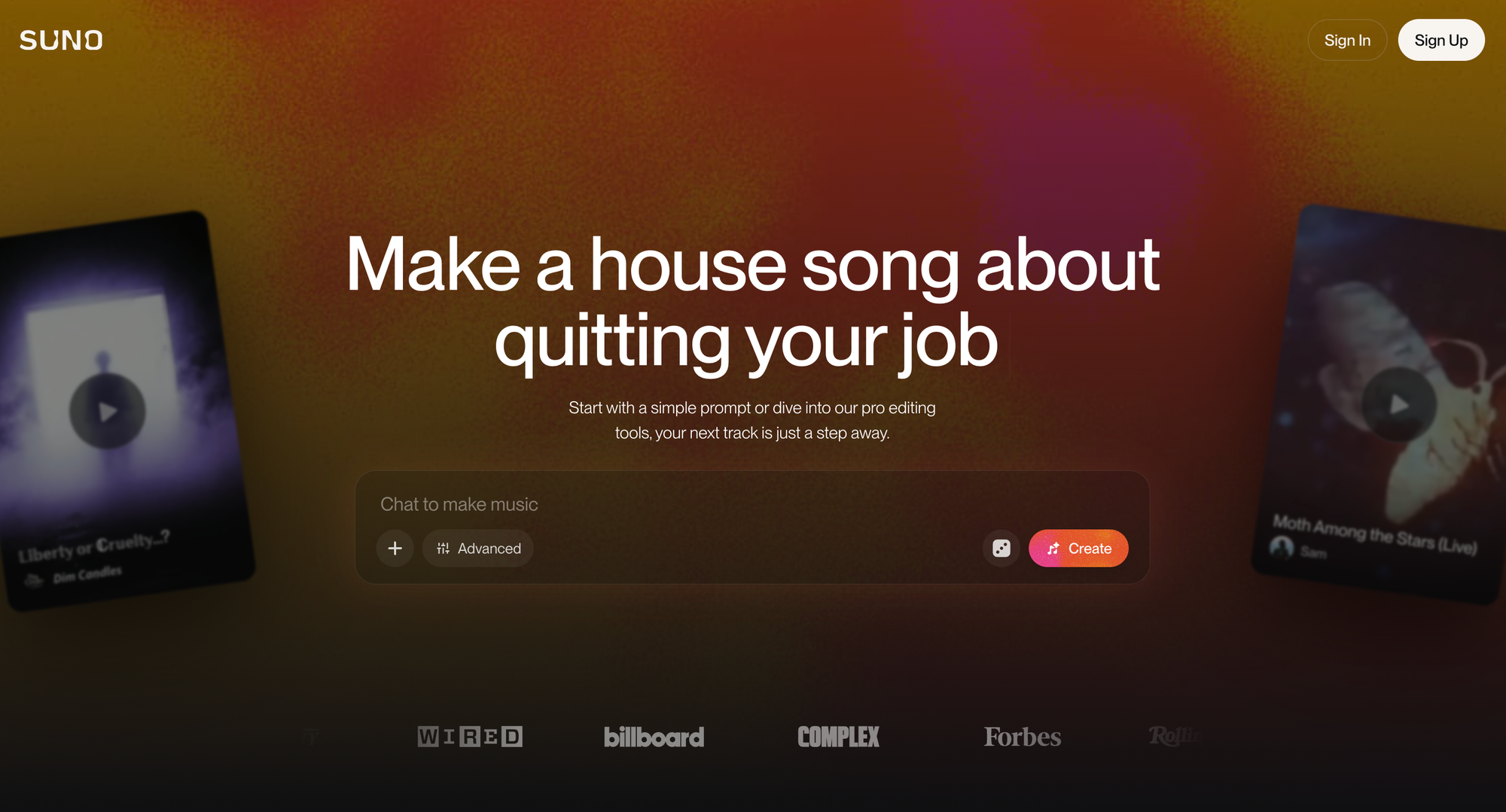
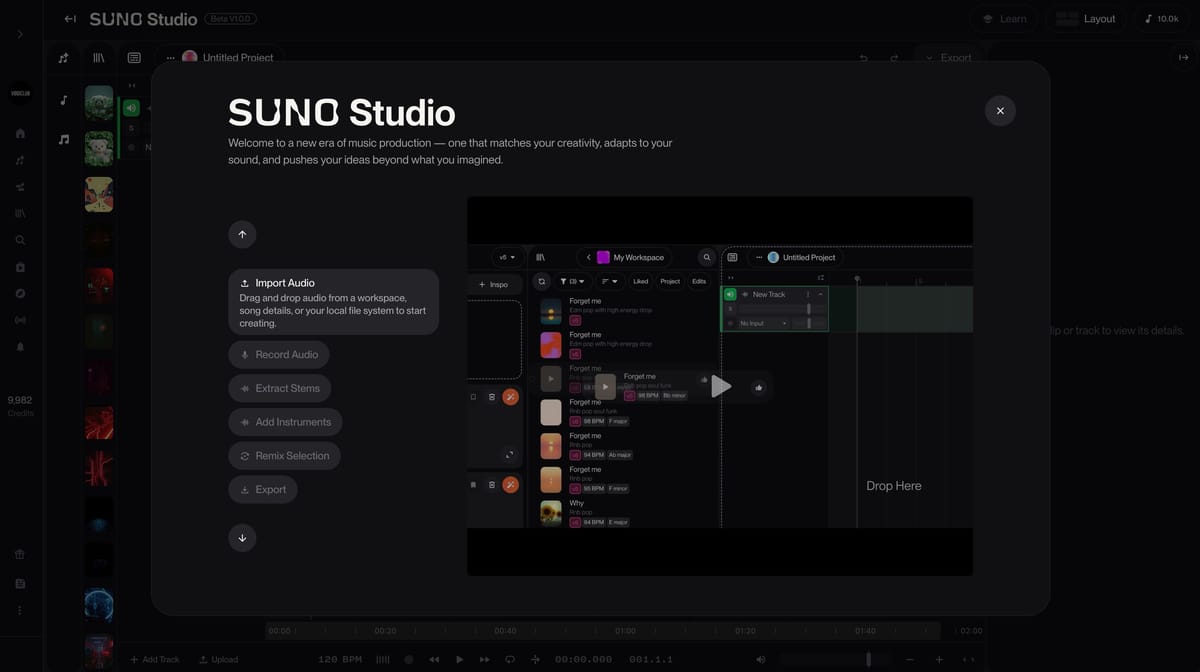
Suno has become synonymous with AI music generation for good reason. The platform specializes in turning text prompts into complete songs with remarkable speed and polish. You can go from a written description to a fully produced track with vocals in under a minute.
What makes Suno stand out is its accessibility. You don't need any musical knowledge to use it effectively. Describe the mood, genre, and theme you want, and Suno handles everything else. The results often sound like real radio tracks – catchy hooks, professional production, convincing vocals across multiple genres.
The v4.5 update released in late 2025 improved vocal quality significantly. The nuanced intonation and dynamic expression now include vibrato and whisper-soft vocals that were impossible just a year ago. Support for over 1,200 style descriptions means you can get remarkably specific about what you want.
I use Suno primarily for two things: breaking through creative blocks by generating reference tracks that show me possibilities I hadn't considered, and creating quick demos to communicate ideas to collaborators before investing time in full production. The 50 free daily credits (enough for about 10 songs) make experimentation low-risk.
The limitations? Suno works best for shorter tracks – the sweet spot is around two minutes. Extended compositions lose coherence. And while you can input your own lyrics, changing even a single word after generation can make the vocalist sound like a completely different person, which complicates revision workflows.
Udio
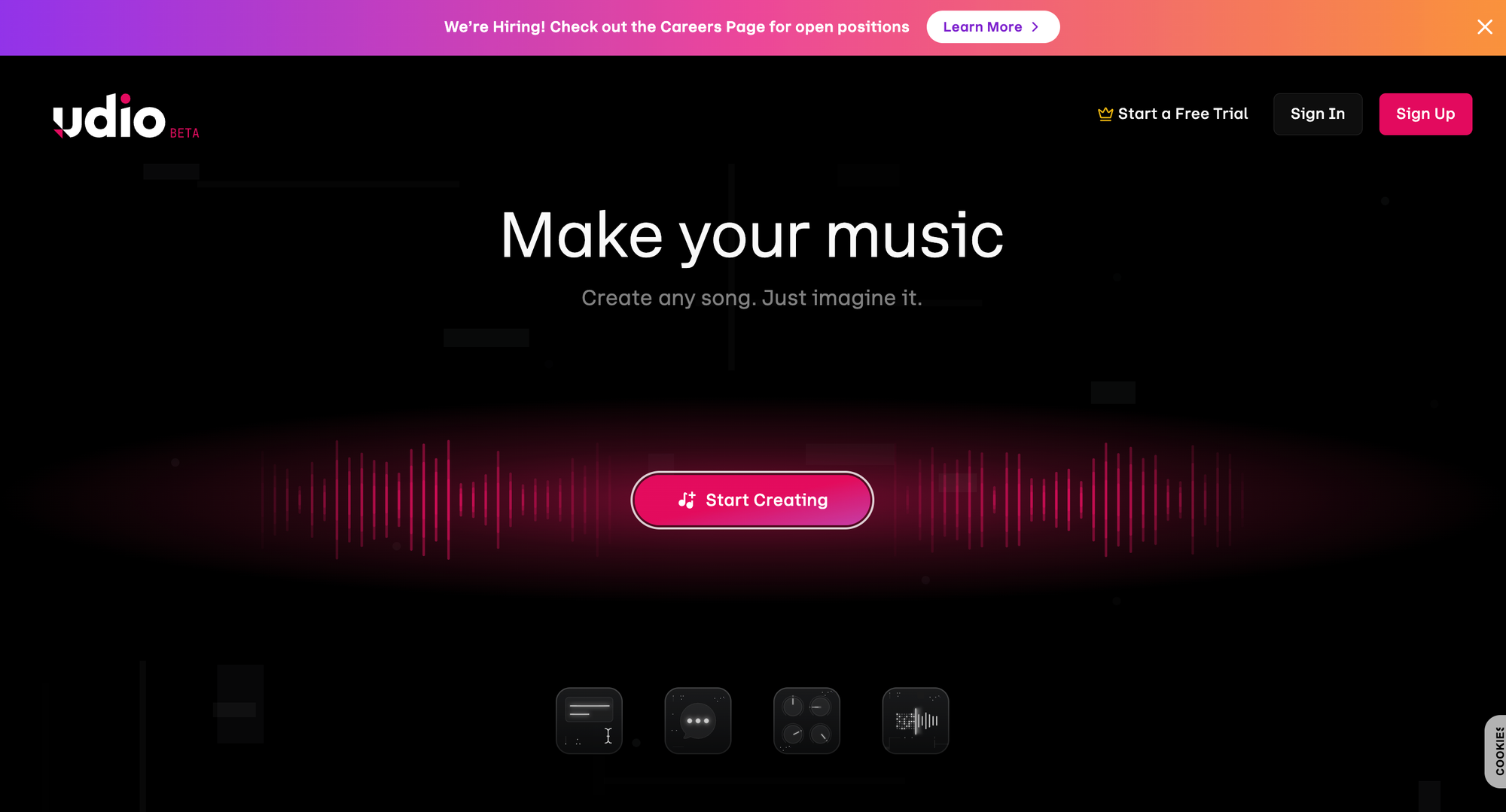
Where Suno prioritizes speed and ease, Udio gives you more control over the creative process. The platform was founded by former Spotify AI researchers who designed it with professional producers in mind.
Udio generates music in 30-second segments that you extend and shape rather than producing complete songs in one shot. This iterative approach requires more time and attention but allows you to guide the creative direction much more precisely. You can regenerate specific sections, adjust the arrangement, and build tracks that match your vision rather than accepting whatever the AI produces initially.
The standout features for professionals include stem downloads (individual tracks for bass, drums, vocals, etc.), inpainting to regenerate specific sections without affecting the rest, and remix capabilities that let you transform a track's genre while keeping the melody intact. These tools integrate well with traditional DAW-based workflows.
In my testing, Udio's audio quality edges out Suno's for extended compositions and detailed production work. The platform handles musical complexity better – intricate arrangements, genre-blending, cinematic pieces that require careful attention to dynamics and progression.
The tradeoff is accessibility. Udio's interface feels more technical, and getting optimal results requires understanding how to craft detailed prompts and iterate strategically. Complete beginners might find the learning curve frustrating compared to Suno's simplicity.
ElevenLabs Eleven Music
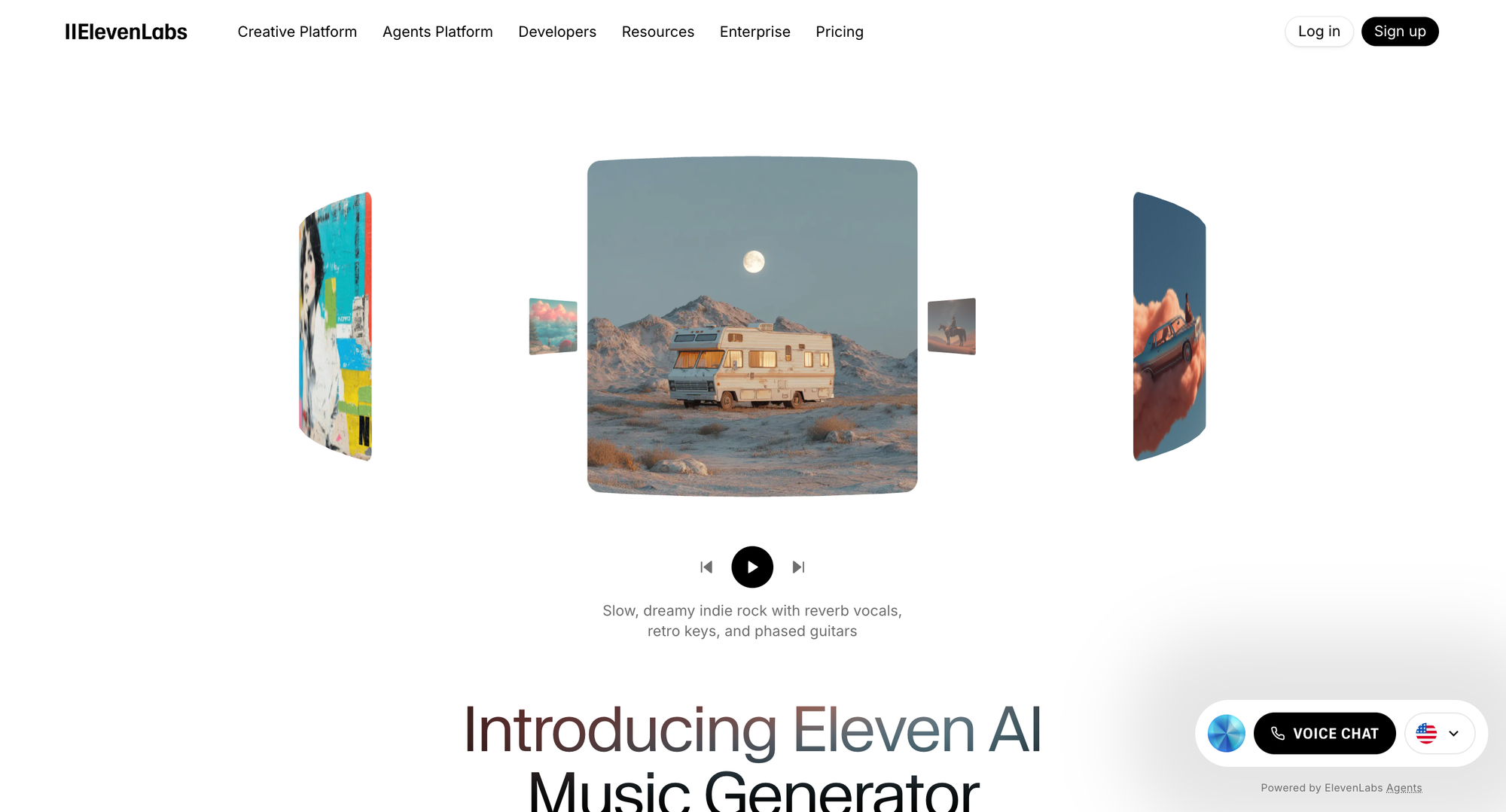
ElevenLabs built its reputation on AI voice synthesis that sounds eerily human. Their entry into music generation, Eleven Music, brings that same focus on audio quality to full song creation.
What distinguishes Eleven Music is the production quality. The platform outputs studio-grade 44.1kHz audio with clarity and warmth that's immediately apparent when you compare it to alternatives. Vocals in particular sound exceptional, not surprising given the company's background.
The other major differentiator is legal positioning. ElevenLabs licensed their training data before launching, which means they avoided the copyright lawsuits that have entangled Suno and Udio. If you're using AI-generated music commercially and want to minimize legal uncertainty, this matters.
Eleven Music is more expensive than alternatives, burning through credits quickly on longer generations. The interface is also more cumbersome for rapid iteration compared to Suno's streamlined approach.
AIVA
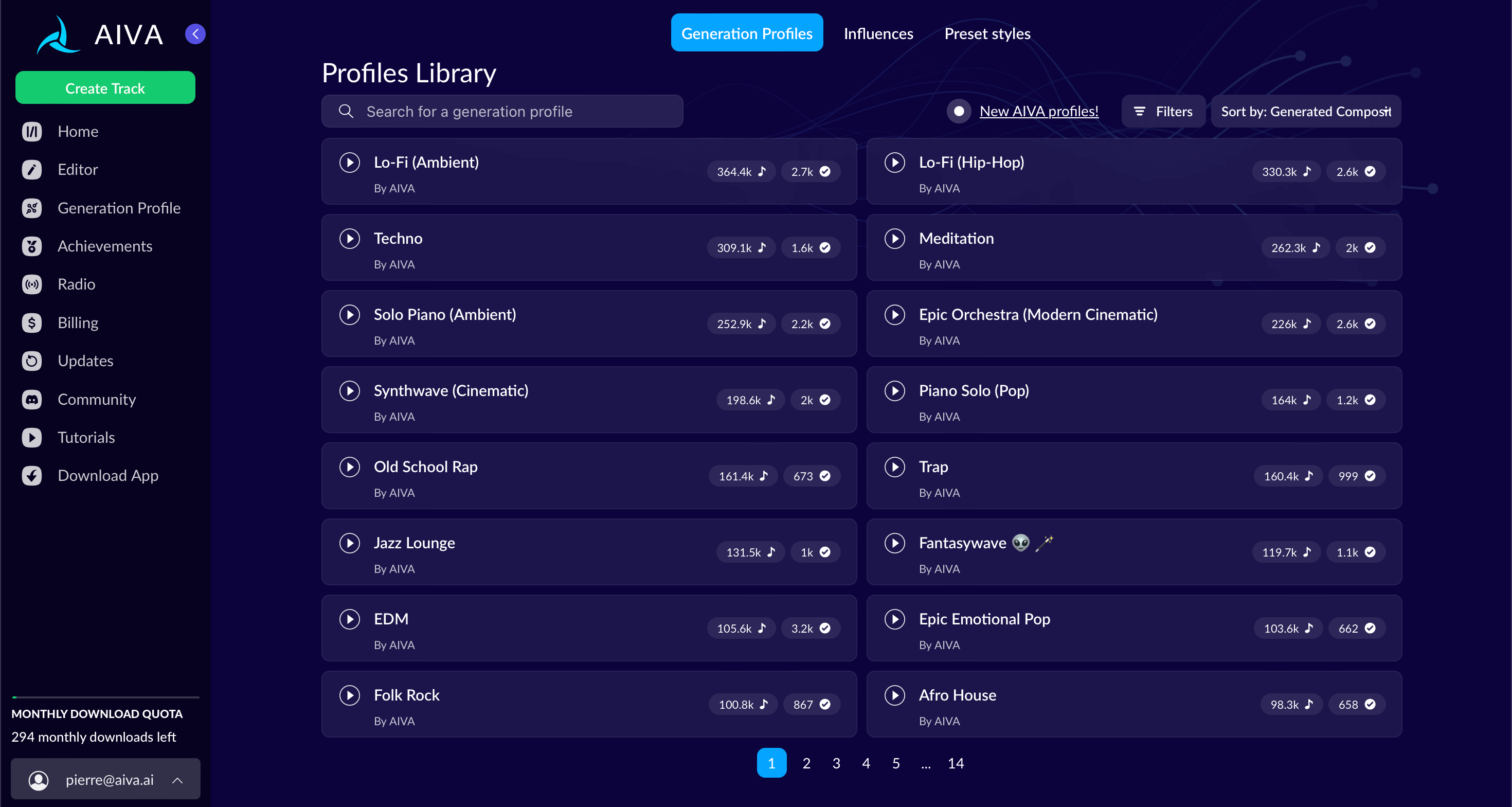
If you need orchestral, cinematic, or classical music without vocals, AIVA deserves attention. The platform specializes in instrumental composition with particular strength in emotionally evocative scoring.
AIVA offers over 250 different styles and provides a MIDI editor that lets you refine what the AI creates. Film composers use it for scoring scenes. Classical musicians appreciate the nuanced arrangements. The platform handles complex orchestration better than general-purpose generators.
The most distinctive feature is the copyright model. AIVA's Pro plan grants full copyright ownership of generated compositions, you can register them with PROs and collect royalties. This is unique among AI music platforms and matters significantly for professional use.
The limitation is obvious: no vocals. AIVA creates instrumentals only. If you want complete songs with lyrics and singing, you'll need to pair it with other tools.
Lyrics-Only Tools
Sometimes you don't want full song generation – you want help with lyrics while handling the music yourself. Several tools specialize in this use case.
ChatGPT and Claude can both assist with lyric writing, though neither is specifically designed for it. They're useful for brainstorming themes, working through rhyme schemes, getting feedback on drafts, and exploring different approaches to the same concept. I find conversational AI helpful when I know what I want to say but can't find the right way to say it.
Dedicated lyric generators like LyricStudio and These Lyrics Do Not Exist offer more structured assistance. You input genre, mood, theme, and structure, and they generate complete lyrics formatted with verses, choruses, and bridges. The results vary in quality, sometimes surprisingly good, sometimes clearly mechanical, but they're useful starting points for revision.
The practical approach I've settled on combines general AI assistants for the conceptual work with dedicated generators for quick options when I'm stuck. Neither replaces actually writing, but both can accelerate the process.
How Professional Songwriters Actually Use AI
The hype around AI songwriting often misses how working professionals actually integrate these tools. It's not about pressing a button and getting a hit song. The reality is more nuanced and more useful.
Breaking Creative Blocks
This is the use case I hear about most from other songwriters. When you've been staring at an unfinished song for hours and nothing is working, AI can provide a fresh perspective that unlocks your own creativity.
The technique I use:
One producer described it to me as "creative whiplash"—the AI's unexpected choices jolt you out of the rut you've dug yourself into. It's not about the AI being good; it's about it being different.
Rapid Prototyping and Demos
Before investing serious time in production, AI can quickly sketch out whether a concept works. This is especially valuable when communicating with collaborators, pitching ideas to artists, or testing whether a melodic concept translates to a full arrangement.
The workflow looks like this:
Several producers I've talked to use AI demos to pitch ideas to vocalists. Rather than playing guitar and trying to describe what they're imagining, they send an AI-generated reference that conveys the vibe more completely. The AI demo isn't the final product—it's a communication tool.
Learning Song Structure
For beginning songwriters, AI generators offer something traditional learning methods don't: unlimited examples of complete songs that you can examine, analyze, and learn from.
Generate dozens of songs in your target genre. Study how they're structured. Notice where choruses land, how verses build tension, when bridges provide contrast. You're not copying, you're developing intuition about how songs work by absorbing many examples quickly.
This approach complements traditional music education rather than replacing it. Understanding theory matters. But hearing theory in action across many examples cements understanding in a way that reading about it doesn't.
Exploring New Genres and Styles
When you want to write outside your comfort zone, AI can provide a reference point for how a different genre sounds and feels.
Say you typically write folk songs and want to try electronic music. Generate AI examples in that style. Listen for what makes them feel "electronic" – the production elements, rhythmic patterns, structural choices. Use that understanding as a foundation for your own exploration rather than stumbling blindly into unfamiliar territory.
This works for hybrid genres too. Curious about blending country with trap? Generate examples and analyze what works. The AI gives you a starting point for experimentation that would otherwise require extensive research or expensive collaboration.
The Ethical and Legal Landscape: What You Need to Know
AI songwriting sits at the center of contentious debates about creativity, ownership, and the future of music. Ignoring this context is irresponsible, so let's address it directly.
The Copyright Lawsuits
In 2024, Universal Music Group, Sony Music Entertainment, and Warner Music Group filed landmark lawsuits against both Suno and Udio for alleged copyright infringement. The core allegation: these platforms trained their AI models on copyrighted music without permission, and the outputs sometimes closely resemble protected works.
The legal situation has evolved significantly since then. Warner Music settled with both Suno and Udio in late 2025, entering licensing partnerships for future AI-powered platforms. Universal and Sony have also reportedly settled with Udio, though Sony's case against Suno remains ongoing.
What does this mean for users? The platforms have committed to launching new models in 2026 trained only on licensed material, while phasing out current models trained on disputed data. Artists and songwriters will have control over whether their names, voices, and compositions can be used in AI-generated music.
The practical implication: if you're using AI-generated music commercially—for content, advertisements, releases—understand that legal uncertainty remains. The safest approach is using platforms like ElevenLabs that licensed training data upfront, or waiting for the new licensed models that Suno and Udio have announced.
The Copyright Ownership Question
Here's something most casual users don't realize: the copyright status of AI-generated music is genuinely unclear, and the platforms themselves acknowledge this.
Suno's own help documentation states: "In the US, copyright laws protect material created by a human. Music made 100% with AI would not qualify for copyright protection because a human did not write the lyrics or the music."
Read that carefully. If you generate a song entirely through AI with no human creative input, you may not be able to copyright it. This means someone else could potentially use that same music without compensating you, and you'd have no legal recourse.
The solution, according to current guidance: ensure meaningful human creative contribution. Write your own lyrics, modify the AI output substantially, add your own vocal performance, arrange and produce the track yourself. The more human creativity involved, the stronger your copyright claim.
This is another reason why the most sensible approach treats AI as a tool in your creative process rather than a replacement for creativity. Beyond the artistic arguments, there are practical legal reasons to keep human hands on the wheel.
The Artist Community Response
In April 2024, over 200 prominent artists, including Billie Eilish, Nicki Minaj, Stevie Wonder, Katy Perry, and the estates of Bob Marley and Frank Sinatra, signed an open letter specifically opposing AI music generators that train on copyrighted music without permission.
This represents significant opposition from the creative community. Whether you agree with their position or not, it's important to understand that using these tools isn't ethically neutral in the current moment. The technology exists in a contested space where reasonable people disagree about appropriate use.
My personal position: AI tools that properly license training data and compensate artists are fine. Tools that trained on copyrighted material without permission raise legitimate concerns, even if I use them. I'm hopeful the industry settles into licensing frameworks that allow the technology to develop while respecting artist rights.
Practical Workflows
Let's get tactical. Here are specific workflows I've developed and refined for incorporating AI into songwriting without losing the human element that makes music meaningful.
The "Unstuck" Workflow
When you're blocked on a specific song:
- Start by writing out everything you know about the song, even if it's incomplete. What's the theme? The mood? The story you're trying to tell? Any lyrics you have, even fragments. The production style you're imagining.
- Then input all of this as a prompt to a full song generator like Suno. Be as specific as possible. Include your partial lyrics if you have them. Describe the sound in detail.
- Generate three to five variations. Don't listen critically at first – just absorb the different interpretations. Notice what surprises you, what feels wrong, what accidentally reveals something you wanted but couldn't articulate.
- Now return to your own work with fresh ears. Often you'll know immediately what was missing. Sometimes you'll borrow a small element—a rhythmic pattern, a melodic contour, a structural choice. But the creative revelation is yours, triggered by exposure to alternatives.
The "Reference Track" Workflow
When communicating a creative vision to collaborators:
- Before any technical production, describe the complete song as you imagine it. Genre, tempo, mood, instrumentation, vocal style, structure, lyrical themes—everything.
- Generate an AI reference track that captures as much of this vision as possible. It won't be perfect, but it should convey the general direction.
- Share this reference with collaborators alongside your written description. The combination of words and audio communicates more completely than either alone.
- Use the AI track as a starting point for discussion, not a template for replication. What works? What doesn't? What does the AI miss that needs to be different?
- Proceed to actual production with aligned understanding. The reference accelerates communication and reduces revision cycles.
The "Genre Exploration" Workflow
When writing outside your comfort zone:
- Generate multiple AI songs in the target genre, using varied prompts to get different interpretations. Listen to at least ten to fifteen examples, noticing patterns.
- Analyze what makes the genre work. Tempo range. Typical chord progressions. Production elements. Song structure norms. Lyrical conventions. Build a mental model of genre expectations.
- Write your own song using that understanding as a foundation. The AI-generated examples become your crash course in genre conventions.
- Generate an AI version of your song as a check. Does it feel like it belongs in the genre? If not, what's missing? Iterate.
- Produce the final version yourself (or with human collaborators), using AI reference material as guidance but not copying directly.
The "Lyric Refinement" Workflow
When polishing existing lyrics:
- Take your draft lyrics and paste them into a conversational AI like Claude or ChatGPT. Ask for feedback on specific aspects—rhyme scheme, imagery, emotional progression, singability.
- Request alternative phrasings for lines that feel weak. Don't automatically accept suggestions, but let them prompt consideration of options you hadn't considered.
- Ask the AI to identify the strongest and weakest lines. Compare its assessment to your own instincts. Sometimes outside perspective reveals blind spots.
- Request variations on specific sections with different approaches—more concrete imagery, more abstract, more personal, more universal. Use the variations as raw material for your own revision.
The final lyrics remain yours, but the process benefits from AI as thinking partner.
Common Mistakes and How to Avoid Them
After watching people use these tools (and making plenty of mistakes myself), here are the pitfalls to avoid.
Using AI Output Without Modification
The most common mistake is taking AI-generated content and using it directly without significant human contribution. This is problematic for several reasons: it produces generic results that don't reflect your artistic voice, it raises copyright ownership questions, and it misses the opportunity to develop your own skills.
The fix: treat every AI output as raw material requiring substantial revision. Let the AI give you a starting point, then make it yours through meaningful creative contribution.
Prompting Too Vaguely
Garbage in, garbage out. Vague prompts like "make a good pop song" produce generic results. The AI needs specificity to produce anything distinctive.
The fix: describe what you want in detail. Reference specific artists or songs for stylistic guidance. Specify tempo, key, mood, instrumentation, vocal characteristics, structural elements. The more precise your prompt, the more useful the output.
Judging Results Too Quickly
AI generation involves randomness. The first output for any prompt might be terrible, but the fifth might be exactly what you need. Giving up after one bad generation means missing potential value.
The fix: generate multiple variations for every prompt. Expect to discard most of them. The useful outputs justify the iterations.
Ignoring the Legal Context
Using AI-generated music commercially without understanding the legal implications can create problems. The copyright landscape is genuinely unsettled.
The fix: understand which platforms have licensed training data versus which face legal challenges. For commercial use, favor platforms with clearer legal foundations. Ensure meaningful human creative contribution to strengthen copyright claims. Stay informed as the legal situation evolves.
Losing Your Own Voice
The seductive efficiency of AI can lead to homogenization. If everyone uses the same tools with similar prompts, music becomes generic and loses the personal distinctiveness that makes it meaningful.
The fix: use AI as input to your creative process, not output. Let it inform and inspire your work, but ensure the final product reflects your artistic perspective, not the AI's average of everything it was trained on.
Where AI Songwriting Is Heading
The technology is evolving rapidly. Here's what I expect to see in the near future based on current trajectories.
- Licensed training data becoming standard. The lawsuits and settlements are pushing the industry toward proper licensing. Expect platforms to differentiate based on their relationships with labels and publishers. Artists will have opt-in/opt-out control over whether their work trains AI models.
- Integration with traditional workflows. We're already seeing AI tools that plug into existing DAWs rather than operating as standalone generators. This integration will deepen – expect AI assistance embedded throughout production software, helping with arrangement, mixing, and mastering alongside composition.
- Personalization. Current models generate music based on general training data. Future models will adapt to your specific preferences, learning your style and producing output that reflects your artistic sensibility rather than generic patterns.
- Real-time collaboration. Current tools are turn-based – you prompt, the AI generates, you evaluate. Future tools will enable genuine back-and-forth collaboration, with AI responding to your playing in real time and contributing to improvisation.
- Transparency and attribution. As legal frameworks mature, expect clearer labeling of AI involvement in music and systems that track and compensate artists whose work contributed to training data.
Frequently Asked Questions
Can AI actually write a good song by itself?
AI can generate songs that sound polished and competent, but whether they're "good" depends on your criteria. AI-generated songs typically lack the emotional depth, personal perspective, and intentional artistic choices that distinguish meaningful music from background noise. They can be catchy, well-produced, and genre-appropriate without being genuinely moving. Think of it like the difference between a competent cover and an artist's original work—technically similar but spiritually different.
Will AI replace human songwriters?
No, and here's why: songwriting isn't just about producing sound patterns that follow musical conventions. It's about communicating human experience in ways that resonate with other humans. AI can mimic the structure of communication without actually having anything to communicate. The Recording Academy CEO's observation that "every" songwriter he knows uses these tools reflects augmentation, not replacement—AI handles technical tasks while humans provide creative vision.
Is AI-generated music legal to use commercially?
The legal situation is genuinely unsettled. Major lawsuits against Suno and Udio are partially resolved through settlements, but the fundamental legal questions remain open. For safest commercial use, choose platforms like ElevenLabs that licensed training data upfront, ensure meaningful human creative contribution to strengthen your copyright claim, and stay informed as the legal landscape evolves. For casual personal use, the practical risk is much lower.
Can I copyright an AI-generated song?
It depends on human creative contribution. The US Copyright Office has indicated that works created entirely by AI without human authorship cannot receive copyright protection. However, if you write the lyrics, substantially modify the AI output, add your own performance, or make significant creative choices in producing the final work, your contributions can be copyrighted. The more human creativity involved, the stronger your position.
Which AI songwriting tool should I start with?
For complete beginners who want to experience AI song generation quickly, start with Suno—it's the most accessible and the free tier is generous. For those wanting more control and willing to learn a more complex interface, Udio offers deeper creative tools. For instrumental composition, AIVA specializes in orchestral and cinematic music. For lyrics-only assistance, conversational AI like ChatGPT or Claude can help brainstorm and refine without generating audio.
How do professional songwriters use AI tools?
Most professionals use AI for specific tasks rather than end-to-end song creation: breaking creative blocks by generating alternative approaches, creating quick demos to communicate ideas, learning song structure by analyzing AI-generated examples, exploring unfamiliar genres, and rapid prototyping before investing in full production. The AI output is typically a starting point or reference, not the finished product.
What are the best prompts for AI song generators?
Specific, detailed prompts produce better results than vague ones. Include: genre and sub-genre, tempo or energy level, mood and emotional tone, instrumentation preferences, vocal characteristics (gender, style, energy), structural elements (verse-chorus, bridge placement), thematic content, and reference artists or songs for stylistic guidance. Example: "Upbeat indie folk song at 120 BPM with acoustic guitar and mandolin, female vocals with a warm intimate tone, about finding hope after disappointment, similar to early Lumineers but with tighter production."
Is it ethical to use AI for songwriting?
This depends on your values and how you use it. Using AI as a tool in your creative process—for inspiration, learning, and assistance—is increasingly accepted. Passing off AI-generated work as entirely your own creation raises ethical questions. Using platforms that trained on copyrighted material without permission is contested. The most defensible position: be transparent about AI involvement, ensure meaningful human creative contribution, and support frameworks that compensate artists whose work trains these models.
How much does AI songwriting software cost?
Costs vary widely. Suno offers 50 free daily credits (about 10 songs), with paid plans at $10/month (Pro) and $30/month (Premier). Udio provides limited free daily credits with paid plans at $10-30/month. ElevenLabs is generally more expensive per generation. AIVA offers free and paid tiers depending on copyright ownership needs. Lyrics-only tools range from free to subscription-based. Most platforms offer enough free access to evaluate before committing.
Can AI help me learn songwriting if I'm a complete beginner?
Yes, in several ways. Generating many examples in your target genre helps develop intuition about song structure. Analyzing AI-generated lyrics teaches rhyme schemes and phrasing conventions. Getting AI feedback on your own attempts provides outside perspective. Using AI to hear how your lyrics sound sung can reveal issues that aren't apparent on paper. The key is treating AI as a learning tool rather than a shortcut—you want to develop skills, not bypass them.
How do I ensure my AI-assisted songs are original and not plagiarized?
First, use AI as one input in a creative process with substantial human contribution rather than using output directly. Second, don't prompt AI to generate content "in the style of" specific copyrighted songs. Third, listen critically to generated output for obvious similarities to existing tracks. Fourth, run completed songs through plagiarism detection services before release. Fifth, modify AI output substantially enough that the final work reflects your creative choices, not the AI's training data.
What's the difference between Suno and Udio?
Suno prioritizes speed and accessibility—type a prompt, get a complete song in under a minute. The interface is beginner-friendly and the output is polished. Udio prioritizes control and depth—build songs in 30-second segments with more creative direction at each stage. The interface is more complex but allows finer adjustment. Suno excels at quick, radio-ready tracks. Udio excels at extended compositions and professional production workflows that benefit from stem exports and section-by-section refinement.
Will using AI songwriting tools hurt my development as a musician?
Only if you use them as shortcuts instead of learning tools. If AI becomes a crutch that lets you avoid developing skills, yes, that's harmful. But if AI becomes a thinking partner that exposes you to more possibilities, provides feedback, and accelerates experimentation while you still develop traditional skills, it can actually enhance your growth. The key is intentionality: use AI to learn and create, not to avoid learning and creating.
My Personal Take
After spending twelve months deeply immersed in AI songwriting tools, I want to share some honest reflections that don't fit neatly into the practical sections above.
The first thing I've learned is that AI has made me more appreciative of human artistry, not less. When you see how easy it is to generate something that sounds like music, you realize that making music that actually matters—that expresses something real, that connects with people, that stands the test of time – requires something AI fundamentally lacks. The tools are impressive technically. But they've deepened my conviction that human creativity isn't just valuable; it's irreplaceable.
The second thing I've learned is that the fear of AI replacing musicians is largely misplaced, but the fear of AI changing the music economy is legitimate. Musicians who write background music for stock libraries, who produce generic content tracks, who compete primarily on speed and volume rather than distinctiveness – they face real pressure. But musicians who create meaningful, personal, artistic work? The demand for that isn't going away. If anything, a world flooded with AI-generated content creates more appetite for the real thing.
The third thing I've learned is that these tools work best when you already know what you want. AI is excellent at generating options but terrible at making creative decisions. If you have clear artistic vision and just need help executing or expanding it, AI accelerates your work. If you don't know what you're trying to create, AI gives you a million possibilities and zero guidance for choosing among them.
The fourth thing I've learned is that the community matters more than the technology. The songwriters I know who've benefited most from AI tools are the ones who stayed connected to other humans – collaborators, audiences, mentors. The tools are useful, but they don't replace the relationships that give music its context and meaning.
If you're considering incorporating AI into your songwriting practice, my honest advice is this: try it without expectations. Use the free tiers. See what sparks. Let it inform your work without defining it. Remember that the goal isn't to make more music faster – it's to make music that matters to you and the people who hear it. AI can help with that, but only if you stay in the driver's seat.
The technology will keep improving. The legal frameworks will eventually settle. The ethical debates will continue. Through all of it, what matters is what's always mattered: people creating things that move other people. AI changes how we do that. It doesn't change why.
Related Articles
 Dani
Dani
 Mark
Mark
 Mark
Mark