During the 2025 holiday season, something shifted in e-commerce that most people outside the industry barely noticed.
One in five Cyber Week orders involved an AI agent, according to Salesforce. Adobe tracked a 4,700% year-over-year increase in AI-driven traffic to US retail sites in July alone. Salesforce credited AI with generating $262 billion in global retail revenue during the holiday season through personalized recommendations and automated purchasing assistance. Amazon reported that its Rufus AI shopping assistant reached 250 million users, with purchase conversion rates 60% higher than non-AI sessions and Black Friday sessions that more than doubled compared to the trailing average.
Those are not incremental metrics. They describe a structural shift in how people shop — one that has been building quietly for two years and is now arriving in a form that demands every business selling anything online rethink how they get found, how they compete, and who, or what, they are actually selling to.
The most important customer you have in 2026 may not be a human.
The Moment Agentic Commerce Became Real
For most of the past decade, "AI in retail" meant product recommendation widgets, dynamic pricing engines, and the kind of "customers also bought" suggestions that Amazon perfected fifteen years ago. These were useful but passive — AI surfacing options for humans to evaluate and act on.

Agentic commerce is categorically different. An agentic shopping system does not surface options. It researches, compares, decides, and — with appropriate authorization — executes the transaction on the consumer's behalf.
The clearest definition of what this looks like in practice came from Google's Vice President for Ads and Commerce, Vidhya Srinivasan, describing the shift in search behavior:
"A shopper might say, 'Give me a blue top to wear to a bridal shower in San Francisco, and the dress code is formal.' Conversations are now two to three times longer than traditional searches."
That one example captures the entire paradigm change. The consumer is no longer submitting keywords to a search engine and evaluating a results page. They are describing a goal — context, occasion, constraints — to an AI that interprets the intent, queries product data across merchants, applies personal preference and purchase history, and surfaces a ranked recommendation. In the most advanced implementations, the agent completes the purchase when the consumer confirms.
The infrastructure to do this at scale arrived in late 2025 and early 2026 through a flurry of product launches, protocol releases, and retailer integrations that, taken together, represent the most significant structural change to the e-commerce stack since the introduction of one-click checkout.
The Platform Race: Who Controls the Shopping Agent
The battle for agentic commerce is a battle for a new category of infrastructure: the interface layer between consumer intent and commercial transaction. And right now, the field is dominated by four distinct plays from platforms that have very different incentives and very different relationships with retailers.
OpenAI: ChatGPT as a Storefront

On February 16, 2026, OpenAI launched "Buy it in ChatGPT" to all US users — including the free tier — making its Instant Checkout feature, built on the Agentic Commerce Protocol (ACP) co-developed with Stripe, available to its 800-million weekly active user base.
The mechanics are straightforward. When a user asks a shopping question — "best running shoes under $100" or "gifts for someone who loves ceramics" — ChatGPT shows relevant products from across the web. For merchants integrated with ACP, users can tap "Buy," confirm shipping and payment, and complete the purchase without leaving the conversation.
Etsy sellers were the first integration, with over one million Shopify merchants — including Glossier, SKIMS, Spanx, and Vuori — joining in onboarding. Target, Instacart, Walmart, and DoorDash have all announced partnerships.
The fee structure has become a significant discussion point for merchants. OpenAI charges a 4% service fee on completed transactions. Combined with standard Stripe payment processing fees of approximately 2.9%, the total effective take rate for Shopify merchants reaches roughly 9.2% — more than traditional marketplace fees but positioned as a new customer acquisition channel rather than a competing marketplace.
OpenAI has stated explicitly that payment participation does not influence product rankings. This matters because it positions ChatGPT's commerce model closer to organic search than to Amazon's pay-to-play advertising environment, where sponsored products dominate visible real estate.
Google: The Universal Commerce Protocol Play
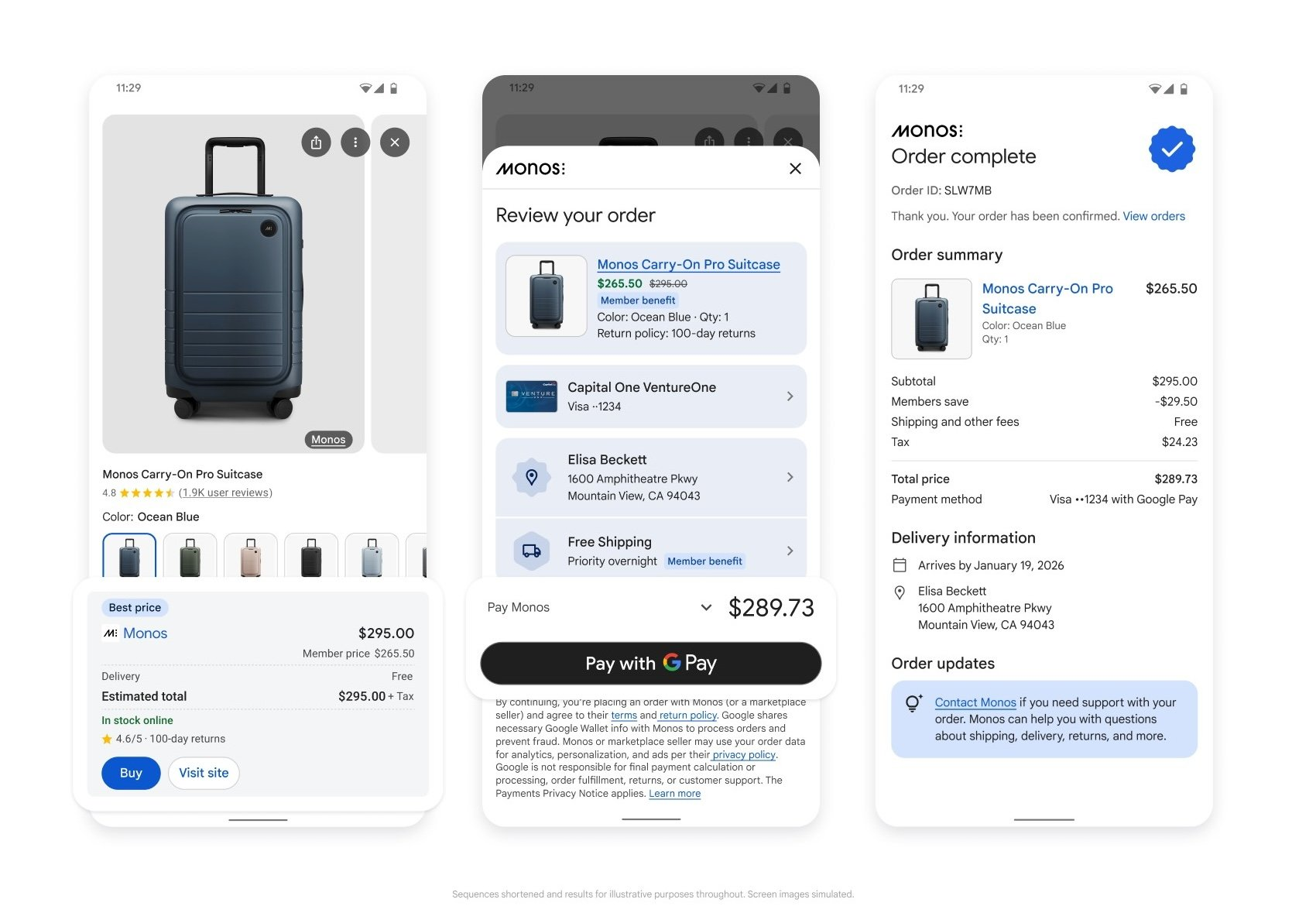
In January 2026, Google CEO Sundar Pichai unveiled the Universal Commerce Protocol (UCP) at the National Retail Federation conference — an open standard designed to let AI agents navigate the full shopping journey from discovery through checkout within Google's ecosystem.
The coalition Google built behind UCP is significant. Shopify, Etsy, Wayfair, Target, and Walmart co-developed it with Google, with endorsements from Visa, Mastercard, Stripe, American Express, and Best Buy. This is not a solo Google play — it is an attempt to build an industry standard before OpenAI's ACP captures that position.
Google's Shopping Graph now indexes more than 50 billion product listings, with 2 billion updated every hour. In November 2025, Google enabled agentic checkout: users can set a target price and authorize Google to auto-purchase via Google Pay when the price drops. The Business Agent feature lets retailers deploy branded AI assistants directly inside Google Search.
Google's position is structurally different from OpenAI's. Google owns the existing search intent graph — the data on what people look for before they buy. Converting that into an end-to-end purchasing interface is a defensive move as much as an offensive one. Nearly 60% of Google searches already end without a click, and AI-driven commerce is accelerating that trend. Google needs to own the transaction layer or watch its advertising model erode.
Amazon: The Walled Garden Strategy
Amazon's response to agentic commerce has been simultaneously aggressive and self-contradictory — a telling sign of the bind that the world's largest e-commerce platform finds itself in.
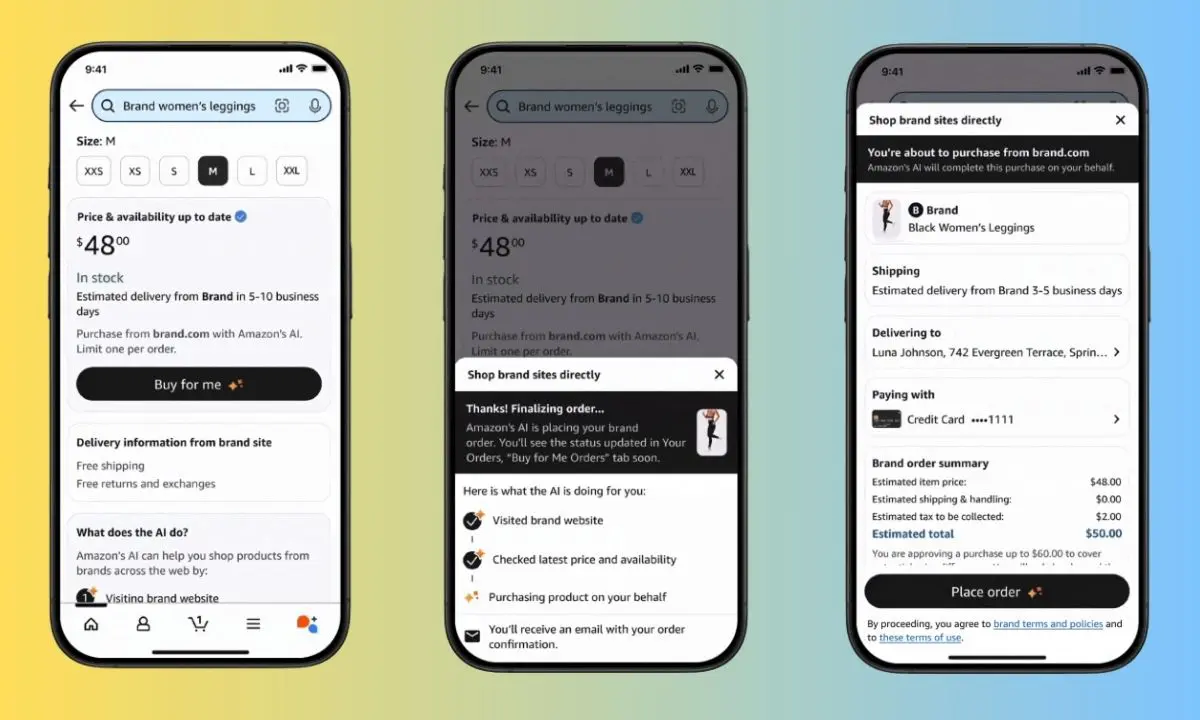
On one side, Amazon has invested heavily in its own agentic tools. Rufus, its shopping assistant, has reached 250 million users and is on pace to drive more than $10 billion in incremental annualized sales, according to Amazon. The company launched "Buy For Me," a feature that lets consumers shop other retailers' websites without leaving Amazon's app. Sessions involving Rufus that ended in a purchase doubled during Black Friday 2025.
On the other side, Amazon has been systematically shutting out external agents. The company updated its robots.txt to block OpenAI's ChatGPT-User and OAI-SearchBot crawlers — removing its 600 million-plus product listings from ChatGPT's shopping results. It has blocked crawlers from Anthropic, Meta, Google, and Perplexity. In November 2025, it filed a federal lawsuit against Perplexity, alleging that the startup's Comet browser was committing computer fraud by using disguised agents to make unauthorized purchases on Amazon.
Perplexity's response: "Bullying is not innovation."
The lawsuit is the first major federal case specifically about agentic commerce, and its outcome will shape the legal definition of what AI agents are allowed to do on third-party platforms without explicit permission. Amazon's legal theory — that an agent shopping on behalf of a human user does not inherit that user's permissions — is contested, but its commercial logic is obvious. Amazon generated $17.7 billion in quarterly advertising revenue in Q3 2025. An AI agent that bypasses sponsored listings to find the objectively best product at the lowest price is existentially threatening to that revenue model.
The irony: Jeff Bezos is an investor in Perplexity, which runs on Amazon Web Services. The platforms and the economics of the AI transition do not align cleanly.
| Platform | Key Tool | Protocol | Merchant Fee |
|---|---|---|---|
| OpenAI (ChatGPT) | Instant Checkout | ACP (open) | ~4% + processing |
| UCP Checkout | UCP (open) | No additional fee | |
| Microsoft (Copilot) | Merchant Program | Proprietary | No additional fee |
| Amazon | Rufus / Buy For Me | Proprietary (closed) | Standard seller fees |
| Perplexity | Perplexity Buy | Proprietary | Varies |
Perplexity: The Specialist Challenger
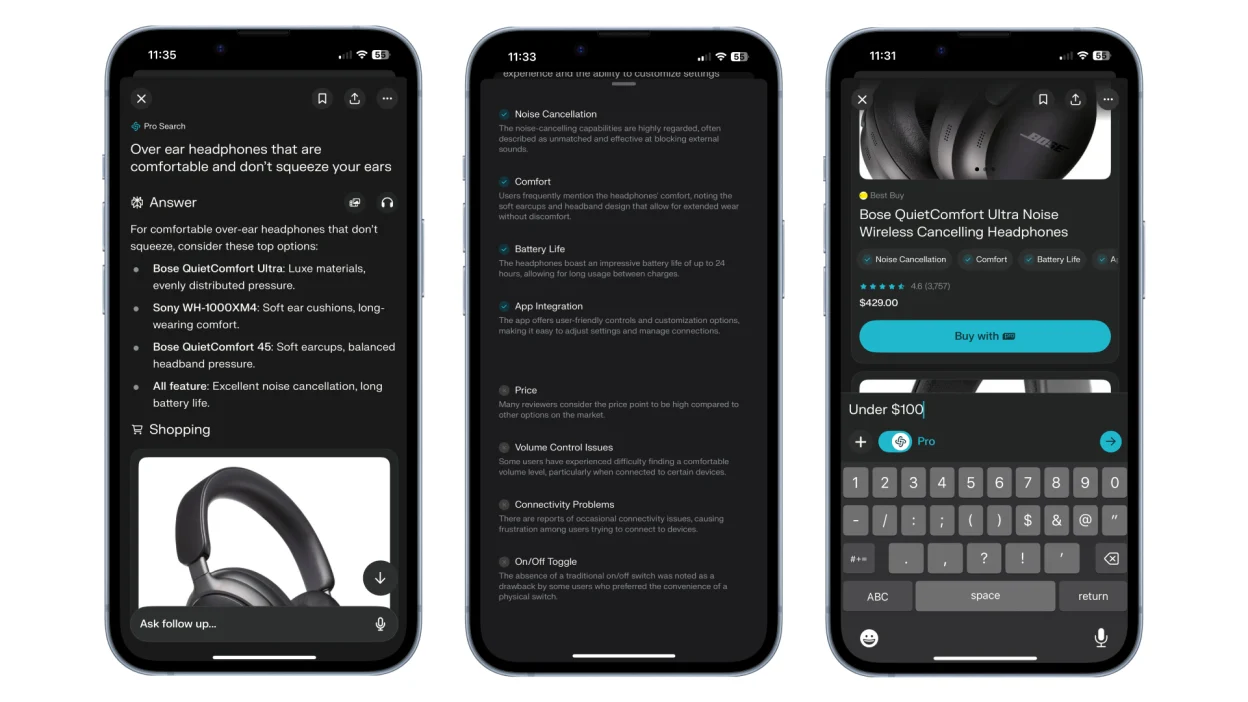
Perplexity was the first major AI platform to launch agentic shopping, introducing its "Buy with Pro" feature in late 2024. Its approach focuses on search intent — spotting purchase signals in user queries and using search history to personalize recommendations and responses. The partnership with PayPal just before Black Friday 2025 extended its reach to tens of millions of small businesses.
The Amazon lawsuit has paradoxically elevated Perplexity's profile and crystallized the broader debate. Whether it represents a legitimate consumer rights argument or a startup building value by disregarding platform terms is a question reasonable people disagree on.
The Numbers That Explain the Urgency
The market size projections for agentic commerce vary significantly depending on the definition and timeframe, but every credible forecast points in the same direction.
- Morgan Stanley estimates agentic shoppers could represent $190 billion to $385 billion in US e-commerce spending by 2030, capturing 10% to 20% of market share
- Worldpay projects more than $261 billion in AI-driven spending against a projected $2.9 trillion US e-commerce market by 2030
- McKinsey projects agentic commerce could hit $1 trillion in US B2C retail revenue by 2030, with global projections reaching $3 trillion to $5 trillion
- eMarketer projects AI platforms will account for $20.9 billion in US retail e-commerce sales in 2026 alone — nearly quadruple 2025's figures
The range in these projections reflects genuine uncertainty about how quickly consumer behavior shifts, how much friction agentic tools still carry, and how the protocol wars resolve. The floor and the ceiling are both large.
Consumer behavior is already moving fast:
- 23% of Americans made purchases using AI in the past month, per Morgan Stanley
- 44% of consumers are comfortable with a smartbot browsing and shopping on their behalf; that figure rises to 59% among shoppers aged 18 to 34 (Worldpay)
- 41% of consumers have used dedicated AI platforms for product discovery as of January 2026, with 33% saying they have fully replaced their previous methods
- Generative AI traffic to US retail sites grew 4,700% year-over-year in July 2025 (Adobe)
- Around 50 million shopping-related queries happen daily on ChatGPT alone, per an OpenAI working paper
The early adopter population is already large enough to have commercial significance. The question is how fast it expands into the mainstream.
What This Means for Brands and Merchants
The strategic implications of agentic commerce are not limited to whether to integrate with ACP or UCP. They run deeper — into how products are described, how brands are discovered, and what the customer relationship actually means when an AI agent mediates every transaction.
The Product Data Problem Is the Central Problem
Shopping agents are only as good as the data they can access. And there is a significant gap between the way most retailers currently structure their product catalogs and what AI agents actually need to make accurate recommendations.
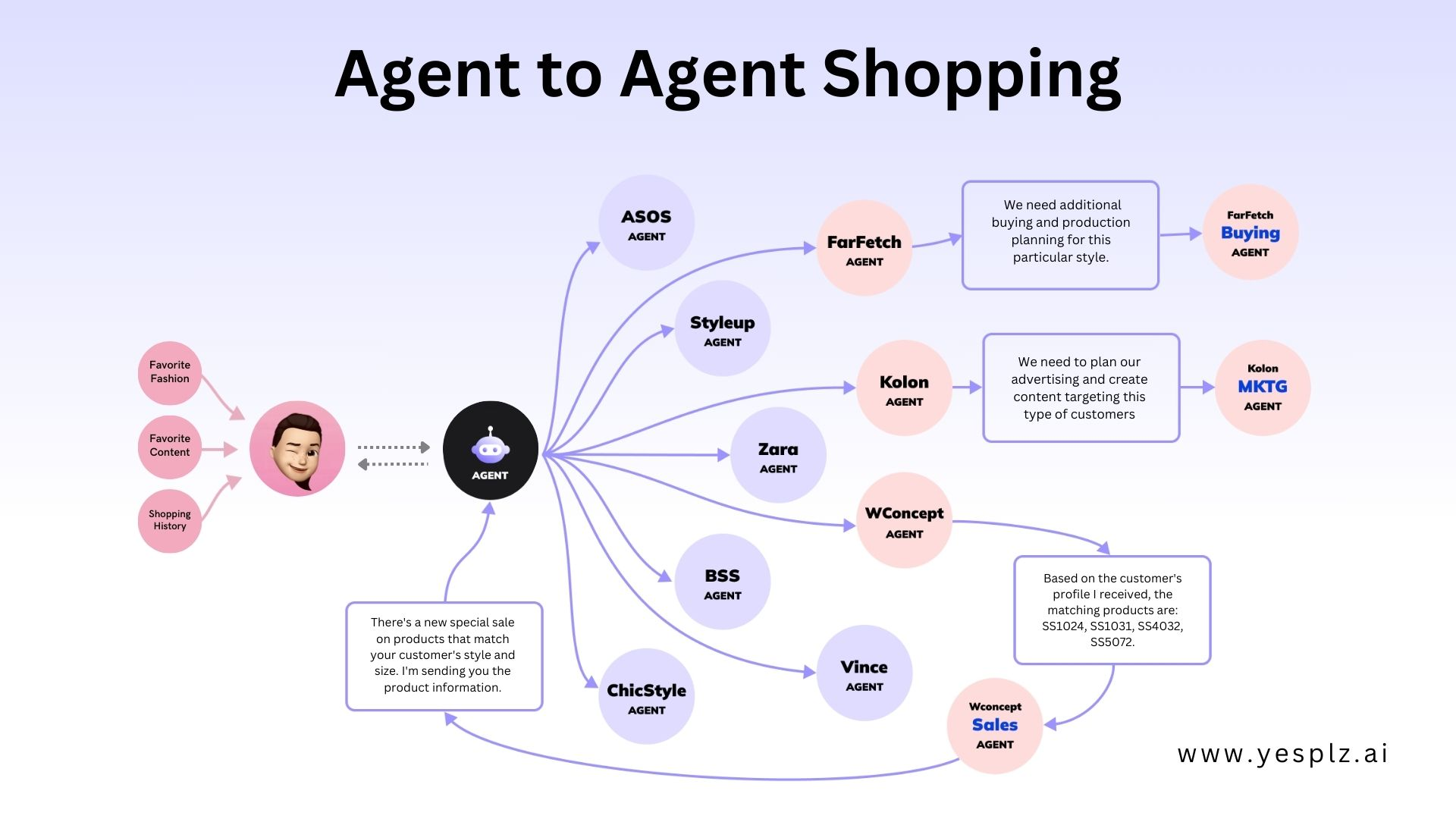
Keyword-optimized product titles and basic attribute fields were built for human-readable search. An AI agent interpreting a query like "a quiet, durable blender for a small apartment kitchen" needs semantic information: actual noise decibel levels, dimensions, material quality indicators, motor longevity data. Current catalogs largely do not provide this at machine-readable depth.
Scot Wingo, founder of ReFiBuy, a company helping brands optimize for agentic AI, articulated the gap clearly:
"GenAI knows far more about the shopper than Google ever did; the job now is to expand and contextualize the product catalog so the engine can map that shopper context to the right SKU. There's a big gap between tight, keywordy product catalogs and the context GenAI needs."
Structured data — complete product schema with accurate pricing, availability, and specifications; clear shipping, return, and warranty policies in machine-readable formats; granular attribute data that maps to how consumers actually describe needs — is now the primary competitive lever in AI-mediated commerce.
Research shows businesses lose an average of $15 million annually due to poor data quality. In an agentic commerce environment, that number will compound, because poor data means invisibility to agents making recommendations on behalf of buyers who will never visit your website.
SEO Is Becoming AEO
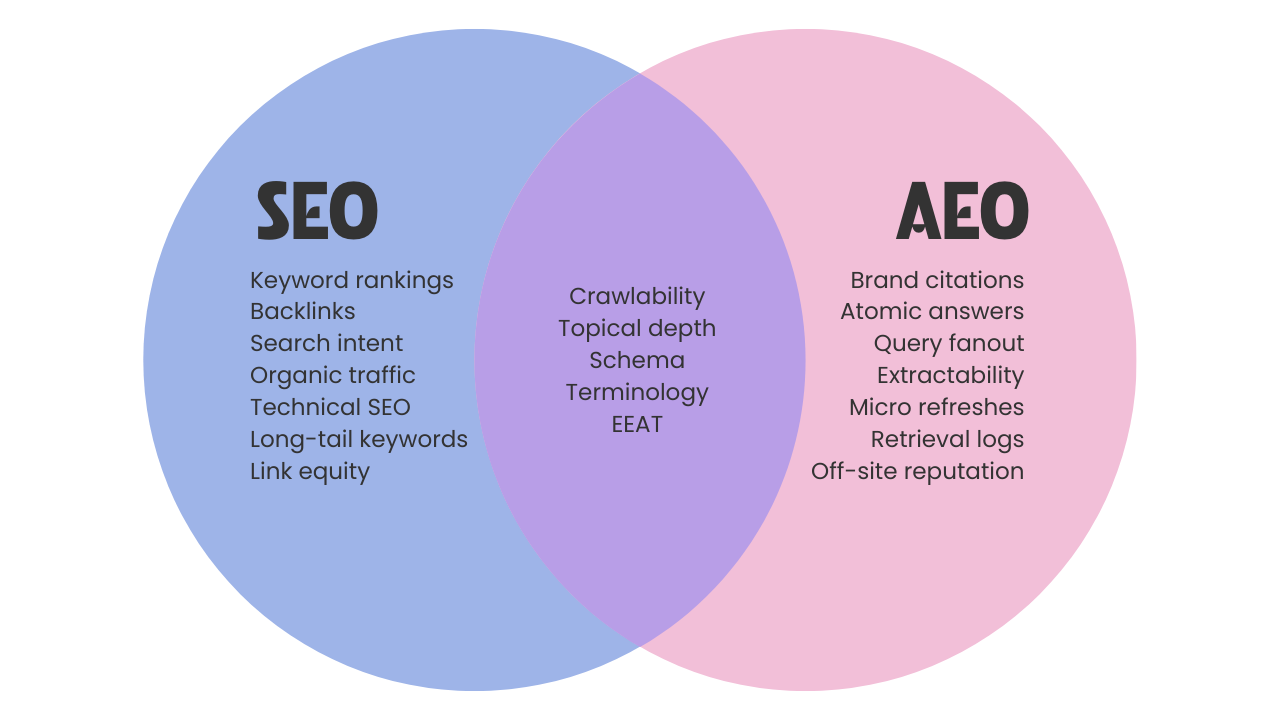
The digital marketing discipline that has governed how brands get found online for the past twenty-five years is undergoing its most significant transformation since Google's first Panda algorithm update. Search Engine Optimization is becoming Answer Engine Optimization.
The mechanics differ in important ways. Traditional SEO optimizes for ranking signals: backlinks, keyword density, page authority, click-through rates. AEO optimizes for citation signals: structured content that agents can extract and synthesize, factual accuracy that avoids disqualification, first-party data that adds uniqueness, and genuine expertise that a reasoning model rates over commodity content.
If a brand is not making detailed information about its products visible to AI search channels, it will not show up in the AI recommendations driving sales. The brands that structured their product data for schema markup years ago have a head start. Everyone else is catching up.
The Customer Relationship Is Being Intermediated
The deepest business model implication of agentic commerce is one that most brands have not fully confronted: when AI agents control discovery, comparison, and checkout, the direct brand-to-consumer relationship atrophies.
BCG has warned that without strategic intervention, retailers risk being reduced to background utilities in agent-controlled marketplaces. The dynamic is already visible: when someone buys through ChatGPT's Instant Checkout, the purchase flows through OpenAI's platform on Stripe's rails. The merchant retains fulfillment and customer support. But the discovery, the recommendation, and the relationship moment belong to the AI layer.

One Forrester analyst put it plainly:
"With an agent on ChatGPT, retailers risk relinquishing transactions on their site to pay a toll on someone else's highway for the same transaction."
This is the structural tension that the Amazon-Perplexity lawsuit actually represents. It is not about a single cease-and-desist letter. It is about who owns the customer relationship when intermediation becomes total.
The Fraud and Security Problem Nobody Is Solving Fast Enough
Agentic commerce introduces an attack surface that existing fraud infrastructure was not designed for.
When a human completes a purchase, the identity verification chain involves browser fingerprinting, behavioral signals, device recognition, and payment credentials tied to known account history. When an AI agent completes a purchase, it presents a synthetic behavioral profile that bypasses most of those signals.
Visa tracked a 450% spike in AI fraud tools on dark web markets in 2025. Nearly 80% of financial institution leaders surveyed by Accenture expect that fraud will increase as a direct result of agentic commerce. Only 21% of business leaders report having complete visibility across agent behaviors, permissions, tool usage, and data access.
The emerging response is a concept called Know Your Agent (KYA) — extending the Know Your Customer framework that governs financial compliance to cover AI agent identity verification. The idea is that agents must identify themselves transparently, carry verifiable credentials, and operate within defined permission scopes that can be audited.
Amazon's lawsuit against Perplexity centers on exactly this issue: the allegation that Perplexity's Comet browser disguised its agent identity to make unauthorized purchases. Whether Amazon's legal framing succeeds or fails, the underlying security question it raises — how do platforms know they are dealing with an authorized agent rather than a malicious one — does not go away.
OpenAI's ACP addresses this with Shared Payment Tokens: single-use, scoped credentials that the agent never sees directly, inherited from Stripe's existing fraud infrastructure. This is meaningfully better than traditional stored payment methods from a security standpoint. But it only covers transactions within OpenAI's protocol. The broader agent web has no equivalent standard yet.
The Honest Accounting: Where the Hype Meets Reality
Emily Pfeiffer, a principal analyst at Forrester with a focus on digital business, was direct: "I am shocked at the promises versus reality."
For ChatGPT, referrals to e-commerce apps represented 0.82% of all sessions over Thanksgiving weekend. Only 2.1% of ChatGPT activity is classified as "purchasable products" in OpenAI's own research. A Bloomberg test of product recommendations from Amazon's Rufus, ChatGPT, and Walmart's Sparky found "fairly generic results" when asked for gift recommendations.
The agentic commerce tools that exist today look more like fancy, conversational search than truly autonomous shopping agents. The capability to interpret complex, multi-constraint buying decisions, maintain memory across sessions, compare across the full breadth of available products, and execute transactions with the accuracy and personalization that would actually change consumer behavior — that is still a work in progress.
What is not a work in progress is the infrastructure, the investment, and the directional trajectory. The gap between current capability and the projected future is smaller than it was twelve months ago, and it is closing faster than most retailers' technology planning cycles can respond to.
What Every Business Should Be Doing Right Now
The decisions that will determine who benefits from agentic commerce and who gets disintermediated by it are being made now — not when the $385 billion projection materializes.
- Audit your product data for machine readability. Conduct an honest assessment of whether your product descriptions, attributes, policies, and inventory data can be reliably extracted and synthesized by an AI agent. If an agent cannot accurately represent your products, it will not recommend them.
- Register for ACP and evaluate UCP. OpenAI's Instant Checkout onboarding is open now at chatgpt.com/merchants. Shopify merchants can enable it in their admin. Google's UCP is in active rollout. These are production commerce channels reaching hundreds of millions of users. The cost of not participating is invisibility.
- Restructure content for AEO, not just SEO. First-party data, original research, detailed product expertise, and structured factual content that agents can cite are the new ranking signals. Generic marketing copy optimized for keyword density is losing value. This is a content strategy shift, not a technical tweak.
- Build separate analytics for AI-origin commerce. Traditional web analytics do not capture AI-mediated transactions. Implement UTM parameters for ChatGPT referrals, track ACP and protocol-level checkouts, and measure AI-origin conversions separately from organic and paid. You cannot optimize what you cannot measure.
- Invest in structured product schema. Complete Schema.org markup — including Product, Offer, Review, and LocalBusiness schemas where applicable — is the machine-readable foundation that all agent platforms use to understand and recommend your products. This is table stakes, not advanced practice.
- Understand your exposure. If a significant portion of your revenue flows through Amazon, you are operating inside a platform that is simultaneously blocking external agents, building its own agents, and redefining the rules for how third-party automation can operate on its infrastructure. The March 4, 2026 changes to Amazon's Business Solutions Agreement governing AI agent use are now in effect. Know what they require of you.
The Structural Question Underneath All of It
Agentic commerce is not a new product feature or a more sophisticated recommendation engine. It is a question about who owns the relationship between consumers and the things they buy.
For the past two decades, that relationship has been mediated by search engines and marketplaces — Google channeling intent toward destinations, Amazon consolidating transactions within a single platform. Both models depended on consumers doing significant work: clicking, browsing, evaluating, and navigating to checkout.
AI agents collapse that process. The consumer states a goal. The agent does the rest. In doing so, it shifts the balance of power from the platforms that controlled discovery to the agents that interpret intent — and potentially to the consumers who now delegate entire categories of purchasing decisions without ever visiting a website.
For established platforms, that shift is an existential threat to current revenue models dressed up as a product opportunity. For brands, it is a distribution channel that arrives with new economics and new requirements. For consumers, it is a genuine improvement in the experience of buying things online — if the quality of recommendations catches up to the ambition of the pitch.
The infrastructure is here. The consumer behavior is moving. The projections are large. Whether agentic commerce becomes a true paradigm shift or a more capable version of what came before depends on a handful of unresolved questions: quality of recommendations, trust in agent decision-making, resolution of the protocol wars, and whether the fraud infrastructure can scale fast enough to keep autonomous transactions secure.
Those questions will start getting answered in 2026. Every business selling anything online should be paying close attention.
Frequently Asked Questions
What is agentic commerce?
Agentic commerce refers to AI systems that act autonomously on behalf of consumers to research, compare, and complete purchases. Unlike traditional recommendation engines that surface options for humans to evaluate, agentic shopping tools interpret consumer goals, query product data across multiple sources, apply personal context and purchase history, and can execute transactions with minimal human input beyond confirming the purchase.
How much revenue is AI shopping driving in 2026?
During the 2025 holiday season, Salesforce credited AI with generating $262 billion in global retail revenue through personalized recommendations and automated purchasing assistance, with AI influencing 20% of all Cyber Week orders. For 2026, eMarketer projects AI platforms will directly account for approximately $20.9 billion in US retail e-commerce sales — nearly quadruple 2025 levels — with longer-term projections from Morgan Stanley reaching $385 billion in US spending by 2030.
What is the Agentic Commerce Protocol (ACP)?
The Agentic Commerce Protocol is an open standard co-developed by OpenAI and Stripe that provides the technical interface between AI agents and merchant systems. It powers ChatGPT's Instant Checkout feature, allowing agents to securely pass order and payment details to merchants without the consumer leaving the conversation. The protocol uses Shared Payment Tokens — single-use, scoped credentials — for security. Merchants pay a 4% fee on completed transactions. The protocol has been open-sourced so other merchants and developers can build integrations.
How is Google's Universal Commerce Protocol different from OpenAI's ACP?
Google's UCP, unveiled at NRF in January 2026, is a competing open standard focused on intent-based product discovery within Google's search and Gemini ecosystem. Unlike ACP, which is built around conversational checkout inside ChatGPT, UCP is designed to integrate into Google Search AI Mode. Google is not charging merchants additional fees beyond standard processing. Both protocols can coexist, and most brands operating across multiple channels will likely need to support both.
Why is Amazon blocking AI shopping agents?
Amazon is protecting its advertising revenue model — approximately $17.7 billion per quarter — which depends on consumers being exposed to sponsored products and paid placements as they browse. An AI agent optimizing purely for price, quality, and consumer need bypasses this ad layer entirely. Amazon has blocked crawlers from OpenAI, Meta, Google, Anthropic, and Perplexity in its robots.txt file, and filed a federal lawsuit against Perplexity over unauthorized purchases made through its Comet browser. Amazon is simultaneously investing heavily in its own agentic tools including Rufus and Buy For Me.
What should brands do to prepare for agentic commerce?
The most important immediate actions are: structuring product data with complete schema markup so agents can accurately represent your products; registering for OpenAI's ACP merchant program and evaluating Google's UCP integration; shifting content strategy from keyword SEO toward Answer Engine Optimization with detailed, expert, machine-readable content; building separate analytics tracking for AI-origin conversions; and understanding your exposure if you sell significantly through Amazon's platform given its new March 2026 agent policy changes.
Is agentic commerce ready for mainstream consumers today?
Partially. The tools exist, they are improving rapidly, and consumer adoption is meaningfully underway — particularly for grocery, consumer packaged goods, and commoditized product categories. But current agentic shopping tools still look more like sophisticated conversational search than fully autonomous shopping agents. Product recommendations remain somewhat generic, personalization quality varies, and ChatGPT shopping activity currently represents a small fraction of overall platform usage. The infrastructure is production-grade; the experience quality is still catching up to the projections.
What is the fraud risk in agentic commerce?
Significant and largely unsolved at scale. AI agents present synthetic behavioral profiles that bypass traditional fraud detection signals designed for human shoppers. Visa tracked a 450% spike in AI fraud tools on dark web markets in 2025. Nearly 80% of financial institutions expect fraud to increase as agentic commerce scales. The emerging response framework, known as Know Your Agent (KYA), extends financial compliance concepts to AI agent identity verification — but industry-wide standards have not yet been established.
Related Articles
 Dani
Dani
 Dani
Dani