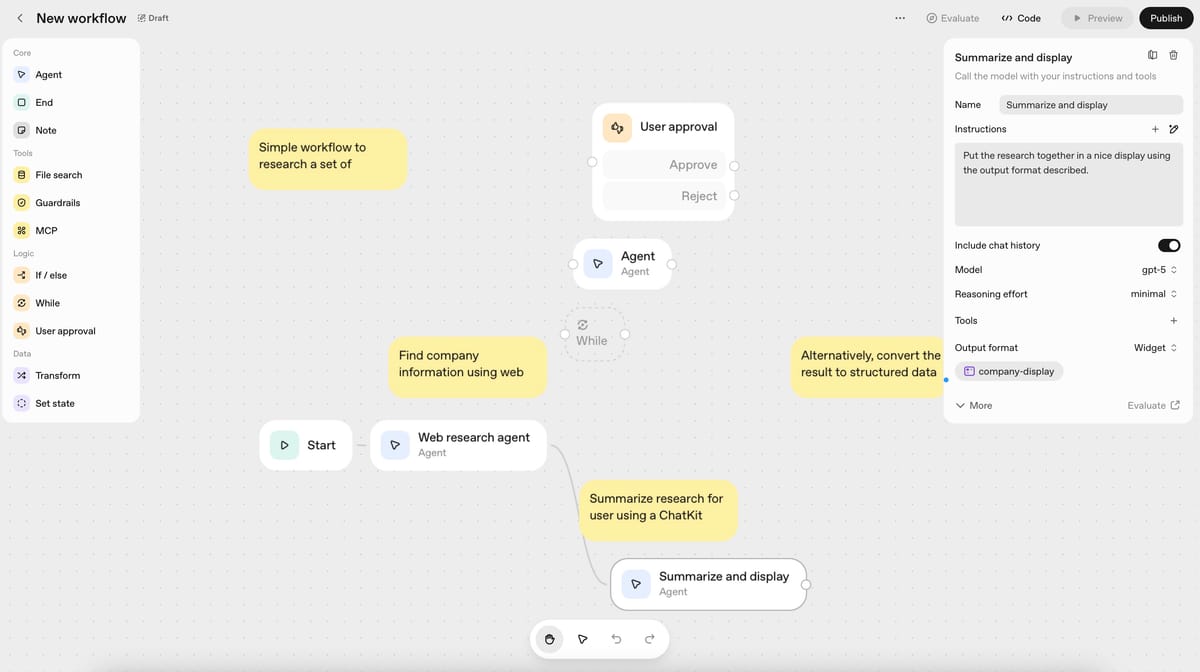
Think about how you get work done right now. You log into your CRM to pull up a contact, switch to your email client to follow up, jump into a project management tool to update a task, then copy data manually from one platform to the next. That sequence, performed billions of times a day across corporate America, is what traditional software was built to support. It assumed a human would always be in the loop, clicking through interfaces, transferring information, and connecting the dots.
That assumption is quietly crumbling.
AI agents, software systems that can reason, plan, and take multi-step actions across multiple tools without waiting for a human to tell them what to do next, are beginning to make that workflow model look as dated as a fax machine. And this is not a prediction about some distant future.
The implications reach far beyond productivity. They cut to the heart of how software is built, sold, and used, and they raise uncomfortable questions for anyone who has spent the last two decades building or buying SaaS products.
What Exactly Is an AI Agent, and Why Now?
The term "AI agent" gets thrown around loosely, which has led to what Gartner researchers have started calling "agentwashing," the tendency to rebrand ordinary AI assistants or chatbots as agents without the underlying architecture to back it up. An actual AI agent does something fundamentally different from a copilot or an autocomplete feature.
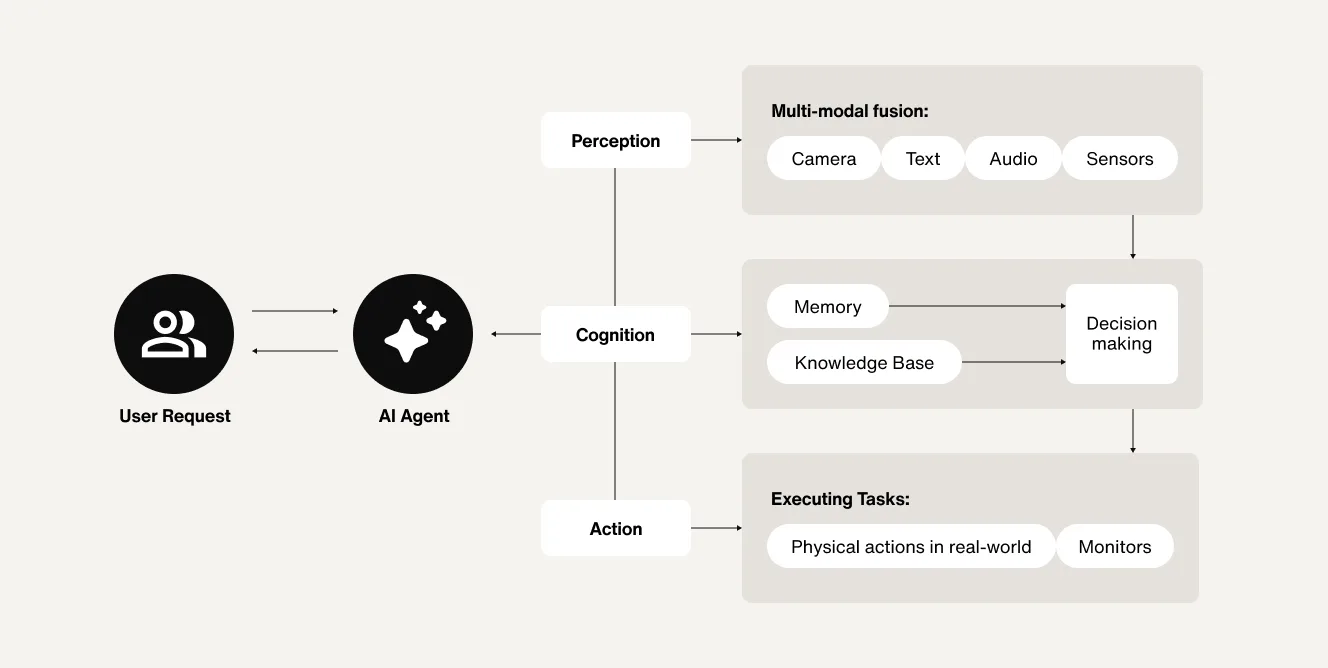
A true agent perceives its environment, makes decisions based on that context, executes actions across connected systems, and then evaluates the results to decide what to do next. It operates with a degree of autonomy that earlier automation tools could not match. It does not just answer questions. It does things.
The reason this is happening now comes down to a convergence of factors that did not exist even three years ago. Foundation models have become good enough at reasoning and tool use to handle ambiguous, multi-step tasks. APIs and model context protocol standards are making it easier for agents to communicate with external systems at scale. And compute costs have dropped far enough to make running agents on real enterprise workflows economically viable.
Microsoft's Dynamics 365 team has been explicit about the shift. At Convergence 2025, the company announced that its ERP model context protocol server was evolving from a set of static actions into a dynamic framework that could support millions of ERP actions at enterprise scale, all driven by agents reasoning over live business data rather than static snapshots. That is not a copilot. That is a system of action replacing a system of record.
How AI Agents Actually Work
At the core of most enterprise AI agents today is a large language model serving as the reasoning engine. The model receives a goal, breaks it into sub-tasks, decides which tools to call, processes the results, and determines the next action. This loop, sometimes called a ReAct loop for reason-act, continues until the goal is achieved or the agent determines it needs human input.
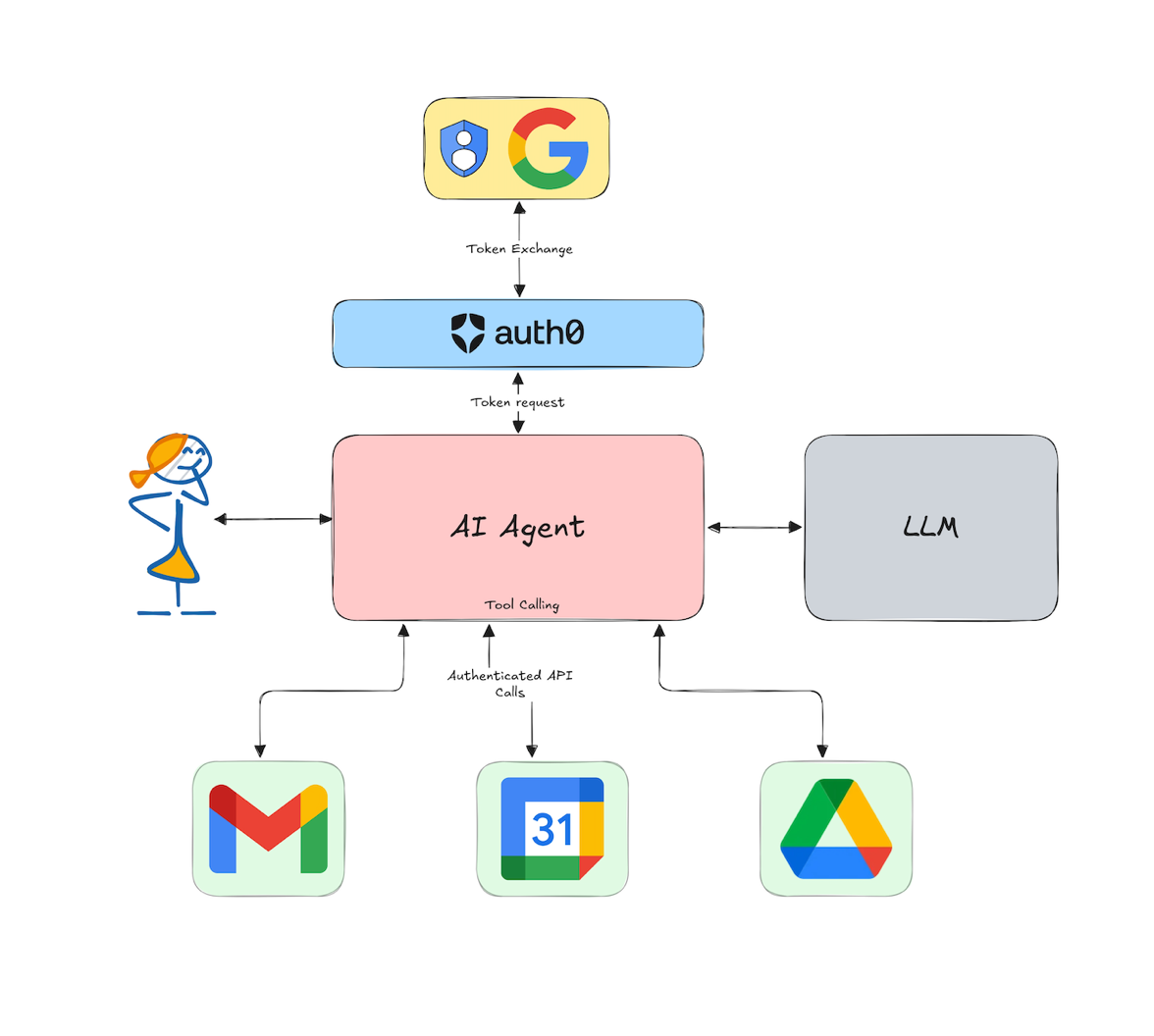
What makes enterprise agents especially powerful is their ability to coordinate across multiple systems simultaneously. Where a human employee might need to log into three separate platforms to complete a workflow, an agent can query all three concurrently, applying logic and executing actions in seconds. The agent does not need a graphical user interface. It interacts directly with APIs and databases, which means traditional software interfaces become optional abstractions rather than mandatory entry points.
Multi-agent architectures take this further. Rather than a single agent handling an entire workflow, orchestrator agents break complex tasks into components and delegate them to specialized sub-agents. A customer support orchestration system might have one agent pulling account history, another analyzing sentiment, another checking inventory, and a fourth drafting a response, all working in parallel before a human ever sees the ticket.
IBM's enterprise AI research describes AI orchestrators as the potential backbone of enterprise systems, connecting multiple agents and optimizing workflows across languages and data types. This is not theoretical. Sales teams are already using learning agents that continuously analyze customer data, qualify leads, book meetings, and follow up automatically. These systems improve over time and coordinate across CRMs, email platforms, and calendar tools, behaving less like software features and more like junior team members.
Why This Threatens the SaaS Model at Its Foundation
The traditional SaaS model was built around a specific assumption: that value is delivered through a graphical interface that humans navigate. The business model followed. You charge per seat. More users means more revenue. The product roadmap optimizes for user adoption, feature discovery, and time-in-app. The entire go-to-market motion is oriented around convincing human employees to change their behavior and use your software.
AI agents fundamentally disrupt that logic.
If an agent can access your CRM, your inbox, your project management tool, and your analytics dashboard simultaneously without anyone logging into any of them, the seat-based model loses its meaning. The interface that justified your pricing becomes a vestigial organ. Worse, if an agent is good enough at reasoning, it may be able to replicate the core function of a specialized SaaS product using general-purpose tools and a well-written prompt, bypassing the product entirely.
The incumbents understand this. ServiceNow acquired AI agent platform Moveworks for $2.85 billion in March 2025, a clear signal that legacy software players are making aggressive bets on agent technology as core to their future platform strategy. Salesforce has launched Agentforce. Microsoft has embedded Copilot agents across its entire productivity and enterprise suite. These companies are not experimenting at the margins. They are repositioning their entire platforms.
The Competitive Landscape Is Moving Fast
The agent platform market is still fragmented, but clear categories are emerging.
On the horizontal side, companies like Salesforce Agentforce, Writer, and Glean have established early footholds in enterprise agent orchestration. According to Menlo Ventures' 2025 enterprise AI report, agent platforms captured around $750 million in enterprise spend last year, a fraction of the broader copilot market but growing significantly faster.
Vertical agents are where much of the practical activity is happening. Legal, healthcare, finance, and supply chain are all seeing purpose-built agent systems that combine domain knowledge with autonomous execution. In legal tech, a historically software-resistant market, AI agents are beginning to automate contract lifecycle management and compliance workflows at a scale that generic tools cannot match. In finance, ERP-native agents are enabling what some vendors describe as touchless operations, where entire approval chains and reconciliation processes run without human intervention by default.
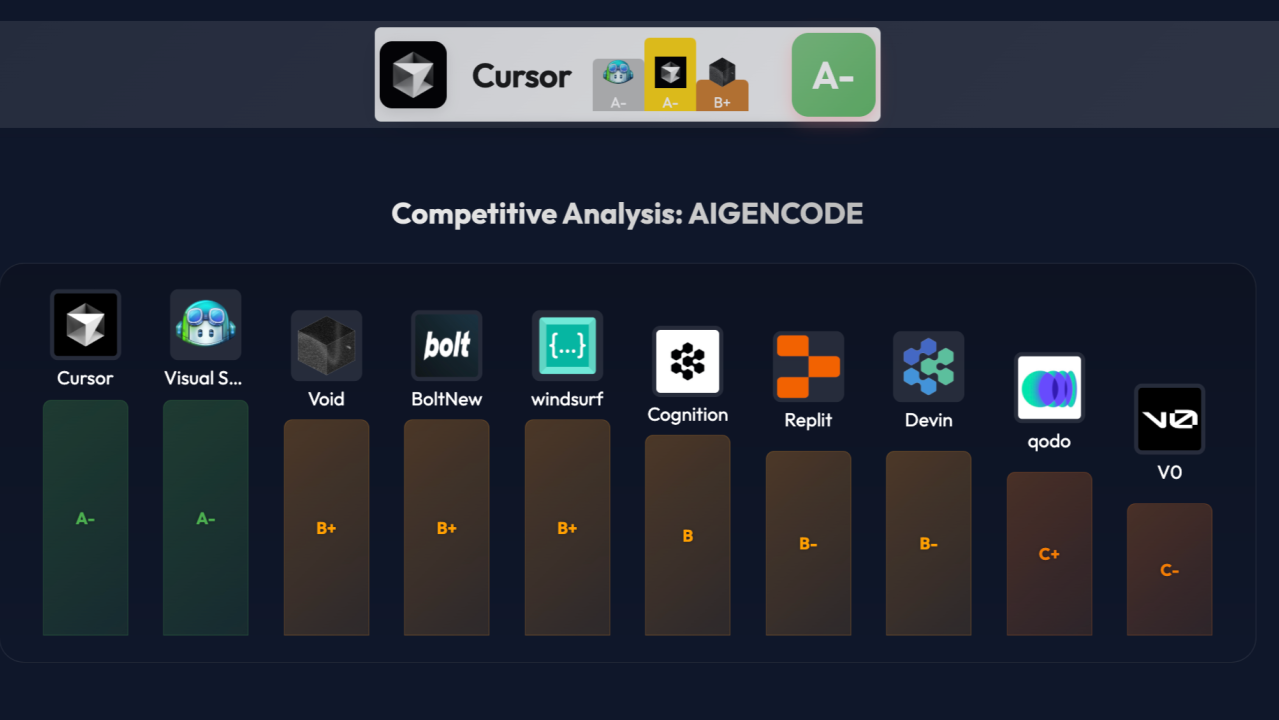
At the developer tooling layer, coding agents have become one of the most commercially validated use cases in all of AI. Menlo Ventures data shows the coding category grew from $550 million to $4 billion in 2025 as models became capable of interpreting entire codebases and executing multi-step development tasks. Teams using AI coding agents report velocity gains of 15% or more across the software development lifecycle.
No-code and low-code agent builders are also collapsing the technical barrier. Platforms like Zapier, Coze, and Druid.ai let business users, not just engineers, build and deploy agents in hours. That accessibility is accelerating adoption in mid-market companies that cannot staff a dedicated AI engineering team.
The Real-World Implications for Enterprises
For enterprises, the move toward agentic AI is forcing a fundamental rethinking of how workflows are designed, not just automated.
What distinguishes those high performers is not just the technology. It is how they approach the transition. Rather than dropping agents into existing workflows, leading organizations are redesigning those workflows from the ground up, mapping out which processes benefit most from autonomous execution and which still require human judgment. IBM researchers caution that not every workflow should be agentized. The question is not whether you can automate a process but whether automating it delivers enough ROI to justify the investment in governance, security, and integration.
That governance question is not trivial. The OWASP Top 10 for LLM applications identifies prompt injection, data leakage, and excessive agency among the highest risks in enterprise agent deployment. An agent that has been given broad permissions to execute actions across systems is, by definition, a high-value target for adversarial manipulation. Enterprises moving fast on agents without equivalent investment in security and observability frameworks are trading short-term productivity gains for significant long-term risk.
Risks, Limitations, and the Hype Problem
None of this means the transition is smooth or that the technology is ready for every use case.
A January 2025 Gartner poll found that 42% of organizations had made only conservative investments in agentic AI, with 31% still in wait-and-see mode. Trust, security, and governance were the top reasons for hesitation. Only 15% of IT application leaders at the time were considering, piloting, or deploying fully autonomous agents. DIY agent builds reportedly fail at rates around 75%, a number that underscores the distance between the hype and the operational reality.
There is also a genuine question about whether the technology is being deployed thoughtfully or recklessly. IBM's research team warns that scaling agent systems without strong compliance frameworks is a recipe for accountability failures. Using an agent that has been given permission to take actions on your behalf, as one IBM researcher put it, is essentially trusting an LLM with real-world consequences in environments where errors are costly and reversals are difficult.
The agentwashing problem Gartner identified is also real. Many products marketed as AI agents are, on closer inspection, glorified chatbots or rule-based automation systems dressed up in new language. Buyers who do not understand the distinction are making purchasing decisions based on capabilities that do not yet exist in the products they are evaluating.
And agents still fail at tasks requiring deep empathy, nuanced social judgment, and the kind of contextual human understanding that no current model reliably provides. Customer-facing workflows with high emotional stakes, complex negotiation scenarios, and situations where trust depends on human presence are all areas where autonomous agents are likely to underperform for the foreseeable future.
What This Means for Developers, Founders, and Business Leaders
For developers, the agent era is not a threat to employment. It is a shift in the nature of the job. As coding agents handle more implementation work, the developer role increasingly resembles what the best senior engineers have always done: define requirements, review outputs, catch edge cases, and make architectural decisions. The baseline of what you can ship solo or with a small team has jumped dramatically.
For founders building new software products, the implications are more complicated. Building a narrow SaaS product that automates a single workflow and charges per seat is a harder pitch in a world where agents can stitch workflows together dynamically. The products that will survive and scale are those that become foundational infrastructure, deeply embedded systems of record with strong data network effects, or purpose-built agent platforms with domain expertise that general-purpose models cannot replicate.
For enterprise leaders, the immediate takeaway from McKinsey's research is that having an AI strategy is not enough. The organizations capturing the most value from AI agents are those where senior leaders are actively engaged in driving adoption, where workflows are redesigned rather than just automated, and where governance frameworks are built in from the start rather than bolted on after a breach or a failure.
The Road Ahead
Gartner's most optimistic projection suggests agentic AI could drive roughly 30% of enterprise application software revenue by 2035, representing more than $450 billion in annual market value. That is a best-case scenario, and it assumes the technology continues to improve, that trust and governance frameworks mature alongside capability, and that enterprises do not lose their appetite for the technology after the first wave of high-profile failures.
What seems more certain is that the direction of travel is clear. The question is not whether AI agents will reshape enterprise software. The evidence that they are already doing so is substantial. The question is how fast, how broadly, and who will capture the value as the transition accelerates.
The apps will not disappear overnight. The interfaces and the databases and the workflows they support will persist for years. But the way humans interact with all of that infrastructure, the daily experience of doing knowledge work, is being renegotiated right now. The organizations, platforms, and developers that understand this early will have a significant advantage over those who wait for the transition to become impossible to ignore.
Frequently Asked Questions
What is an AI agent and how is it different from a chatbot or copilot?
An AI agent is an autonomous software system that perceives its environment, plans multi-step actions, executes those actions across connected tools and systems, and evaluates its own results to decide what to do next. A chatbot typically responds to individual prompts without taking external actions. A copilot assists a human user who remains in control of each step. An AI agent operates with meaningful autonomy, completing workflows without requiring a human to direct every action.
Will AI agents replace traditional SaaS software?
Not entirely, and not quickly, but they are beginning to disrupt the underlying logic of the SaaS business model. Traditional SaaS is built around human users navigating interfaces, which justifies seat-based pricing. AI agents can access the same data and execute the same workflows without using an interface, which challenges the value proposition of many point solutions. Incumbents like Salesforce, ServiceNow, and Microsoft are responding by embedding agents directly into their platforms rather than waiting to be disrupted from outside.
What are the biggest risks of deploying AI agents in enterprise environments?
The primary risks include prompt injection attacks, where adversarial inputs manipulate agent behavior; excessive agency, where agents are granted permissions broader than necessary and take unintended actions; data leakage through poorly governed API integrations; and accountability gaps when agents make consequential errors that are difficult to trace or reverse. OWASP has published a Top 10 list of LLM application risks that serves as a practical starting point for enterprise security teams.
Which industries are seeing the fastest AI agent adoption?
IT and knowledge management have seen the earliest and most widespread adoption, with service desk automation and deep research as common use cases. Sales and customer support are close behind, with autonomous agents handling lead qualification, meeting booking, and follow-up. Finance teams are deploying agents for touchless reconciliation and approval workflows. Legal and healthcare, historically resistant to software adoption, are seeing rapid growth driven by AI agents that can handle unstructured data and comply with domain-specific regulatory requirements.
How large is the AI agent market and how fast is it growing?
The AI agent market reached approximately $7.6 billion in 2025 and is projected to exceed $50 billion by 2030, representing a compound annual growth rate of roughly 46%. Gartner forecasts that agentic AI could account for 30% of enterprise application software revenue by 2035, potentially surpassing $450 billion in annual value in an optimistic scenario.
What should enterprise leaders do right now to prepare for the agent era?
McKinsey's 2025 AI research identifies several practices common to high-performing AI organizations: senior leadership should actively champion and model AI adoption, workflows should be redesigned rather than just automated, and governance frameworks covering accuracy validation, security, and accountability should be established before deployment scales. IBM researchers recommend starting by identifying which workflows offer the highest ROI from agentization, rather than attempting to automate everything at once.
How should software founders think about building in the AI agent era?
Products that occupy a single point in a workflow and rely on human habitual use are increasingly vulnerable. The products most likely to thrive are deeply embedded systems of record with strong data moats, purpose-built vertical agents with domain expertise that general-purpose models struggle to replicate, and infrastructure platforms that other agents depend on to function. The seat-based pricing model is under pressure; usage-based and outcome-based pricing structures are better suited to agentic workflows.
Are AI agents reliable enough for production enterprise use today?
Selectively, yes. Narrowly defined, well-governed, specialized agents operating in environments with clear success criteria are delivering measurable value in production today. Broadly autonomous, general-purpose agents operating across complex, high-stakes workflows with limited human oversight are not yet reliable enough for most enterprise production environments. The 75% failure rate reported for DIY agent builds reflects the gap between the ambition and the current state of the technology. Starting with constrained, well-monitored use cases and expanding from there is the approach most consistently associated with success.
Related Articles
 Dani
Dani
 Mark
Mark
 Mark
Mark