For the past decade, robotaxis have been a perpetually five-year-away technology. In 2026, that framing is becoming harder to maintain. Waymo passed 500,000 paid rides per week across ten US cities in early 2026. Tesla transitioned to genuinely unsupervised operation in Austin in January and has a purpose-built Cybercab entering mass production in April. The autonomous driving industry has crossed from demonstration into early commercial reality.
The two companies represent fundamentally different bets on how to get there. Waymo uses expensive lidar, radar, and camera sensor arrays and operates a company-owned fleet. Tesla uses cameras only, bets on neural network learning from its massive fleet data, and ultimately wants individual Tesla owners to add their cars to the network. Both are now commercially operating, and both are expanding in 2026.
Where You Can Ride a Waymo Right Now
Waymo currently operates fully driverless commercial robotaxi service in ten US cities. The rollout has been aggressive: the company was operating in three cities in early 2025 and doubled to six by late 2025 before adding four more in February 2026.
Cities with active Waymo commercial service:
- San Francisco Bay Area (including peninsula service down to San Jose)
- Phoenix and surrounding suburbs
- Los Angeles
- Austin, Texas
- Atlanta
- Miami
- Dallas
- Houston
- San Antonio
- Orlando
In all of these markets, anyone can download the Waymo One app and hail a ride. Access for new users is rolling out on an invitation basis, with Waymo adding riders gradually as it scales vehicles and operational infrastructure in each market. The company currently has approximately 3,000 robotaxis deployed across its fleet.
The service is fully driverless. There is no safety driver in the front seat, no remote operator with the ability to steer, and no human in the vehicle at all. The car handles everything from pickup to navigation to drop-off independently.
Where Waymo Is Expanding Next
Waymo has publicly announced plans to launch commercial service in at least ten additional US cities during 2026. Some have begun driverless testing. Others are in earlier mapping and validation phases.
Announced 2026 US launches (not yet commercially open):
- Denver
- Detroit
- Las Vegas
- Nashville
- San Diego
- Washington DC
- Baltimore
- Philadelphia
- Pittsburgh
- St. Louis
- New Orleans
- Minneapolis
- Tampa
Several of these cities represent new terrain for Waymo's technology. Denver averages 56 inches of seasonal snowfall, and Detroit gets significant winter weather. Waymo has been conducting cold-weather testing specifically to validate its sensors and software in conditions its existing Sun Belt markets never presented.
International expansion:
Waymo has begun testing in London with a planned commercial launch in 2026, which would be its first service outside the United States. Operations and maintenance in London will be handled by Moove. The company has also begun mapping and testing in Tokyo, partnering with Nihon Kotsu and Japan's GO taxi app, though no commercial timeline has been announced for that market.
Scale targets:
Waymo's co-CEO Tekedra Mawakana said the company is on track to provide one million rides per week by end of 2026, roughly four times its current volume. To support that, the company is expanding its manufacturing partnership with Magna in Arizona to build more than 2,000 vehicles by end of 2026, with the stated goal of eventually producing tens of thousands of vehicles annually.
How Waymo Works: The Technical Approach
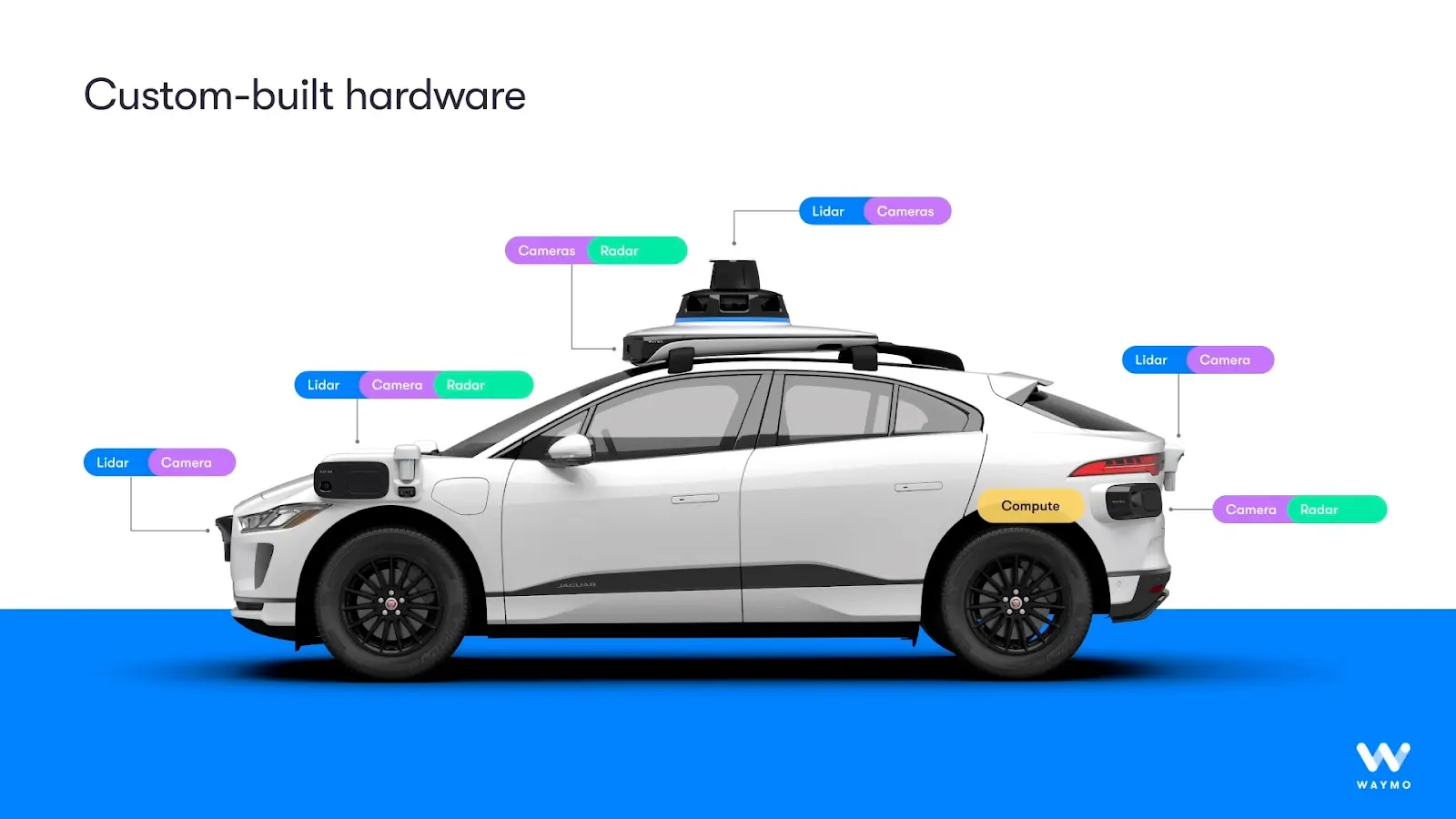
Waymo's system uses a combination of lidar, radar, and cameras to build a real-time 3D model of its surroundings. Lidar, which uses laser pulses to measure distances, provides precision that cameras alone cannot match, particularly in low-light conditions or complex urban environments. This sensor redundancy is central to Waymo's safety argument and to its differentiation from Tesla's approach.
The system requires detailed prior mapping of each area before deployment. Waymo builds high-definition maps of every street it operates on, which is why expansion requires substantial groundwork before a commercial launch. This mapping requirement is also why Waymo's rollout happens city by city rather than nationwide simultaneously.
Deutsche Bank analyst Edison Yu described the current state accurately: Waymo is "furthest along in true driverless deployment," operating fully autonomous services "in limited geofence, high CAPEX operations, but they prove the technical feasibility of Level 4 autonomy in constrained urban zones." The high cost of the sensor suite has historically been a concern, but prices for lidar hardware have fallen substantially over the past several years.
Where You Can Ride a Tesla Robotaxi Right Now
Tesla launched its robotaxi service in Austin, Texas in June 2025, initially with human safety monitors riding along. In January 2026, the company transitioned to genuinely unsupervised operation, with no human in the vehicle. As of early 2026, the fleet in Austin consists of approximately 30 to 40 modified Model Y vehicles operating within a defined service area.
The service is available through the Tesla app. Riders hail a Model Y, which arrives without a driver, completes the trip, and returns to service. The flat fare structure started at $4.20 per trip in Austin and has been adjusted as Tesla tunes the service economics.
The Austin service currently serves a relatively small geographic footprint compared to Waymo's established markets. Tesla has been deliberately cautious about expanding the operational zone, accumulating miles and data before extending the boundaries.
Tesla's Expansion Plans for 2026
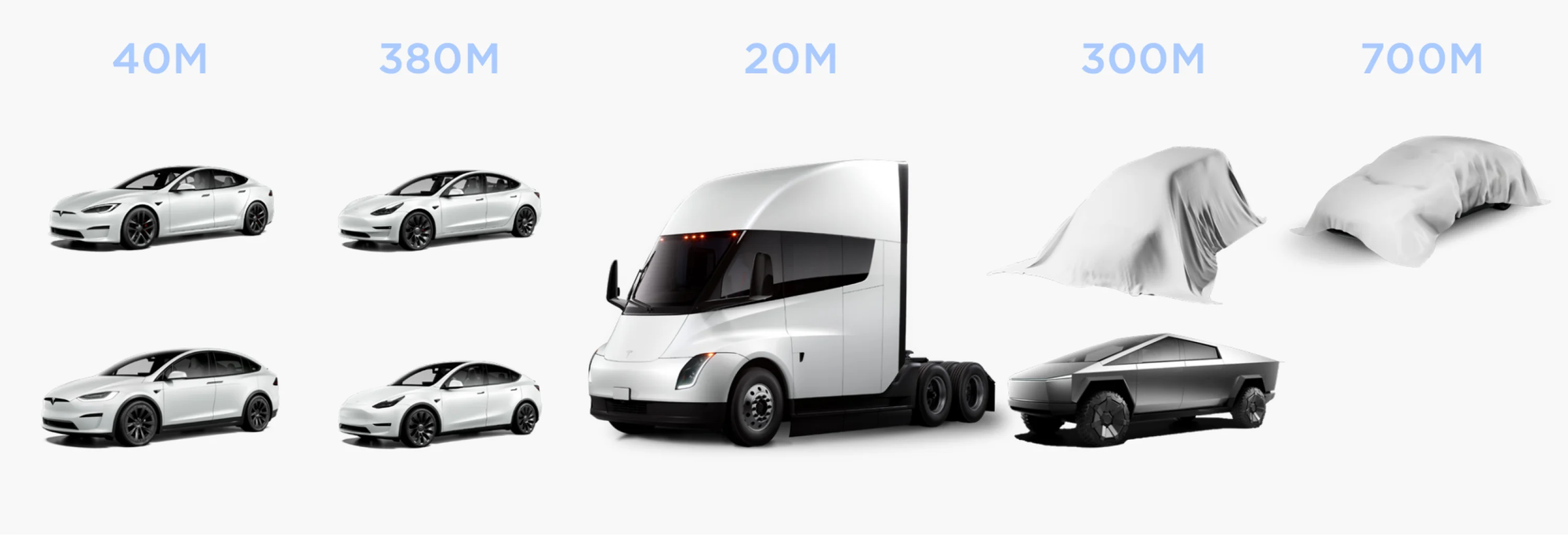
Tesla announced in January 2026 that it plans to expand the robotaxi service to seven additional cities in the first half of 2026. The specific cities named across various announcements include Dallas, Houston, Phoenix, Miami, Orlando, Tampa, and Las Vegas.
No firm launch dates have been confirmed for individual cities. Texas's permissive regulatory environment was the reason Austin became the launch market. California has a more complex regulatory landscape, and Tesla has filed with the California Public Utilities Commission for a passenger transport permit but has not received approval for fully driverless commercial operation in the state.
The Cybercab, Tesla's purpose-built robotaxi with no steering wheel or pedals, began production at Gigafactory Texas in February 2026, with volume production targeted for April. The first production unit was confirmed by Elon Musk on February 18, 2026. Unlike the current Model Y-based fleet, the Cybercab is designed from the ground up for autonomous operation, featuring a two-passenger cabin, butterfly doors, and no manual controls of any kind.
If NHTSA regulatory requirements mandate the inclusion of manual controls, Tesla has indicated it can add a steering wheel. The regulatory path for a vehicle with no manual controls at all requires federal exemptions that have not yet been fully secured.
How Tesla Works: The Technical Approach and the Bet
Tesla's autonomous system uses eight cameras and no lidar or radar. The system relies entirely on neural networks trained on footage from Tesla's global fleet of owner vehicles, which represents a dataset of real-world driving miles that no dedicated robotaxi company can match.
The core bet is that with enough data and a sufficiently capable neural network, cameras alone can achieve reliable autonomy without the expensive sensor redundancy that Waymo uses. Critics argue that cameras cannot provide the precision of lidar, particularly in adverse weather, low light, or novel scenarios. Tesla's response is that the system learns from situations that lidar-equipped vehicles have never encountered, because the training data covers edge cases that accumulate across millions of vehicles.
The Austin launch was not without issues. Early riders documented incidents including the vehicle driving on the wrong side of the road, phantom braking, and dropping passengers in intersections. Seven collisions involving Tesla's ADS-equipped 2026 Model Y vehicles were reported to NHTSA through October 2025, though none were severe. These incidents triggered regulatory scrutiny and reinforced the cautious expansion approach Tesla has taken since.
What This Costs to Ride
Pricing varies by market, but the current data points are informative.
Waymo charges standard rideshare rates, broadly comparable to Uber and Lyft in the same markets. In San Francisco, typical Waymo trips have been reported at roughly $5 to $15 for in-city rides depending on distance and time. The service does not charge surge pricing in the same way that human-driver platforms do.
Tesla's Austin service launched with a flat $4.20 fare, which worked out to roughly $0.25 per mile at the service's early stage and represented a below-market price point consistent with building ridership rather than maximizing revenue. Tesla's longer-term stated goal is to bring cost-per-mile significantly below human-driver alternatives as the Cybercab fleet scales.
Musk has claimed that rides in the robotaxi network could ultimately cost less than riding a bus, though that projection depends on production scaling at rates that have historically proven optimistic in Tesla's timelines.
Safety: What the Data Shows
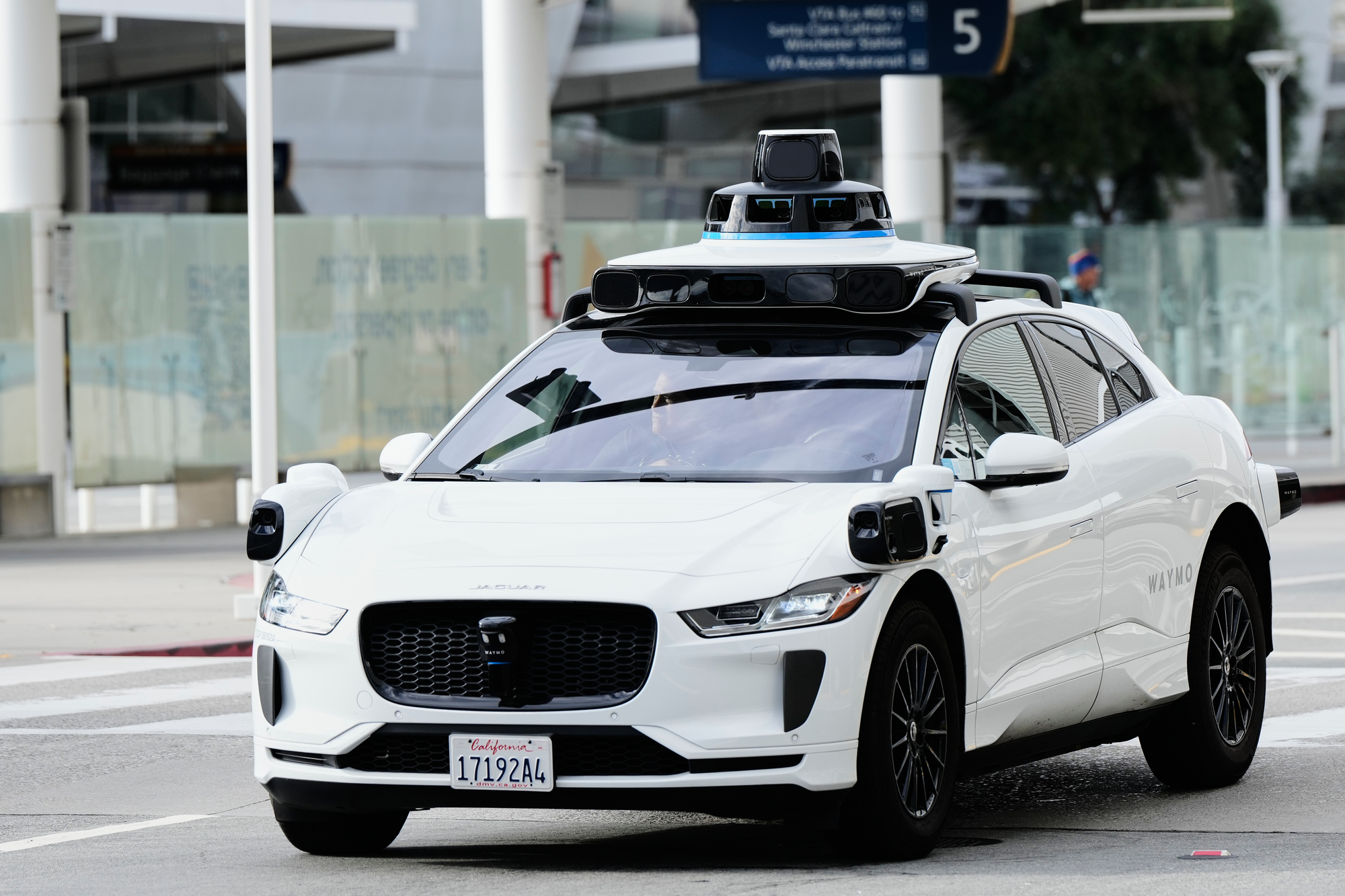
Waymo has compiled the most extensive safety record in the industry. The company has completed more than 20 million paid rides since launching commercially. Its data submitted to regulators shows significantly fewer injury-causing incidents per mile driven compared to both human drivers and competitors.
A survey by The Verge found that public comfort with robotaxi services is measurably higher in cities where Waymo is already operating. Among Waymo market respondents, 54% viewed the services as safe, compared to 45% of the general population. Familiarity with the technology correlates directly with increased acceptance.
Tesla's record in Austin reflects the earlier stage of its deployment. The seven collisions reported to NHTSA through October 2025 have not involved serious injuries, but they have kept regulatory attention high. Tesla has said publicly that it is "paranoid about deployment" and that any incident receives front-page treatment, an acknowledgment that the scrutiny is real and consequential.
Wrap up
The honest description of autonomous driving in 2026 is that Waymo has demonstrated that fully driverless commercial robotaxi service works, in a growing number of US cities, for hundreds of thousands of people per week, without serious safety incidents at scale. That is a meaningful achievement. It is also still a limited, geofenced, high-infrastructure operation that serves a small fraction of the urban transportation market.
Tesla is at a much earlier stage operationally, with dozens rather than thousands of vehicles in a single city, but with a production ramp underway and a technical approach that, if it continues to perform at scale, could enable the kind of nationwide deployment that Waymo's city-by-city mapping model makes difficult to achieve quickly.
If you are in San Francisco, Phoenix, Los Angeles, Austin, Atlanta, Miami, Dallas, Houston, San Antonio, or Orlando, you can download the Waymo One app today and request a ride. In Austin, you can do the same with the Tesla app and experience a different approach to the same problem. For everyone else, the timeline depends as much on regulatory frameworks and operational infrastructure as it does on the technology itself.
Frequently Asked Questions
Where can I get a Waymo robotaxi right now?
Waymo operates fully driverless commercial service in ten US cities as of early 2026: San Francisco Bay Area, Phoenix, Los Angeles, Austin, Atlanta, Miami, Dallas, Houston, San Antonio, and Orlando. Download the Waymo One app and request an invitation to ride. New users are added on a rolling basis as Waymo scales its fleet in each market.
Where can I get a Tesla robotaxi right now?
Tesla's robotaxi service is currently operating in Austin, Texas only, using a fleet of approximately 30 to 40 modified Model Y vehicles. The service operates through the Tesla app. As of January 2026, the Austin fleet uses genuinely unsupervised vehicles with no human safety monitor. Tesla has announced plans to expand to Dallas, Houston, Phoenix, Miami, Orlando, Tampa, and Las Vegas in the first half of 2026, though no firm city-specific launch dates have been confirmed.
What is the Tesla Cybercab and when is it coming?
The Cybercab is a purpose-built Tesla robotaxi with no steering wheel or pedals, designed exclusively for autonomous operation. It seats two passengers and features butterfly doors. Tesla confirmed the first production Cybercab was built at Gigafactory Texas on February 18, 2026. Volume production is targeted for April 2026. The Cybercab is planned to replace the current Model Y-based fleet as production scales.
How is Waymo different from Tesla technically?
Waymo uses lidar, radar, and cameras, providing sensor redundancy and precise 3D environmental mapping. Tesla uses cameras only, relying on neural networks trained on data from its global fleet of owner vehicles. Waymo requires detailed prior mapping of each area before deployment, which is why expansion happens city by city. Tesla's camera-only approach could theoretically scale more broadly without that prerequisite, though it remains more limited in adverse conditions.
Is riding in a robotaxi safe?
Waymo has the most extensive safety record in the industry. With more than 20 million paid rides completed, its safety data submitted to regulators shows significantly fewer injury-causing incidents per mile than human drivers. Tesla's Austin service recorded seven collisions through October 2025, none severe, but early-stage data is limited. Public acceptance is measurably higher in cities where robotaxi services have been operating longer, suggesting that direct experience shapes safety perception more than abstract analysis.
What cities is Waymo planning to launch in next?
Waymo has announced plans to open commercial service in Denver, Detroit, Las Vegas, Nashville, San Diego, Washington DC, Baltimore, Philadelphia, Pittsburgh, St. Louis, New Orleans, Minneapolis, and Tampa during 2026. The company is also planning its first international launch in London and has begun testing in Tokyo. Not all announced markets will necessarily launch commercially by year-end, as regulatory approvals and operational readiness vary by city.
How much does it cost to ride in a robotaxi?
Waymo charges standard rideshare rates comparable to Uber and Lyft, roughly $5 to $15 for typical in-city trips in San Francisco. Tesla launched its Austin service with a flat $4.20 fare. Both companies are in the process of establishing commercial pricing as they scale, and neither currently charges surge pricing in the same way human-driver platforms do.
Related Articles
 Dani
Dani
 Dani
Dani