Stability AI built its reputation by giving away its best technology. Stable Diffusion, the open-source image generation model it released in 2022, became the foundation for an entire ecosystem of tools, fine-tunes, and community projects. It produced an estimated 12.59 billion images by 2024, accounting for roughly 80% of all AI-generated imagery worldwide. Developers could download the weights, run the models locally, and build on top of them without paying Stability a dollar.
On April 8, 2026, Stability launched Brand Studio, a commercial creative production platform built specifically for enterprise marketing teams. The architecture is powered by Stable Diffusion, but the product is not for the community that built the ecosystem around it.
This is not a surprise move. It is the logical end point of a transition that began the moment Prem Akkaraju took the CEO role in June 2024, and every major decision since then has pointed toward it.
What Brand Studio Actually Is
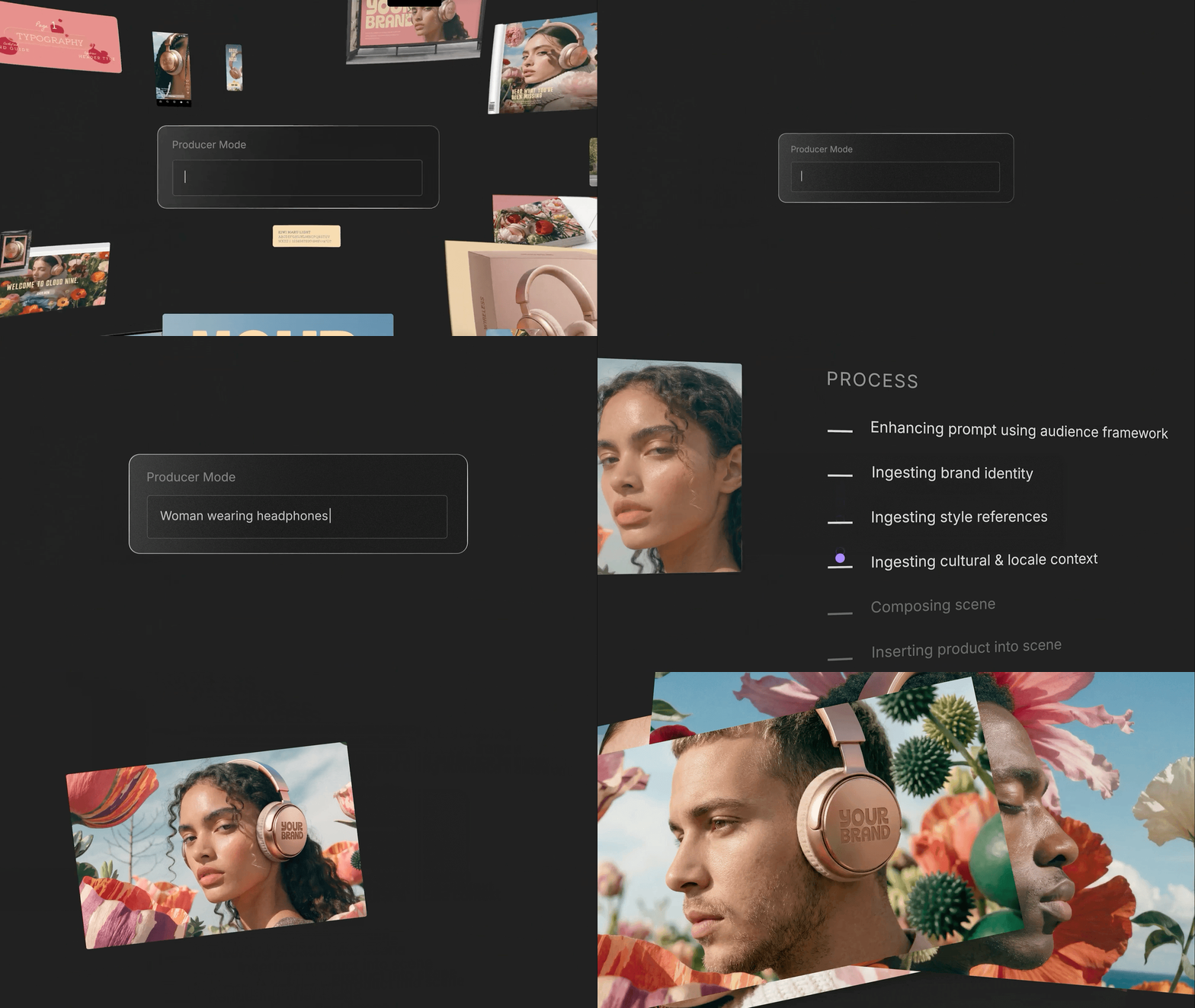
Brand Studio is a creative production platform for professional marketing and advertising teams, not a model release and not a developer tool. Stability's own description frames it clearly: "Instead of another AI tool that's supposed to work for everyone, we built a platform that works just for you."
The platform has four core components:
Brand Studio ships with a free Core version and a paid Enterprise plan. Pricing for Enterprise has not been publicly disclosed.
The Pivot in Full
Brand Studio did not come out of nowhere. It is the consumer-facing product of a strategic transformation that has been underway since mid-2024, and tracing that transformation explains both how the product came to be and what it signals about where Stability is headed.
The Akkaraju Era
When Emad Mostaque resigned as CEO in late May 2024, Stability was in financial trouble. The company had reported losses exceeding $30 million in the first quarter of that year on revenues of less than $5 million. The open-source model had built an enormous community but had not built a business.
Akkaraju came from Weta Digital, the visual effects company behind Avatar and The Lord of the Rings. His background was not in democratizing AI but in selling creative technology to production houses and entertainment studios.
His first major moves were structural: he hired Robert Legato, the visual effects pioneer behind Avatar and Titanic, as Chief Pipeline Architect. He brought in Ryan Ellis from Unity as SVP of Product. He pursued SOC 2 Type II and SOC 3 certification, the kind of compliance work that large enterprise customers require before signing contracts. By December 2024, he reported the company had eliminated its debt and was growing at triple-digit rates.
The Partnership Track
The enterprise deals accelerated through 2025. Stability signed a partnership with WPP in March 2025, integrating its models into WPP Open, the agency's AI-powered marketing services platform. WPP CTO Stephan Pretorius said the partnership "helps our clients stay at the forefront of innovation" and "ensures brand consistency on every level." In October 2025, Universal Music Group announced a strategic alliance to co-develop professional AI music creation tools. Warner Music Group followed in November 2025 with a joint venture framed around "responsible AI tools for music creation."
These are not partnerships with the open-source community but commercial contracts with companies that need custom AI implementations, indemnification, compliance guarantees, and dedicated support.
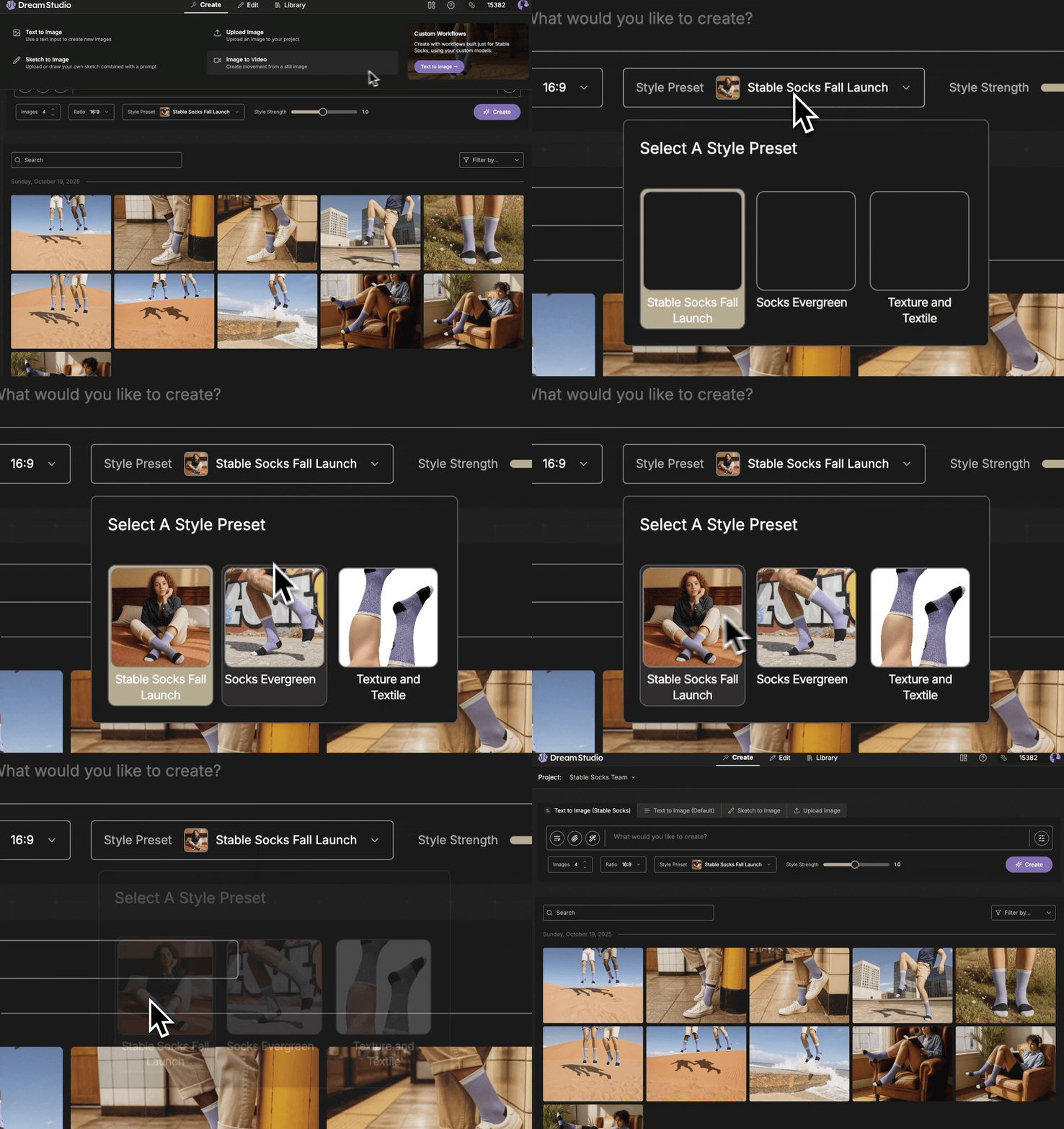
Stability also launched Stability AI Solutions in August 2025, an enterprise offering that partnered directly with brands to build custom fine-tuned models and purpose-built workflows. Brand Studio is the productized version of that offering, accessible without a custom implementation engagement.
The Open-Source Question
The honest framing of what Brand Studio represents is not complicated: Stability AI is a different company than the one that released Stable Diffusion in 2022.
Stable Diffusion itself remains open-source. Stability still releases models, still maintains a research blog, still hosts a community of over 200,000 members building on its work. Stable Diffusion 3.5, released in October 2024, introduced the Multimodal Diffusion Transformer architecture and was released with permissive weights.
But the commercial products Stability is building, pricing, and selling are not open. Brand Studio is a managed platform with proprietary model routing logic and a Brand Central customization layer that developers cannot fork and run locally.
The community that made Stable Diffusion the dominant image generation infrastructure worldwide, responsible for the 80% market share and the 12.59 billion images, did that work for free. They built fine-tunes, trained custom models, created plugins, and shipped applications on top of the open weights. That work created the ecosystem that made Stability's brand credible enough to sell to WPP and Universal Music.
Brand Studio is Stability monetizing the credibility that open-source community work created, through a product that the community that created it cannot access without paying.
Whether that is a betrayal or simply the financial reality of operating an AI company depends on your position. The AI community has been debating it since the membership model launched. Brand Studio makes the answer more concrete.
Who Brand Studio Is Actually For
The product's intended customer is a marketing or advertising team inside a mid-to-large enterprise that produces high volumes of creative assets across campaigns, channels, and seasonal launches.
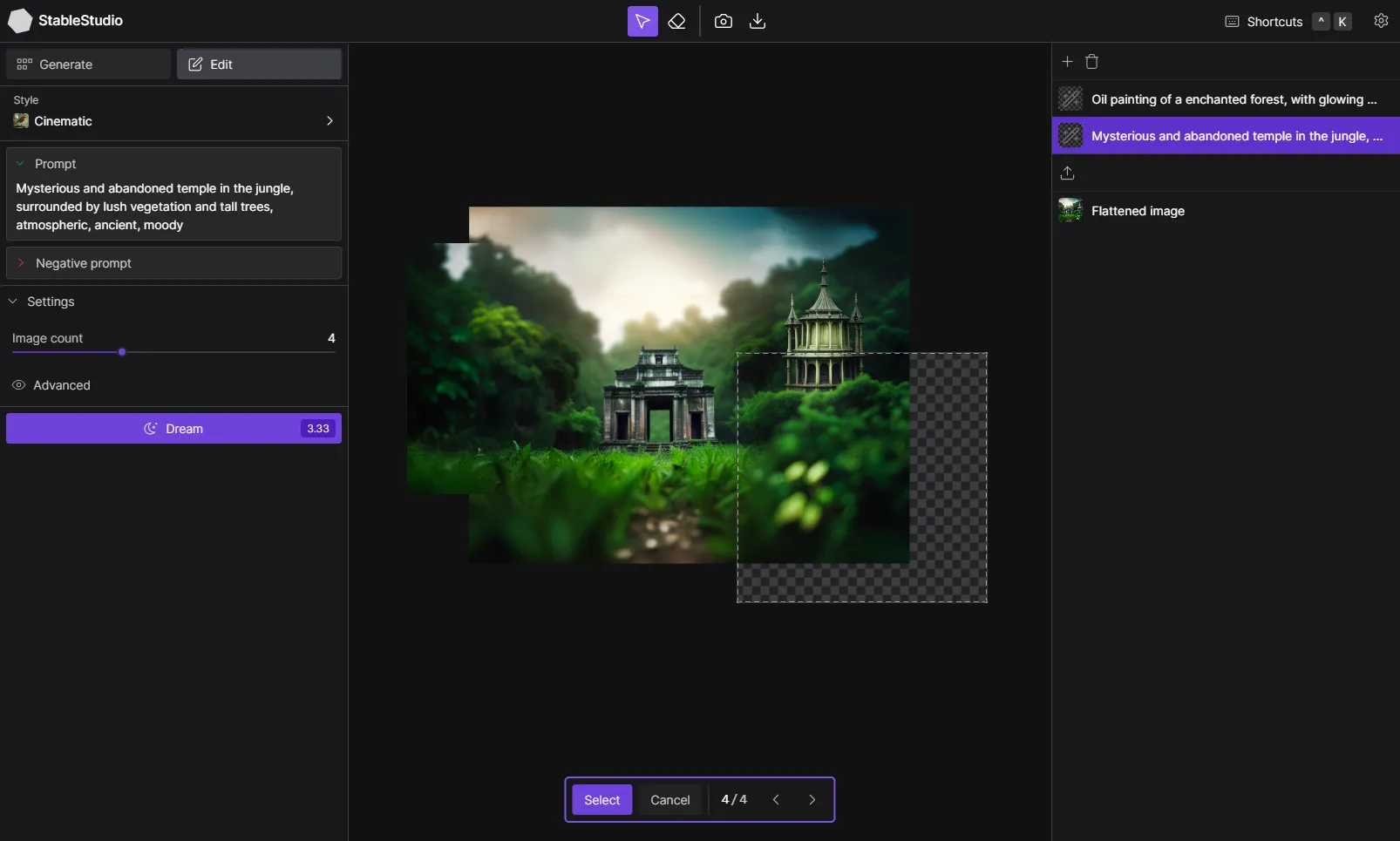
The use case Stability's own documentation illustrates is a fashion brand running a seasonal campaign. The team trains Brand Central on the brand's visual identity, guidelines, product photography, and campaign aesthetic. Producer Mode accepts a brief and generates a production workflow. Curated Model Routing handles the model selection for each step. Precision Inpainting handles product placement and final asset cleanup.
The output is not a creative direction or a concept sketch but a production-ready visual asset, delivered consistently at the brand's specific quality bar, without requiring a photographer, an art director, or a stock library for each iteration.
Competitive Context
Brand Studio enters a market with direct competition from Adobe Firefly, which integrates AI generation into Creative Suite workflows, and from platform-specific tools from Canva, Getty, and Shutterstock. Midjourney, which does not have an enterprise-focused platform, competes on image quality for general creative work. Runway targets professional video creators for advertising and film production.
The specific positioning Stability is pushing, a model routing layer that evaluates options against brand-specific criteria, is relatively differentiated. Adobe Firefly is a single-model experience. Midjourney is similarly single-model.
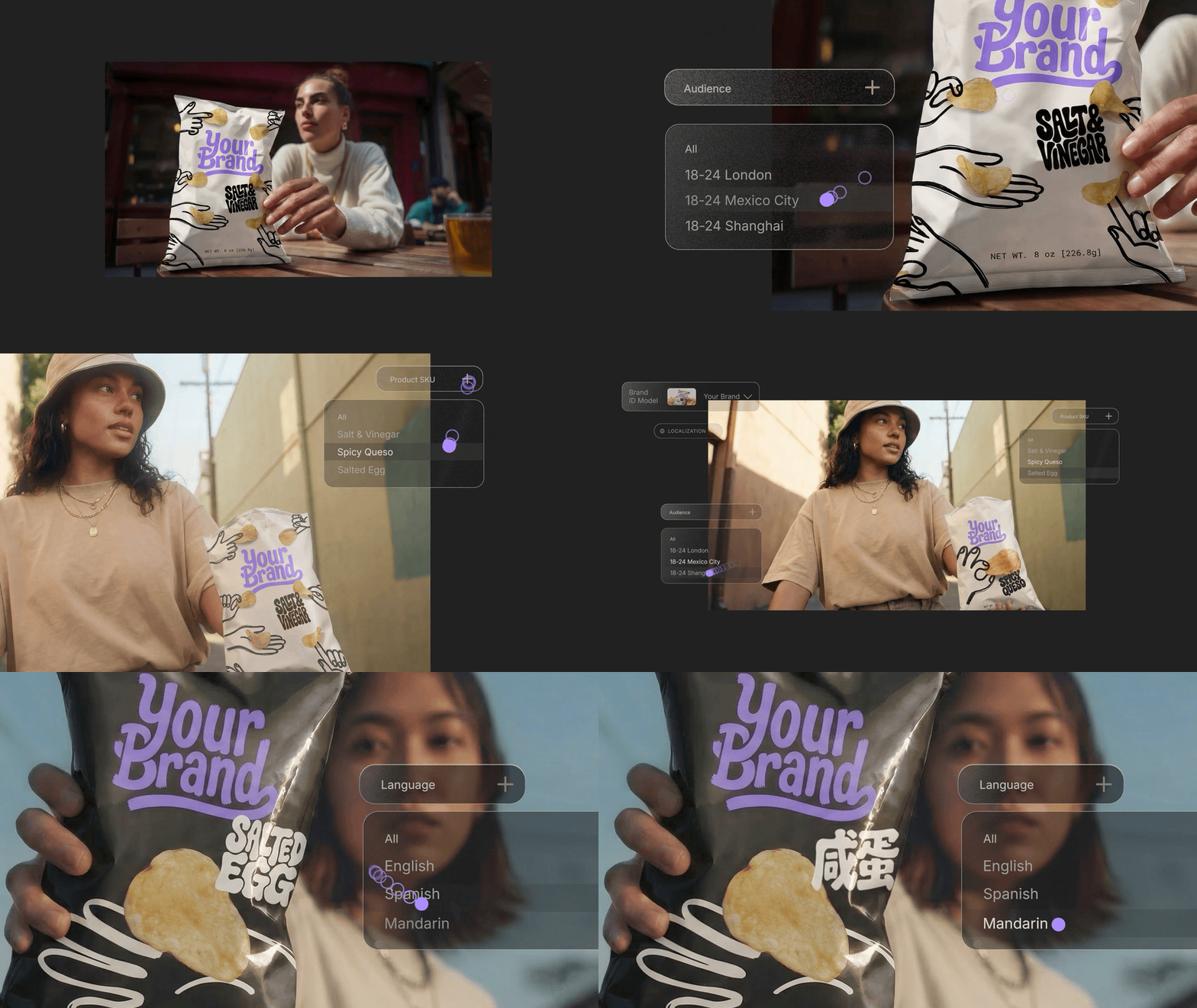
Stability's willingness to route to third-party models including competitors positions Brand Studio as infrastructure for creative production rather than a bet on Stability's own model being the best. Acknowledging that no single model wins every task, and building the platform that picks the right one, is an interesting strategic choice for a company whose core product is a model.
What This Means for the Developer Community
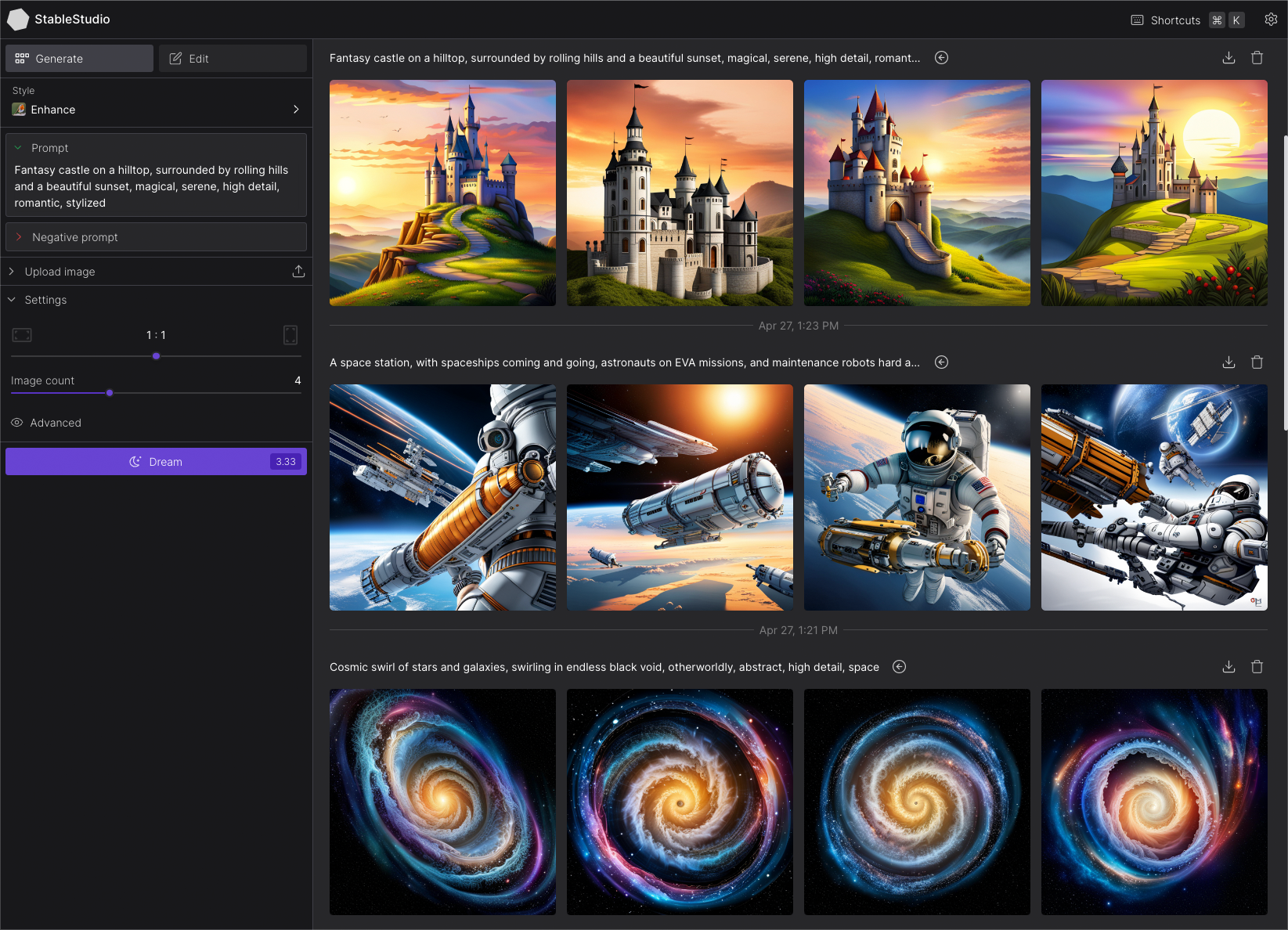
Stable Diffusion is not going away. The weights remain downloadable, the community remains active, the 2,500-plus applications built on Stability's APIs still exist, and the company still operates usage-based API pricing for developers.
But the direction of Stability's product investment is unmistakable. Brand Studio is not a tool the developer community asked for or will primarily use. It is a product designed for the customer segment that pays reliably: enterprise marketing teams with annual budgets and procurement processes.
The developers who built the ecosystem that made Stability credible are now primarily customers of infrastructure that their community work helped create, rather than the primary audience for new product development.
That is not unique to Stability. It is the standard pattern for open-source companies that eventually need to generate revenue: Red Hat did it, HashiCorp did it, Elastic did it. The community creates the value, the enterprise captures the revenue, and the community either accepts the arrangement or forks the project.
In Stability's case, the community has already forked extensively. Civitai alone recorded 213.99 million model downloads. The open-source ecosystem Stable Diffusion spawned is too distributed to reverse. Brand Studio is Stability acknowledging that it cannot compete with the full weight of its own community on open infrastructure, and choosing instead to build a product layer that community cannot easily replicate.
Conclusion
Brand Studio is a real product solving a real problem for enterprise creative teams. Curated Model Routing is a genuinely useful abstraction, and the brand consistency layer addresses a legitimate bottleneck in high-volume marketing production.
The larger story is what Brand Studio represents for Stability's identity. The company that opened up AI image generation to the world is now building closed commercial products for enterprises that need that capability delivered reliably, indemnified, and supported at scale.
Both things can be true simultaneously: Brand Studio can be a good product for its intended customers, and it can mark the end of the era when Stability's primary relationship was with the developer and researcher community that built its reputation.
Akkaraju's Stability is financially healthier than Mostaque's was. Whether the open-source community that made Stability worth saving is still part of what Stability is building toward, or whether they are now primarily users of infrastructure that moves at a different pace and serves a different customer, is the question that Brand Studio raises without answering.
Frequently Asked Questions
What is Stability AI Brand Studio?
Brand Studio is a commercial creative production platform launched by Stability AI on April 8, 2026, built for enterprise marketing and advertising teams. It includes Brand Central for training custom brand-specific models and storing campaign templates, Producer Mode for converting creative briefs into automated production workflows, Curated Model Routing for automatically selecting the best AI model for each task, and Precision Inpainting for targeted image editing. It is available in a free Core version and a paid Enterprise tier.
Is Brand Studio open source?
No. Brand Studio is a managed commercial platform. Its model routing logic and Brand Central customization layer are proprietary. Stable Diffusion, the underlying model technology, remains open source, and Stability continues to release model weights. But Brand Studio itself is not something developers can run locally or fork.
How does Curated Model Routing work?
Curated Model Routing is an automated system that evaluates each submitted creative task against criteria including brand consistency, product accuracy, text rendering quality, and audience appropriateness. It then routes the task to the highest-scoring model from a pool that includes both Stability's Stable Diffusion models and third-party providers including Nano Banana and Seedream. Users do not need to select or test individual models manually.
How did Stability AI change under Prem Akkaraju?
Akkaraju became CEO in June 2024 after Emad Mostaque resigned. Under his leadership, Stability pursued enterprise compliance certifications, hired entertainment and production industry veterans including former Weta Digital talent, signed commercial partnerships with WPP, Universal Music Group, and Warner Music Group, and launched Stability AI Solutions in August 2025. The company shifted from open-source model releases as its primary output to enterprise products and managed services.
Does Stability AI still release open-source models?
Yes. Stable Diffusion remains open source and Stability continues to release model weights. Stable Diffusion 3.5, released in October 2024, introduced new architecture and permissive weights. The company's research blog and community of over 200,000 members remain active. However, Stability's primary commercial product investment in 2025 and 2026 has been in closed enterprise products rather than open model releases.
Who are Brand Studio's main competitors?
Direct competitors include Adobe Firefly, which integrates AI generation into Creative Suite workflows, and Canva, Getty, and Shutterstock, which each have AI generation features aimed at marketing teams. Midjourney competes on image quality for creative work but does not have an enterprise-focused platform. Runway targets professional video production. Stability's multi-model routing differentiates Brand Studio from most of these, which route exclusively through their own models.
Related Articles
 Mark
Mark Dani
Dani Dani
Dani