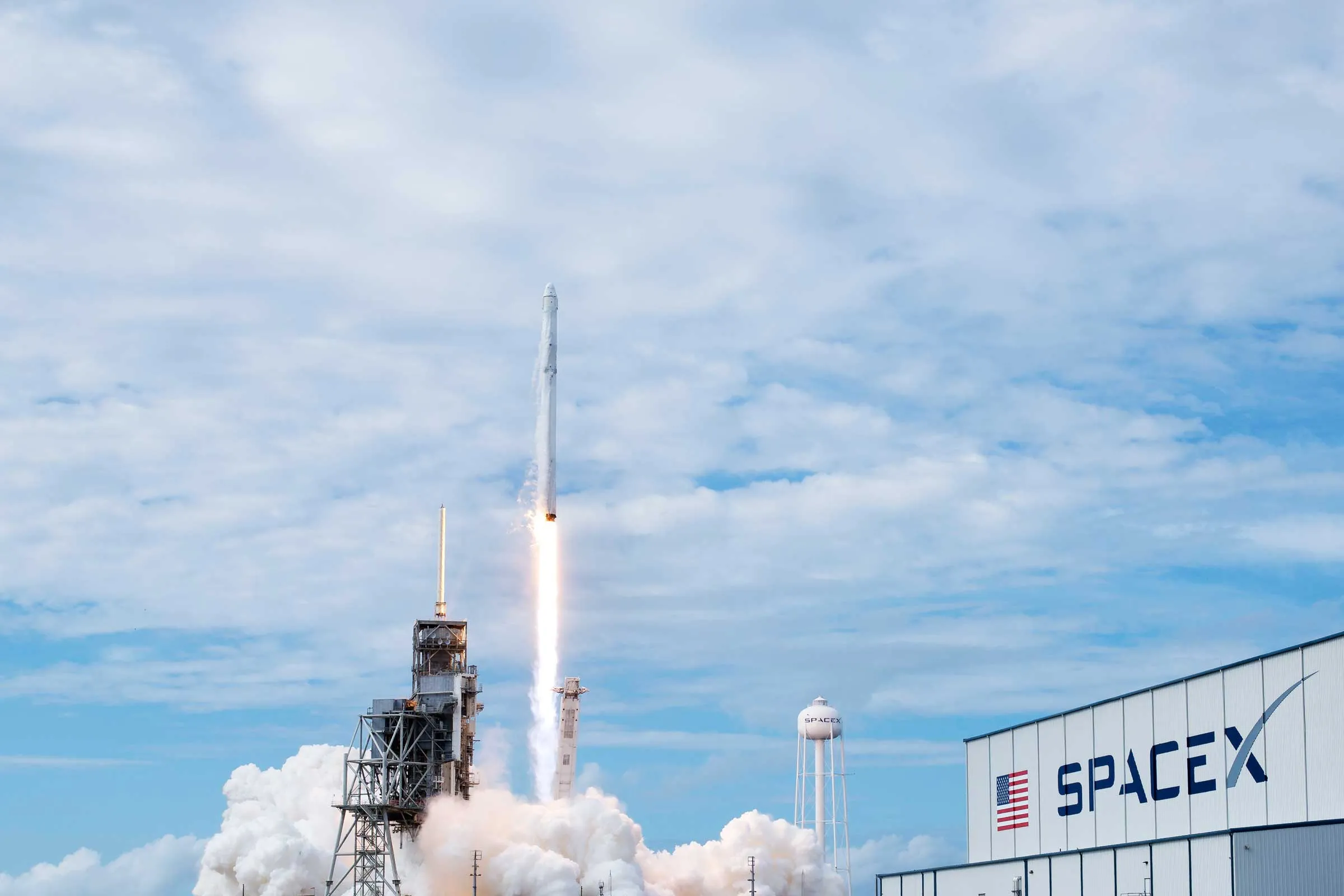
On April 1, 2026, SpaceX submitted its confidential draft registration statement to the US Securities and Exchange Commission, setting in motion what would be the largest initial public offering in the history of capital markets. Bloomberg reported the filing first, confirmed independently by CNBC, Reuters, and The Wall Street Journal within hours.
The numbers are staggering. SpaceX is targeting a valuation of $1.75 trillion and aims to raise up to $75 billion in the offering, internally codenamed "Project Apex." For context, Saudi Aramco's 2019 IPO raised $29.4 billion and has held the global record since. Alibaba's $22 billion 2014 US IPO and Visa's $18 billion 2008 listing are not in the same range.
SpaceX is targeting more than twice the biggest IPO on record.
A listing is targeted for June on the Nasdaq. The public S-1 prospectus, which must be released at least 15 days before the roadshow begins, is expected in late April or May.
What SpaceX Actually Is in 2026
SpaceX entering public markets is not the same event it would have been three years ago. The company that filed with the SEC in April 2026 is substantially different from the pure-play launch and satellite business that most investors picture.
In February 2026, SpaceX completed an all-stock acquisition of xAI, Elon Musk's AI company behind the Grok large language models, structuring it as a wholly owned subsidiary. The combined entity was valued at $1.25 trillion at the time of the deal. The merger also brought X, the social media platform formerly known as Twitter, into SpaceX's corporate orbit indirectly through xAI's ownership.
What SpaceX is going public as, then, is a vertically integrated platform spanning satellite internet, orbital launch, frontier AI, and social media infrastructure. Whether that framing justifies the jump from $1.25 trillion at the February merger to $1.75 trillion at the IPO target is one of the central questions institutional investors will be working through before the roadshow.
What's Inside SpaceX Now
| Business Unit | What It Is | 2025 Revenue (Est.) |
|---|---|---|
| Starlink | Satellite broadband, 9.2M+ subscribers, 150 countries | ~$10 billion |
| Launch Services | Falcon 9, Falcon Heavy, commercial and government payloads | ~$5–6 billion |
| Government / Defense | NASA, Air Force, Space Force contracts | $24.4B cumulative since 2008 |
| Starship | Next-gen heavy-lift rocket, under active development | Pre-revenue |
| xAI (Grok) | Large language models, AI infrastructure | Under $1 billion |
| X (indirect) | Social platform via xAI merger | ~$2.9 billion (est.) |
SpaceX completed 122 successful launches in 2025. Total 2025 revenue across the company was estimated at $15 to $16 billion, with profits of approximately $7.5 billion in EBITDA. Starlink accounts for the majority of that revenue and effectively all of the profitability.
The Starlink Thesis: Why the Valuation Is Not About Rockets
Most institutional commentary on the SpaceX IPO makes the same observation: the rockets created the competitive advantage, but Starlink is the business that justifies the valuation.
Starlink ended 2025 with 9.2 million subscribers across 150 countries, up from roughly 4.6 million at year-end 2024. Analysts project the subscriber base could reach 16 to 17 million by end of 2026. At current average revenue per user, that trajectory implies total Starlink revenue approaching $24 billion in 2026, which would represent the fastest revenue ramp of any telecommunications business in history.
The economics of Starlink are also structurally different from terrestrial telecom. The satellite constellation can serve markets that no fiber or tower network can reach economically, including maritime routes, aviation, rural broadband, and emerging-market mobile backhaul.
It has no incumbent competitor with comparable coverage. Amazon's Project Kuiper is the only credible near-term challenger, but it remains pre-commercial and faces an FCC deadline to deploy 1,618 satellites by July 2026. Kuiper will not approach Starlink's scale before 2027 at the earliest.
At $1.75 trillion, SpaceX is valued at roughly 87 times its 2025 revenue. No publicly traded comparable exists at that multiple with a comparable business profile. The valuation is essentially a bet on Starlink's subscriber trajectory continuing, Starship becoming operational at scale, and the xAI integration unlocking a category of space-based AI infrastructure that does not yet meaningfully exist.
The xAI Merger: Strategic Rationale vs. Valuation Complexity
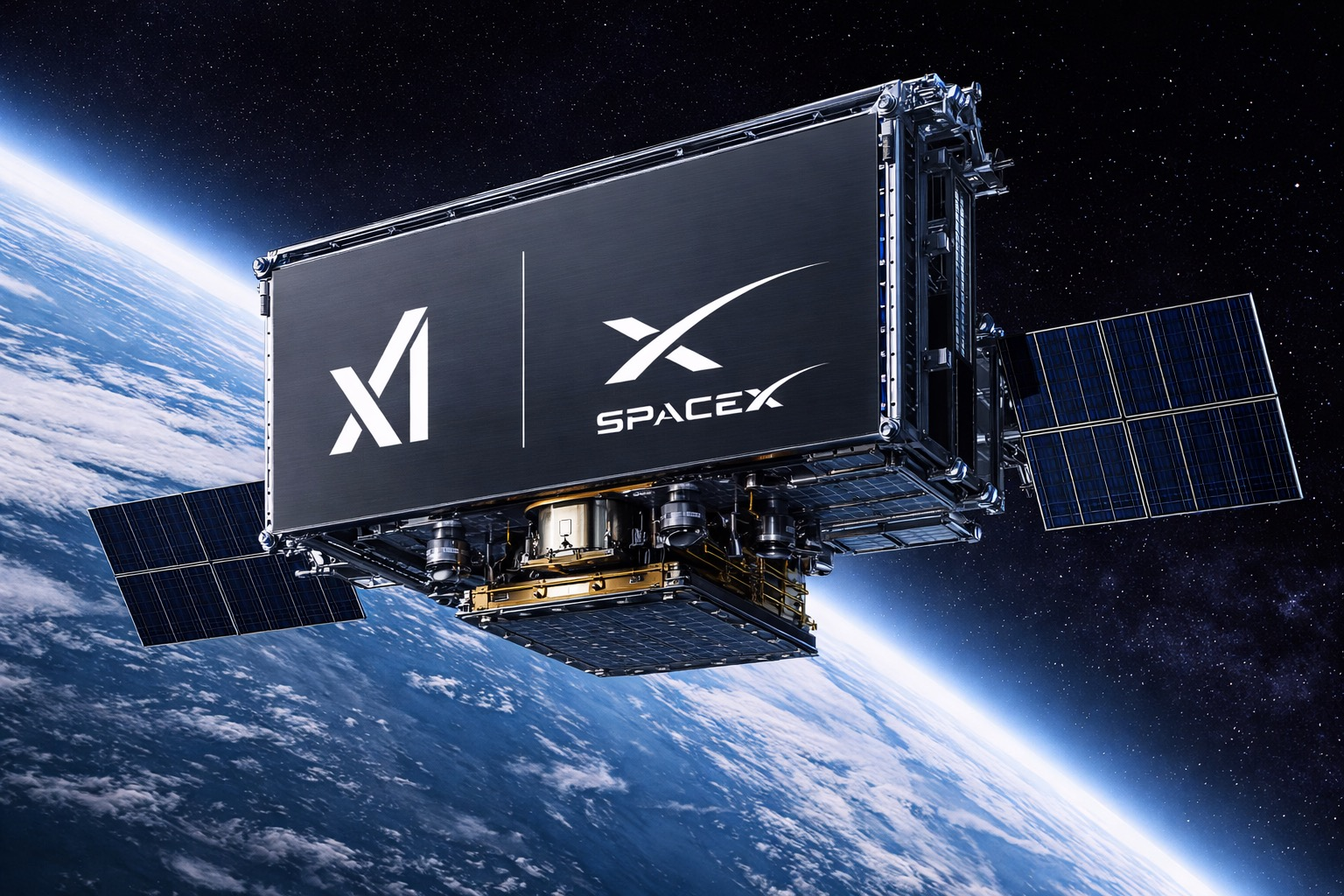
The xAI acquisition adds both narrative and accounting complexity to the IPO.
The strategic framing is orbital data centers: by integrating Grok AI models with Starlink's satellite network, SpaceX claims the ability to move compute workloads into space, taking advantage of constant solar power and natural radiative cooling to avoid the land use and energy constraints of terrestrial data centers. Analysts estimate this narrative added several hundred billion dollars to SpaceX's internal valuation in the months between the February merger and the April filing.
The practical financial picture is more challenging. xAI is currently losing approximately $1 billion per month. Its original co-founders have largely departed during the post-merger integration. The $1.75 trillion IPO target represents a $500 billion jump from the combined entity's valuation just six weeks earlier, with the AI infrastructure thesis doing most of the work.
The public S-1 will need to address how xAI's losses are being treated in SpaceX's consolidated financial statements, what the accounting treatment of the all-stock merger looks like, and what the path to profitability for the AI segment looks like on a standalone basis.
These are not unanswerable questions, but investors will need clear answers before they can price the deal with confidence.
X (formerly Twitter) sits indirectly in this structure. X generated an estimated $2.9 billion in revenue in 2025, mostly advertising, but carries approximately $1.2 billion in annual debt servicing costs and operates near break-even. One of the under-discussed implications of the xAI merger was that it folded X's ongoing costs into a much larger balance sheet that can absorb them.
The IPO Structure and What Retail Investors Need to Know
The Underwriting Syndicate
Twenty-one banks are reportedly managing the offering, internally codenamed "Project Apex." The five senior underwriters are Bank of America, Citigroup, Goldman Sachs, JPMorgan Chase, and Morgan Stanley.
Governance: Dual-Class Shares
SpaceX is considering a dual-class share structure that would preserve Musk's voting control post-IPO. Musk currently holds approximately 42 to 43% of SpaceX's economic equity but controls roughly 79% of voting rights through the existing private share structure.
A dual-class IPO structure is standard for founder-led technology companies, but it means public shareholders would receive economic exposure without commensurate governance rights. For a company where leadership concentration around a single individual is already a named risk factor, this distinction is material.
Retail Allocation
SpaceX is reportedly planning to allocate approximately 30% of shares to retail investors, roughly three times the typical norm for a US technology IPO. This reflects a deliberate strategy of converting Musk's global follower base into shareholders.
The practical implication is that access to IPO shares at the offering price through standard brokerage accounts will be unusually accessible by historical standards, though still subject to broker allocation processes.
The Timing Risk
The timing is not without complications. The Nasdaq posted its steepest weekly drop in nearly a year in March 2026. Reena Aggarwal, a Georgetown finance professor and IPO specialist, noted that even companies with strong fundamentals and significant investor interest can face difficult receptions when markets are volatile. "You can have a great company, with great fundamentals and a lot of investor interest, and an IPO can still flop if the markets have turned south, if there's too much volatility in the market," she said.
Key Risks Investors Should Understand
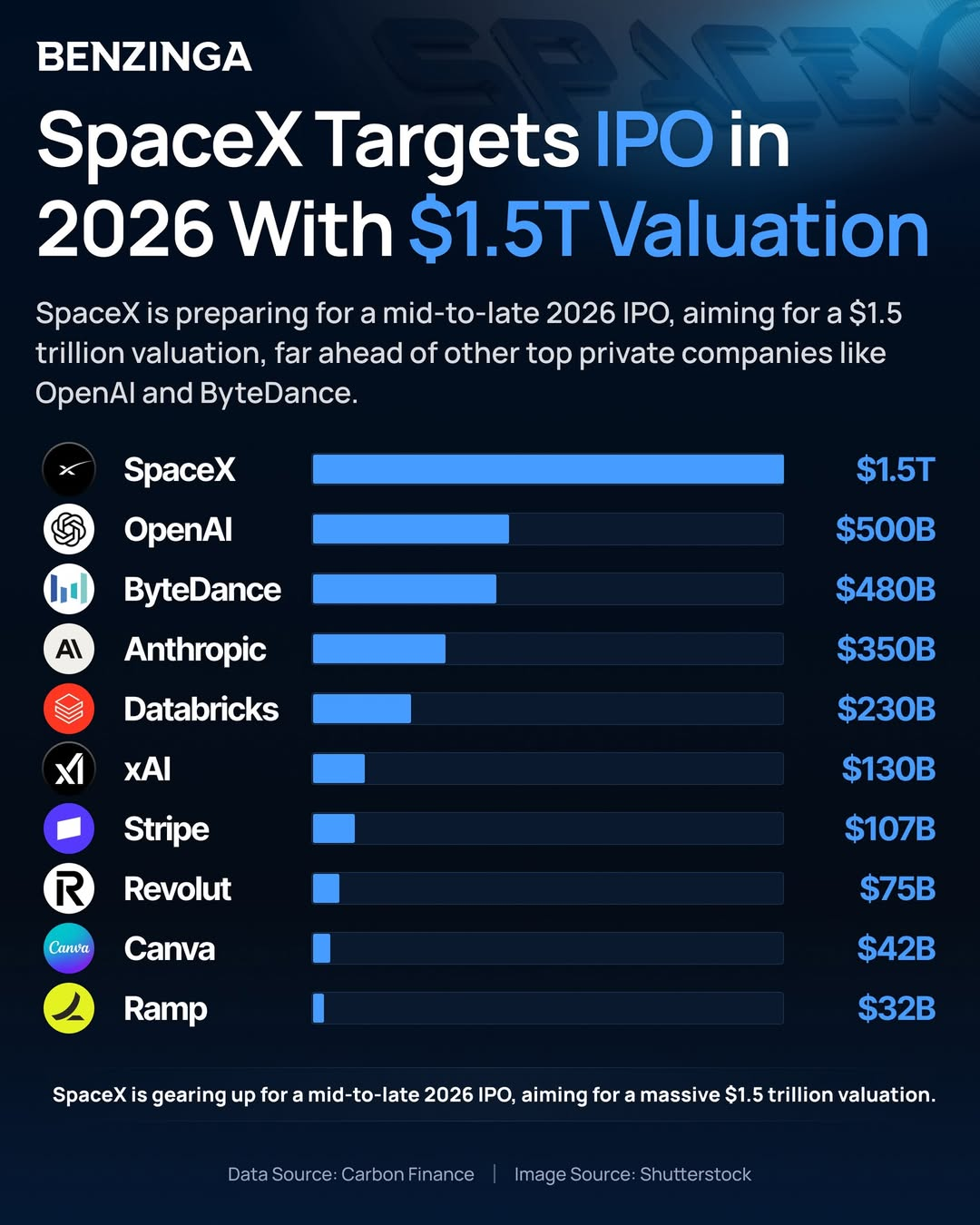
Before the S-1 drops, the risks are partly known and partly unquantified.
- Valuation multiples with no public comparable. At $1.75 trillion against $15 to $16 billion in 2025 revenue, SpaceX is priced at roughly 87 to 110 times revenue depending on which year's projections you use. No publicly traded aerospace, telecom, or AI company trades at these multiples. The premium requires sustained high-growth execution across multiple business units simultaneously.
- xAI integration losses. xAI is losing approximately $1 billion per month and has experienced significant leadership turnover since the merger. The path to profitability for the AI segment needs to be visible in the S-1 for the valuation to hold.
- Key-person concentration. Musk simultaneously leads Tesla, SpaceX, xAI, X, Neuralink, and The Boring Company. He has a public profile that generates both brand value and regulatory friction. The S-1 will need to address this explicitly as a risk factor.
- ITAR restrictions and transparency limits. International Traffic in Arms Regulations limit what SpaceX can disclose about its defense and national security contracts. The S-1 will not provide the same financial transparency investors expect from a commercial technology company.
- Starship development uncertainty. Starship is central to SpaceX's future economics, including Starlink V3 satellite deployment, NASA lunar missions, and the orbital data center concept. It is still in active development. The Starship V3 Flight 12 test is targeting late April 2026 from Starbase in Boca Chica. Success or failure will directly influence IPO sentiment.
- Market conditions. The Nasdaq's recent volatility, geopolitical uncertainty, and the simultaneous pipeline of OpenAI, Anthropic, and other large AI IPOs all compete for institutional allocation budgets. Musk has specifically cited wanting to beat the AI companies to market to capture those budgets first.
What Happens After the Listing
If the IPO proceeds at the June target, SpaceX would debut as the sixth most valuable publicly traded company on Earth, ahead of Meta, Berkshire Hathaway, and every energy and industrial company in history.
Musk would become the first person to simultaneously lead two publicly traded companies each valued above $1 trillion, with Tesla currently at approximately $1.4 trillion.
The capital raised, estimated at $75 billion, would fund Starship's full commercialization program, Starlink V3 satellite deployment, and Mars mission preparation. It would also cover the compute infrastructure required to run and develop xAI's models at scale.
For investors who have been watching the private SpaceX secondary market with no access point, the IPO is the first opportunity to hold direct equity in the company. That access comes with the caveat that the valuation assumes a future that is partly speculative, governance rights will be limited by the dual-class structure, and the public S-1 has not yet been filed.
Wrap up
The SpaceX IPO is several bets placed simultaneously: that Starlink's subscriber growth continues at its current trajectory, that Starship becomes economically operational on a timeline that justifies the V3 deployment plan, that xAI's losses are a temporary phase rather than a structural drain, and that orbital data centers become a real infrastructure category rather than a narrative premium.
The base business, Falcon 9 launches and current-generation Starlink, is genuinely profitable and genuinely dominant. The $1.75 trillion valuation prices in substantially more than the base business.
Whether that premium is justified will become visible when the S-1 drops in April or May. The prospectus will be the first time the company's financial details are publicly available, and it will be the real test of whether the valuation holds up under scrutiny.
Frequently Asked Questions
When is the SpaceX IPO?
SpaceX filed a confidential draft registration with the SEC on April 1, 2026, targeting a June 2026 Nasdaq listing. The public S-1 prospectus is expected in late April or May. Under SEC rules, the S-1 must be publicly available at least 15 days before the company begins marketing shares to investors.
What is SpaceX's IPO valuation?
SpaceX is targeting a valuation of approximately $1.75 trillion, according to Bloomberg reporting citing sources familiar with the matter. That figure is up from the $1.25 trillion valuation established by the February 2026 xAI merger. The company aims to raise up to $75 billion in the offering.
Why is SpaceX going public now?
SpaceX needs capital at a scale that private markets are struggling to provide efficiently. Starship development, Starlink V3 satellite deployment, NASA commitments, and xAI's ongoing losses all require sustained large-scale investment. An IPO also provides liquidity for existing investors and employees, and Musk has cited wanting to list before OpenAI and Anthropic to capture institutional allocation budgets ahead of the broader AI IPO wave.
What happened between SpaceX and xAI?
In February 2026, SpaceX completed an all-stock acquisition of xAI, Musk's AI company behind the Grok large language models, valuing the combined entity at $1.25 trillion. xAI is now a wholly owned SpaceX subsidiary. The merger also brought X (formerly Twitter) into SpaceX's corporate orbit indirectly through xAI's previous ownership of the platform.
Can retail investors buy SpaceX stock at IPO?
SpaceX reportedly plans to allocate approximately 30% of IPO shares to retail investors, roughly three times the typical norm. Access will depend on broker participation and allocation processes. The 30% retail target does not guarantee access at the IPO price, but it is meaningfully more retail-friendly than most large technology listings have been.
What are the biggest risks of the SpaceX IPO?
The primary risks include an 87-plus-times revenue valuation with no public comparable, xAI's ongoing losses of approximately $1 billion per month, key-person concentration around Musk across multiple simultaneous companies, ITAR restrictions that limit financial transparency on defense contracts, Starship development uncertainty, and market conditions. The dual-class share structure means public shareholders would receive limited governance rights relative to their economic ownership.
Related Articles
 Mark
Mark
 Dani
Dani