The hospital bill arrived a month after the cremation. Eight lines of vague descriptions, each carrying a five-figure charge, for four hours of care that failed to save a 62-year-old man who had suffered a heart attack after a morning run. The total: $195,628.
Matt Rosenberg, a New York-based marketing consultant and his sister-in-law's closest advocate, told her to wait before paying. Then he opened Claude.
What followed, documented in a first-person account published in Business Insider in February 2026, was a methodical, line-by-line audit of a hospital bill using an AI system as a research partner. Within an hour, Claude had identified duplicate billing codes, a charge for a coronary bypass that had never been performed, and a ventilation management fee that Medicare explicitly prohibits when a critical care code is also present. The AI calculated that Medicare would have paid approximately $28,675 for the same care. The hospital had billed $195,628.
Rosenberg drafted a six-page letter documenting each violation. The hospital reduced the final bill to $33,000. A $163,000 reduction, negotiated with a $20-per-month AI subscription and about an evening's work.
The story is notable not because it is extreme but because it is increasingly typical. Patients and their families are deploying consumer AI tools, including Claude, Google's NotebookLM, and ChatGPT, to do something the healthcare system has always counted on people not doing: reading the documents carefully.
The Information Asymmetry Problem
The American healthcare system has a structural design feature that rarely gets named as such: its complexity is, in many ways, its protection. Medical billing codes, treatment protocols, drug interaction warnings, pathology report language, and oncology staging criteria are all written in professional registers that most patients cannot parse without expert help.
The result is that patients and families navigating high-stakes medical decisions, including cancer diagnoses, have historically been almost entirely dependent on the professionals treating them to explain what those documents mean, what options exist, and whether the care being recommended is appropriate.
AI is changing that dynamic in a specific way. It does not replace clinical judgment or professional expertise. What it does is translate. A patient who uploads a pathology report to Claude and asks what it says in plain English is not second-guessing their oncologist. They are trying to understand what they have been told.
That translation function is where documented patient outcomes begin to appear.
The Oncology Navigation Pattern
A 2026 report in Cancer Today magazine documented the growing pattern of cancer patients using AI chatbots to navigate their diagnoses. One patient, diagnosed with cancer in both breasts simultaneously, uploaded her biopsy report to an AI chatbot within minutes of receiving it. The tool translated the staging information into plain language and generated a list of questions to bring to her oncologist three hours later.
"I had a much stronger baseline understanding of what was happening and what those biopsy results meant," she told the magazine. "It doesn't replace medical advice, but it is a fantastic bridge to help you engage better with your medical team."
Liz Salmi, a patient advocate and researcher who was diagnosed with a malignant brain tumor in 2008 and has since studied AI-patient communication, described the appeal to Cancer Today: these tools provide answers in real time, at home, when patients cannot reach their doctor. They help people prepare better questions, understand complex terminology, and share information with family members who also need to process what is happening.
A January 2026 survey by OpenAI found more than half of respondents had used AI tools for healthcare advice over a three-month period. The platform estimated 40 million people worldwide were using AI for healthcare daily.
That volume represents a population engaged in medical navigation at a scale that no healthcare system could support with professional staff alone.
How Claude and NotebookLM Work Differently in This Context
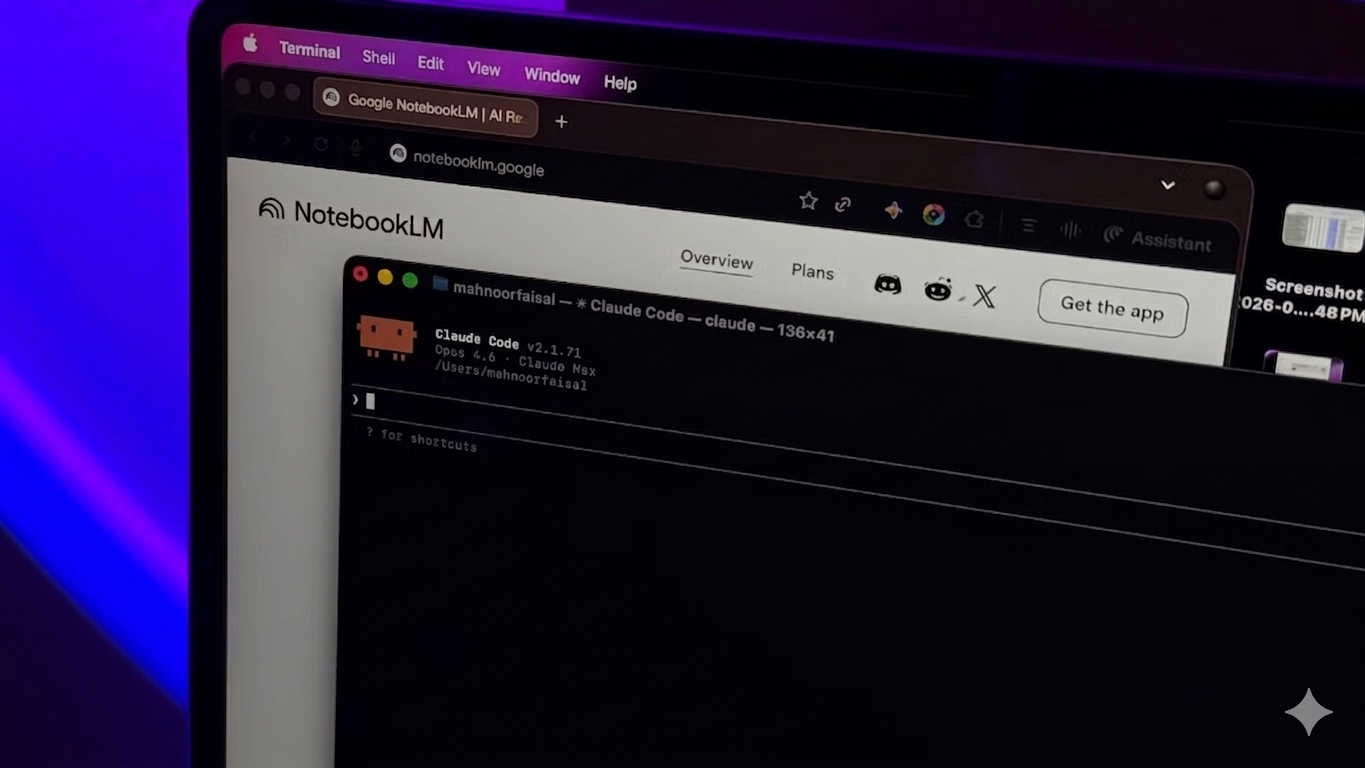
Claude and NotebookLM are distinct tools that patients have started combining in medical navigation workflows, and they offer different things.
Claude is a conversational AI with strong reasoning and document analysis capabilities. In the Rosenberg case, it worked as an interactive research partner: he uploaded the billing document, asked specific questions, received structured analysis, and then directed Claude to cross-reference Medicare billing rules. The back-and-forth conversation allowed him to probe ambiguities, test interpretations, and build a case document that referenced specific regulatory violations.
The iatroX clinical AI publication noted in a March 2026 review that among general-purpose AI systems, Claude is particularly notable in medical contexts for presenting multiple perspectives, flagging limitations, and avoiding overconfident conclusions. "Claude tends to explore differentials systematically, consider alternative explanations, and present qualified conclusions rather than confident wrongness," the review stated, identifying this as an advantage in medical contexts where overconfidence is dangerous.
NotebookLM, Google's AI-powered research tool, functions differently. Rather than a general conversational interface, it allows users to upload specific source documents and then ask questions grounded exclusively in those sources. A patient who uploads their medical records, research papers on their diagnosis, and clinical guidelines can then ask NotebookLM questions that the tool will answer only from that curated document set, reducing the risk of the system generating information from outside sources that may be less relevant or accurate.
The combination has become a documented patient workflow: Claude for broad research, question generation, and document analysis; NotebookLM for grounding answers in specific verified documents. Patients investigating a diagnosis they have questions about can research the clinical literature, upload the relevant papers to NotebookLM, and then ask targeted questions about their specific case with the system's answers tied directly to the source material.
What the Research Says About AI Accuracy in Oncology
The enthusiasm for AI as a patient tool runs against a body of research that urges caution, and both things can be true simultaneously.
A study released in April 2025 by researchers from the University of Southern California posed more than 500 cancer-related questions to popular AI chatbots and found meaningful error rates. Research published in JMIR Cancer in September 2025 found that AI models using only verified cancer research sources produced consistently accurate information, while general models showed more variability.
Research specifically on Claude in clinical contexts is more recent. A study published in the European Archives of Oto-Rhino-Laryngology assessed Claude 3 Opus against ChatGPT 4.0 on 50 consecutive primary head and neck cancer cases, comparing AI recommendations to actual multidisciplinary tumor board decisions. Both models showed meaningful concordance with expert recommendations but also demonstrated limitations in tailoring recommendations to patient-specific circumstances.
The broader picture from a ScienceDirect systematic review covering 123 papers on agentic AI in cancer detection and diagnosis through 2025 was more optimistic about AI's diagnostic capabilities: GPT-4 versions matched human expert performance on error detection in pathology reports (89.5% vs. 88.5%), classified skin lesions at a level comparable to dermatologists (84.8% vs. 84.6%), and staged ovarian cancer at 97% accuracy compared to 88% by radiologists.
These are not the same as asking Claude to explain a billing code. They are different tasks operating at different levels of consequence. But they establish that AI systems working with medical information can, under the right conditions, match or approach expert performance on specific tasks.
The $163,000 Methodology

Rosenberg's account in Business Insider is worth examining in detail because the methodology he used demonstrates what careful, skeptical AI-assisted medical navigation can look like when applied rigorously.
He did not simply accept Claude's analysis. After receiving the initial billing audit, he ran the same analysis through ChatGPT, explicitly asking it to check Claude's work for errors and flag anything questionable. His reasoning: while each AI might hallucinate, two systems sharing the same specific delusion seemed less likely. He then spent twenty minutes spot-checking the Medicare billing rules Claude had cited, reading the original regulatory documents.
"I wouldn't have known what to look for without Claude," he wrote. "But I didn't take the information at face value."
The procedure he describes is essentially a peer-review methodology applied to AI outputs. The AI provided the analysis; he verified it against primary sources. The letter he sent to the hospital was six pages long, cited specific regulatory violations by name, and requested a corrected invoice. It was not a complaint. It spoke the hospital's language precisely because Claude had taught him enough of it to do so.
This methodology matters because it reflects the appropriate framing for AI as a medical navigation tool. The value is not that the AI is infallible. The value is that it makes the effort of verification productive instead of overwhelming. A patient without AI assistance who wanted to investigate their hospital bill would need to first learn which billing codes applied to their care, then research what Medicare pays for each code, then understand the rules about bundling and inpatient procedures, then identify which specific violations appeared in their bill. That is weeks of work for a person with no prior medical billing knowledge. With Claude, it was an evening.
The Limits and Risks
The same asymmetry-reducing capability that makes AI useful for patients also introduces the risk that patients will act on AI-generated medical information without adequate verification, or that they will use AI outputs to second-guess clinical decisions that require expertise the tools do not have.
Dr. Maria Alice Franzoi, a medical oncologist at Institut Gustave Roussy in France, told Cancer Today: "While AI can help reduce information overload, it shouldn't interfere with the relationship between patients and clinicians."
Anthropic's January 2026 launch of Claude for Healthcare specifically noted the patient-facing use case: the system can connect to medical records, summarize health history, explain test results in plain language, and prepare questions for appointments. But the launch materials also stated explicitly that "the aim is to make patients' conversations with doctors more productive," positioning the tool as a bridge to professional care rather than a replacement for it.
The distinction matters clinically. A patient who uses Claude to understand what their pathology report says before their appointment with their oncologist is augmenting a professional relationship. A patient who uses Claude to decide whether to refuse a treatment recommendation without consulting their doctor is operating outside the domain where these tools are validated.
The Johns Hopkins Medicine research that found more than 330,000 patients die annually in the US from diagnostic errors establishes the scale of the problem that accurate AI-assisted navigation could help address. The same research also underlines why the stakes of getting AI-assisted medical decisions wrong are severe.
What This Is Actually Changing
The hospital bill case and the oncology navigation examples represent the same underlying shift: patients gaining access to analysis that was previously available only to those who could afford professionals with specialized expertise.
A medical billing attorney or healthcare advocate consultant would have done what Rosenberg did with Claude and produced a similar letter. They would have charged somewhere between $500 and $2,000 for the work. Claude costs $20 per month and can be interrupted and questioned at 2 AM. The economic accessibility of that capability is not trivial.
In oncology specifically, the information environment around a new cancer diagnosis is overwhelming by design, not through malice but through complexity. Staging systems, treatment protocols, clinical trial eligibility criteria, drug interaction profiles, and second-opinion protocols are all technically accessible to patients and almost none of it is comprehensible without medical training or significant time investment.
AI does not eliminate that complexity. It makes it navigable. A patient who uses NotebookLM to ground their questions in verified clinical literature before a tumor board consultation is not a problem for the medical system. They are a better-prepared participant in it.
The documented patient cases, from Rosenberg's billing audit to the Cancer Today profiles, show what that participation looks like in practice. The tools do not replace physicians, oncologists, or the clinical judgment that requires years of training. They collapse the information gap between what a patient is told and what they are capable of understanding and questioning.
That is a meaningful change in a system that has long relied on that gap remaining wide.
Frequently Asked Questions
How are patients using Claude and NotebookLM for medical navigation?
Patients are using Claude as a conversational research tool to analyze medical bills, translate pathology reports into plain language, research diagnosis-specific clinical literature, and generate informed questions for their doctors. NotebookLM, Google's document-grounded AI, allows patients to upload specific medical records and research papers and ask questions that the system answers exclusively from those uploaded sources. Many patients use both tools in combination: Claude for broad research and analysis, NotebookLM for grounding answers in verified clinical documents.
What was the Matt Rosenberg hospital bill case?
Matt Rosenberg used Claude to audit a $195,628 hospital bill his sister-in-law received after her husband died of a heart attack. Claude identified billing code violations including a charge for a coronary bypass that had never been performed, a ventilation management fee prohibited under Medicare rules when a critical care code is also present, and duplicate billing. Rosenberg verified the analysis through ChatGPT and primary Medicare regulatory documents, then sent the hospital a six-page letter citing each violation. The hospital reduced the bill to $33,000.
Is AI reliable for medical information?
Reliability varies by tool, task, and how the AI output is used. Research published in JMIR Cancer found that AI models drawing exclusively on verified cancer research sources provided consistently accurate information. General AI models show higher variability. Studies assessing AI on specific clinical tasks, such as pathology error detection, have found performance comparable to expert clinicians in controlled settings. Medical professionals and the tools themselves consistently recommend using AI to prepare questions for clinical consultations rather than to replace clinical judgment.
What is the difference between Claude and NotebookLM for medical research?
Claude is a general-purpose conversational AI that can analyze documents, research topics, cross-reference sources, and generate structured analysis. NotebookLM is specifically designed to answer questions grounded in user-uploaded source documents, limiting its outputs to the specific papers and records you provide. For medical navigation, Claude is better for broad research and interactive analysis; NotebookLM is better for ensuring that answers are tied to specific verified sources like clinical guidelines or your own medical records.
What are the risks of using AI for medical decision-making?
The primary risks are acting on AI-generated information without verification, using AI outputs to make clinical decisions that require professional expertise, and misinterpreting AI responses as definitive medical conclusions. Anthropic, Google, and OpenAI all frame their tools as aids to professional medical relationships rather than replacements. The appropriate use model is to use AI to become a better-prepared patient and to verify AI-generated medical information against primary sources or through clinical consultation before acting on it.
Related Articles
 Dani
Dani Mark
Mark