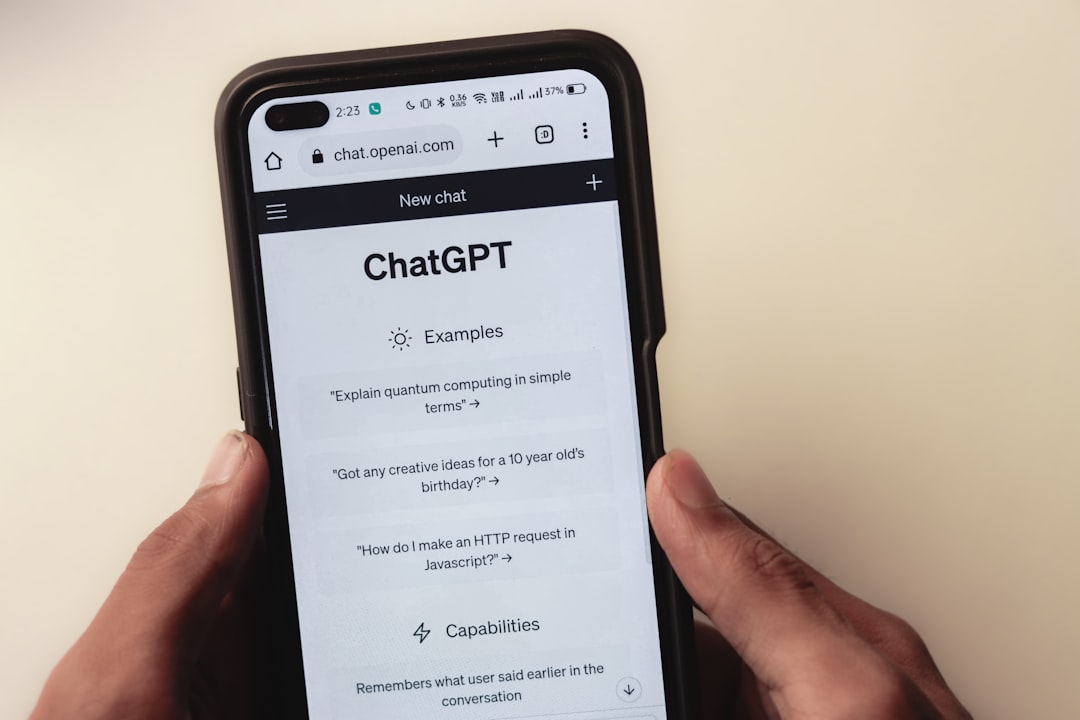
OpenAI is preparing to go public in one of the most anticipated and complicated technology listings in years. The Wall Street Journal reported in January 2026 that the company had begun informal talks with Wall Street banks about a potential IPO, and that OpenAI had recently hired a new chief accounting officer and a business finance officer to oversee investor relations. The target: a listing as early as Q4 2026.
The company has not formally filed an S-1 with the SEC, and its CFO Sarah Friar has suggested 2027 as a more realistic timeline. The groundwork is clearly being laid, and the numbers behind this IPO are unlike anything public markets have seen from a technology company.
The Financial Picture
OpenAI's revenue growth has been extraordinary. The company crossed $25 billion in annualized revenue at the end of February 2026, up from $21.4 billion at year-end 2025 and roughly $6 billion at the end of 2024. That is a roughly four-fold increase in 14 months, a growth rate that outpaces every enterprise software company at comparable scale in recent memory.
| Metric | Figure |
|---|---|
| Annualized revenue (Feb 2026) | $25 billion |
| Revenue at year-end 2025 | $21.4 billion |
| Revenue at year-end 2024 | ~$6 billion |
| Weekly active ChatGPT users | 900 million+ |
| Paying business customers | 9 million+ |
| February 2026 funding round | $110 billion |
| Post-money valuation (Feb 2026) | ~$840 billion |
| Projected cash burn (2028) | $47 billion/year |
| Expected profitability | 2030 |
| Projected cumulative losses to 2030 | $200 billion+ |
The cash burn is equally dramatic. OpenAI's annual cash burn is projected to rise from $17 billion in 2026 to $35 billion in 2027, peaking at $47 billion in 2028. The company has said it does not expect to reach profitability until 2030, and cumulative losses through that period are projected to exceed $200 billion. At current burn rates, an IPO is not optional but necessary.
Who Already Owns OpenAI
Before any public shares exist, a large portion of OpenAI's equity is already committed to a specific set of investors.
| Investor | Committed / Invested | Approx. Stake | Notes |
|---|---|---|---|
| OpenAI Foundation (nonprofit) | Converted equity | ~26% | Full governance control; appoints all directors |
| Microsoft | $13B+ across rounds | ~27% | Includes revenue-sharing and Azure cloud arrangements |
| Current and former employees | Various | ~47% combined | Includes sovereign wealth funds and institutional investors |
| SoftBank | $64.6B total | ~13% | Used $40B bridge loan for commitment |
| Amazon | $50B (Feb 2026) | Undisclosed | Bundled with $100B AWS spending agreement |
| Nvidia | $30B in GPU capacity | Undisclosed | Infrastructure commitment, not cash equity |
An IPO would create liquid, publicly-traded shares that allow these investors to realize gains. It would also be the first time retail investors could buy exposure directly to OpenAI rather than through proxy investments in Microsoft or other publicly traded stakeholders.
The Corporate Structure Behind the Listing
One reason the OpenAI IPO is more complicated than most is the company's unusual governance architecture, which went through significant changes in 2025.
OpenAI was founded as a nonprofit in 2015. In 2019, it created a "capped-profit" for-profit subsidiary to attract the capital that charitable donors could not provide. By 2024, that structure was becoming an obstacle to fundraising at the scale the company needed, so OpenAI began working toward a more conventional structure.
After months of legal challenges, civic group opposition, and an Elon Musk lawsuit seeking to block the conversion, OpenAI completed its restructuring on October 28, 2025. The for-profit entity is now a Public Benefit Corporation called OpenAI Group PBC, and the nonprofit is now called the OpenAI Foundation.
The Foundation holds a 26% equity stake in OpenAI Group PBC and retains full governance control, with the power to appoint and remove all directors of the for-profit entity.
The PBC structure is legally required to consider the interests of all stakeholders, not just shareholders. In practice, the OpenAI Foundation's board acts as the ultimate authority, and its fiduciary duty runs to the mission rather than to commercial returns.
California and Delaware attorneys general both engaged in the process. The California AG secured commitments that charitable assets would be used for their intended purpose and that safety would be prioritized before agreeing not to contest the restructuring in court.
For prospective IPO investors, the governance implications are real. Public shareholders will own economic interest in OpenAI Group PBC but will not control the company. The Foundation controls it, which is an unusual proposition for a public company at this scale.
What the Competitive Landscape Looks Like
Public market investors will not be buying into a company with a clear and stable market position. The competitive dynamics have shifted dramatically in the year leading up to any potential listing.
Anthropic reported $19 billion in annualized revenue as of early 2026, roughly 14 times higher than a year earlier. The gap between OpenAI's $25 billion and Anthropic's $19 billion has compressed to just $6 billion. Anthropic's revenue has been growing at approximately 10 times per year versus OpenAI's 3.4 times, and Epoch AI projected that at current growth rates, Anthropic would surpass OpenAI in annualized revenue by mid-2026.
The enterprise API market tells a particularly revealing story. OpenAI's enterprise LLM API share fell from approximately 50% in 2023 to 25% by mid-2025, while Anthropic's rose from 12% to 32% over the same period. Among US businesses tracked by Ramp Economics Lab, Anthropic's share of combined OpenAI-plus-Anthropic enterprise spend went from roughly 10% at the start of 2025 to over 65% by February 2026.
OpenAI CEO Sam Altman declared a company-wide "code red" in December 2025, pausing non-core projects to accelerate development in response to competitive pressure. The company is planning to nearly double its workforce to 8,000 employees by year-end 2026.
PitchBook's analysis of the three major AI IPO candidates, OpenAI, Anthropic, and Databricks, concluded that OpenAI scores weakest on business quality fundamentals despite commanding the highest valuation. One key metric that investors typically scrutinize, net revenue retention from enterprise customers, has never been publicly disclosed by OpenAI.
Databricks and Anthropic both sit at approximately 140% NRR. OpenAI's comparable figure remains unknown, which makes assessing customer loyalty and expansion revenue impossible before the S-1 is filed.
What Going Public Changes for ChatGPT
OpenAI going public will not change ChatGPT's product direction immediately. But it will change the incentive structure around every decision the company makes, and those pressures will compound over time.
As a public company, OpenAI will face quarterly earnings scrutiny. Investors will expect consistent revenue growth, expanding margins, and a credible path to profitability.
The company's current model of prioritizing scale over margins, spending heavily on model training, infrastructure, and talent, will face pressure to produce visible financial progress at regular intervals.
Public companies also disclose significantly more. OpenAI will need to publish GAAP financials, including its cash burn rate, cost of revenue, and details about its enterprise customer concentration. Metrics that have been private, including the net revenue retention figure that analysts need to assess business quality, will become visible to every investor and competitor.
There are also questions around product liability. OpenAI is currently navigating lawsuits and regulatory pressure related to alleged psychological harms from its products. Public company status will require more comprehensive risk disclosure around those issues.
Sam Altman has said publicly that he is not thrilled about the prospect of being a public company CEO, citing the quarterly reporting pressure as a constraint on the kind of long-term thinking that frontier AI development requires.
Whether the nonprofit Foundation's governance authority will function as an effective buffer against the short-term pressures of public markets is the governance question that any prospective investor should take seriously. The answer will depend on what happens the first time commercial pressure and mission-aligned decisions genuinely conflict.
Wrap up
The OpenAI IPO, if it happens on the current timeline, will be one of the largest technology listings ever attempted. The revenue growth trajectory is real and the user base is enormous. The competitive pressure is equally real, the cash burn is substantial, the governance structure is unusual, and profitability is not expected until 2030.
For retail investors who have been watching the AI boom from the sidelines, a public OpenAI would offer direct exposure to the company most associated with the generative AI wave. Whether the valuation at IPO reflects the actual business fundamentals or the narrative premium that has defined private AI fundraising for the past two years is the question that public markets will finally be equipped to answer.
Frequently Asked Questions
When will OpenAI IPO?
OpenAI is targeting a listing as early as Q4 2026, according to Wall Street Journal reporting from January 2026. The company has begun informal discussions with banks and hired finance executives to prepare. OpenAI's CFO Sarah Friar has described 2027 as a more realistic timeline. No S-1 registration statement has been filed with the SEC as of early 2026.
What is OpenAI's current valuation?
OpenAI closed a $110 billion funding round in February 2026 at a pre-money valuation of $730 billion, implying a post-money valuation of approximately $840 billion. Most analysts place the likely IPO valuation in the range of $500 billion to $1 trillion depending on market conditions and the company's financial disclosures at listing time.
How much revenue does OpenAI make?
OpenAI crossed $25 billion in annualized revenue at the end of February 2026, up from $21.4 billion at year-end 2025 and roughly $6 billion at the end of 2024. The company does not expect to reach profitability until 2030 and projects cumulative losses exceeding $200 billion through that period. Annual cash burn is expected to reach $47 billion by 2028.
What is OpenAI's corporate structure after its restructuring?
On October 28, 2025, OpenAI completed a restructuring that converted its for-profit entity into a Public Benefit Corporation called OpenAI Group PBC. The nonprofit, now called the OpenAI Foundation, holds a 26% equity stake and retains full governance control, including the power to appoint and remove all directors of the for-profit entity. Microsoft holds approximately 27%, and the remaining 47% is distributed among investors and employees.
What does the OpenAI IPO mean for ChatGPT users?
In the near term, going public would not directly change ChatGPT's products or pricing. Over time, public company status introduces quarterly earnings pressure that could influence product prioritization, pricing decisions, and the pace of safety-focused work relative to commercial priorities. OpenAI will also need to disclose substantially more about its operations, including financial metrics that have remained private.
Can retail investors buy OpenAI stock before the IPO?
Not directly. Accredited investors can sometimes buy pre-IPO shares through secondary market platforms like EquityBee or Hiive. Non-accredited investors can get indirect exposure through publicly traded stakeholders like Microsoft, or through funds like the Fundrise Innovation Fund that hold pre-IPO positions. Once the IPO occurs, OpenAI shares would be available through standard brokerage accounts.
Related Articles
 Mark
Mark
 Dani
Dani
 Mark
Mark