Look, I get it. You're drowning in AI options right now, and every tech blog is screaming about how their favorite model is "the best." I was in the same boat three months ago when I started this comparison journey.
Here's the thing – I've been using AI assistants daily since ChatGPT first launched, and I've never seen the landscape this competitive. GPT-5 landed in August 2025, Gemini 3 dropped in November, and Claude Opus 4.5 followed right behind. All of them claiming to be the smartest kid in class.
So I did what any reasonable person would do: I subscribed to all three, used them for real work, and took detailed notes. This isn't going to be another benchmark-heavy piece where I throw numbers at you without context. I'm going to tell you exactly what each model does well, where it falls flat, and most importantly — which one you should actually pay for based on what you're trying to accomplish.
Let's dive in.
The State of AI in 2026: Why This Comparison Matters
Before we get into the nitty-gritty, let me set the scene. The AI market in early 2026 looks completely different than it did even six months ago. ChatGPT's market share dropped from 87% to around 68%, while Gemini surged from barely 5% to over 18%. Claude carved out a solid niche among developers and professional writers who need precision over speed.
What happened? Competition finally caught up. For years, OpenAI had the field mostly to itself. Now we're in a genuine three-way race, and honestly, that's great news for us users. Prices are dropping, features are improving, and each company is forced to actually innovate rather than coast on their lead.
Here's the quick overview before we go deeper:
GPT-5.2 (latest version) is OpenAI's flagship. It's the generalist champion, good at almost everything, exceptional at complex reasoning and mathematical problems. Think of it as the reliable all-rounder who might cost a bit more but rarely lets you down.
Claude Opus 4.5 is Anthropic's crown jewel. It's become the developer's darling, particularly for coding tasks where it genuinely outperforms the competition. But it's also surprisingly good at creative writing with a more natural, human-like voice.
Gemini 3 Pro is Google's answer. It dominates multimodal tasks (analyzing images, videos, and documents together) and has the biggest context window of the bunch at 1 million tokens. If you work with large codebases or lengthy documents, Gemini's memory is unmatched.
Now let's break down what actually matters.
The Real-World Performance Breakdown
Coding and Software Development
I'm going to be direct here: if coding is your primary use case, Claude Opus 4.5 is currently winning.
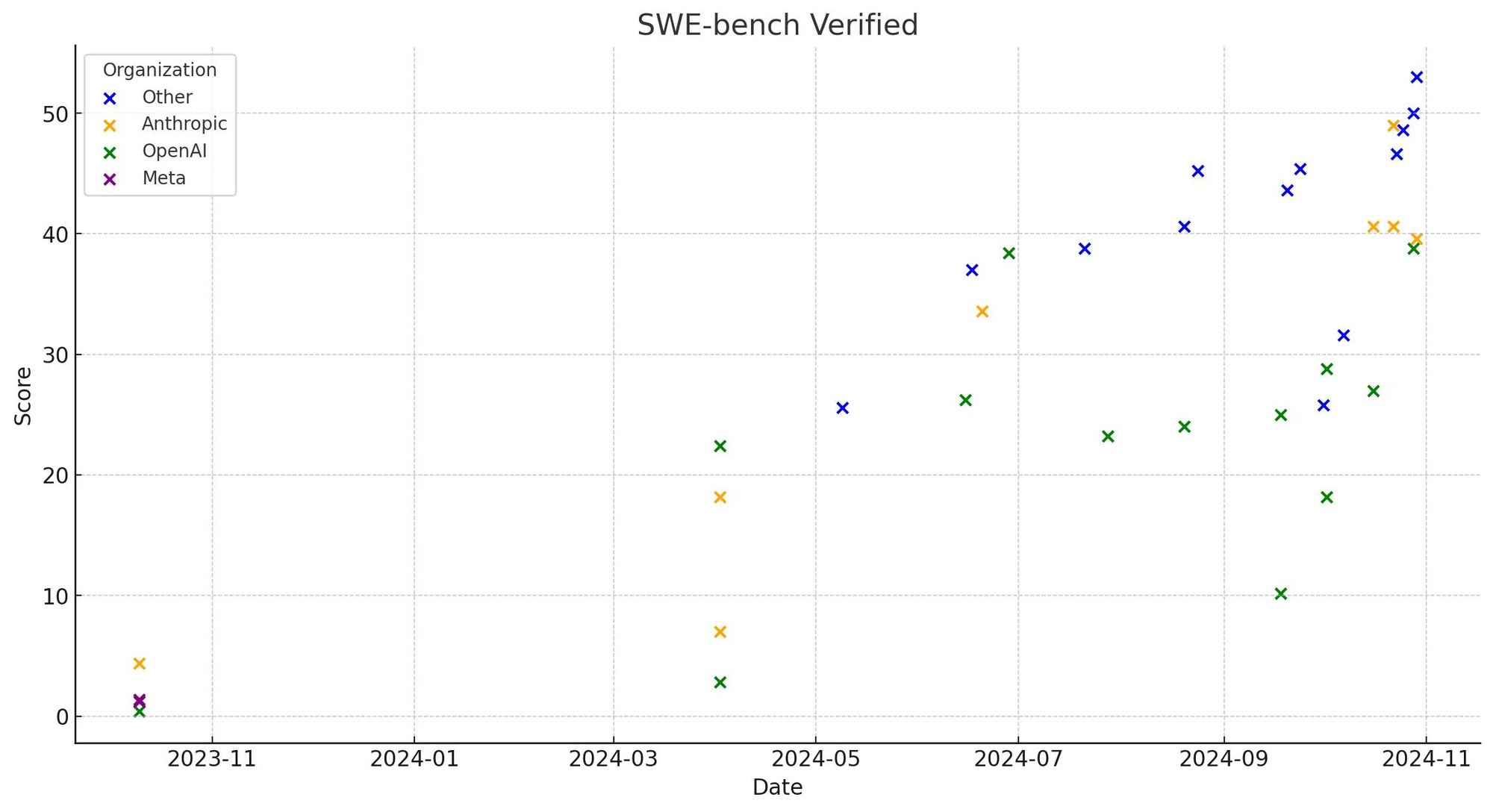
On SWE-bench Verified, which tests how well AI can solve real GitHub issues from actual open-source projects – Claude Opus 4.5 hit 80.9%. That made it the first model to crack the 80% barrier. GPT-5.2 Codex follows closely at 80.0%, and Gemini 3 Pro sits at around 76%.
But benchmarks only tell part of the story. In my day-to-day coding work, Claude feels different. When I'm debugging a complex issue across multiple files, Claude maintains context better. It understands what I'm trying to accomplish, not just what I literally asked for.
Here's a concrete example. I was refactoring a React application last month — nothing crazy, just cleaning up some legacy components. I gave both Claude and GPT-5 the same task: review this file structure and suggest improvements.
GPT-5 gave me technically correct suggestions. It identified redundant code, suggested some optimizations, made reasonable recommendations.
Claude did all that, plus it noticed that my naming conventions were inconsistent between two different sections of the codebase. It asked if that was intentional. It understood the project holistically, not just the files I showed it.
That said, GPT-5.2's coding has improved dramatically with the Codex variant. It's particularly strong at generating frontend code — websites, UI components, visual elements. If you're doing a lot of "vibe coding" where you describe what you want and expect the AI to figure out the details, GPT-5 handles that gracefully.
Gemini 3 Pro deserves mention for competitive programming. It achieved Grandmaster-tier ratings on Codeforces, and if you're solving algorithmic problems, it's genuinely excellent. Google also released Antigravity, an IDE built around AI-assisted coding that shows where they're heading.
My recommendation for developers: Start with Claude Opus 4.5 for complex, real-world coding tasks. Use GPT-5 for frontend work and rapid prototyping. Keep Gemini handy when you need to understand a massive codebase at once.
Writing and Content Creation
This is where things get interesting, and where my preference probably differs from the benchmarks.
GPT-5 technically leads on creative writing benchmarks. OpenAI specifically tuned it for warmth and natural conversation after users complained that early versions felt "flat" and "robotic."
But here's my honest take after three months: Claude produces the most natural-sounding prose.
There's something about Claude's writing that feels less... AI-ish. It doesn't fall into those patterns you've probably noticed — the excessive hedging, the repetitive structures, the way most AI writing somehow manages to sound both confident and empty at the same time.
Claude takes creative risks. When I asked both models to write an opening paragraph for a tech article (like this one), Claude gave me something with actual voice. GPT-5 gave me something technically proficient but safe.
For professional writing — reports, documentation, business communication — GPT-5 is excellent. It's reliable, it follows instructions precisely, and it won't surprise you. If you're working in an enterprise environment where "predictable quality" matters more than creative flair, GPT-5 is the safer choice.
Gemini 3 Pro is a bit utilitarian in its writing style. It's functional, clear, and efficient, but it's not winning any creative writing awards. Where Gemini shines is when you need to write about something while referencing other materials — summarizing research papers, creating content from video transcripts, that sort of thing. Its multimodal capabilities make it genuinely useful for research-heavy writing.
My recommendation for writers: Claude for creative work, blog posts, and anything where voice matters. GPT-5 for professional documents and enterprise use cases. Gemini when your writing requires synthesizing information from multiple sources and formats.
Research and Analysis
This might be the most underrated category, and it's where these tools have gotten genuinely impressive.
All three now offer "Deep Research" modes that can spend 15-30 minutes actually investigating a topic, pulling from dozens of sources, and producing comprehensive reports. I've used these extensively, and they've legitimately changed how I approach research tasks.
Gemini 3 Pro has an edge here for a simple reason: Google's infrastructure. When you use Gemini for research, you're tapping into the same systems that power Google Search, Google Scholar, and the broader Google ecosystem. The integration is seamless, and the source quality tends to be higher.
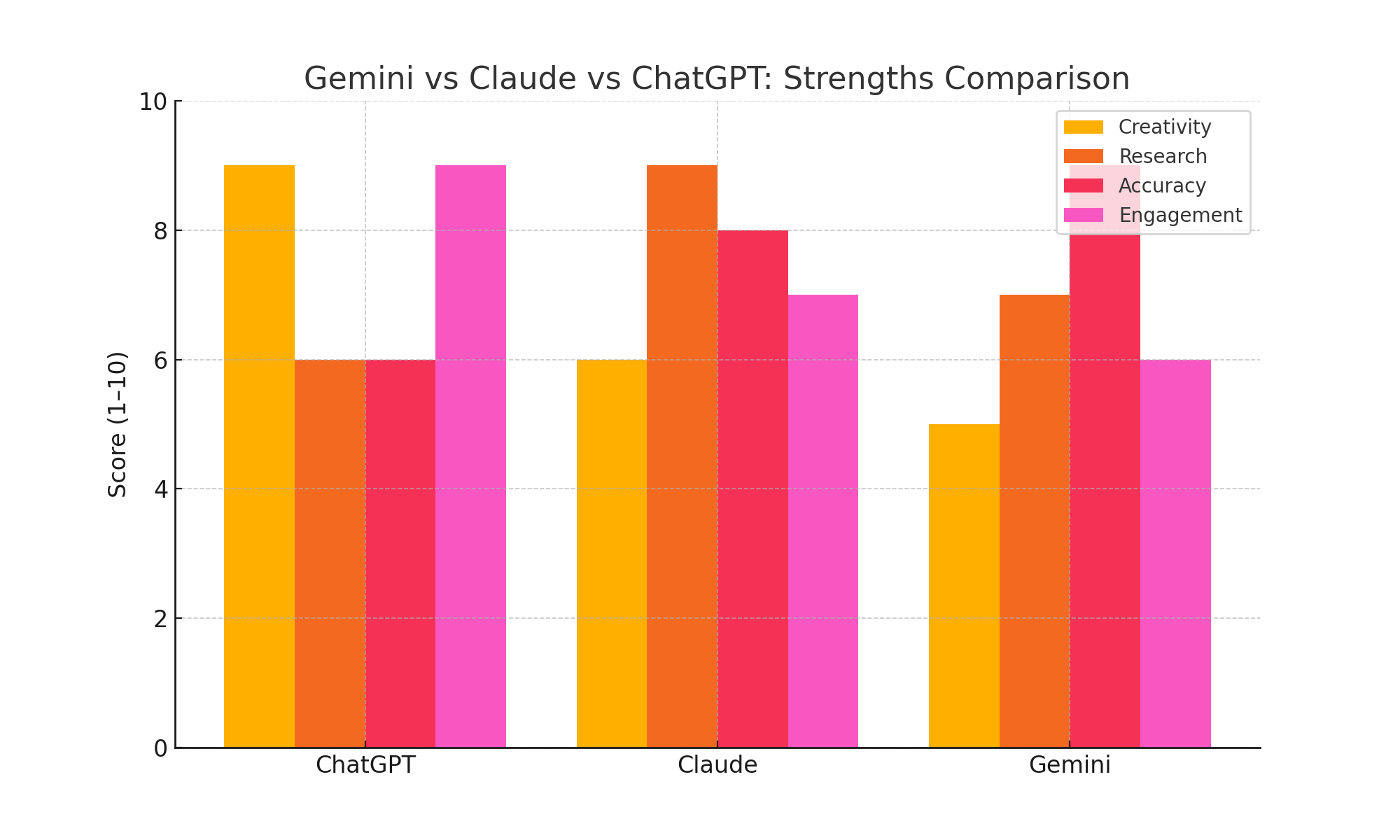
GPT-5's Deep Research is excellent for structured analysis. If you need something organized into clear sections with specific conclusions, it excels. The o1 reasoning model that powers it can break down complex topics methodically.
Claude approaches research differently. It's more willing to acknowledge uncertainty, flag conflicting information, and present nuanced takes rather than definitive answers. Depending on your needs, that's either a feature or a limitation.
For academic and scientific research, Gemini and GPT-5 pull ahead simply because of their integrations with scholarly databases and their citation handling. Claude is catching up but isn't quite there yet for heavy academic work.
My recommendation for research: Gemini for anything requiring multimodal sources or Google ecosystem integration. GPT-5 for structured, business-oriented research. Claude when you need nuanced analysis that acknowledges complexity rather than oversimplifying.
Math and Logical Reasoning
GPT-5.2 dominates this category, and it's not particularly close.
On ARC-AGI-2, a benchmark specifically designed to test genuine reasoning rather than pattern matching, GPT-5.2 scored around 54%, while Claude hit 37% and Gemini reached 45%. That's a significant gap that shows up in real-world problem-solving.
GPT-5.2 achieved a perfect 100% score on AIME 2025 (American Invitational Mathematics Examination) without using any external tools. That's genuinely impressive for competition-level mathematics that even talented high school students find challenging.
More importantly, on the GDPval benchmark (which tests professional knowledge work across 44 different occupations), GPT-5.2 Thinking mode beats or ties human industry professionals 70.9% of the time.
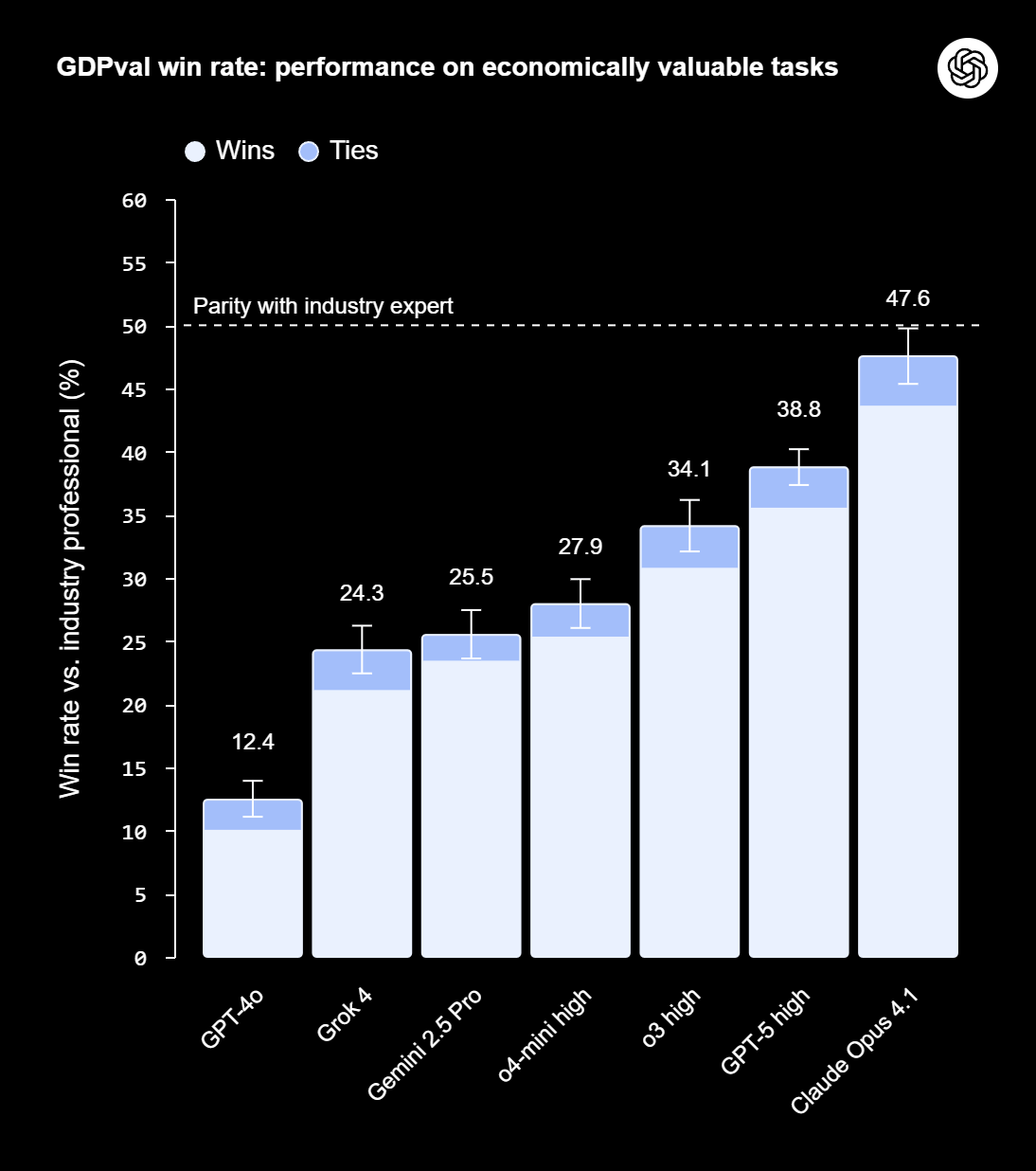
When I need to work through complex logical problems — debugging intricate business logic, analyzing financial models, working through multi-step technical decisions — GPT-5 handles it better than the alternatives.
Gemini 3 Pro is strong in this area too, particularly with its Deep Think mode enabled. It achieved 93.8% on GPQA Diamond, a graduate-level science benchmark, which is essentially tied with GPT-5.2.
Claude's reasoning is solid but more... deliberate. It takes longer, and it's more likely to walk you through its thinking process step by step. That can be helpful for learning but slower for production work.
My recommendation for math and reasoning: GPT-5.2 without question. If you're doing heavy mathematical or logical work, it's worth the premium.
The Multimodal Revolution: Images, Video, and Beyond
This is Gemini 3 Pro's home turf, and Google has leaned into it heavily.
Gemini's native multimodal capabilities mean it doesn't just process different types of content, it actually understands relationships between them. You can upload a video, an image, and a document, then ask questions that span all three. The model doesn't treat them as separate inputs; it synthesizes them.
I tested this with a product review workflow. I uploaded a video demo, the product specification sheet, and some customer feedback screenshots. I asked all three models to create a comprehensive analysis.
Gemini produced something cohesive that referenced specific moments in the video alongside relevant specs and customer concerns. GPT-5 handled it well but treated each input more independently. Claude struggled a bit with the video analysis (though it's improving).
GPT-5 has strong vision capabilities. It can analyze images thoughtfully and generate images through DALL-E integration. But it doesn't have the same native multimodal architecture that Gemini does.
Claude's vision has improved significantly with Opus 4.5, and Anthropic's Computer Use feature (where Claude can actually interact with your computer) opens interesting possibilities. But for pure multimodal analysis, it's still behind Gemini.
My recommendation for multimodal work: Gemini 3 Pro is the clear winner. If you regularly work with mixed media – videos, images, documents, audio. It's worth having a Gemini subscription specifically for those tasks.
Context Windows: Why Size Actually Matters
Let's talk about context windows — essentially how much information the AI can "remember" during a conversation.
Gemini 3 Pro: 1 million tokens (roughly 750,000 words)
GPT-5.2: 400,000 tokens (around 300,000 words)
Claude Opus 4.5: 200,000 tokens (about 150,000 words)
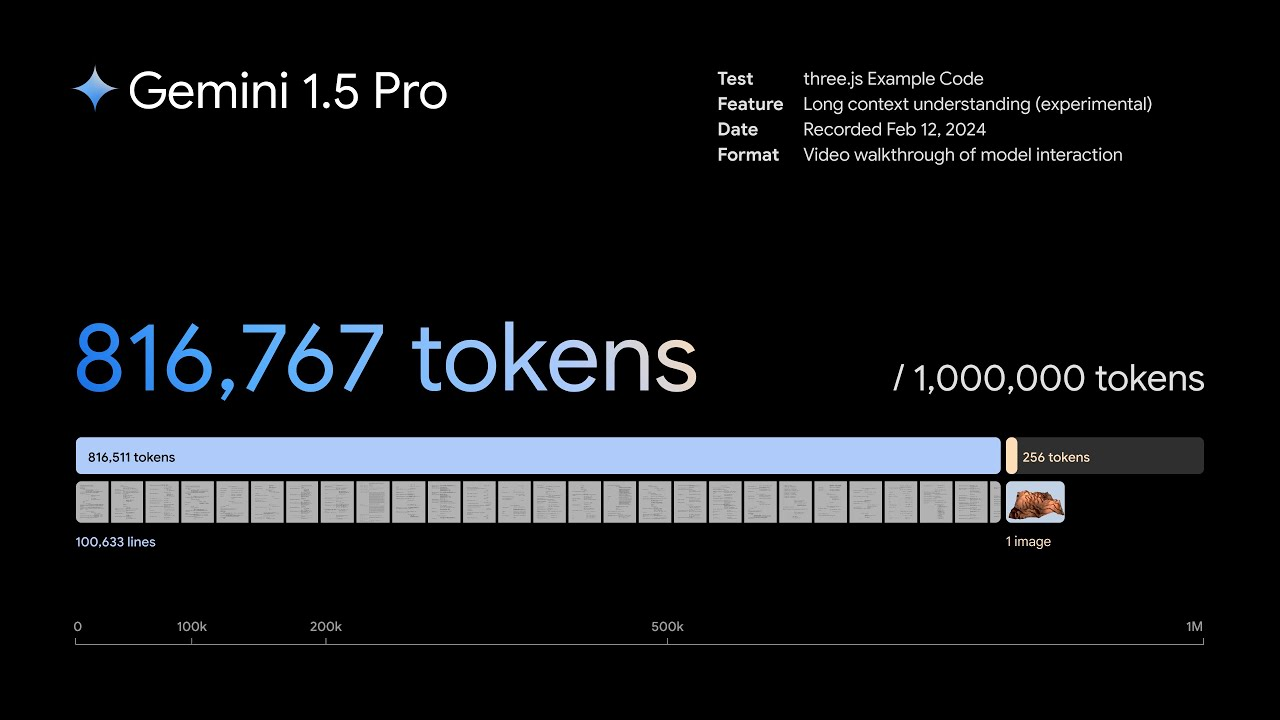
On paper, Gemini's advantage here is massive. And in practice, it genuinely matters for certain use cases.
If you're analyzing an entire codebase, reviewing a lengthy legal document, or processing a book's worth of research materials, Gemini can hold all of it in context simultaneously. GPT-5 can handle most substantial documents. Claude requires more careful context management for very large inputs.
But here's what the numbers don't tell you: Claude Opus 4.5 has a Memory Tool that persists information across sessions. So while its context window is smaller, it can effectively "remember" things from previous conversations. GPT-5 keeps everything in the active window; Claude explicitly manages what persists.
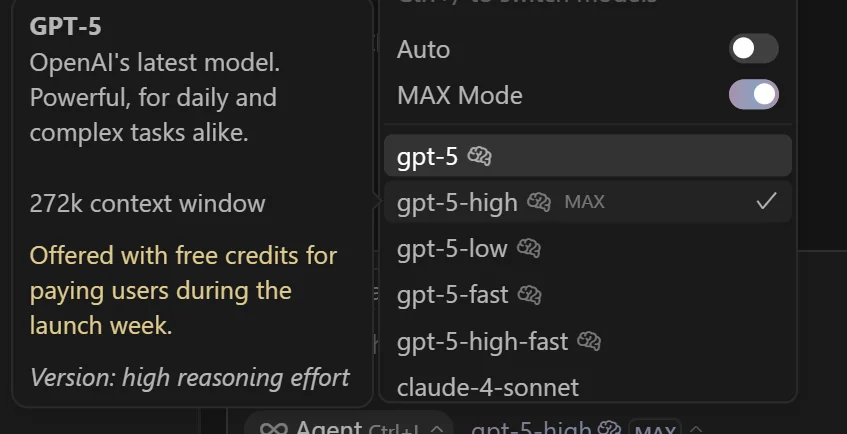
In practice, I rarely hit Claude's context limits for normal work. When I do, the memory feature helps compensate. But for specific use cases — analyzing massive codebases, processing long transcripts, reviewing extensive documents — Gemini's context advantage is real and meaningful.
My recommendation: If you regularly work with very large documents or codebases, Gemini's context window is worth the subscription alone. For most typical use cases, all three are adequate.
Pricing: What You'll Actually Pay
Let's talk money because this is where the decision often gets made.
Consumer Subscriptions (as of January 2026):
All three have settled on similar pricing for their premium tiers:
- ChatGPT Plus: $20/month (GPT-5 with usage limits)
- ChatGPT Pro: $200/month (unlimited GPT-5 Pro with extended reasoning)
- Google AI Pro: $19.99/month (Gemini 3 Pro with enhanced features)
- Google AI Ultra: $249.99/month (highest access, agentic capabilities)
- Claude Pro: $20/month (Claude Opus 4.5 with higher limits)
For most users, the $20/month tier from any provider will cover typical use cases. The premium tiers (Pro/Ultra) make sense if you're using these tools extensively for professional work.
API Pricing (for developers):
This is where things get more nuanced:
- GPT-5.2: ~$1.25 input / $10 output per million tokens
- Claude Opus 4.5: ~$5 input / $25 output per million tokens
- Gemini 3 Pro: ~$2 input / $12 output per million tokens
Claude's API pricing is higher, but Anthropic has argued it's justified by the output quality and reduced need for retries. In my experience, that's partially true — Claude produces usable results more consistently, which can save money despite higher per-token costs.
For budget-conscious developers, it's worth noting that cheaper models exist. DeepSeek offers competitive performance at dramatically lower prices ($0.27/$1.10 per million tokens), and open-source options like Llama 4 can be self-hosted for even lower effective costs.
My recommendation: Start with the $20/month tier of whichever model suits your primary use case. Upgrade to premium only if you're hitting limits regularly. For API usage, test multiple providers — the "best" option depends heavily on your specific workload.
The Honest Assessment: What Each Model Does Best
After three months of intensive testing, here's my bottom line on each:
GPT-5.2 is best for:
- Complex logical reasoning and mathematical problems
- Professional, enterprise-grade work requiring reliability
- Users who want one model that handles everything reasonably well
- Frontend development and visual code generation
- Anyone already invested in the OpenAI ecosystem (ChatGPT, DALL-E, etc.)
Claude Opus 4.5 is best for:
- Software development and real-world coding tasks
- Creative writing where voice and naturalness matter
- Long-running agentic workflows that require persistent context
- Users who prefer thoughtful, nuanced responses over confident assertions
- Developers who value clear explanations alongside code
Gemini 3 Pro is best for:
- Multimodal work combining images, video, audio, and text
- Processing very large documents or entire codebases
- Research tasks requiring Google ecosystem integration
- Users heavily invested in Google Workspace
- Cost-conscious users who need near-frontier performance
Safety and Ethical Considerations
This might seem like an odd section to include in a comparison article, but hear me out, it actually affects your daily experience more than you'd expect.
Anthropic built Claude with a focus on what they call "Constitutional AI." In practice, this means Claude tends to be more forthcoming about its limitations, more willing to push back on questionable requests, and more nuanced in how it handles sensitive topics.
I've found Claude more willing to engage thoughtfully with complex ethical questions rather than defaulting to vague disclaimers. It'll actually reason through moral dilemmas with you rather than refusing to discuss them.
GPT-5 has improved significantly on what OpenAI calls "safe completions" — the model tries to provide helpful high-level guidance even on sensitive topics rather than outright refusing. This is a welcome change from earlier versions that could be overly restrictive.
Gemini is... careful. Google has clearly been conservative given their brand reputation concerns. This sometimes means Gemini will decline requests that the other two would handle fine. It's not necessarily worse, just more cautious.
In terms of factual accuracy and hallucinations — all three have improved dramatically. GPT-5 claims around 45% fewer factual errors than GPT-4o when web search is enabled. Claude tends to acknowledge when it's uncertain rather than confidently generating incorrect information. Gemini leverages Google Search integration to ground its responses in verifiable sources.
For professional users, this matters. You need to trust that your AI assistant isn't making things up. All three are significantly more reliable than the models we had in 2024, but Claude's tendency toward epistemic humility has saved me from potential embarrassments more than once.
The Integration Ecosystem: Where Each Model Shines
Beyond raw capabilities, where these models plug into your existing workflow matters enormously.
- OpenAI Ecosystem: ChatGPT connects with DALL-E 3 for image generation, has Code Interpreter for data analysis, offers voice mode for hands-free interaction, and integrates with thousands of GPTs (custom chatbots) in their marketplace. The Responses API provides web search, file search, image generation, and code execution. If you want a one-stop shop where everything works together, OpenAI has built the most comprehensive ecosystem.
- Google Ecosystem: Gemini's integration with Google Workspace is genuinely seamless. It works natively with Gmail, Google Docs, Sheets, Slides, and Drive. If your organization runs on Google's productivity suite, Gemini can access and modify your documents directly. The Google Search integration means research tasks get better source material. Google AI Studio provides developer tools that connect to the broader Google Cloud platform.
- Anthropic Ecosystem: Claude's ecosystem is more focused. Claude Code for developers offers sophisticated coding assistance directly in your terminal. The desktop app now supports multiple parallel sessions, you can have one agent fixing bugs while another researches documentation and a third updates files. It's less sprawling than OpenAI's or Google's offerings but more purpose-built for serious work.
For enterprise users, the integration story matters. Microsoft has partnered with both OpenAI (through Azure OpenAI) and Anthropic (Claude in Microsoft Foundry). Google has obvious advantages for companies running on Google Cloud. Your existing infrastructure should influence your choice.
Performance Benchmarks: The Numbers in Context
I've tried to avoid drowning you in benchmark numbers because they only tell part of the story. But for those who want the data, here's a summary of key benchmarks as of January 2026:
Coding (SWE-bench Verified):
- Claude Opus 4.5: 80.9%
- GPT-5.2 Codex: 80.0%
- Gemini 3 Pro: 76.2%
Mathematical Reasoning (AIME 2025):
- GPT-5.2: 100% (without tools)
- Gemini 3 Pro: 95.0%
- Claude Opus 4.5: 92.8%
Abstract Reasoning (ARC-AGI-2):
- GPT-5.2 Pro: 54.2%
- Gemini 3 Deep Think: 45.1%
- Claude Opus 4.5: 37.6%
Graduate-Level Science (GPQA Diamond):
- Gemini 3 Deep Think: 93.8%
- GPT-5.2 Pro: 93.2%
- Claude Opus 4.5: ~88%
Overall Intelligence (LMArena Elo):
- Gemini 3 Pro: 1501 (first to break 1500)
- GPT-5.2: ~1480
- Claude Opus 4.5: ~1470
What these numbers tell us: GPT-5.2 leads on pure reasoning tasks. Claude leads on practical coding. Gemini has the strongest overall benchmark profile. But benchmarks are artificial. They measure specific capabilities in controlled conditions, not necessarily how useful a model will be for your work.
The gap between all three is narrow enough that other factors: pricing, integration, personal preference often matter more than raw benchmark scores.
The Agentic Future: Where We're Headed
I'd be doing you a disservice if I didn't mention where all this is going, because it's changing fast.
All three companies are pushing hard into "agentic AI" — systems that don't just answer questions but actually complete tasks autonomously. Claude's Computer Use feature lets it control your mouse and keyboard. GPT-5's Operator can browse the web and interact with services on your behalf. Gemini Agent can manage your inbox and book appointments.
This is the real battleground for 2026, and it's still early. None of these agentic features are fully polished yet. They work well in controlled demos but can stumble in real-world complexity.
That said, if agentic capabilities matter to your workflow, Claude Opus 4.5 currently has the edge for complex, multi-step tasks. Anthropic has focused heavily on this area, and it shows. GPT-5.2 is strong for professional knowledge work automation. Gemini is pushing agent capabilities through deep Google Workspace integration.
Watch this space closely over the next six months. Whoever cracks reliable autonomous agents first will have a significant advantage.
Frequently Asked Questions
Which AI is best for coding in 2026?
Claude Opus 4.5 leads real-world coding benchmarks with an 80.9% score on SWE-bench Verified, making it the first model to exceed 80%. It excels at understanding codebases holistically, debugging complex issues across multiple files, and explaining its reasoning clearly. GPT-5.2 Codex is excellent for frontend development and rapid prototyping, while Gemini 3 Pro shines in competitive programming and algorithmic challenges.
Is GPT-5 worth the upgrade from GPT-4?
Yes, the improvement is substantial. GPT-5 offers significantly better reasoning, reduced hallucinations (around 45% fewer factual errors with web search enabled), and improved performance across coding, writing, and mathematical tasks. The unified model architecture that intelligently routes between quick responses and deep reasoning is genuinely useful. However, some users preferred GPT-4o's warmer personality initially, though OpenAI has worked to address this.
Which AI model has the largest context window?
Gemini 3 Pro leads with a 1 million token context window, roughly equivalent to 750,000 words or hundreds of pages. GPT-5.2 offers 400,000 tokens, and Claude Opus 4.5 provides 200,000 tokens. For processing entire codebases, lengthy legal documents, or book-length materials, Gemini's context advantage is significant.
What's the difference between GPT-5 and GPT-5.2?
GPT-5 launched in August 2025, and GPT-5.2 arrived in December 2025 with major improvements in long-context understanding, agentic tool-calling, and professional knowledge work. GPT-5.2 beats or ties human professionals on 70.9% of knowledge work tasks according to OpenAI's GDPval benchmark. The .2 update also introduced better vision capabilities and improved performance on coding benchmarks.
Is Claude better than ChatGPT for writing?
For creative writing and content that requires a natural, human-like voice, Claude generally produces better results. Its prose avoids the "AI-ish" patterns common in other models and takes more creative risks. However, GPT-5 excels at professional, structured writing where reliability and consistency matter more than creative flair. The "best" choice depends on your specific writing needs.
How much do GPT-5, Claude, and Gemini cost?
All three offer similar consumer pricing: around $20/month for their standard premium tiers (ChatGPT Plus, Claude Pro, Google AI Pro). Premium tiers range from $200-250/month for power users. API pricing varies significantly — GPT-5.2 runs about $1.25/$10 per million tokens, Claude Opus 4.5 at $5/$25, and Gemini 3 Pro at $2/$12. Budget alternatives like DeepSeek offer competitive performance at much lower prices.
Which AI is best for research and analysis?
Gemini 3 Pro has an advantage for research due to Google's infrastructure and integration with Google Scholar. Its Deep Research mode produces well-sourced, comprehensive reports. GPT-5's Deep Research excels at structured analysis with clear conclusions. Claude approaches research with more nuance, acknowledging uncertainty and conflicting information rather than oversimplifying.
Can these AI models analyze images and videos?
Yes, all three have vision capabilities, but Gemini 3 Pro leads in multimodal analysis. It natively processes text, images, video, and audio together, understanding relationships across different media types. GPT-5 has strong image analysis and generates images via DALL-E. Claude's vision has improved with Opus 4.5 but remains behind Gemini for complex multimodal tasks.
Which AI should I choose for business use?
For enterprise deployments requiring reliability and predictability, GPT-5.2 is the safest choice with established enterprise features and extensive documentation. Claude Opus 4.5 works well for development teams and professional services requiring precision. Gemini 3 Pro integrates naturally with Google Workspace, making it ideal for organizations already in Google's ecosystem.
How do these models handle hallucinations?
All three have improved significantly on factual accuracy. GPT-5 claims approximately 45% fewer factual errors than GPT-4o when using web search, and 80% fewer than o3 when using extended thinking. Claude tends to acknowledge uncertainty rather than generating confident but wrong answers. Gemini's integration with Google Search helps ground responses in verifiable sources.
What's the best free AI option in 2026?
All three providers offer free tiers with limitations. ChatGPT's free tier provides access to GPT-4o with daily limits. Gemini offers standard features free for Google account holders. Claude includes Sonnet 4.5 access with usage resets every 5 hours. For serious use, the $20/month premium tiers from any provider are worthwhile investments.
How do these models compare for data analysis?
GPT-5's Code Interpreter remains the gold standard for data analysis. You can upload spreadsheets, CSVs, and datasets, then ask natural language questions. It'll write and execute Python code to analyze your data, create visualizations, and generate insights. Gemini handles data analysis well with strong spreadsheet integration, especially if your data lives in Google Sheets. Claude is capable but less specialized for this use case.
Which AI is best for learning and education?
All three are excellent study companions, but they excel in different ways. GPT-5 is great for structured explanations and step-by-step problem solving. Claude provides more conversational, nuanced explanations that help you understand the "why" behind concepts. Gemini's integration with YouTube and ability to analyze video content makes it particularly useful for visual learners.
Do these AI models remember previous conversations?
Yes, but differently. Claude's Memory Tool explicitly persists information across sessions — you can see what it remembers and control what it forgets. GPT-5 has memory features that save user preferences and context over time. Gemini maintains conversation history within Google's ecosystem. All three let you start fresh conversations when you want a clean slate.
Which AI should I use for customer service automation?
For customer service bots, GPT-5.2 currently leads with its reliability and consistent tone. The Tau2-bench Telecom evaluation showed GPT-5.2 achieving 98.7% accuracy on customer support simulation tasks. Claude's thoughtful, nuanced responses work well for complex customer inquiries but might be overkill for straightforward support. Gemini integrates well with Google Business tools.
How fast are these models?
Response speed varies by mode. In "fast" or "instant" modes, all three respond in 1-3 seconds for simple queries. For complex reasoning that requires extended thinking, responses can take 10-30 seconds. GPT-5.1 introduced adaptive reasoning that dynamically adjusts thinking time — simple questions get quick answers, complex ones get more processing. Claude tends toward thoroughness over speed. Gemini's Flash model prioritizes speed for users who need rapid responses.
My Personal Workflow: How I Actually Use All Three
After months of testing, I've settled into a workflow that leverages each model's strengths:
Morning research and planning: I start with Gemini when I need to review large documents, analyze research papers, or catch up on information that spans multiple sources. Its context window and multimodal capabilities handle my "catch up on everything" needs.
Active development work: When I'm coding, Claude is open all day. It sits alongside my IDE, and I treat it like a senior developer I can pair program with. The conversation stays focused on my codebase, and Claude maintains context about what we're building together.
Writing and content creation: For articles like this one, I use Claude for drafting because I prefer its voice. I might use GPT-5 for fact-checking or when I need a different perspective on structure.
Complex problem-solving: When I hit a wall on a difficult logical problem, GPT-5.2 is my go-to. Its reasoning capabilities genuinely help me think through complex decisions.
Quick questions throughout the day: Honestly, I use whichever browser tab is already open. For quick factual questions, they're all fine.
This isn't necessarily the optimal workflow for everyone, but it illustrates an important point: the best approach in 2026 isn't picking one model forever — it's understanding what each does best and matching the tool to the task.
Wrap up
Here's the truth that no AI comparison article wants to admit: the "best" model changes depending on what you're doing, and the gap between these three is narrower than the marketing suggests.
If you forced me to pick one subscription for general use, I'd go with Claude Pro for its combination of coding excellence and natural writing. But I genuinely use all three regularly, switching based on the task at hand.
For coding: Claude For complex reasoning: GPT-5
For multimodal work: Gemini For most everyday tasks: Any of the three
The most practical advice I can give is this: take advantage of the free tiers and trial periods. Test each model with your actual work — not hypothetical benchmarks, but the real tasks you need to accomplish. You'll quickly discover which one clicks with your workflow.
The AI landscape is evolving rapidly. What I've written here reflects the state of things in January 2026, but check back in six months and the dynamics may have shifted again. That's exciting, honestly. Competition is driving all three companies to improve faster than any of us expected.
Now go pick one and start building something. That's the point, after all.
Related Articles
 Dani
Dani
 Mark
Mark
 Mark
Mark