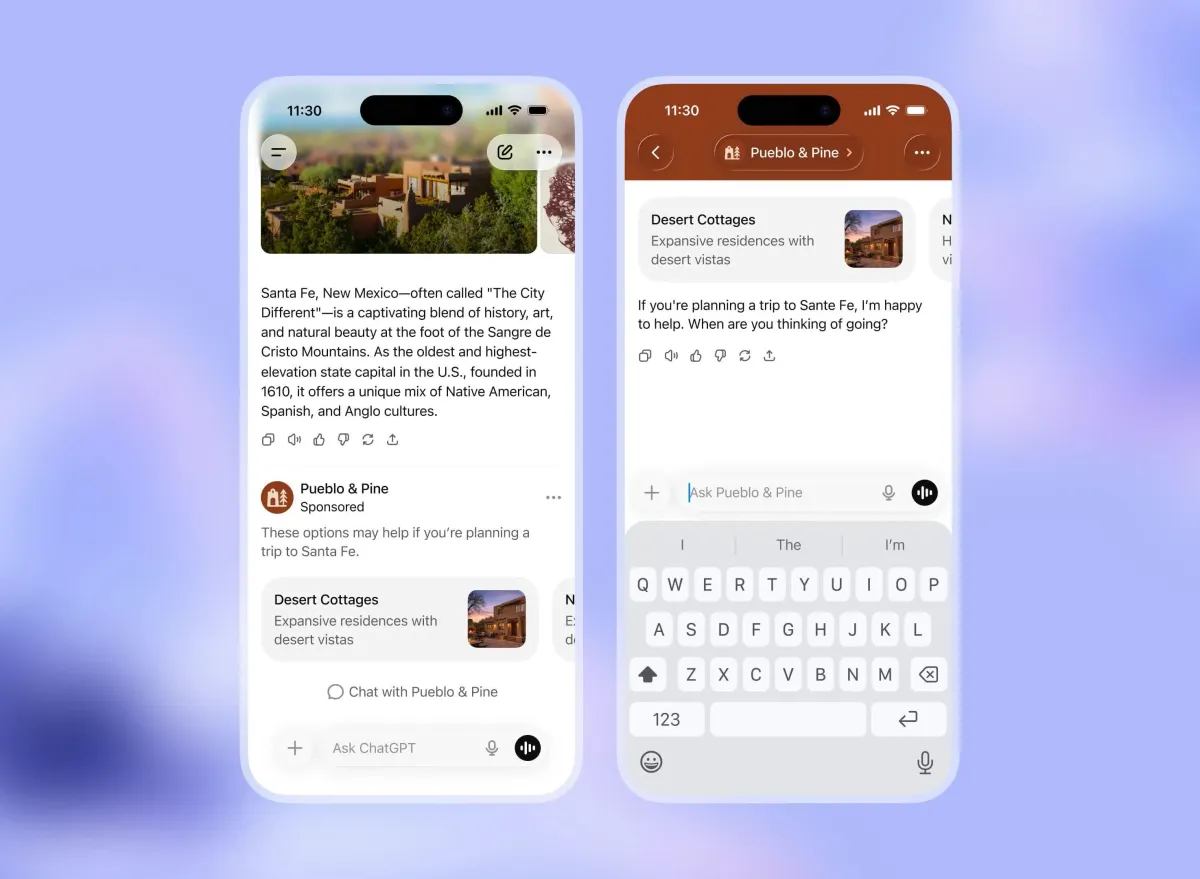
For the first time in a decade, a genuinely new advertising surface is being built from scratch. It is not a social feed, not a streaming platform, and not a new search results page. It is a conversational AI assistant that 750 million people use every month, and Google has told advertising clients that it plans to put ads in it.
The story is more complicated than a simple announcement. Google's public statements have been contradictory, its timeline is deliberately vague, and the fundamental questions about what an ad inside a conversation even looks like have not been answered. But the direction is clear, and the competitive pressure to move quickly is real.
OpenAI, the company Google is most directly competing against for AI attention, launched ads in ChatGPT in January 2026 and crossed $100 million in annualized ad revenue within two months of the pilot launch. The race to monetize AI assistants has started. Google cannot afford to watch from the sidelines.
How Google's Position Shifted from "No Plans" to "Not Ruling It Out"
The timeline of Google's public messaging on Gemini advertising is worth tracing carefully, because it shows how quickly the company's position evolved under competitive pressure.
In December 2025, Google VP of Global Ads Dan Taylor published a post stating that "there are no ads in the Gemini app and there are no current plans to change that." At Davos in January 2026, Google DeepMind CEO Demis Hassabis reiterated the same position to reporters.
Those statements were overtaken by a WIRED interview with Nick Fox, Google's SVP of Knowledge and Information, who oversees Search, Ads, and Commerce. Fox said Google is "not ruling them out," and added: "I would expect that the learnings that we get from ads in AI Mode would likely carry over to what we might want to do in the Gemini app down the road."
That framing is significantly different from "no current plans." It is a confirmation that Gemini advertising is part of Google's strategic roadmap, just one that has not yet been publicly calendared.
Behind the public hedging, more concrete conversations were happening. Adweek reported in December 2025 that Google representatives told at least two advertising clients directly, in separate calls, that ad placements in Gemini are targeted for a 2026 rollout. The buyers who spoke to Adweek noted that Google had not shared prototypes or technical specifications about how the ads would appear. But the direction was explicit enough that agencies were already incorporating it into 2026 planning conversations.
What AI Mode Tells Us About Where Gemini Advertising Is Heading
Google is not moving into AI advertising blind. It has been running a live laboratory for AI ad formats inside AI Mode, the Gemini-powered conversational search product, since its US launch in March 2025.
AI Mode reached 75 million daily active users by late 2025, processing over one billion monthly queries across the United States and India. Ads appear in approximately 25% of AI Mode results. This is where Google has been testing what formats work, what labeling is required, what user reactions look like, and what click-through rates are achievable before bringing anything to the Gemini app.
The strategic logic Fox articulated in WIRED follows from this directly. AI Mode is the experiment. Gemini is the product where successful patterns get deployed at scale.
Google's AI Advertising Surfaces
| Surface | Status | Monthly Scale | Ad Integration |
|---|---|---|---|
| AI Overviews (Search) | Live, expanding globally | Billions of queries | Ads appear on 48% of AI-affected queries |
| AI Mode | Live, US/India | 75M daily active users | Ads in ~25% of results |
| Gemini app | No ads yet | 750M+ monthly active users | Targeted for 2026 |
| Gemini in Chrome | Live, US | Part of Gemini app base | Not announced |
The financial context gives the timeline urgency. Google Search generated $63 billion in Q4 2025 revenue. AI Overviews are now appearing on 48% of all search queries. Organic click-through rates on AI Overview-affected queries are falling by 15 to 61% depending on query type. Every percentage point of CTR erosion from traditional search is a revenue exposure that Google needs to replace somewhere. Gemini, with 750 million monthly active users and growing, is the most obvious recovery surface.
The OpenAI Effect: How ChatGPT's Ad Launch Changed the Calculus
Google's timeline accelerated significantly after OpenAI moved first.
OpenAI announced on January 16, 2026, that it would test ads in ChatGPT's free and Go tiers in the United States. The company made the announcement 24 days before the February 9 rollout, signaling urgency. Its stated rationale was access: making AI available to users who cannot or will not pay for premium subscriptions, subsidized by advertising revenue.
By late March 2026, OpenAI's nascent ads business had surpassed $100 million in annualized revenue, less than two months after launch. The company reported working with more than 600 advertisers and said it had seen no impact on privacy-related trust metrics. The pilot is now expanding to Canada, Australia, and New Zealand.
That $100 million run rate is not a rounding error for an advertising market. For context, eMarketer projects AI-driven search ad spending in the United States will grow from approximately $1.1 billion in 2025 to $26 billion by 2029. OpenAI's first two months in market captured a measurable slice of a rapidly expanding pool before the established players had formally committed.
The move drew a pointed response from Anthropic. The AI safety company made OpenAI's ad push the focus of its first Super Bowl campaign, positioning Claude as the ad-free alternative for users uncomfortable with the commercial direction of AI assistants. That framing underscores how real the trust and positioning stakes are as the industry moves toward ad-supported models.
What Advertising in a Conversational AI Changes
Advertising in search has worked for two decades because the intent signal is explicit. A user who searches "best project management software" is almost certainly in a buying or evaluation mindset. The keyword provides the context. The ad can match the context. The system is relatively legible.
Advertising in a conversational AI assistant is structurally different in ways that create both opportunity and significant risk.
A user in a multi-turn conversation with Gemini might move through several topics in a single session: researching a vacation, asking about a medical symptom, planning a home renovation, and checking a news summary. The conversation provides extraordinarily rich intent signal, but it also raises questions about which moments in a conversation are appropriate for a commercial intervention, and what it means for an AI assistant's answer to be influenced by whether a brand has paid for visibility.
Google has acknowledged this problem indirectly. Fox's framing of AI Mode advertising as a learning laboratory, rather than a finished playbook, suggests the company understands that personal assistant advertising needs its own architecture and its own set of rules.
How AI Advertising Differs from Traditional Search Ads
| Dimension | Traditional Search | AI Assistant (Projected) |
|---|---|---|
| Intent signal | Single keyword, explicit | Conversational context, implicit and inferred |
| User mindset | Point-in-time query | Extended multi-turn session |
| Ad format | Text link, shopping card | Embedded in response, sidebar, sponsored recommendation |
| Labeling requirements | "Sponsored" label, established norms | Unclear; regulatory standards not yet defined |
| Trust risk | User expects ads; ignores easily | User expects neutral advice; ads may feel like compromise |
| Targeting depth | Demographics, keywords, behavior | Conversation content, personal data (via Personal Intelligence) |
The targeting depth row is the one that will generate the most scrutiny. Google's Personal Intelligence feature, which connects Gemini to users' Gmail, Photos, and YouTube history, creates a targeting signal unlike anything available in traditional search. A user asking Gemini to help plan a trip while the assistant has access to their travel history, income signals from email, and prior purchase behavior is a fundamentally different advertising target than a user typing a search query.
That depth of targeting is also what makes privacy advocates uneasy. The IAB released research in January 2026 showing rising Gen Z skepticism toward AI-powered ads, with clearer standards and disclosure requirements cited as the primary conditions for trust. Regulatory frameworks for AI advertising specifically, as opposed to digital advertising generally, do not yet exist in most markets.
What This Means for Brands and Marketers
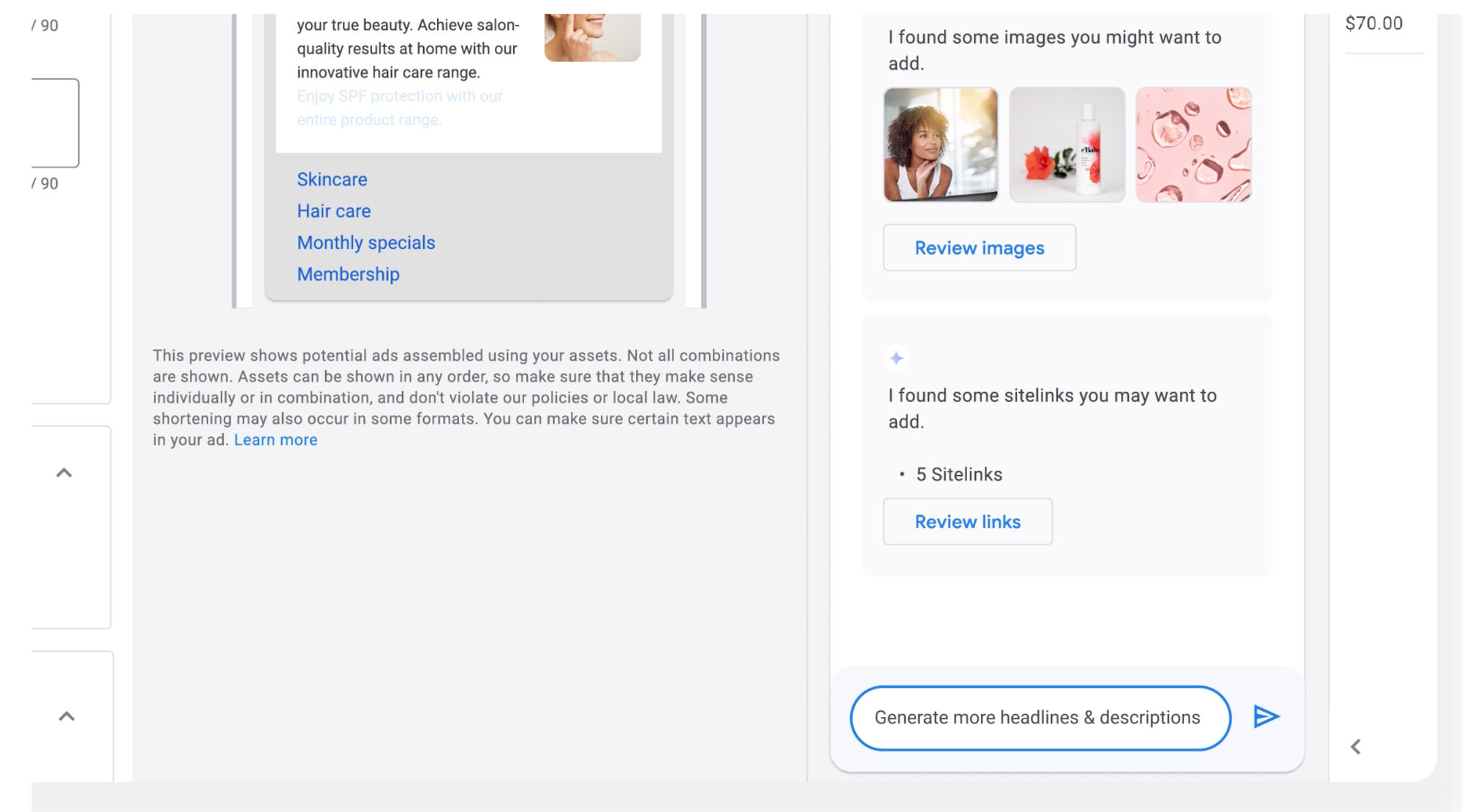
The shift to AI-mediated advertising is already affecting how brands are discovered, even before ads formally launch in Gemini.
Organic search click-through rates on queries with AI Overviews fell by 15 to 61% depending on query type, according to BrightEdge data tracking from February 2025 to February 2026. Seer Interactive's analysis of 25.1 million AI Mode impressions found that 93% of AI Mode queries end without a single click to an external website. Brands that depended on organic search visibility to reach buyers are already being displaced by AI-generated responses that cite sources but do not reliably send traffic to them.
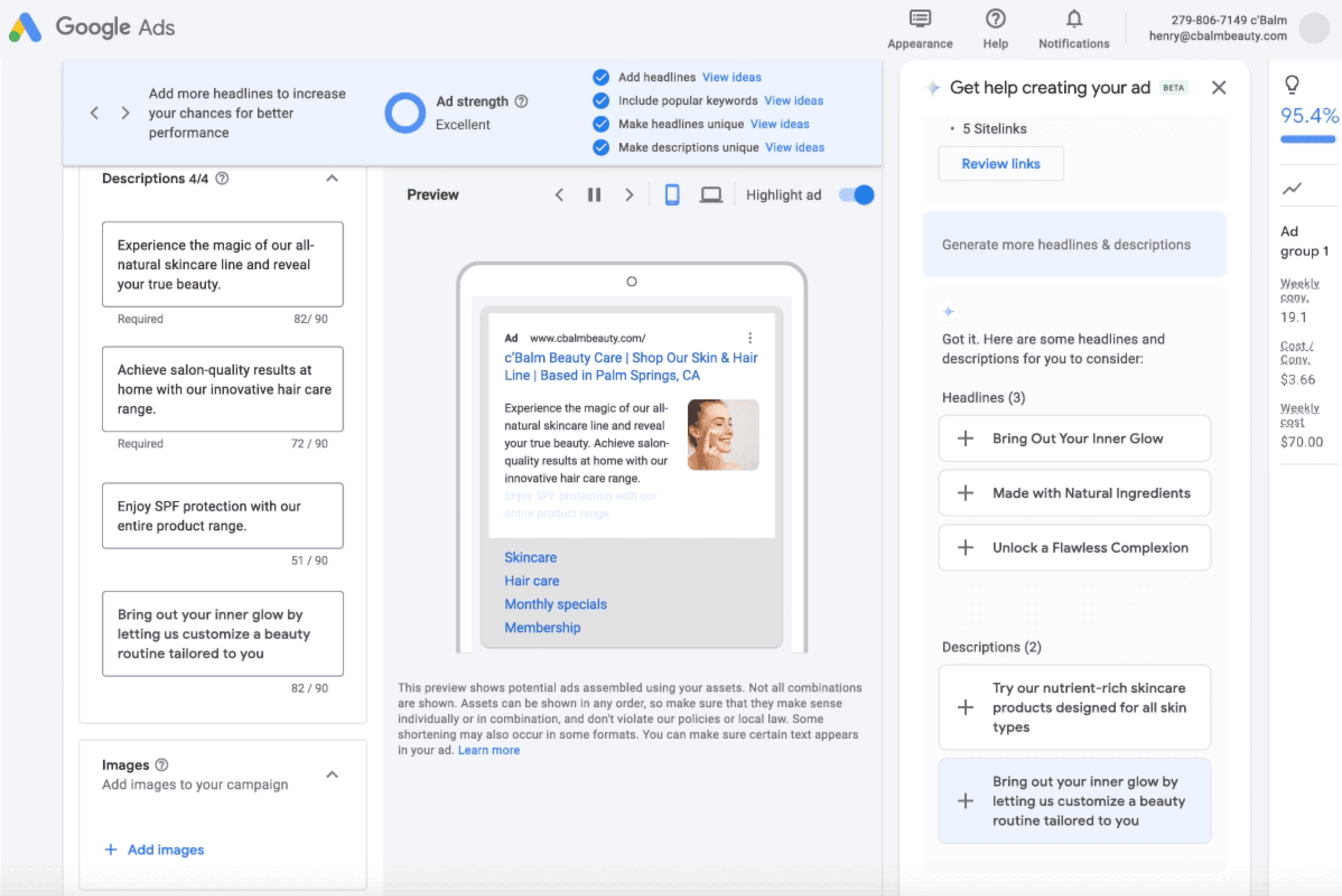
Paid visibility in AI results is beginning to fill the gap that organic visibility used to occupy. Advertisers using existing Google Ads campaigns will likely see AI placements enabled automatically through Performance Max and AI Max campaign types as Google expands its inventory. This means brands could be appearing in Gemini results without having specifically opted into or priced for that placement.
For marketers planning budgets for 2026 and beyond, the questions to be working through now are not hypothetical. They include: which conversational contexts are most valuable for your category; what format of commercial message feels appropriate in a multi-turn session; how to measure outcomes when 93% of sessions end without a click; and how to structure creative for an environment where the "ad" may be woven into or adjacent to an AI-generated answer rather than displayed as a standalone unit.
Wrap up
Google's public messaging on Gemini ads has been careful to the point of contradicting itself, but the direction is not in doubt. The company's SVP has confirmed the intent. Agency buyers have confirmed the briefings. The AI Mode laboratory has been running for a year. OpenAI's pilot has crossed $100 million in annualized revenue and validated advertiser appetite. The only genuinely open question is timing and format.
The deeper question, which will take longer to answer, is what it means for users when the AI assistant they use as a trusted research partner begins to operate within a commercial framework. Search advertising survived that question because users learned to distinguish sponsored links from organic results. Whether conversational AI earns the same level of user trust, or whether the opacity of AI-generated answers makes the commercial influence harder to see and therefore more corrosive, is something the industry will be figuring out in public over the next two to three years.
Google wants ads in Gemini because it needs them. Whether it can introduce them without degrading the product that made Gemini worth advertising in is the challenge that every player in this space is now managing simultaneously.
Frequently Asked Questions
Are there ads in Google Gemini right now?
As of early 2026, there are no ads in the Gemini app. Google's VP of Global Ads confirmed this in December 2025, and Google DeepMind CEO Demis Hassabis reiterated the same position at Davos in January 2026. However, Google SVP Nick Fox has since confirmed ads are "not ruled out," and Adweek reported that Google told advertising clients directly that Gemini ad placements are targeted for a 2026 rollout.
Does Google already run ads in AI products?
Yes. Google runs ads in AI Overviews, which appear on approximately 48% of all search queries, and in AI Mode, where ads appear in roughly 25% of results. AI Mode reached 75 million daily active users by late 2025. These products are serving as a testing environment for formats, labeling, and advertiser response before any ads are introduced in the Gemini app itself.
How is advertising in AI different from search advertising?
Search advertising relies on explicit keyword intent: a user's query signals what they want, and an ad can match that signal precisely. Conversational AI advertising involves longer multi-turn sessions where intent shifts, the targeting signal comes from conversation context rather than a single query, and the user's expectation is that the assistant is providing neutral, helpful guidance. The trust dynamics and appropriate formats are fundamentally different, and industry standards for AI advertising do not yet exist.
What happened when OpenAI launched ads in ChatGPT?
OpenAI launched ads in ChatGPT's free and Go tiers in the United States on February 9, 2026, after announcing the plan on January 16. By late March 2026, the nascent ads business had exceeded $100 million in annualized revenue. The company reported working with more than 600 advertisers and said it had seen no negative impact on privacy-related trust metrics. The pilot is expanding internationally.
How does the decline in organic search affect brands?
AI Overviews now appear on 48% of Google search queries, and organic click-through rates on affected queries have fallen by 15 to 61% depending on query type. Seer Interactive's analysis of 25.1 million AI Mode impressions found that 93% of AI Mode sessions end without a click to an external website. Brands that relied on organic search traffic to reach buyers are already seeing structural declines, which creates pressure to shift budget toward paid AI placements.
What is the projected scale of AI advertising?
eMarketer projects AI-driven search ad spending in the United States will grow from approximately $1.1 billion in 2025 to $26 billion by 2029. Broader AI-powered advertising, including non-search formats, is projected to grow from $35 billion (8% of US ad revenue) in 2025 to $142 billion (26% of total US ad revenue) by 2030.
Related Articles
 Dani
Dani
 Dani
Dani
 Dani
Dani