Well, it finally happened. The thing everyone predicted but nobody really wanted – OpenAI is putting ads in ChatGPT.
On January 16, 2026, OpenAI announced it will begin testing advertisements inside ChatGPT for users in the United States. The company that once positioned itself as a mission-driven nonprofit dedicated to beneficial AI has now joined the ranks of every other tech giant that eventually discovered the advertising business model was too lucrative to ignore.
If you're a free user or subscribe to the new $8/month ChatGPT Go plan, get ready to see sponsored content at the bottom of your AI conversations. And yes, those ads will be based on what you're actually talking about with the chatbot.
Let me break down everything that's happening, why it matters, and what it means for the 800 million people who use ChatGPT every week.
What Exactly Is OpenAI Doing?
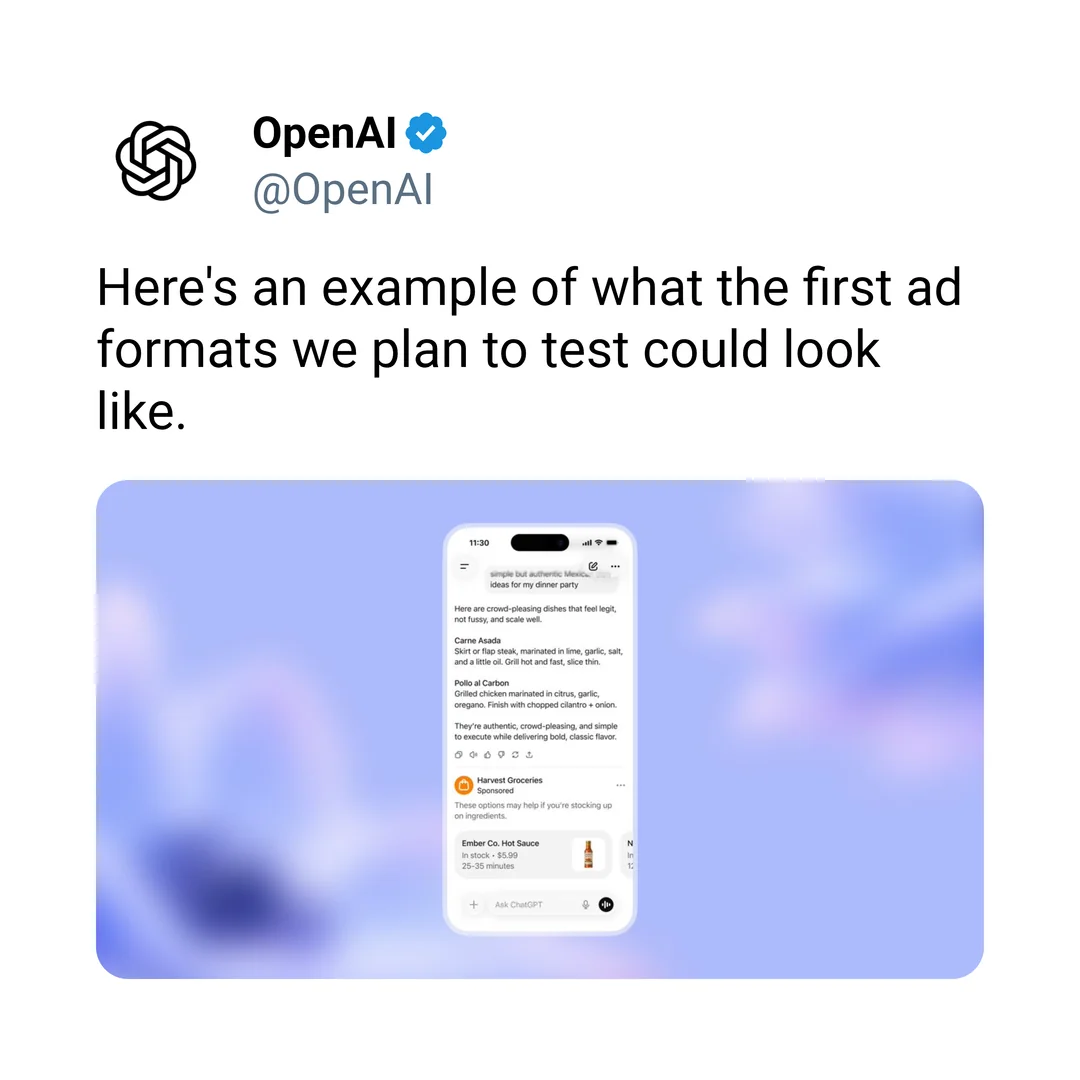
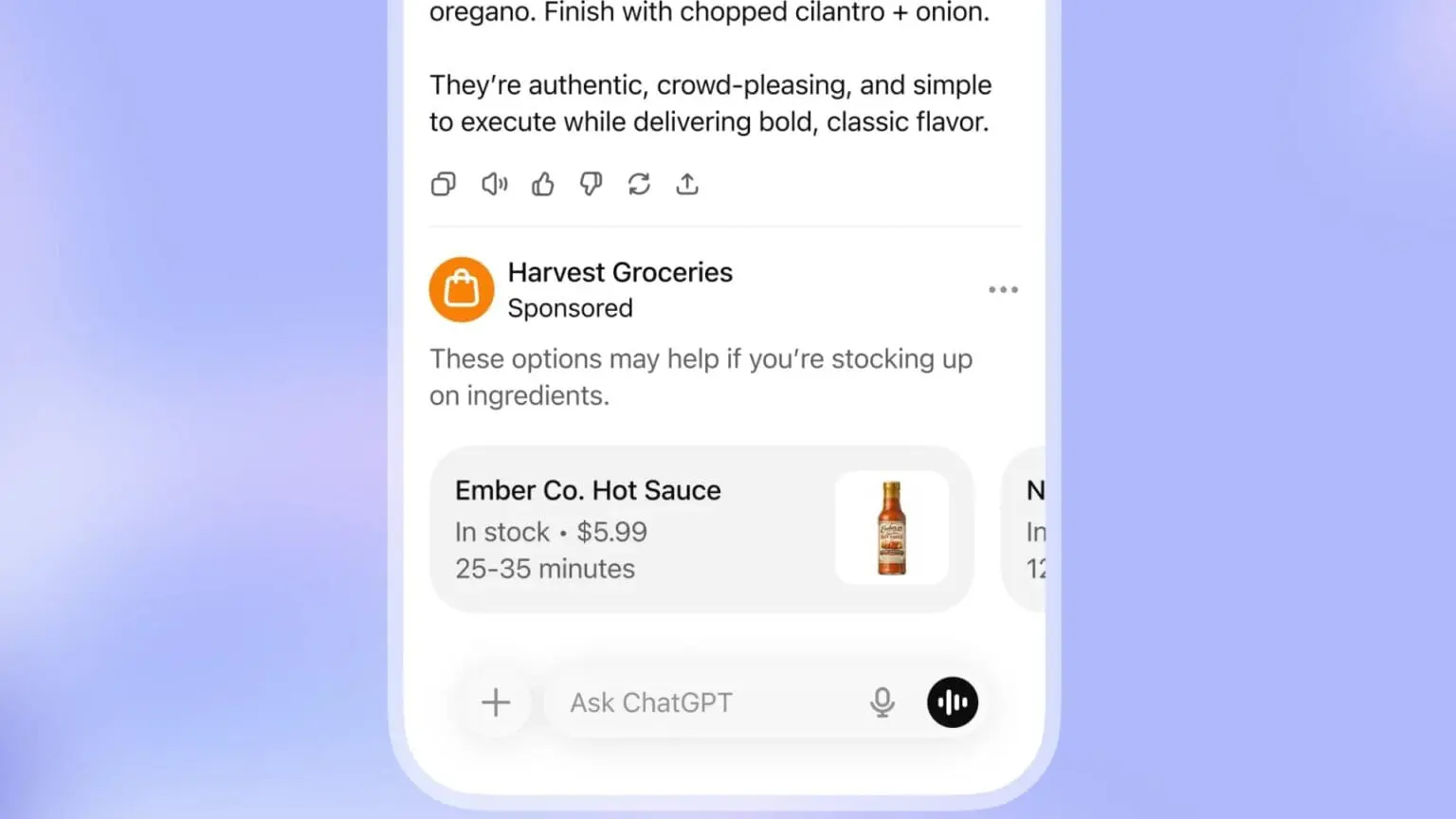
Starting in late January or early February 2026, OpenAI will begin testing ads within ChatGPT for logged-in adult users in the United States. The ads will appear at the bottom of ChatGPT's responses, clearly labeled and separated from the AI's actual answers.
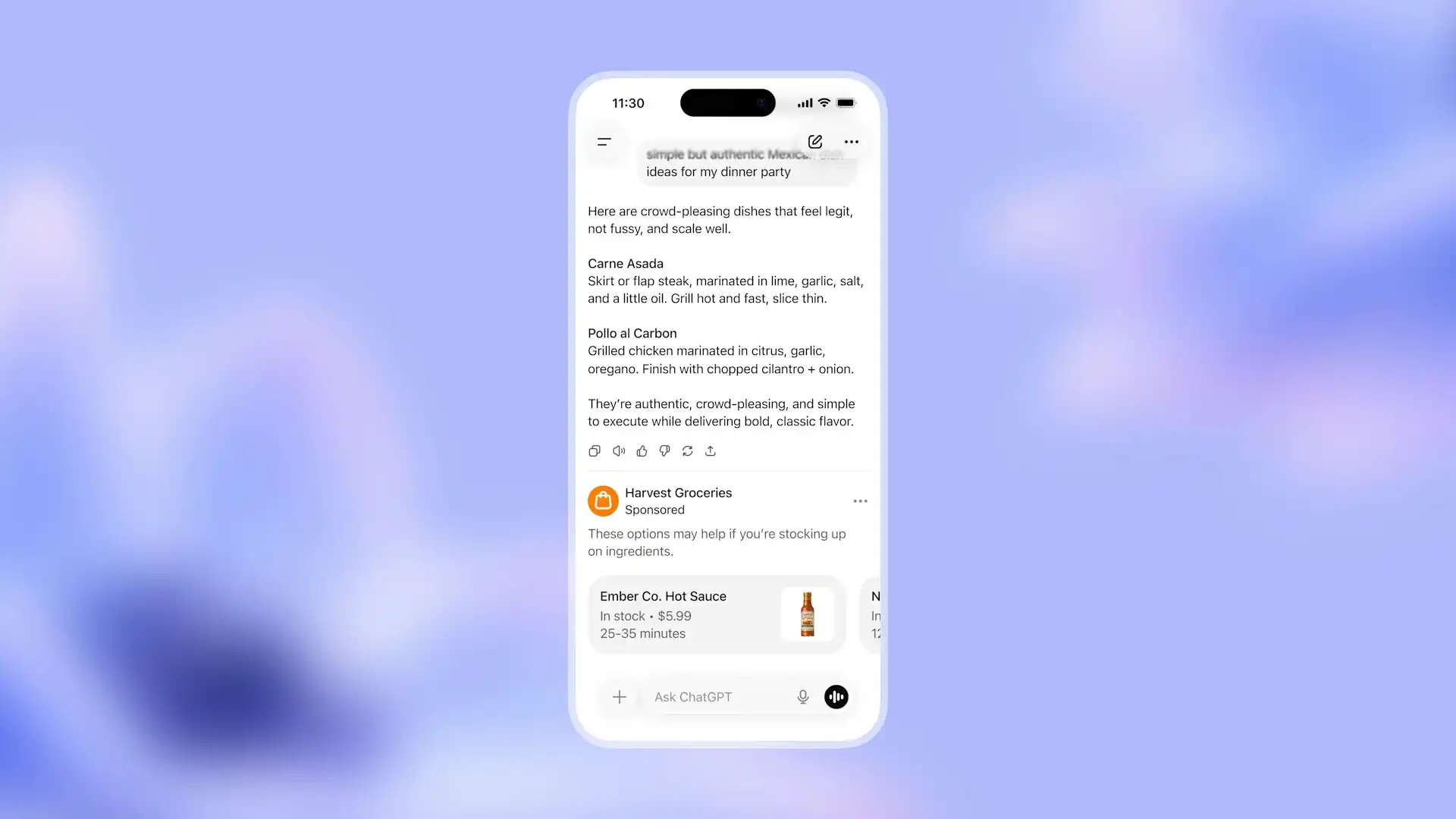
Here's the key detail that has privacy advocates concerned: the ads will be contextually targeted based on your current conversation. If you're asking ChatGPT about vacation planning, you might see ads for hotels or airlines. Discussing a home renovation project? Expect to see ads for hardware stores or contractors.
OpenAI's CEO of Applications, Fidji Simo, wrote in a blog post announcing the change:
"People trust ChatGPT for many important and personal tasks, so as we introduce ads, it's crucial we preserve what makes ChatGPT valuable in the first place."
The company is framing this as a way to keep AI accessible to everyone. CEO Sam Altman put it more directly in a post on X:
"It is clear to us that a lot of people want to use a lot of AI and don't want to pay, so we are hopeful a business model like this can work."
Who Will See Ads (And Who Won't)
Let's be very clear about who's affected here.
You WILL see ads if you're using the free version of ChatGPT or the new ChatGPT Go subscription ($8/month). Both of these tiers will include advertising as part of the experience.
You WON'T see ads if you're paying for ChatGPT Plus ($20/month), ChatGPT Pro ($200/month), or any business or enterprise subscription. OpenAI has committed that these paid tiers will remain ad-free.
This creates an interesting dynamic. The advertising essentially becomes another reason to upgrade to a paid plan, not just for more features or faster responses, but simply to avoid seeing marketing messages in your AI conversations.
OpenAI has also stated they won't show ads to users under 18, or to users the company's AI estimates are minors based on their conversation patterns and usage habits. That last part is worth noting – OpenAI is using AI to guess users' ages and adjust the advertising experience accordingly.
The Business Model: Pay-Per-Impression
Here's something that caught my attention: OpenAI is using a pay-per-impression model rather than pay-per-click.
According to reports from The Information, advertisers pay based on how many times their ad is shown, not based on whether users actually click on it. This is significant because it means OpenAI gets paid regardless of whether the advertising actually works for the brands involved.
For advertisers, this represents a gamble. You're paying for visibility without guaranteed engagement. But for OpenAI, it's a smart move – they get predictable revenue from every ad slot, whether users interact with it or not.
The early testing phase is limited to major advertisers with budgets around $1 million each. This isn't a self-serve ad platform where small businesses can buy a few hundred dollars worth of impressions. At least not yet. OpenAI is starting with big-budget brand advertisers and learning from their feedback before potentially opening things up more broadly.
What OpenAI Promises
OpenAI has laid out several commitments around how advertising will work. Let's look at what they're actually promising.
- First, they claim ads will not influence ChatGPT's responses. The AI's answers are supposed to remain objective and helpful, with advertising appearing separately below the response. OpenAI writes: "Answers are optimized based on what's most helpful to you. Ads are always separate and clearly labeled."
- Second, they say they won't sell your data to advertisers. Your actual conversation content won't be shared with the brands buying ads. Instead, OpenAI uses contextual signals from your current chat to determine which ad to show, but the advertiser never sees your specific queries or responses.
- Third, they promise you'll have control. Users can turn off ad personalization, dismiss individual ads, and provide feedback about the advertising experience. There will always be a paid option to avoid ads entirely.
- Fourth, they commit to avoiding certain sensitive topics. Ads won't appear in conversations about health, mental health, or politics. This is presumably to avoid the nightmare scenario of someone discussing depression with ChatGPT and getting served pharmaceutical ads.
What they don't promise is equally important. They don't promise ads will never become more intrusive. They don't promise the ad-free tiers won't eventually include advertising. They don't promise this model will stay as limited as it is during testing. OpenAI explicitly says they'll "learn from feedback and refine how ads show up over time."
Why This Is Happening Now
The timing here isn't coincidental. OpenAI is burning through cash at an almost incomprehensible rate.
According to recent financial reports, the company spent over $8 billion on inference costs alone through the first nine months of 2025 — that's just the expense of running the AI models that power ChatGPT. Despite bringing in over $20 billion in annual revenue (a figure CFO Sarah Friar confirmed just days before the advertising announcement), OpenAI posted a net loss of $13.5 billion in just the first half of 2025.
OpenAI is losing roughly three dollars for every dollar it earns.
And here's the uncomfortable reality that makes advertising inevitable: only about 5% of ChatGPT's 800 million users actually pay for the service. The company is essentially subsidizing free usage for 95% of its user base with revenue from the paying minority.
OpenAI has committed to spending $1.4 trillion on AI infrastructure over the next eight years. That's not a typo – trillion with a T. The subscription model alone simply cannot generate the revenue needed to fund that level of investment.
Advertising represents a way to monetize the massive free user base that currently generates zero direct revenue. If even a fraction of those 800 million users see a few ads per session, the numbers start to add up quickly.
What This Means for Your Privacy
Let's talk about the elephant in the room: your conversations with ChatGPT are now, in a very real sense, a product being monetized.
OpenAI insists they're not selling your data. Technically, that's true. They're not handing over transcripts of your conversations to advertisers. But they are using the content of your conversations to determine which ads to show you, and they're generating revenue from that targeting.
The distinction matters legally and technically, but it may feel like a distinction without much difference to users who thought their ChatGPT conversations were private.
OpenAI says you can disable ad personalization. But doing so doesn't mean you won't see ads – it just means you'll see less relevant ones. And the conversations are still happening on OpenAI's servers regardless.
For users who valued ChatGPT as a judgment-free space to think through problems, the introduction of advertising changes the dynamic. There's now a commercial entity with a financial interest in what you're discussing.
The Competitive Implications
OpenAI's move into advertising sets a precedent for the entire AI industry. If it works, other AI companies will follow. If it fails, it could accelerate a shift toward paid-only AI services.
Right now, OpenAI's main competitors – Anthropic's Claude, Google's Gemini, and others – don't show ads in their AI assistants. Google's DeepMind CEO Demis Hassabis, speaking at the World Economic Forum in Davos, said the company doesn't have plans to put ads in Gemini. "It's interesting they've gone for that so early," Hassabis noted. "Maybe they feel they need to make more revenue."
That comment hints at the competitive opportunity here. If ChatGPT becomes cluttered with advertising and users find it annoying, competitors could position themselves as the ad-free alternative. Anthropic could market Claude as "the AI assistant that respects your conversation" without sponsored interruptions.
On the other hand, if OpenAI figures out how to do AI advertising in a way that feels helpful rather than intrusive, they could unlock a revenue stream that funds even more advanced AI development, potentially pulling further ahead of competitors who remain dependent on subscriptions alone.
The stakes are high. OpenAI is betting that users will tolerate ads in exchange for free access. If they're wrong, they risk driving users to alternatives at exactly the moment when the AI assistant market is most competitive.
What Users Are Saying
The reaction from users has been predictable: overwhelmingly negative, with pockets of pragmatic acceptance.
Within hours of the announcement, OpenAI's blog post had garnered over 10 million views, with comments dominated by criticism and concerns about the direction of the platform.
Some users say they'll simply pay for Plus to avoid ads. Others say they'll switch to competitors. A smaller but vocal group argues that advertising is a reasonable trade-off for free access to powerful AI.
The most common concern isn't about ads per se – it's about trust. Many users worry that despite OpenAI's promises, advertising will eventually influence the AI's recommendations. Today, the ads are below the response. Tomorrow, will the response itself start subtly steering toward paid partners?
Sam Altman addressed this directly, writing that OpenAI will "keep your conversations private from advertisers" and comparing the potential to Instagram ads where he's "found stuff I like that I otherwise never would have." Whether users find that comparison reassuring or alarming probably depends on how they feel about Instagram's advertising.
What You Can Do About It
If you're not thrilled about ads in ChatGPT, you have a few options.
- The most obvious is to pay for an ad-free tier. ChatGPT Plus at $20/month or ChatGPT Pro at $200/month won't include advertising. This is exactly what OpenAI is hoping some users will do — convert from free to paid to escape the ads.
- You can also disable ad personalization in your settings. This won't eliminate ads, but it will stop OpenAI from using your conversation context to target them. You'll see generic ads instead of contextually relevant ones.
- Consider alternatives. Claude, Gemini, and other AI assistants don't currently show ads. If advertising in ChatGPT bothers you enough, switching is always an option.
- Finally, provide feedback. OpenAI says they'll "learn from feedback and refine how ads show up over time." If the advertising experience is genuinely bad, telling them might actually influence how it evolves.
The Bottom Line
ChatGPT getting ads was always a question of when, not if. OpenAI's massive infrastructure costs, combined with a user base that overwhelmingly prefers free access, made some form of advertising monetization inevitable.
The company is trying to do this in a way that preserves user trust — keeping ads separate from responses, not selling conversation data, and maintaining ad-free options for paying users. Whether they succeed depends on execution.
For users, this marks a turning point. ChatGPT is no longer just a tool you use; it's a platform that monetizes your attention. That's not inherently bad, but it does change the relationship.
The era of free, ad-free AI assistants is ending. What replaces it — whether it's a reasonable trade-off or an intrusive mess — is still being written. OpenAI's advertising experiment will help determine which future we get.
Frequently Asked Questions
When will ads start appearing in ChatGPT?
OpenAI plans to begin testing ads in late January or early February 2026. The initial test will be limited to logged-in adult users in the United States using the free tier or ChatGPT Go ($8/month) subscription.
Will ChatGPT Plus and Pro subscribers see ads?
No. OpenAI has committed that ChatGPT Plus ($20/month), Pro ($200/month), Business, and Enterprise subscriptions will remain ad-free. Only free users and ChatGPT Go subscribers will see advertising.
Where will ads appear in ChatGPT?
Ads will appear at the bottom of ChatGPT's responses, clearly labeled and separated from the AI's actual answer. They will not appear within the response itself.
How will ChatGPT target ads to users?
ChatGPT will use contextual signals from your current conversation to show relevant ads. If you're discussing travel, you might see travel-related ads. OpenAI says they do not share your actual conversation content with advertisers.
Can I turn off ad personalization?
Yes. Users can disable ad personalization in their settings, which will stop ChatGPT from using conversation context to target ads. You'll still see ads, but they won't be based on what you're discussing.
Is OpenAI selling my conversation data to advertisers?
OpenAI says no. They claim they do not sell user data or share conversation content with advertisers. However, they do use your conversations to determine which ads to show you, which some users consider a meaningful distinction.
Will ads influence ChatGPT's responses?
OpenAI promises that ads will not influence the answers ChatGPT provides. They state: "Answers are optimized based on what's most helpful to you. Ads are always separate and clearly labeled." However, some users remain skeptical about whether this commitment will hold over time.
Will children see ads in ChatGPT?
OpenAI says they will not show ads to users under 18 or users they estimate are minors. The company uses AI to estimate users' ages based on their conversation patterns and usage habits.
What topics won't have ads?
OpenAI says ads won't appear in conversations about sensitive or regulated topics including health, mental health, and politics.
How much are advertisers paying for ChatGPT ads?
According to reports, the initial testing phase requires advertisers to commit budgets of around $1 million each. The ads operate on a pay-per-impression model, meaning advertisers pay based on how many times their ad is shown rather than clicks.
Can small businesses advertise on ChatGPT?
Not yet. The current testing phase is limited to major advertisers with large budgets. There's no self-serve advertising platform for small businesses at this time.
What alternatives exist if I don't want to see ads?
You can upgrade to ChatGPT Plus or Pro for an ad-free experience, or switch to competing AI assistants like Anthropic's Claude or Google's Gemini, which currently do not display advertising.
Related Articles
 Dani
Dani
 Dani
Dani
 Mark
Mark