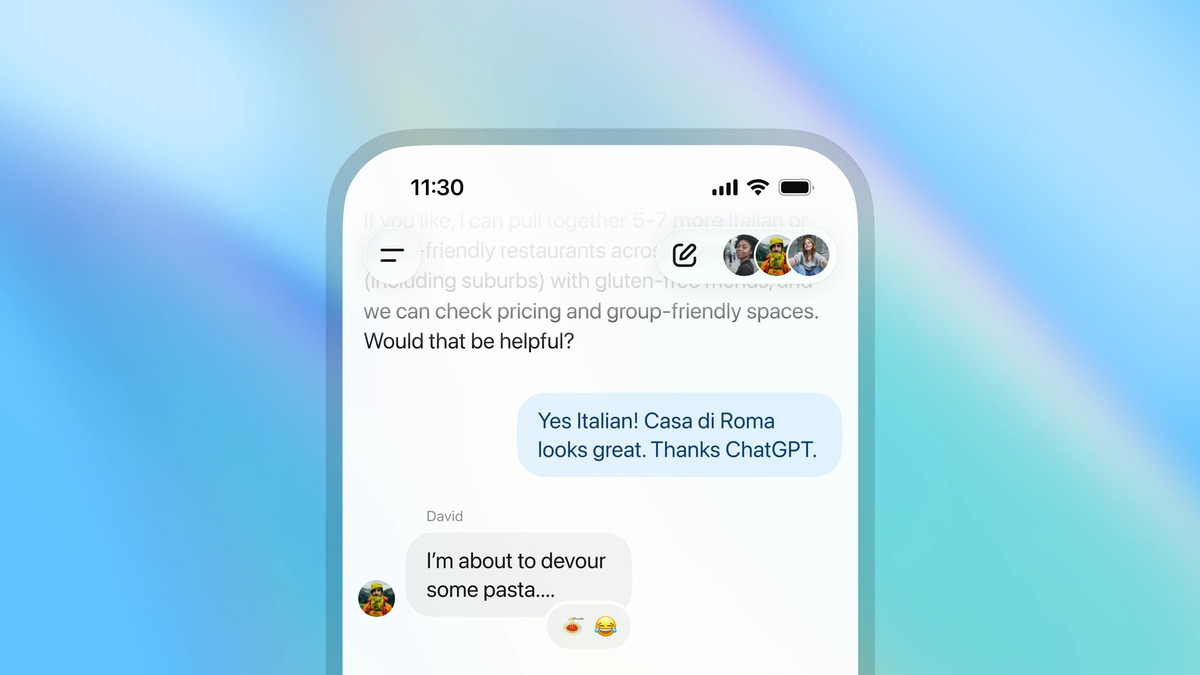
On January 16, 2026, OpenAI officially announced that it would begin testing advertising inside ChatGPT in the United States. Ads will be shown only to free users and subscribers of the new $8/month ChatGPT Go plan.
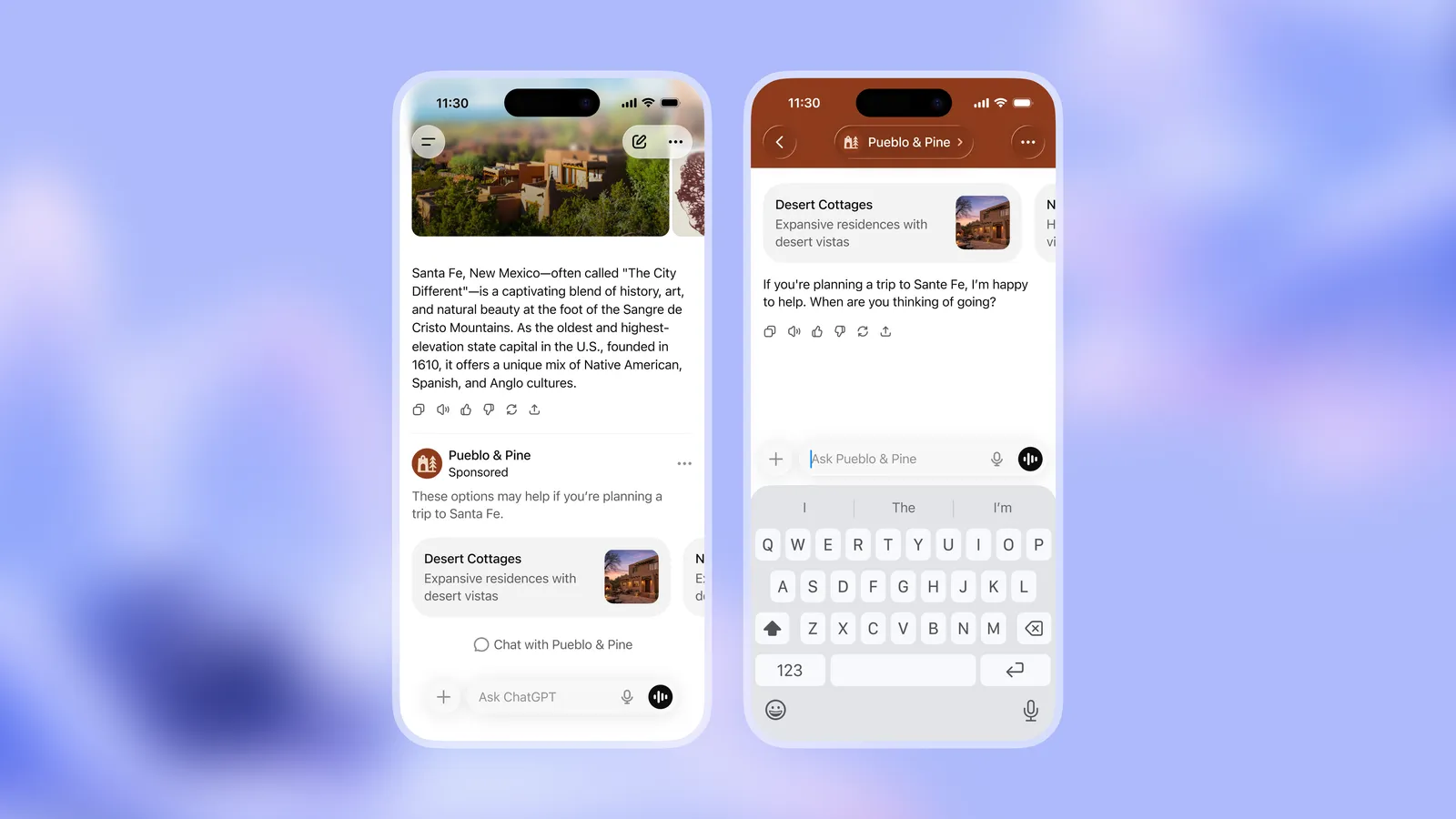
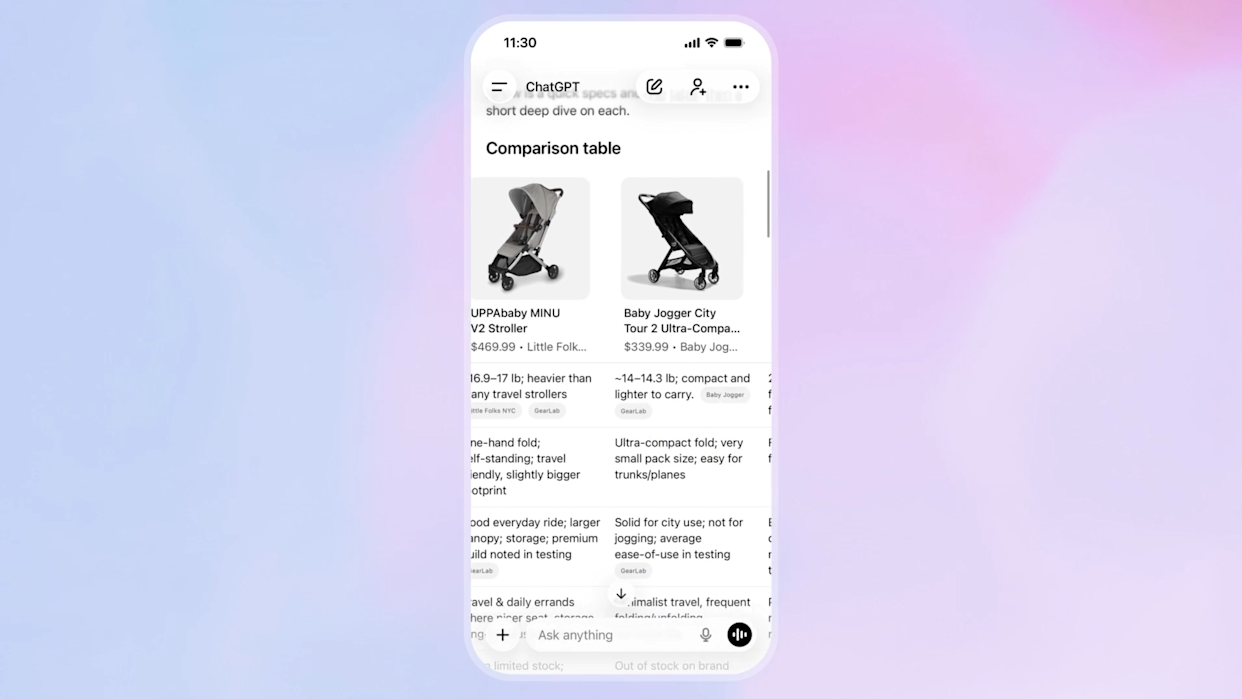
The company is being deliberate about how this works. Ads appear only at the bottom of responses and are clearly labeled as advertisements, separate from the AI’s actual answer. Before anything is shown, a separate AI system evaluates the conversation to determine whether advertising is even relevant. If a user is discussing philosophy, personal issues, or abstract topics, no ads appear. Product- or service-related conversations may trigger them.
Certain categories are completely excluded from advertising:
- Health and medical topics
- Mental health discussions
- Political content
Additionally, if ChatGPT believes a user may be under the age of 18, no ads are shown at all.
Paid tiers remain untouched. Users on ChatGPT Plus ($20/month), Pro ($200/month), or business plans will see no ads whatsoever. Their experience stays exactly as it was.
The timing raised eyebrows—not because OpenAI needs quick cash. The company reportedly generated $10–13 billion in revenue in 2025, an extraordinary figure for a company that scaled this fast. But CFO Sarah Friar, speaking at Davos shortly after the announcement, explained the underlying problem: scale.
ChatGPT now serves around 800 million weekly users, yet only 5–8% of them pay for a subscription. Meanwhile, the system processes roughly 2.5 billion prompts every day, each one carrying real compute costs. Subscriptions alone can’t subsidize that level of free usage indefinitely. Advertising is OpenAI’s attempt to close the gap, without compromising sensitive use cases or paid users.
Why 60 Dollars Is Either Insane or Genius
Let’s put a $60 CPM into context, because that number immediately made people in advertising sit up straight.
On Meta platforms like Facebook and Instagram, brands usually pay $10–15 per thousand impressions. Push the targeting harder, add some creative testing, and you might creep up to $20–25. Google Display is often even cheaper, sometimes well into single digits. YouTube gets pricier for premium placements, but even there, $30–60 CPM is reserved for top-tier inventory.
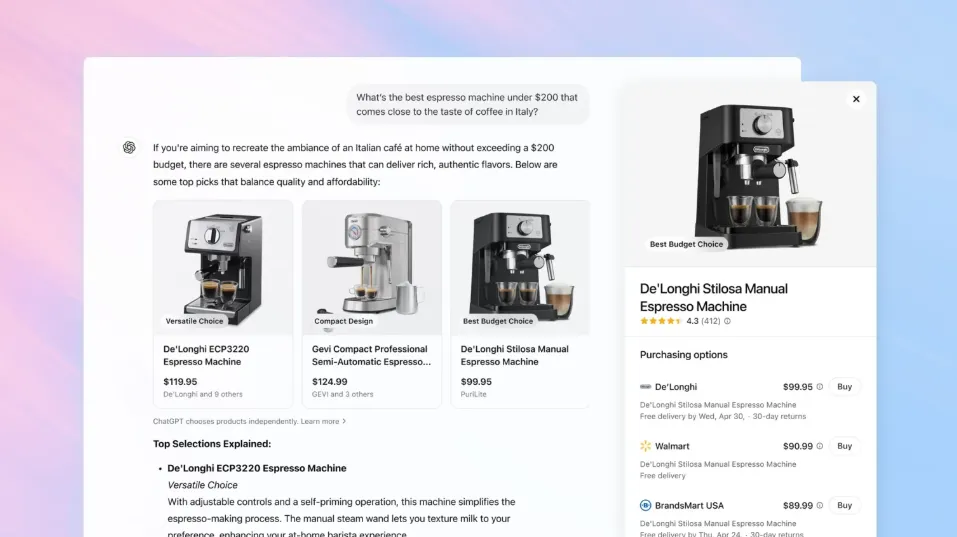
There’s only one place where $60+ CPMs are normal: connected TV and live sports. NFL broadcasts routinely land in the $50–80 range because they offer something almost no other media does – massive audiences, full attention, and cultural relevance in real time. People don’t multitask the Super Bowl. They watch it.
So when OpenAI priced ChatGPT ads at roughly the same level, the implication was wild: ads inside an AI chatbot are being valued like ads during an NFL game.
The immediate industry reaction was predictable. This felt absurd.
NFL advertisers get deep audience data, sophisticated attribution models, and years of benchmarking. They can track brand lift, purchase intent, downstream conversions – the whole enterprise-grade analytics stack. ChatGPT advertisers, by contrast, are offered what The Information diplomatically called “high-level metrics.” Translation: impressions and clicks. That’s basically it.
- No conversion tracking.
- No robust attribution.
- None of the measurement tools digital advertisers have treated as non-negotiable for the last twenty years.
By traditional standards, that makes a $60 CPM look indefensible. But here’s where things get interesting.
OpenAI isn’t really selling the same product that Meta, Google, or even YouTube sells. If you evaluate ChatGPT ads using the logic of standard digital advertising, the pricing looks insane. If you evaluate them based on what the placement actually represents, the math starts to look… different.
And that difference is the key to whether $60 CPM turns out to be a joke or a bargain.
The Thing That Makes ChatGPT Different
Traditional digital advertising works because platforms know a lot about their users. Facebook knows your age, your location, your interests, your relationship status, your job, who your friends are, what pages you've liked, what content makes you pause while scrolling. All of this data powers increasingly precise targeting. Advertisers pay for the ability to show their message to exactly the right people based on everything those people have done in the past.
ChatGPT doesn't have any of that. But it has something that might be more valuable.
When someone types "What's the best laptop for video editing under $1,000?" into ChatGPT, they've just told the platform exactly what they're thinking about at that exact moment.
- They're not passively scrolling through content.
- They're not researching abstractly.
- They're actively trying to make a purchase decision, right now, and they're asking an AI they trust for advice.
This is basically the holy grail of advertising. The whole industry has spent decades trying to figure out how to reach people at the exact moment they're ready to buy. Most of the time, that's impossible. You can target people who visited competitor websites, or who searched for related terms last week, or whose demographics suggest they might be interested eventually. But you're always guessing. You're always approximating.
ChatGPT doesn't have to guess. The user tells you exactly what they want in plain language, and they do it in a context where they're seeking guidance rather than filtering through options. They've come to ChatGPT the way you might ask a trusted friend for a recommendation, and they expect a direct answer rather than a list of ten possibilities to sort through.
Think about how different this is from other advertising environments.
When you're scrolling through Instagram, you're not looking for anything in particular. You're killing time, catching up with friends, watching videos. The platform knows a lot about you, but you're not in buying mode. Ads have to interrupt what you're doing and try to create interest from scratch.
When you search on Google, you have intent, but it's often vague. You're researching, comparing, exploring. Many searches are just curiosity rather than genuine purchase readiness. And you arrive at Google expecting to evaluate multiple options, not to receive a single trusted recommendation.
ChatGPT occupies completely different psychological territory. Users treat it like an advisor. They ask questions expecting answers, not options. The relationship has an element of trust that Google searches and Instagram feeds simply don't have.
An ad that appears after ChatGPT answers a product question isn't really an interruption. It's a follow-up suggestion in an ongoing conversation about exactly what you just asked about. That's a very different value proposition than traditional display advertising, and OpenAI is betting it's worth paying a premium to access.
The Advertisers Who Won't Touch This
Not everyone buys the argument, and plenty of advertisers have legitimate reasons to stay away.
Performance marketing has spent the last 20 years building incredibly sophisticated systems for measuring exactly what advertising accomplishes. Return on ad spend. Cost per acquisition. Attribution models that can trace a customer's journey from first impression through final purchase. The whole discipline is built on the assumption that you should be able to prove, with data, that your advertising investment paid off.
ChatGPT's current offering is basically the opposite of this.
Without conversion tracking, you can't calculate whether campaigns are working. Without attribution, you can't optimize your creative or your targeting. Without pixel integration, you can't build audiences of interested users or retarget people who showed intent but didn't buy.
For performance marketers, this is a deal-breaker.
If you need to hit specific return targets, ChatGPT advertising is simply unusable right now. There's no way to manage what you can't measure, and you can't measure much of anything.
Small businesses face a similar problem. If you're spending your own money and you need to know whether it's working, you can't justify $60 per thousand impressions for data that doesn't tell you what happened after the click.
OpenAI seems perfectly comfortable losing these advertisers — at least for now. The company is reportedly reaching out through agencies and focusing on large, established brands. Initial campaigns are apparently capped below $1 million, which suggests this is a controlled experiment rather than an attempt to build a huge advertising business overnight.
The Advertisers Who Might Actually Benefit
The approach makes more sense when you realize who OpenAI is actually targeting with this product.
Brand advertisers have always operated differently than performance marketers. Companies like Coca-Cola or BMW or Rolex don't measure success by counting conversions. They measure success through brand lift studies that assess whether people remember their advertising, whether their perception of the brand improved, whether they'd be more likely to consider the product in the future. These advertisers have spent decades buying television commercials that offer even less measurement capability than what ChatGPT provides.
For a Fortune 500 company, the questions are different.
- These questions don’t require pixel-level tracking.
They require the same kind of brand research methodologies that existed long before digital advertising made everything quantifiable. - Some categories are especially well suited to this environment.
Software tools, educational services, professional services, productivity solutions, consumer electronics. If your product is the kind of thing people might genuinely ask an AI about, advertising in that context puts you in front of users who are actively researching your category. The contextual relevance is built in. - There’s also a first-mover advantage.
Being among the first companies to advertise in a new channel generates attention that goes beyond the paid impressions. When ChatGPT advertising launches, there will be coverage and discussion and curiosity about which brands are participating. For companies that want to be associated with innovation, the novelty itself has value. - But this only works for a specific kind of advertiser.
Big enough to afford experimentation. Sophisticated enough to measure brand impact without platform-provided conversion data. Patient enough to view this as relationship building rather than immediate return generation.
That’s a narrow audience and OpenAI seems to know it.
The Scale That Makes It Impossible to Ignore
Whatever hesitations advertisers might have, the numbers eventually force attention.
But raw user counts aren't really the point.
What matters is how people use the platform.
Users send over 2.5 billion prompts to ChatGPT every single day. The average session lasts more than 14 minutes. 30 percent of usage is work-related, which means professional decision-making with real purchasing authority behind it.
This isn't the distracted, half-attentive engagement of social media scrolling. People come to ChatGPT with problems they want to solve. They're focused, they're engaged, and they're often making decisions with real stakes attached. For advertisers, that quality of attention is worth far more than the same number of impressions on users mindlessly flipping through content.
ChatGPT also reaches audiences that have become genuinely difficult to target elsewhere. Younger people who never developed television habits. Cord-cutters who've abandoned traditional media entirely. Privacy-conscious users who block ads and opt out of tracking everywhere they can. These audiences have largely vanished from traditional advertising channels. They're still on ChatGPT.
The business adoption angle opens up opportunities that don't really exist on consumer social platforms. Over 90 percent of Fortune 500 companies now use ChatGPT for work. Advertising inside the platform puts you in front of professional decision-makers during their actual work, which is very different from reaching those same people during their personal scrolling time.
Where This All Goes Next
The introduction of advertising to ChatGPT signals some bigger shifts in how digital marketing might work going forward.
The most significant change is the rise of contextual targeting based on what users are thinking about right now, rather than profile-based targeting built on historical behavior. The entire digital advertising industry was built on the idea that if you could track users across the internet and build detailed profiles of their interests and behaviors, you could predict what they'd respond to and target ads accordingly. Privacy changes have been steadily eroding that model for years. Apple's tracking restrictions, Google's slow deprecation of cookies, regulatory pressure around the world.
ChatGPT represents a different approach entirely. The platform doesn't need to know anything about your history because you're telling it exactly what you care about in the moment. No tracking required. No surveillance infrastructure. The conversation itself provides all the context advertisers need. If privacy restrictions keep tightening, this contextual model might prove more durable than behavioral targeting.
There's also an interesting scarcity dynamic at play. As AI assistants become the primary way people get information and make decisions, the total number of advertising opportunities might actually decrease even as the value of each opportunity increases. Someone who asks ChatGPT for a product recommendation might have previously done ten Google searches, visited five comparison websites, and encountered dozens of display ads along the way. Collapsing that whole journey into a single conversation means fewer chances to reach the user, but each chance captures more intent and attention than any of those individual touchpoints.
The format possibilities are genuinely different from what exists in feed-based or search-based advertising. Ads within an ongoing conversation can feel like helpful suggestions rather than interruptions. A product recommendation that appears after you've just asked about the category feels more like advice than promotion. There's potential there, but also risk. If the line between organic content and sponsored content blurs too much, users lose the ability to tell what's a genuine recommendation and what's been paid for.
All of this rests on trust. Users trust ChatGPT with personal questions, professional challenges, decisions they might not discuss with anyone else. That trust extends, to some degree, to anything the platform surfaces. Advertisers paying $60 per thousand impressions aren't just buying eyeballs. They're buying proximity to a trusted source of recommendations. That's worth something real, as long as the trust remains intact.
What It All Means
OpenAI is charging $60 per thousand impressions for ChatGPT advertising. That's triple what Meta charges for a fraction of the measurement capability. On any conventional analysis, the pricing seems indefensible.
But conventional analysis might miss the point.
ChatGPT offers something that doesn't really exist anywhere else: access to users at the exact moment they're making decisions, in a context where they trust the platform to give them good advice, with full attention rather than distracted scrolling. If that combination is worth what OpenAI thinks it's worth, $60 per thousand impressions might actually be reasonable. It might even be cheap.
If it isn't worth that much, prices will come down. OpenAI has room to adjust. The decision to start with brand advertisers at premium rates gives the company flexibility to evolve the product as they learn more about what works.
For most advertisers, ChatGPT probably isn't the right move today. The measurement limitations make optimization impossible. The pricing requires faith in a value proposition that can't be quantified. The risks aren't well understood.
For brands that have money to experiment, sophisticated ways to measure brand impact, and interest in being early to an important new channel, the calculation looks different. First-mover advantages don't last forever, but they matter while they last. There's something to be said for being among the first to figure out how advertising works in AI assistants, before everyone else crowds in.
The real question isn't whether $60 is the right price for ChatGPT advertising today. It's whether advertising inside AI assistants becomes a standard practice over the next ten years, and whether the companies that figure it out early end up with advantages that late arrivals can't replicate.
OpenAI is betting the answer is yes. With 800 million users and counting, they might have the leverage to make that bet pay off.
That free ChatGPT experience we all got used to? Turns out it was always a customer acquisition strategy, not a sustainable business model.
The real business just started.
Frequently Asked Questions
How much do ChatGPT ads cost?
OpenAI is asking for about $60 per thousand impressions, which works out to roughly three times what advertisers typically pay on Facebook or Instagram. The pricing puts ChatGPT in the same territory as premium television inventory like live NFL games.
When are ChatGPT ads starting?
OpenAI announced in mid-January 2026 that testing would begin in the coming weeks. The initial rollout is limited to adult users in the United States who access ChatGPT through the free tier or the $8 per month Go subscription.
Who has to see the ads?
Only users on the free tier and ChatGPT Go will see advertisements. If you pay for ChatGPT Plus, Pro, or any business plan, your experience stays ad-free. Users under 18 won't see ads regardless of which tier they're on.
What data do advertisers get?
Not much, honestly. OpenAI provides total impressions and total clicks, but no conversion tracking, attribution data, or information about what users did after seeing an ad. This is much less than advertisers are used to getting from platforms like Meta or Google.
How does targeting work?
It's contextual rather than profile-based. A separate AI system evaluates each conversation to decide if it has commercial intent before showing an ad. The ad you see depends on what you're currently talking about, not your browsing history or demographic profile.
Will ads change what ChatGPT recommends?
OpenAI says no. Ads appear separately at the bottom of responses and are clearly labeled. The company has committed to keeping advertising completely separate from the AI's actual answers. Whether that boundary holds as advertising revenue grows is worth watching.
Does OpenAI sell my conversations to advertisers?
No. OpenAI has explicitly stated that conversations remain private and aren't shared with advertisers. You can turn off personalized advertising and clear your data whenever you want.
Should small businesses advertise on ChatGPT?
Probably not right now. OpenAI is focusing on large brands through agency relationships, and the lack of conversion tracking makes it really hard for small businesses to know if their money is working. This is an experiment for companies with substantial budgets and sophisticated brand measurement capabilities.
What topics won't have ads?
Health discussions, mental health conversations, and political topics are all off limits for advertising. OpenAI has indicated other sensitive categories will be restricted too.
How many people use ChatGPT?
About 800 to 900 million people use ChatGPT every week as of early 2026, and OpenAI expects to pass a billion soon. The platform handles over 2.5 billion prompts daily.
Can I get rid of the ads completely?
If you're on the free tier or Go plan, you can't remove ads entirely, but you can turn off personalization and dismiss individual ads. The only way to eliminate ads completely is to upgrade to ChatGPT Plus, Pro, or a business subscription.
What's ChatGPT Go?
It's a new subscription tier that launched globally in January 2026 for $8 per month. You get about ten times more usage than the free tier, plus extended memory and other features. Go subscribers will see ads; Plus subscribers won't.
Why is ChatGPT charging so much more than Facebook?
OpenAI's argument is that they're offering something different: access to users at the exact moment they're making decisions, in a context where they trust the AI to give good advice. That high-intent, high-trust environment is supposedly worth more than reaching people passively scrolling through social media feeds.
What does this mean for the future of advertising?
ChatGPT's approach represents a shift toward contextual targeting based on what users are thinking about right now, rather than profile targeting based on historical behavior. As privacy restrictions continue tightening, this model might prove more durable. OpenAI projects advertising revenue could hit $25 billion annually by 2029.
Related Articles
 Mark
Mark
 Dani
Dani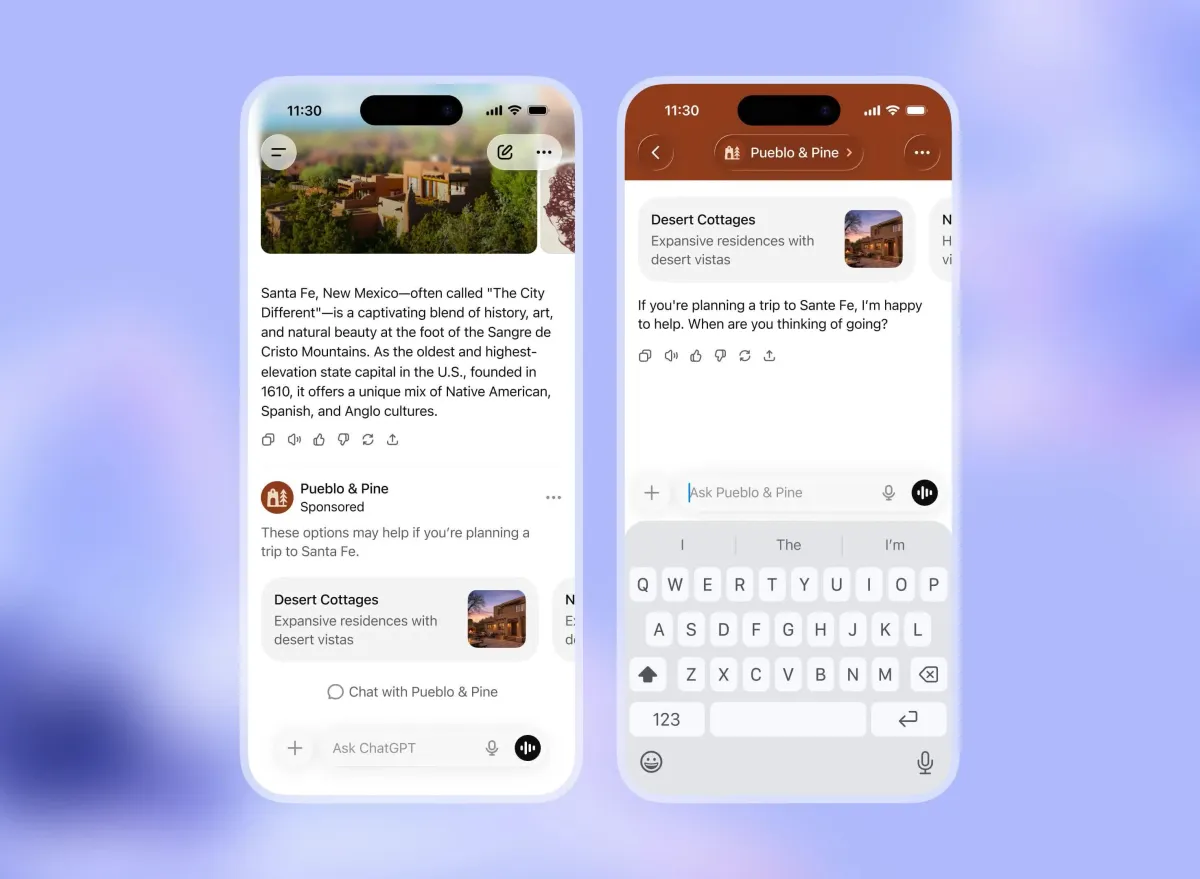
 Mark
Mark