


Amazon announced on April 14, 2026, that it had agreed to acquire Globalstar for $11.57 billion in cash and stock, folding the satellite operator into its Amazon Leo broadband initiative and immediately triggering a separate agreement with Apple to power Emergency SOS services on iPhone and Apple Watch. Amazon stock rose 5% on the announcement and Globalstar shares jumped more than 10%.
The deal, expected to close in 2027, gives Amazon all of Globalstar's satellite operations, infrastructure, and mobile satellite services spectrum licenses with global authorizations. It also repositions Amazon Leo, formerly Project Kuiper, from a consumer broadband competitor into something more structurally significant: a satellite layer integrated with AWS cloud infrastructure.
What Amazon Is Actually Buying
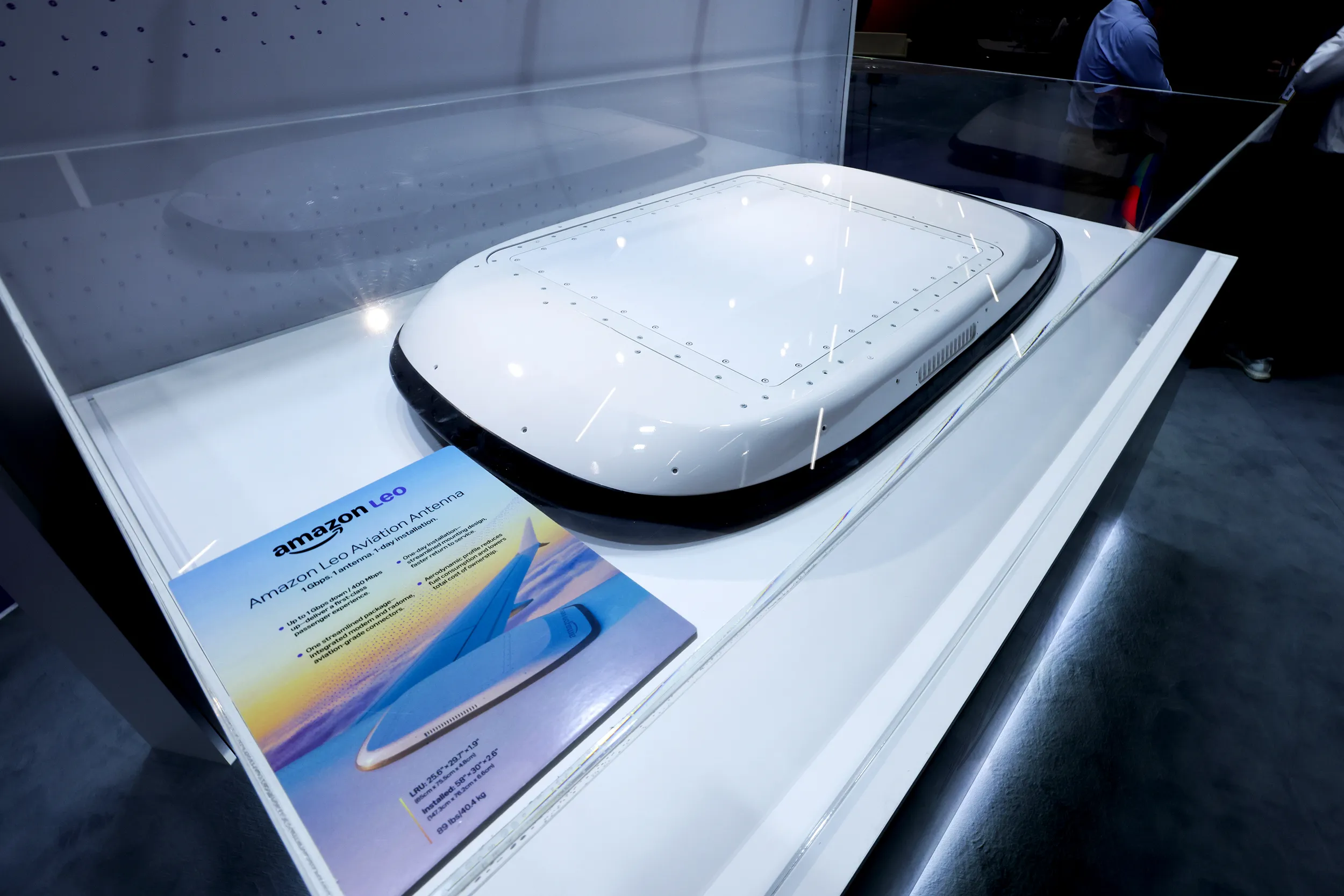
The $11.57 billion price tag acquires more than satellites, and the most strategically important assets are not the hardware.
Globalstar operates a network of low Earth orbit satellites and has been the infrastructure behind Apple's Emergency SOS via satellite feature since its launch. Apple has now signed a long-term agreement directly with Amazon, ensuring that Emergency SOS services for iPhone and Apple Watch will continue on Amazon Leo's expanded network. Amazon is inheriting one of the most visible satellite consumer applications currently in production.
More strategically, Amazon is acquiring Globalstar's FCC spectrum licenses, which carry global authorizations for mobile satellite services. Obtaining equivalent spectrum independently would require years of regulatory filings with uncertain outcomes. As the 5G World Pro analysis described the spectrum portfolio: it is a "significant regulatory moat" that cannot be replicated on any accelerated timeline.
Globalstar's new satellites, currently being manufactured by MDA Space, will operate alongside the existing Amazon Leo constellation. Amazon also gains Globalstar's enterprise and IoT customer base: asset tracking, industrial monitoring, maritime operations, and remote sensing clients who represent the commercial overlap with AWS's own enterprise footprint. The acquisition also brings direct-to-device spectrum and infrastructure that Amazon plans to use for native satellite connectivity without cellular intermediation, with a launch targeted for 2028.
The Competitive Context: SpaceX Had Bid First
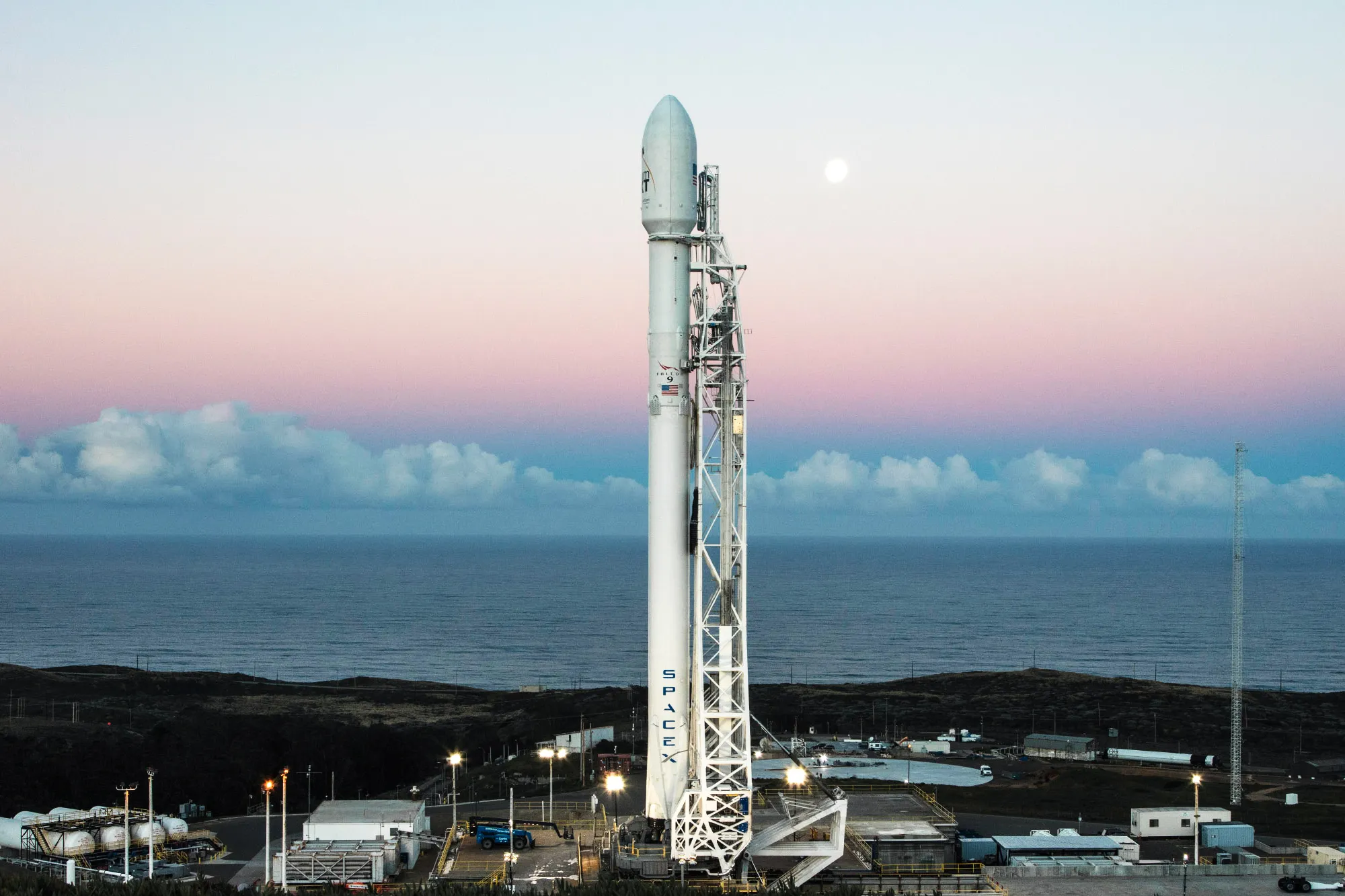
The strategic pressure behind this deal becomes clearest with one data point: SpaceX explored its own acquisition of Globalstar in November 2025. Amazon's deal means Starlink will not absorb Globalstar's spectrum. That context, as 247 Wall St. noted, reframes the acquisition as "less of a strategic choice and more of a defensive necessity."
The gap between the two companies' satellite deployments is significant. Amazon Leo currently has approximately 241 satellites in orbit. SpaceX's Starlink operates more than 10,000 satellites and serves over nine million subscribers. Amazon had an FCC deadline requiring approximately 1,600 operational satellites by July 2026 and has already requested an extension to 2028, acknowledging it will reach roughly 700 by the original deadline.
Globalstar adds Globalstar's existing fleet of roughly two dozen operational satellites to that count. More importantly, it adds the infrastructure, the regulatory approvals, and the enterprise relationships that Amazon was years away from building independently.
Why This Is an AWS Story More Than a Connectivity Story
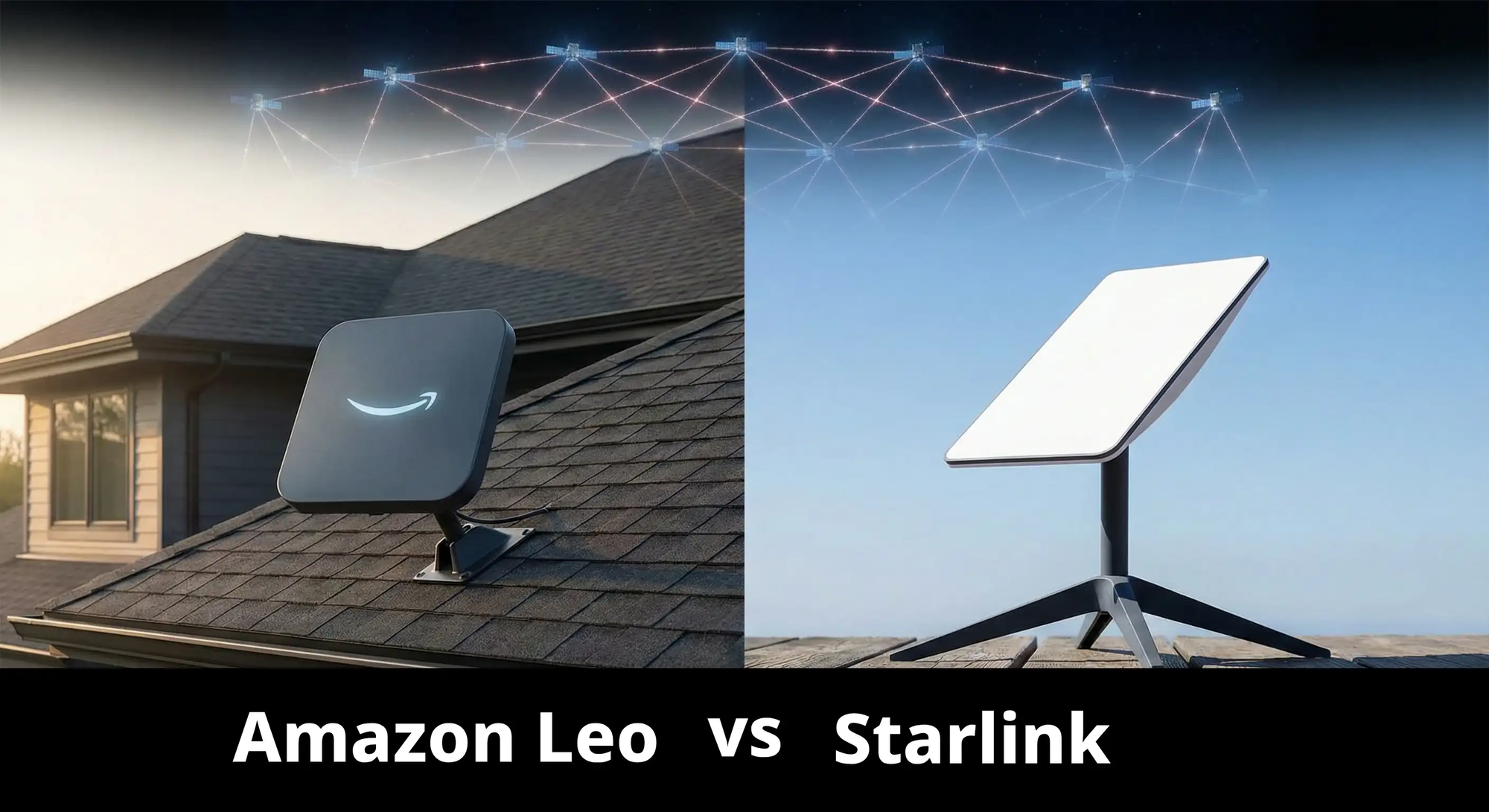
Framing this as Amazon versus Starlink for satellite broadband is accurate but incomplete.
AWS is the world's largest cloud infrastructure provider, and the frontier of its expansion is the edge: moving compute, storage, and processing capacity as close as possible to the point of data generation. Satellites are, in this architecture, edge nodes in orbit. They can process and route data from devices in locations where terrestrial infrastructure does not exist or cannot be economically deployed.
Globalstar's existing enterprise customer base maps directly onto the AWS segments that are most constrained by connectivity gaps. Every offshore wind farm, container ship, mining operation, and remote industrial facility is a potential AWS edge location if satellite connectivity can be made reliable and economically viable. That is the addressable market expansion the Globalstar deal unlocks, not just consumer broadband.
Integrating Globalstar's network with AWS Ground Station, Amazon's existing satellite data reception service, and AWS IoT services creates what the market analysis from Shashi.co described as "a vertically integrated stack from orbital data capture through cloud processing." No competitor can replicate this combination at the same depth. Microsoft Azure and Google Cloud do not own satellite constellations.
The AWS Bedrock enterprise AI platform and the recently launched Mantle inference engine both benefit from the same structural dynamic: any enterprise running AI inference workloads on AWS infrastructure in remote or connectivity-constrained locations now has a native path to connectivity through the same vendor relationship.
The Apple Agreement: Continuity and Leverage
Apple has been Globalstar's largest customer since launching Emergency SOS in 2022, and the Amazon acquisition comes with a new long-term Apple agreement to continue that service on Amazon Leo's expanded network.
For Amazon, the Apple partnership provides three things at once: a guaranteed revenue anchor from one of the world's most valuable device companies, immediate operational credibility for Amazon Leo, and a distribution relationship through more than a billion active iPhone users well before mass consumer broadband launches.
The Numbers
What Comes Next
Three questions will determine how this deal is evaluated over the next two years.
Can Amazon close the constellation gap? Amazon Leo currently has 241 satellites. Starlink has more than 10,000. Amazon has already missed one FCC deadline and is seeking an extension to 2028. The Globalstar acquisition helps with spectrum and infrastructure, but the satellite count gap requires sustained deployment velocity that Amazon has not yet demonstrated.
Will the AWS-satellite integration produce measurable revenue? The strategic logic for integrating satellite connectivity with cloud infrastructure is clear. The commercial execution requires enterprise customers to change procurement behavior, shift existing connectivity contracts, and commit to AWS as a single-vendor solution for both compute and connectivity. That kind of architectural decision moves slowly inside large organizations.
Does this trigger a response from Microsoft or Google? If Amazon's acquisition confirms that space infrastructure has become a hyperscaler arms race, the remaining independent satellite operators become acquisition targets. The Meridiem analysis noted that investors now have "a 6-12 month window before consolidation reprices remaining independent operators."
Conclusion
Amazon's $11.57 billion acquisition of Globalstar is the most significant move yet in the convergence of cloud computing and satellite infrastructure. It extends AWS's connectivity reach to the edge of terrestrial networks, defends against Starlink absorbing critical spectrum, and secures Apple as an anchor customer for a service that will power connectivity on more than a billion devices. The deal is not primarily about competing with Starlink for consumer broadband subscribers, though that competition is now direct. It is about ensuring that AI inference workloads, IoT deployments, and edge computing running on AWS have a native satellite layer owned and integrated by Amazon.
The question now is how fast Amazon can close the constellation gap and turn that architecture into production-ready service at scale.
Frequently Asked Questions
What did Amazon acquire from Globalstar?
Amazon agreed to acquire all of Globalstar's satellite operations, infrastructure, and assets, including mobile satellite services spectrum licenses with global authorizations. Globalstar's existing satellite fleet and new satellites under construction by MDA Space will operate alongside Amazon Leo's broadband constellation. The deal also includes Globalstar's enterprise and IoT customer relationships.
Why did Amazon acquire Globalstar instead of building its own satellite infrastructure?
Speed and spectrum. Amazon faces an FCC deadline that required approximately 1,600 Amazon Leo satellites operational by July 2026, a target it has already missed and requested an extension to 2028. Globalstar's spectrum licenses carry global authorizations that would take years to obtain independently. SpaceX had also explored acquiring Globalstar in November 2025, making the acquisition partly defensive: Amazon could not let Starlink absorb that spectrum.
What happens to Apple's Emergency SOS via satellite service?
Apple and Amazon signed a separate long-term agreement to continue Emergency SOS via satellite on Amazon Leo's expanded network. The service, which has been running on Globalstar infrastructure since 2022, will transition to the combined constellation. Apple devices currently using Globalstar will continue to be supported.
How does this connect to AWS and AI infrastructure?
AWS is the world's largest cloud provider and its expansion frontier is edge computing: bringing compute and processing capacity to locations where terrestrial networks cannot reach. Satellites in this architecture function as edge nodes in orbit. Globalstar's enterprise customer base, covering asset tracking, maritime operations, industrial monitoring, and remote sensing, maps directly onto AWS segments that need satellite connectivity to extend cloud services to those environments. Amazon's inference and IoT services benefit from a native satellite layer owned by the same vendor.
How does Amazon Leo compare to Starlink?
Amazon Leo currently has approximately 241 satellites in orbit. Starlink operates more than 10,000 and serves over nine million subscribers. The Globalstar acquisition adds spectrum, infrastructure, and enterprise relationships but does not significantly close the constellation gap in the short term. Amazon's full authorized constellation of 3,236 satellites, when deployed, would make it a meaningful competitor. Deployment velocity will determine how quickly that competitive position materializes.
Related Articles
 Mark
Mark Mark
Mark Mark
Mark


